
The last two exhibits that Beatriz González (1938) held in Bogotá again centered around death. This topic, as pointed out by Álvaro Robayo in the fragment of his book La crítica a los valores hegemónicos en el arte colombiano (Criticism of the Dominant Values in Colombian Art) (SECAB, 2001) was reproduced for the Fondo Cultural Cafetero catalog, has been present almost obsessively in the artist's works since 1965.
With Los suicidas del Sisga (The Sisga Suicides) (1965), one of her most famous oil paintings, and according to Marta Traba, her career's most evident point of departure, González incorporated into her work two elements that would resurface recurrently throughout her career: the topic of death and the reinterpretation of what Carolina Ponce de León calls "the visual repertoire of everyday images found in newspapers and popular magazines" (Beatriz González, una pintora de provincia [Beatriz González, Province Painter], Carlos Valencia Editores, Bogotá, 1988, p. 18).
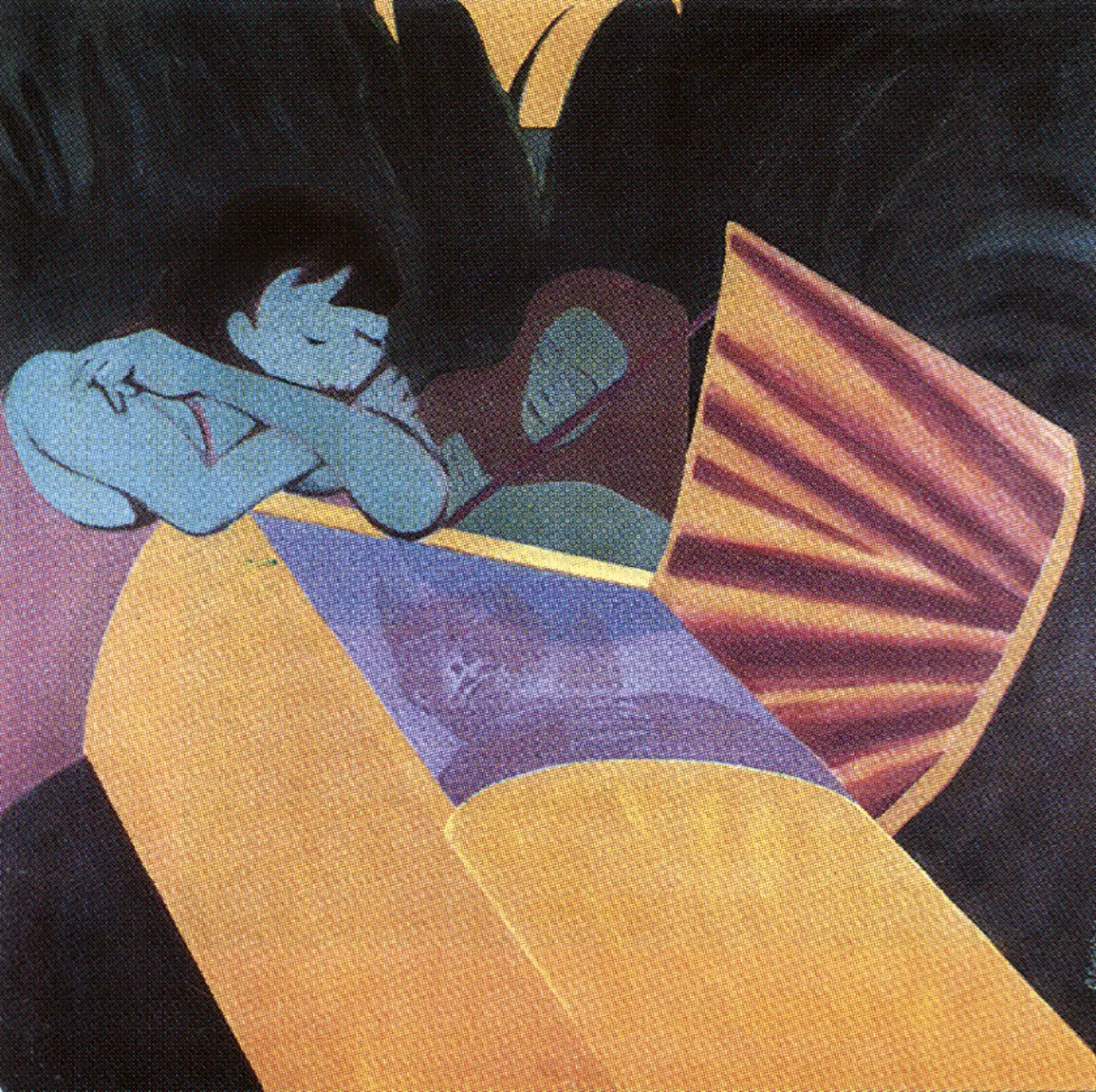
The total group of paintings and drawings she presented at the Fondo Cultural Cafetero under the title of Dolores. Obra reciente (Pains. Recent Works), along with the wallpaper and the park benches presented at Galería Sextante, could be interpreted as a preoccupation for reflecting on the iconography of death, which in González's works, it already has a long tradition. On the other hand, as the artist herself predicted in an interview granted to Katherine Chacón for a retrospective show held in the Museo de Bellas Artes de Caracas in 1994, González is also interested in studying the intensity of the drama. In her own words: "(...) I'd like to express that intensity. To reach a visual metaphor that is also sensual, but it also has the intensity of the drama" (Beatriz González. Retrospectiva [Beatriz González. Retrospective], 1994, p. 20).
In these last two exhibits, this intensity is once again related to the way the Colombian printed media have built a visual code on violent death and the expression of the pain that comes afterward. In this sense, the large-format oil paintings such as Dolores (Pains), Empalizada (Palisade), and Ventana entreabierta (Window Ajar) could be interpreted within González's preoccupation with the rituals of grief as protagonized by the families of the violently deceased. By being captured by the mass media's visual logic, those rituals begin to turn into repetitive structures.
In some works, we find the casket and people weeping. In others, the corpses of those murdered en masse. In Predicadores (Preachers), for example, and contrary to what she's previously done, where the corpses of the murdered and their context are involved in great chaos, González has "rationally" presented three corpses in an orderly fashion: their faces covered, and their hands crossed over the chest. Precisely, the "logic" of the mass murderers, its brutal repetitive structure, is alluded ironically in the wallpaper reproducing this piece at the Galería Sextante.
In the same way that death in Colombia has a particular history, linked necessarily to the ways the different armies involved in the armed conflict have elaborated, symbolically and physically, the enemy's extermination, violent death and the subsequent pain have created an iconography that González has reinterpreted, rescuing their original intensity.
Although these two exhibits do not show González's intellectual, humorous, and corrosive gaze as we know it, they show us again the codes of pain and death forming in Colombia in the midst of a war that is already a half-century old. It seems that González has lost her laughter, although she's still reflecting emotively on death.
WILLIAM LÓPEZ