
La Caja Negra Gallery, which specializes in graphic works, presented a selection of Francisco Toledo's most recent series. For reasons that are understandable but not justified, European approaches to this Mexican artist's rich oeuvre have tended primarily towards an indigenist, folkloric reading that to a degree has obscured those more universal—and more critique-oriented—elements of his work.
It was thus a surprise to come across these works by Toledo, where, along with his characteristic irony, sense of humor, and sharp gaze, new formats are explored while the range of cultural references is expanded. The show comprises three recent, clearly distinct series. In Sombra del deseo (Shadow of Desire), Toledo gathers photographs from hard-core pornographic magazines and intervenes them by darkening some sections, drawing on others, or incorporating new elements into them. An act of penetration turns into a giant bat (Volaverunt III, 2000); the detailed image of one female sexual organ is transformed into a chicken (Gallina vieja [Old Hen], 2000). Through the interplay of veilings and transfigurations, Toledo forces the spectator to see and assume things that would probably go unnoticed in different circumstances. Beyond alluding to the ghosts of adolescent sexual repression, each piece becomes a perceptual game that reminds us of gestalt exercises and, above all, shows its creator's enormous gifts of imagination.
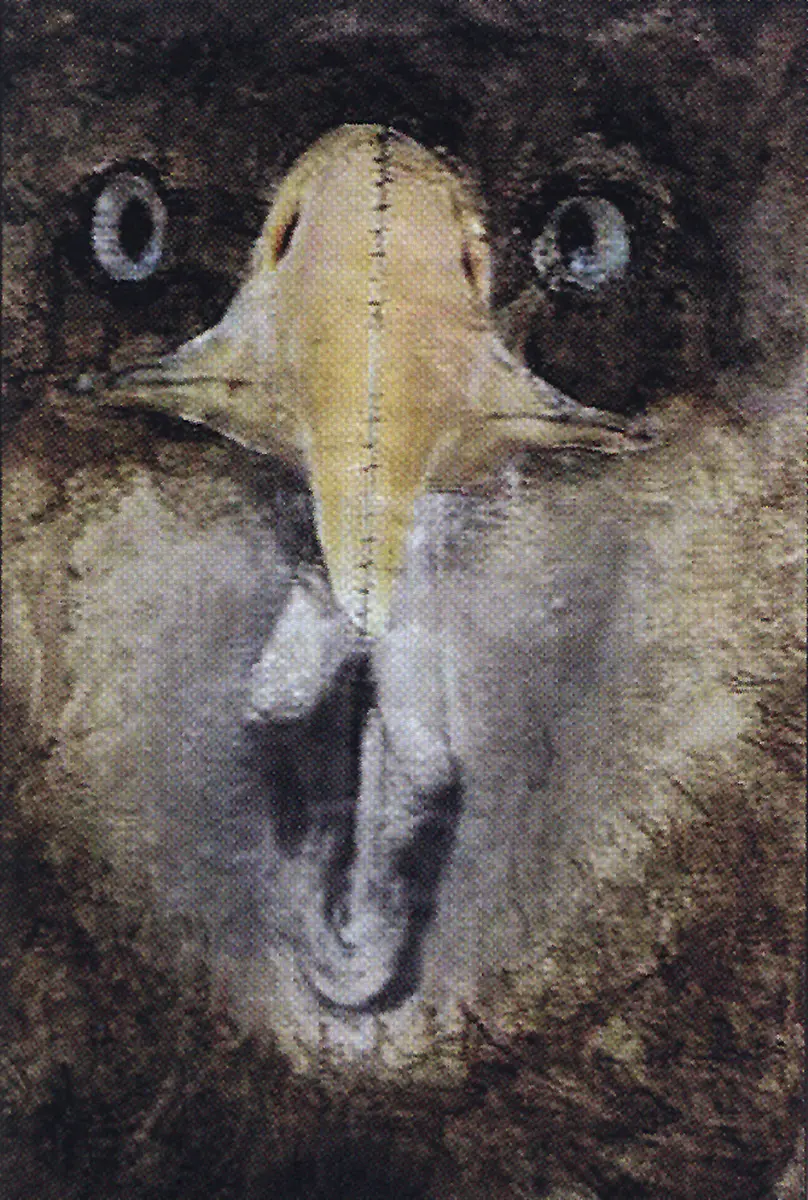
In a different register, Sueños de Durero (Dürer's Dreams) presents a series of variations on that magnificent drawing of Dürer's in which the German artist suggests several different faces in the creases of six pillows. Dürer's obsessions correspond to Toledo's, who, using diverse and complex techniques (silver gelatin, ferrous cyanide, polytoner, graphite, and watercolor), rearranges time and, again, the composition of the pillows. If Sombra del deseo privileges intuition, Sueños de Durero responds to a more conscious investigation of the obsessiveness and the delicacy involved in drawing and engraving.
The show's third series is Bizancio (Byzantium), which relates to Toledo's graphic tradition while bridging the gap with more contemporary media, such as digital graphics. In this series, which originated in a group of collages done with recycled illustrated books, Toledo irreverently and humorously alters various Byzantine mosaics. As Cuahutémoc Medina points out in the catalog text, mosaics lend themselves much better than other techniques to superimposition and montage, to the point that, at first glance, the images seem to not have been intervened at all; it is only in a detailed viewing where the elements of parody and iconoclasm reveal themselves. Armed with a giant pair of binoculars, Christ hands out blessings left and right (Máquina de dar bendiciones [The Blessing Machine], 2000), while the Virgin Mary realizes her mascot has dirtied itself (Multa a la virgen y su perrito [The Virgin and her Little Dog Get a Fine], 2000), or anxiously tries on different shoes (La virgen que no encontró zapatos [The Virgin Who Didn't Find Shoes], 2000). There is an interesting contrast between theme and technique: from the small tassels the mosaics are made of, we move into digital pixelization. In this trajectory, the orthodoxy of theological discourse is violated by the animalization and sexualization of its usual themes and characters, but the formal result is less vehement than the subtle commentary and critique implicit in each image. Here again, Toledo displays the wide range of his technical resources and the brilliant intelligence he applies to them.
One last element in Toledo's work, not less important but not as known in Europe, is its social dimension, deployed in the critical attitude permeating most of his work but also demonstrated in the different social projects he has promoted. In this show, this aspect of the artist's work is represented by the notebooks with original dry-stamped covers made at the paper mill installed in Etla, Oaxaca, at Toledo's insistence (several other artists have participated in this project as well). The addition of all these elements at La Caja Negra should drive us to acknowledge Francisco Toledo one of the very few artists in History who are not only prolific in their topics and techniques but also capable of approaching the world with a new kind of gaze.
ISSA MARÍA BENÍTEZ DUEÑAS