
O Fio da Trama brings together 21 contemporary Brazilian artists who over the past decade have in some way used fabric, sewing, or thread as a theme. This quiet and sophisticated exhibition organized by curator Fátima Bercht, highlights formal associations between works, focusing the viewer's attention on materials, process, and the personal vision of the artist. Little reference is made to the wider historical context in which the works were made. Instead, formal qualities and unsurprisingly, the phenomenological characteristics of the artwork are stressed, thus referencing the history of post-1950s Brazilian art itself.
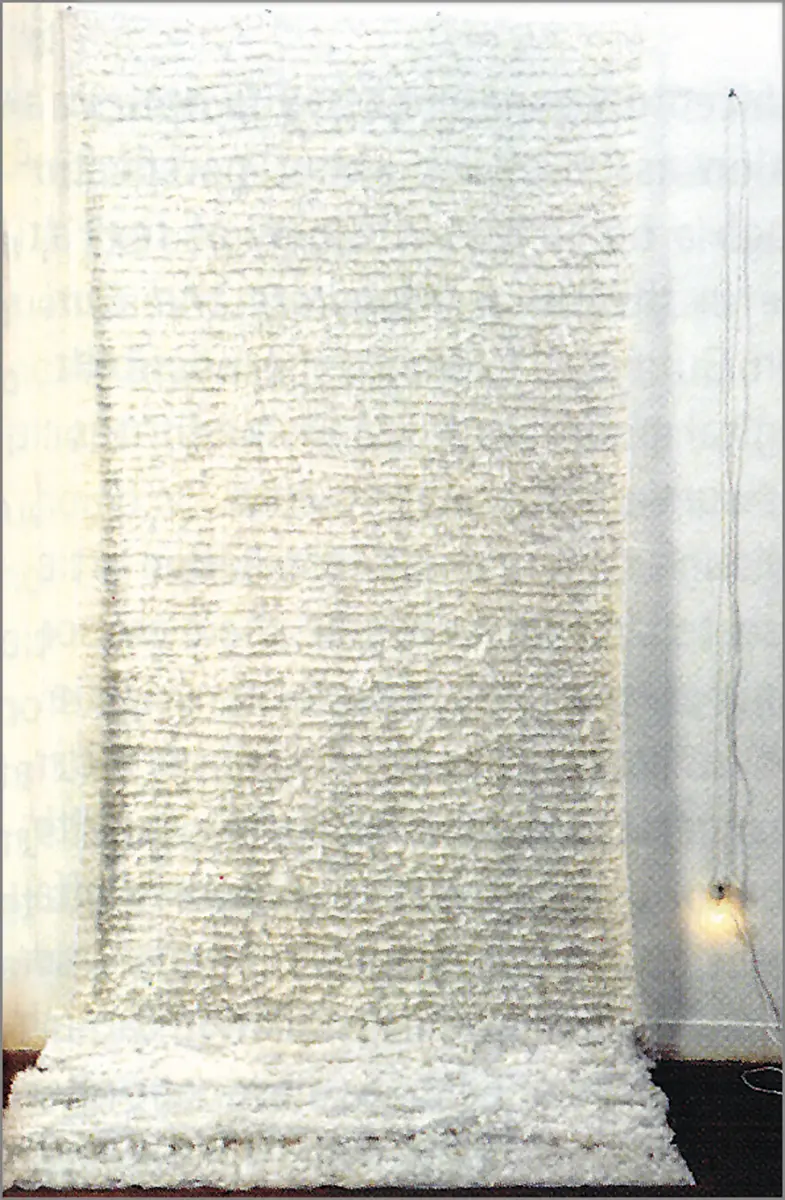
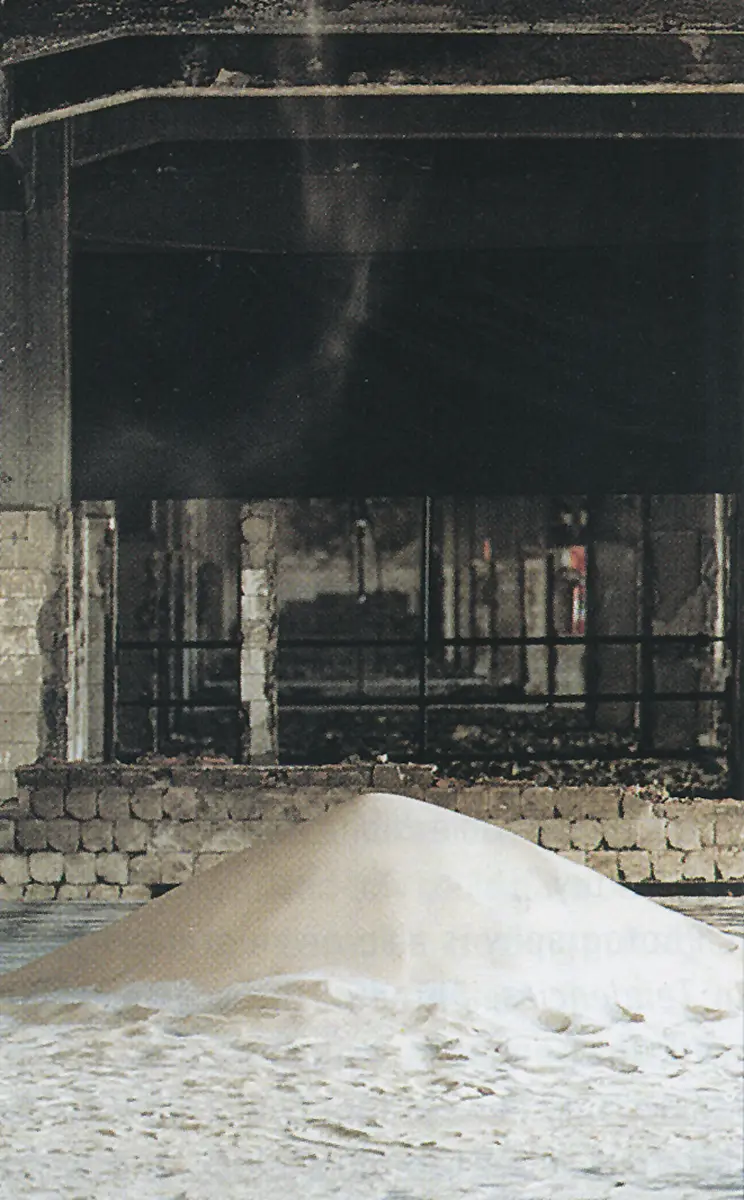
As might be expected the vast majority of the 63 artworks are sculptural. Lina Kim's As Much As (1997), and Laura Vinci's Untitled (1997-2001) set the tranquil mood of the show's subdued tones and neutral colors that characterize much of the work. Kim presents a woven tapestry of white downy feathers illuminated by a single hanging light bulb, while Vinci pours golden sand through a square funnel mounted onto the ceiling, producing a luminous accumulation on the gallery floor.
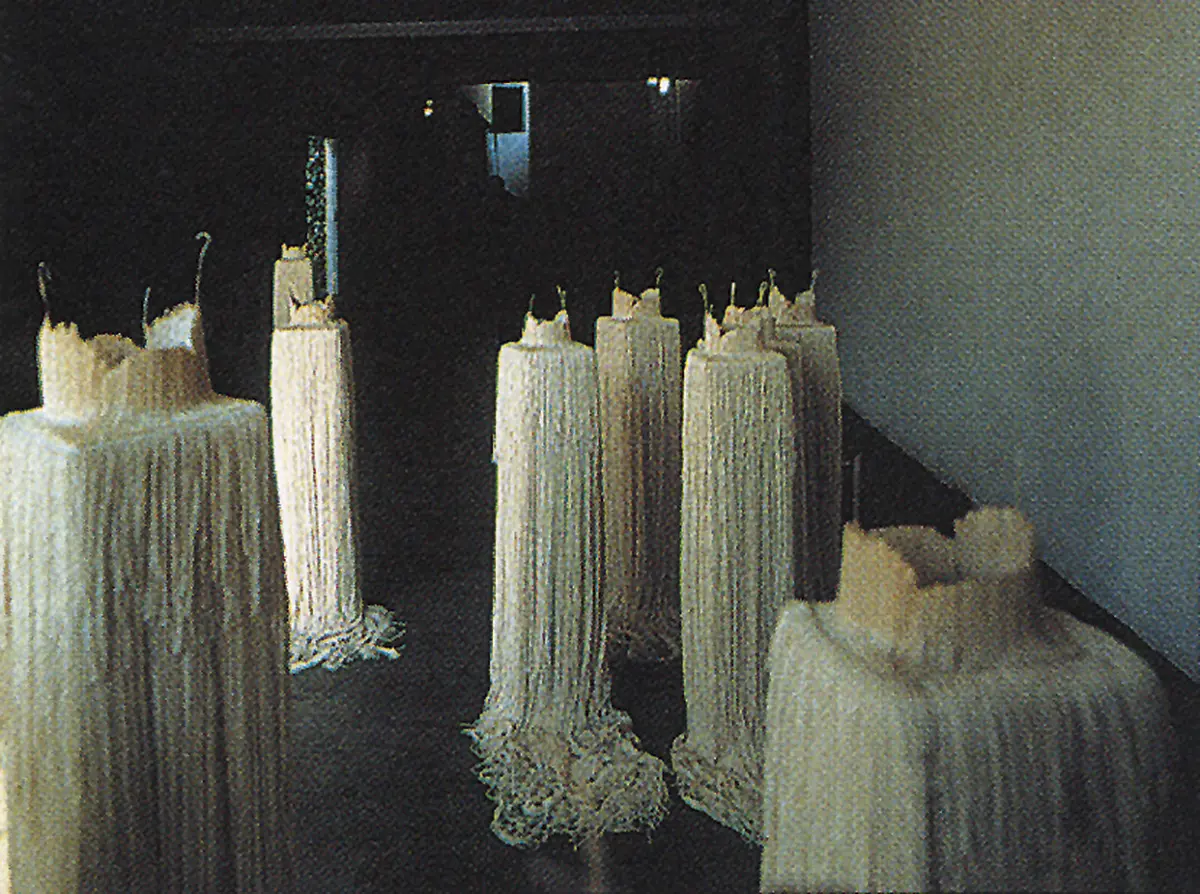
Artists Ernesto Neto and Vera Martins create anthropomorphic objects that are clustered into groups. Neto's Groupolip (1990) is weighted with small lead pellets at the bottom and Styrofoam pellets above, creating twelve freestanding pods that seem to be migrating across the floor. Martin's unique columnar sculptures are constructed from the unraveled threads of painter's linen canvases. Placed on invisible armatures, her disembodied cloaks are both abstract references to the human form and also a rhetorical comment on the deconstruction of art.
More surreal objects were presented by artists Nazareth Pacheco and Tatiana Grinberg. Pacheco's objects are seductive, duplicitous, and ultimately dangerous. Items such as an elegant evening dress and a baby's bassinet are constructed with razor blades. Grinberg casts silicon replicas of her hands and places them on a mirrored surface in an oblique allusion to human absence and memory.
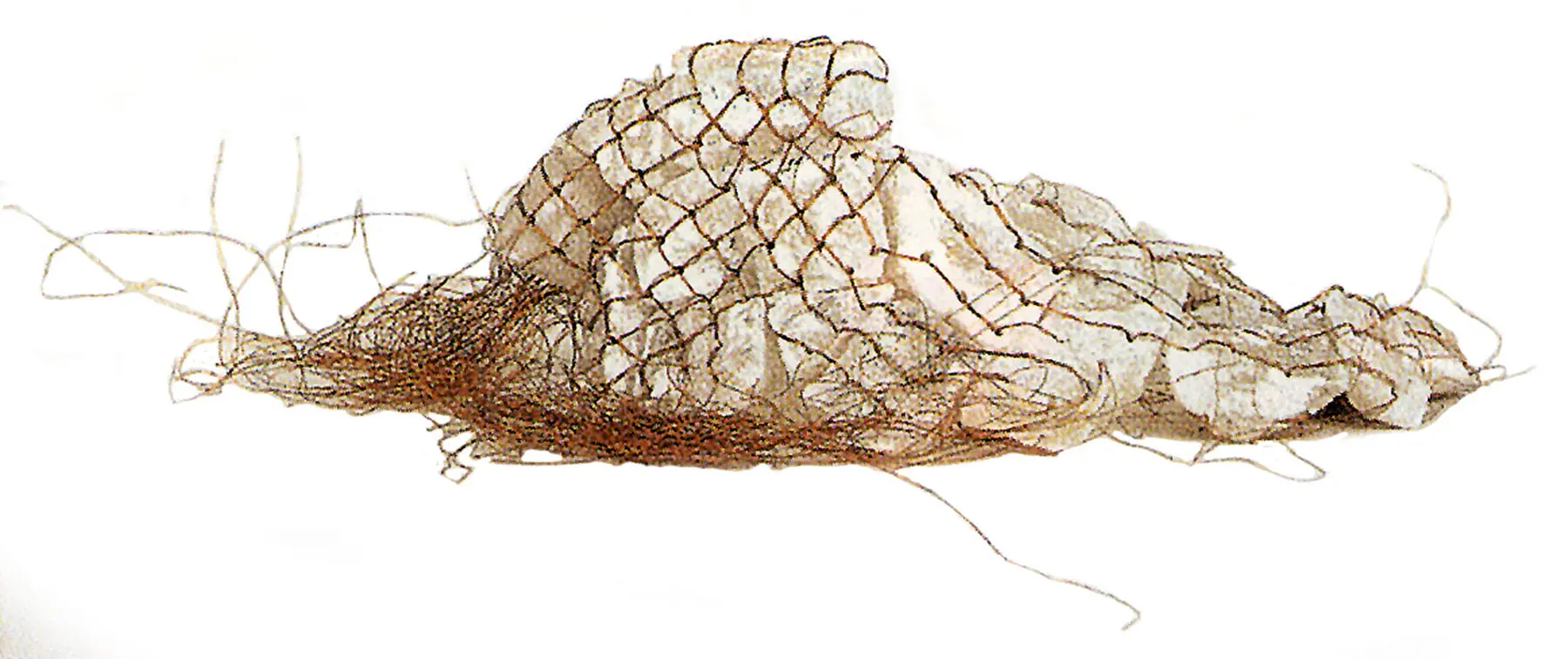
Sewing and embroidery, particularly of items that may not immediately come to mind, were prominent throughout the exhibition. Ana Linnemann's Rock Lace series (2001), uses needles to thread together stones with copper wires in an act that would appear illogical creating beautiful and alluring installations. One of the more aggressive works in the exhibition, Stillborn, (2001) by Eliane Duarte, sews together seven fetal skins taken from stillborn calves. Paradoxically these hanging sculptures present both birth and death as a simultaneous process. More traditionally, Leonilson embroiders personal and diarist words onto small panels of cloth, creating miniature quilts with enigmatic wordplay.
Of course, not all works fit neatly into this motif. According to the curator, the open-ended title of the exhibition can also be read as a loosely woven network of artists and works that are ultimately a personal selection. Works that explore the edges of perception such as Brmgida Baltar's video The Collecting of Mist, (1999) and Vik Muniz's Pictures of Wires series (1993-1997) may have formal similarities with the works in the exhibition, however their underlying conceptual premise would appear to be more complicated. This is one of the show's strengths as well as one of its weaknesses. The overarching theme leads one to question why sewing, fabric, and thread are used as a motif: Does this theme somehow refer to a larger movement within contemporary Brazilian art? And is there a greater metaphor that is being explored? Although this query is never fully answered, O Fio da Trama successfully brings together a range of artistic sensibilities in a formal and thoughtful meditation on contemporary Brazilian art.
CHARMAINE PICARD