
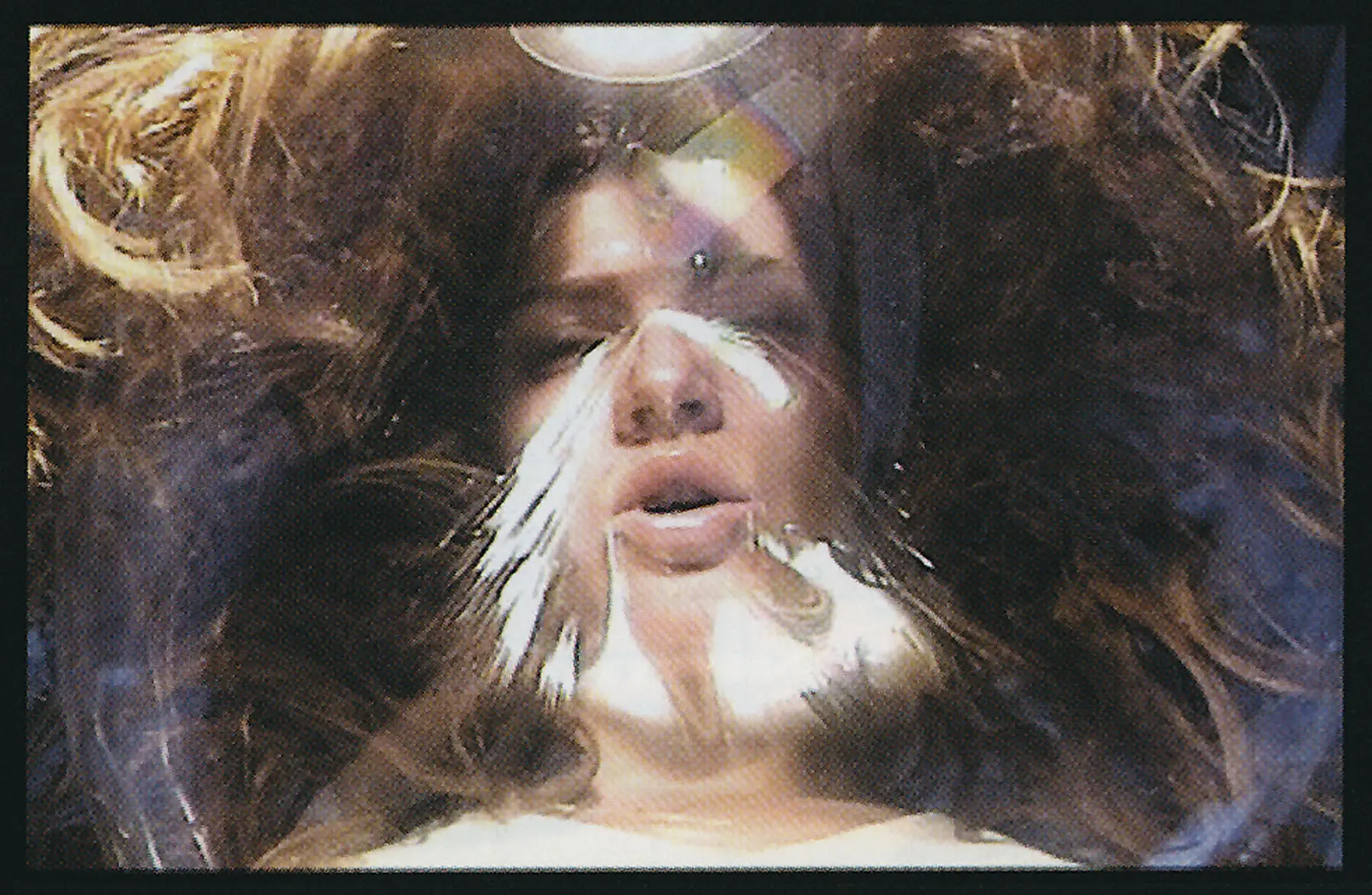
The Panorama of Brazilian Art exhibit is presented with innovations in format, revealing new trends in contemporary art.
Panorama of Brazilian Art is a tradition inside the country's cultural circuit. Its purpose is to establish itself in the main trends of today's Brazilian art. The event is linked to the history of the São Paulo Museum of Modern Art. It has existed since 1969; it was first thought out as an annual event that would not only disseminate modern art in the country's cultural scene, but it would also update the Museum's collection by awarding prizes.
In the beginning, the exhibits alternated yearly between painting, sculpture, and paper-based art. The artists' participation was defined by the Museum's Artistic Council in collaboration with art critics from different regions in the country. In 1995, the emphasis shifted to the aspects of the language of contemporary art. Since then, each event has a single, specialized curator who, after choosing a central axis, selects a certain number of participating artists. It becomes evident that from that moment on, in the contemporary language's complex scenario, the exhibit would reveal to the public a vision of this artistic reality, generating personal critical readings among many other options; in other words, there would be an accredited version of the production of contemporary art.
Panorama 2001 constitutes the event's 27th edition. The first show of the new century brought with it some novelties in terms of organization and format that should be highlighted. It opened on October 25, 2001, and it remained open until January 20, 2002. It was the result of the coordinated work by three curators who'd been invited by Ivo Mesquita, the Museo's technical director. The curators are Paulo Reis, from Paraná; Ricardo Basbaums, from Rio de Janeiro; and Ricardo Resende, from São Paulo.
The curatorship highlighted four trends present in today's artistic production: 1. the one working on the constitution of the artistic language as sensory perception; 2. the one that evidences subjective narratives, especially those dealing with the individual's body; 3. the one gazing at the dynamics between subjective space and social space; and 4. the one criticizing the art system and its circuits. Besides all this, the curators rethought the reality of the country's art circuit and changed the exhibit size and profile. The show is no longer confined to the Museo's physical space; now it has the support of a book that besides being the show's documentation, has been conceived as a space for artistic experimentation. This space was used by several of the artists who participated in the show, as it was also the space through which the visitor was invited to enter art's territory. In this fashion, the public, aside from walking through the exhibition, found another modality for artistic experimentation.
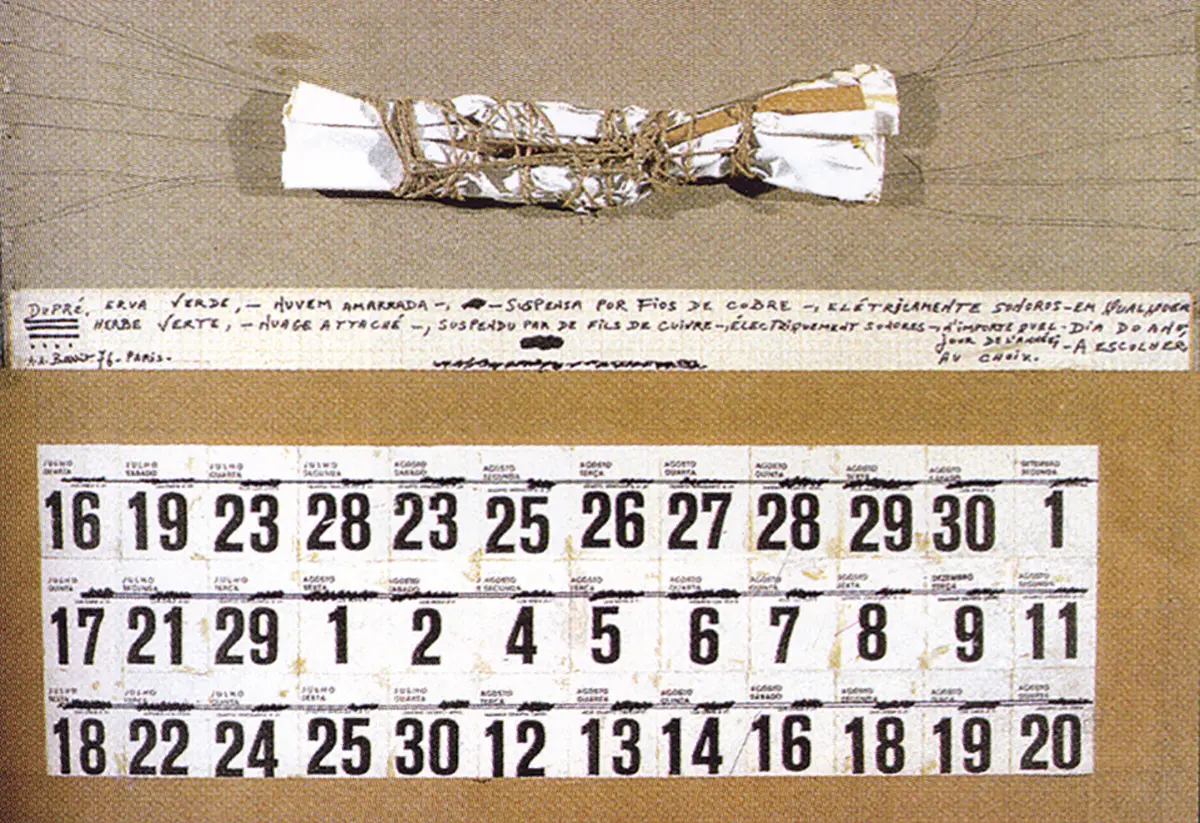
It's a publication where the proposals done only for the "book" are found. According to the curators, the book's point of departure was the work of some artists whose poetics demand the idea of "register in action," like, for example, the works by Artur Barrio (notebooks-books) and Paulo Brusky (artist books). The book was also presented as a space of challenge for artist organizations such as Alpendre (from Fortaleza, Caerá), Agora/Capacete (Rio de Janeiro), and Torreão (Porto Alegre), and groups such as Camelo, Mico, Atrocidades Maravilhosas, Clube da Lata APIC "all invited to take part in Panorama 2001. This participation indicates a new tendency in Brazil's current artistic scene: the presence of groups.
The curators also explain that the design given to the show was clearly intended to show and discuss these contemporary practices, pinpointing possible paths between the production and the distribution of art. They exemplify their concept with the Linha imaginaria (Imaginary Line) project, a cooperative dedicated to the organization of collective shows for young artists throughout Brazil. They also organize a data bank of modern art, telling us that the APIC (Artistas Patrocinando Institucões Culturais [Artists Promoting Cultural Institutions]) project was created as an ironic gesture "to problematize the practical and economic relationships between individual artists and art institutions. There is, in both group actions and independent organizations, an effort to turn upside down those spaces of artistic action that have been privileged by the art circuit.
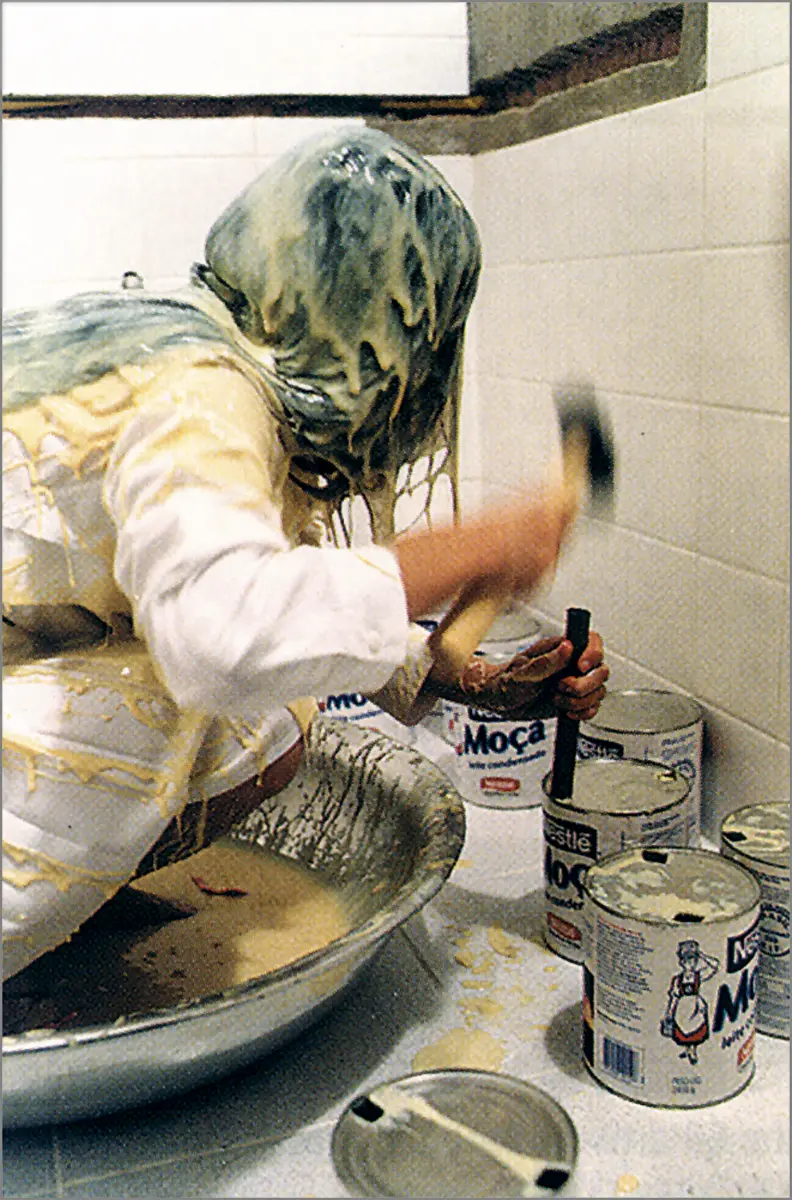
Another aspect that can be highlighted in the 27th edition (a fact that also appears in collective shows and biennials) is the significant presence of performances that have been scheduled throughout the show. In this Panorama, we have Marcia X's, Jarbas Lopes', and Laura Lima's performances. There was also a parallel show presenting videos from several of the artists who participated in the exhibit. Among its participants, the 27th edition has nothing less than 29 artists, 7 groups, and 3 independent organizations whose field of action is in different Brazilian cities.
The tendencies established above can be identified by the work of Ivan Do Espiritu Santo, Carina Weidle, Tatiana Grinberg, Gilberto Mariotti, and Paulo Brusky, who among others, deal with the sensory perception and the problematization of the limits of representation; Marcia X, Cao Guimarães, Laura Lima, Fernanda Magalhães, Janaina Tschäpe, Rosana Paulino, and Mario Ramiro, who among others, discourse on the body's subjectivity. The critical dimension of the subject-society relationship appears in the works by Marepe, Eduardo Coimbra, Jarbas Lopes, Marcos Chaves, Mónica Nador, and in the projects by Clube da Lata and Atrocidades Maravilhosas. Criticism of the art circuit figures in the works by Kim and Carla Zaccagnini, and in the collective projects by Camelo, Chelpa Ferro, Agora/Capacete Alpendre, and Torreão.
The curatorship's modality elaborated for Panorama 2000 innovated and exceeded the conventional limits thought out for contemporary art exhibits. This Panorama, more than hurling questions about novelties in Brazil, revealed itself to the public as a space thick with experience, inviting visitors to participate in a critical dialogue with the art circuit of their time. An enterprise that has been undertaken with courage by a museum.
LISBETH REBOLLO GONÇALVES