
Carlos Garaicoa's work could "illustrate" a conference on Cuban society from the '90s to date, both for what it reflects and for what it reveals of the artist's personality as an individual being and part of a social group. Elements and resources of anthropology, sociology, social psychology, and even political sciences could be the scientific tools used. But the photographic images and the objects created by Garaicoa, and especially each of his public interventions, would be the ideal support to shed light on the controversial issue.
To go through the artist's copious file in chronological order would be like taking the vital signs of the urban environment as if it were a matter of a living organism. Garaicoa's own personal history exemplifies this idea: a graduate of the Instituto Superior de Arte, he is one of the most sophisticated creators in the country. At the same time, he is a person of humble origin who grew up in one of the most "burdened" neighborhoods of the capital, Old Havana: Cultural Patrimony of Humanity, according to UNESCO. But it is an overpopulated area where we find majestic restored colonial buildings that still stand alongside others that are preserved as blocks of flats in horrendous condition.
Once he became accepted as a member of the "international" artistic "clan" (in accord with the canons established in New York), whether he wanted to be or not, intentionally or unwittingly (money talks, especially in art), the artist was displaced toward a new life, which stemmed from the fact that he began to sell, which in turn allowed him to move within Cuba among those who have dollars. This new state of things made it possible for him to change to better habitat, to travel, and to consume: he did not need to emigrate, a situation different from that of the artist of the '80s, unthinkable in the '70s, and even less so in the romantic '60s. But this position is also the Sword of Damocles that hangs threateningly over the talented artist (and over all those who have drifted toward a social stratum similar to his thanks to the demand for his works in the market).
The transformations in Cuban society have been reflected in art where, in stages, there has been some of everything. Looking at the optimistic side of life, we could say that even the precariousness of existence could have been a stimulus for the imagination, for artists continuously sprout in a way that is surprising on account of the small territory and the limited population. Garaicoa is one of the best examples. The center of his work, basically the city, incites multiple question marks; one stands out among the rest: How was he able to metaphorize Havana, feeling its non-touristy entrails; that is, its ruins, its dirtiness and, in an oblique way, the social indiscipline of its inhabitants who create a garbage dump anywhere, and who do so in a strangely poetic, very personal fashion, even achieving measured doses of humor?
The answer that could be put forward is that he comments on a loss that seems to cause him pain: Havana is partially falling to pieces, and there are not even any resources to repair it in sections. Garaicoa "sings" to it, he reinvents it, he tries to perpetuate it, to reconstruct it in each drawing, in each installation, in each photograph, video, or whatever means of expression he uses to express himself (he moves quite comfortably across all of them).
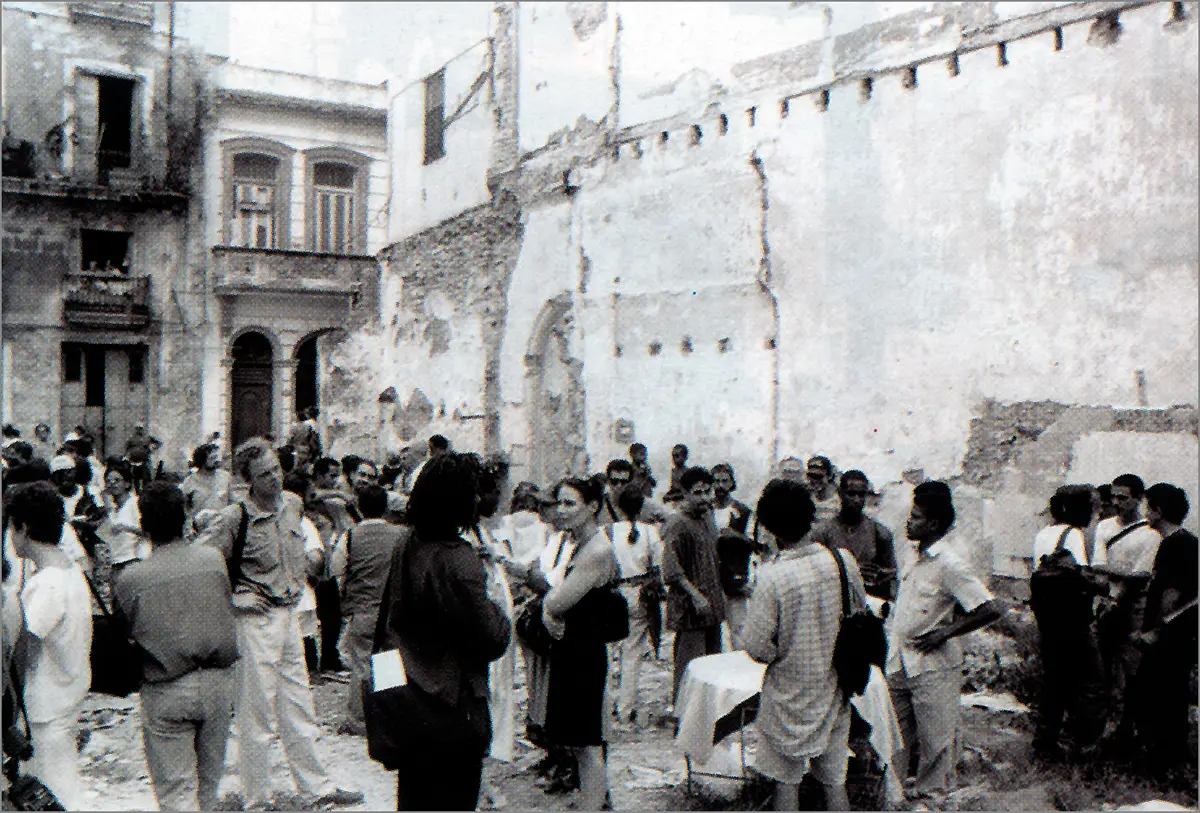
There are two attractive aspects of Garaicoa's art. One is that his work has always grown moderately, without repeating itself, without losing quality, and with adequate coherence. The other is that it offers the possibility of making others change their perception of the city environment and of weighty experiential situations in society. There the very ruins are maintained that have even been used in film scenes. But after Garaicoa's treatment, they are seen almost as "heroines" of fabulous stories. The architecture metamorphoses from object into subject thanks to the Duchampian protagonism given to it by the artist. The pieces of the building, the garbage dumps, the graffiti' all of it has been exhibited in galleries and museums. On the other hand, Garaicoa has taken the crème de la crème of the public of one of the most recent Havana biennials to a "party" in the middle of the ruins.
He himself has written: "I have tried to see the city as a large text, of which I am a fragment, the road to its interpretation and deconstruction. The objects and spaces are crying out for something that I need to tell, and that confirms for me at once a certain mystical and ludic sense of every image." We could add that his images reach a social background and, in addition, they serve as psychotherapy even for some of us who live in Havana.
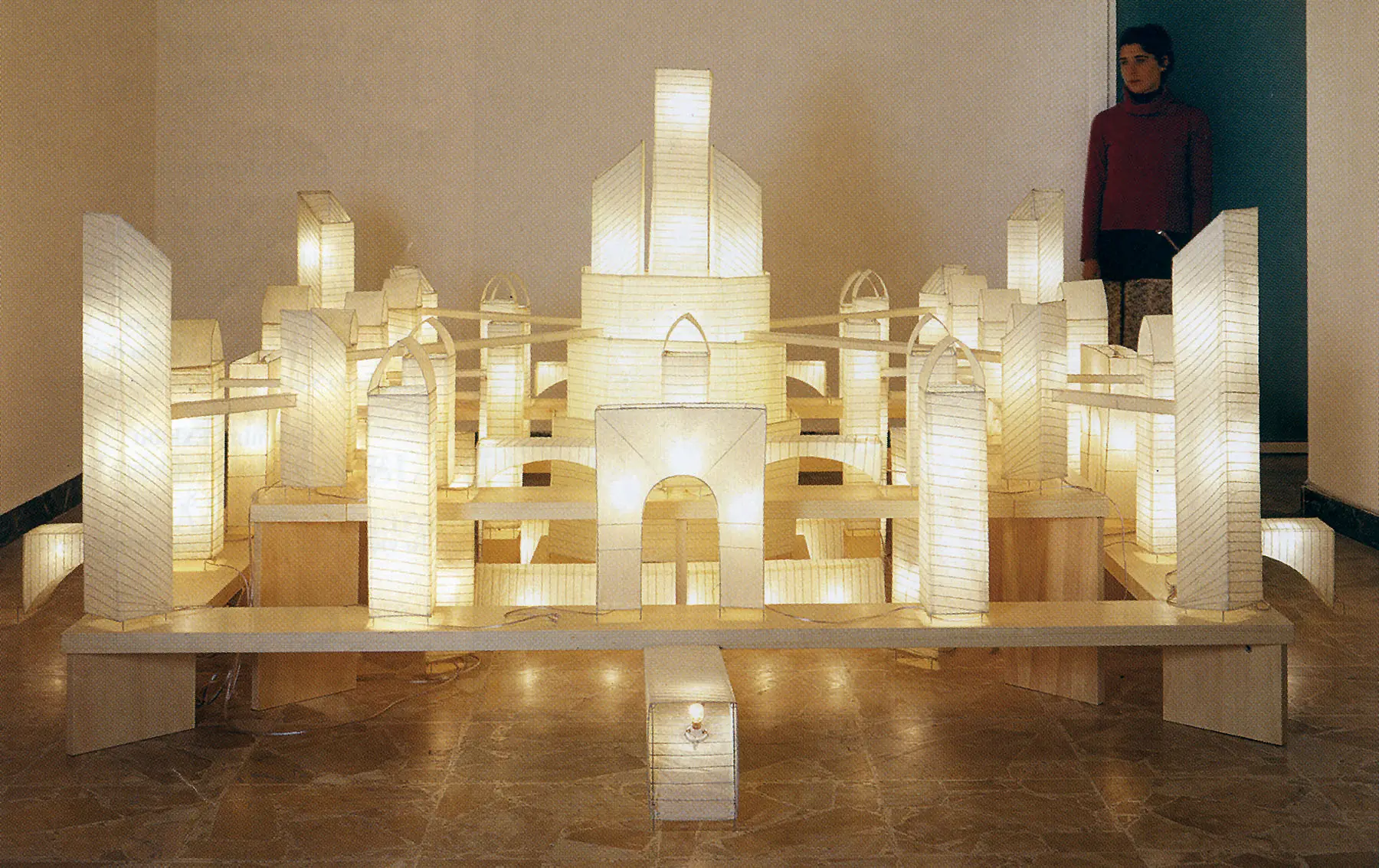
Garacoia's greatest presence in international shows began approximately in 1998. This coincided with an increase in the formal aspect of his work. In pieces like Nuevas arquitecturas (New architectures), we perceive a rare insistence on understanding the night. It is an installation with a wooden table, lighted lamps made of wire, and rice paper —the geometrized copy of a city— accompanied by light boxes on the walls, with photographs of Bogotá, Havana, and Cuito Cuanavale. This tendency can already be glimpsed in pieces like Espacio A (Space A, 1997), a sort of technical drawing with added insects, resolved in graphite and with a photo engraving on thin cardboard. He showed that line in Costa Rica in 1999 under the heading of "landscapes" combined with a "garden" of ruins. More or less after that point, the artist became engrossed in some dissertations that construct the work on the level of linguistic juggling, which makes it more epidermic, although it still preserves its "seal of quality," understood only as the result of the work of a professional: aseptic pieces, very well done, but more with the head than with the heart.
A similar fate awaited other pieces, like Toda ciudad tiene derecho a llamarse utopía (Every city has the right to call itself utopia), created for the 2001 Yokohama Biennial, an installation where, upon a table (and also on the wall), he drew with threads aerial views of imaginary cities. And in two cavities on either end of the table, aerial views of real cities appeared on monitor screens. He had also been moving in a similar direction since 1998 with La ciudad vista desde la mesa de casa (The city seen from the coffee table) and Jardín (Garden), the first for the São Paulo Biennial, where the table was full of dissimilar household objects made of glass, which also aspired to give a sense of the city due to their geometric shapes; the second, exhibited in the Centro Wifredo Lam, was the table covered with grass, with a bonsai on one end, and on the other a video monitor with a half-dried tree, part of a ruin.
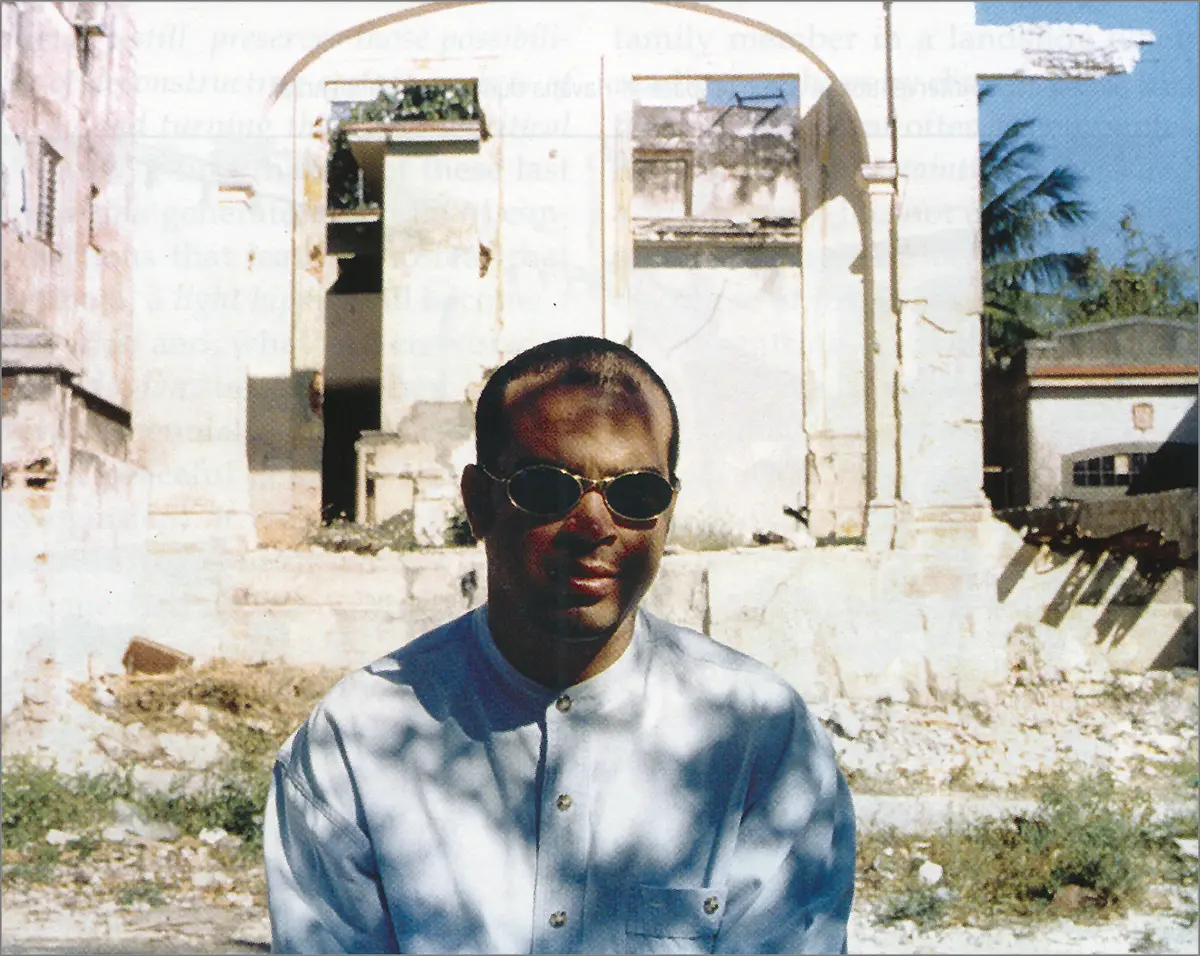
Very different is the Garacoia who debuted in 1991 with a socio-artistic experience executed in the building of Old Havana where he lived, and his solo show the next year Tu número de suerte (Your lucky number)¿where he displayed the photos of that intervention in addition to all those works that opened the door quite wide for him in the art world because they were acts of love toward the city: the desire to rescue what had been lost (an inheritance of generations who built it in order to enjoy it, who witnessed a past full of history and culture). In an unusual way, Garacoia photographed the dying moments of a hotel where José Martí stayed, and others of some specific value, and he drew utopian solutions, uprooted fragments of the ruins of buildings that in their day were emblematic, he restored them, and arranged a moving installation that he exhibited in the gallery.
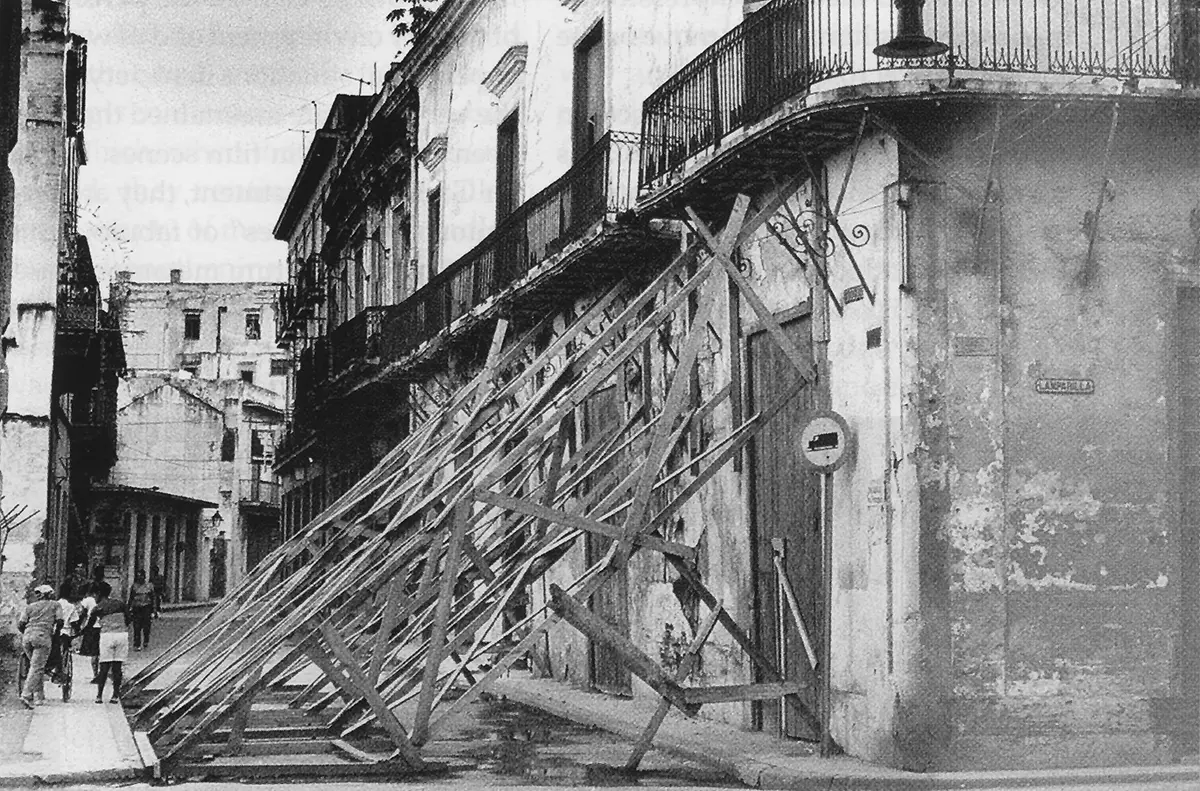
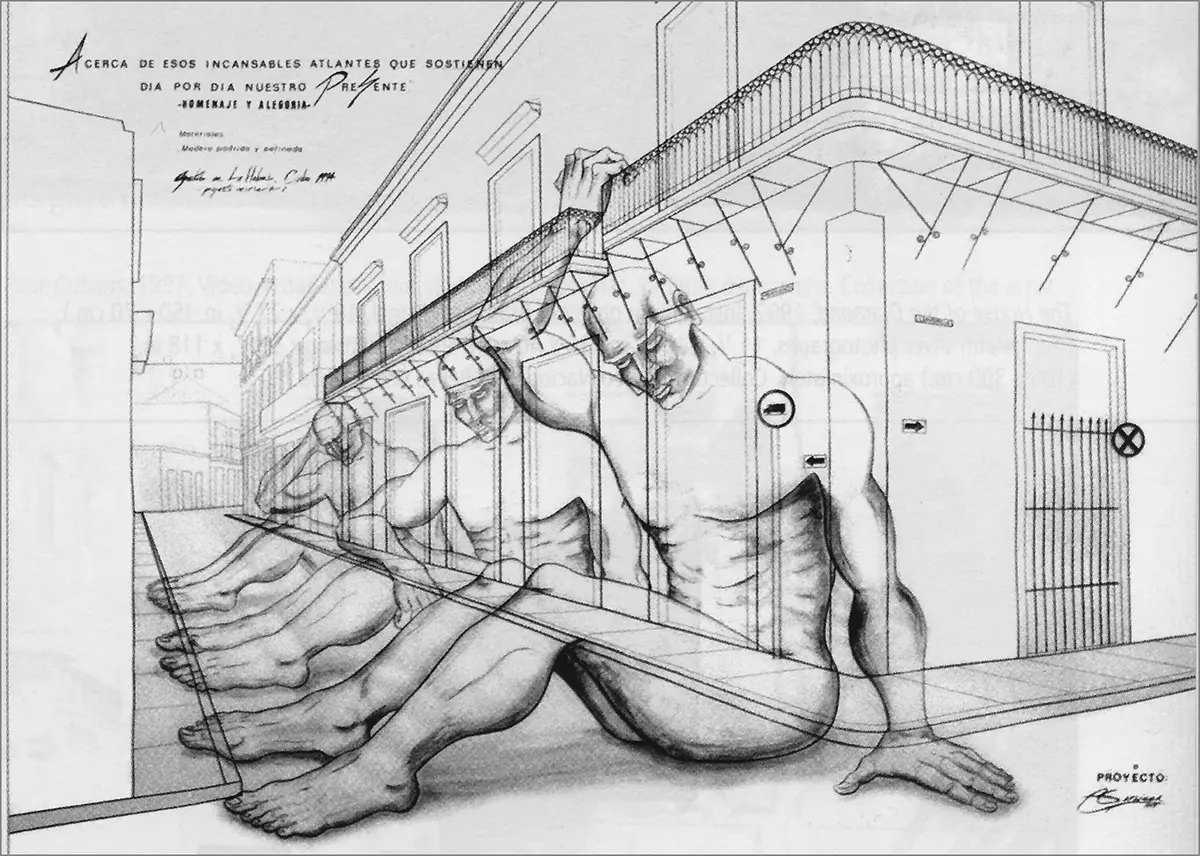
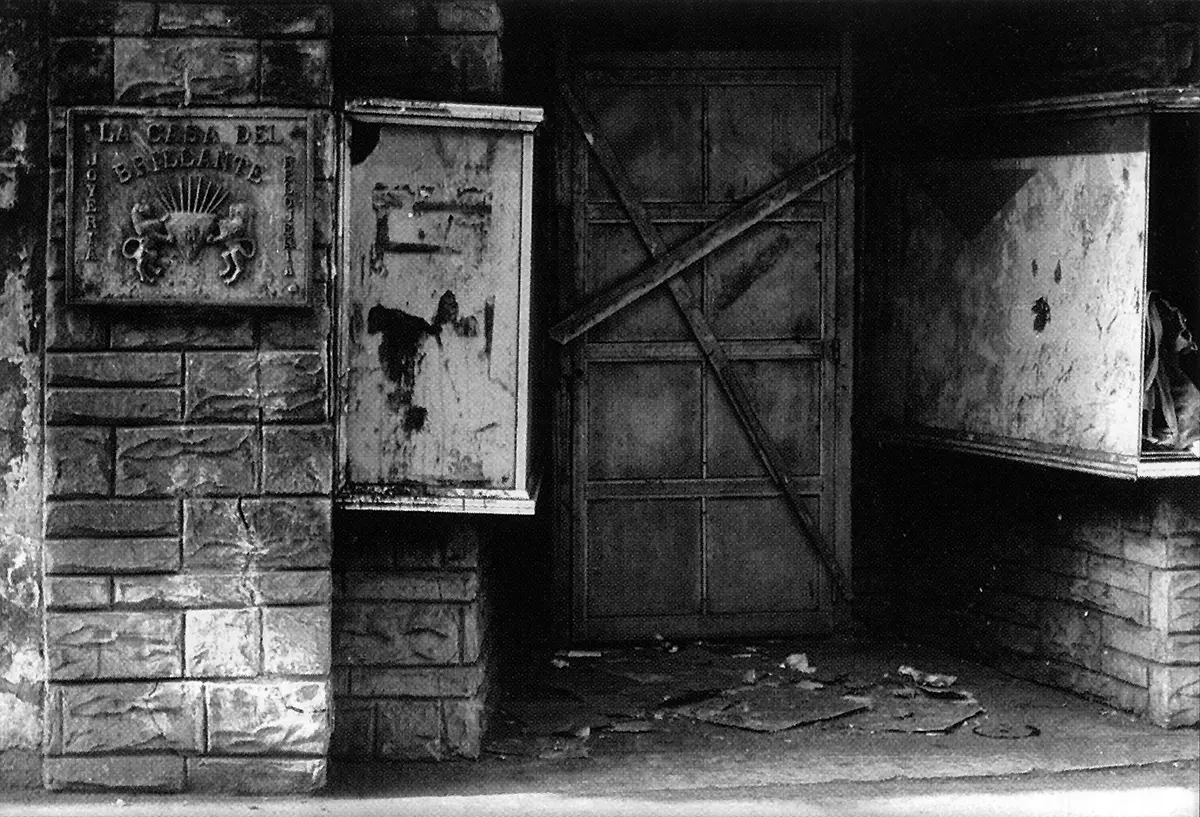
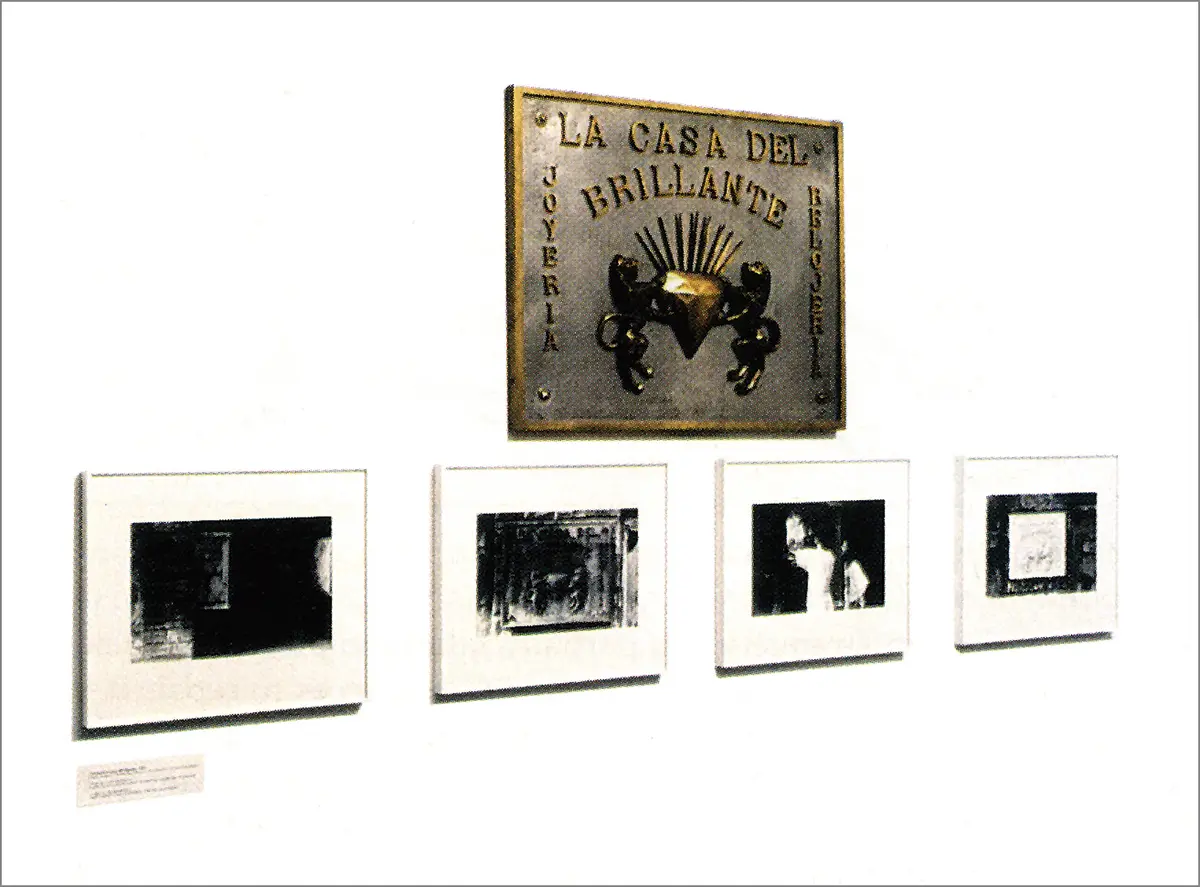
From that same mold emerged memorable pieces like Acerca de esos incansables Atlantes que sostienen día por día nuestro presente (About Those Restless Atlantes Who Sustain Our Present Day By Day), Acerca de la construcción de la verdadera torre de Babel (About the construction of the true Tower of Babel), Proyecto La Casa del Brillante (The House of the Diamond project), Interior habanero (Havana interior), El juego de las decapitaciones (The game of beheadings), etc. We must not overlook the previous stage in which he invaded the city and, wherever he found signs that had a specific function at some given moment for some reason (but which, when that moment disappeared, they continued to be called upon, empty of meaning), he handled them, strengthening their ludic possibilities and demonstrating the creative essence of language. In some cases it was a question of a number; in others, a banal object: he wrote all sorts of "madness," he placed it next to the element, and he spied on the public's reactions. At other times he constructed fake official plaques, parodying the language of the institutions that watch over the patrimony. He placed them near the building in ruins, revalidating before the eyes of the passerby the glorious past of the site. He photographed the entire event, and he exhibited the documentation. This is what he did with Placa del número 39, Placa del Gran Hotel, Placa a la Microbrigada 72, and many others.
Garacoia even took the garbage dumps to the gallery, the humorous graffiti, and he labeled them "gardens" and "landscapes;" but those initial pieces had another connotation. When his gaze turned toward the city, generically speaking, he had already "internationalized" his vision in the same way as happens with someone who travels a great deal and is bored with finding the same type of "international" food on any part of the planet. Here lies the essence of the matter: the city of Havana is so uncommon that it exerts a strange fascination on its visitors, even in its state of deterioration. Its own contradictions and energy, linked to its character of being a city museum that came to a halt in the '50s, make it a peculiar site.
In my opinion, there are three memorable moments in Garacoia's work situated outside of the Havana context: the piece Lincoln y San Juan Bosco, an installation carried out in his show Cuando el deseo se parece a nada (When desire seems like nothing), in Art in General, New York, 1996; En las hierbas del verano (In the summer grass), Instrumento para disolver la memoria (Instrument to dissolve memory), and Cuatro cubanos (Four Cubans), all presented in 1997 as part of the collective project Memorias Íntimas Marcas (Memory, intimacy, marks), from 1998, created with an Angolan artist and a South African artist on the topic of the Angolan War; and Survia, also on this same topic, realized for Fotolatina, a group show carried out in Guadalajara in 2001.
The power of these pieces has several sides, from the formal and conceptual point of view. In them, we find the Garacoia able to express a great deal with extremely elegant metaphors and allegories; but the aspect that rounds them out is that they responded to motives that touched upon the sensitivity of the artist as a human being. In the piece from Art in General, the commentary has to do with the dream of all immigrants and the impossibility of realizing it when they clash with reality. He assembled a "map" with one hundred fifty dollars in Lincoln Head pennies and a small figure of St. John Bosco in the center. To the side, a photo with the religious effigy, a glass, and the coins that he bought from a beggar for twenty of the one hundred dollars that he had earned by selling one of his drawings.
Also, the video installation Cuatro cubanos the result of a dramatic impact. Four ex-combatants from the Angolan War remain silent, each one on a different monitor; their images, with shadows over them that emanate from the city itself; in the background, the ruins of Havana, recurrent in Garacoia's work. It is a comment on the very silence that surrounds the act of war. The Cuban presence lasted for fifteen years in that war, some two thousand soldiers died, and no one mentioned the topic. Neither seriously nor in jest. It is as if there were a tacit accord never to talk about sacrifice again.
When Garacoia was just about to finish his studies at the Instituto Superior de Arte, he curated in conjunction with Esterio Segura the show Las metáforas del templo (Metaphors of the Temple) at the Centro de Desarrollo de las Artes Visuales in 1993. In a short introductory text, signed by both, we read: "Every critical or theoretical position on an object is not autonomous in itself, it is limited by the object that dictates its own law. This is how the curator's 'Law of Desire' will always be repressed by the eroticizing arrogance of the object of desire. The discourse of the lover, according to Barthes, is only possible thanks to the influence that the loved object exerts upon him or her."
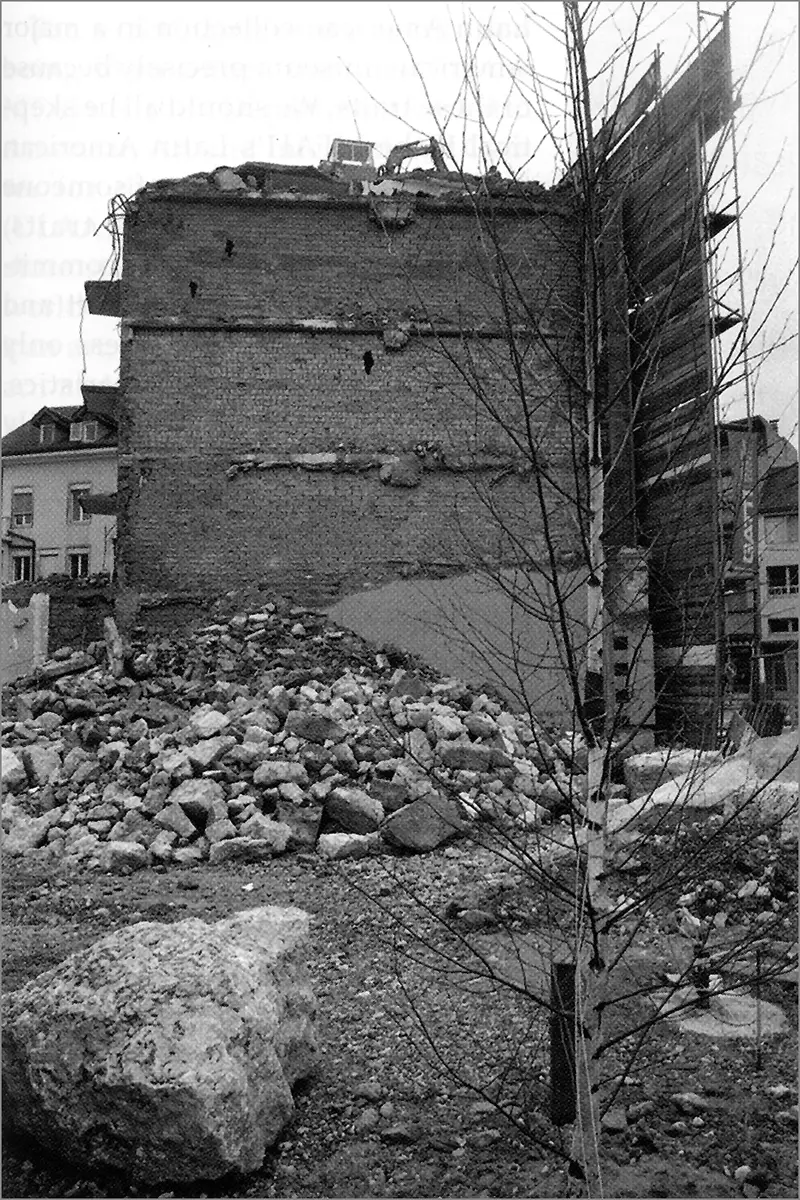
There are frequent landslides in Havana, some with fatal results. These events seem to me to formulate an ethical question for Garacoia's work at this stage, focused as it is on the city as a universal phenomenon. In an interview with Virginia Pérez-Ratton, cited in the catalog of his anthologized show in Bogotá, he said: "I think that desire is born from the need for transgression. Transgression, in turn, develops and is transfigured in UTOPIA, in DREAMS, and this is a sign of POSSIBILITY." This is how he responded to a question about Havana as a tragic character in his work.
In the same catalog, we find the following comment that Garacoia made to Eugenio Valdés: "Even as students [...] we joked about that legacy of the generation that preceded us and we said nostalgically, as well as sarcastically, that our generation was a promotion that was born plagued by inversions and contradictions¿we were the '60s turned upside down, and we were therefore condemned to suffer everything from an inverted perspective, we would be the 'light' hippies of the '90s."
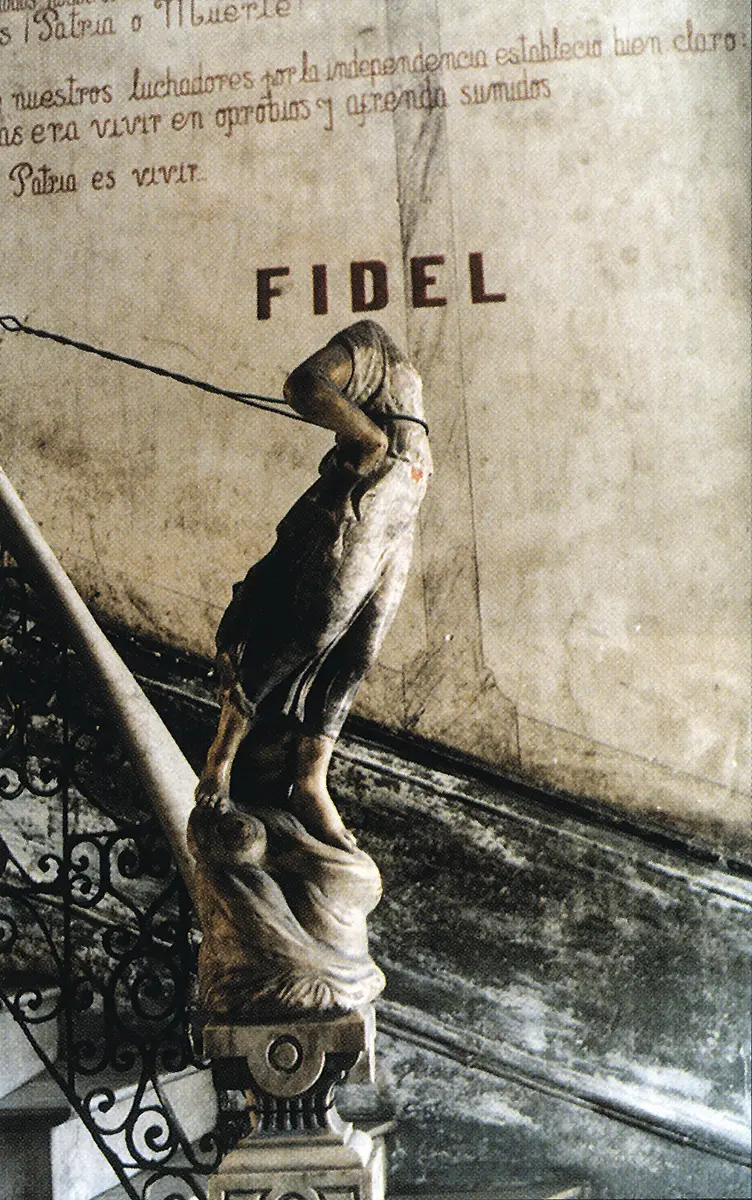
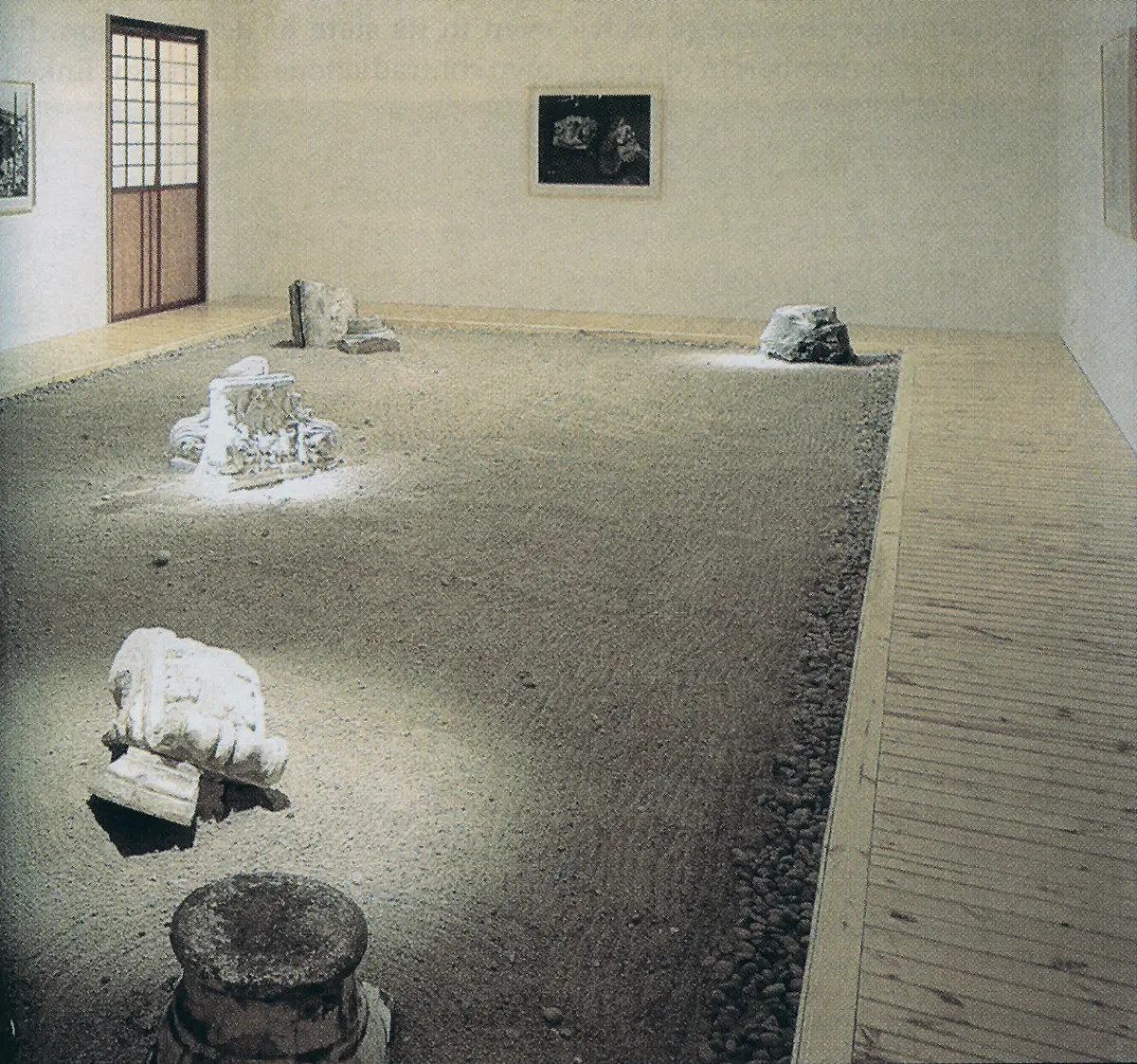
If we return to the interview with Pérez-Ratton, where Garaicoa says "language still preserves those possibilities of deconstructing certain aspects of reality and turning them into a critical document," I find that all of these last comments generate a bundle of contradictions that lead me to fear that Garacoia, a light hippy, will become a light artist and, what is even worse, a light utopian because when the 6th Havana Biennial exhibited an aesthetic and peaceful Jardín japonés (Japanese garden), it was congruent with the critical edge of his work, which simultaneously led the public to a Jardín cubano (Cuban garden) that were only the mere ruins of a building. By continuing in the new direction, the loved object runs the risk of becoming diluted in the verbal juggling to which I referred above. For his work to continue to be coherent and to have meaning for someone who has lost a family member in a landslide when reading, perhaps by chance, a text like the following that often accompanies his works "the certainty of living in a world of tears" it is not useful to instill in such a person the lack of faith in the discourse of lovers. It is better for us to concentrate on other discourses, such as "Before being a fragment I was a city [...] But, first and foremost, the wisdom of another's desire." And desires always look toward the future, even from the ruins.
NOTE
1. Interview with the author.
ERENA HERNÁNDEZ
Journalist and art critic. She is the corres pondent for ArtNexus in Havana. She works as a specialist in the Centro de Desarrollo de las Artes Visuales in the Cuban capital.