
With dramatic adornments, the entrance to Enrique Martínez Celaya's exhibit was obstructed by a huge, dark-grey sculpted head that announced, metaphorically, the topics of transition, loss, and change that have been fundamental in this artist's works for more than a decade. With the presentation of some 60 sculptures, paintings, drawings, and photographs in four galleries, the exhibit detailed chronologically Martínez Celaya's development since the beginning of the 1990s.
Although figurative painting has been a central point in his work during the past several years, the entrance hall presented a series of monochromatic paintings done during his first period. At first glance, these paintings appear to be abstract; with their sober tonalities ranging from blackboard black to charcoal grey, dark red, and transparent white, these images use physical emptiness to build metaphors of silence. When observed closely, one notices that each painting has one or two-minute figures that are almost impossible to see from a distance. As with Tàpies' paintings, they evoke graffiti-scribbled walls, these solid paintings are decorated with a few motifs that allude simultaneously to the memories and silence uniting and separating the dead from the living.
While the first hall exhibited works from the first half of the 1990s where color, space, and texture were used to construct narratives of struggle and separation, in the second hall we found the ones done between 1997 and 1998. They deal with the artist's preoccupation with representing the figurative presence and authenticity in paintings, photographs, and sculptures. The most fascinating ones were the heads sculpted in resin that would emerge under a series of damaged photographs. While the photographs emphasized the damage that time has done to crumbling statues and ruined buildings, the translucent heads reflected the human soul's cultural and spiritual capacity before returning to dust. Placed all except one atop white satin pillows, the five sculptures had incrusted in them found objects ranging from a plastic hummingbird to real dust, configuring the tragedy of the human condition.
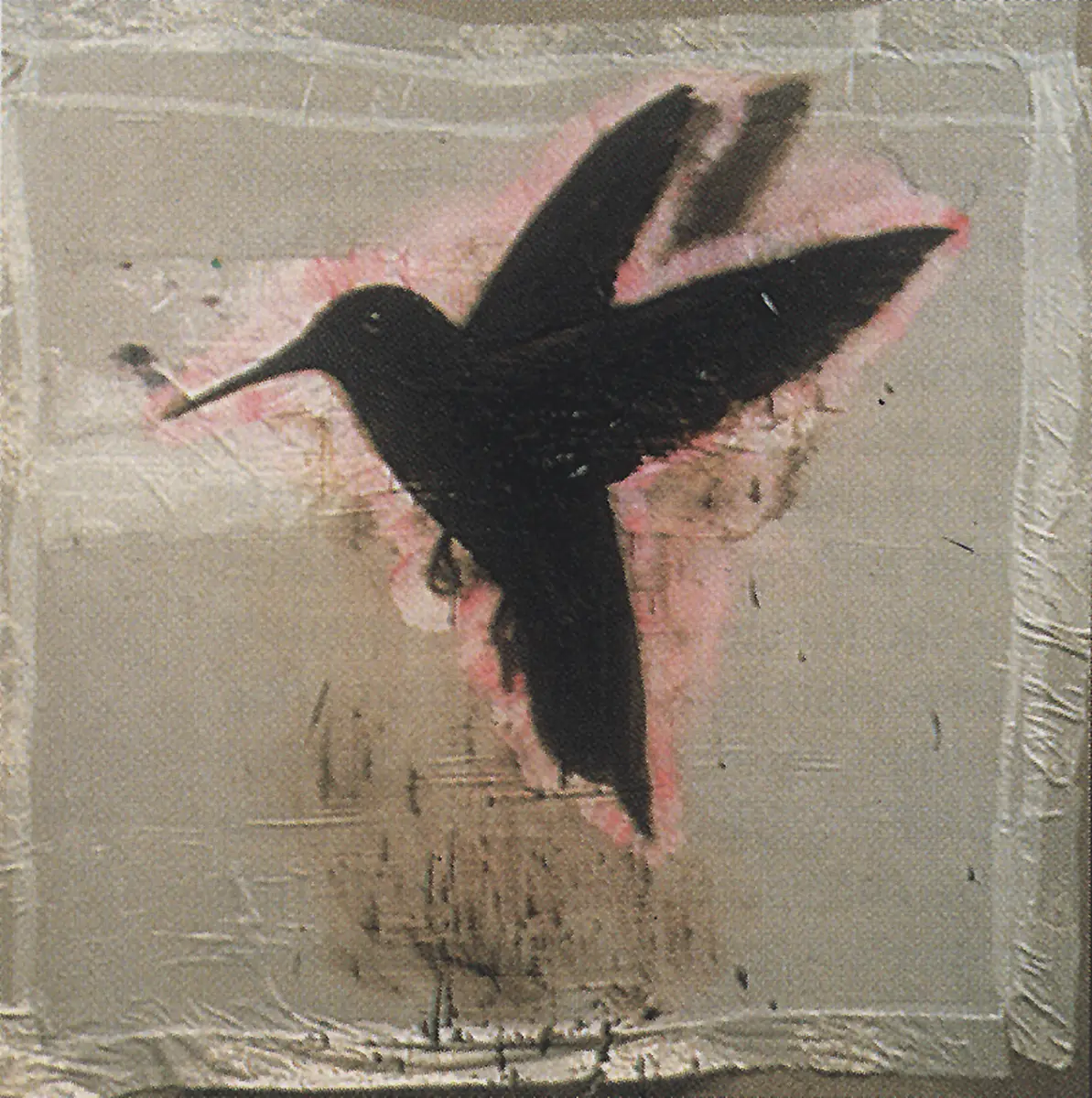
The following hall featured drawings, paintings, and sculptures alluding to time, memory, and immortality. In Unbroken Poetry (Herman Melville), a huge hummingbird with a hot pink trim remained inside an undetermined space. The fact that the bird was neither flying nor falling, but, rather, hanging in mid-air, suggested life's equivocal nature, here emphasized by tar-and-lace contradictions, energy, paralysis, tenderness, and violence.
The hummingbird appeared again in the last hall. This time he was painted on an almost life-size photograph of a male silhouette standing before a luminous sea. If it's dusk or dawn, it remains ambiguous. A small white hummingbird appears behind the back of the silhouette's head, its wings up high in the air and the body stretched out as if it were flying. Like the other works assembled there, this image sounds out the enigma of human existence, affirming not only life's importance and brevity but also its strangeness and dreams of transcendence.
COLLETTE CHATTOPADHYAY