
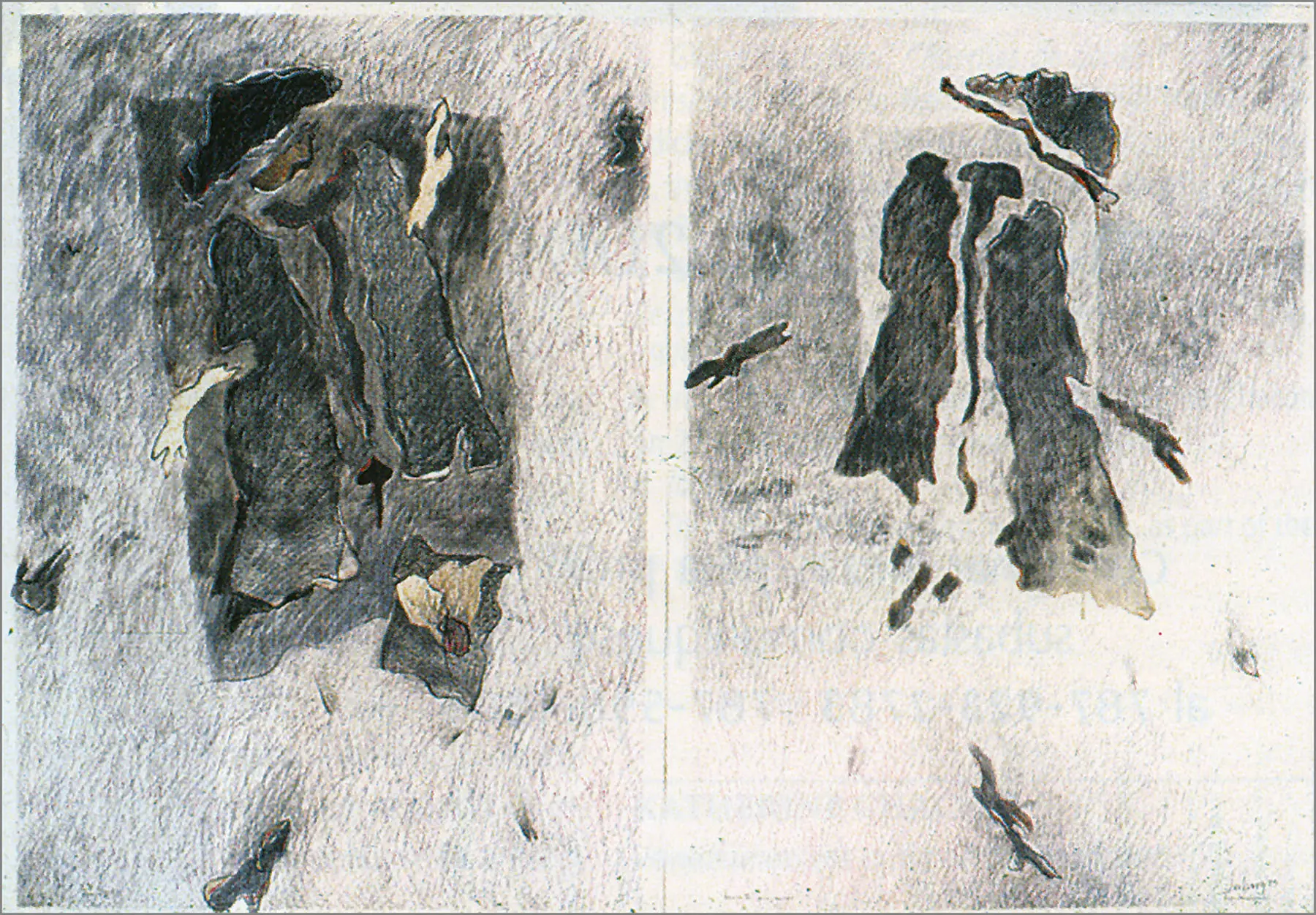
Since Aire fresco (Fresh air), his first solo show in 1989, when he was barely twenty years old, Dominican artist Julio Valdez has been shaping a language inscribed onto contemporaneity and, at the same time, in accord with the expression of the Caribbean being, which is one of the essential topics of his work, or rather the one that encompasses the others. This is made up both by engraving and painting, and in both techniques his work seems to express the struggle between memory and oblivion, between the perennial and the fleeting, and his art thus concentrates on the will to leave a trace, to record, to fix, to stamp.
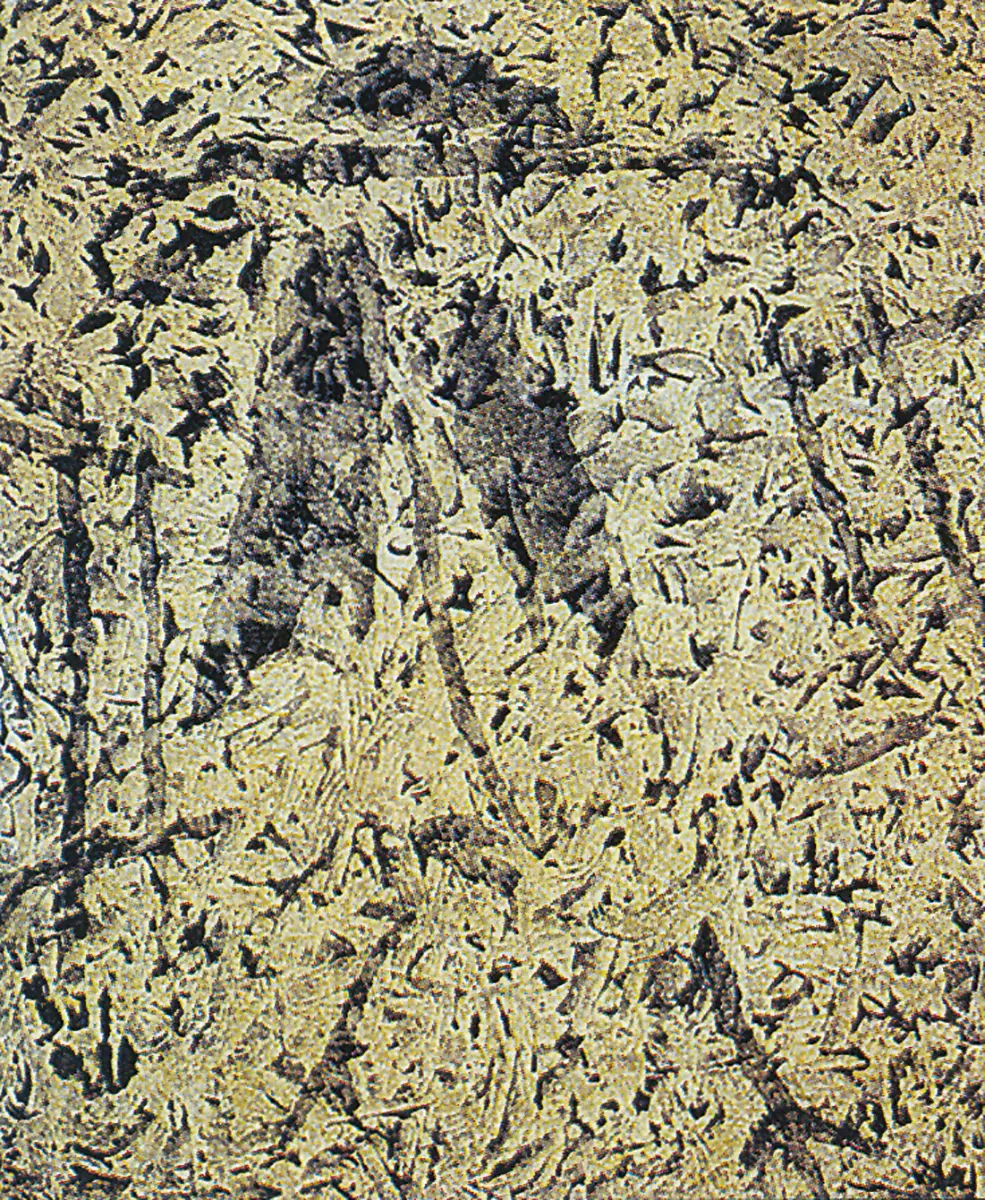
In the early '90s, he developed an aesthetic still related to the all-over of abstract expressionism, with a marked tendency toward dull, almost monochromatic, harmonies with effects of spots (De corazón a corazón [From heart to heart] I and II, 1991) in shades of grays and browns, although for the artist the most direct reference is the reminiscence of the walls of pre-Columbian buildings. The forms, whose tonal values are hardly distinguished from the background, seemed to brush the surface of the support, like papers fallen at random. The resulting visual instability evokes the transitory, the ephemeral, and the light (De corazón a corazón III, 1992).
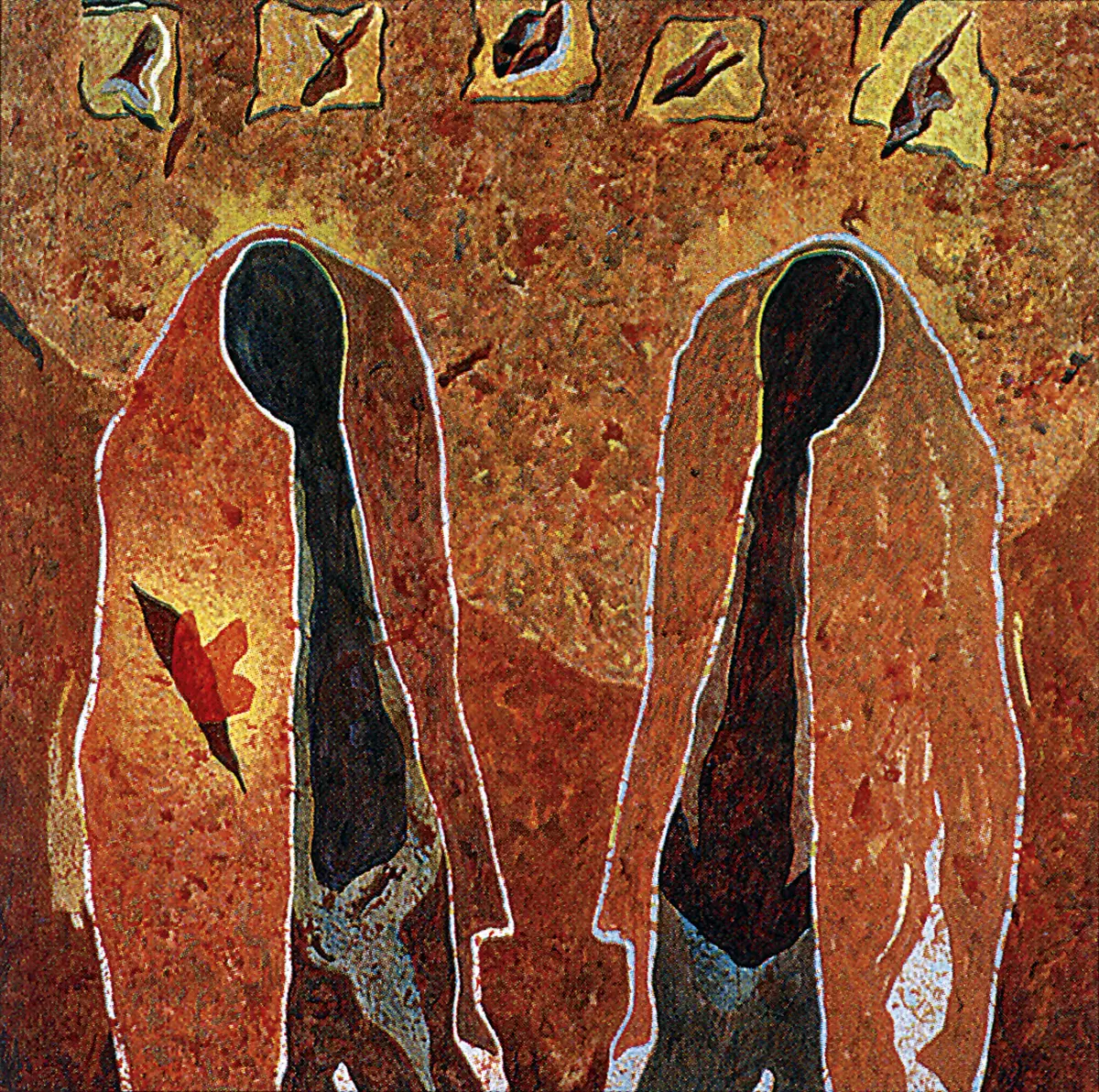
Some works are totally abstract (Símbolos rotos III [Broken symbols III], 1992-1994; De corazón a corazón III, 1992); others contain anthropomorphic evocations that stem from the indigenous Taína culture, which the artist reinterprets in two registers: one geometrizing, in the style of petroglyphs (Habitantes de la noche III [Night dwellers III], 1990); the other baroque, a hybrid between the human and the animal (Músico [Musician], 1990; Mayoyo II, 1991). (Mayoyo is a mythical being in popular Dominican culture, a character without a navel who goes out at night to frighten the people, but who does no harm.) All of these pieces are characterized through the treatment of forms on the surface of the canvas, without depth effects, and through human representation on a second level, coming from a cultural reading and not from a naturalist observation. In Figura fragmentada (Fragmented figure, 1993-1994), the outlined human silhouette is born out of a contrast between the grays and ochers, thanks to subtle glazes. The references to the indigenous are never literal (i.e., anthropological or archeological); instead, they are signs of signs that the technique itself, layer upon layer, makes uncertain, brought from remote times and rescued by fragile memory. Generally speaking, in the pieces from that period (the early nineties), the signs are hardly dissociated from abstraction since the uniformity of treatment of the surfaces does not allow for a clear separation of form and content, which are resolved on one single plane, in one single mark of lines, at times quite cramped, as in Pareja II (Couple II, 1992-1993).
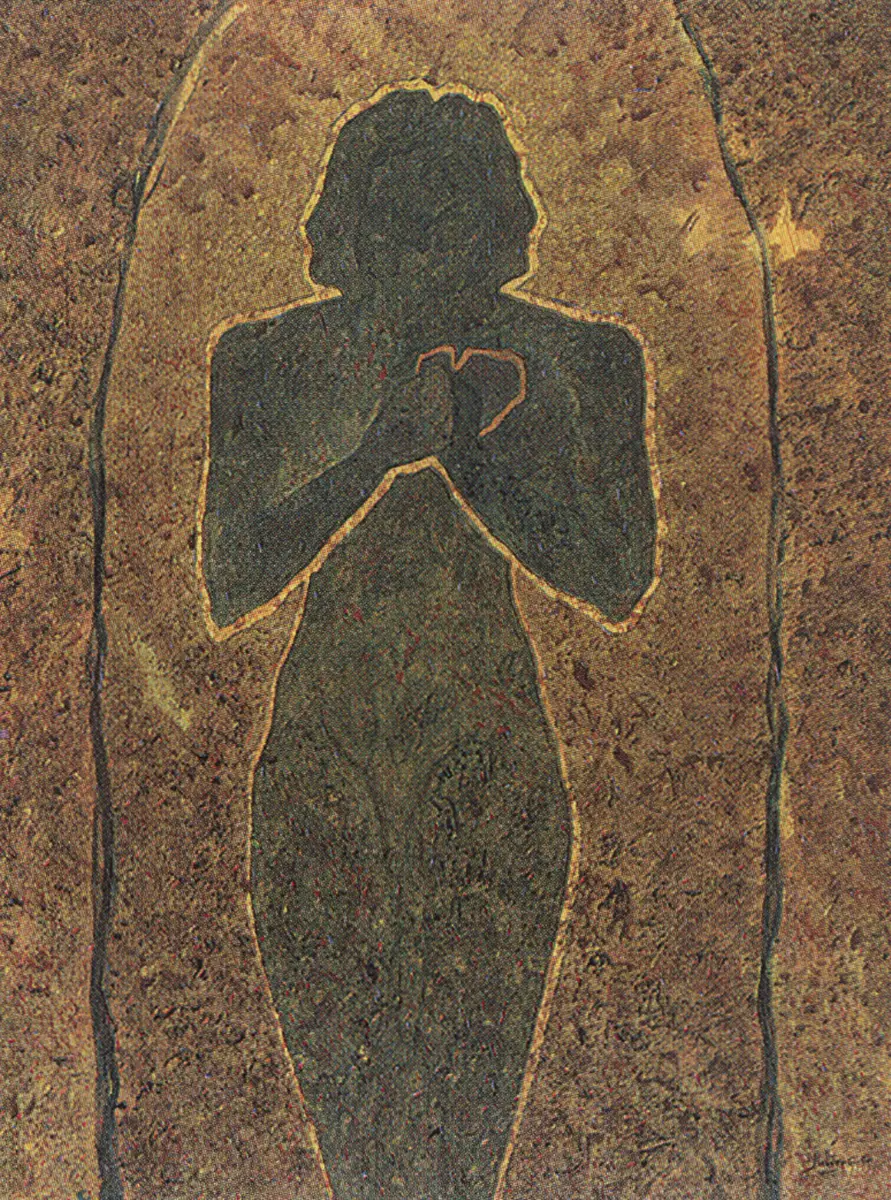
From those same years, however, the later evolution of Valdez's art toward fragmentation can be made out: Símbolos rotos presents the forms as weightless pieces of a puzzle. Later, beginning in 1996, it is the totality of the surface that is treated as an irregular checkerboard or patchwork, squares that can become a labyrinth, about which the artist states: "The labyrinth is a metaphor of what the Caribbean area is for me [...] it is what the Dominican Republic represents for me because you never know what you're going to find there."1 Within his divisions, the checkerboard and the labyrinth indistinctly receive abstract or figurative signs, or perhaps abstract and figurative signs at the same time, marked by hybridity. In this way, he accentuates the concept of inventory, of the constitution of a visual archive closely tied to the task of memory, to the need to retain (record), which is contradicted by the flowing and ephemeral, and he keeps the work on a thread that is taut, very thin, and tremulous, in a precarious balance, always open to new signs and new meanings. At the same time, the internal coherence in Valdez's art begins to take shape in the creation of a vocabulary that collects what is scattered among various works and confers on it the identity of a style of its own, of a way of saying things that is confused with it. Inescapably, it is a profoundly Caribbean vocabulary, not only on account of its repertoire of images but also because of its hybridity (already present in the indetermination between the abstract and the figurative), the multiplicity of its sources and interpretations, which correspond to a culture defined by mestizaje, the superimposition, and integration of elements of diverse origin. This aspect seems fundamental to us since it announces through its weight and its power of synthesis the later concept of man-island that establishes Valdez not only as a spokesperson for the Caribbean but also in a more intense fashion, as a "Caribbean-being," who only communicates what is present in his deepest self, the most existential, and who only through this condition becomes a symbol of belonging to his culture, to the shared myths, values, memories, and territory.
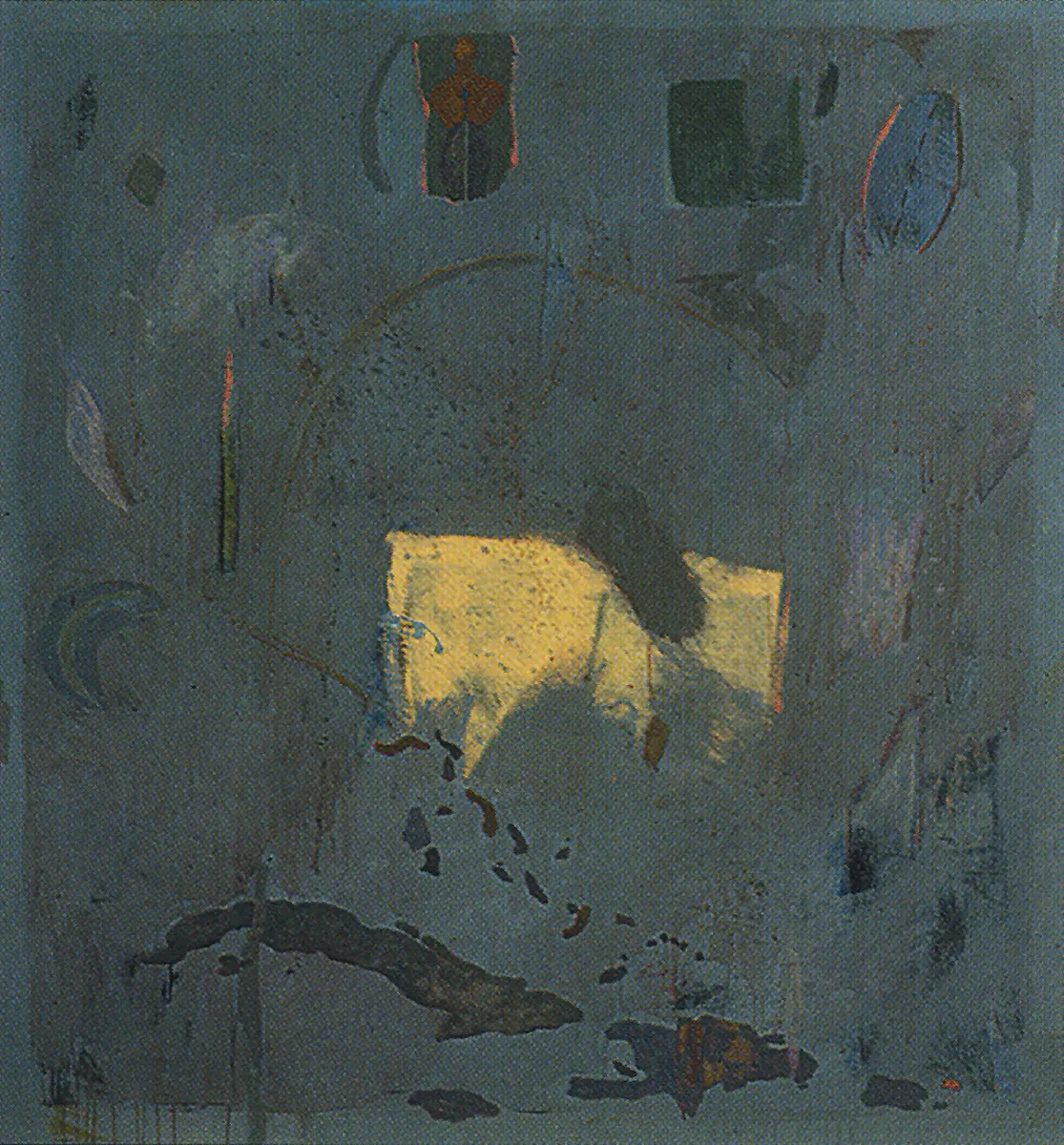
At the same time, in 1994, figuration is declared in paintings like Una mujer está sola (A woman is alone) and Los condenados de la tierra (Earth's damned). The artist himself comments on this change: "I was beginning to react a little more to social questions. For example, Los condenados de la tierra referred to what was happening in Haiti and Rwanda." However, these references are not found on an illustrative level. In both works, the human figure is surrounded by a sort of arch (in the latter, it is made up of an external line of a shelter niche that covers the person entirely), an archetypical form that is found again in Fábula de los inocentes (Fable of the innocents, 1995) and Símbolos rotos IV (1994-1995), as well as in various later pieces. That arch never ceases to be a mysterious figure, perhaps with religious echoes: the niche of a saint, a sacred space, a threshold of access to a spiritual dimension... Be that as it may, a mythical atmosphere emanates from Valdez's work which surpasses the data of an immediate reality: not only the threshold but also the labyrinth, the powerful hand, the archaic signs, the original silhouette of the devotee, the Sacred Heart, the body with thorns.
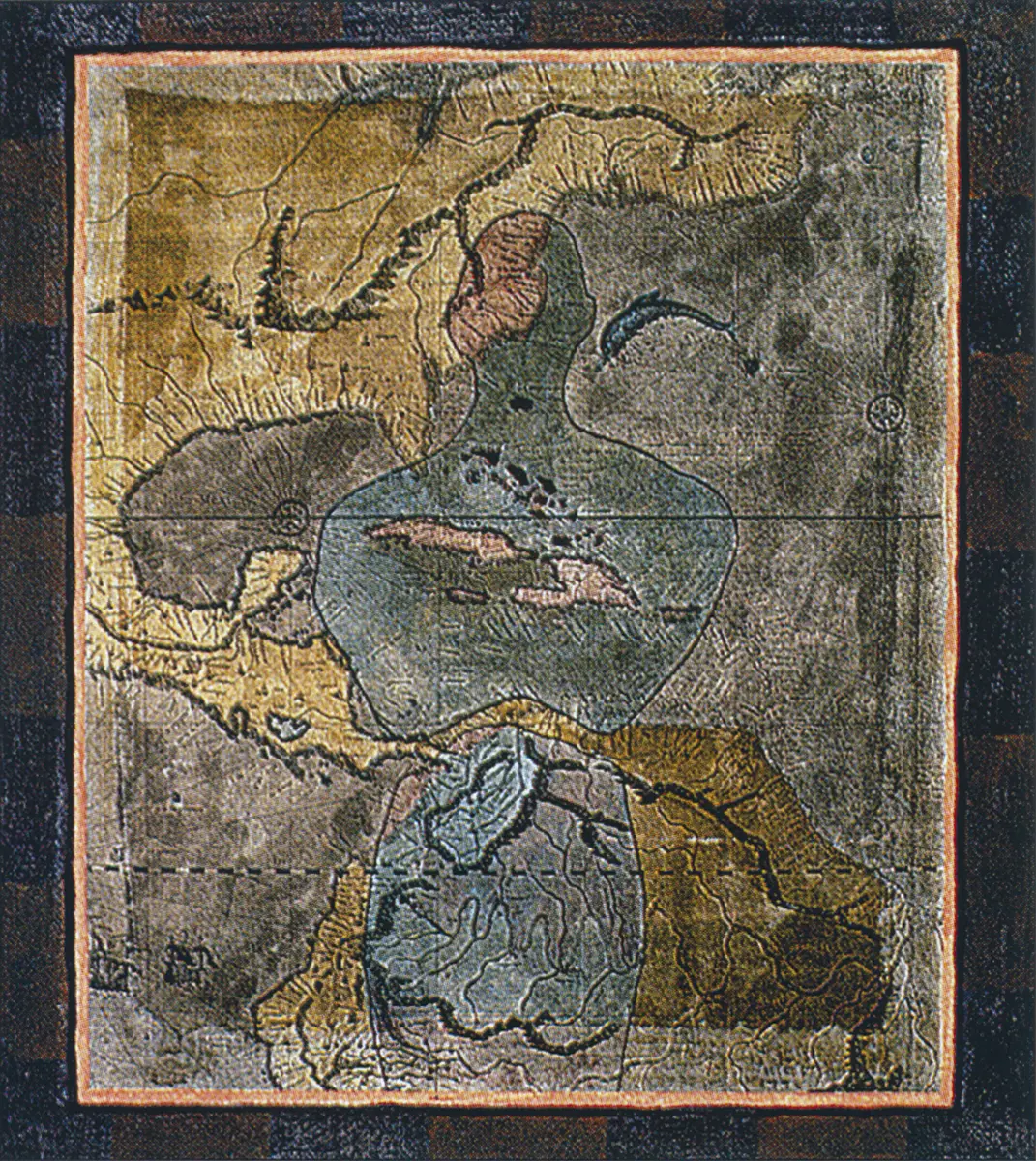
A new crux appeared in 1996: the self-portrait and another mythical figure were developed thereafter, that of the man-island, the geographical territory as a map of the body. In that sense, we believe that the syncretic tradition of Caribbean culture allows the contemporary artist to bring together various meanings into one single image or into one play of superimpositions: silhouette of the man, contour of the island, threshold, totem... The man is the island, the island is the man, and both are also recipients of other connotative signs that evoke the religious, the natural, and the cultural of the Caribbean, with the generative sense of a world creating itself. At the same time, none of these signs has a demonstrative or hierarchical value per se: there is no structured "discourse" by Valdez, but rather notes in passing that correspond to an affective will to gather fragments belonging to diverse registers in order to begin to create a reality that never ceases to be something elusive, hypothetical, fluctuating, that denies the descriptive and anecdotal. The artist plays with the visual ambiguities that reveal ambiguities of meaning (we use the verb "to play" highly conscientiously, for the ludic, fresh, and imaginative angle of this undertaking of the construction of an artistic universe based on the deconstruction of the surrounding universe is fundamental). In the work ironically titled Vista panorámica (Panoramic view, 1997), the distracted viewer could confuse the map of the islands of Cuba, Santo Domingo, Puerto Rico, Jamaica, and the Lesser Antilles with abstract spots: it is a subtle way of evoking a reality in the making as if emerging from magma of colors and taking on life through the very creativity of the maker, who is the artist, and through the faculty of the observer to identify, that is, to grant identity. In other cases, the artist imitates an ancient map, thus evoking the vision of the European and the historical past. In Hombre-isla (estudio) (Man-island [study], 1996), the human silhouette is superimposed over this map on a transparency: the place of the heart corresponds to the Caribbean, the head to New York City, where the artist has lived since 1993.
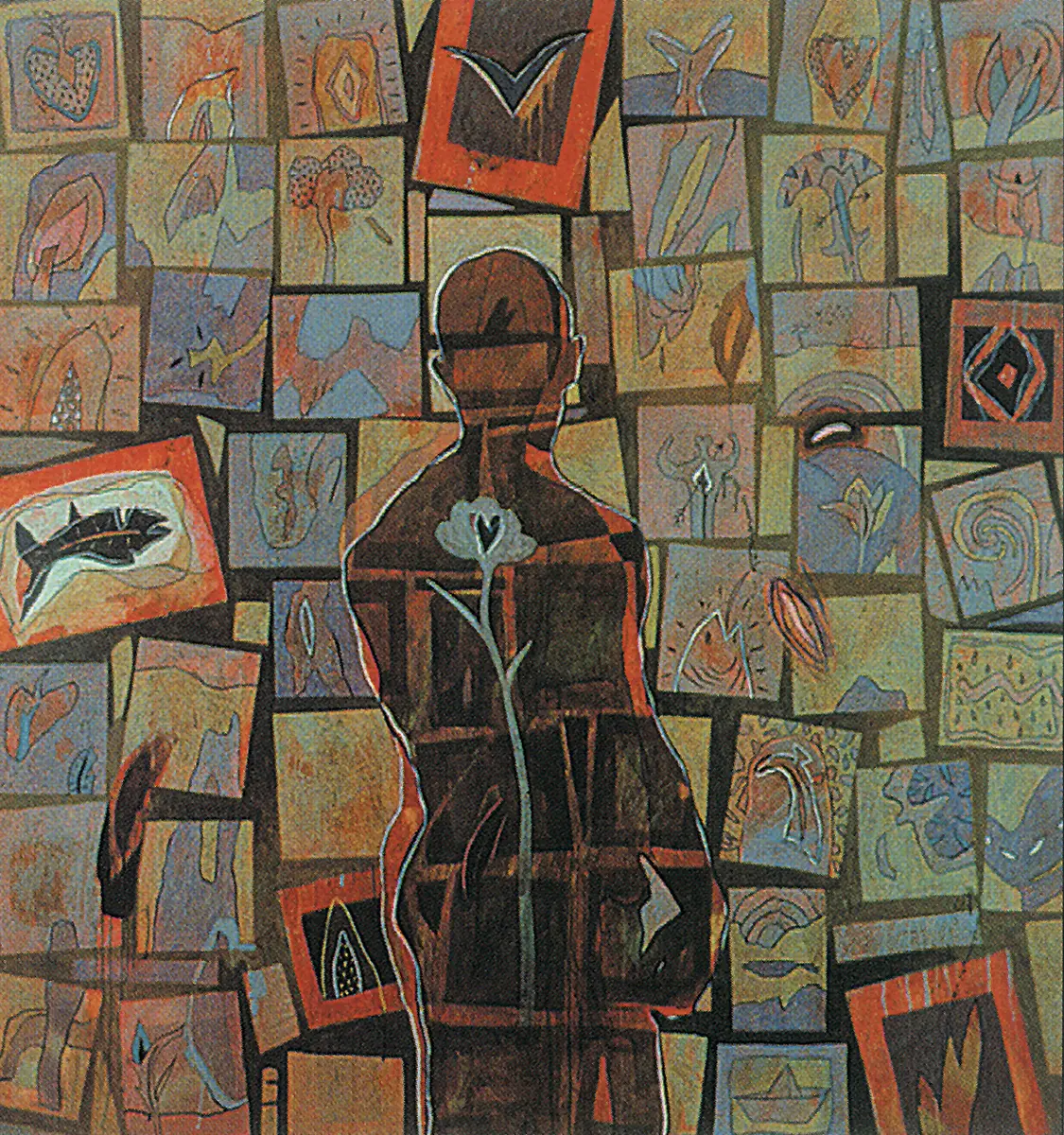
Another rather significant aspect of the voluntary syncretism between the self-portrait and the island is its correspondence to the osmosis between the individual and the group, on two levels of identity. It is not a question of expressing the intimate identity and at the same time echoing the Caribbean identity, but rather of returning to both indivisible identities. This is one of the greater tendencies of current Latin American art, especially Caribbean, a tendency that stems from the correspondence, in spite of very distinct styles, between the works of artists as renowned as Luis Cruz Azaceta, José Bedia, Arnaldo Roche, among others, and Ana Mendieta before them. The collective only gains presence through the private experience; it is not a parallel reality, a strange, annexed, or added body of which the artist would be a chronicler; it is an essential part of his being. And perhaps insularity is the determining factor, and not a coincidence, of this new attitude that signals a good part of the art of an entire region: insularity is a tendency to create particularly strong ties between the being and the environment, accentuated by the development of introspection, which in turn has to do with the limits of territory, with the gaze inward imposed by geographical conditions, with isle-ation.
In the case of Julio Valdez, this body-map correspondence is produced in what we could call a "pure state," and it focuses on itself since it is not generally affected by other local circumstances of a historical and political nature, as it is among Cuban and Puerto Rican artists, subject to the obvious pressures of their context. To be sure, Valdez only very rarely makes direct reference to a concrete situation that is not only insular but specifically Dominican. Only in his series Travesías (Voyages) does he allude to the yoleros, Dominicans who clandestinely throw themselves into precarious boats (yolas) in search of a better economic condition. At any rate, the specific situation is nothing but a local version of a general problem of exile in the Caribbean, treated with greater emphasis by other Caribbean artists: Bedia evokes the drama of the Cuban balseros in his installations; Roche, the Puerto Rican people as exiled from their own culture, like an eternal traveler on the "airbus" between the island and the United States. Like them, Julio Valdez also tackles the theme from another perspective, that of introspection: in his case, the paper boat also evokes childhood and the fragility of memory, another example of visual syncretism, of an image with several meanings that settle with no contradiction. And it could also refer to his condition as a voluntary exile who remains united to the fatherland.
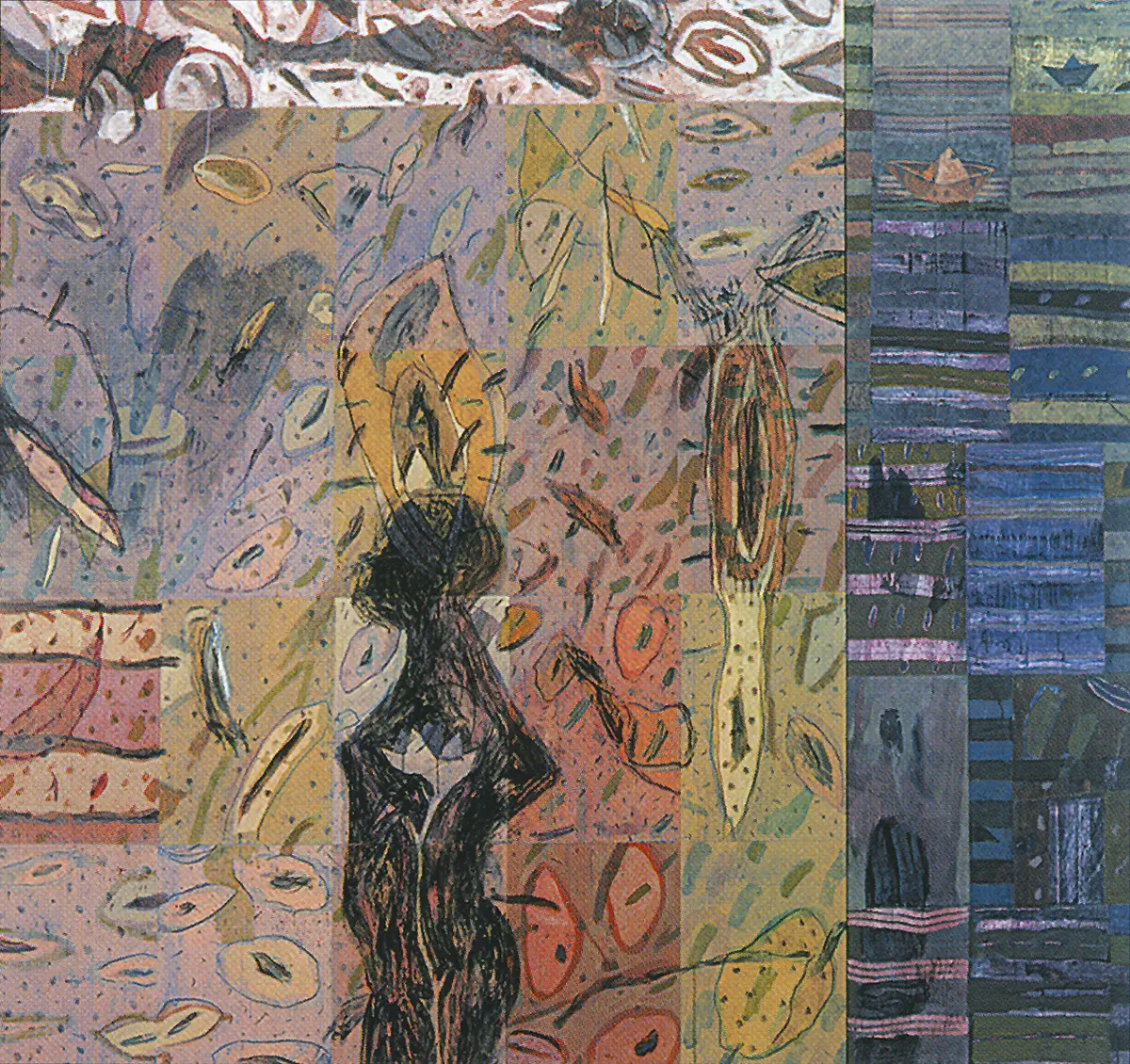
Naturally, it is in the self-portrait where the identity elements that we have just mentioned are concentrated. And this is also possible through the absence of precise physiognomic features (it is not a self-portrait in the conventional sense that art history gives the term), and through a certain ambivalence that allows Valdez's silhouette to endorse other meanings, always within the fusion between these and the artist: not only the island, but also the man who reveals his inner being in a sort of X-ray (Te regalo una rosa [I give you a rose], Autorretrato con raíces [Self-portrait with roots], 1998; Hasta los huesos [To the bones], 2000); and also the ignoble slave trade during the Spanish Colonial period, evoked through the silhouettes lying down in Con el motivo (1999) and Un latido en la memoria (A heartbeat in memory, 2000); this is how the blacks traveled from their African land to America: on shelves, like objects.
Around 1998, the checkerboard has a tendency to disperse or become a register leaning on the edge of the composition (Raíz de sueños II [Root of Dreams II], Autorretrato con esperanza II [Self-portrait with Hope II], 1998), although it remains in some pieces (Autorretrato de fin de siglo II [Turn of the century self-portrait], 1998). At the same time, the signs are dissociated from the checkerboard and they are freely "turned loose" through the entire surface, and in this way, we return to the impression of the ungraspable and precarious that governed the pieces from the early nineties. But throughout these ten years, the artist has broadened considerably his expressive possibilities, without discarding his initial language, in a labor of continuous gestation. The chromatic variety to which he turns here, in comparison with the almost monochromaticity of the early pieces, is only one example.
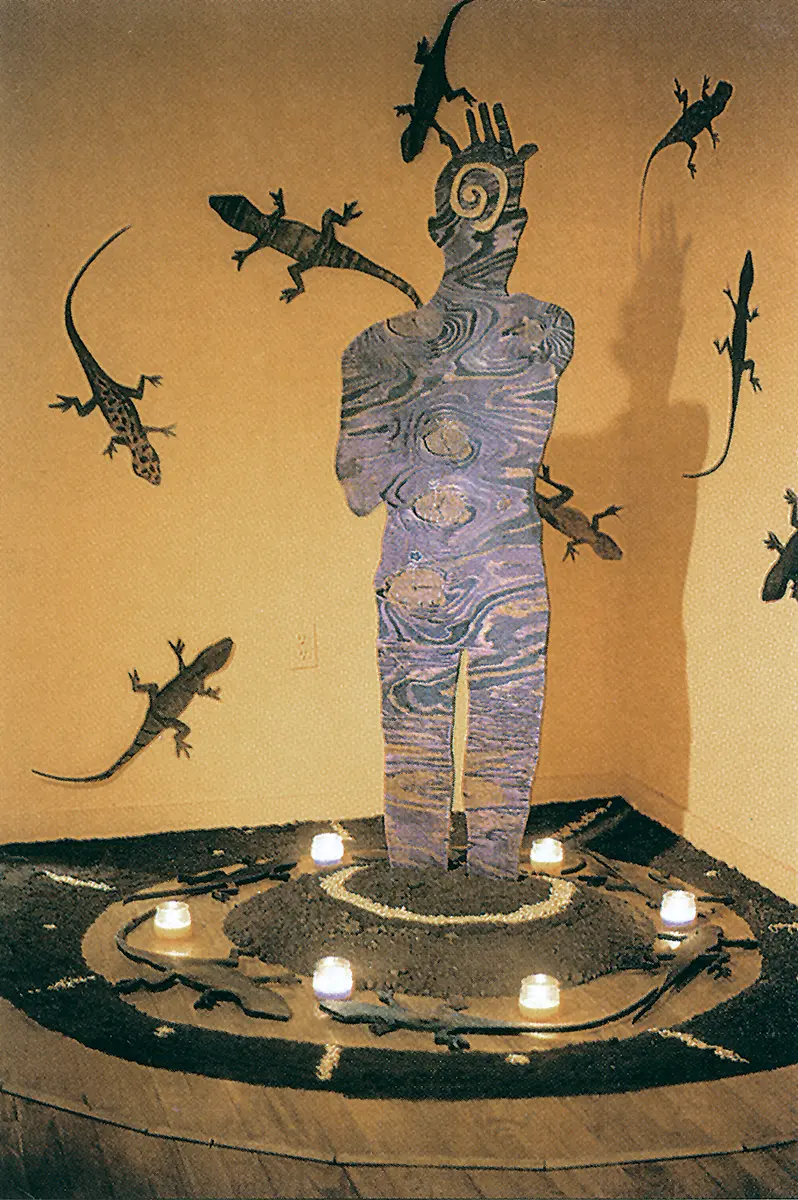
Corresponding to this expansion are the installations in situ that the artist has undertaken since 1998 in close connection with the paintings. As happens with the most interesting Latin American installers, operating on Julio Valdez is a resemanticization and profound metamorphosis of a language that originates in the art of the United States, which invests him with an organic, telluric, magical, and ritual charge that is quite distant from the "clinical" aspect that frequently characterizes him in other areas. The isle and the labyrinth are essential images of some sober designs realized on the floor. Marianne de Tolentino makes the following comment on them: "The labyrinth protects the island, hindering it from being attacked. The circle surrounds the man-island, resuscitating the ancestor. Those contours turn into mandalas, figures, and expressions of supreme harmony. They invite contemplation, reflection, and withdrawal. The consecrating element is imposed once more."2
We can thus observe a proliferation of signs: fragments of sentences, loose letters, an alphabet of deaf-mutes, eyes, mouths, and ears. In the works from 2001, the arch reappears multiplied as sound waves (El eco gris [Gray echo]). The compositions have come out of their previous frame of registers or borders and they are spread out all over the surface. A new harmony dominates in the colors lowered in tone. The totally new reference to photographs of the artist's parents is another level of expression of the intimate that draws him nearer to another Caribbean artist living in New York, namely, Puerto Rican artist Juan Sánchez.
Today, Julio Valdez is growing into one of those artists that the Caribbean needs in order for its cultural tradition to find a convincing direction, without false exoticisms, in the languages of contemporaneity that have been claimed within a free, unprejudiced, and independent usage.
NOTES
1. Cited in Elena Pellegrini, "Guiado por el proceso, una entrevista con Julio Valdez," in the catalog Valdez, Transposiciones (San Juan: Museo de las Américas, 1997) 14.
2. Marianne de Tolentino, "Julio Valdez cuestiona el fin de siglo," in the catalog Julio Valdez. Raíz de sueños (Santo Domingo: Museo de las Casas Reales, 1999) 9.
FEDERICA PALOMERO
Venezuelan art historian and critic.