
In parallel to the FotoSeptiembre program at the Contemporary Art Museum of Panama City (inspired in turn by the equally named festival celebrated in Mexico), Arteconsult Gallery exhibited works by Panamanian photographers Sandra Eleta and Gustavo Araújo. No observer could be left indifferent to the combined presence in this show of two artists with significant trajectories and varied interests such as theirs. Indifference was impossible as much to the topics as to the comparative analysis suggested by the exhibition itself. Eleta, whose figure looms large in Panamanian photography, has followed closely the younger Araújo's career; they know each other and live in the same country, but they would seem to inhabit different worlds, as could be appreciated here.
Araújo presented a series of photographs documenting the Miss Barbie Universe event, a beauty contest for dolls carried out (initially underground) by a group of gay friends in Panama. In this contest, the owners dress their dolls just like typical beauty pageant participants, in evening gowns, feathers, and with large doses of glamour. In the most recent pageant, Araújo, who has years of experience in the fashion world, registered images of the contestants "in action." They appear on catwalks, sharply dressed, under dramatic light, in highly colorful scenes.
Araújo became known as a promissory young artist in 2000, after winning first prize in both the Panama Art Biennial and the Central America Art Biennial. Following that, he had a solo show in the US, won a Mention at the Cuenca International Biennial, and participated in several contemporary art fairs at the international level. The works that won him acclaim in 2000 were light boxes or large vinyl sheets supporting several digital photographs "sometimes manipulated" in which the artist used the language of advertising to create poetic compositions capable of communicating feelings of intimacy. He later experimented with different visual, photic, and conceptual formats, and more recently has begun to incorporate sound into his work.
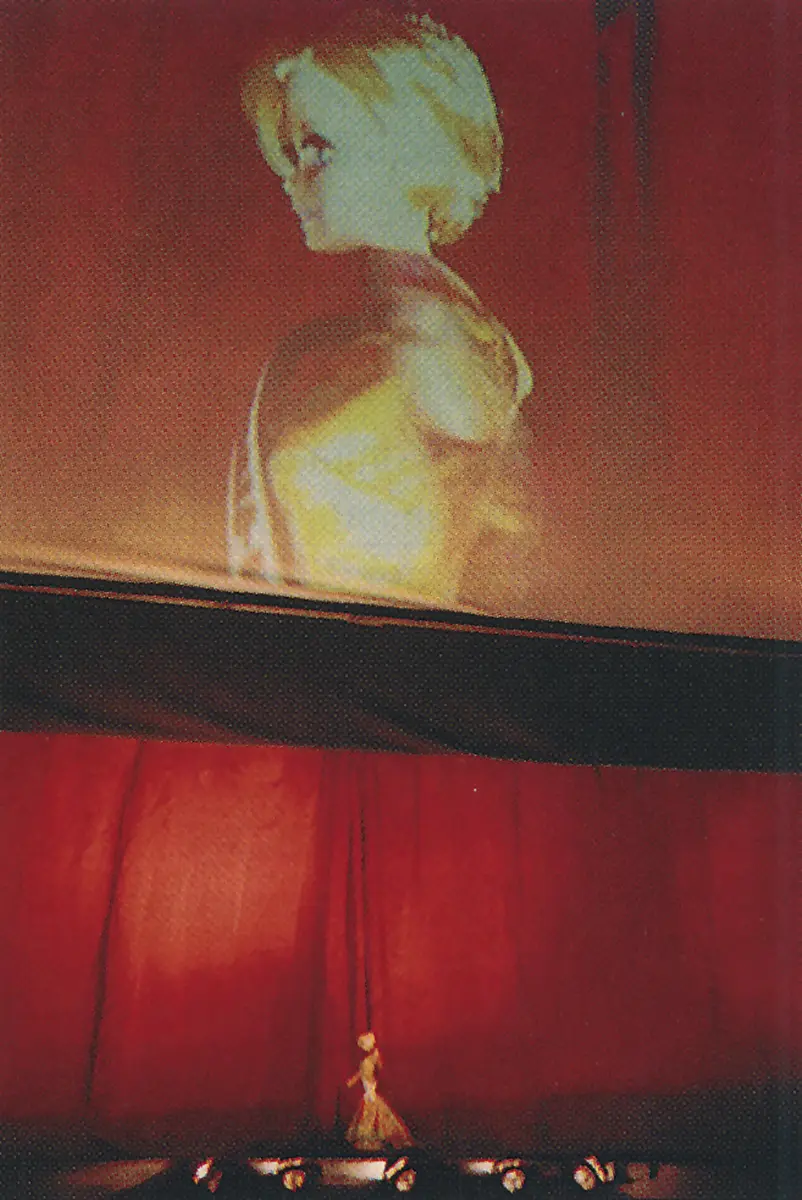
Even though his Barbie photographs were realized simultaneously with these works, they do not reflect the same creativity or the same analytic potential. The Barbie series is of a more documentary nature, realized in ink-jet printing, and here what dominates our perception is not the artist's work but the ultra-kitsch event he documents. These are dolls undergoing a superficial process of anthropomorfization, driven by people who are not seen in the photographs, people whose intentions the photographer does not question. If in a beauty pageant women are treated as objects, we are faced here with objects treated as living entities, in a game organized by adults. Paradigmatic on that level is one photograph in which we see one of the little plastic "Misses" in a red set and also, amplified and bathed by golden lights, on a video screen on the top section of the composition. As with all of these dolls, the details are what is most impressive: she wears on her torso the typical ribbon bearing the name of the country she represents in this surreal event.
Despite the camera's apparent objectivity, Araújo's Barbie photographs suggest an ironic commentary. They bring to mind the numerous images of Panama City the photographer captured for MOGO magazine, a valuable urban visual document we hope to see circulating again. Miss Barbie Universe is also an urban cultural expression involving a camp attitude, with its characteristic "engaged detachment," as described by Adrienne Samos in the exhibition booklet: "the vital tension between playful irony (the critique of the tyranny of the normal) and sobriety (the genuine adoption of a kitsch aesthetic)."
Sandra Eleta's photographs show a different world. In a series of scenes printed in black and white using classic photographic processes, she presents what she calls "multiethnic angels," works that continue in the line that has made her a well-known figure. Her pictures of the people of Portobelo, on Panama's Caribbean coast (where she lives), were shown throughout the world in the 1970s and 80s. Later came audiovisual works such as Sirenata en B (Siren-nata in B), based on the figure of a bus driver and the city's traffic, and Abia Yala, with which Eleta represented Panama in Spain. Among other works, in the late 1990s, she produced ethnographic studies of the Chagres River and the Emberá Indians who live along its course. In 1999, she took Comanche, a collaborative piece, to the Lima Biennial; it's a photographic essay on a Panama City homeless individual. Eleta's work has been shown in Europe, the US, and Latin America, and she is one of the region's best-known photographers.
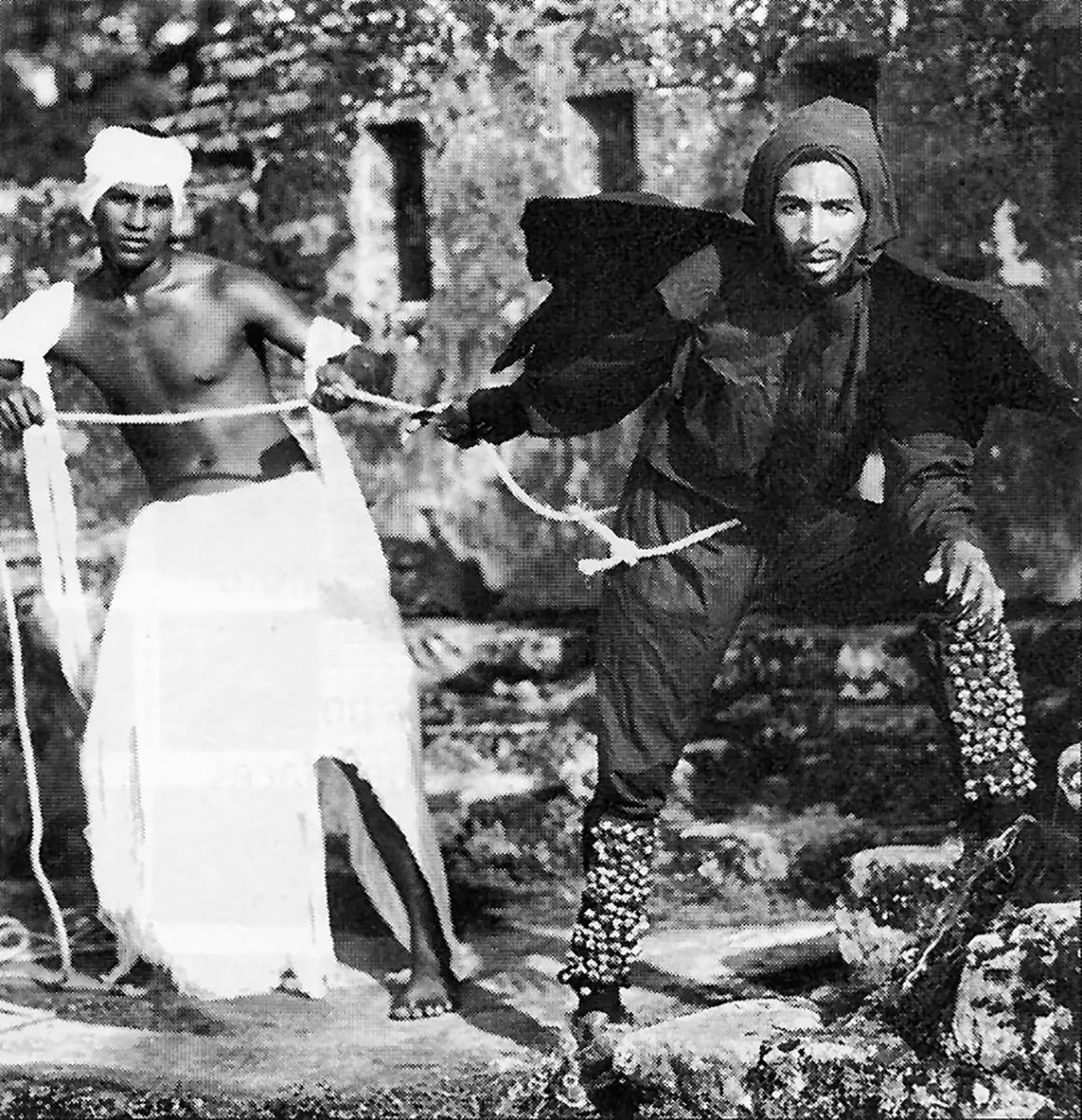
In this show, Eleta turns her attention again to Portobelo and its inheritors of a rich Afro-Caribbean cultural tradition, a richly syncretic religion, and fascinating cultural expressions. She knows the subject well. The angels in her photographs are those that accompany every procession in the Media Luna Valley (where a major church honoring the Virgin Mary stands), along with the devils and archangels represented by Portobelo youths participating in the rituals of the city's Congo people. For Eleta, they are a live presence, and she asks of the observer a "suspended spiritual state" in order to appreciate the truth being offered, where only the thinnest of lines separates reality from poetry.
The little girls photographed in Las Aguas del Cascajal (In the Waters of the Cascajal) are connected to the young Emberá woman named América, shown some years before, and, in general, to the anthropological-poetic attitude of that series. We perceive Eleta's communicative relation with her subjects, who look directly into the lens. In these photographs, Eleta captures the innocence permeating these lives, the importance they assign to nature, and, above all, the major role played by water in the character's existence. There are many impressive images, such as that of an angelic little girl wearing palm-leaf wings, or that of another little girl, already half submerged, who with an ecstatic expression moves into the water.
Other photographs in the show, however, do not reflect the strength for which Eleta is known. Such is the case of the girls dressed as angels posing in a cemetery, or outside the basilica with a background of doves, or on a staircase in Para subir al cielo (To Rise to the Skies). These images also lack the sensuality characteristic of Eleta's initial Portobelo photographs. They are dominated by a somewhat contrived sensibility, even if their intention is not to approach kitsch, as described in the booklet. Eleta's compositions here resemble choreography, sections of a story, or scenes in a dramatic work, and the images are like their illustrations. The positioning of human figures, as well as their paper wings and their costumes, are the result of artistic choices. The same thing, albeit with more dynamic effects, happens with the series Los siete ángeles y el gran diablo de Portobelo (The Seven Angels and the Great Devil of Portobelo). These scenes recreate Portobelo's yearly ritual, immediately after the carnival, of the capture of the devil by the Archangel Gabriel. Eleta constructs scenes based on existing realities, but nonetheless theatrical.
The line dividing truth from fantasy is entirely blurred when, after the sessions, the photographer comes across a number of damaged paper wings hanging from walls in some ruins, and imagines a "clinic for broken wings," from which a new series emerges. In this series, now entirely conscious of creating an illusion, Eleta closes the show's imaginary circle, transforming Araújo into one of her characters. The "clinic" is just as real and just as unreal as the angels and devils, and as naive as Araújo's beauty queens. Even if the expressive intensity and the creative energy fluctuate in this show, these are extraordinary gazes, and they give us glimpses of alternative realities.
MÓNICA KUPFER