Two years behind schedule, the 25th São Paulo Biennial finally opened its doors on March 23, 2002. Few of these mega-shows have been as conflictive as this one. The curator originally designated for this exhibition, Ivo Mesquita, and his team were dismissed a little over a year ago. The alleged motive: an irreconcilable difference of opinions over the conceptual and formal bases that would frame the show. Other, much more concrete causes of the delay: the show Brazil 500 Years occupied the central office of Ibirapuera Park for a long time, and it also exhausted the financial resources available. Naturally, the very conflict and deferment had generated enormous expectations, which this show does not come close to satisfying.
In order to settle the problem that arose in Brazil's artistic medium, the Fundacao Bienal named a German curator: Alfons Hug, ex-director of one of the Goethe Institutes in Brazil. This complex function had never before been carried out by a foreigner, although this is a current practice in several of the more important biennials across the globe. The Brazilian section was curated by Agnaldo Farias, ex-director of the Museum of Modern Art of Rio.
Metropolitan Iconographies refers, as a germinal idea, to Borges's story El Aleph. In his introductory text, Mr. Hug states: "Like the Aleph, a minute point in space, it contains all the points of an inconceivable cosmos, the images dealt with by our exhibition show the diversity, the contradictory and multifaceted aspects of Earth."1 And from the first paragraph of his text, he warns us of the fundamentally pessimistic tone that dominates both the story and the show. The curator's long introduction explains and justifies the options that structured the exhibition in its early stages as well as in the elimination of the museological section. It also insists on the clearly international nature of the show, with the participation of many countries that do not belong to the traditional America-Europe axis, even at the risk that many items do not in any way adhere to the proposed theme.
The show was organized into two original sections. The first section was comprised of twelve group shows that refer to eleven real cities and one imaginary or utopian city. The other section, the traditional national entries, was placed under the care of one artist per country.2 Both sections are spread out across the three floors of the building. In addition, there are nine Special Project Rooms that replace the museological space that was highlighted in several of the past biennials, an area of Net Art,3 and the many Brazilian representations. Added to the aforementioned is a small independent show of several African video artists. Some of these videos are very interesting.
The artistic languages that largely dominate are video—from the simple monitor with a fixed image to complex video installations that border on filmed theater or cinema—and photography—almost all digitally manipulated—in a multiplicity of techniques. At this point, we should raise the following question: to what point is the massive use of filmic, fixed, or kinetic media a trend? In many of the entries, emphasis is placed on technology per se, on the media stripped of content. They may dazzle, but they say nothing. Technology wins, but art does not. "The medium is the message."4
We also find many installations, in the original sense of the term. And some, very few, examples of more traditional expressive media.
Nearly all of the invited artists expressed themselves in the apocalyptic tone that dominated the transition into the new millennium, reinforced, of course, by the attacks of September 11th on the United States. Such polyphony obliged a complex montage, resolved with elegance by the team of architects Mario Biselli and Artur Katchoborian. This is in spite of the fact that many videos required the space to be compartmentalized into an endless series of small, dark rooms. Three catalog books accompany the show: Brazil, Cities, and Countries.5
The biennial could not help but underscore the fact that conflict characterizes our era. Peace is reduced to a utopia generated by centers of power that are relatively far from the battlefields. That peace that was the panacea of modernism, before the Great War, never arrived. If an Athenian from the fifth century B.C. could see us now, he would say "Nothing new." The metropolises evoked by this biennial coarsely reveal the internal war that defines contemporary societies.
The curators' central thesis aimed at the idea of the large city as a paradigm of the world today. It almost seems useless to point out the fact that a large part of the works present at the biennial have nothing to do with this theoretical framework. Even some that comprise the core of the eleven cities, and practically all of those shown in the Special Project Rooms. Seen through the biennial, the metropolis differs little from the hells configured by Byzantine and medieval art: a den of iniquity, decomposition, depravation, and punishment (at least in the Middle Ages such punishment had a theological justification). None of the positivist theses about the city survive. Progress, comfort, numerous opportunities, a realm that favors the development of the individual, etc. No. The metropolis is a devouring, hostile, crushing, dirty, cacophonous, and fire-emitting monster. Or an illusion conveyed by the propaganda for marginalized groups.
The cities—they do not appear as metropolises in the catalog—are Berlin, Caracas, Istanbul, Johannesburg, London, Moscow, New York, Beijing, São Paulo, Sydney, and Tokyo. Plus the (im)possible city, utopia. Five artists from each city were called upon by local curators to respond to these kinds of interrogations formulated by Hug in his attempt to turn this section of the biennial around a common theme. The responses are uneven in tone, in quality, and in attitude. These are neither common nor coordinated projects. Each artist acted individually, and this considerably diluted the central idea. I shall review the entries that I consider to be the most outstanding. On the whole, Berlin might steal the applause.
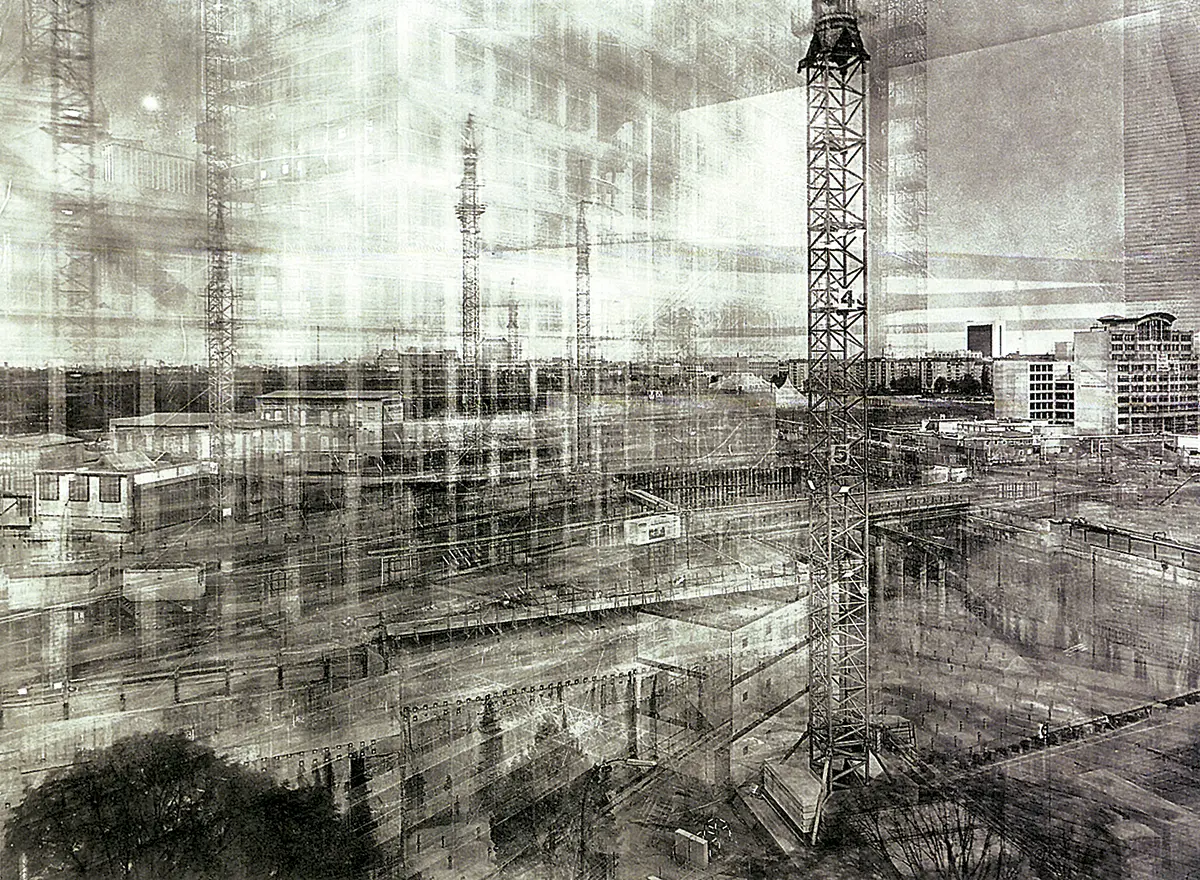
The German capital fluctuated between the neo-pop painting of Franz Ackermann (1963), flowing over the frames onto the support panel, and the marvelous photographs of the city under construction, seen by Frank Thiel camouflage uniforms tautened between two of the building's structural columns, and with a series of baseball bats as accolades. The action of time in the city is recorded in Michael Wesely's (1963) nostalgic photos. They are large formats in grays that were shot for up to a year. The long exposure of the films gives the positives an engraving quality that shows us a phantasmagoric and empty city.
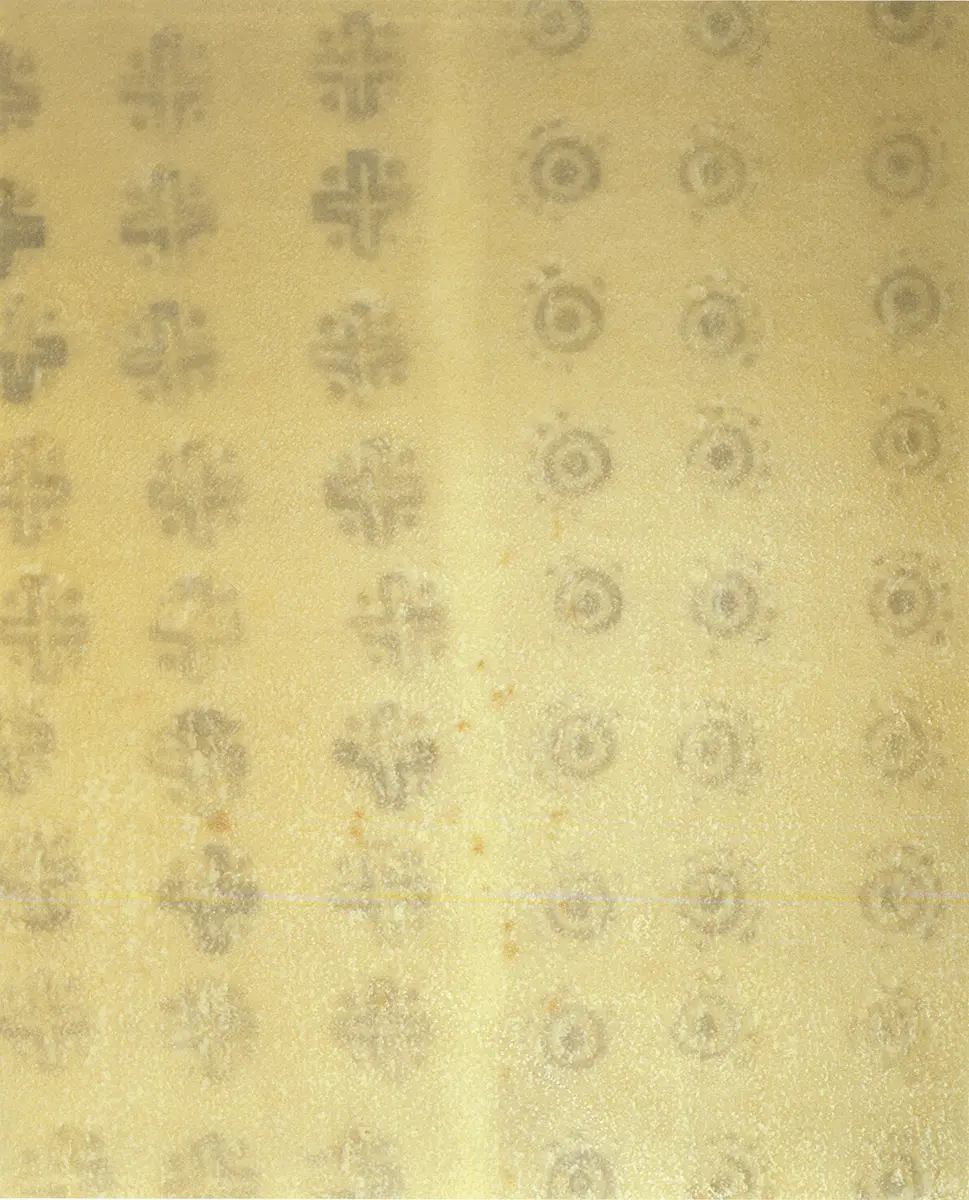
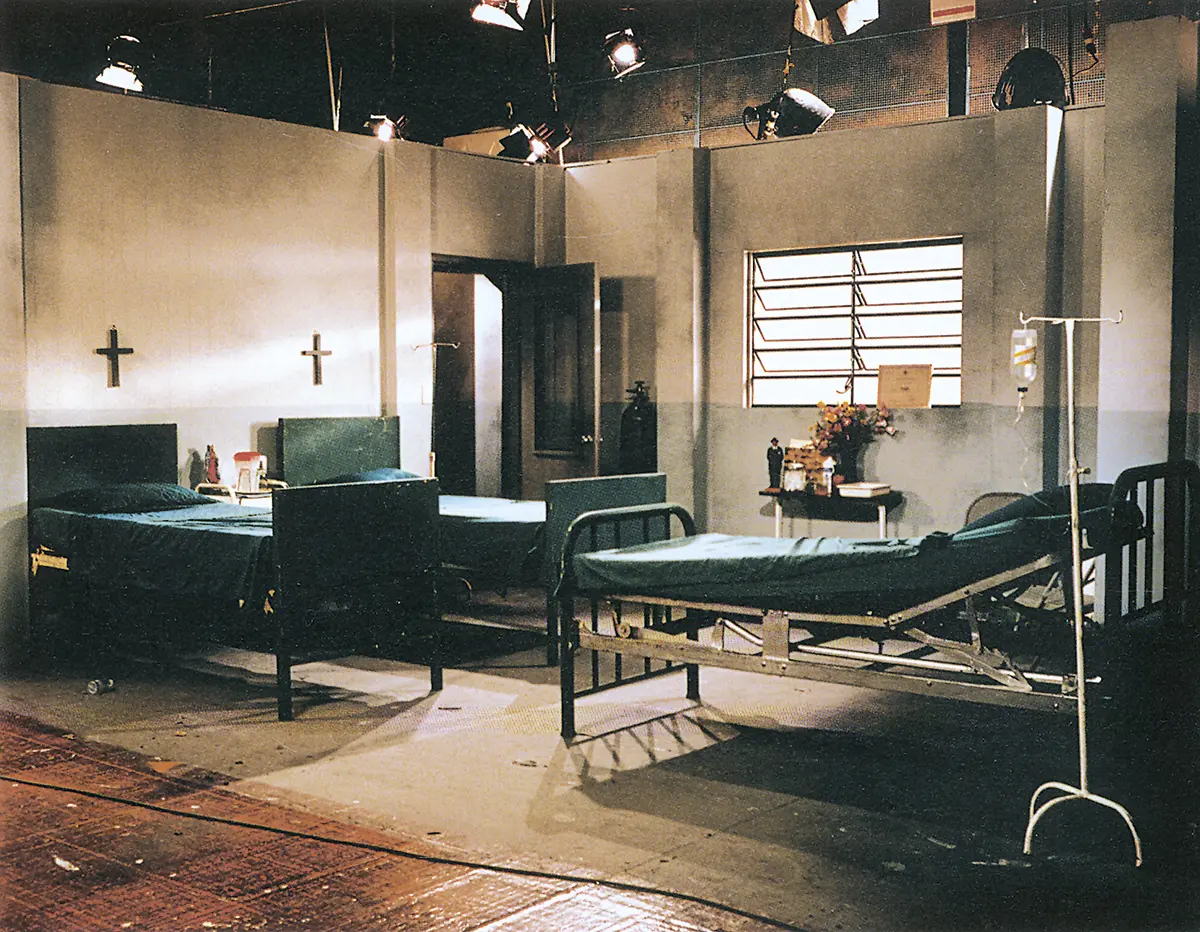
Caracas. Overwhelming and frightening photographs of walled-up buildings were presented by Alexander Apóstol (1969). Images of the city as the negation of itself. Several-storied constructions with their doors and windows walled up and closed. They are useless and absurd buildings, not in their essence but rather in their becoming. Totally incomprehensible were Emilia Azcarate's entry and her supposedly pre-Columbian stamps, semi-hidden by a layer of wax. On the other hand, the photographic work of Luis Molina-Pantin (1969), which gathers scenes staged in TV studios for soap operas, was rather fun. A play between fiction and reality: what the city is, or pretends to be. And an obvious allusion to the power of mass media, which dominates to a large extent the events of the metropolises.
Moscow. Curated by Victor Misiano, this section is testimonial art with no beating around the bush. The elderly, the poor, and child prostitution, all in large format, chilling photos with no manipulation or touch-ups. Raised next to this is a construction made of boxes for packaging, deliberately arranged haphazardly, as a wink to the constructivists from the beginning of the twentieth century, which contrasts with the viewer's trajectory through a small closed space that precedes it. On either side, the city that once was "goes by." It goes by because the image is that of both videos read as a linear journey over the facades of the old city. Nostalgic images that at times seem to be reflected in a canal, since we see them inverted. History turns out to be deaf before the current situation.
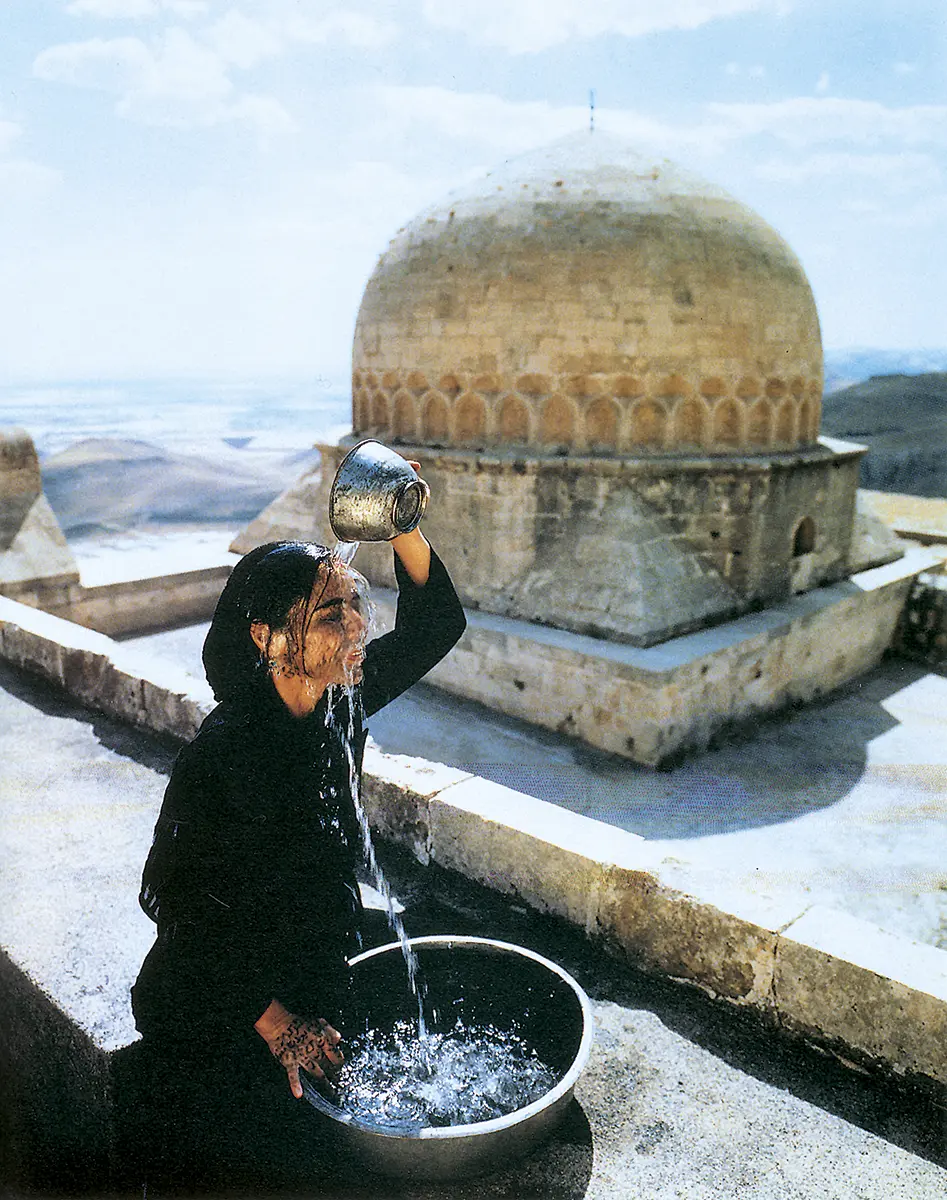
New York, the metropolitan icon par excellence, has two outstanding representatives. Nancy Davenport (1965), a noted photographer of Canadian origin, constructs a disquieting fiction in her series The Apartments. To the more or less neutral facades of the residential buildings she adds—on a credible scale—images of armed terrorists who are the only residents. A discourse that began years before the attacks, but which has naturally been strengthened by them. Shirin Neshat (1957), an Iranian filmmaker who lives in the United States, participates in her Soliloquy, filmed in 1999. "She creates a dialectic of closedness and openness, oppression and freedom, the traditional and the modern."6 The work is presented on two facing screens that the spectator must watch, alternately and in a staccato rhythm, from the central space. The character is a woman from the Middle East, majestic, totally covered by a black chador that passes through two antagonistic worlds, the East and the West, the alter ego of the artist's inner being. One screen shows the film shot in Albany, N.Y., and Manhattan. The other, filmed in Turkey, combines images of an old construction that could be an isolated madrasa. The actress moves through both universes and gazes profoundly and carefully at her subject, whether it be the silhouette of a skyscraper, a subway escalator, or—in the East—a group of kids playing under a water fountain that sprinkles the building's inner patio. Like an internal witness, without intervening.
The metaphor could not be any more eloquent: globalization produces an estrangement, we become strangers everywhere and we are alone even in the middle of a crowd.
Outstanding among the group of Chinese artists who personify Beijing is Gong Xin Wang (1960). His video installation is comprised of four translucent screens, like loose curtains that receive both projections. The curtains generate a central space, like a patio that invites visitors. Projected over each curtain is a large closed door. These doors are massive, old, and dusty. In a sequential fashion, each one opens in order to allow us to see different scenes: a military parade, gym exercises in the public parks, a market, a concert, a field, a street vendor, and a street musician. A few seconds later, the door is slammed shut. The shadows of the viewers jam the projection, and they become part of it. The diluted images (partially due to the filming itself, partially due to the quality of the curtains), refer to the tensions generated by time, yesterday and today, presence and memory. A great poetic quality defines the work as a whole.
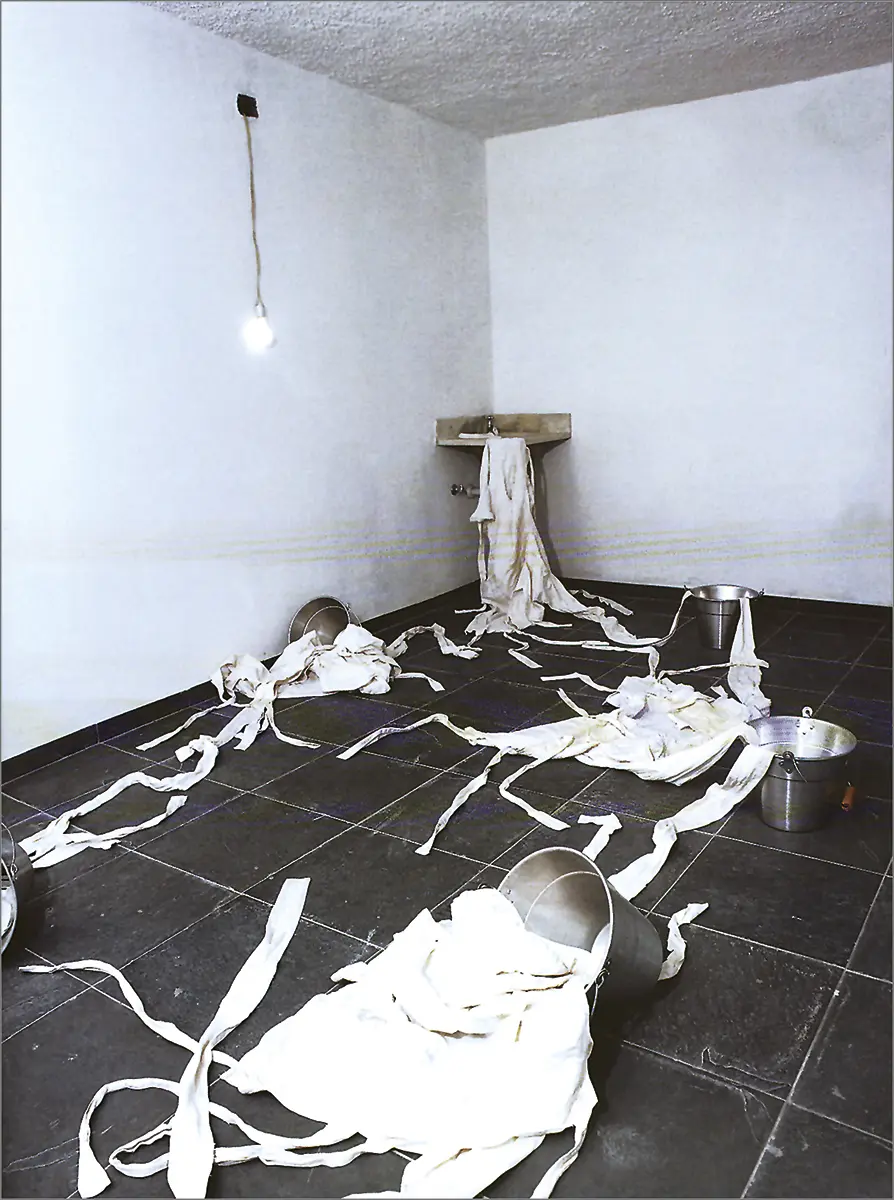
An installation and a couple of voluminous works are the most interesting contributions by the group from São Paulo. The first is that of Lina Kim (1965). A space defined by walls made with small circular mirrors, like a network, in which we see ourselves partially reflected, serves as an area for storing, in apparent disorder, hundreds of straight jackets, aluminum shelves, and a couple of old sinks. A good allegory of São Paulo, a chaotic, modern, and backward metropolis, both extremely rich and extremely poor, rational and alienated. The works of Artur Lescher, on the other hand, do not refer to the city. They have been characterized for years by their impeccable finish. They are large volumes of simple shapes that the artist sets in opposition to urban shapes. Curator Agnaldo Farias says that they are constructions opposed to the constructed world. In the biennial, there are two pieces that dialogue with one another through their apparent contradictions. One, made of wood, is resolved in a large plane supported on a curved base, like a cylindrical segment. The upper plane is a box of glimmering planks. The second work is another square, a plastic, silver-plated mattress full of water and placed directly on top of the floor. The public is invited to touch it, shake it, and rock it. Despite the austere forms and the apparent hermeticism of its geometry, these pieces are interactive, and therefore they somehow evoke the works of two distinguished Brazilians from the modernist period: Lygia Clark and Hélio Oiticica.
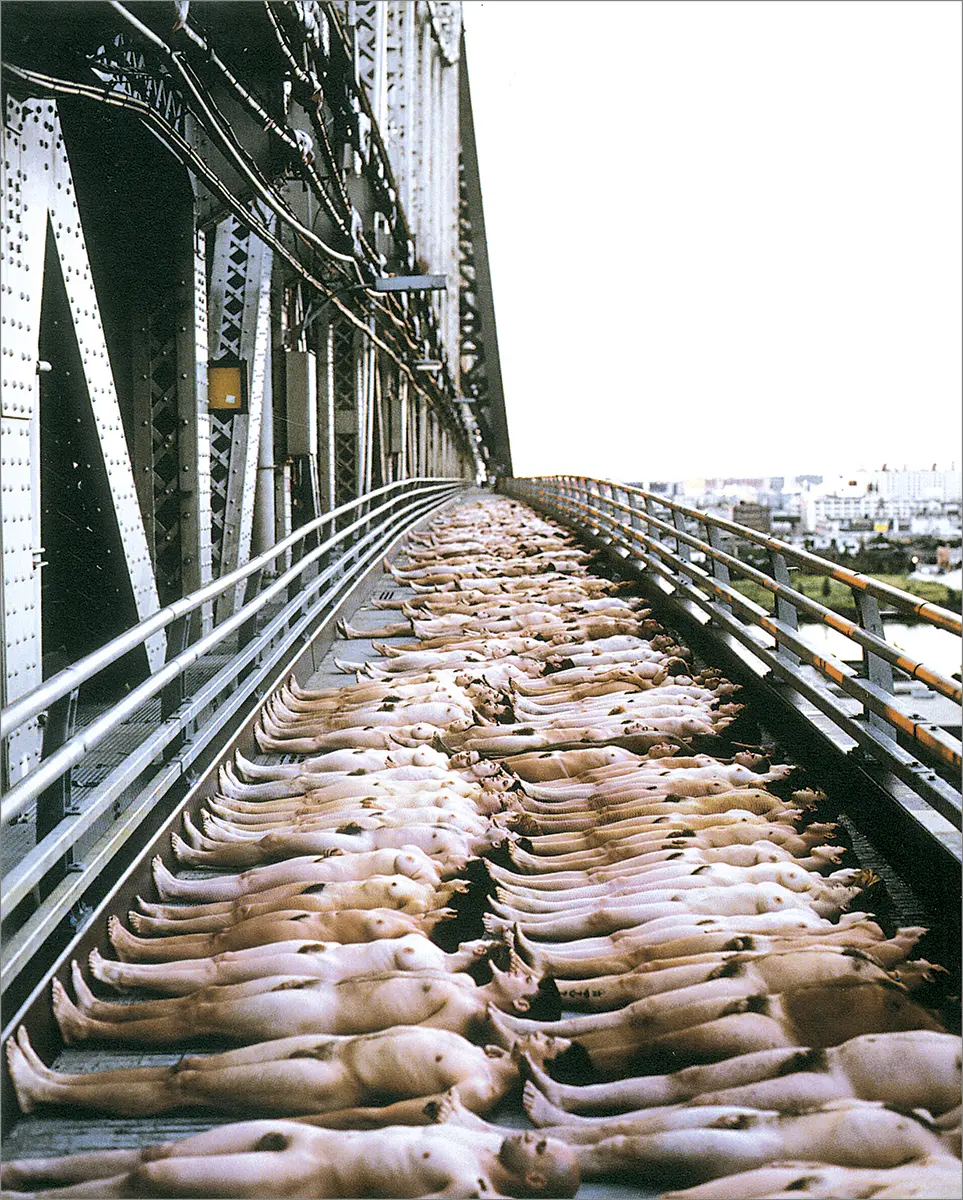
From Nineveh to the digital spatiotemporal matrix: The Twelfth City was the title chosen by curator Lidia Haustein for the group of artists—twelve individuals and groups—that designed the non-existent city. The proposals range from complex technological systems, like that of Rio de Janeiro native Roberto Cabot (1963), to the ludic and ingenuous scale models of Bodys Isek Kingelez (1948), an artist from the Congo, and the delirious construction of Sarah Sze (1969), delicate and monstrous still of tubes, mechanisms, bands, toys, real and plastic plants, coils, water, and light. The Cuban group Los Carpinteros (the carpenters) used tubes and Plexiglas to construct three sentry box watch towers,7 while Huang Yong Ping (1954) and Shen Yuan (1959), Chinese artists living in Paris, reinterpreted the headquarters of the Brazilian Senate: an immense half-sphere whose interior conceals a favela (slum) enclosed by a ring of red clay, the most characteristic soil of Brazil's central States.8 Also in this city are the macro photographs of the nude multitudes by Spencer Tunick (1967), the living who seem dead, as if thrown into the disorder of a street, of a plaza, or formally lined up on a bridge or a highway, just as the corpses of those fallen in battle are lined up. Possible city, probable city, toy city, crematorium city. The most shocking of entries in this section is that of Brazilian photographer Arthur Omar (1948). Ten macro photographs show us images of contemporary Afghanistan. The desolate panorama of the war, the worn-out faces of the elderly, and some smiles of children. He composes "the city" by joining into one single imaginary space a desert and facades of neoclassical buildings riddled by projectiles.
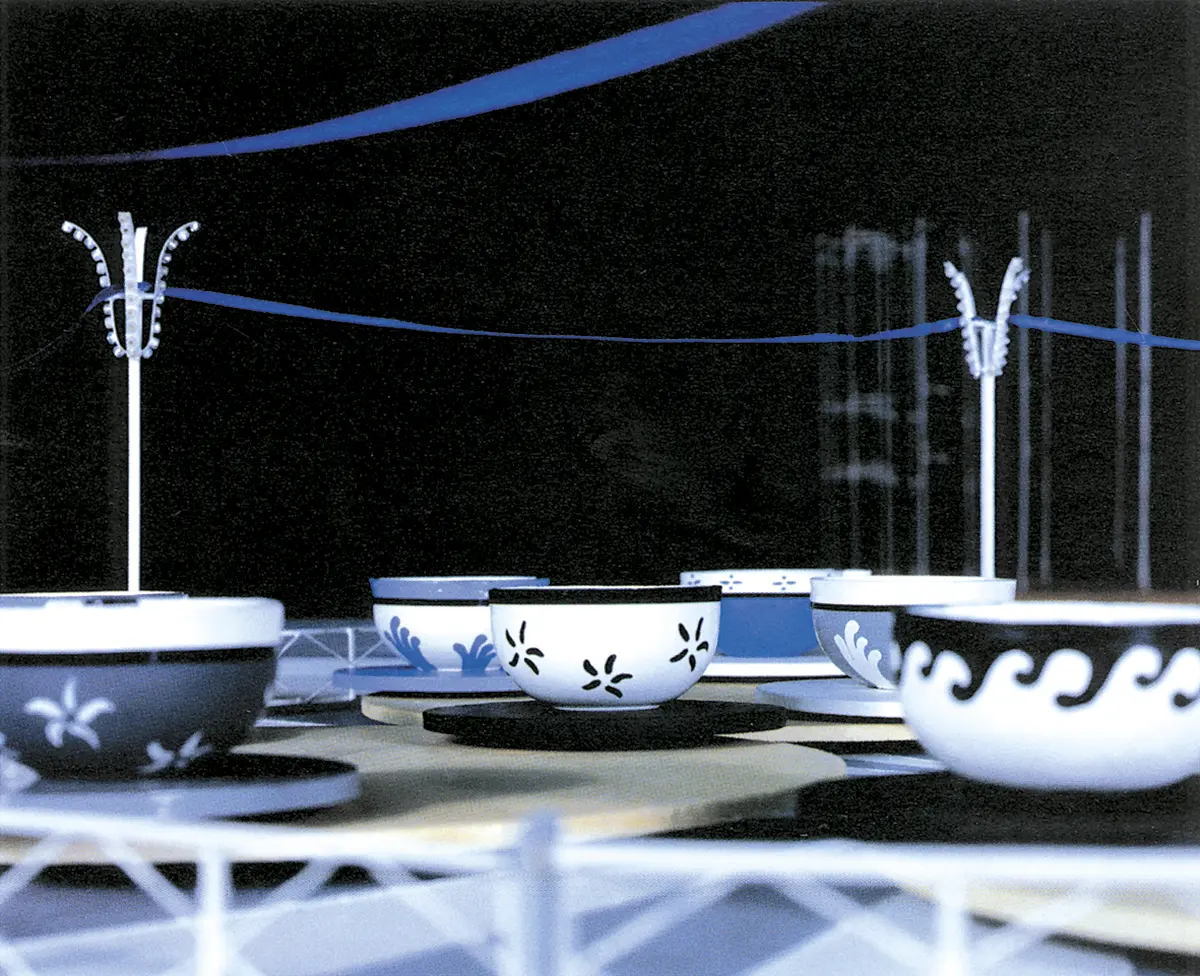
National EntriesSome seventy countries responded to the call of the 25th São Paulo Biennial. With the condition that only one participant per nation is sent, the idea of aggiornamento, which used to accompany this section, has become impossible. A very clear example is that of the Venezuelan entry: one of the chromokinetic atmospheres of master Carlos Cruz-Diez (1923), a development of proposals formulated in the 1960s.Very few entries were really outstanding. I shall follow the alphabetical order given by the catalog for this section of the biennial. A. Argentina. A scale model of Italpark constructed by Dino Bruzzone (1965) and some large format photography. The photographic images with diluted light generate a vision that alternates between reality and dream. The installation Lluvia (Rain) by Colombian artist Luis Fernando Pelaez (1945) undergoes a strange metamorphosis in the realm of this show: it loses its tragic character, becoming almost loveable. British artist Willie Doherty (1959) sets two enormous screens, on which a citizen runs through a vehicular tunnel, in opposition to one another. We see him from the front and from behind in a race that is both anguishing (the runner's face is quite expressive) and apparently futile. Modern-day Sisyphus?
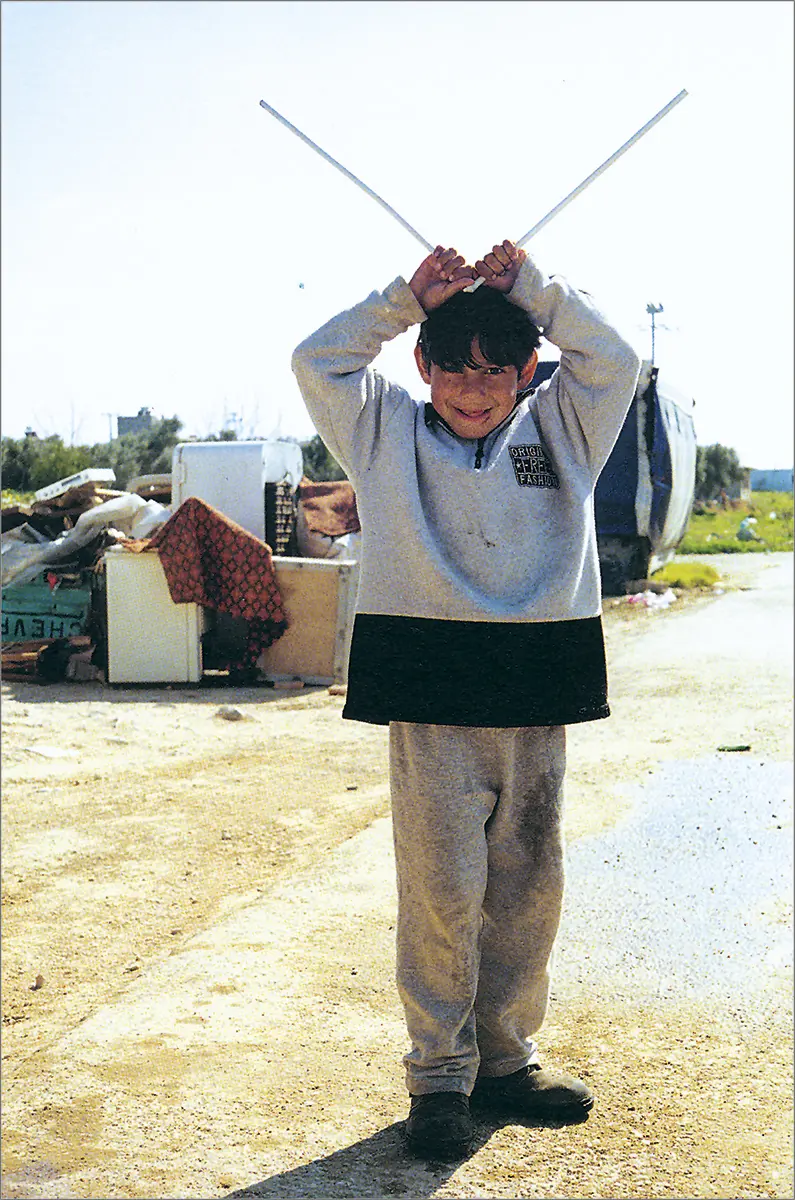
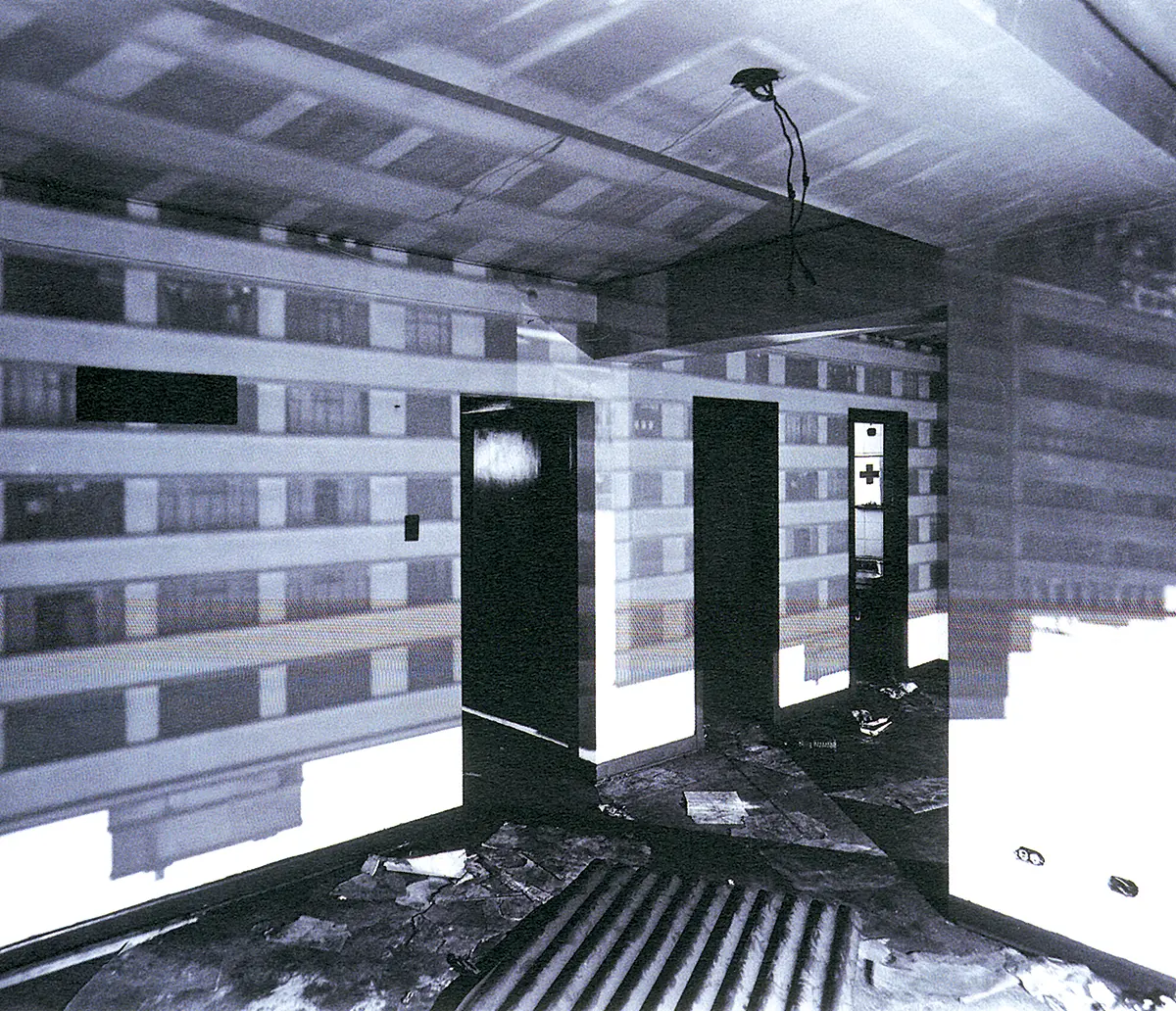
Greek artist Maria Papadimitriou (1957) presents the photographic record of a curious project, which is actually more sociological than artistic. In the area of Avliza, Ménidi, a depressed zone some ten kilometers from Athens, the artist organizes a Temporary Autonomous Museum for All in the camp of the semi-nomadic gypsies. The aim is to recover a culture that is quite distinct from the urban one, safeguarding its own values and with the active participation of its members. Naturally, the images hardly show the group's incredible accumulation of domestic belongings and provisional hovels. The text of the catalog is indispensable for giving meaning to these images. The most moving photo is that of a little boy who places an old TV antenna on his head.The space of Japanese artist Kimio Tsuchiya (1955), a sort of strongbox with a round bottom, preceded by a gallery of debris, makes us confront all the times of the world expressed through the hundreds of wall clocks that cover the whole interior. A large layer of dried and cracked mud, stamped with a design of repeated red roses, alludes to the drama of Palestine in the voice of Sliman Mansour (1947). The two photographers representing Peru, Philippe Gruenberg and Pablo Hare (1972), invent a city within a city. Photographs of old facades of Lima are projected, inverted, inside the abandoned areas. We see the photographic record of the projection originally made with the method of camera obscura. They are disturbing images that disarticulate the usual contents of urban space, both exterior and interior: there is no room for man, and only the ghosts remain.
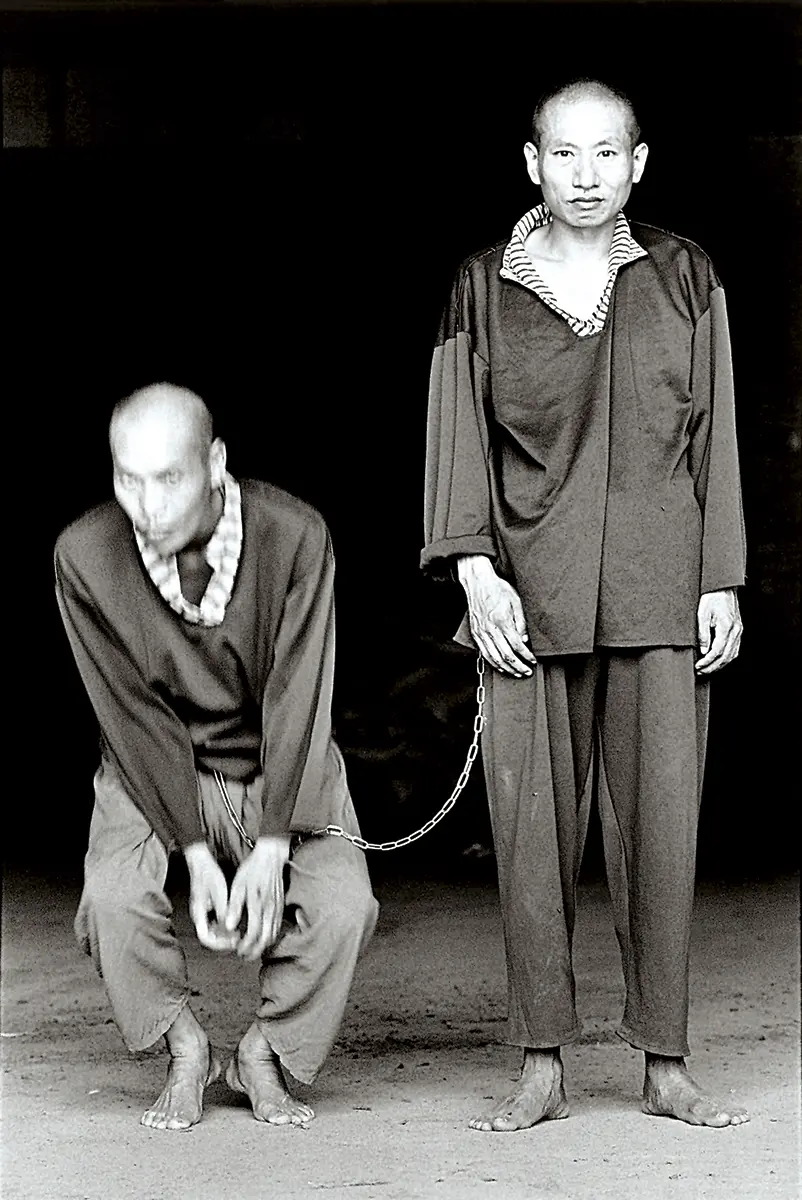
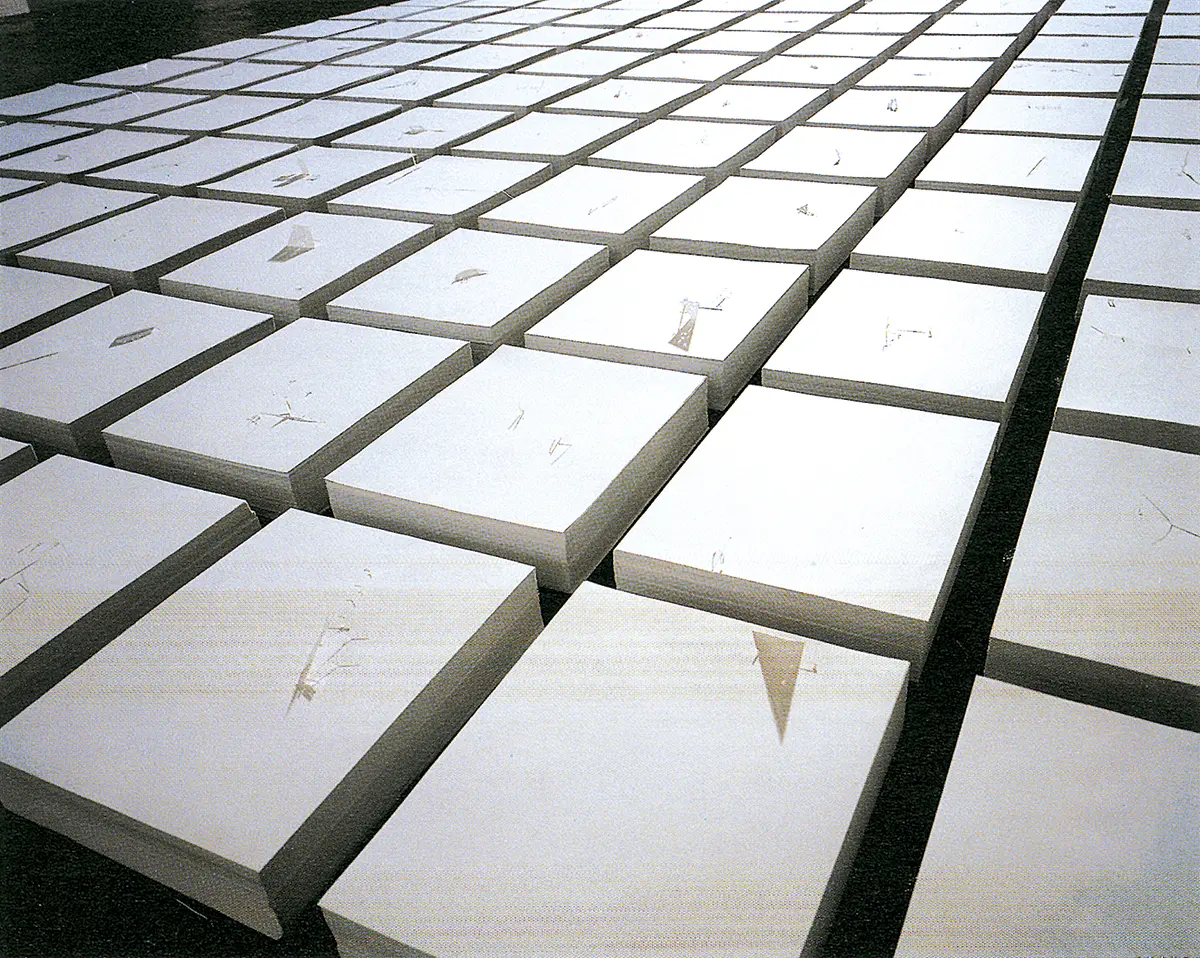
One of the most shocking entries is that of Russian artist Alexander Brodsky. Curiously, it does not appear in the catalog. This work is comprised of twenty rusty containers for burning trash that are lined up in a dark block with a peripheral crack, enlarged on one side, that reveals a miniature city in ruins. Coming from it is the sinister noise of the crematorium horn. Also sinister, as well as moving, are the large-scale photographs by Chien-Chi Chang (1961), the representative of Taiwan. The individuals portrayed, placed around the viewer, are mentally ill, and chained in pairs. We naturally associate them with prisoners of war, although in this case, it is a question of the internal war waged on their own minds.With Indian ink on rice paper, artist Hong Sek Chern (1967), who represents Singapore, creates an enormous drawing of imaginary architecture. She suggests the internal space of an unfinished or demolished structure, empty and enveloping, with no support surface. An infinite web of lines in perspective that pass through all of the imaginable qualities of tonality and an overwhelming demonstration of the dominance of the technique of paintbrushes. Uruguayan artist Marco Maggi (1957) set up an installation with 50,000 sheets of paper strictly arranged in blocks, in imitation of an urban network. Some minimal cuts and folds in some upper sheets alter the void, alluding to urban furniture. The artist himself says that this is an allegory of myopia as a strategy with which to resist globalization.
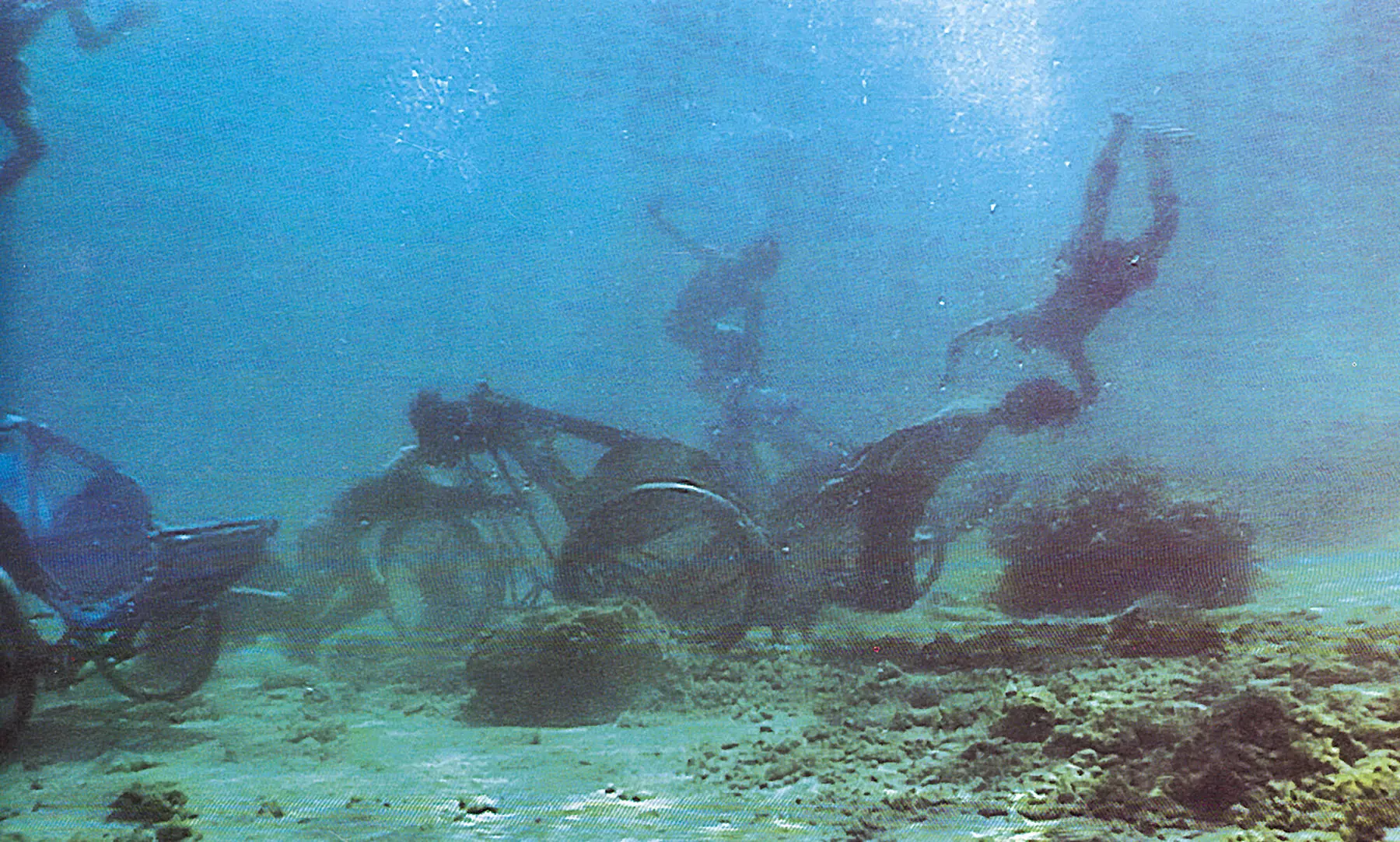
The most moving and beautiful of the videos at the biennial represents Vietnam. Its creator was Jun Nguyen-Hatsushiba (1968). This artist was born in Japan and has also lived in the United States. For the last several years, he has also investigated the concepts of the in-between society, those human groups that lack roots or that are forced to break with their roots. The artist went from painting to installation, using materials like mosquito nets, bamboo curtains, and fishing poles. Now he uses video in his work Memorial Project Nha Trang, Vietnam Towards the Complex—For the Courageous, the Curious and the Cowards (2001), an underwater film that records the long journey of some men who drag rickshaws with great difficulty. Some tautened mosquito nets several meters under the water comprise "the city." The fishermen who act in the video go up for air and come back down in order to continue their pilgrimage. The slow rhythm imposed by the difficulty of the performance adds a dream-like quality to the entire discourse.
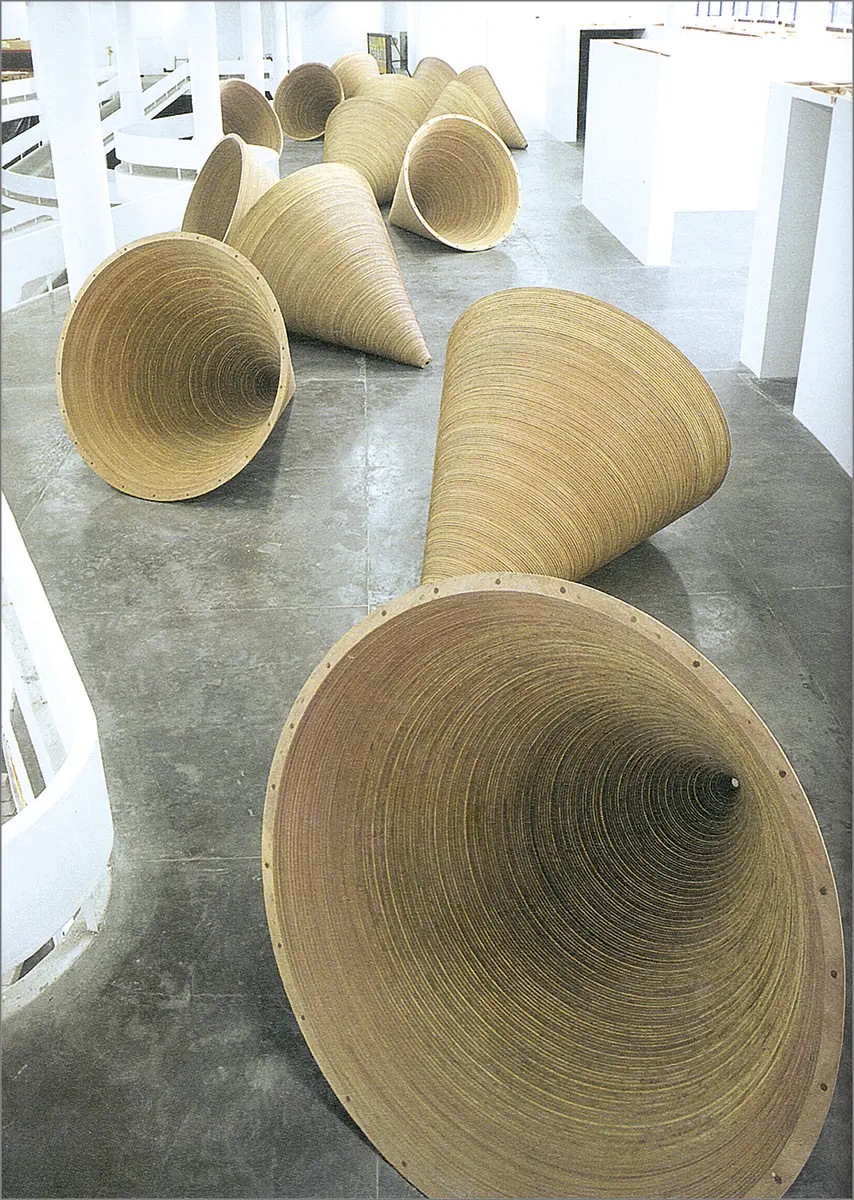
Brazilian ArtistsThe São Paulo show usually convokes a significant number of national artists in order to represent the country. In this edition, aside from the five artists who participate in the "cities" section for São Paulo, curator Farias called upon a contingent of twenty-two others in order to make up the national section, and three for the Special Project Rooms. The Brazilian group is centered on the ramp area and it occupies half of the third floor. Various texts in the catalogs state explicitly that an effort was made to gather "emerging" artists as well as artists who do not belong to the Rio-São Paulo axis. No one doubts the effort, but the result is deceptive, especially for the foreign public. The lack of maturity is evident in practically all the entries. Merely four or five deserve a comment. They are José Bechara (1957), interested in the textures that he achieves with the processes of oxidation on canvases and by tautening ox skins; Eduardo Frota (1959), a sculptor from Fortaleza who presents enormous hollow cones arranged with rings of compressed wood; perhaps Carmela Gross (1946), a native of São Paulo who installed a gigantic luminous sign on the building's external facade reading "HOTEL". More of an outside, a joke, than anything else, the intervention hardly adheres to the career of this artist; Marepe (1970), a Bahia native who has shown his work for some ten years, recovered a piece of real wall, the support for a painted notice: "Comercial São Luís. Tudo no mesmo lugar pelo menor preço." In addition to the wall itself, a video reveals the recovery operation and its transfer to the biennial. Sergio Sister (1948), a native of São Paulo, exhibits a group of beautiful abstract canvases with rectangles, squares, and bands of subtle opaque and textured colors that look like exposed concrete. From time to time, the painting survives, rather impressively, in spite of everything. Reviewing the group as a whole, we yield to the temptation to ask: "Where are the great Brazilians?"
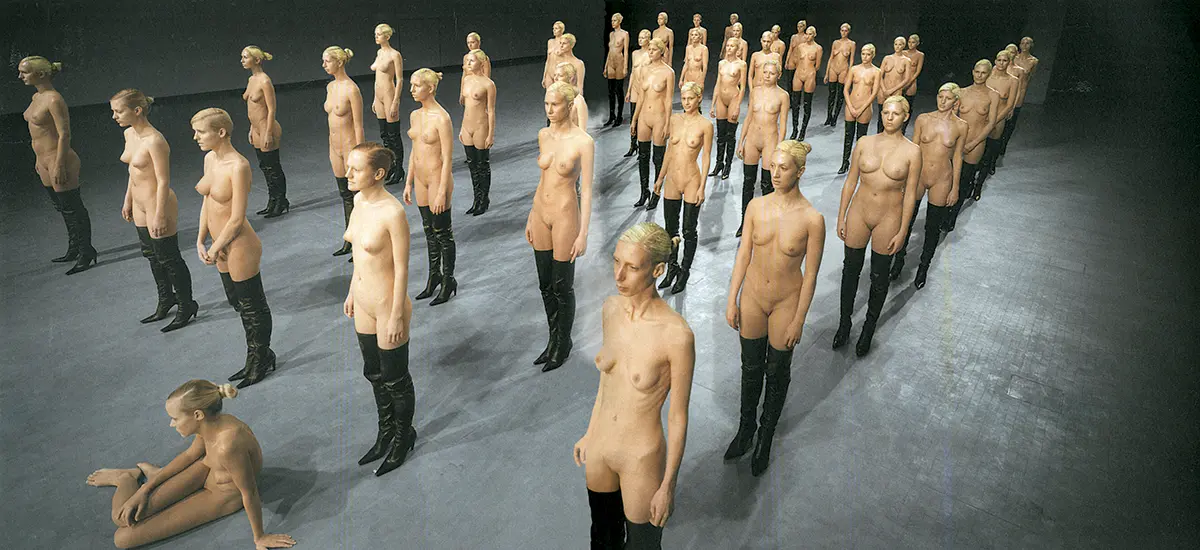
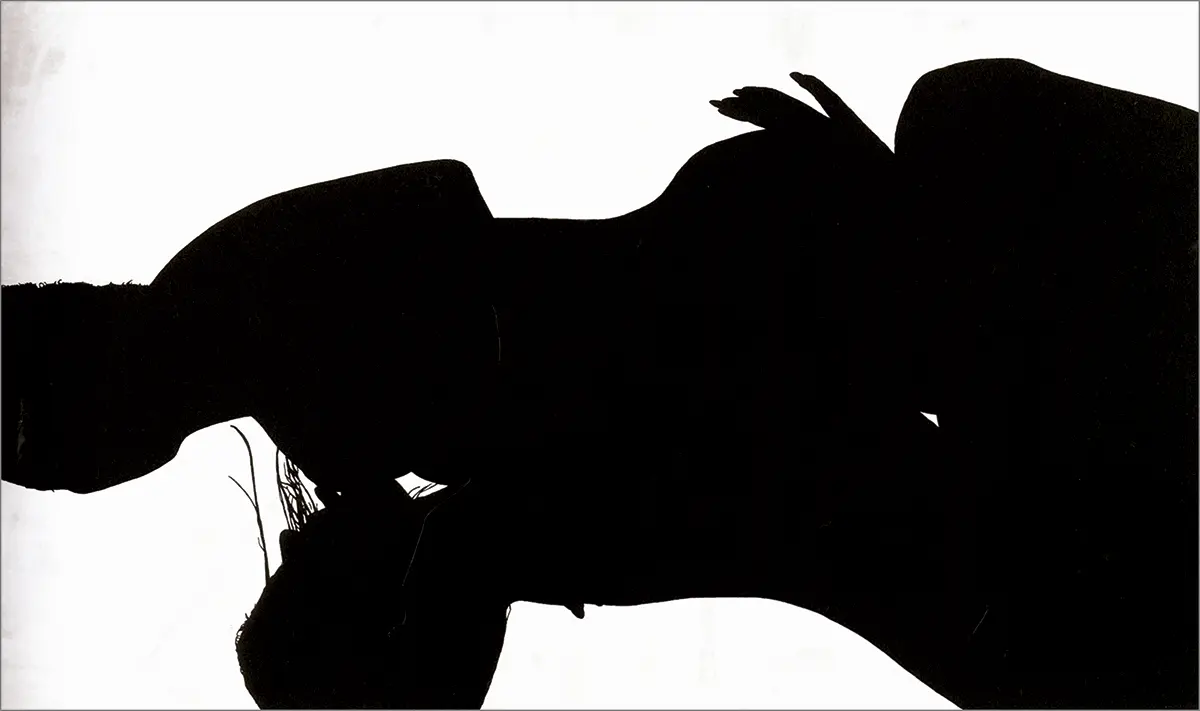
Special Project RoomsAs mentioned above, these rooms, dedicated to six international artists and three Brazilian artists, substituted for the museographical project of the most recent biennials. Generic explanation: the biennial already fulfilled its educational mission based on relevant examples of art history. Now it must devote itself to contemporary art. The invited guests are contemporary, to be sure, but not one is first-rate unless we consider Jeff Koons's (1955) indescribable kitsch to be first-rate. The other foreigners are Vanessa Beecroft (1969), who presents enormous photos of semi-nude female models (wearing black boots halfway up the thigh), a veritable army that looks like a neo-Nazi contingent; Andreas Gursky (1955), a German photographer who specializes in crowds; Thomas Ruff (1958), another German photographer, who submitted a series of manipulated photographs based on paradigmatic buildings by Mies van der Rohe; Portuguese artist Julião Sarmento (1948), who works with black and white painting, based on partial shadows of human bodies frozen in sexual acts; and Irish artist Sean Scully (1945), a painter of sober geometric execution. These Special Project Rooms preserve a living memory of a Mondrian, a Malevich, a Torres-García, and a Figari. Will the artists of this biennial ever take their places? The question stands.
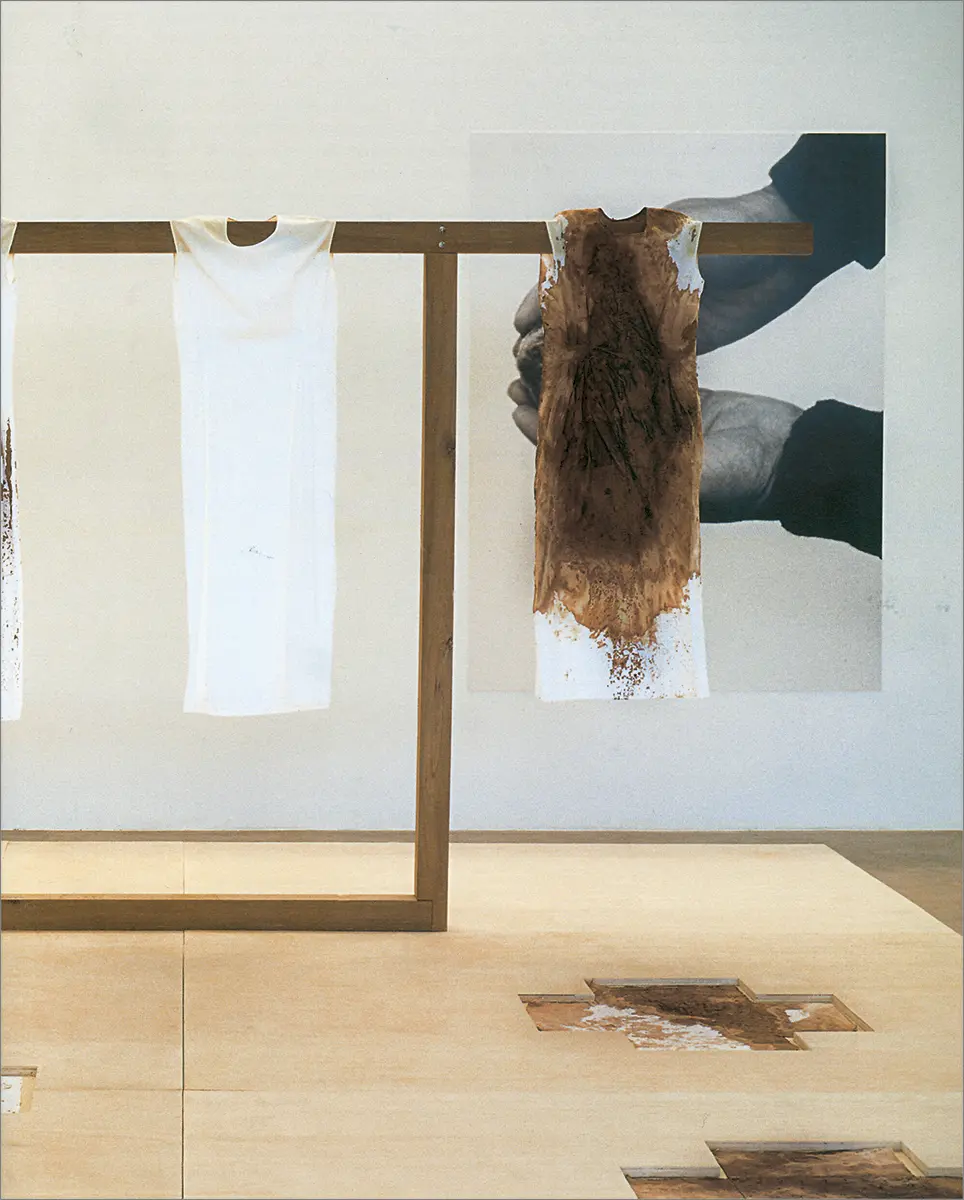
The three Brazilians in this section are Carlos Fajardo (1941), the veteran Nelson Leirner (1923), and Karin Lambrecht (1957). Fajardo constructed a sort of glass labyrinth, concealed by a silver-plated curtain around the perimeter that isolates it. In the center, six slabs of white marble lie on the floor forming a dazzling square. Since the plate glass construction almost entirely eliminates the outside noise, the viewer stops at the end, on top of a hard, irregular, and isolated surface. Leirner put an acrylic ping-pong table in his space. Accompanying it are some glass cases that enclose a long row of rackets and several rows of balls. Hanging above the table is a black rectangle, perforated with three horizontal rectangles. In the room, we hear the pitter-patter of an endless game. Let us recall that this artist was, for several decades, one of the best representatives of Brazilian pop. A large part of his work overwhelmingly refers to social and political criticism. His intervention in the Biennial seems, by comparison, less transcendent. Karin Lambrecht's installation stemmed from the macabre reconstitution of the sacrifice of the lamb. Several white dresses, stained with blood, are hung from a beam that looks like a gallows. We see the mark of the animal's guts as if this were a monotype, and a series of crosses, like bas-reliefs on the floor. In the back, a large photograph: the hands (of the artist?) hold the heart of the sacrificed animal as if making an offering. Is this a rather indirect allusion to the innocent victims of terrorism?To sum up, there were few memorable entries, too many photos and videos of little significance, and a theme that dissolved in the exhibition as a whole. Some clearly urban issues shine in their absence: graffiti, for example; the forced cohabitation of diverse strata that define the social fabric of a city; the spaces of rest and recreation; historical contents. This biennial was not memorable. We shall wait for the next one.
NOTES1. Alfons Hug, "El Atlas del Aleph," in the exhibition catalog Cidades, p. 22.2. Some countries are represented by more than one artist.3. I do not consider this section in the present essay, since it deals with a theme that escapes my competence.4. Marshall McLuhan, Understanding Media (1964).5. The main catalog Cidades (Cities) includes the Special Project Rooms and the area of Net Art.6. Julian Zugazagoitia, Cidades, p. 208.7. There is another sentry box in the show, that of Swiss artist Fabrice Gygi. The two entries are markedly different from one another. The one from the Cuban group is resolved in an almost naive language, with tubes and transparent signs. The one from the Swiss group is an installation that relies on technology.8. The interior of the installation, ten meters in diameter, may only be appreciated from the top floor.
MARÍA ELVIRA IRIARTE
Historian and art critic.