
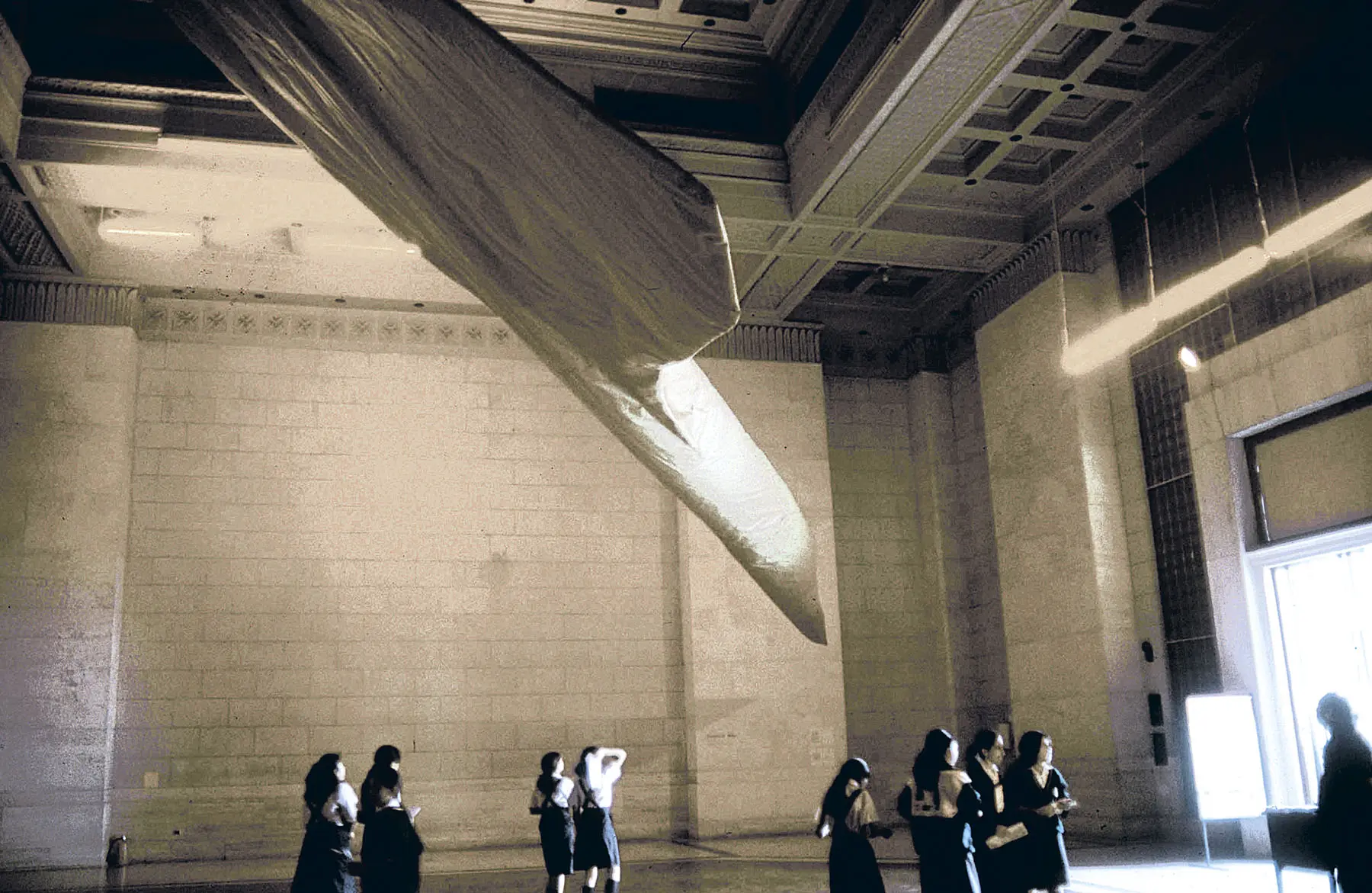
On a random morning, a documentary had just ended on The Discovery Channel. For thirty minutes, the spectators watched the turns of a sort of declaration of love made by the Concorde, the supersonic French-made airplane that surprised the world when one of the components of its fleet exploded in the air. Exclusively for magnates, executives, and businessmen—like new global Phoenicians—the documentary attempted an "affair" or recovery of admirers by reiterating the precision and good qualities of the machine, and the fact that the trip has a minimum price of $10,000. However, The Discovery Channel probably does not know that this redeeming and exclusivist vision led me directly to the work titled Lokin4LVnthXXCntry by Panamanian artist Humberto Vélez. This piece represents an enormous Concorde created with traditional techniques of piñata makers: a wire frame covered with monotone recycled papers.
From above, in the huge reception room of the Rímac house located in the historic center of Peru's capital, the work seemed to observe the mortals who walked under its belly, recalling the duality in which a pinata perishes: children's parties and traumas. In its artisanal fragility and totemic airs, it was raised as the perfect metaphor for that relationship between love and hate that emerges between modernity's utopia (or orphanhood) and the weight of reality. It graphically recalled the enormous social and political difficulties in which we find ourselves immersed, and the fragility of our democratic systems. In any case, the use of the metaphor of this twisted paper and wire airplane was set up as a possible entryway into the 3rd Ibero-American Biennial of Lima, as proof of the will to open an interesting space for art, against wind and tide.
Rudiments for a Visit
Very close to the opening of the mythical São Paulo Biennial, big enough for all the attention of the world, of the international circuits, and the glamour of the art scene, the biennial of this South American city opened last April 17th. It is, however, an unexpected situation that has been arousing greater interest and more invitations on the complex map of the Ibero-American art scene, made up of Latin American countries, Spain, Portugal, and the portion of Hispanic artists established in the United States. I am not referring to just any attention, but rather to the attention that begins to emerge when we intuit that an event, in its early stage, possesses the necessary ingredients to generate an important focus of attention and encounter. Of course, this optimistic vision also stems from removing the protocols and social accessories that any biennial needs to justify itself before its own political conditions or to legitimate itself locally before authorities and sponsors.
In the third edition of the Ibero-American Biennial, twenty-two artists participated in the international representations, five in the national representation, and there were four parallel shows. These latter exhibitions bring together a retrospective and magnificently well-assembled representation of Priscilla Monge and three representative works that allow interesting itineraries through the particular universes of creators like Liliana Porter, José Luis Cuevas, and Ricardo Migliorisi. As has been customary, the selection of Peruvian artists is the product of their participation in the National Biennial of Lima, which overlaps every two years with the present show, and whose trademark is to give prizes to the best works and their creators.
Taken as a whole, we face a biennial that seems to take one step beyond. With less spectacular, though more careful and well-reasoned, montages than those of previous years, a body of work stands out that stresses or discusses—without intending to—that political and social situation that envelops both us and them, and suggests an interesting debate on what we could define as "transconcerns." Yes, that portion of personal concerns that are on the same wavelength as those of the inhabitants of different regions and areas, and which coincide with becoming aware of a historical moment where civilized spaces are even more dangerous than those occupied by nature.
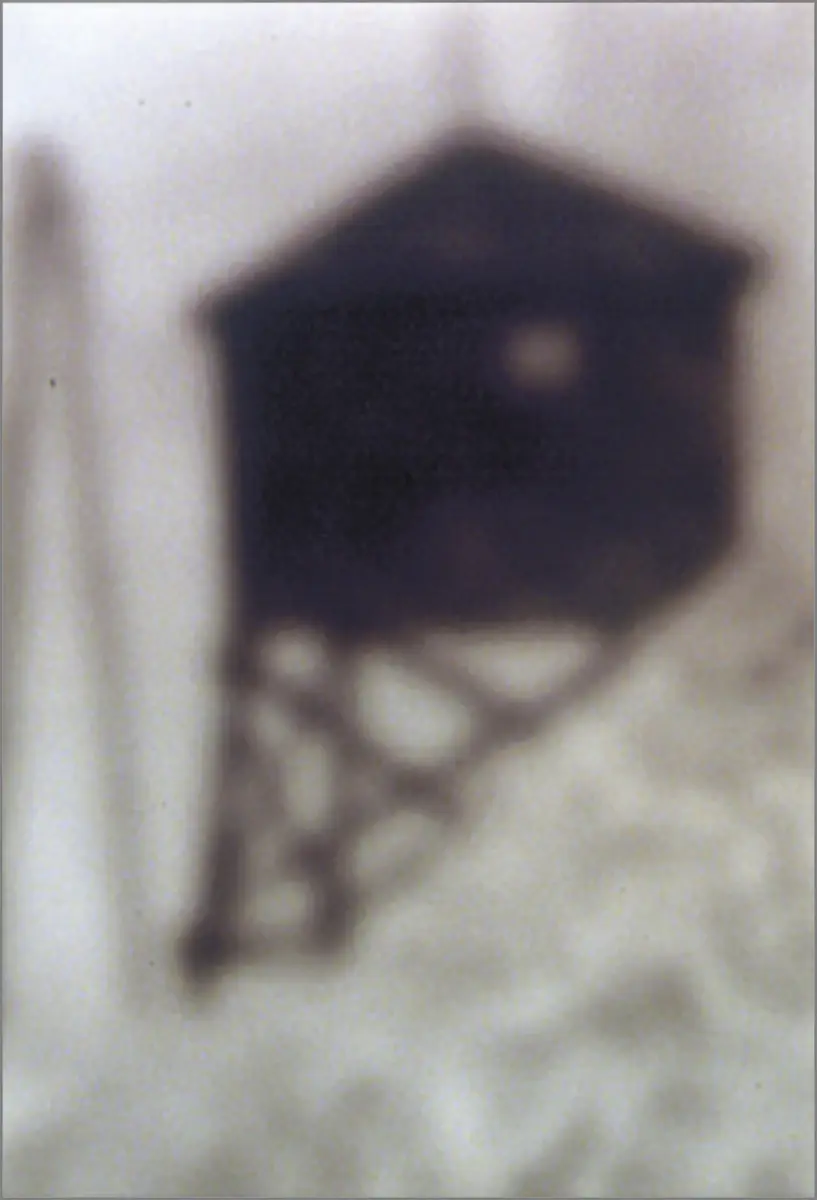
Considering the fact that the Ibero-American Biennial of Lima has refused to duplicate the biennial model that frames everything through a central theme, this introductory thread emerges in the spontaneous dialogue and the interaction of the works. It becomes tangible before photographs like those of Ana Tiscornia, which allow us to see—or to guess—watch-towers that inundate the memory of past history, what were possible concentration camps or besieged cities, and which today are transformed into voyeuristic cities of a present that finds no spaces in order to be alone, in order to weave a personal memory when dynamited by the intense noise of communications, enormous consumption, and the terror of the latest news.
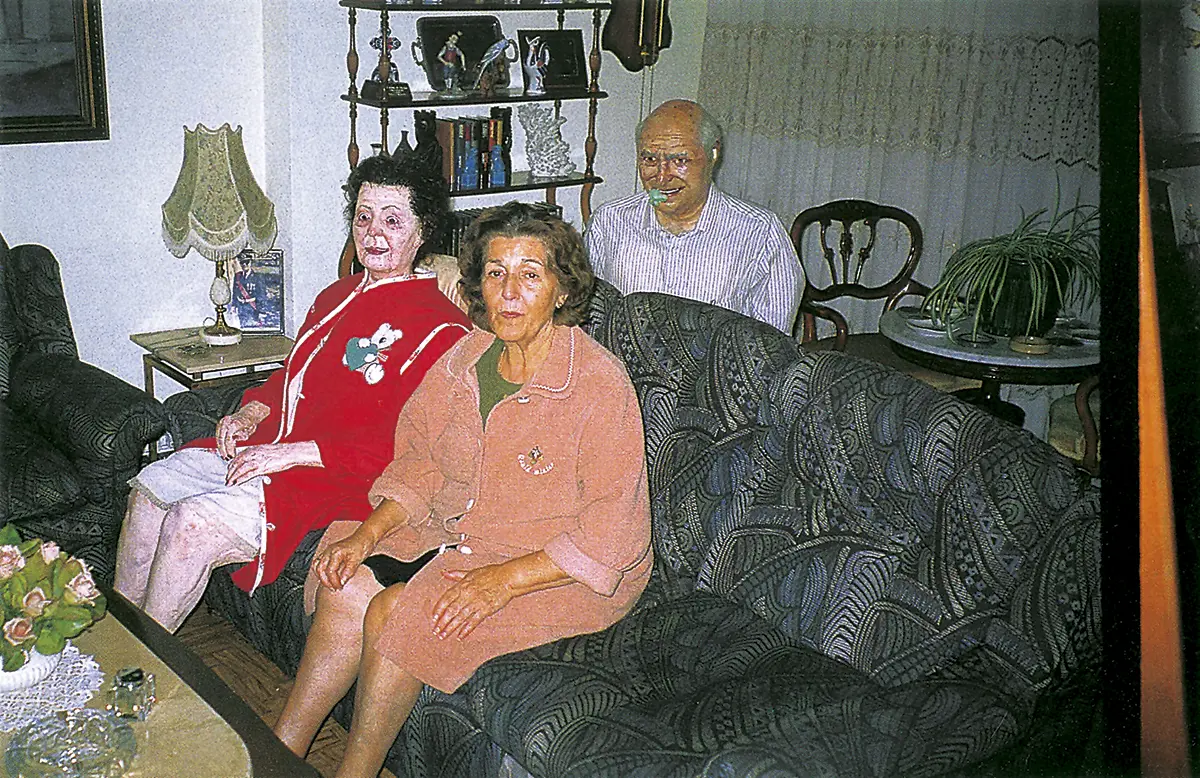
But the thread of Daedalus also tells us that history is not composed exclusively of noises. Spanish artist Enrique Marty's installation contradicts or complements Tiscornia's observation since it is framed by the construction of memory and traumas starting with family intimacy. In a highly baroque staging with knickknacks and objects of domestic reference, the artist seeks to ventilate unabashedly the traumas that the family figure generates. However, the interesting thing is how Marty's strategy is not limited to the illustration of a problem, but rather how it suggests possible escapes as it confronts this concise image with a video in which the mother herself is represented and acts in relaxed group therapy, as indicated by curator Estrella de Diego.
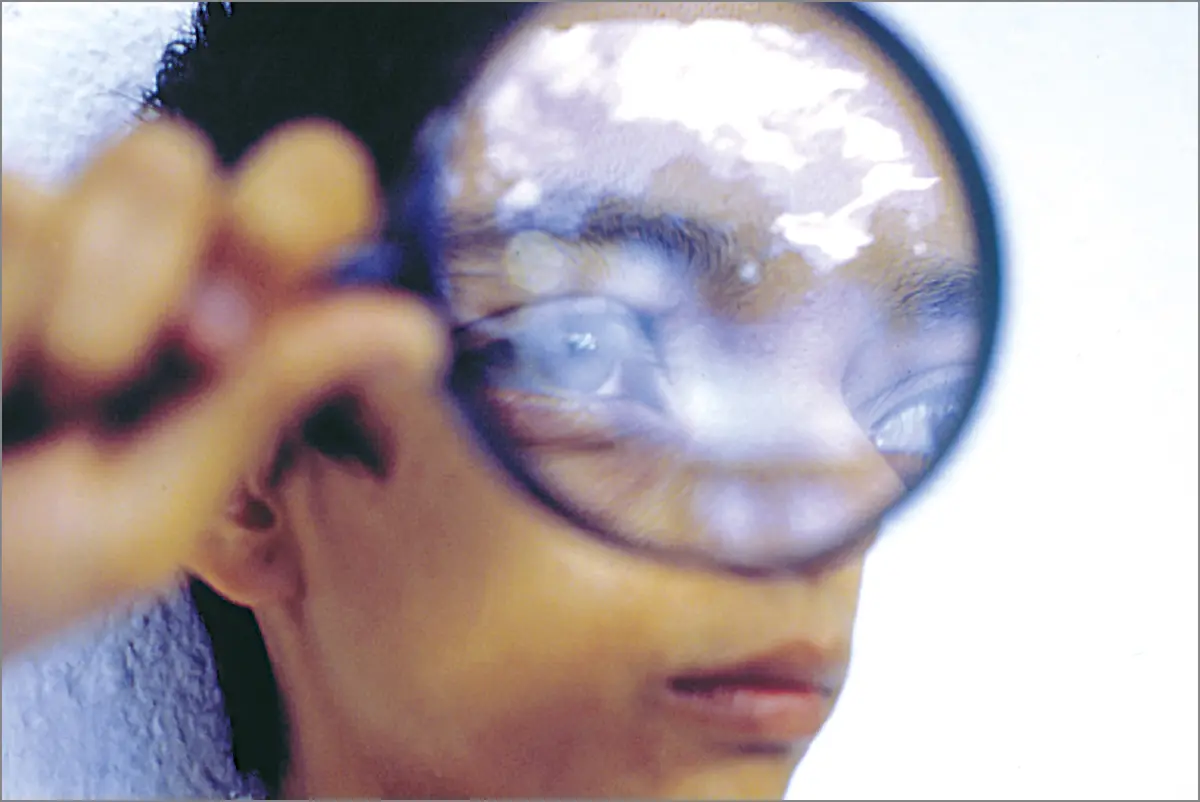
Between the figure of melancholy and brutality, the itinerary continues in the performance of artist Regina Galindo, who traveled from Guatemala City with her eyes patched; and she remained like that for six days in order to return later to her point of origin without visual references of her trip to the city of Lima. This performance carried out as an exercise of high physical risk, where one of the most important senses is castrated at will, pushes the viewer to a reflection on what José Saramago has called the responsibility of seeing. In a period saturated with images that scream at us and turn us into spectators and slaves—whether on account of its exacerbated consumption or out of the desire for silence—Galindo adopts an attitude of withdrawal in order to underscore the value of freedom to choose what one wishes to see.
With the same intensity with which Galindo refuses to recognize an urban space, Rogelio López Cuenca participates in the design of a cultural tour for gullible tourists. Lima 1 [NN] Memoriam proposes a guided and resemanticized visit to places located on the map of the city where events have taken place that was motivated by political violence, the market and its economic rationality, cultural, racial, or sexual repression, and the elimination of spaces considered by the powerful as ungovernable, in order to identify a critical relationship with the urban space and collective imagery that supports it.
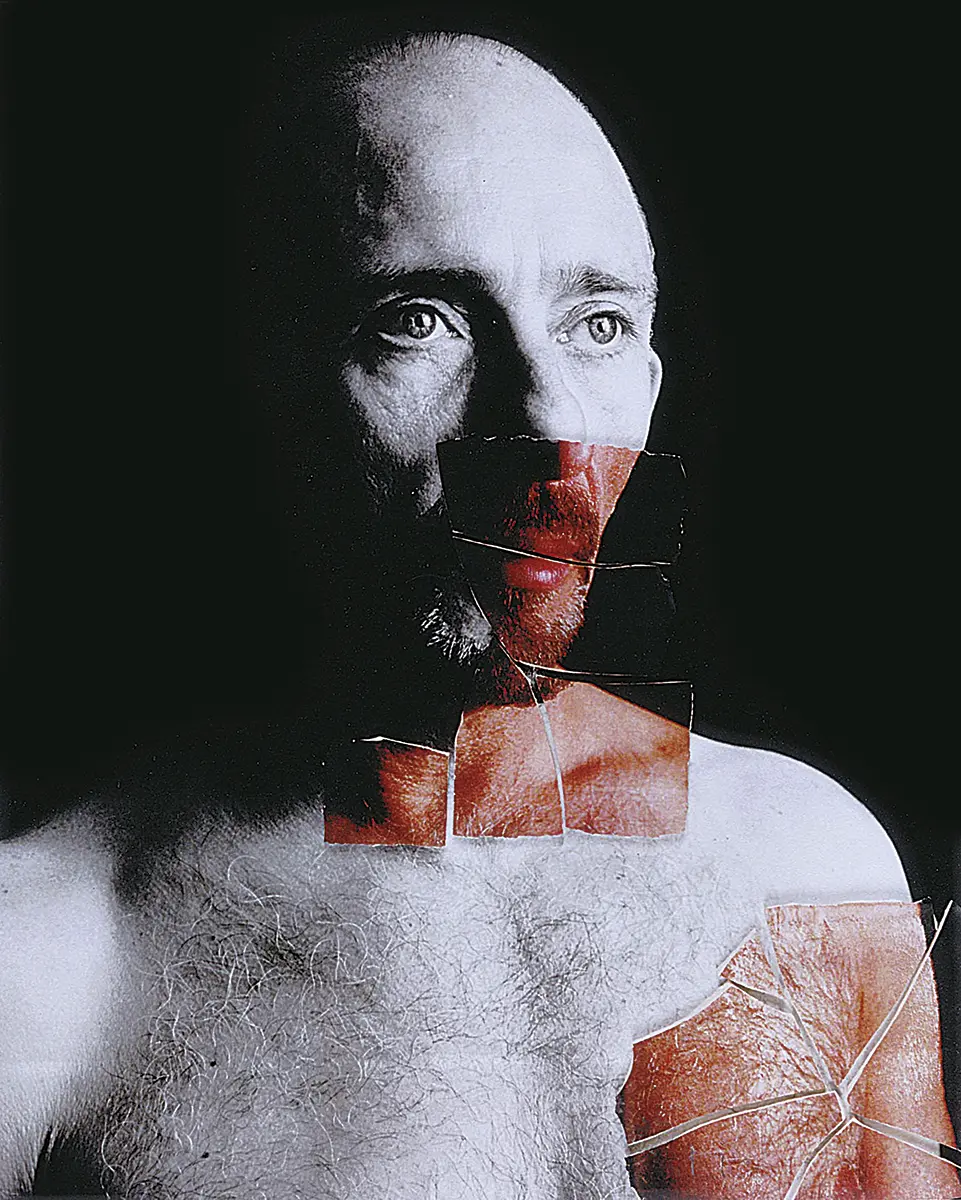
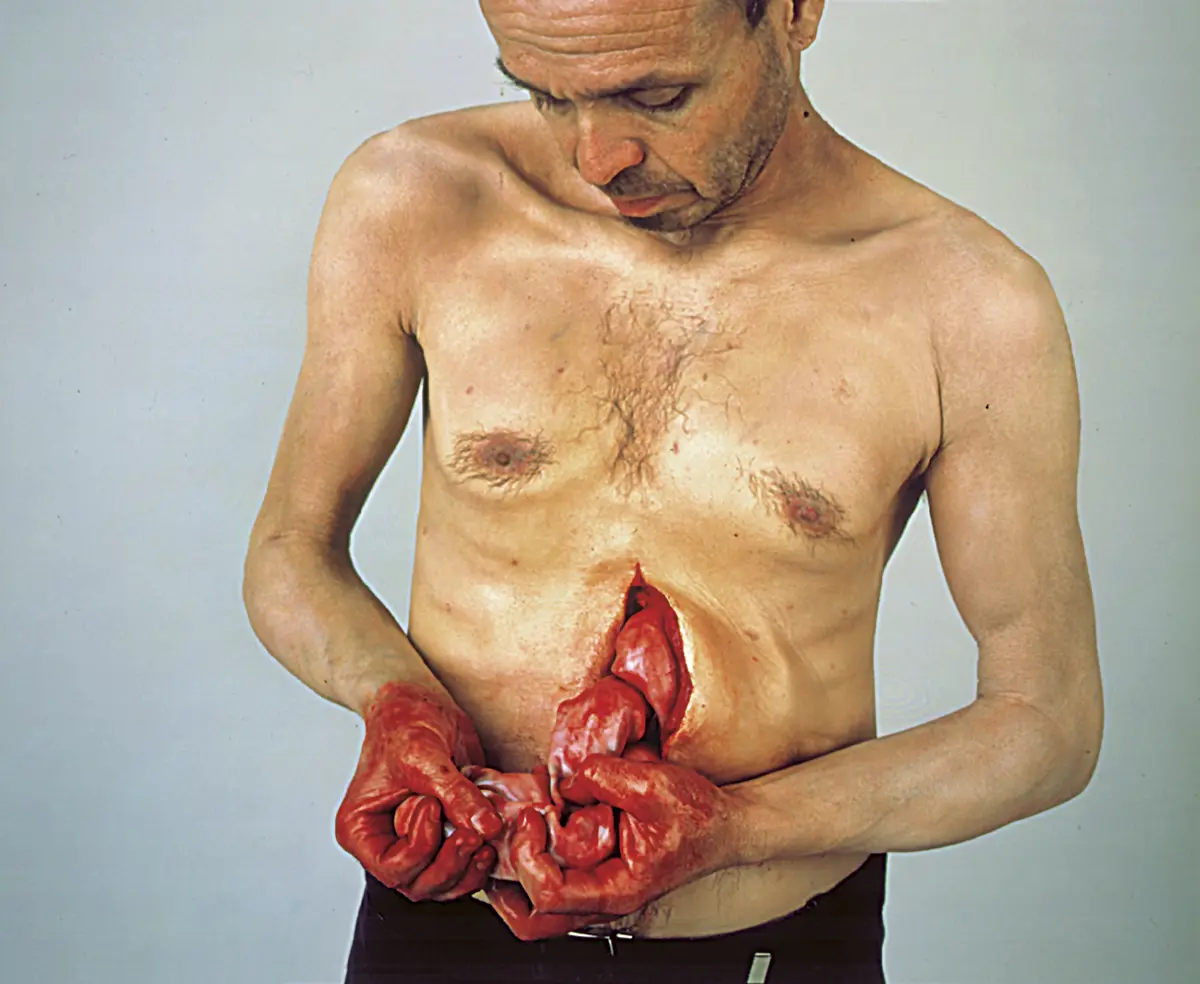
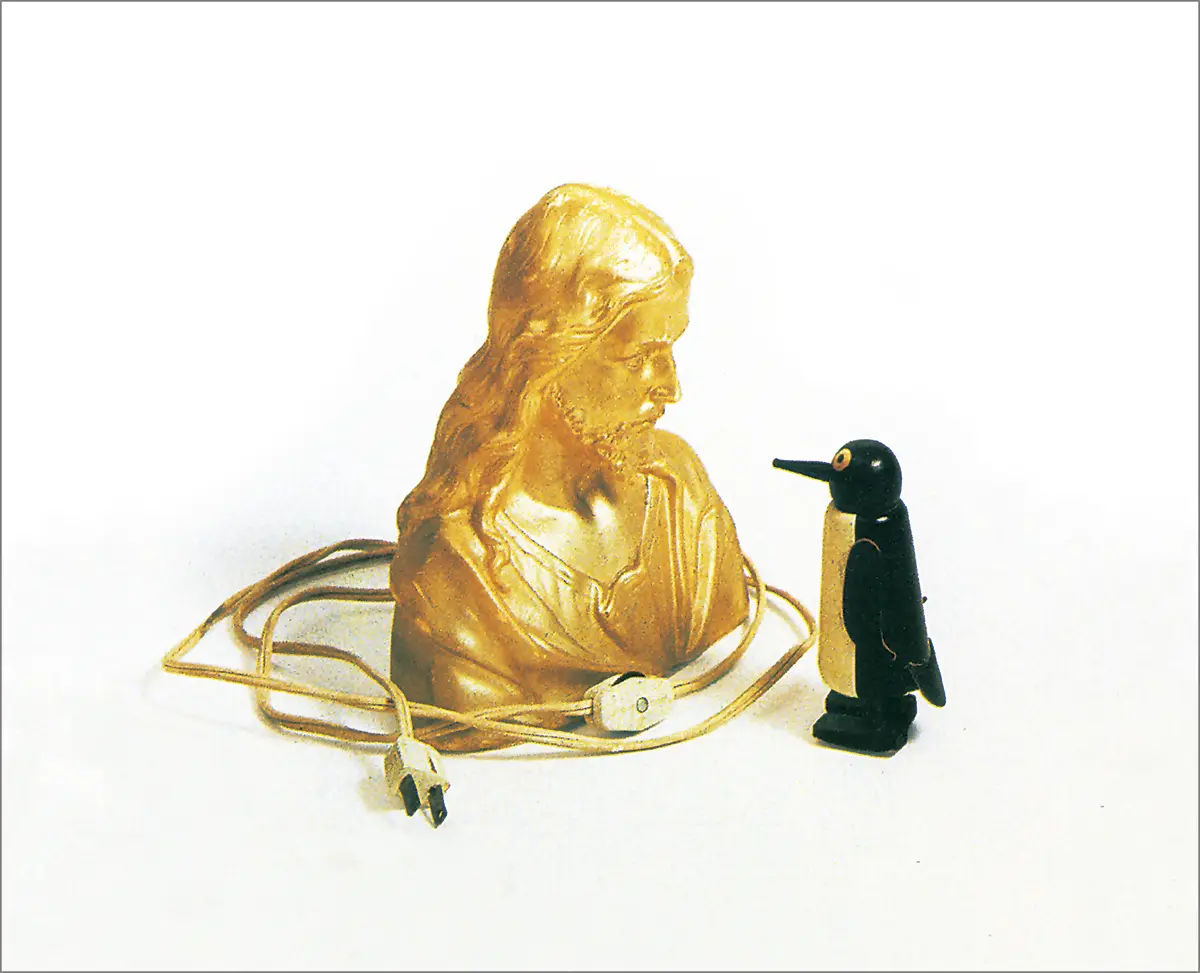
For his part, Daniel Martínez presents us with a series of photographs where the body is a prisoner of the most vile lacerations. But, only afterward, between doubt and certainty, we prefer to think that these wounds are achievements of digital techniques than what they really are: montages achieved with all those special effects that the film industry achieves with makeup, fake blood, and props suitable for the occasion. Nevertheless, beyond a simple delight in the perfection of the image, Martínez's work concentrates on making even the best eyes doubt, in order to lead the viewer to question his own concept of reality. To do this, the artist parts from a motto that is as chilling as the bloody guts that his montages show: "It is not that we confuse photographs with reality, it's that we prefer them to reality". This is corroborated or complemented by a simple and poetic voice through the performance of Honduran artist Isadora Paz, titled Entremeses para la esperanza (Interludes for hope), which is based on a series of movements typical of dance and a video that invites reflection on the daily space television has come to occupy. Also, how television today is able to unite on one single plane dubious information with products of reality. And to the crude rhythm of "channel surfing," these cyclops establish orders that drive our behaviors, routines, and social relationships.
Subversion and Resistance Strategies
In the city of Lima, hearing the voices of lawsuits stemming from civil society is a daily event. In the course of street demonstrations, these voices become mixed up with the din of traffic; they fall before war groups and the shouting of street vendors. If not so long ago we were distant eyewitnesses to the powerful demonstrations that clamored for the restitution of the democratic process in the country, it is not difficult to consider a vein in the local artistic production that refers to and insists on the importance of discussion and criticism on the political, economic, and social plane. With direct allusions or discourses of a poetic nature, some of the artists who make up the Peruvian representation in the biennial insist on the value of revising and subverting the systems of power imposed by the horizon of the status quo, in a country of contradictions, with streets invaded by successive rural migrations and the most refined spaces of aesthetic contemplation.1
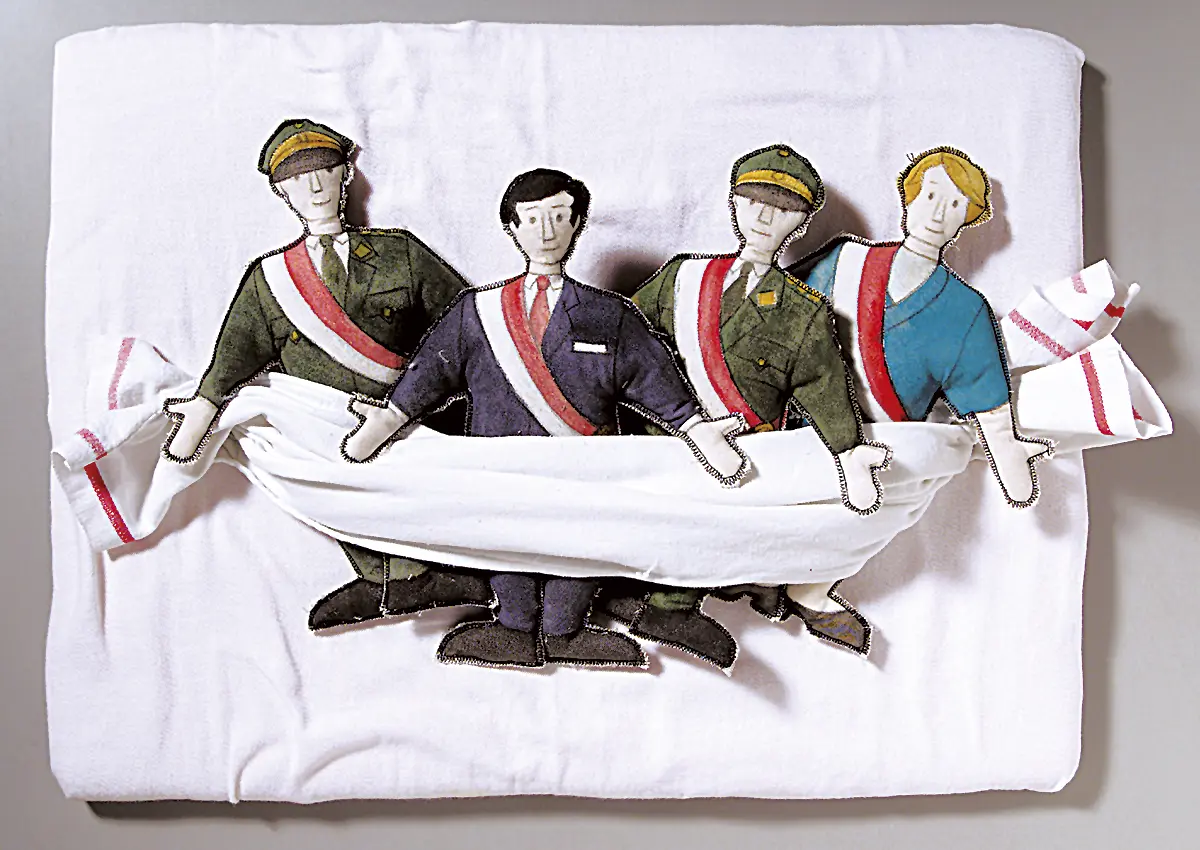
Thus does the work of Giuliana Migliori stand out, which gathers a series of components that attempt to structure a fictitious ad campaign. In a display that organizes the reading of a video with its respective audio, an attractive logotype, and the image of a model of obvious Peruvian descent, the central character is the perfume Eau de Sarita. Intentionally in French, Eau de Sarita evokes the place where the great perfume industry is a banner. Migliori thus makes use of its advertising gestures; she appropriates a discourse based on the sensual and hormonal in order to present a perfume that arouses different (and even confusing) expectations by substituting the codes of supposedly acceptable beauty with that of real persons, with bodies that refer to a particular sociocultural group. As a sort of gag, Migliori proposes a decolonized vision based on humor that defies the prejudices and practices of segregation. Luz Letts, as a contrast to the indirect commentary on the subliminal strategy, shows off ferocious humor in order to evaluate the electoral systems through a slot machine that chooses, through a wide array of selection possibilities and chance occurrence, presidential candidate dolls. Like a ready-made, the machine is introduced into the artistic space in order to insist on the automatism and manipulation of the people, of their representative hopes and requests.
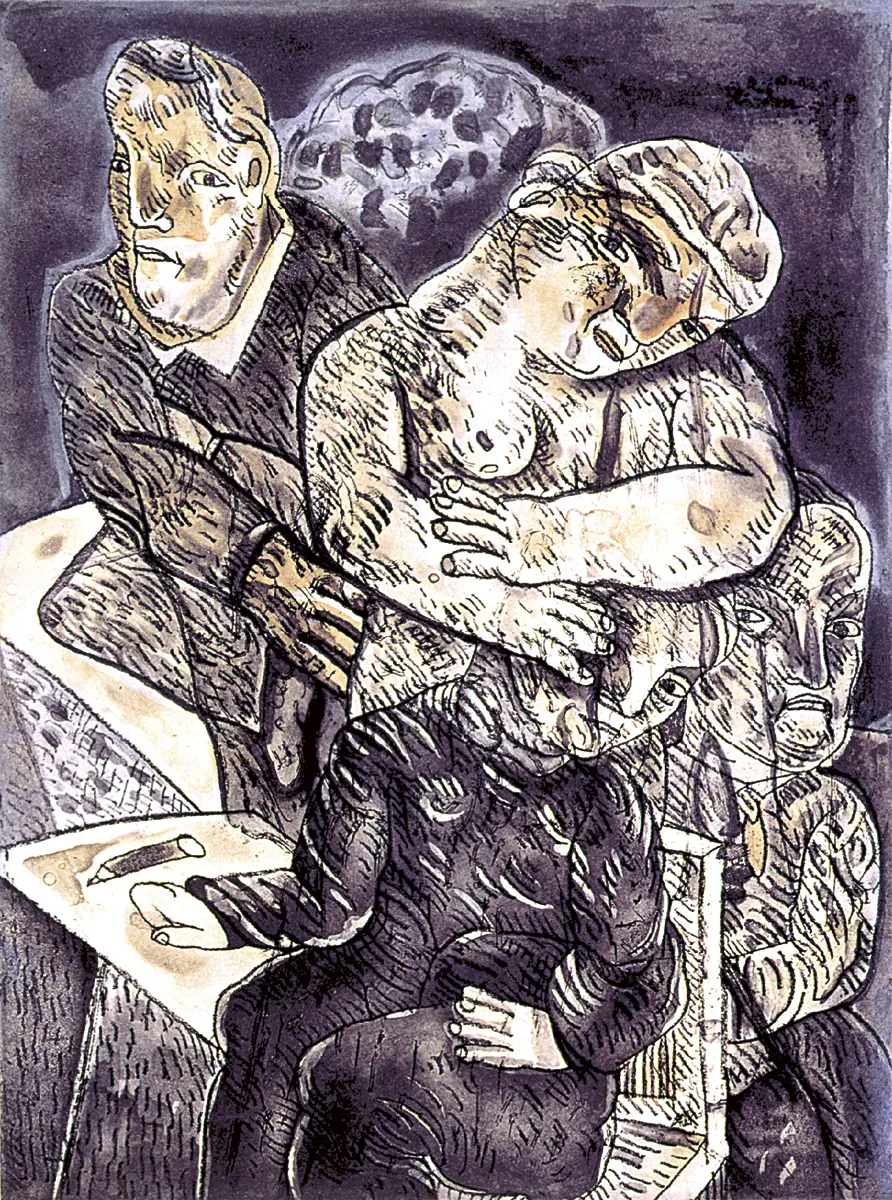
Just as Migliori and Letts speak of a specific spatial and temporal context, Fernando Bryce finds an indispensable piece of information in Peruvian history through the revision of a series of reproductions of known works of art that were accumulated in the 1950s for the Museo de Arte de San Marcos by an elite group as part of a cultural project. This same piece of information makes tangible the aim of civilizing the masses with what were then pieces of Western art considered universal. In the simple operation of exhibiting the entire group and redressing it with academic interest, Bryce questions precisely the judgments that were applied along with the eagerness for cultural desire in the past and present.
Engineers of Our Own Foolishness
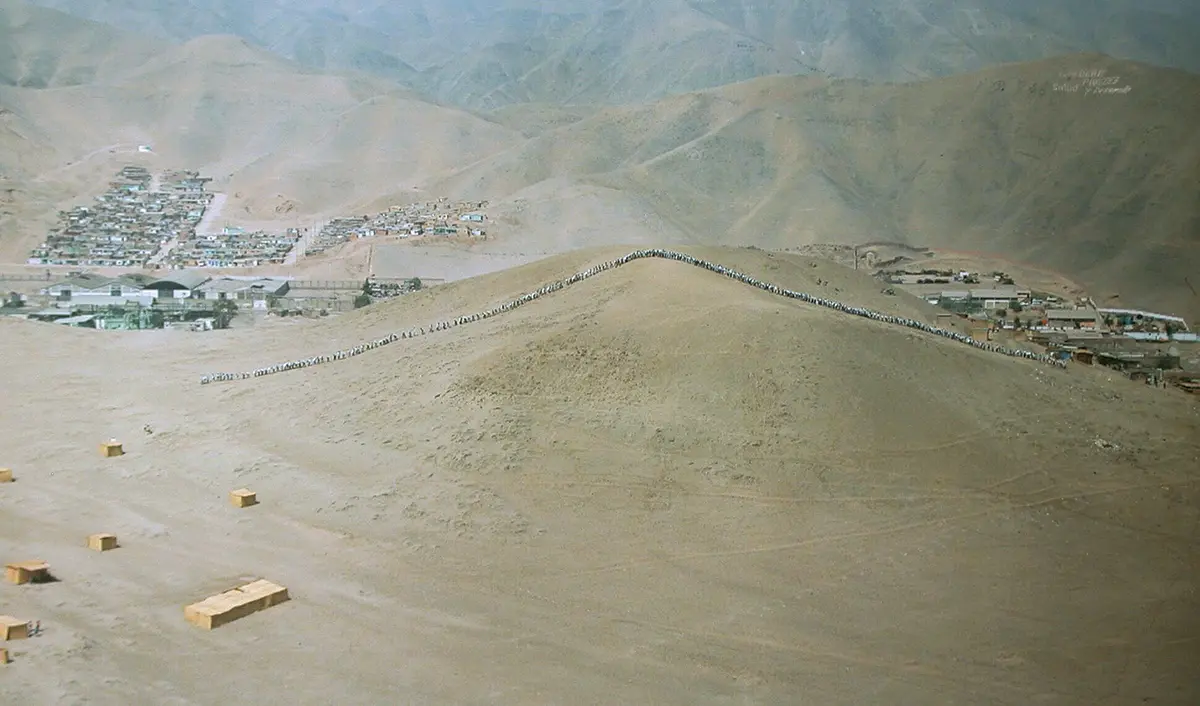
It has been said that one of the aspects that attracts the most attention in the biennial is how the works exhibited in the different parts of the city come to dialogue with the public and symbolic space, to reflect tensions of political, social, economic, and geographical order, and, in some cases, to take on truly poetic and interesting metaphorical resonances. And that is where a work like that of Francis Alÿs comes into play. Titled La fé mueve montañas (Faith moves mountains), this action of an epic nature, whose images recall somewhat the human wave in the Aztec stadium, was able to convoke 500 people in order to form a line with the aim of moving a dune measuring 400 meters in diameter, located outside the city. The participants, like an immense comb, moved forward, pushing and removing the upper layer of sand with shovels. The goal was to displace the mound from its original position through infinitesimal steps. There are no better words than those of Cuauhtémoc Medina, the theoretician behind this action of apparent uselessness, for explaining this maximum effort as something that contemplates the minimum result, and as an application of the Latin American non-developmentalist principle: an extension of the logic of failure, programmatic dilapidation, resistance, entropy, and economic erosion.
In the harmony of exhibiting the effects of scant productivity, the work of Costa Rican artist Joaquín Rodríguez del Paso discourses between the fetishization of the dollar and the fragile economies. Although he ran the risk of seeming overly didactic, the artist carried out an action in the public square where passersby were invited to participate in drawing a dollar bill. In exchange for their effort and work, the volunteers received the dollar that was used as a model. Later, Rodriguez del Paso's proposal was to sell the drawings at a higher price than the one assigned, thus provoking a reflection on the dollarized economies of Latin America.
In sum, it is worth pointing out that the Ibero-American Biennial of Lima, during its few years in existence, has gathered artists with diverse and interesting proposals. But it is still in that stage of germination where we generally consider the following equation to be true: enthusiasm and good intentions equal a chance to evade homelessness to which we are often subjected. However, it is important to remain alert. For such excessive enthusiasm at times ignores the task of continuously revising the internal parameters, which reduces the taking of risks. Therefore, the call of the totemic but fragile figure of the Concorde affects the importance of maintaining the self-critical ability and a responsible curiosity which help, first and foremost, to inspire significant dialogues, to evaluate the enriching effects of the work of art on the viewers and the local production, to support the discourses, the presence of their creators, and the exchanges that may come as a result.
NOTE
1. Cited by G. Buntinx,"Los signos mesiánicos. Fardos funerarios y resurrecciones mlticas en la 'Republics de Weimar peruana' (1980-1992)," in Arte y violencia, XVIII Coloquio Internacional de Historia del Arte (Mexico City: UNAM, 1995).
ROSINA CAZALI
Independent curator and art critic. She lives and works in Guatemala. She directs the project La Curandería.