Alfredo Prior (Buenos Aires, 1952), is among the great painters to emerge in recent decades in Argentina, even if his points of reference are of a definite conceptual slant, and even if local conceptual art tends to mix disciplines and techniques. Since the 1970s, and more decidedly in the 1980s, Prior has been recognized as a painter, and his works trigger, even today, the kind of paused gaze that only great masters evoke. A Prior painting, any of them, is to be studied slowly, silently: his narrative contains such symbolism and such a mystery that it is impossible not to look for keys, traces, and communicating vessels in it. An attentive observer finds them, but it is unlikely that a complete decoding of these images will be achieved; part and parcel of their power is the escape they offer to regions inhabited only by the artist's own fantasy.
Prior's recent show at the Museo Quinquela Martín allowed for a rediscovery of the artist's early years, the young Prior who would soon join Kuitca, Monzo, Bueno, and Pierri, and others in a generation of painterly painters. Later, he would alternate large-format painting with expressions such as drawing and collage on paper, performance, and literature, the latter manifested in the production of erudite and side-splitting texts that the young magazine Ramona currently publishes with some regularity. Prior's writings are a joyous surprise in a scene unaccustomed to visual artists with such a wide range of expressive talents. In large part, Prior writes like he paints: inviting the reader/viewer to partake of an ample menu of historical data, ancient legends, and mythological scenes, duly manipulated and always captivating; these are used as points of departure for fiction. Prior is a defender of fiction, an admirer of Beuys and Duchamp who recuperates the purest quality of imagination and leaves aside the ostentations of a cheap ingenuity made so popular by many contemporary artists fixated on achieving effect.
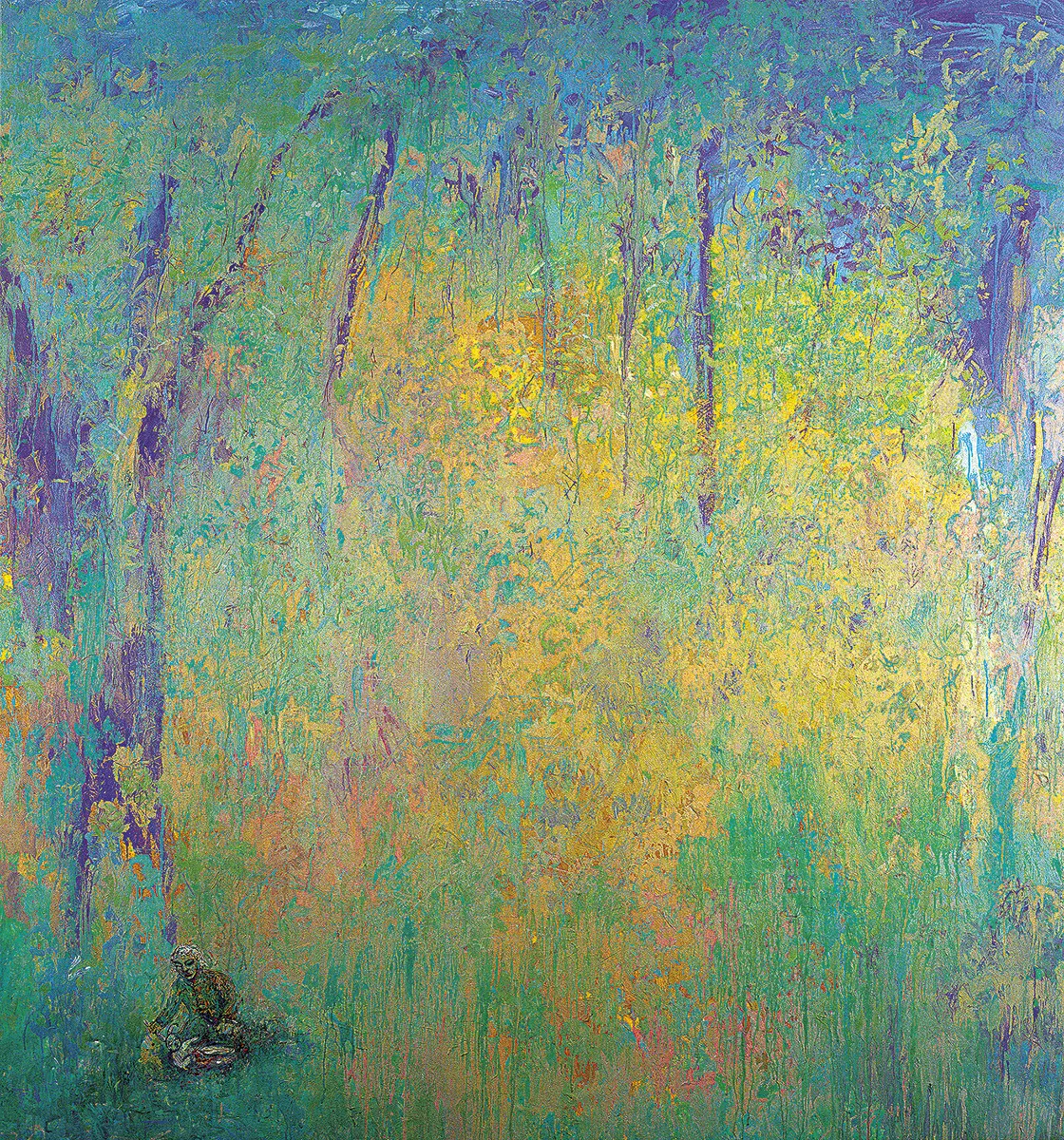
Prior's cosmography is subtle and strange, and it resists a strictly rationalistic interpretation, which would only succeed in giving it a more or less functional label. His canvases are inhabited by zoomorphic beings painted against viscous backgrounds, minuscule characters caught in instants of generally epic quality, appearing from corners as if their hyperbolic environment forced them to engage in the adventures sometimes suggested by the work's titles. In his landscapes and portraits —Prior is, in his own way, a classicist— figures are often incarnated in bears, rabbits, and other various animals going about their businesses in all seriousness, at times melancholy, at times pensive. The museum's retrospective was a good opportunity to appreciate an evolution in the work's general tone (this is not a value judgment), from a darker and more experimental period in terms of technique to a more festive period, full of warmer colors and humor. (The reader will not know this, but it is a true pleasure to watch Prior watching his own paintings, laughing like a child at his own private jokes, never completely revealed).
It's also worth noting that despite his achievements and his talent, and despite having shown his work in Buenos Aires' most important galleries, Alfredo Prior has not seen a book published with his work, compiled and annotated as it deserves. This is just but one indication of the sad state of art publishing in Argentina regrettably dissociated from quality and subjected to the capricious dictates of commercial interests.
EVA GRINSTEIN