
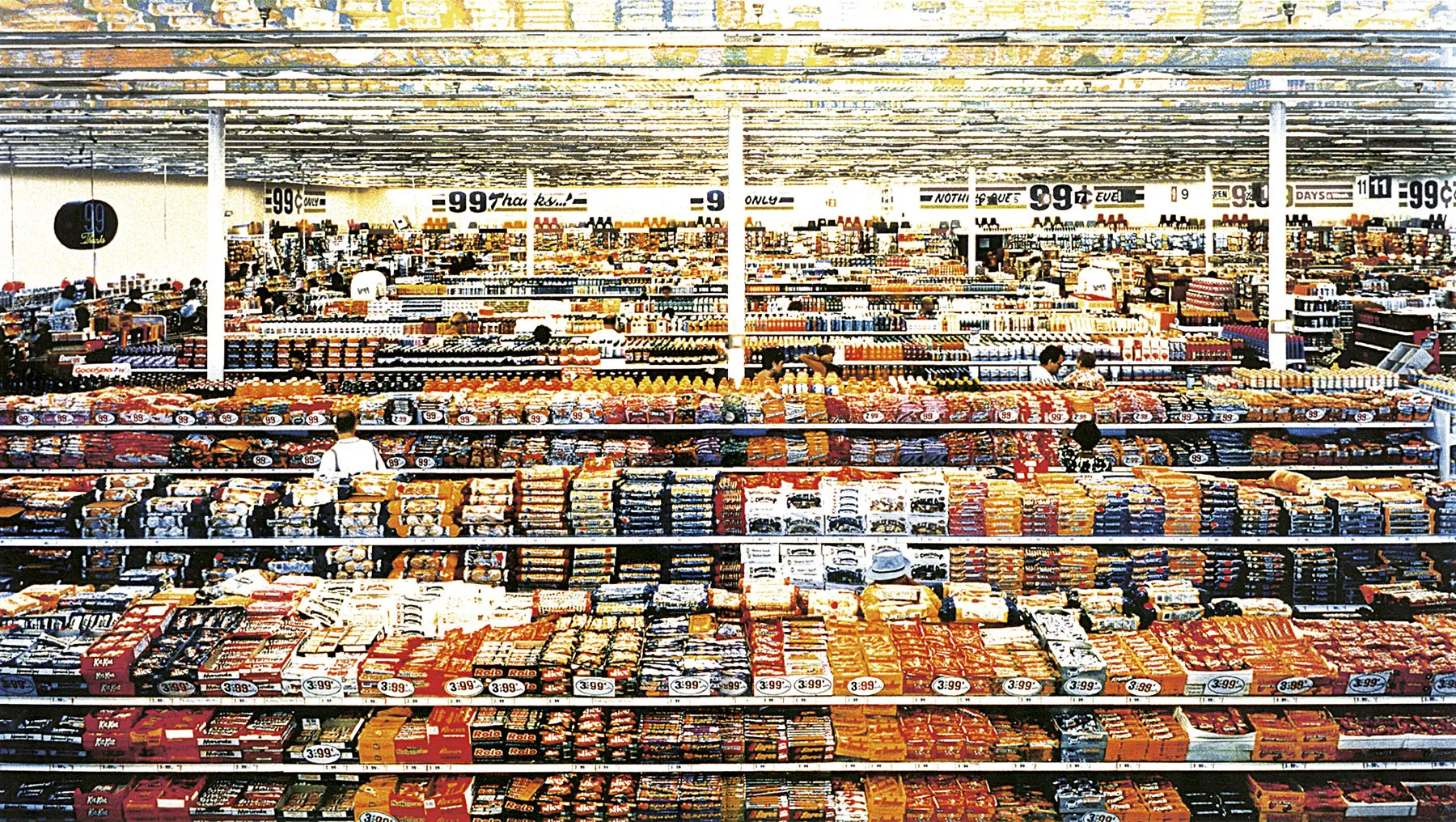
The Deichtorhallen, one of the biggest exhibition spaces in Hamburg, attempts to explore one of the most pertinent issues governing art today, and, appropriately, it does so with an exhibition with an English-language title, Art & Economy. Though the exhibition, big and ambitious, is not very interesting, the topic certainly is, and so is the fact that it is addressed at all. In a rather obsessive and self-righteous manner, I used to make the distinction between art produced for commercial consumption and art made with the less selfish intention of building a culture. Selfishly, I expected this show would at least illustrate my concerns, if not confirm my views. The English title, alluding to the global hegemony of the language, raised my expectations that the show would offer a critique of the de-communalization of art and its role as a servant of an international market. The exhibit sprawls along many rooms with objects, installations, videos, and documentary sections, and a list of artists including Louise Lawler (fetishism of the collector), Andreas Gursky (iconography of mass dynamics), Matthieu Laurette (survival in chaos of offerings), and Santiago Sierra (exploitation of labor), with enough space for their presentations to promise a serious review of many of the issues involved. And, the title hinted at a critical distance.
However, the apparent irony in the title ended at the gallery marquee. Coproduced with Siemens, the exhibition avoids any ideological analysis. Objects and data are presented in a quasi-archeological fashion: "things" are shown devoid of any analytical context. The catalogue is somewhat more explicit and its introduction mentions some points that are nowhere to be seen in the exhibition. According to the text, one of the possible theses of the exhibition is that the development of art is congruent with the development of the economy. A second thesis is that art not only gratefully accepts payment from those controlling the economic structure, but also uses economic arguments to explain and justify the form it takes. A third thesis is that today, artists refuse to take a position of moral superiority with respect to the system ruling commercial transactions.
The organizers underline the fact that neither the corporation that manages the gallery nor the artistic program of Siemens can be considered neutral territory on the subject. This certainly helps to explain why the organizers of the show end up highlighting a few points without exploring the power relations that affect art. Their caveat provides an important clue for decoding the exhibition and can be bought for 25 euros (approximately $23 U.S.), the cost of the catalog. The disclaimer in the catalog text virtually invites us to see the incompleteness of the project and the extent to which the artists' decisions in regard to the aims and destiny of the artwork have been ignored. What should have been an elucidation of stylistic and ethical-political problems does not rise above a description of the obvious.
Most trivial is the affirmation that there is an intimate relationship between art and economy. But a more interesting discussion culturally and historically, would have been whether the binomial "art-economy" has become useless. What is the significance of the fact that (if true) modernist utopias no longer exist? Is art becoming no more than a rubber stamp for a particular power relation in the economy, ceasing altogether to be an agent for social change?
For a very long time, the artist has been structured like a capitalist enterprise. Simultaneously: 1) he/she is an entrepreneur with ideas; 2) a venture-capitalist seeking funds; 3) a slave laborer who generally works below minimum wage or for free; 4) an advertiser who promotes particular products; and 5) a sales clerk. Inevitably, the artist, as a producer of articles for consumption, is subject to market laws. Even art intended as a form of resistance is made within market parameters.
It is a big step, however, to leap from this empirical observation to a normative embrace of the idea that all alternatives are dead. It is true that some decades ago artists who focused on sales were seen as compromising or worse, as mercenaries, even as prostitutes. It is also true that today judgments of that kind sound a false note if not in ethical terms, at least in reference to artistic reality. But the difference between change on the one hand and defeat on the other has not yet been discussed. It is a crucially important question, though, and challenges us to examine the role that artists may have or should have in relation to power structures embedded in the economy.
For a few decades beginning in the late 1950s, there was a concerted effort—at least on the part of many artists, to break the yoke of economy on the production of art. Artists tried to erase the division between art and life, to incorporate everyday materials and situations in order to chip away at the domination of categories, disciplinary thinking, and preciousness. Freedom was the aim; spectacle and super production were the result. If we revisit these questions from three decades ago, we are led to ask what should the artist do in today's world. Should the artist now accept that everything produced is economically digested? Should the artist devise strategies to fool the economy? Should the artist, not only work for the economy but also be happy in doing so?
The exhibition, disappointingly, takes for granted that economy means no more or less than the corporative economy that develops in a so-called "free market." Defining it this way erases the State from all together consideration. We are left uncertain as to why political economy is not addressed. Does the omission reflect an enlightened insight into the world? Is it a sign of colonized thinking? Is it merely an oversight? It is true that in the United States, there is no Ministry of Culture and that the government agency responsible for the financing of the arts, the National Endowment for the Arts, has suffered over a long period from steady budget cuts, political scandals, and diminishing influence. It is also true that the current President Bush believes that his statement: "a night out at the theatre can be a rejuvenating and relaxing diversion," represents serious support for the arts. But, at least at present, this model is rather unique in the world and one that, with luck, will not be erected beyond the frontiers of the U.S.
Meanwhile in Germany, where this exhibition takes place, and in the countries of origin of the artists in the show, public funding for the arts remains substantiated. It would seem natural for an exhibition focusing on art and economy to discuss the implications and consequences of the two different systems of financing art— private on the one hand, and public on the other. Both have shortcomings, primarily because of the varieties of censorship attendant on both, and the different purposes served by each. The government tries to promote its image and to appear as a keeper of the constitution and morals. Corporations try to hide their interest in profit under the disguise of patronage, while simultaneously trying to avoid the offending of potential customers. Even with these flaws, however, both systems provide needed support, and it would seem that it is in the tensions between both where the independence of the artist can find some space for expression.
The title Art & Economy, in any language, forces consideration of the limits imposed on the artist by the transfer of money, any transfer of money. One wants to see, for example, what effects a virtually 100% public subsidy of art had on Cuban artists during the eighties—a time when Cuban art reached an unexpected and surprising peak. One is curious about the possible advantages of the more moderate subsidy system implemented in Holland during the sixties and seventies, in which artists were helped along until they were commercially successful. It would be useful to analyze the effects of circuits of distribution on artists' work: how is the work affected by commissions, or by the use of galleries; and how does the artist function who avoids commercial circuits.
As in the case of public subsidies, private funding of the arts reflects and promotes certain interests of the donor. Sometimes these interests are explicit; sometimes they are hidden. Drawing a borderline between "pornography" and "art," for example, has nothing to do with freedom of expression, but a lot to do with institutional values and interests. The U.S. and Cuban governments; private corporations and socialist regimes, all share a preference for a restrictive, "conservative" definition of pornography, reflecting a desire to maintain social control. Private galleries, on the other hand, where the money comes after the art is produced, are more likely to accept a very broad definition of art that includes images politicians would decry as mere pornography. A similar variation among art supporters can be seen when the subject matter or iconography of work touches on matters of national pride.

The generosity of subsidies should not be minimized, though, for as it is evident from the documents presented in this exhibition, private corporations are playing an enormous role in the promotion of art. There are tables with tens of catalogues of excellent exhibitions all of which were privately funded. These were ambitious projects; frequently providing vital information about artists and historical periods and in many cases would have been highly unlikely candidates for government patronage. Several of these exhibits demonstrate that the private sector is often able to recruit more highly skilled technocrats than the public sector. Some of these exhibits funded by private corporations have included artists who are dissenters from the economic system, raising some interesting questions equally unexplored in this exhibition such as: Is the power of the corporations so strong that they can finance their ideological enemies? Or, is art so weak in its effects that it is unable to threaten the power structure? Or, does art move simultaneously on two levels, one manifest where the bite somehow leaves no permanent mark, and the other latent, confirming the statu quo.
In certain ways, what is absent in this exhibition is the artists themselves, despite the presence of their art. One wonders what positions the artists shown here take in regard to these issues, but the exhibition provides no answer. This is puzzling, since among the limited array of possible answers, these artists would all be able to choose with some clarity. A broader speculation is whether artists have reached a level of working within an aesthetic that connects and integrates art and economy so completely that the ideological position of the individual artist becomes meaningless, something along the lines of Gothic in relation to religion. Individual variations get lost within a generic style and cease to influence how the work is read. Under such conditions, artists would have internalized the ideological values of production for consumption within a capitalist market to such an extreme that, even while they believe in something different, they confirm the system.
In one of its documentary areas. Art & Economy includes a sampling of collaborations between art and industry. The examples range from a rug based on a design by Gerhard Richter to a project by Öyvind Fahlström done at a sign factory. The irony and comment implicit in Richter's original art piece, copied from a display sheet for commercial house paints, is completely lost. The resulting carpet could have been created in the Bauhaus in the 1920s. Fahlström's work, unexpectedly old in the context of this show, is a working model for a definitive piece executed by the Heath Sign Company in 1969. Based on an original drawing by R. Crumb, Meatball Curtain reproduces the explicit sexual content in metal silhouettes. It is not clear if the managers of Heath ever realized what they were helping to manufacture.
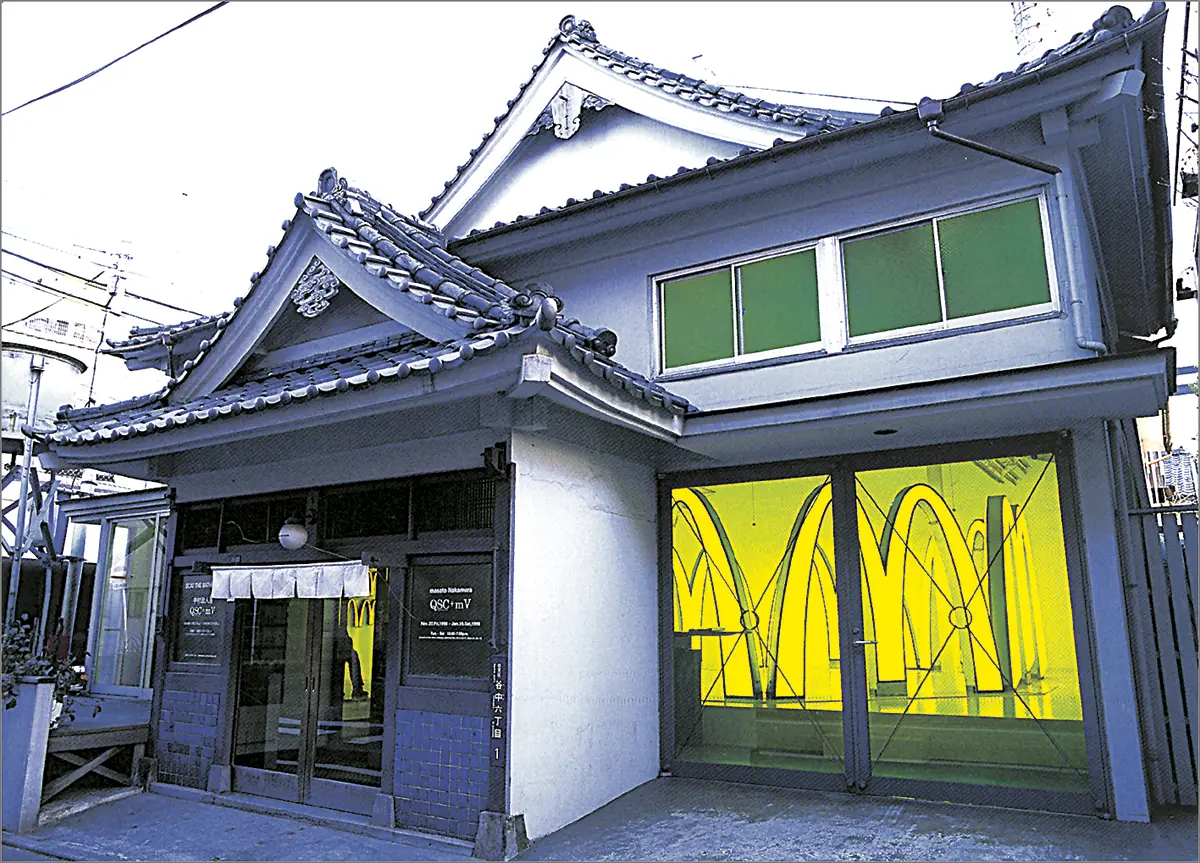
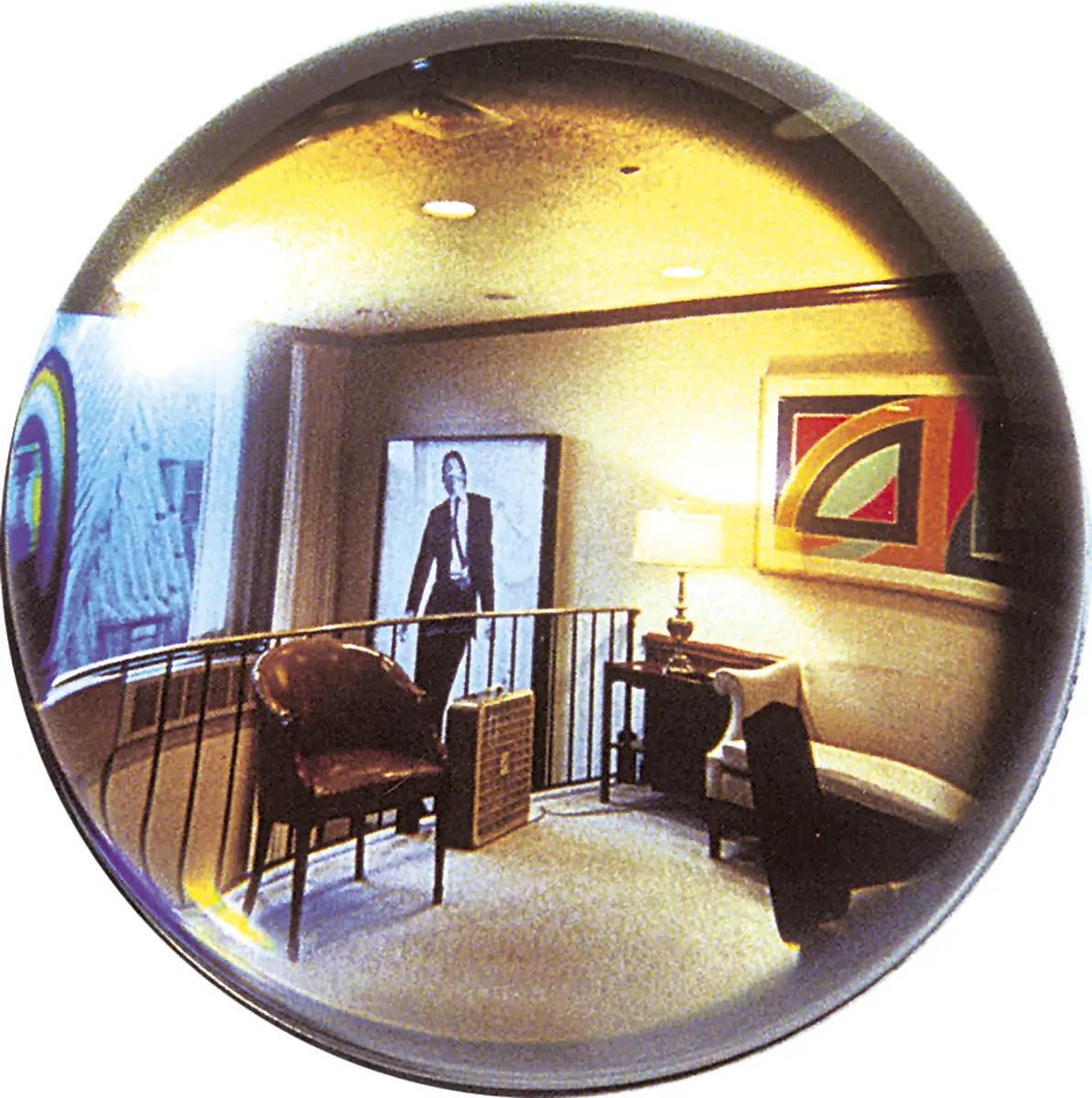
It is not so much the absence of ideological analysis (this, at least, was the consequence of a wiled decision) that is shocking in Art & Economy, but rather the lack of an organizing principle in the show. Viewers encounter a salad that doesn't even dare to assume its identity as such. The lettuce in it is represented by the work of Masato Nakamura who was the author of the big McDonald's sign installation in the Japanese pavilion during the recent Venice Biennial. Here, Nakamura has a much smaller piece that doesn't go beyond an attempt to transform a logotype into a piece of art. The obviousness of his piece is in blunt contrast to the pointed works of U.S. artist Louise Lawler, the real vinegar in the show. Lawler's photographs are works of art that are well-known in the market. In her hands, the original piece becomes a still life, undergoing the same process of transformation a flowerpot does in order to become a painting. Both stop being themselves to become models. Effectively, Lawler establishes a distance from the original and forces us to see, not works of art, but emblems of possession. They are portraits of the acquired. These pieces are probably the clearest and most synthetic in the whole exhibition and signal one of the most fertile directions that could have been taken here.
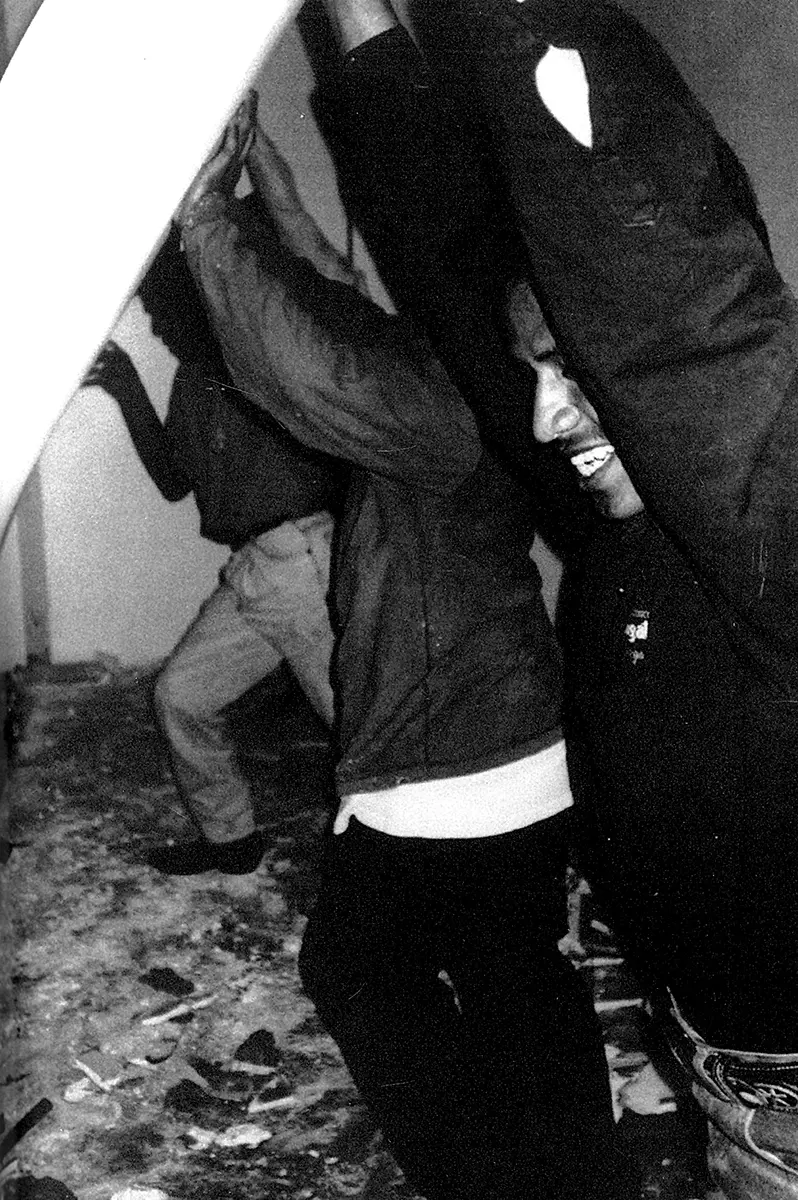
Santiago Sierra is another challenging artist in the exhibition. A Spaniard residing in Mexico, Sierra invariably manages to make everybody uncomfortable. He specializes in videotaped performances for which he contracts people to perform or suffer under unusual and painful conditions in exchange for pay. In the two videos shown here, one sees four men precariously holding a wall at 60 degrees, with a fifth individual controlling the precision of the angle and masses of people summoned to gather in a gallery without any clear reason. The people employed (in the double meaning of "used" and "contracted"), are always marginal to the economy and ready to do anything in exchange for money (like having their back tattooed with a horizontal line). Sierra's obvious precedent is Argentine artist Oscar Bony's La familia proletaria (The Proletarian Family), 1968, but there is a significant difference between them. To exhibit a live family in a gallery. Bony paid the head of the family twice the normal salary he earned as a die cutter. Sierra, instead, looks for his laborers among the ranks of the desperate (illegal immigrants, drug addicts, prostitutes, etc.). At the same time that he denounces exploitation in our society, he also takes advantage of it. He puts himself in the position of an unscrupulous accomplice appropriating debasement to effectuate his communication. But he also becomes a hero, doubtless about soiling himself to complete his denunciation.
Matthieu Laurette is less provocative and more endearing in his development of a strategy to live free by making use of supermarket coupons, promotional offers, and refunds "in case of dissatisfaction." He managed to live free for a year by claiming back purchase prices. As nice as the idea and performance may be, the presentation is weakened by the display. For the purpose of the exhibition (which was also shown in the Venice Biennial), Laurette includes a realistic Duane Hanson-like portrait of himself with a shopping cart full of products, along with enlargements of newspaper clippings about his feat. A visit from one's home to his web page (www.moneybackshopping.net) is much more interesting and offers a much more aesthetically consistent experience.

The only piece in the whole group that presumes to be subversive is the video by B.I.T. (Bureau of Inverse Technology). The Australian group defines itself as an "information agency." Here the images are taken by a remote-controlled spy plane. The plane could be misunderstood as a toy (20" wingspan), but it is a true espionage tool that flies at a height between 10 and 600 feet). During three months (November 1997 to February 1998) the plane took "prohibited" pictures of a majority of the industrial parks in Silicon Valley, including property belonging to IBM, Intel and Lockheed. It is not clear how truly illegal these flights were, but they make good fun of the twin obsessions of keeping industrial secrets and stealing them.
Other works in Art & Economy are more ambiguous. In these, it is not clear whether a critical approach is being taken in which the image reveals something more than itself as an object, or if the image is no more than a representative icon. Zhuang Hui takes group photographs of employees in Chinese factories. Hundreds of people pose and, before the shutter clicks, the artist joins the group. The photographs can be as long as 30 feet and are taken with a panoramic camera that was popular in China during the first half of the twentieth century. Hui's work is not confined to the photograph. It also includes the complex negotiations to convince managers to approve the project, and the coordination of masses of people (A photograph including 300 employees costs the factory roughly 300 man/hours and needs a lot of leadership). The inclusion of the artist in the photograph may be read as providing an ironic twist—the appropriation of the collective by an individualist artist—or as the creation of an image of a cultural collective that transcends the factory enclosure. As icons, these photographs provide an interesting and charged counterpoint to the ones by Andreas Gursky's huge panoramas of masses of people and products.
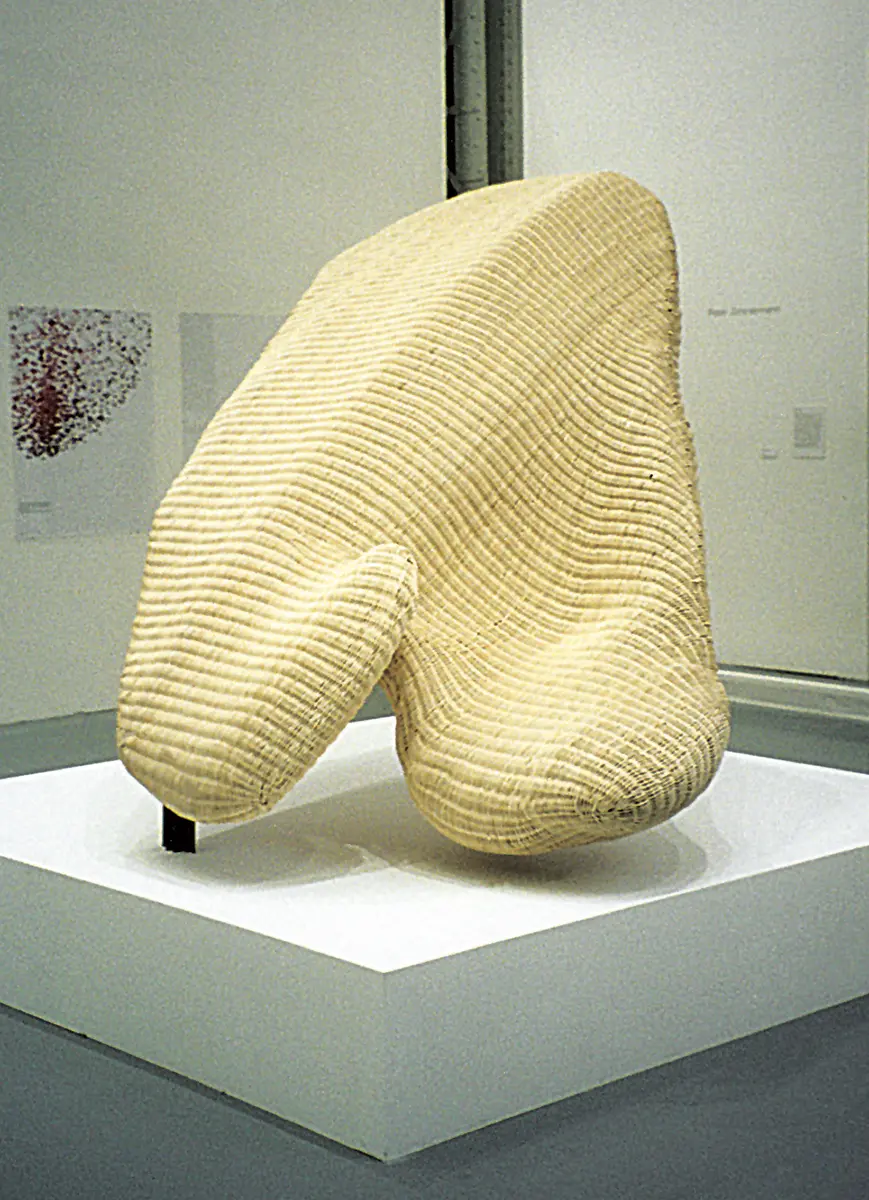
Peter Zimmermann introduces another perspective in the exhibition by proposing a set of rules that produce unpredictable images. The intention here is that the rules reflect the economic system and that by applying them, they create a representative symbol. In this case, Zimmerman calculated the cost of the TV's prime time and then used his available production budget as a reference to select 15 seconds of images randomly recorded through zapping. The video was sent to a commercial company (MPS Mediaworks) to translate the images into three-dimensional coordinates that in turn generated a graph. This graph was then woven into a wicker sculpture. The theory seems to be that multiple translations will lead to a sculpture that symbolizes the whole process. While the sculpture is handsome, the project seems to ignore both the weight of the loss of information that occurs at each step and the arbitrariness of the rules that may invalidate the result. It could be, of course, that the whole thing is an exercise in irony. But that remains unknown.
It is unfortunate that one has to leave the exhibition with so many barely grazed or wholly untouched topics. The catalog, in parallel disorganization, includes some essays that address important subjects and thus seems more self-conscious in terms of leaving a body of references. Michael Mueller, one of the more interesting essayists, discusses the possibility of thinking of culture as a commercial structure, that is, organized by stockholders, with the artist selling him/herself and the cultural entrepreneur opening markets and defining values. The cultural entrepreneurs of this exhibition seem to have decided to avoid both these functions and, with it, any chance for exhilarating provocation. Thus, a savory topic sank into total insipidness.
(Edited by Selby Hickey)
NOTES
1. Art & Economy, Deichtorhallen, Hamburg, March 1- June 23, 2002
2. Zdnek Felix, Beate Hentschel and Dirk Luckow, Art & Economy (Hatje Cantz, 2002) p. 14
3. "Bush Pledges Art Support," Newsday, 12 June 2001. The full start of the Reuters telegram reads: “President George W. Bush pledged his support for the arts at a Washington gala on Sunday, saying a night out at the theater can be a rejuvenating and relaxing diversion."
4. In the catalog there is one reference to the socialist structure of Hungary where the government, "powerful, prejudiced and conservative," generously gave money to artists. After 1989 the government turned to ask for help from private corporations. Among them appear several German banks, a Dutch insurance company, and, of course, Siemens. Strangely enough, there is no mention of the Soros Foundation. Julia Varadi,"Kunstfoerderung in Hungarn nach den Umbruechen von 1989/1990." Art & Economy, p. 166. The catalog also includes essays about the development of art in the economies of Mexico and South Africa.
5. In the U.S. in 1991, the National Endowment for the Arts tried to force recipients of funds to sign a document by which they promised not to use the money for works with pornographic implications. The demand was eventually ruled anti-constitutional and the NEA was forced to pay out the awarded grants to those artists who had refused to sign it.
6. Heike Kramer, Art & Economy, p. 143
7. Michael Mueller, "Kultur, ökonomisch gedacht," Art & Economy, pp.146-156.
LUIS CAMNITZER
Uruguayan artist, Professor Emeritus at the SUNY College at Old Westbury.