For the period of the international recognition of the new tendencies in North American and European art in the '60s (Pop Art and Nouveau Réalisme, for example), the art produced in Brazil already had its own references that gave a unique meaning to its insertion into the international artistic avant-garde. Meanwhile, the serious political situation of the country made it impossible for its artists to withdraw in the face of the discretional actions of the dictatorship, which remained in power from 1964 to 1985.
Under the impact of the first repressive measures of the military government, the so-called New Figuration was launched in the Opinion 65 shows, carried out in August in Rio de Janeiro, and Proposals 65, which opened in São Paulo in December. The political sense of these exhibitions was centered on the configuration of a cultural front for the defense of the freedom to make proposals and express opinions. It was not based as much on the explicit denunciation of the national situation. This font was made up both of artists of the new figurative generation and of those who had come from the constructivism of the previous decade (Hélio Oiticica and Waldemar Cordeiro). In spite of its ethical-political tone, this formulation had long-lasting aesthetic consequences. Although it did not establish an artistic movement with clearly defined plastic-formal characteristics, it stated explicitly, for the artists of the period, the specific meaning of the contribution of that generation to the future of contemporary Brazilian art. Essential to the configuration of this meaning were the reflections contributed by artist Hélio Oiticica (1937-1980) and the critical thought of Mario Pedrosa (1900-1981).
This historical base was the result of Hélio Oiticica's1 mix of two extremely key moments in the country's artistic production: Oswald de Andrade's Antropofagia (Anthropophagy, 1928), and the neoconcrete experimentalism of 1959. This intercrossing made possible the progressive formation of a field of experimental action that relied on the contribution of artists of diverse tendencies, and not only on constructivist tendencies. It is important to point out that experimentalism—considered an "experimental exercise of freedom," according to Pedrosa—assumed the character of a divider of waters in Brazil dominated by the dictatorship. Therefore, it must not be confused with the experimental processes that spontaneously emerged from artistic practices. That process allowed for the configuration of a tradition in permanent motion that, without constituting a formal or thematic list, has been functioning as a referent for the work of Brazilian artists of different generations. In that effervescent cultural context, the work of Artur Barrio flourished in the second half of the '60s.
Launched in 1969 in Rio de Janeiro, his Manifesto2—against the categories of art; against the shows; against the prizes; against the judges; against art criticism—considered that the growing use in the Third World of expensive and conventional work materials met, first and foremost, the consumer demands of the elite.
Based on the critique of the socioeconomic, ethnic-political, and aesthetic reality. Barrio deduced, with a clarity that is rare in Brazilian art, the basic core of his unique poetics: to conspire against the tastes of the dominant classes in the field in which they exert their cultural and operative power (power based on the belief in the existence of a true and pure field of art). He carried out this conspiracy with the use of precarious and perishable materials collected from among the waste of the transit and the flow of daily life.
Linked to dullness by routine, dailiness—an element from which art traditionally tried to separate itself on account of its intrinsic aspiration toward eternity—became, for artists like Barrio,3 a field to be continuously disturbed by creative participation.
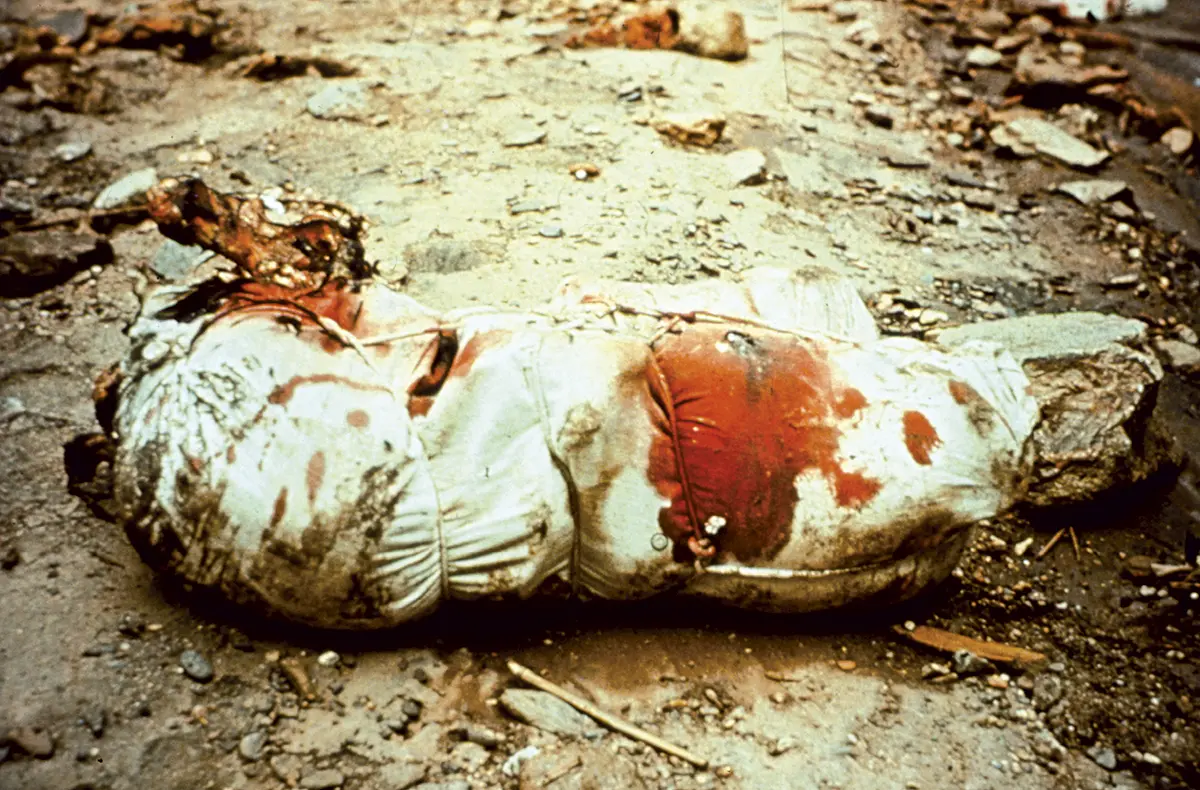
However, that choice only makes sense if the ephemeral element of those actions is assumed as a positive poetic element (and not as a limitation). Its efficacy resides precisely in its insertion into the unexpected. Not only in the space in which life takes place, but rather, above all, in the time4 that devours the very dailiness that the artist provisionally resensitized. In this reality in transit, the situations and experiences of Artur Barrio, materially fragile, can only be eternalized in the textual and photographic registers of his creative process.
The radicality of the Situations and other Experiences created by Barrio has been revealed since the beginning of his artistic action. Right in the middle of a military dictatorship, Barrio produced his Situación T/Tl-1970 in the short span of a few days. Divided into three parts, all of which took place in the city of Belo Horizonte, capital of the state of Minas Gerais, the artist created Situación T/ Tl-1970 for the show Do Corpo a Terra, organized by art critic Federico Moraes.
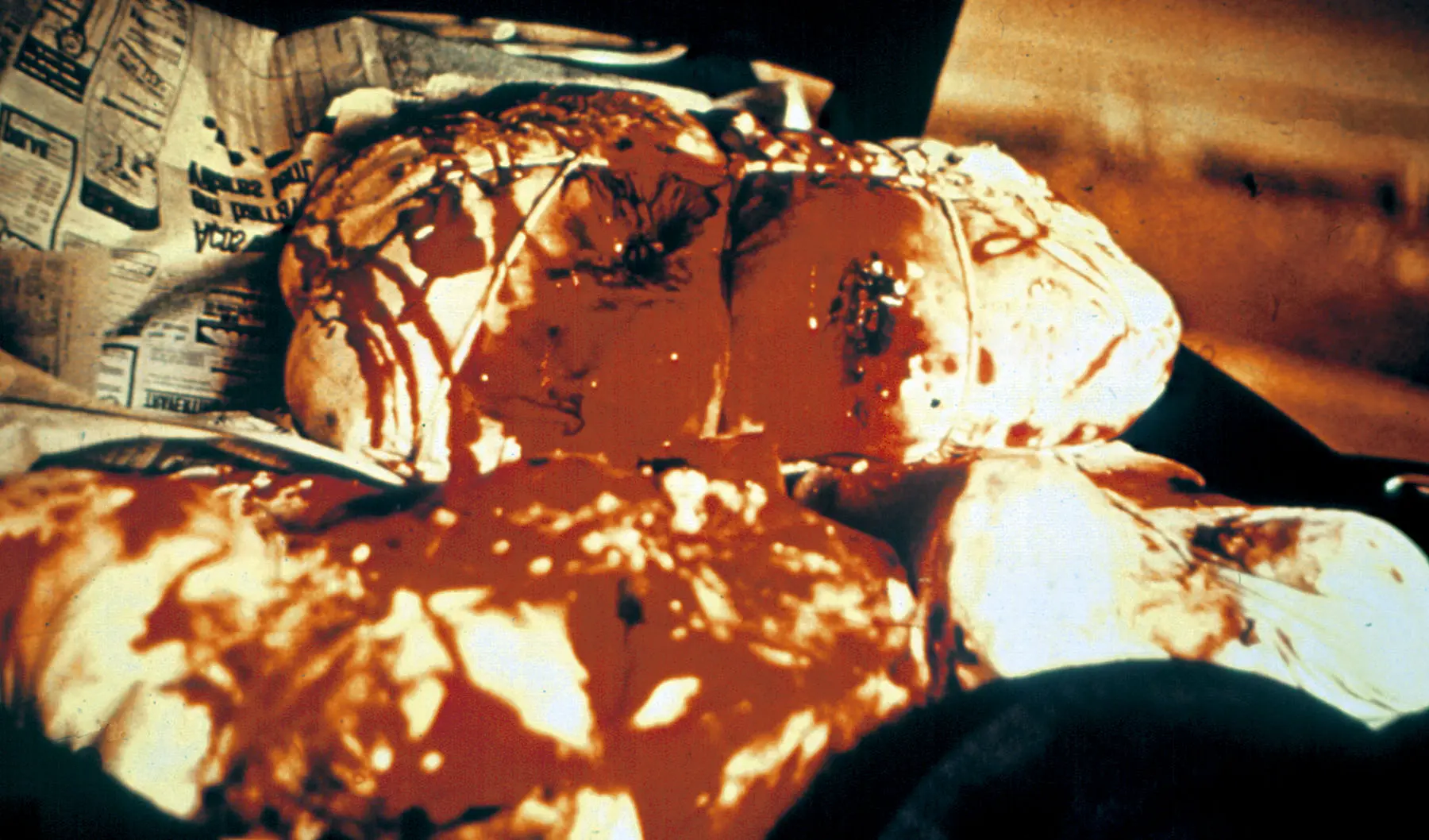
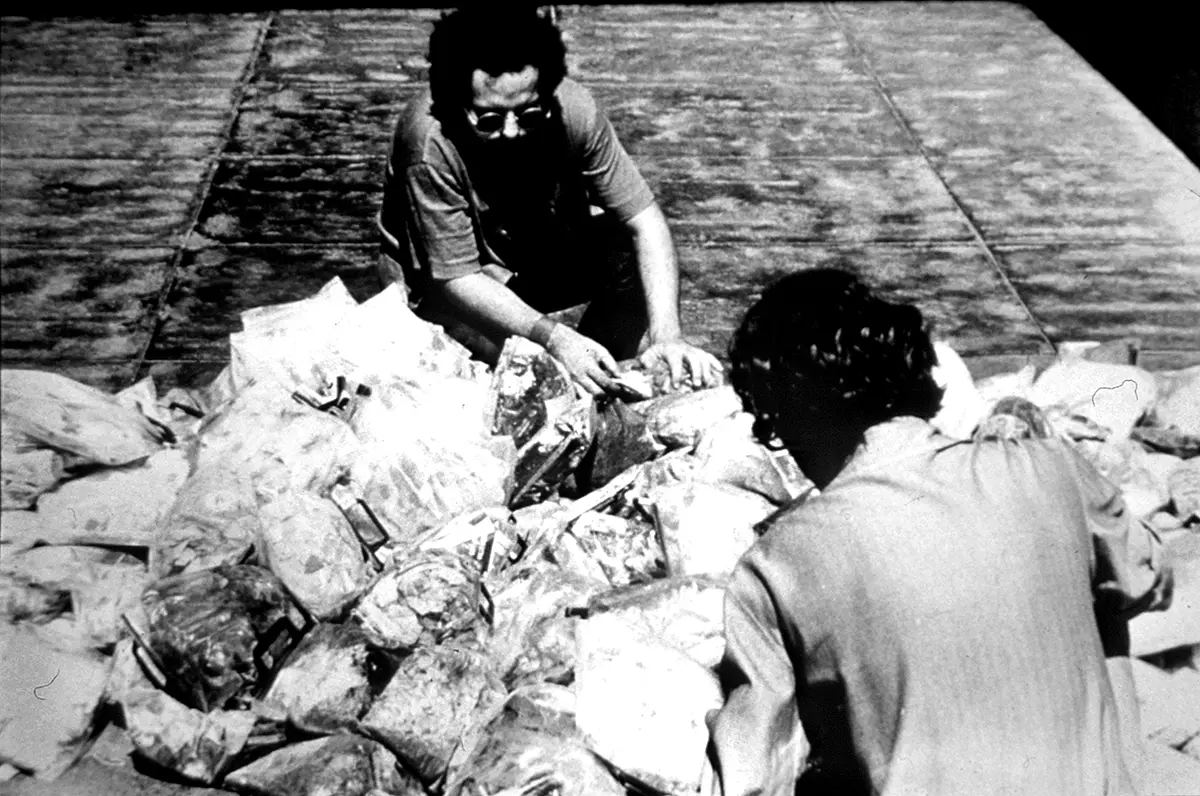
The first part consisted of the preparation of the action (at the same time as it made up part of the action itself). Throughout the night of April 19, 1970, in the exhibition space Palacio das Artes, he prepared pastries made of canvas and tied with cords. They contained blood, meat, bones, mud, and foam rubber. He also used knives, bags, etc.
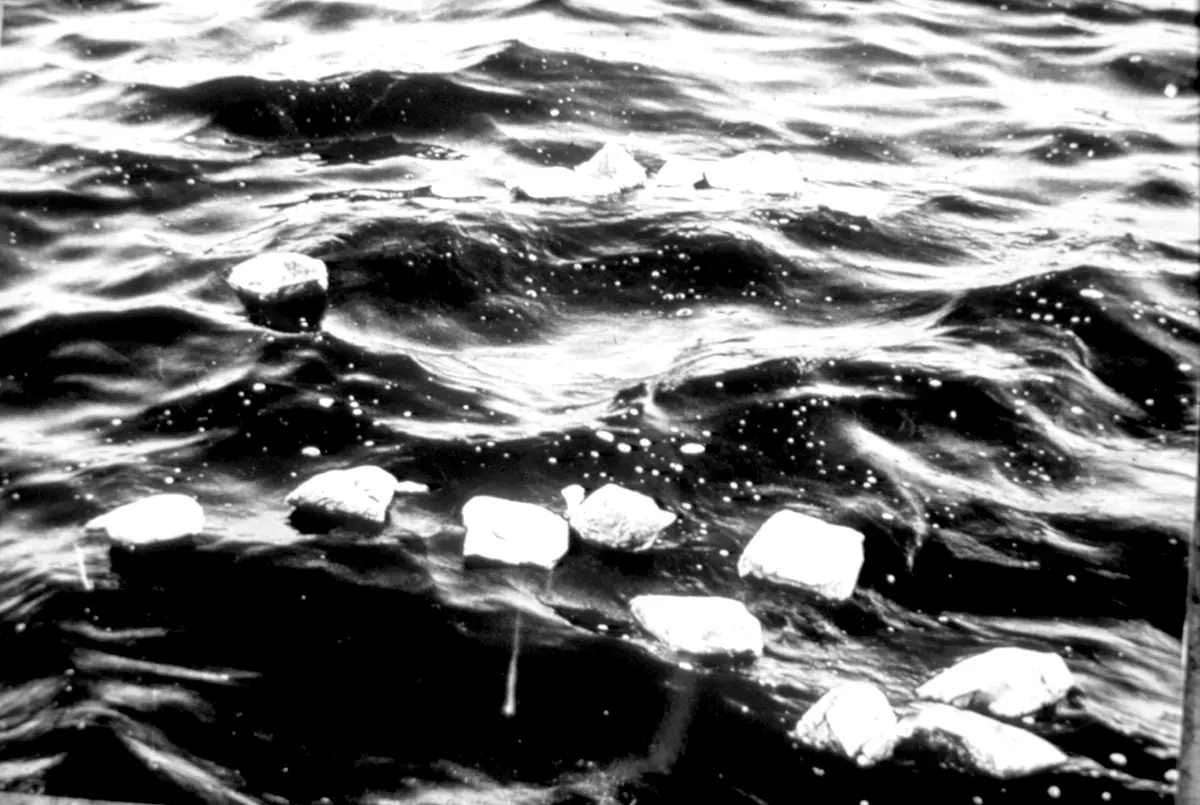
The second part occurred on April 20th in the space of the Ribeirão do Arruda, which runs through the city's Parque Municipal. Around fourteen pastries, tied with canvas and created the night before, were spread along the banks of the stream in the morning, during a period in which that area was like a sewer.
In line with the textual recording of the Situación, which also included photographs taken anonymously from among the crowd, a large group of people began to gather at around 3 p.m. The mobilization of speculative curiosity of nearly 5,000 people, the strangeness of the Situatción, and the artist's creative confusion wound up attracting the police and firemen.
In this period in which Brazil's military dictatorship exerted its underground violence, dedicated to torture and to the disappearance of individuals with no explanation whatsoever, the Situación T/Tl-1970 externalized the concealed (and therefore limitless) violence, sending it back to the omission of civilians and the police. In spite of being a habitual agent of repression, the police also joined the popular crowd in their stupefaction. They were thus transformed, for a short period of time, into spectators of brutality with which they normally collaborated.
Stirred up by the impact caused by the second part, in the third part Barrio re-created a Situation previously tested in Rio de Janeiro's Bahia de Guanabara. Here, as well as in Ribeirão do Arruda, Artur Barrio unrolled seventy rolls of toilet paper, once again attracting repression.
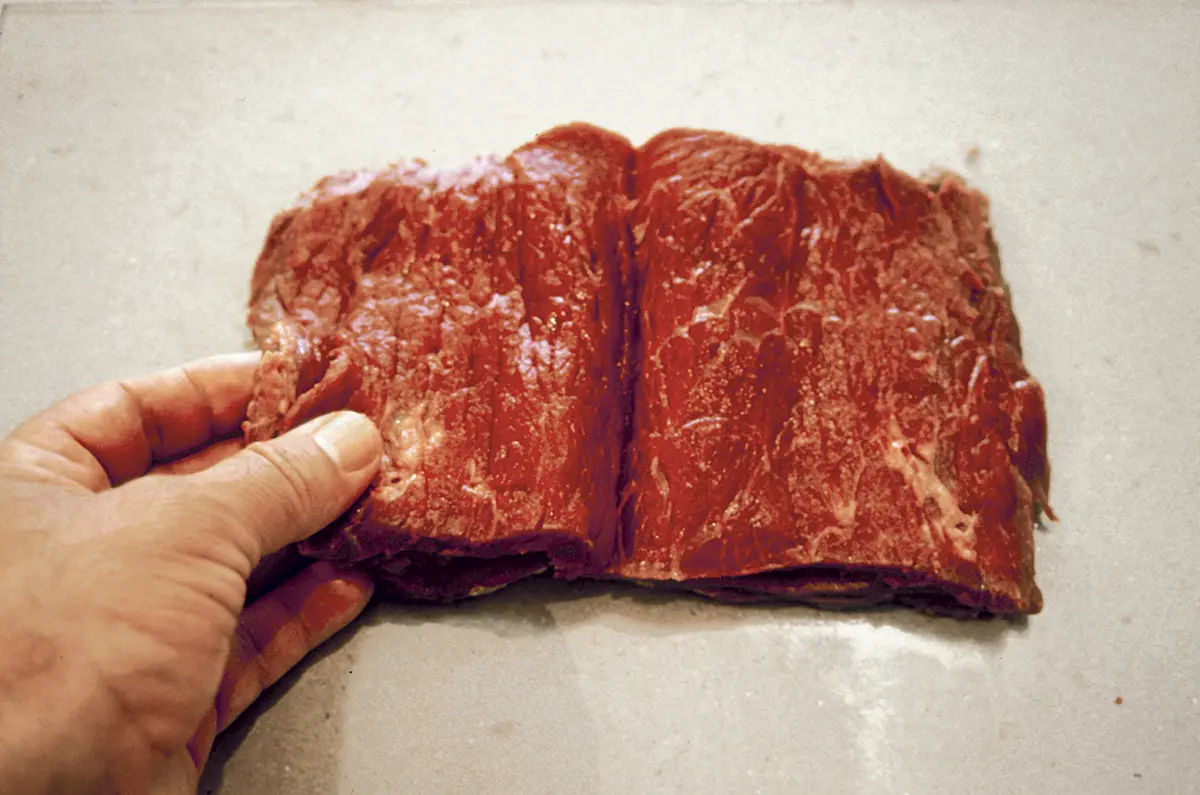
Nevertheless, the flesh that was originally chosen because it was a perishable material and strange for art, must not be taken as a symbol that emits violence. It can also represent the desire contained in the gesture of the person who chooses it with the delicacy of a lover, revealing its hidden beauty to us.
Created in Paris in 1978-1979, the Book of Flesh was "based on the cut/action of the slaughterhouse knife" in such a way that the flesh is seen during its short and perishable existence. Its fatal decomposition became a sort of anti-record. Separated from reason, just as the body is separated from the soul, this book could never have captured discourses (as common books do). It merely survived in the photographic and textual register.
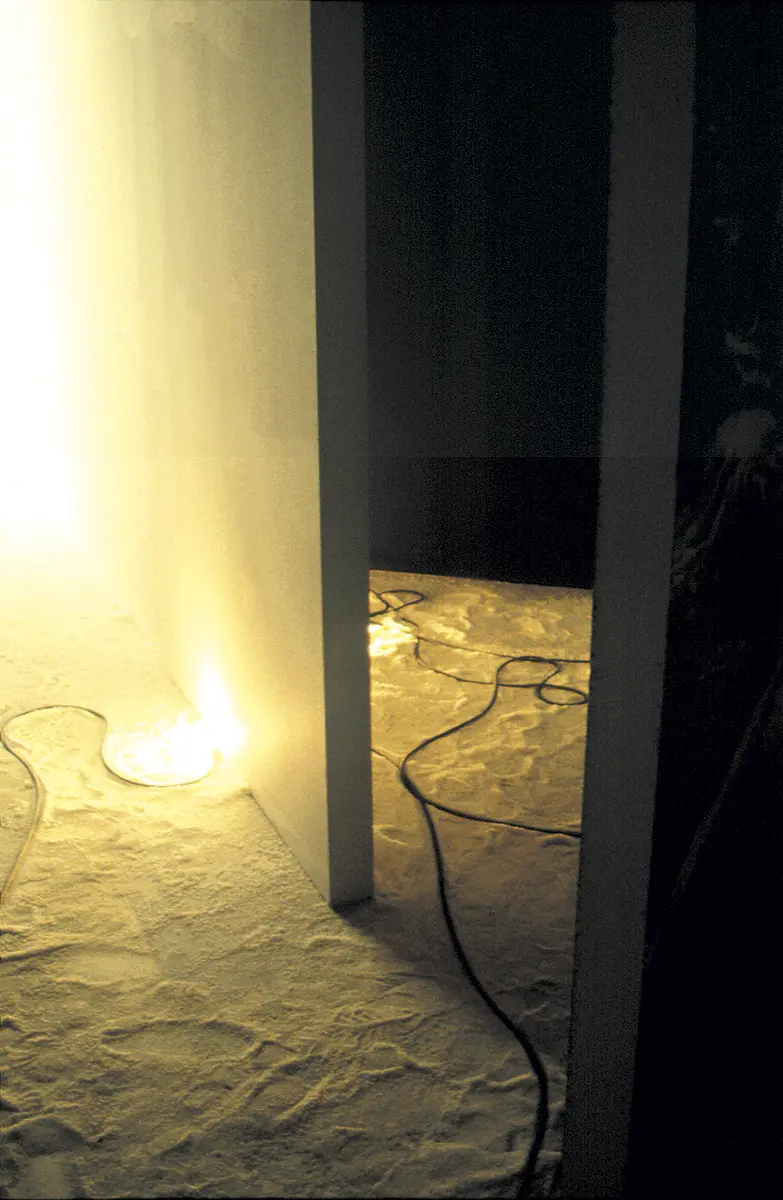
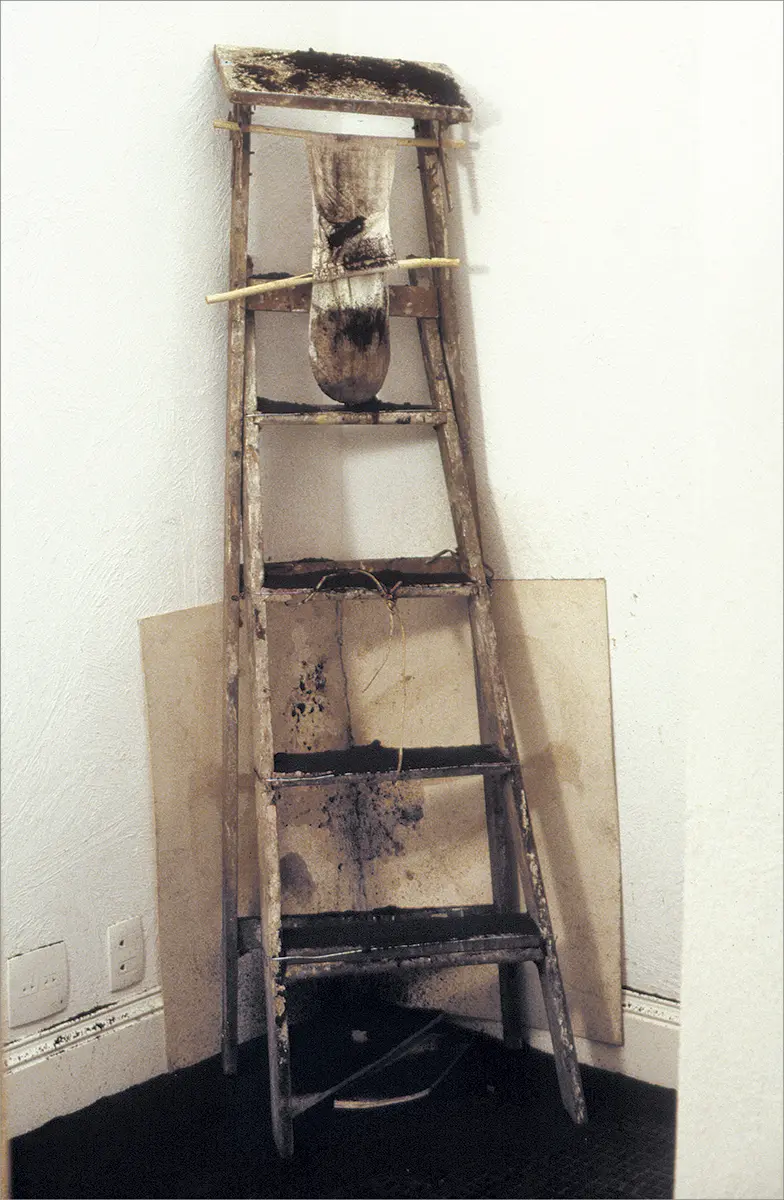
Begun in 1987, Barrio's so-called Experiences are still carried out today. They consist of unique interventions created on the walls and floors of spaces (coarse salt, malachite, etc.), phrases, brief written texts, graphic designs, excavations, holes, lamps, and any object used in the artist's installations. Beyond his desires and paintings, what all the other works have in common is the appreciation for the moment. That is, for the time of situations that are special, conceptual, and ephemeral.
Those witnesses of life (rolls of toilet paper, bread, bones, meat, rags, grease, fish, rocks, wood, threads, and words) become essential for the poetics of Artur Barrio. The journey between the quotidian, where they naturally originate, and the world of art, which does not recognize them given their perishable and, therefore, supposedly anti-artistic nature (foreign not only to the contemplative gaze but also, at times, to the sense of smell), transforms those witnesses into materials, and the materials into a semantic list. Opposed (on account of their short, useful life) to those materials made in order to serve the demand of permanency of traditional artistic media, such as painting (brushes, canvases, and colors) or drawing (paper, graphite, charcoal, Indian ink). Barrio's materials transcend their own physical properties and acquire a critical statute.5
Therefore, in Barrio's production, as well as in that of others, there is a shifting of the center: his interventions no longer centered on the creation of formal objects (pictures, sculptures, engravings, etc.), on behalf of the exploitation of the sensitive and instantaneous power of the intervention proper.
For a significant part of contemporary art, the perennial fact of creation went on to be that of the continuity of the action (the accumulative character of the experience) and the temporary, free, and precarious material configuration (which is consummated in the decomposition or disassembly) of the situations that the artist creates and provokes.
From a historical point of view, the incidence of the aesthetic focus on the artistic attitude, and no longer only on its artisanal results, implied—at least since the readymade of Marcel Duchamp (1913)—a new possibility of conceiving and executing creation.
Legitimized by the power of the author, slowly woven over the last 500 years, many contemporary artists, against the habitual concrete character of the work of art, concentrated their works on the investigation of art itself, of its social circuit, and of the power of subjectivity in invention.
In pre-Renaissance art, there was still no clear distinction between art and craftsmanship. In those circumstances, the labeling of the artist's activity was merely reduced to the sphere of the artisanal (the act of making, manual ability, and the mastery of the essential techniques of the trade that he had chosen).
The old division of arts between mechanical and liberal separated the practices considered strictly physical, for which the intellect was indispensable. That atavistic classification of the arts, grounded in the hierarchical division between body and soul, could not distinguish between artist and artifice, as was made possible after the Renaissance.
Once painting and the other plastic arts were defined by Leonardo da Vinci as mental, they came to reclaim their place in the liberal arts. Situated at the confluence of several intellectual knowledge (geometry, physics, anatomy, etc.), painting (art) acquired, from that point on, a new meaning and a new value. The notion of the author was the principal aesthetic consequence of the invention of the concept of the individual and the unique creation was its best attribute.
The notion of the author, however, only reached maturity and became explicit and self-sufficient after Duchamp. The ideas and works of that artist were produced in the margin of the triumph of pure form, so highly appreciated by hegemonic modernism. This almost solitary antecedent, the substitution of making for invention and appropriation, placed it in the origin of all contemporary art.
In Brazil, Barrio is perhaps the artist who clung most tightly to the prerogatives of authorship. Since the beginning of his career in the late '60s, that was what most strongly emphasized the ethico-aesthetic attitude,6 to the detriment of a strictly formal investigation, even though he had produced drawings and paintings of undeniable quality.
Only a notion of authorship with a density similar to that of the subject of knowledge, such as that conceived by philosophy since Descartes (although Barrio's actions have a meaning and a sensitive purpose opposed to those of theoretical-scientific rationality) could confer an aesthetic sense on the precarious and provisional results of the situations and experiences created by the artist.
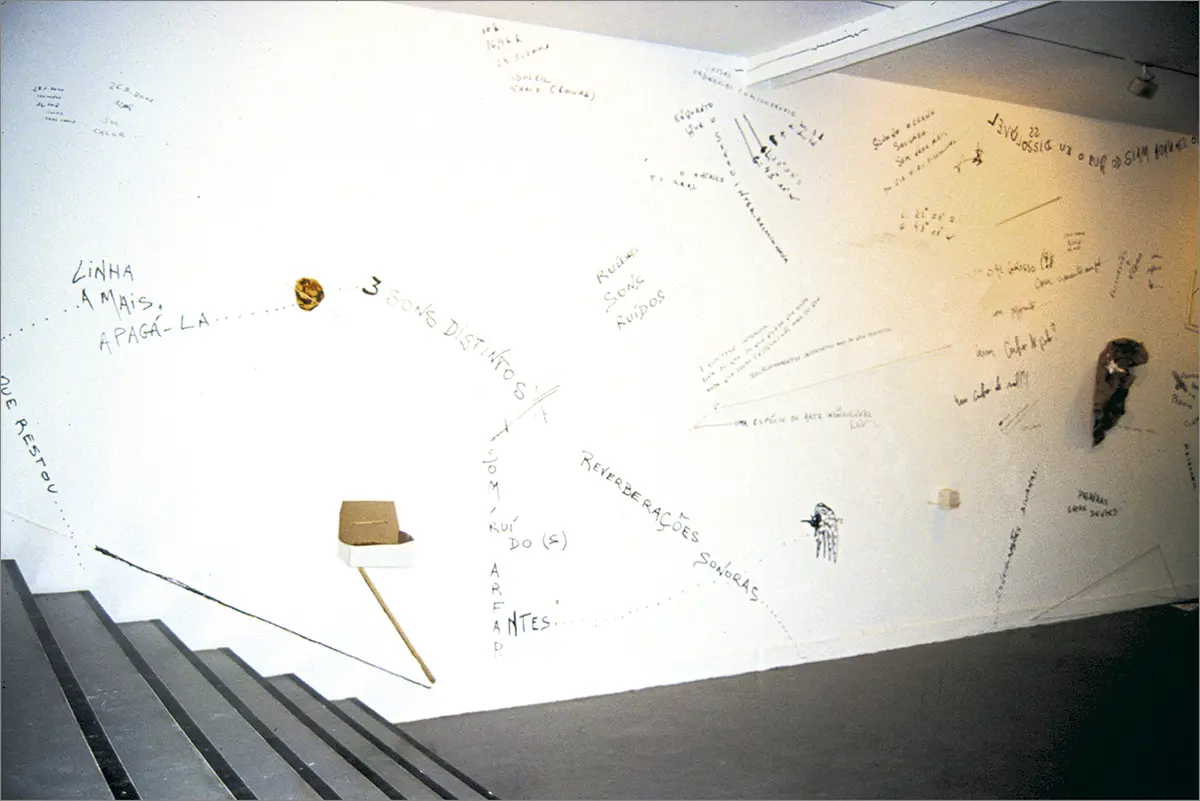
Considered in and of themselves, both the materials used by Barrio as well as his disposition and insertion into alternative circuits could hardly be seen by the supporters of form and by common sense as bearers of aesthetic attributes. Meanwhile, art history and the philosophy of art, and with them the market and the circuit, are reluctantly obliged to recognize the poetics of deconstruction of the form (and of the object), since, for everyone, the authorial function is decisive for the labeling of the artist.
The invention of the individual in the Renaissance and the emergence of physics provoked the creation of a su- pre-individual instance where universal, philosophical, and scientific knowledge could travel beyond the realm of opinions.
The Cartesian cogito (I think) of the seventeenth century introduced a new instance of the I, different from the individual and, virtually, common to all. This other I, designated by philosophy as a (cognitive) subject, later became (for Kant) an indispensable and fundamental function for knowledge.
The construction of the subject also made possible, from the epistemological point of view, the critique of English empiricism. This, like the rationalism of Descartes, attempted to assimilate scientific experimentation, inherent in the natural sciences, to logical thought.
It is evident that the character of Barrio's situations and experiments is strategically opposed to those produced by science. His installations and registers are diametrically opposed to the expectations of rigor and truth of the scientific—and even philosophical—sciences.
In spite of the obvious difference between the media, the methods, and the goals of scientific experimentation and those of aesthetics, any experiment, independent of its nature, takes place within a period of time. For this very reason, it has a beginning, a middle, and an end. The temporal character common to all processes of experimentation invariably generates the need to record them.
As a scientist. Barrio records the situations that he creates in "texts/ projects/essays/notes/digressions/ stories/ideas/fragments of ideas/ drawings/collage/etc." in his Cuadernoslibros (Notebooks) that "have free creativity as their content" and "are a new support."7 Here, the distance between art and science is not the same one that, in the past, opposed sensitivity to reason, body to soul, or the particular to the universal.
Polarized thought, which is indispensable for the epistemological, technological, and economic success of Western civilization, already began to be dismantled in the second half of the nineteenth century. That dismantling, initially theoretical and promoted by anthropology, history, sociology, psychoanalysis, and philosophy, led to the emergence of the much-discussed crisis of the subject, which can be felt today at all levels of social and psychic life. Within that framework, not only are the crises of the individual and of the subject of knowledge contained but so is the crisis of the very knowledge that is based on polarization.
Fragmented to the core, the notions of individual, subject, and knowledge lie disjointed, in hopes of other models that serve the new reality. In a world in which the processes of globalization no longer reflect those conceptions of unity extracted from the depth (ontological and epistemological) in which truth was presumed to dwell, in a reality in which consent to totalities based on the complex superficiality that characterizes postmodern life, but which were already announced in the modern past (from Frankenstein, the psychoanalyst's couch, the Fordist assembly, and the editing of Eisenstein and Griffith, to video editions through Word), perhaps the social task of constructing a new subject was possible for the artist.
Authors like Merleau-Ponty (L'oeil et L'esprit, Cézanne's doubt [Sense and Nonsense], etc.) clearly attributed that task to the artist.8 Like a premonition, Paul Valéry had already speculated on the question in 1929: "At first sight, wouldn't it seem very difficult to think like artists about certain problems that until now we had thought about as investigators of truths, to transform into beautiful lies—into fictions in themselves—those productions of the most intimate sincerity?"9
Can there be a better field in which to situate Barrio's production? His work seeps and sails into the cracks that produced the tension between the permanency of the features of the sensitivity of the past and the contemporary universe. In the transit between art and life, between the lapses of critical discourse itself. Barrio produces an essential work for the renovation of Brazilian art.
NOTES
1. Published in the "Esquema general de la nueva objetividad", in the catalog for the show Nueva Objetividad Brasileña (Rio de Janeiro: Museo de Arte Moderno, 1967).
2. Published for the second time in the catalog for the show Regist(R)os (Porto: Fundación Serralves, 2000).
3. In Brazil, artists like Flávio de Carvalho, Hélio Oiticica, Lygia Clark, and Lygia Pape, for example, had already formulated, through works and ideas, the urgency for the integration between art and life.
4. In the case of Brazil, Abraham Palatnik (1951) and Mary Vieira produced kinetic works between the '40s and the '50s. The post-neo concrete experiences of Hélio Oiticica, Lygia Clark, and Lygia Pape are inseparable from the temporal sphere.
5. In a political sense different from that attributed by Joseph Beuys, although also convergent, in the sense that, for contemporary art, the materials are not restricted to their plastic-formal, chromatic, or material potentialities.
6. In accordance with Carlos Basualdo's quote: “From the third-world perspective, ethics is aesthetics, as Artur Barrio stated in the early 70s, and as Oiticica and the filmmaker Glauber Rocha would also do." "Contra la elocuencia: notas sobre Barrio, 1969-1980," in the catalog for the show Regist(R)os, (Porto: Fundación Serralves, 2000).
7. Barrio, Cuadernoslibros, cited by Ricardo Basbaum, Dentro D' agua, in the catalog for the show Regist(R)os, (Porto: Fundación Serralves, 2000).
8. Although in Merleau-Ponty it is restricted to the metaphysical role of the painter.
9. Paul Valéry, "Leonardo and the Philosophers,” Introduction to the Method of Leonardo da Vinci (London: J. Rodker, 1929).
* Images courtesy of Galería Luisa Strina.
FERNANDO COCCHIARALE
Art critic, professor of aesthetics at the Pontifícia Universidade Católica do Rio de Janeiro, independent curator, and frequent contributor to several art magazines.