
Enoc Pérez's recent works can be characterized as contemporary genre paintings, a style of painting that depicted quotidian activities and was very much in vogue in 17th-century Holland. This art form was all about the representation of the everyday exemplified in street and cafe scenes, and domestic tableaux, and the paintings decorated the mostly secular homes of the Dutch Burgher class. But these paintings also masked moral narratives about the dangers of excessive agnosticism, of sin, and of succumbing to the world of the senses. In his work, Pérez thematically targets the everyday. Yet his paintings are the antithesis of the genre painting tradition because he reifies even the most pedestrian of moments and engenders them to their humanist conclusion: that the world we inhabit and our dialogue with it is the only way that we can know ourselves. Anything beyond that is an act of faith. Pérez's supplanting of the puritanical view of the world as morally dysfunctional for one where the world and human interaction have spiritual potential anchors his work into interesting terrain regardless of whether other artists explored that same avenue.
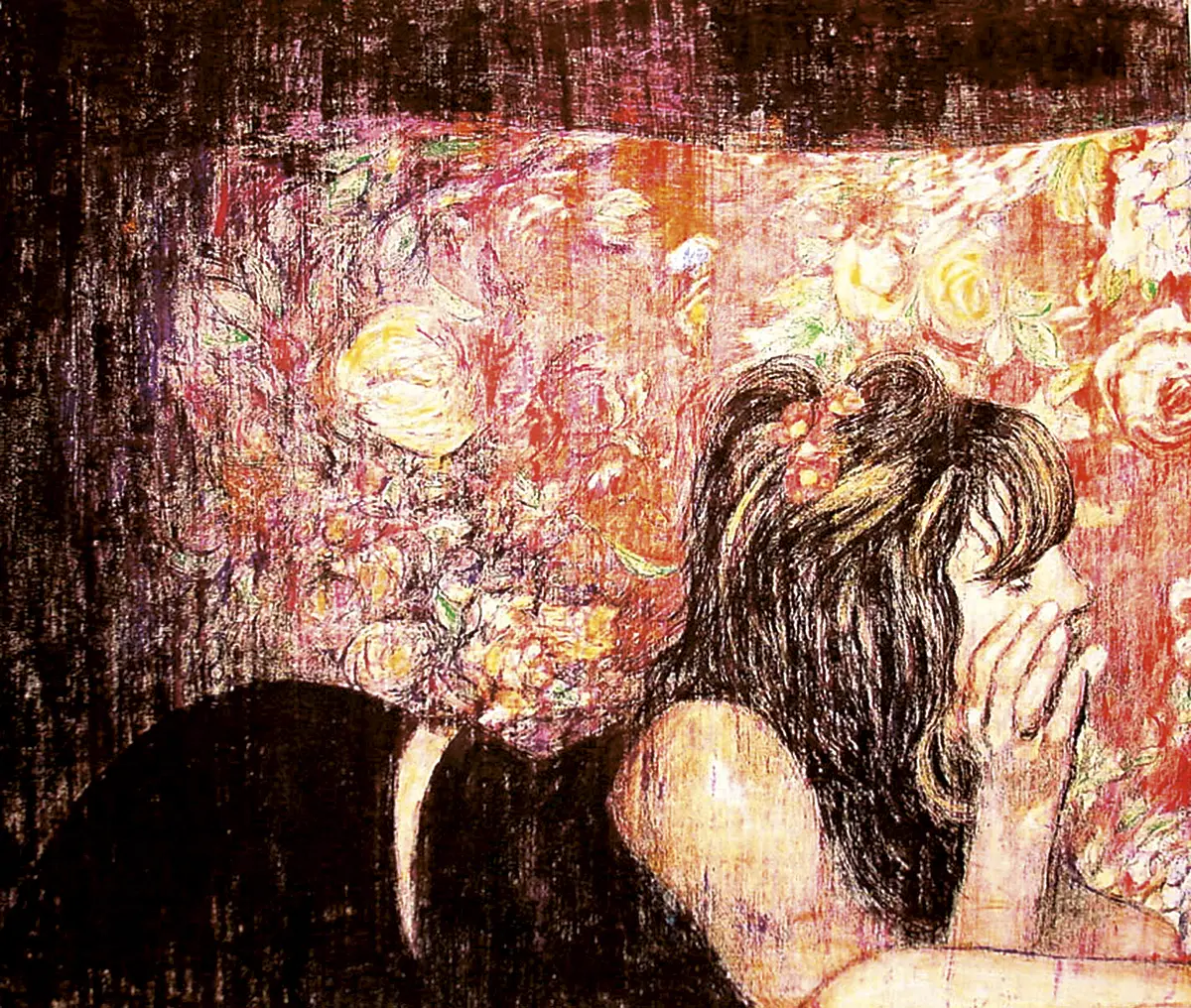
The citation of older traditions is apparent in these paintings and is no different from the type of referencing that one may find with the contemporary painter John Currin and the Old Masters or Cecily Brown's absorption of de Kooning. Pérez's artistic strategy crosses media as well as historical styles. Interesting figurative reconfigurations as well subtle ethnographic portrayals abound. The work is akin to Andy Warhol-like anthropological studies albeit with just enough "objectivity" about urban nightlife's denizens: models, waifs, hangers-on, and the like. But since his works are observations of urbanites in their natural habitats, his themes equally veer into sociology.
Pérez's investigative distance of feigned neutrality situates his paintings between a keen observation of the psychological minutia of cosmopolitan excess and its subversive potential, to a subliminal critique of socially detached lifestyles that construe hedonism as an end rather than a means. In other words, Pérez's themes seem to be a kind of acknowledgment of what the psychoanalyst Jacques Lacan called jouissance, a notion of the revolutionary potential of pleasure. In contrast to this—as well as upping the ante to his paintings—is the problematic that had marked Warhol's Pop iconography. Warhol's imagery of consumer culture had the idiosyncratic capacity to slip into the interstices of reification and criticism, never being quite clear whether it was condemning or condoning mass consumption. Pérez has fleshed out this either/or problematic into related, but different sociological registers: leisure, vice, and the sort that can sometimes, and interestingly enough, convey the opposite of what ostensibly appears to be expressions of freedom in a secular world. A painting of empty cocktail glasses haphazardly composed on the table is as much a sociological commentary on urban social mores as it is about alienation. A painting of an unmade bed with a dish of chocolates can refer both to human intimacy to de-sublimation, frustration, or some other tangent of urban angst. An existentialist reading of Pérez's narratives is never very far away, and it is in such gray areas that help foment levels of thematic complexity in a work that on the surface may be misconstrued as superfluous.
What highlights Pérez's subtle thematic tensions are his informed formal arsenal and aesthetic bag-of-tricks. Apart from the references to Warhol, one can also detect elements of the documentary, cinema vérité, reportage, and other forms of visual culture and art historical precedents. But Pérez's citing of these sources seems to be secondary; that is, he paints as if he invented these forms, which in and of itself is, paradoxically, in his favor. A case in point is The Secret. What dominates this painting is a cropped, reclining female figure that becomes compositionally subordinate to the viewer as well as to a person residing just outside the picture plane. The triangulation that Pérez sets up between the figure, and the person the figure is addressing (as well as the viewer), is an apt way to concomitantly convey immediacy and separation. Like his other works, The Secret blurs a documentary realism with a painterly opacity that confuses through heightened visual pressure the relationship between form and content. It is in this demur, quiet, almost invisible artistic flourishes that Pérez evinces an astute mastery of his medium.
RAÚL ZAMUDIO