The art world became exceptionally cautious after September 11th and took a wait-and-see approach to consider the effects that terrorism, the US war in Afghanistan, and the related economic recession might impose upon the global art market. Fallout in the museum sector and other non-profit art organizations was particularly acute in the months following the attack, and unsurprisingly, the organizers of Art Basel in Miami canceled their December 2001 art fair in response to this volatile and uncertain atmosphere. Hence, it came as a welcome surprise to many when both the Armory Show and the Art Show 2002 opened in New York last February and were both resounding successes.
The Armory Show, an international art fair devoted exclusively to contemporary art, and the Art Show, which represents museum-quality works from the 17th century to the present, have over the past few years become progressively influential and are now seen as critical venues for the exhibition and purchase of important works of art. With the inauguration of Art Basel in Miami later this year, it remains to be seen whether Art Chicago, the largest art fair in the US, will be able to survive in this increasingly competitive climate.
With 164 exhibitors at the Armory Show, and another 70 dealers at the Art Show, the New York art scene was reenergized, providing the city with a much-needed psychological boost. Collectors were out en masse with 2,000 people attending the opening night Art Show gala, including a number of celebrity collectors such as Madonna, Steve Martin, and Bette Midler.
Interestingly, both fairs placed a strong emphasis on works on paper, photography, and special artist editions. In fact, this year's Armory Show devoted a new section to highlight contemporary prints and multiples, inviting eleven publishers to participate in the juried exhibition. Among the art press exhibiting were Parkett Editions, Goya Girl Press, and Trans> Editions, the latter representing a selection of Latin American artists including Beatriz Milhazes, Ernesto Neto, Gabriel Orozco, Jorge Pardo, Adriana Varejão, and Arturo Herrera. Museums and collectors alike have begun to accumulate artist editions, which as of late have become a popular fundraising formula for publishers and non-profit art organizations. The attention to multiples comes as a natural response to the increased use of technologically reproducible media such as digital photography, video, and DVD, in addition to the more traditional reproductive methods like lithographs, silk screens, and etchings.
At the Armory Show, large-format color photography seemed to be all-pervasive. Rosemary Ling's images of intensely colorful carpets laid out in an Australian forest at Gitte Weise Gallery, and Dan Holdsworth's telluric scenes of vast and emptied stretches of Iceland at Entwistle Gallery, stood in stark contrast to more industrialized scenes presented by Frank Thiel at Sean Kelly and Thomas Ruff at Galerie Nelson. Other notable standouts were vintage photographs by Malick Sidébé of Mali, and Zwelethu Mthetwa of South Africa at Jack Shainman Gallery.
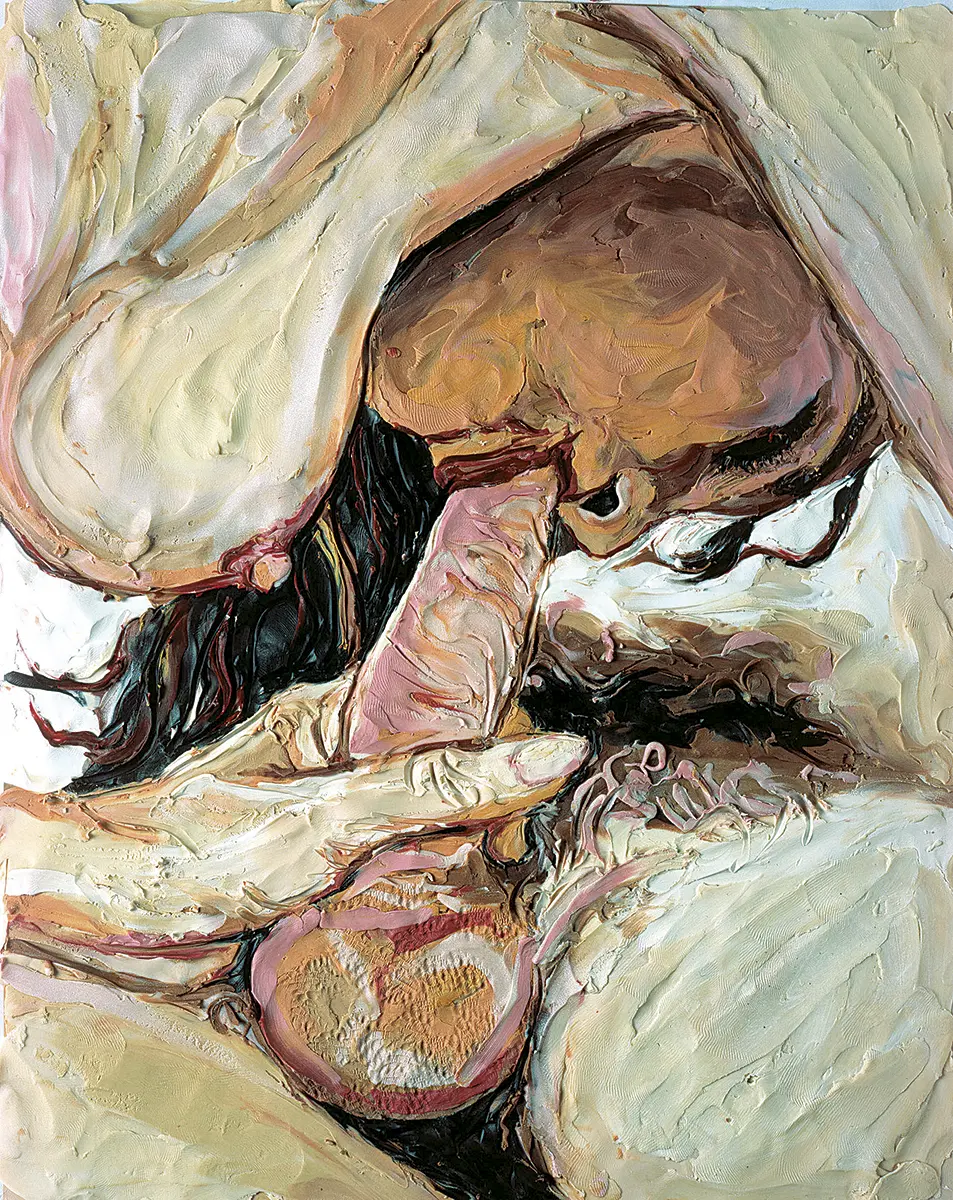
At Galerie Xippas, Vik Muniz presented a series of eleven photographs representing pornographic imagery found on the Internet. Using modeling clay or Silly Putty, a brand of clay marketed in the US for children, Muniz contrasts the tactile quality of sculpted clay and its obvious comparison with human flesh to the technologically transmitted and mediated erotic fantasy. Internet pornography has become a multi-million dollar worldwide industry and has generated new forms of addiction with no shortage of support groups, leading one to question whether Internet porn is a viable substitute for real human contact, sexual or otherwise. Muniz's closely cropped, graphic imagery humorously explores the realm of visual gratification, the fetishization of erotica, and its latest modes of dissemination.
At Galeria Nina Menocal, Pablo Helguera presented photographs and sculptural works from his Everythingness series. In Time is a Waste of Life, Helguera simulates the look of a corporate advertising campaign promoting a fictional company dedicated to the commodification of time. The post-Enron climate makes his work all the more appropriate by making visible connections between power, money, and the never-ending ability to commodify cultural practices, including non-existent virtual investments. Also on view at Nina Menocal were a video installation and a series of photographs by Enrique Ježik investigating media coverage of global violence. Taking images of street combat from television and cable broadcasts, Ježik decontextualizes the scenes, exposing the universality of aggression and brutality as both a means of acquiring dominance as well as achieving liberation.
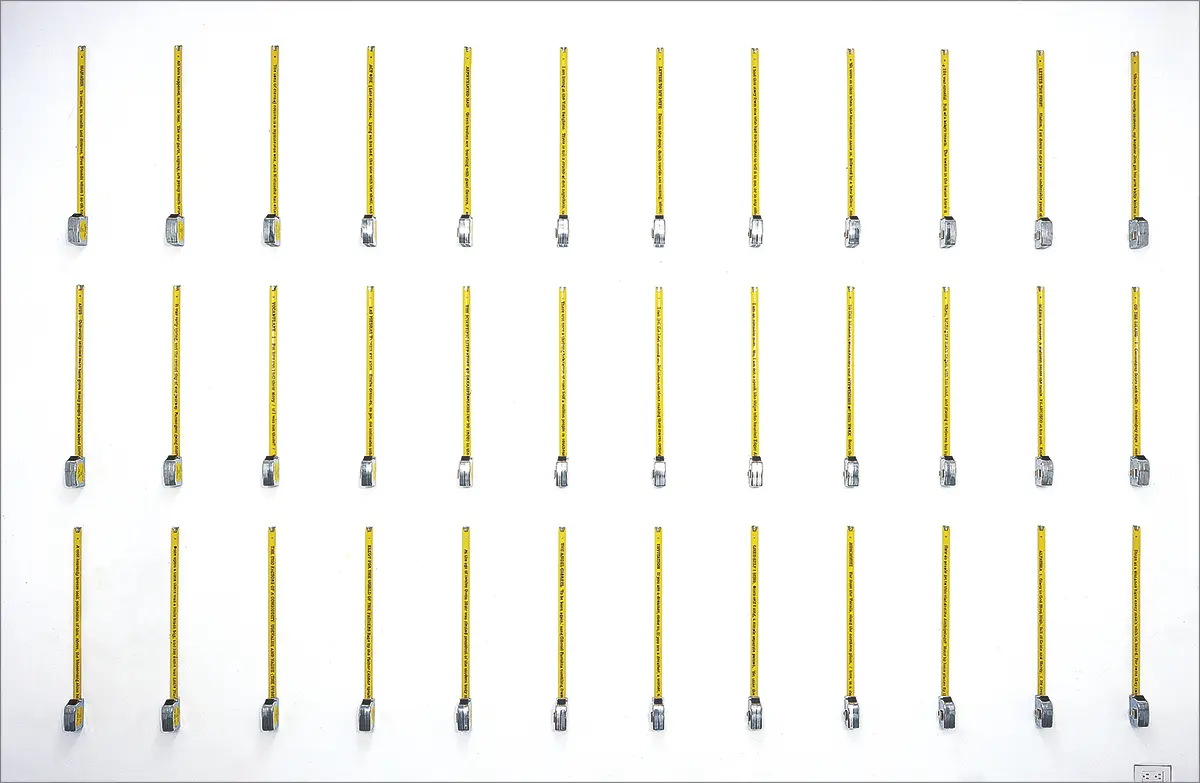
The artist's collective Los Carpinteros was represented at Grant Selwyn Fine Art by two major works. Their Escalera (Oven Step) obliquely alludes to the importance of basic utilities such as cooking gas, and the shortage of fuel and other necessities that shape part of everyday Cuban life. A more political subtext can be read in their installation Library, Part 2, where fragments of books banned at different times throughout history were inscribed onto thirty-six carpenter's measuring tapes installed on the gallery wall. The books include Hamlet, Freud's Interpretation of Dreams, The Qu'ran, and The Joy of Gay Sex, and suggest not only the authority and power of the written word but also the fear and intolerance of new ideas and cultural change.
Notable works by Rivanne Neuenschwander and Janaina Tschäpe were on view at Galeria Fortes Vilaça. After a series of museum shows dedicated to Brazilian art in New York, London, Venice, Paris, and cities throughout South America this past year, international recognition of Brazilian art is at an all-time high. Neuenschwander's Quarar takes its name from the Bahian practice of washing sheets and laying them in grid patterns to dry in the sun. The installation dignifies women's domestic work and is part of a larger project called Projeto Axé where nineteen international artists were invited to Salvador for six weeks to create work inspired by the African-influenced traditions of the region.
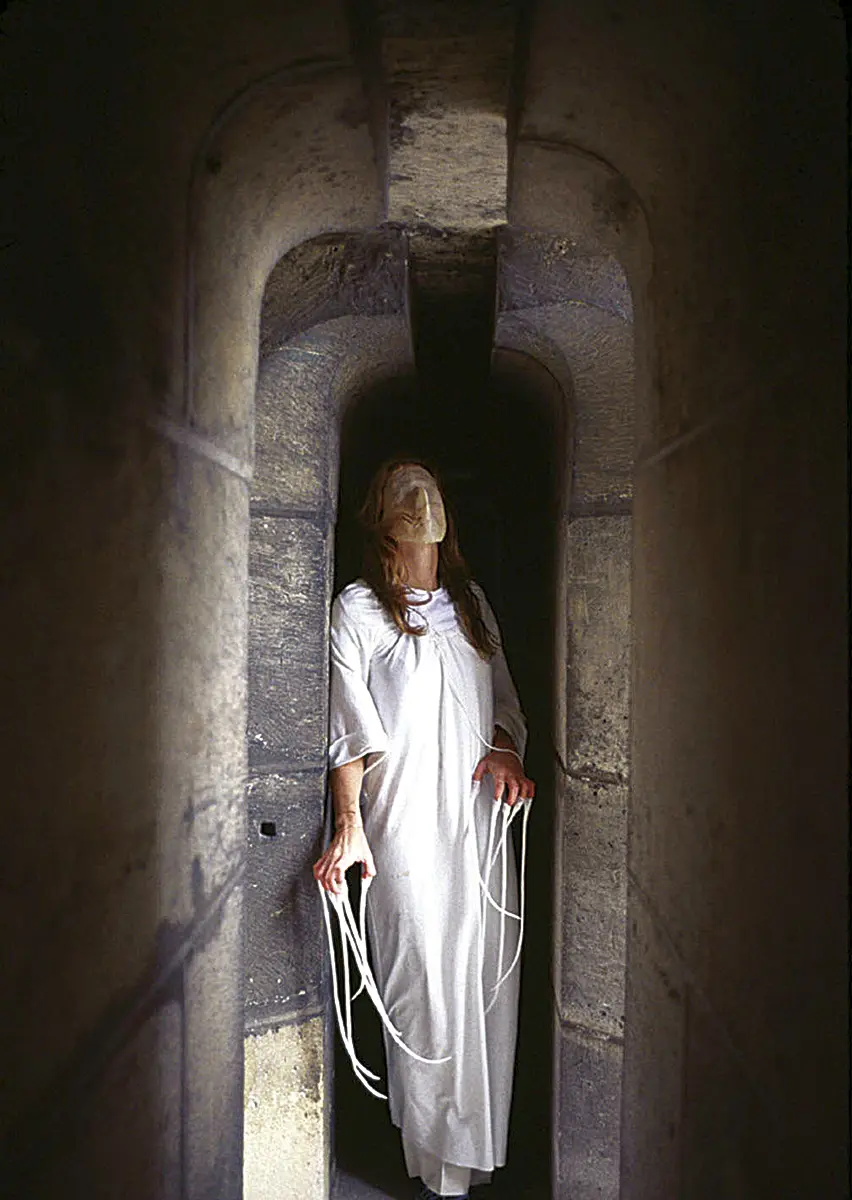
Janaina Tschäpe's personal mythology was represented by photographs, drawings, and texts that utilize her body as the site for exploration. Imagery from her Sala de Espera series traces her physical metamorphosis from human to an avian hybrid replete with wings, beaks, and talons. Tschäpe's psychological narrative manifests subconscious desires, urges, and fears and skillfully captures the sensorial experience of her corporeal transformation.
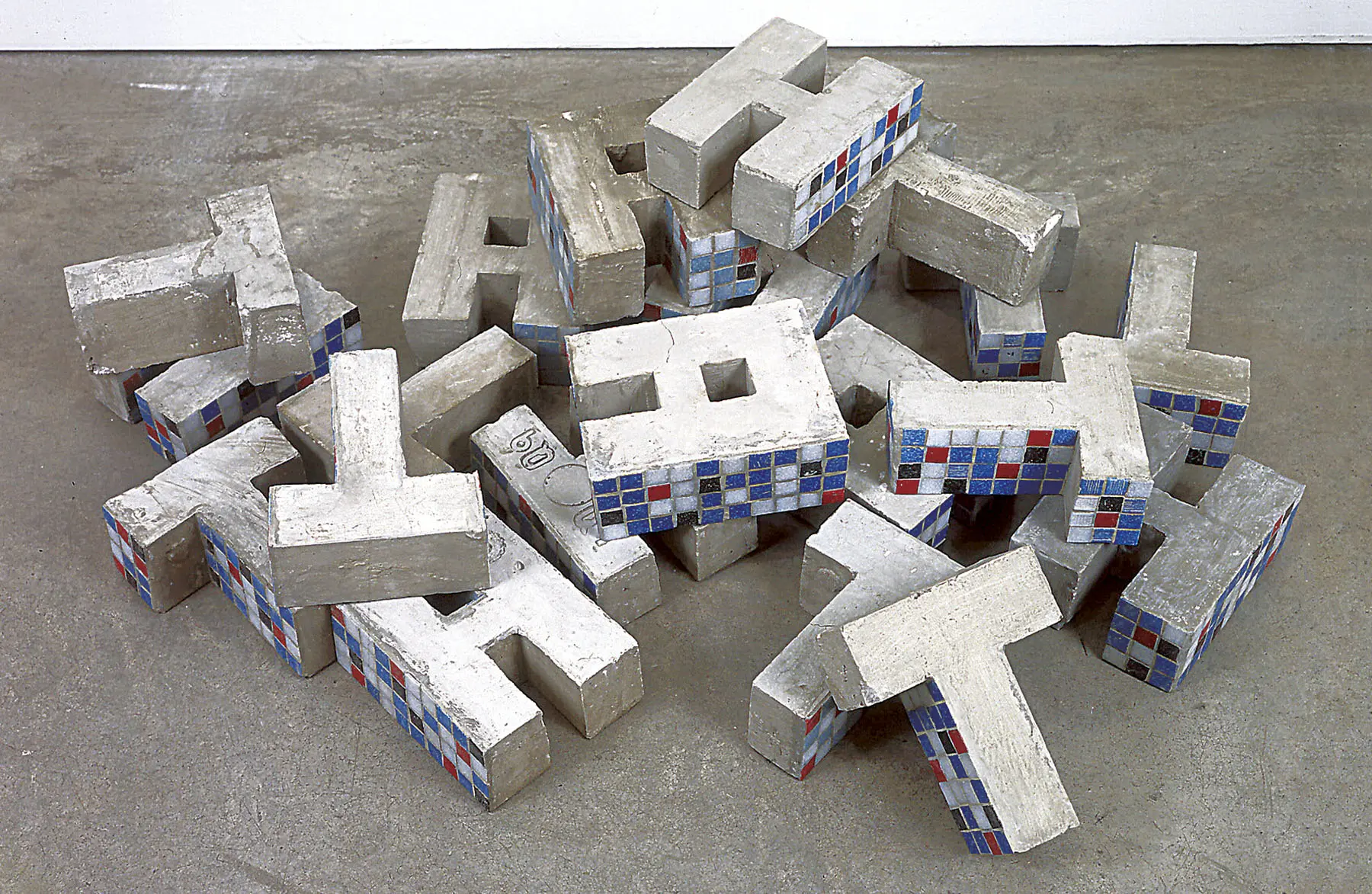
Also worth mentioning were new sculptural works by Damián Ortega at D'Amelio Terras Gallery. In Stuttering Piece, the artist presents a scrambled pile of letters T, H, and A on the gallery floor, creating an installation where language and speech literally become concrete and appear as confused and discarded attempts at communication. Olafur Eliason's Triple Space Projection at Tanya Bonakdur Gallery, a computerized light sculpture projecting Joseph Albers-like geometric patterns onto the wall, was another highlight of the fair.
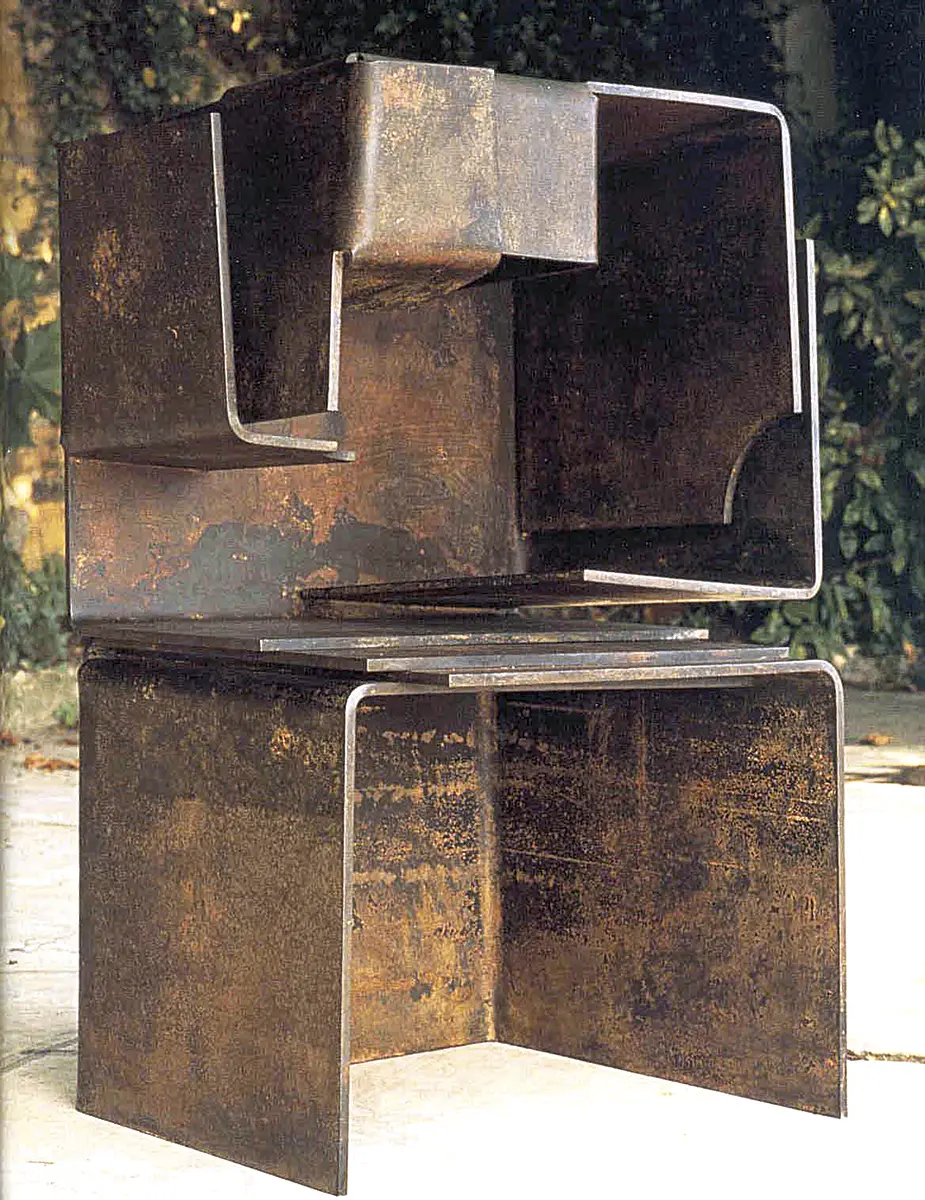
In contrast to the emphasis on new media and the exhibition of the latest and the newest at the Armory, The Art Show was a more staid affair, showcasing blue-chip art in a smaller and more exclusive environment. Organized by the Art Dealers Association of America, the exhibition contained a range of work from 17th-century Rembrandt etchings to 18th-century Goya lithographs, from early 20th-century Picasso, Giacometti, and Man Ray to later works by Pollock, Richter, and Alighiero e Boetti. There were many individual gems at the fair; patience and a selective eye were the trick to seeing through the heterogeneous offerings and miscellaneous groupings. Thankfully, a few dealers presented solo shows such as Jonathan Lasker at Sperone Westwater, Eduardo Chillida at Tasende Gallery, and A.R. Penck at Michael Werner Gallery.
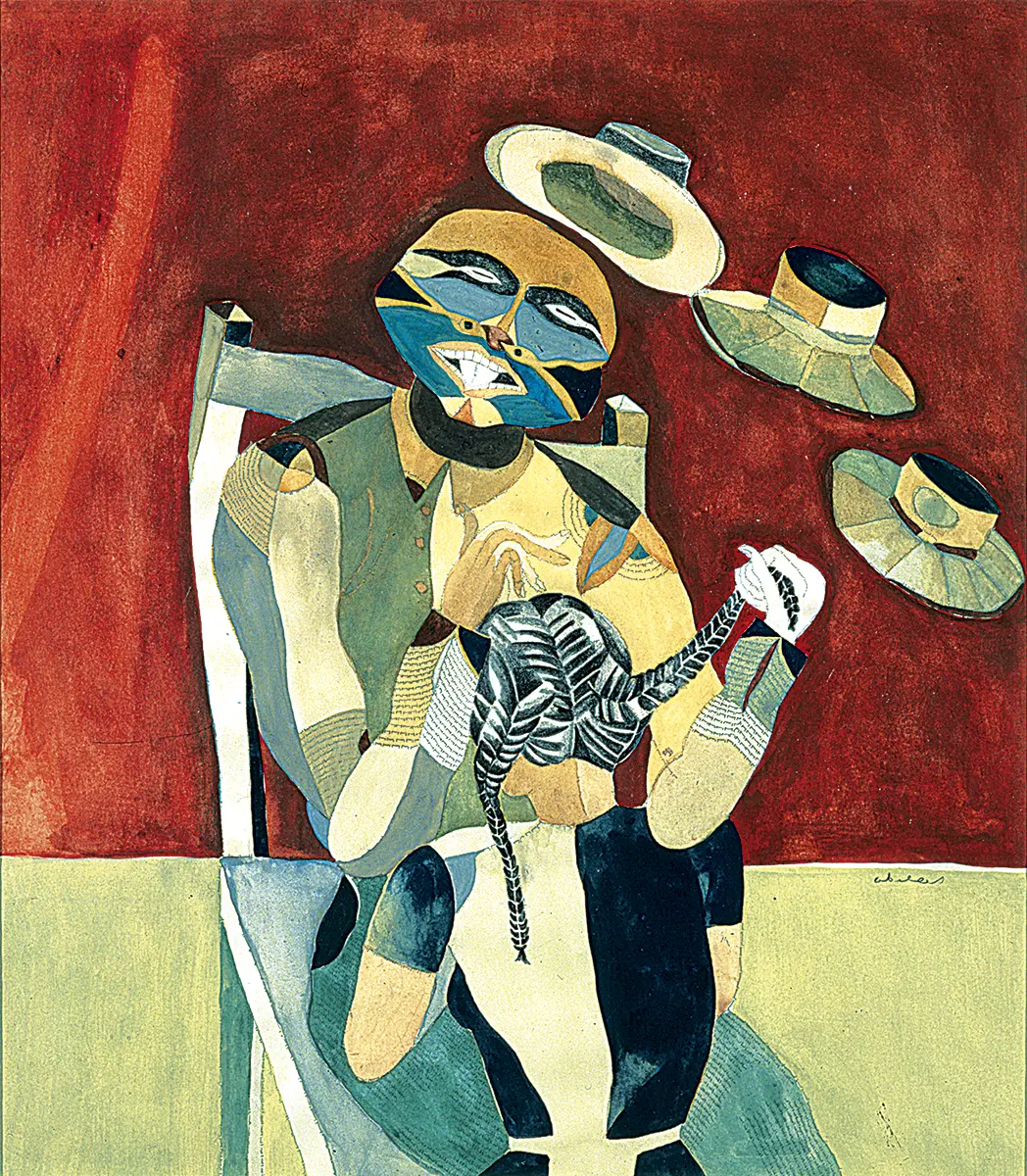
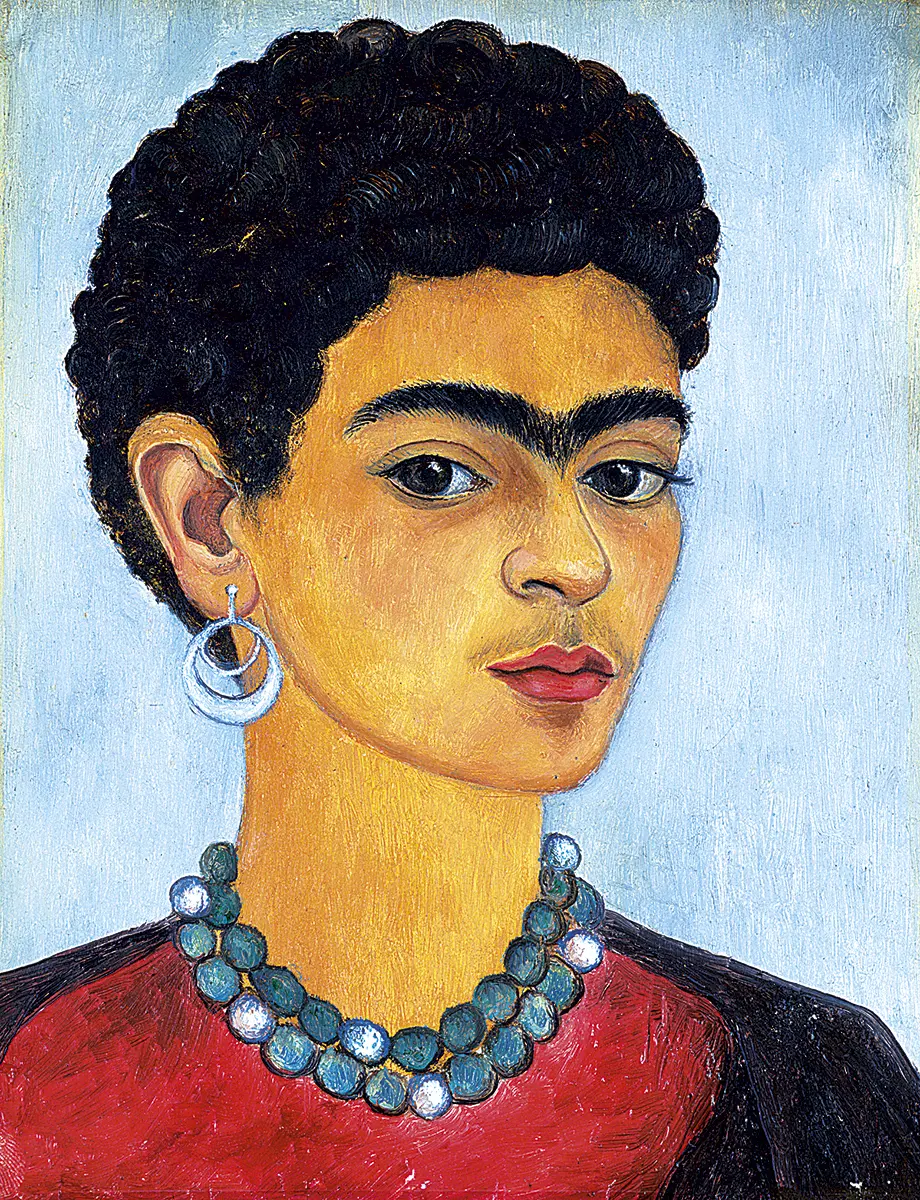
Although only a handful of Latin American galleries were represented at both fairs, there was a respectable selection of artwork by Latin American artists on view. The Richard York Gallery exhibited two important works by modern Mexican masters Angel Zárraga and Frida Kahlo. In Nude with a Shell, painted in Paris in 1926, Zárraga applied muted colors and flattened perspective, revealing the influence of Art Deco and Symbolism on his work. As an artist working abroad from 1911-1941, Zárraga represents the Mexican presence and contribution to the history of the Paris School of Art. Another highlight of the show was Frida Kahlo's Self-Portrait with Curly Hair, one of only two paintings completed in 1934-1935, created after discovering Diego was having an affair with her younger sister Cristina. Other important works included Francisco Toledo's Tres Sombreros at Mary Anne Martin Fine Arts, an untitled oil painting by Roberto Matta at Peter Findlay Gallery, and Rufino Tamayo's Brindis at Lilian Heidenberg Gallery.
The historical avant-garde and high modernist works on paper, photography, and painting were the primary focus of the Art Show. Together with the Armory Show's emphasis on contemporary art, the two New York art fairs are complementary and have found a strong formula for continued success. The high quality of the artwork along with the advantages of being based in New York—museums, nightlife, and the cosmopolitan atmosphere—have made the fairs a required stop on the international art world's destination list. It remains to be seen how this shift will affect other US art fairs, but one thing is certain—the New York fairs are here to stay.
CHARMAINE PICARD
Art critic and candidate for the Ph.D. in Art History at the University of Chicago.