
The question about the origin of the work of art has long preoccupied artists, critics, and art historians, as well as members of the well-informed or merely curious general public. A common, traditional explanation, first posed during the Renaissance and elaborated in the Romantic period, attributes the origin of art to 'inspiration', the privileged moment when the 'muse' visits the artist and offers illumination through a sort of divine intervention or magical act, resulting in the creation of a masterpiece. This idea relates to the various concepts of 'genius' present throughout history, which in turn is connected with the attribution of imaginative qualities and originality to the artist 'a privileged being who by the condition of 'creator' approaches God, as explained by Vasari in his biographies. Imagination and originality, no doubt, contributed to the valuation of novelty and to the assertion of the foundational nature of every individual work of art; they helped perpetuate the mystery and the aura that has always surrounded the origin of artistic expression. According to Javier Arnaldo, Romantic artists sought above all to establish a precise foundation for the process of inspiration; in that initial moment, Arnaldo explains, the work of art is a pure impulse, a sort of force without form or determination. Inspiration for the Romantics is a kind of momentary state of mind which, somehow, has to be preserved intact in the process of materialization of the actual work. In the early years of the 20th century, during what Arthur C. Danto calls the "Era of the Manifestos," many artists touched on this topic. One of them was Paul Klee, who in his famous Jena lecture carefully explains the birth of a work of art using the simile of the tree, and who finds that the artist is a mediator between the hidden forces of Nature 'the creative energy par excellence' and the public. A few years later, Kandinsky spoke of the 'internal necessity' as a decisive factor in driving the artist to the creation of a specific work of art. In the 1960s and 70s, many traditions in the Romantic lineage were broken, and in the views of critics such as Rosalind Krauss, who adopts the legacy of structuralism and post-structuralism, the work of art is placed beyond the scope of concepts such as 'genius' and 'inspiration', to be understood as a structure that reveals, in its materiality, a particular logic, a logic only apprehended through the detailed analysis of the work's components. Here, the origin of the work of art can be said to lie in a series of decisions made by the artist, related to his or her fields of interest and cultural antecedents within the world of art.
Two recent shows at the Valenzuela y Klenner gallery, under the common heading of De dónde vienen las cosas (Where Things Come From), tackled the issue of the contemporary work of art's origin and provenance. The first show took place between February and March, and the second between April and May. Julio Valenzuela, the gallery's director and a principal animator of this project, said in a press release that "one of our intentions with this show is to shed light on the different strategies and processes involved in the materialization of an idea and its later concretion as a work of art."
Such an interest in bringing to light the 'hidden side' of art also meant closing the gap separating art from the non-specialist public, the public that is intrigued by what's shown at galleries but whose expectations are not always satisfied by them. These shows included a number of talks by artists, who conversed with the public on the topic of their own creative processes.
The first show gathered ten experienced artists, all of them considered among the most representative of contemporary Colombian art. The group included Miguel Ángel Rojas, Víctor Laignelet, José Alejandro Restrepo, Juan Fernando Herrán, Beltrán Obregón, Rafael Ortiz, Rodrigo Facundo, Johana Calle, Humberto Junca, and Wilson Díaz. The second show presented a number of very young artists, some of them recent graduates of universities and schools, some of them still students, and all of them already known by their participation in solo and group shows. They were Juan Mejía, María Adelaida López, Beatriz Eugenia Díaz, Luz Marina Tréllez, Milena Barón, María Isabel Rueda, Ernesto Restrepo, Bárbara Santos, and Juan Andrés Posada.
The general impression one is left with after comparing these two shows is that the older artists were more interested in being didactic, and more committed to explaining their creative processes, while the younger contingent, with very few exceptions, do not slow down to account for the origins of their works but, rather, compose a new work in the attempt. Which in itself is neither a flaw nor a virtue, but a different strategy. It was also evident that the majority of participants in the second show sought to create a more spontaneous and inadvertent relationship with apparently unimportant, subjective facts of their daily lives, whereas the artists featured in the first show approached issues related to the country's cultural, social, and political tradition as they pertain to recent history. Again, pointing this out does not imply a value judgment. But just as a number of differences are perceived, there are many common elements between one generation and the other, among them the presence of photography in many cases as the source or origin of the artwork, or as a useful tool for the explanation of that origin, or as a medium for the realization of the work in itself 'all of which confirms the important space occupied in the contemporary scene, in our imagination and our language, by these mechanical images that so much controversy and commentary, both positive and negative, generated when they first began to be ubiquitous. As Walter Benjamin stated, with the arrival of film and photography, the condition of art and aesthetic experience found a new path, one that people of the past could never have imagined, and among the consequences of this is the loss of 'aura'.
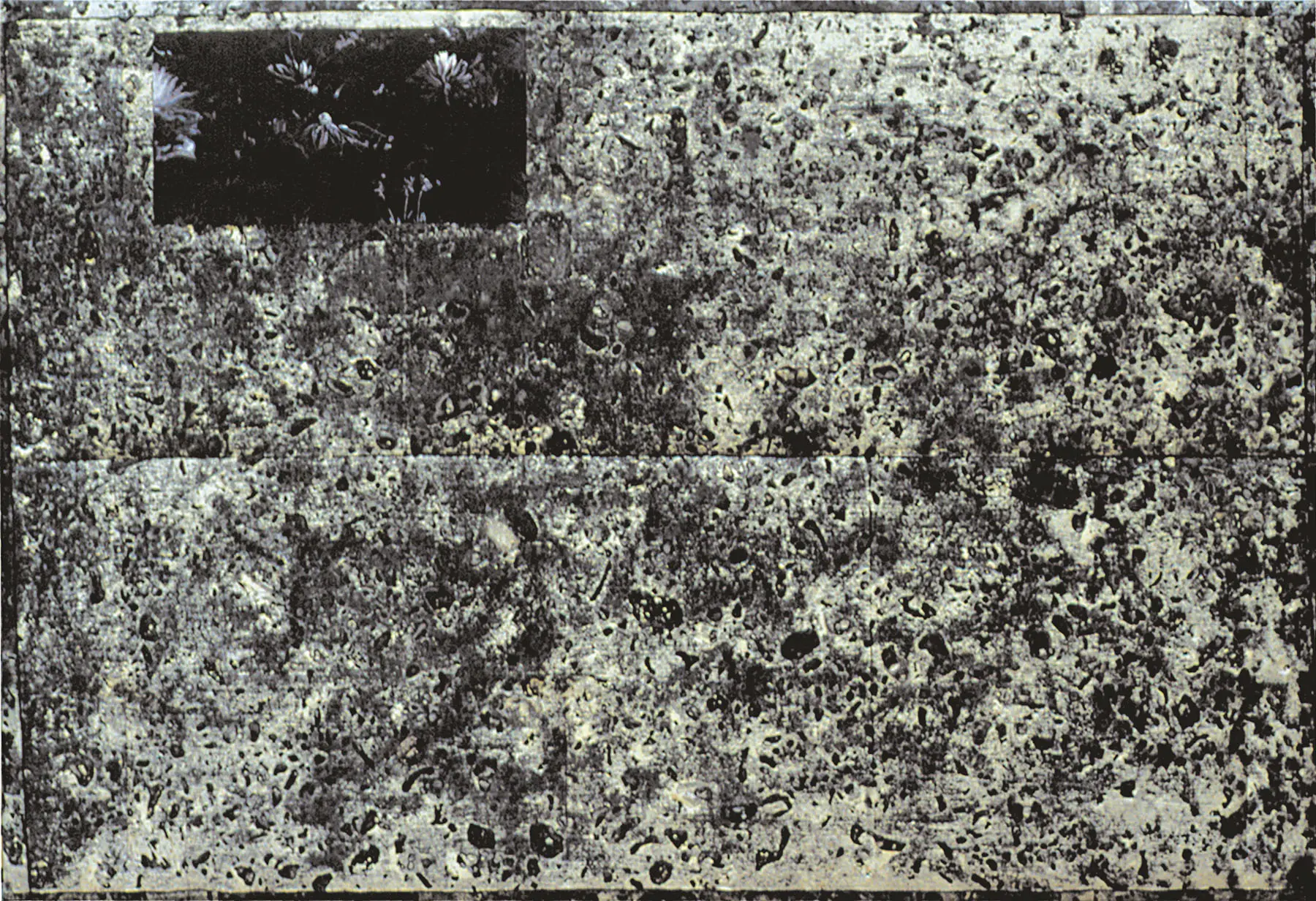
The presence of photography as the origin of the work of art is evident in the career of an artist like Miguel Ángel Rojas; in this show he presented a large dark canvas suspended in space, worked in various media, bringing to mind his installation Grano (Grain; Museum of Modern Art, 1980) as well as his more recent works under the title of Cama de piedra (Stone Bed), shown at the French Alliance Gallery in 2000. The origin of this drawing lies, according to the artist, in the amplification of a black and white photograph of a rock a texture-rich surface that in amplification generates a granulated surface where the gray and black shades that connect photography and drawing coexist. Similarly, photojournalism is at the source of Johana Calle's work, who explained with singular clarity how those newspaper images of children who for one reason or another are distant from their families, or those news items alluding to the emotional situation of young people caught in the middle of Colombia's armed conflict, are what originates her art; these newspaper pictures become Calle's delicate images in photography or as drawings on cloth. In turn, Rodrigo Facundo explained in a brief text that newspaper photography, as well as photographs in books and other media, are at the origin of his own photographic work, while Beltrán Obregón presented images of space exploration, especially images of the smoke trailing a rocket as it takes off, as a pretext for paintings that oscillate between hyperrealism and pure abstraction. In the case of Juan Fernando Herrán, photography is at times the point of origin and at times the medium for his meditations on the growing of poppies, which in Colombia is enveloped in the context of what is known as 'narcoterrorism,' while in other places poppies coexist with fruit trees as elements of a quiet, becalmed domestic life.
Rafael Ortiz, too, alludes in his work to the problem of illegal crops, through a series of paintings of plants that relate to his recent works, such as his mural for the Clínica del Country 'which brings to mind the classifications of botanical expeditions, where plants are named with their scientific designations.
Committed to Colombia's cultural traditions and the external gazes trained upon them, José Alejandro Restrepo created a montage to explain, also with singular clarity, the origins of his Paso por el Quindío (Passage Through the Quindío), which included various images, from those by 19th-century travelers to his engravings of 1992, thus bringing to the fore the issue of representation.
Víctor Laignelet presented a group of four canvases encased in opaque acrylic boxes, the structure of which reminded us of an earlier work by the same artist, La docilidad de la vaca (The Docility of Cows, Museum of Modern Art, 1998). It was a rather enigmatic structure. However, Laignelet's explanations about the origin of the work of art are among the most suggestive here, in a way related to the Romantic vision I referred to before; Laignelet speaks of a drive, a desire that is becoming manifest has no name or defined shape but acquires materiality in the creative process, resulting in a communicable fact.
Humberto Junca and Wilson Díaz also offered short texts to explain the origins of their works. Junca writes in relation to his Handicap, a series of delicate drawings on canvas, with sewn elements that reproduce sign language as it is represented by deaf-mute people in the streets in printed sheets of paper that are used to raise funds for helpful institutions; in Junca's drawings we find a reflection of art as language and as handiwork or craft. Wilson Díaz shows how a 'cultural' TV program is also a discourse about what is understood as culture, as it uses video as a resource.
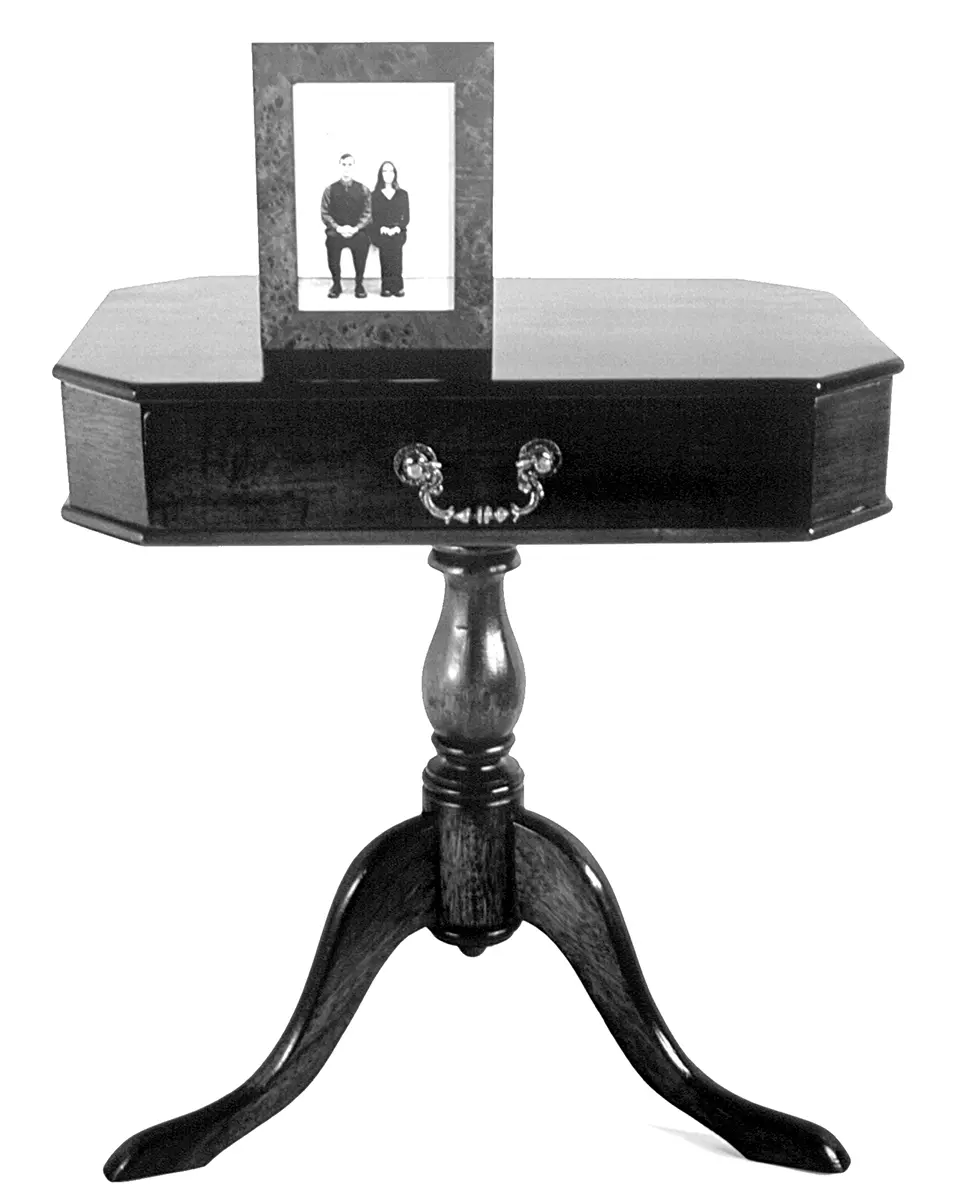
Juan Mejía, María Isabel Rueda, and Bárbara Santos, three participants in the second show, were perhaps the most interested in carefully explaining the origin of their works. Mejía presented an installation with various objects that have been used in previous pieces, all related to a reflection on education and the acquisition of culture. In each one of these objects, both the artist's personal experience and the cultural charge invested in the objects themselves are present, so that a visually simple, formally straightforward installation is articulated as a series of questions that are difficult to decipher, through which the artist's explanation acquires full meaning; on the basis of its cultural referent, each object becomes a unit in a discourse about the condition of art, education, and culture. On top of a TV set, as the screen showed sayings about art and the artistic condition by Beuys, Warhol, and Kandinsky, among others, Mejía placed a plastic Pinocchio covered with modeling clay, shown in 1995 with the title of Falácica (Phallacious); besides the TV set was a Polaroid snapshot of some shrubs under the title Class of 2001. On another wall, he placed a box or frame containing photocopies of three elephants from the history of art, and under it we found a piece of garment sewn at the folding seams, showing continuity. The origin of each object was explained in a sheet of green construction paper, resembling a high school bulletin board 'nothing we would associate with the sophistication of artistic presentations. Mejía's Pinocchio is an interesting figure; according to the artist's explanation, it was selected based on a personal liking, associated with the puppet's desire to become fully human, and to his habit of telling lies. These characteristics add to the title, Falácica, where both 'phallus' and 'fallacy' are present and relate to Pinocchio's famous nasal appendage. Also, the three-dimensional nature of the piece, as Mejía states, alludes to a basic form of 'sculpture'.
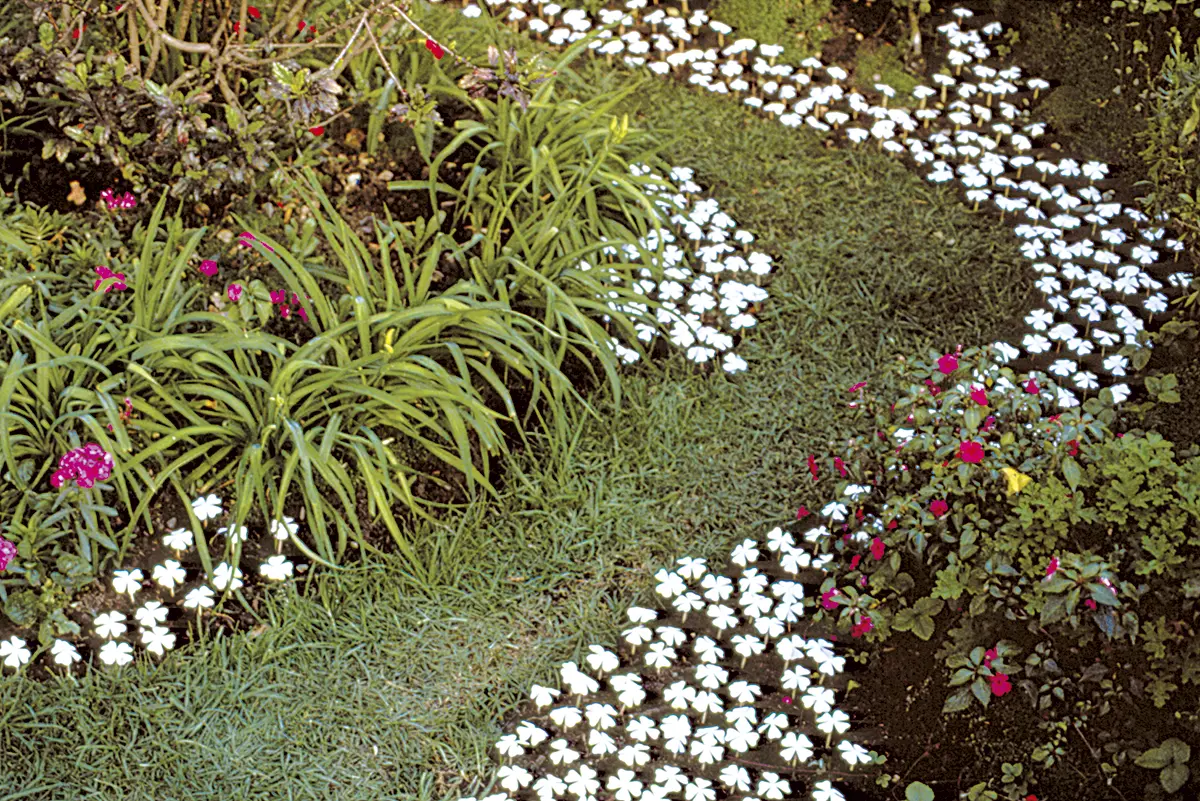
María Isabel Rueda, an art student at the National University, uses photographic records and an explanatory text to present the origins of her La casa de Rosita (Rosita's House), shown at Arte Sale (Art Goes Out) 2000 'an exhibition organized by a group of artists intent on bringing art out of museums and galleries. Rueda's project was to create a garden of trefoils in the house of a woman named Rosita, located in Bogota's red-light district; the artist's text details the experience, and her photographs show a sort of garden of gnomes inundated with white paper trefoils. It is a simple work, full of meaning and poetry. It was selected for the Young Artists Salon at La Villette, in Paris.
Bárbara Santos described the process that produced a video showing the image of a small girl facing against the camera, on a white background, barely moving for several minutes. Despite the absence of action, the video captures the spectator's attention, generating feelings of affection and solidarity with the girl's small presence; the girl finally stands up and leaves, the white wall being all that remains.
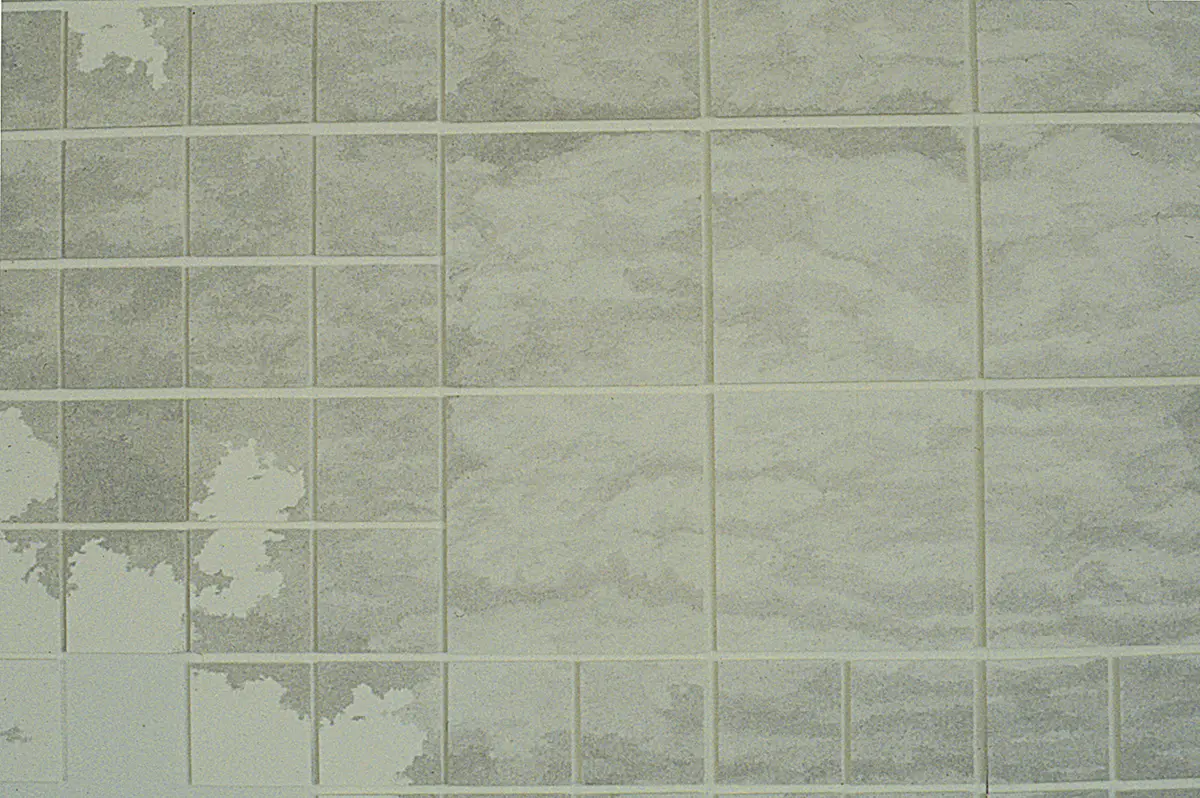
Beatriz Eugenia Díaz, interested for a long time in the creation of visual and sound spaces, installed a large drawing on three flights of the gallery's stairs, realized in white paper with orange tracings and titled Unísono (Unisonous). The viewer could hear a continuous sound playing with the piece's formal structure. Milena Barón presented her graduation thesis, a delicate work in the form of a detailed drawing that breaks down the graphic elements of an image of clouds into small rectangular modules. Luz Marina Tréllez showed the origin of her disquieting photographs that play with space and the viewer's body. María Adelaida López reminded us of those manuals that teach how to draw a house, which she followed with threads on a wall, inviting the viewer to weave an image. Ernesto Restrepo created a ceramic work that referred to the sowing of potato seeds in Boyacá, his family's hometown. Juan Andrés Posada presented a work from his Mades series, realized in iron and wood, where he persists in his strategy of simulacra and appropriation.
Perhaps the conclusion we can arrive at after seeing two shows that gathered such dissimilar works of art, is that the origin of artistic expression is not a magical or divine mystery, but rather something that evolves from experiences as variegated and irreducibly individual as the subjects who live them. A work of art emerges from concrete events, principally cultural events, and it is informed by individual visions open to the vast world of daily experience, be it social, political, or subjective. Though the public might think otherwise, art is closer to us than we normally assume.
MARTA RODRÍGUEZ