
Though predictions were uncertain for Art Chicago, now in its 10th year, the fair seems to have weathered the competition. Many of the top-name New York galleries decided not to attend, yet their absence created space for alternative and lesser-known exhibitors, establishing a more international presence that included galleries from Moscow, Seoul, Toulouse, Ibiza, Davos, Toronto, and Hong Kong. A section called the "International Invitational" subsidized younger, cutting-edge galleries, adding to the more diversified environment. In all, over 200 exhibitors presented artwork by some 2,500 artists, maintaining Art Chicago's claim as the largest art fair in the United States.
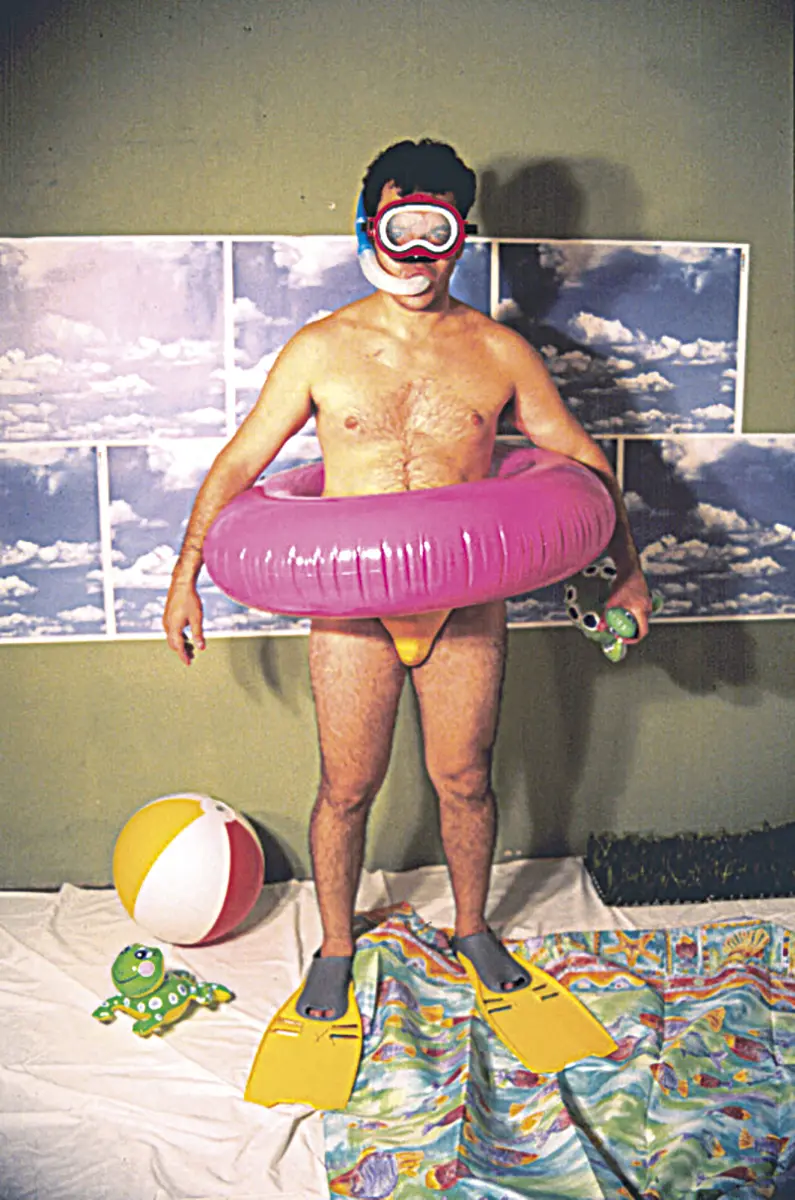
This year's fair was complemented by the inclusion of Metropolis, a contemporary art exhibition curated by Peter Doroshenko exploring the idea of urban diasporic communities. The curatorial addition was an important supplement to the more commercial orientation of the exposition, presenting artwork by twenty artists, including Adel Abdessemed (Algeria), Sharon Balaban (Israel), Fernando Palomar (Mexico), and Priscilla Monge (Costa Rica). Worthy of mention was Aaron Salabarrias Valle's installation, incorporating inflatable wading pools and pink plastic flowers suggestive of the carefree activities of childhood and the exchange of his tropical Caribbean environment for the synthetic world of plastic consumer goods.
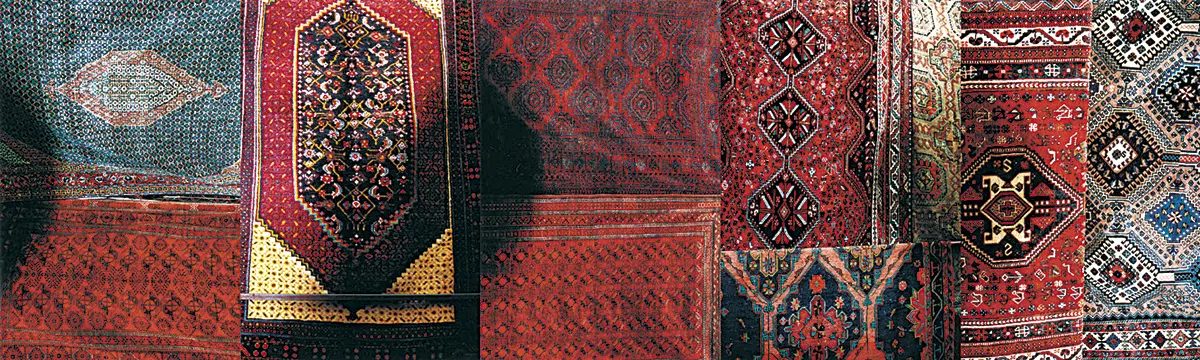
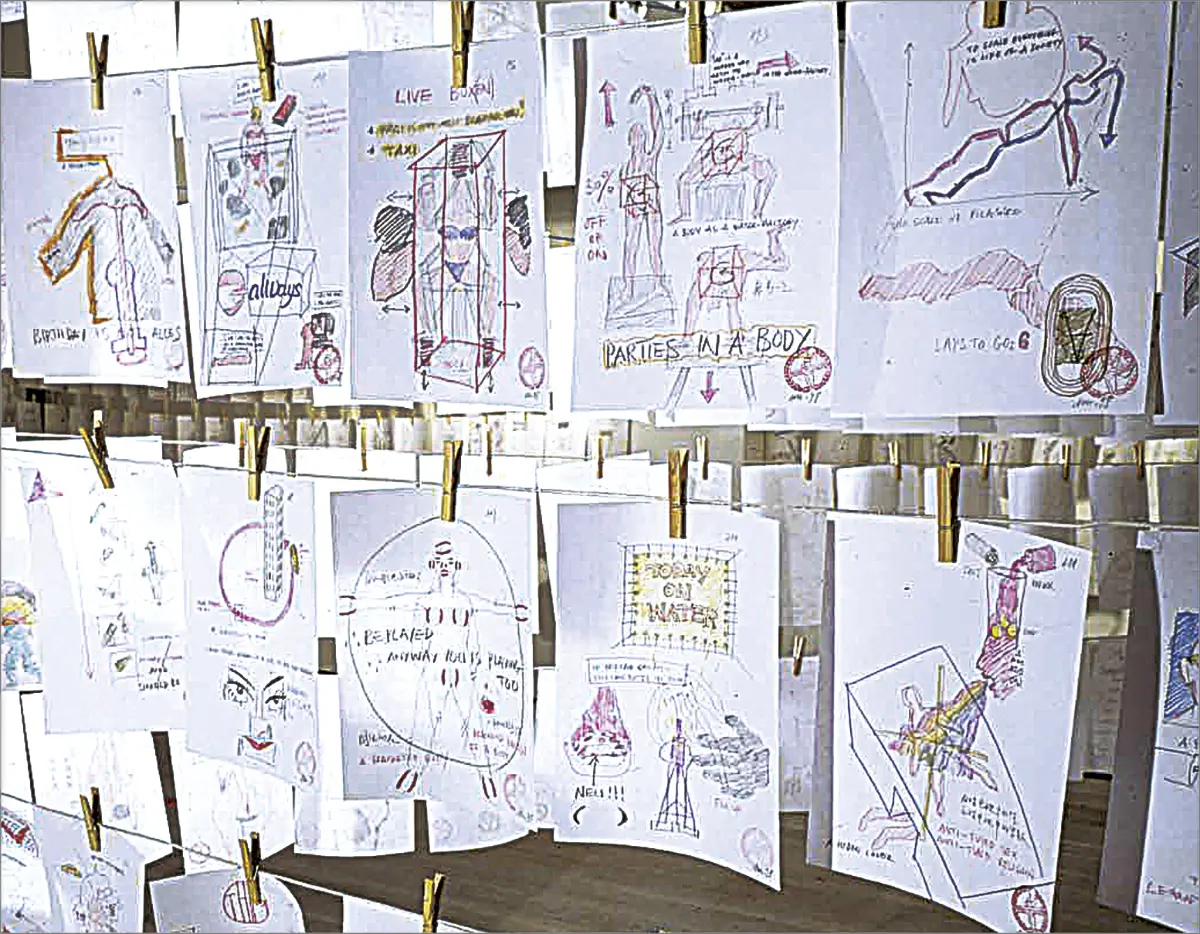
Another notable attraction was the special projects program, now in its second year. Nineteen gallery-sponsored installations were selected by a jury for the display of sculpture, video, and electronic media. Noteworthy spaces included Wu Shan Zhuan's installation Today No Water, the Power of Ignorance, a work that covers the walls and floor with political slogans and advertising logos, demonstrating the contradictory impulses that exist within China today. Another highlight was a mural by Olga Chernysheva, who created a frieze-like photomontage of various hand-woven rugs with traditional designs from Russia and the region. The richly colored mosaic of deep reds and burgundies wrapped around the walls, generating a warm and cocoon-like environment based on age-old customs and ethnic identities.
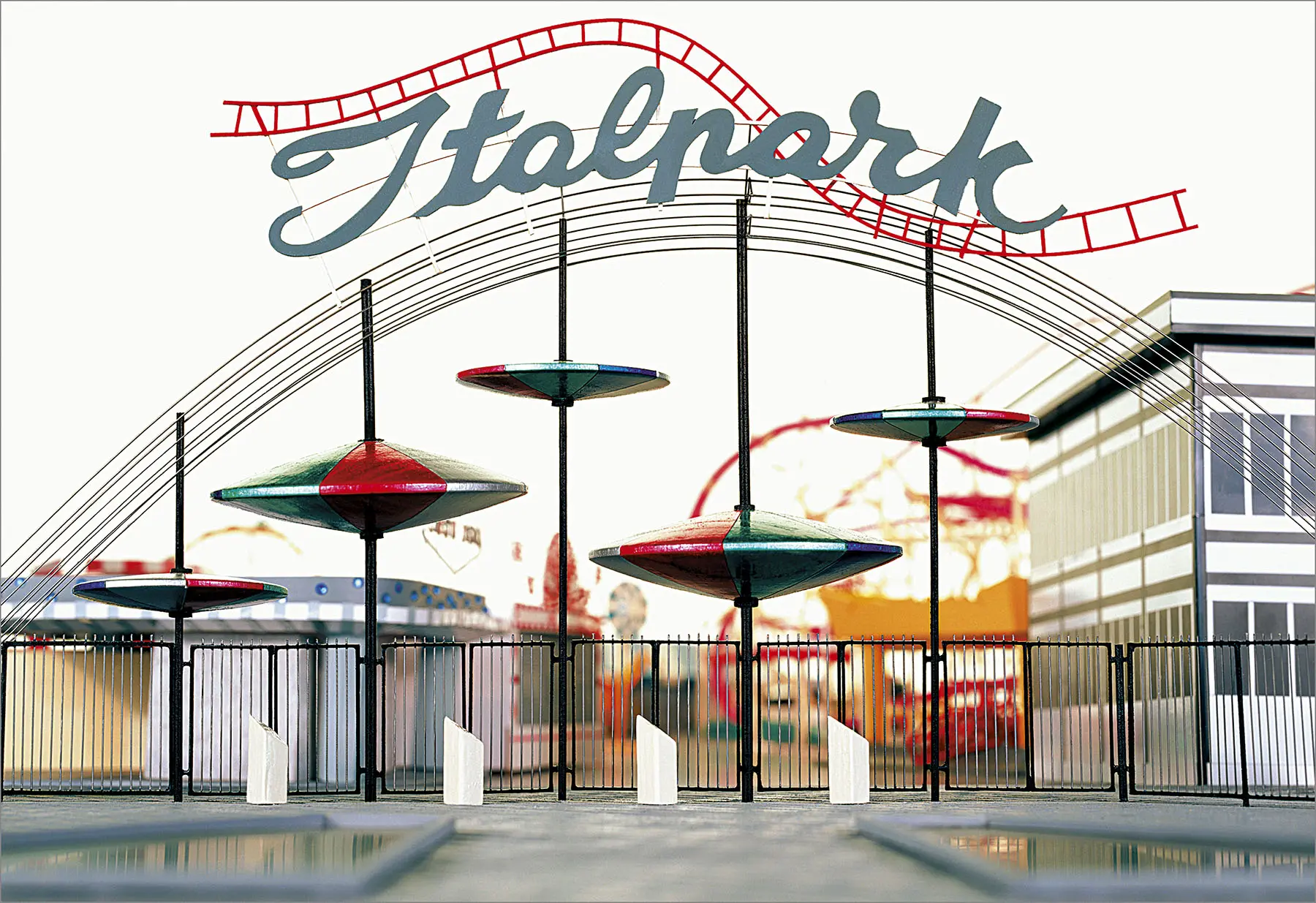
Video and installation art were mainly represented in the Metropolis exhibition and the project spaces, while galleries concentrated on the exhibition of painting, photography, and works on paper. Buenos Aires' gallery Dabbah Torrejón was one of this year's "International Invitational" recipients, bringing their talented roster of artists to Art Chicago for the first time. Trained as an architect, Dino Bruzzone photographically portrays constructed spaces using small-scale architectural models that simulate historic or existing sites. His series, Parque de Diversiones, recreates Italpark—a place of pleasure and memory that was once located in downtown Buenos Aires near the Retiro. Bruzzone's replicas are emptied of the human presence, creating an eerie and quiet environment imbued with a sense of playfulness and a wistful feeling of nostalgia. The painting was represented at the gallery by Manuel Esnoz, who borrows the look of digital technology to create opaque canvases of pixelated color and light. More abstract imagery was presented by Lucio Dorr, whose elegant linear patterns on shaped glass form geometric volumes in space.
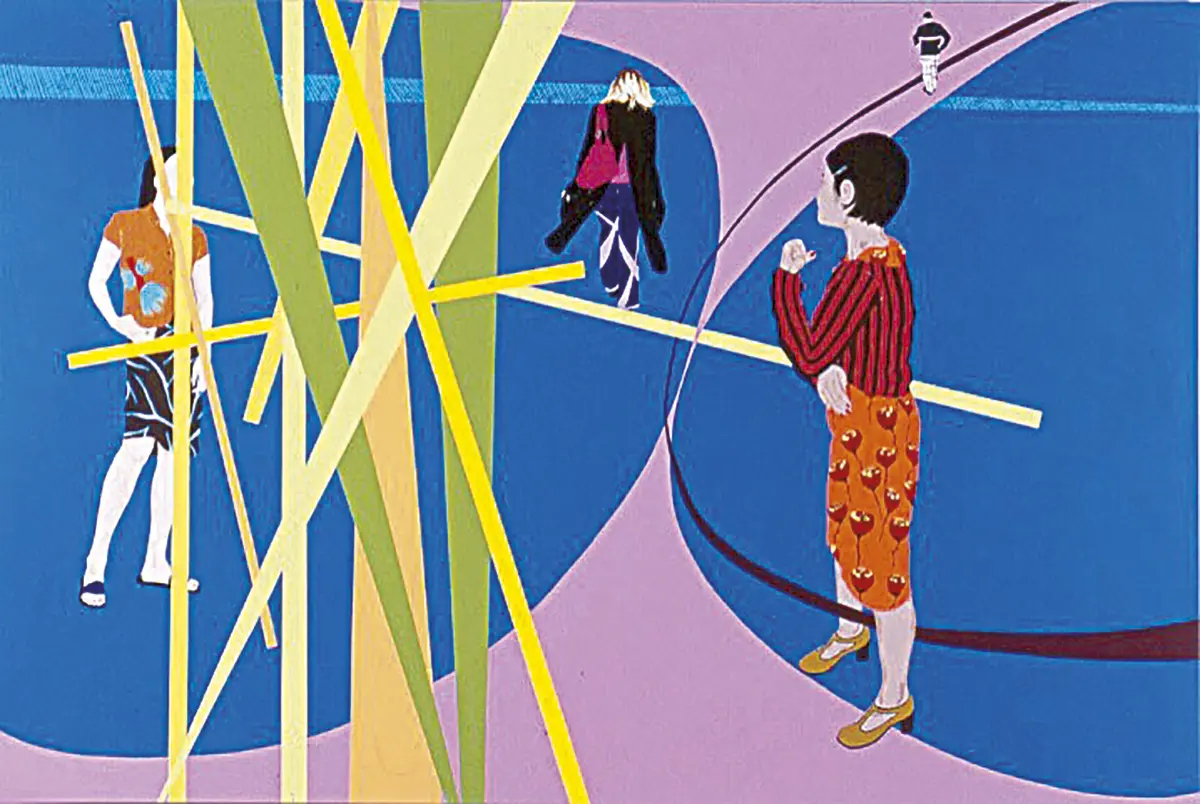
Another newcomer to the fair was the Monique Meloche Gallery, which presented an interesting array of works by Laura Mosquera. Mosquera's paintings recreate the cool, aloof, and often detached behavior of fashionable art world society. Working from photographs of parties and gallery openings, Mosquera isolates her characters from recognizable surroundings, inserting them into an ambiguous space using broad areas of color and stylized designs. By isolating her figures, she shrewdly focuses viewers' attention on behavior, body language, gestures, and dress. Mosquera's youthful pop-culture sensibility, stylistically reminiscent of Alex Katz, provides a fresh approach to self-reflexivity in the art world while avoiding the harsh cynicism often found in more conceptual and direct lines of attack.
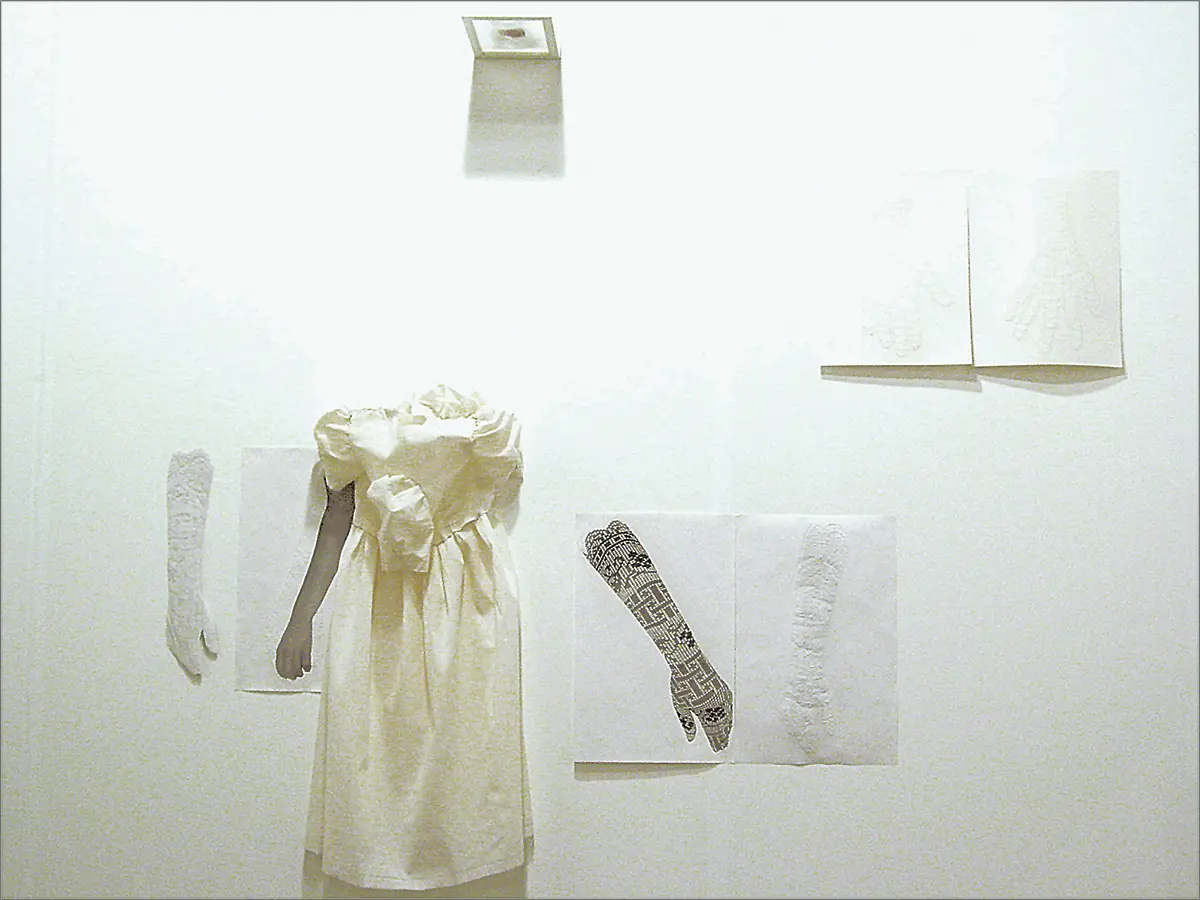
Ecstasy was the theme of photographs by Brazilian photographer and experimental filmmaker Artur Omar at Nara Roesler Gallery. In his series, Antropología da Face Gloriosa, Omar obsessively photographed expressions of delirium, frenzy, and elation, capturing a compendium of Brazilian faces experiencing some form of personal inspiration or transcendence. Also on view at the gallery were sculptural works by Artur Lescher. Better known for his large-scale works, Lescher's Elíptica—a beautiful and elegant piece that was installed on the gallery floor—had all of the formal purity of the larger works presented on a more intimate and refined scale. Semi-autobiographical artworks were exhibited by artists Amparo Sard (Galería Ferran Cano), Ana Fabry (Praxis International Art), and Laura Kina (Diana Lowenstein Fine Arts). Sard's installation, Dress, from her Molecular Imbalance series, displays a garment with four sleeves alongside photocopied drawings of arms perforated with countless pinholes, producing a symbolic image of pain. The hybrid article of clothing is suggestive of issues surrounding gender identity, and according to Sard represents the struggles she has to consolidate different facets of her own personality within the confines of her body.
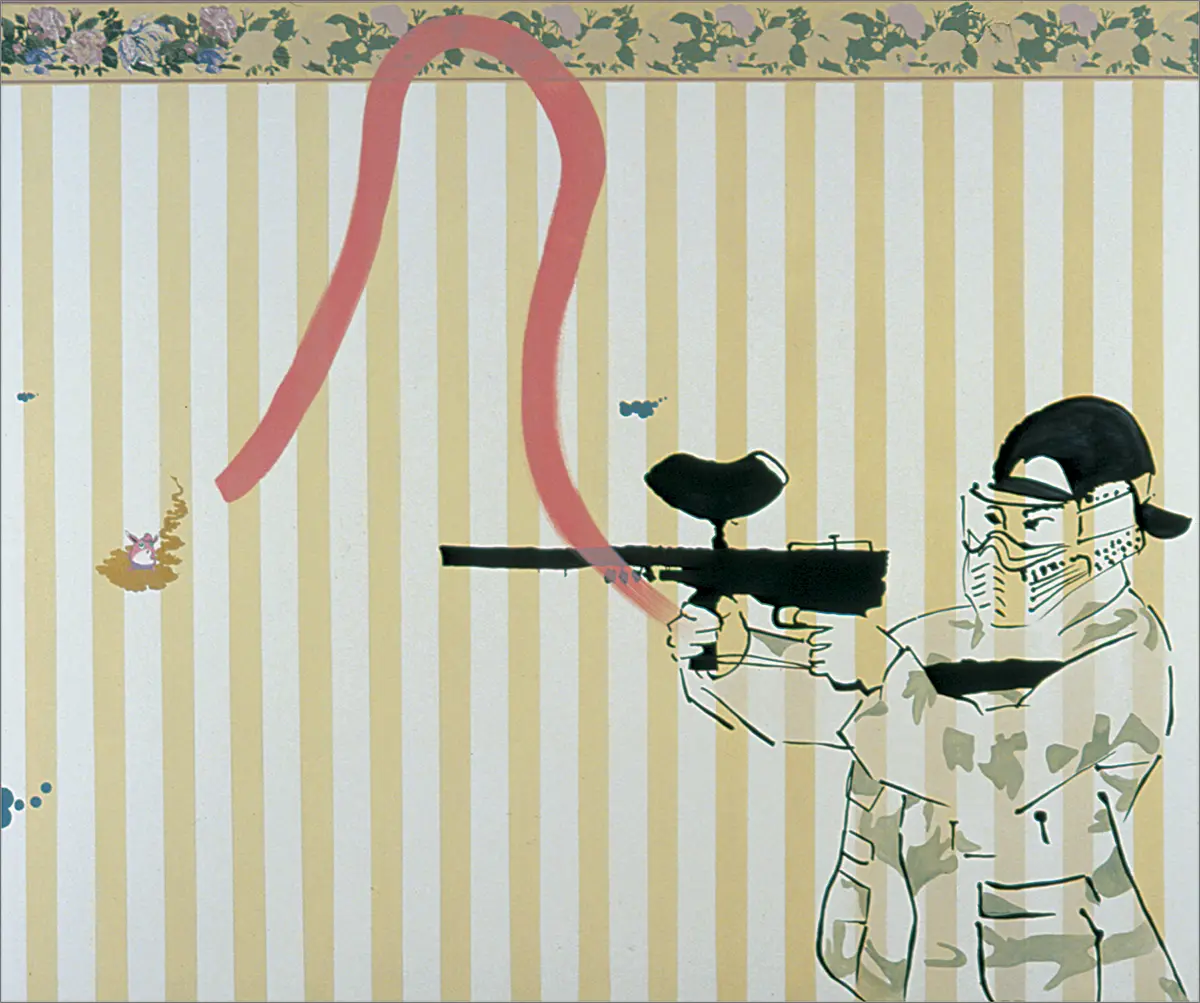
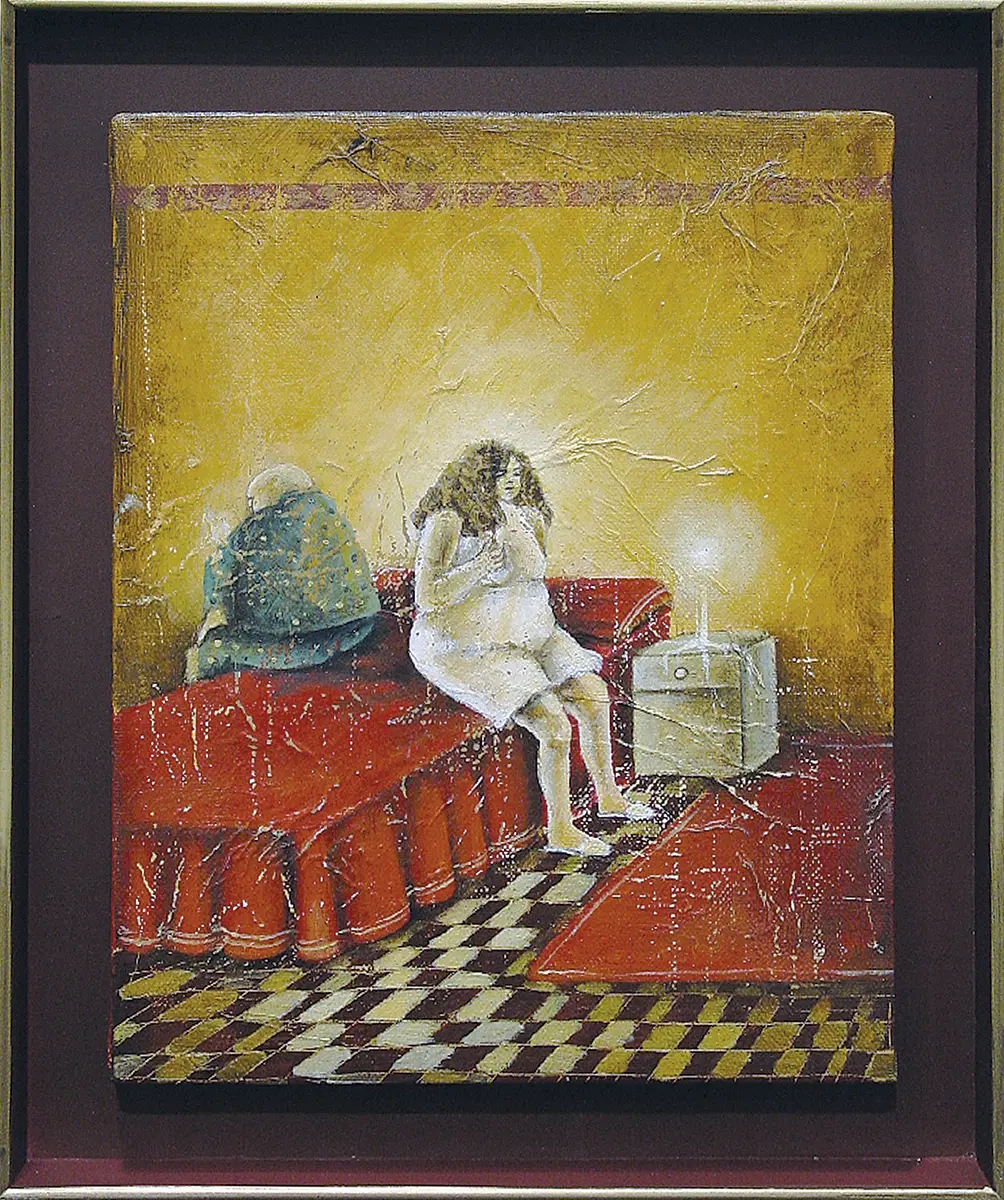
Equally imaginative were Ana Fabry's paintings of childhood and the ordinary experiences of domestic life in Argentina. Her cracked, weathered surfaces humorously reflect both the disappointments of life as well as more hopeful images of psychological liberation. Laura Kina's Paintball pays homage to her younger brother who, as the "number two son," has a lower status in the family than the first-born child. Kina's work integrates traditional Japanese Ukiyo-e prints and sumi ink paintings with Western abstraction and cartoon imagery in works that explore the weight and inheritance of cultural practice.
Also of interest at this year's fair was computer-manipulated imagery by Lluís Barba at Jacob Karpio Gallery. In his latest work, Migration Deportation, Barba focuses on contemporary politics, provocatively depicting Al Qaeda prisoners superimposed upon a dinner plate located on the coastline of Cuba. A barcode—Barba's signature emblem representing encoded information—suggests the regulated and systematized control of the movement of people. His enigmatic imagery also implies the methods in which the US attempts to contain the enemy—be they Islamic militants, Cuban Communists, or anyone perceived as a threat. Barba's work looks at the dehumanization and alienation of the individual in contemporary society and explores the ways in which technology in the hands of the powerful can regulate human interaction.
Conceptual photography by Santiago Sierra and Yoshua Okón was on view at Galería Enrique Guerrero. Earning a reputation as a bad-boy artist, Sierra's black-and-white photographs document public interventions testing the limits of human behavior through financial incentives. Among the many extremes of Sierra's activities, the artist has secluded an individual for 360 continuous hours at $10/hr behind a brick wall and has paid prostitutes to be tattooed, creating a straight line across the backs of six women. A more benign intervention consisted of paying a truck driver to block one of Mexico City's busiest thoroughfares for five minutes while Sierra documented the angry reaction to the traffic jam. Sierra's publicly staged works are confrontational and approach the limits of ethical behavior while simultaneously drawing attention to the lengths that people will go to for financial compensation in our capital-driven societies.
Yoshua Okón's artwork is equally irreverent, yet more lighthearted and humorous in its approach. In his video Orillese a la orilla, Okón asked Mexico City policemen to perform staged confrontations between individuals and the police. One such officer twirls his nightstick and displays comical feats of machismo, becoming a caricature of himself and ironically allowing his own actions to become the vehicle through which authority is mocked. In another series, Pelea de Gallos, friends of the artist—young middle-class girls—were asked to utter vulgar profanities and perform obscene gestures. The discrepancy between their educated and privileged position and the string of profanities the girls spew challenges the norms of polite society and creates the kind of uncomfortable and amusing tension that Okón likes to display.
Although there was a good deal of new and interesting artwork on view, the fair seemed to be somewhat uneven in quality and could have benefited from a bit of pruning—bigger obviously does not always mean better. In spite of this, Art Chicago did profit from the increased number of international art dealers and young galleries, and this is an encouraging sign for the event, which will have to create an identifiable niche during the coming year to ward off the competition. In fact, Thomas Blackman Associates themselves plan to open a new fair in Las Vegas later this year in addition to their existing San Francisco fair. Just how many of these events the public, collectors, and curators, not to mention the marketplace, can sustain, we will have to wait and see.
CHARMAINE PICARD
Art Critic and Candidate for the Ph.D. in Art History at the University of Chicago.