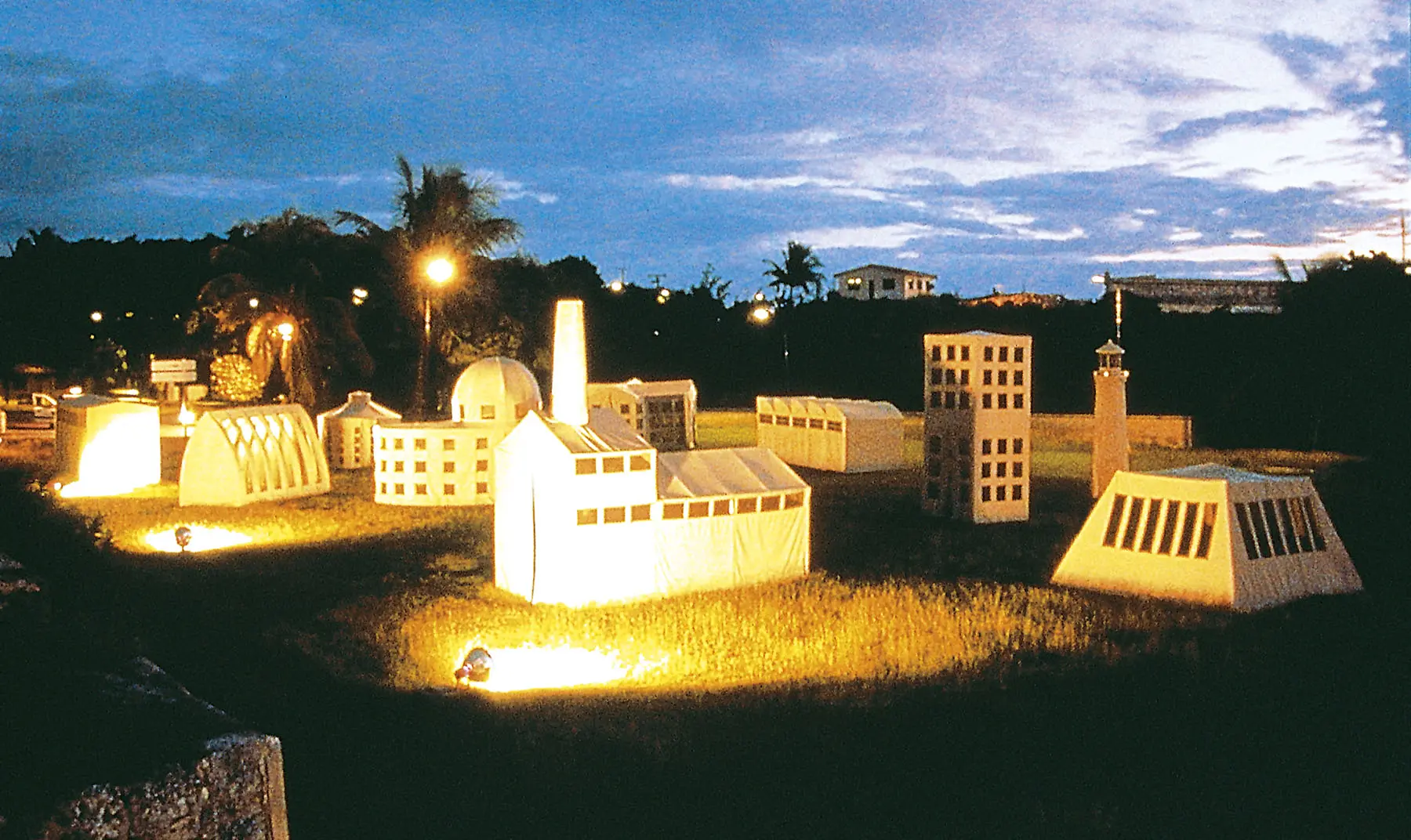
In the last few years, Los Carpinteros, a self-described itinerant artist collective based out of Cuba, has established somewhat of a hub in Los Angeles, with an exhibition at Iturralde Gallery that gained them significant local attention in 1998, followed by two exhibitions at Grant Selwyn Fine Art and, most recently, the exhibition of their Transportable City (Ciudad transportable), originally produced for the 7th Havana Biennial, at the Los Angeles County Museum of Art. In fact, the ten elaborately designed, khaki-colored, aluminum and nylon tents that make up the Transportable City, each of which represents in a simplified, almost international-symbol-like style, a key structure in a European/colonial/post-colonial city —church, capitol, prison, apartment building, lighthouse, factory, university, warehouse, hospital, military building— were fabricated partially in Los Angeles and partially in Havana.
That LA might become an important locus of activity for Alexandre Arrechea, Marco Castillo, and Dagoberto Rodríguez —who began collaborating while studying at Havana's Instituto Superior de Arte and adopted the name Los Carpinteros after friends dubbed them as such for their strange, finely crafted wood sculptures— and that work originally made for display in Havana might find resonance in Los Angeles may seem surprising, but it underscores an expressed intent of the artists that manifests itself consistently in their work. The art of Los Carpinteros is art that defies the essentializing view often taken of contemporary Cuban art by outsiders —that it must be about Cuba and that it must be political. One doesn't— have to stand in the presence of the drawings and sculptures of these three artists for very long before one realizes that while the work can have a political edge, and while it is by all means relevant to Cuba, it also resonates with implications that are psychological, social, and for each viewer rather personal, and they resonate on a global level.
A Cuban viewer might recognize the military building in the Transportable City as a specific reference to La Fortaleza de la Cabaña, the largest Spanish fort in the western hemisphere, or see in the Panopticon-like design of the prison a reflection of what apparently is a standard of jailhouse design in Cuba, but both of these structures also more generally suggest the ways in which, both functionally and symbolically, power, surveillance and control have been built into such architecture all over the world.
Likewise, the domed capitol building references actual capitol buildings like those in Havana and Washington DC, but also a variety of grand civic architecture. While the Gothic lines of the church are suggestive of the cathedrals of Christendom which spread through Europe and across the Atlantic via colonialism, the church also functions in a more generic sense as representative of the religious institution or house of worship common in virtually all cities.
The manner in which the Transportable City hovers between specificity and generality in its design references, combined with the tent technology (and tent symbolism) with which the work was made, yields a scenario in which the work's specificity to Cuba is like that of its specificity to Los Angeles (or to New York where it previously was exhibited). The Transportable City seems at home and in its proper place in each of these locations despite the fact that it is by nature and by implication of its design, an embodiment of "homelessness," of "placeless-ness," of transience."
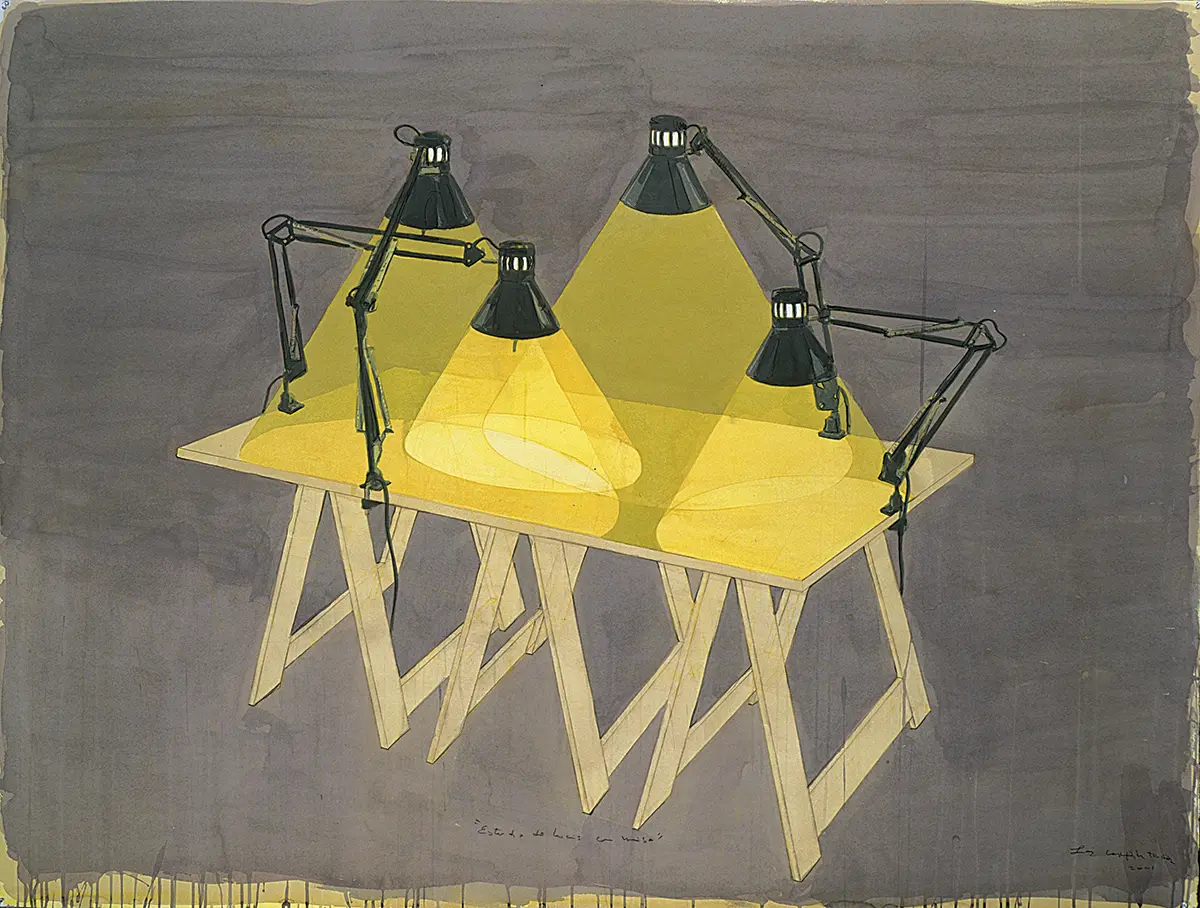
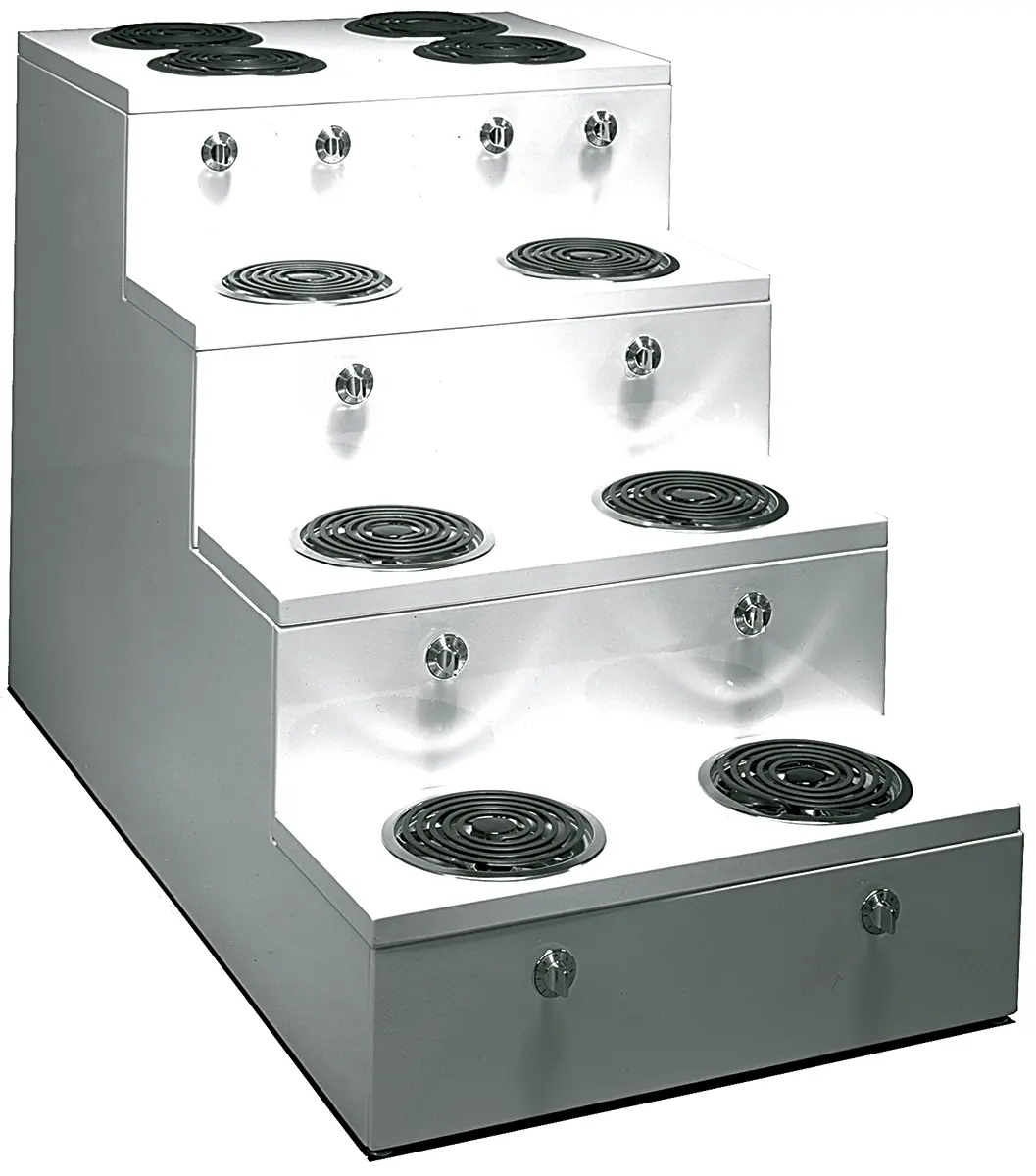
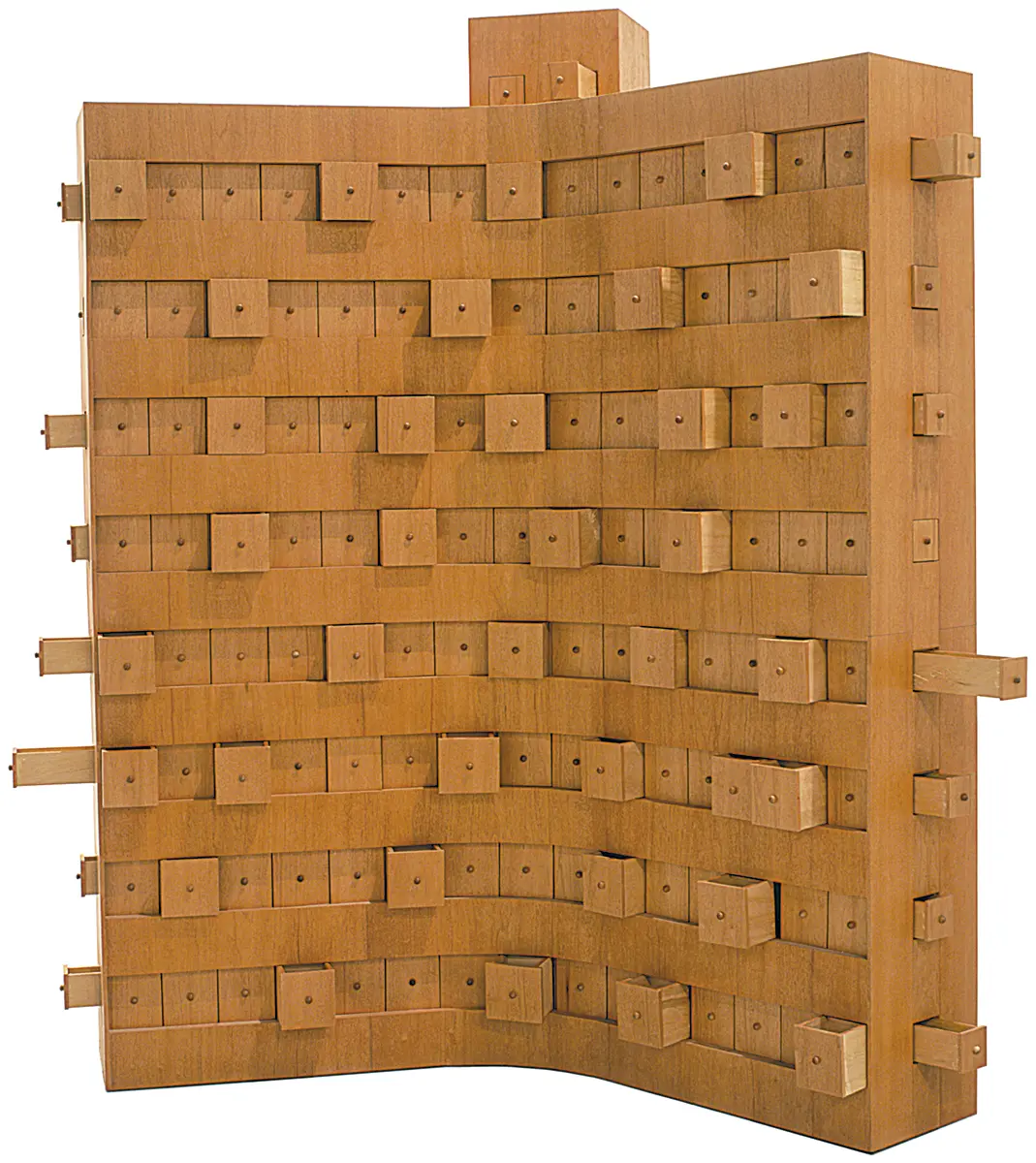
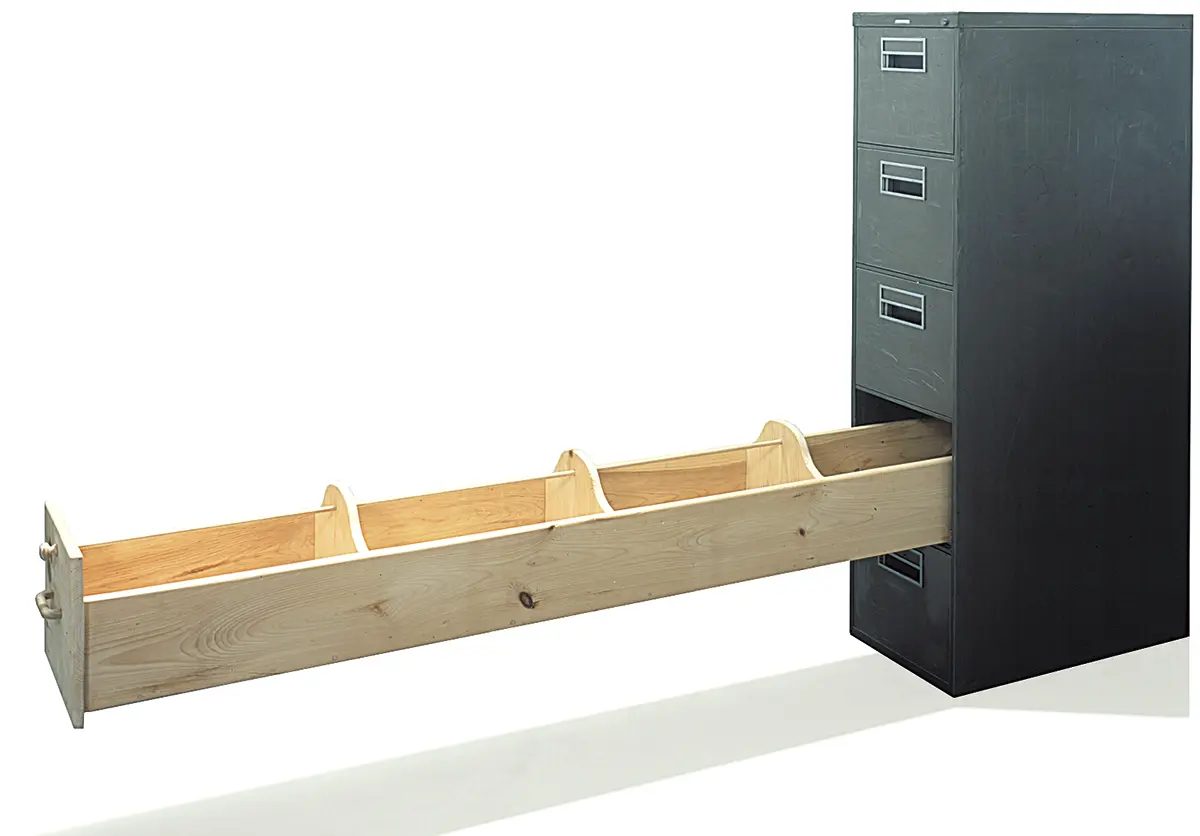
Traditionally, we have thought of site-specific sculpture as that which makes sense in one setting to the exclusion of sensibility in others. But here, strangely enough, we have a sculpture that seems site-specific wherever it goes, at least so long as it stays in a part of the world that has been influenced by, or that shares connections with Western culture, industry, and architectural conventions. Thus the work is able to take on the general denotative references of place and history connected to nearly any city. It takes on a host of connotations and associations, the arising of which depends on the context and mindset of the viewer: shelter, shanty, temporary fix, facade, society putting down roots, society without foundation, open culture, empty culture, a city on the go, a city on the offensive, a city on the run, the home you can take anywhere, home you can't leave behind, etc. Like elements in a playground for social, political, and personal contemplation, the tents, which range between six and fifteen feet in height, collectively provide a societal model for one to mull over according to one's own background, biases, and beliefs, and individually provide symbolic spaces for one to temporarily inhabit and consider. The capacity of the work to elicit and solicit a broad range of generally compelling associations, from the humorous and absurd to the disturbing and haunting, is a common strength that ties together the collective's varied output over the last few years. In carefully crafted constructions and assemblages, drawings that serve as proposals, plans, and diagrams for objects to be made, or that offer information about things that already exist in the world, Arrechea, Castillo, and Rodríguez routinely display a daft sense of humor, irony, and poetry channeled through material, form, image, language, and symbol. A recently exhibited hybrid between an electric stove and a staircase was both an actually functioning ten-burner stove, and a four-tread stairway to nowhere, the climbing of which might well result in getting burned. This piece, like the tents, follows in a line of works by Los Carpinteros —some only proposed in drawings, some actualized as sculptures— that oddly blend function, dysfunction, excess, austerity, ambition, pragmatism, and whimsy into potent, open-ended metaphor. Among the earliest pieces the group exhibited in New York was a fireplace made of wood —depending on how you take it, perhaps merely a clever bit of material irony, but also potentially a troubling meditation on misguided decisions, fallible systems, or no-win situations. Among their better-known works are a rocking chair piled with so many pillows that the possibility of either the pillows or the chair providing rest or comfort is lost, and a steel filing cabinet in which one of the drawers has been replaced with a hand-made wooden drawer resembling a traditional carpenter's toolbox —too long to fit neatly back into the cabinet— a classic gag, but one that invites other considerations about compartmentalization, assimilation and bureaucracy. Other of the trio's clever yet at times bizarre and troubling visions include construction cones of blown glass, a house with plumbing on the outside, and dice connected by a virtually invisible thread. Equally intriguing are the cabinets and chests of drawers that take on the form of a lighthouse, a book, a coffee pot, a grenade, or a hummingbird, or the cardboard boxes that multiply as if suffering from mutated growth or urban sprawl.
I am reminded of the philosopher John Locke's insistence that even the imaginary life is limited to the extent of the life lived —that imaginative visions are simply reorganizations of information recalled from experience in the world around us. It is on the cusp of this reorganization that Arrechea, Castillo, and Rodríguez operate, as it seems everything that Los Carpinteros create has the quality of being simultaneously familiar and foreign, rooted in the truly ordinary, and taken to the limit of the genuinely extraordinary. Perhaps this is due in part to the fact that all of Los Carpinteros projects, whether realized sculpturally or not, begin literally on the drawing board, with the three artists using drawings as the core site for developing ideas. The drawing board is a place where new variations on old standards are worked out, where innovation comes into play and hybridization occurs, and it is a place where anything can happen, where anything that can be imagined can be worked out and pictured, and this seems to be crucial to their work.
The trio's capacity for blending the familiar and the fantastic puts them in the company of artists like Ann Hamilton, Gabriel Orozco, Tim Hawkinson, and Tom Friedman. But it is in denying the site and culture specificity that often drives the work of Hamilton and Orozco, and in sidestepping the hermetic aspect of Hawkinson and Friedman that Los Carpinteros are able to produce works that seem strangely familiar anywhere, and curiously personal, not so much in relation to the makers, but in relation to each viewer. Seldom have I run across work that seems to have so many points of entry for the audience. Of course, one of the aspects of art many (including myself) have come to appreciate in the viewing experience is the evidence of idiosyncrasy in its making. In producing works of art that free themselves of ties to a particular setting or to particular authors (the group doesn't discuss who does what in generating ideas or making the drawings and objects), Arrechea, Castillo, and Rodríguez run the risk of disconnecting from their viewers on that level where the work of art becomes a conduit between creator and audience. I believe, however, that these works do speak of their idiosyncratic makers in volumes. They speak of nomadic individuals looking to express themselves from place to place using a language that is their own, but which is tailored to communicate to an audience in this corner of the world or that, on a planet where, no matter where Los Carpinteros travel, they are more than likely to run into people who look at their works and ask of them, "what is in this for me." The means and methods by which Arrechea, Castillo, and Rodríguez routinely negotiate this dilemma become the means by which the work of Los Carpinteros becomes unique to Los Carpinteros, but it is also in this example that the work again becomes familiar, as it echoes the position in which we all find ourselves in the world. This is the point at which I always find such enjoyment in the work of Los Carpinteros, even when the associations I have with their works are associations I wouldn't necessarily describe as enjoyable. Whether their drawings and sculptures compel me to light laughs or heavy thoughts, I always see in their work the deep commitment and involvement of its makers, and I always see something in it for me. It is a rather fair and rewarding deal for artists and viewers, and from Los Angeles to Havana to wherever Los Carpinteros and their works may travel, I don't think I am alone.
*Courtesy: Grant Selwyn Fine Art.
CHRISTOPHER MILES
Artist and writer based in Los Angeles. He currently writes for Artforum, ArtNexus, and Artweek, and he teaches at the California State University in Long Beach and at the Claremont Graduate University.