The exhibition at Rio’s CCBB was conceived and structured as a scene, and it had the goal of convincingly recounting the history of Brazilian modern art. Both the exhibition and the accompanying book —a collection of essays by the show’s curator, Paulo Herkenhoff— seek to bring closer to the general public a debate about modernity in Brazil. The works in this selection from one of Latin America’s most important collections of Brazilian art are a significant element in Herkenhoff’s attempt to give a dialectical answer to the requirements of museography. Engaging a conceptual project with a historical dimension, Paulo Herkenhoff does not intervene in vacuous polemics. On the one hand —through new arguments supported by international information— he reviews the history of modernity in Brazil; on the other, he re-launches a conversation inaugurated years ago by the University of Campinas. Already in his introduction he explores, within a contemporary school of thought, the issue of Nelson Aguilar’s selection of painters Belmiro de Almeida and Alvin Correia for the "Modern Art" section in the Muestra del redescubrimiento, a selection that had already caused great controversy in the established discourse of modernism.
The contents of any collection, be it public or private (as if the differences between them were not obvious) answer to varied criteria, from the quality of the selected works to their coherence as samples from representative artists of a given period; the interest in a specific stylistic group; the space occupied by the collection, the artist or the work itself in the larger history of art; the balance between artists and curators; etc…; ultimately, the works’ contribution to our general knowledge of art during an era. The Fadel Collection covers, no doubt, most of those demands, and in fact, its selection allows us to interrogate and enrich our knowledge of Brazilian art in the 20th century, while at the same time it gives us new elements for analysis. This has been Paulo Herkenhoff’s objective with certain works that allow him to relocate the birth of Brazilian modernity in time and space, as well as its flourishing in the history of art towards the end of the century. Not only the exhibition’s museography (thematic rather than chronological), but the book of essays on the history of Brazilian art, unveil a series of strategic ideas around the issue of the "efficient" presentation of an art collection, and the spatial (Rio de Janeiro instead of São Paulo) and temporal (before 1922) origins of Brazil’s modernity.
The Collection
In a continent where there exist differences according to countries and their cultural, political, social, and economic history, governments are not characterized by their enthusiasm for the acquisition of art —a response to both economic conditions and the dearth of long-term cultural policies. Private collecting began to develop in the second half of the 20th century and came to play an enriching, complementary role with respect to 20th-century Latin American art. From Gilberto Chateaubriand (20th-century art) to Adolfo Leiner (constructivist art) in Brazil; from Jorge Helft to Eduardo Constantini in Buenos Aires (modern and contemporary Argentine art); from Jacques and Natasha Gelman to Dr. Alvar and Carrillo Gil (modern Mexican art), and many others, the early great collectors of Latin American art started with their own country’s own production and gathered important collections that deserve recognition for the high quality of the works they contain.
What has changed today is the entry of young collectors of both Latin American and international art. It’s the case, among others of Patricia Phelps de Cisneros’ important collection in Caracas (Latin American art) and of Eugenio López Alonso’s collection in Mexico, gathered by Fundación Jumex and comprised of over 250 works by 52 artists, from Gabriel Orozco to Donald Judd, from Pablo Vargas to Pipiloti Rist and Tony Cragg. Artists also contribute to this enriching process, more towards the side of a collective patrimony. Several artists have created foundations to donate their works to the State; among them, we can count Jesús Soto donating to Ciudad Bolívar (Venezuela), Rufino Tamayo and José Luis Cuevas in Mexico (resulting in the creation of two museums), and the Guayasamín Musem in Quito, Ecuador.

The Fadel Collection belongs to the main group of collectors of Brazilian art, and its contents are an inescapable referent for the understanding not only of Brazilian art but of Latin American art and its relation with Europe. It took Sergio Fadel and his wife, Hecilda, 35 years to amass a 1,500-piece collection covering the Baroque period as well as the 19th and 20th centuries. The collection, which first gained notoriety in the 1960s, occupies an interesting place in the history of art "because it offers a panoramic view of the continuities between the 19th and 20th centuries, and it constitutes the best collection of Brazilian art during a long period of cultural modernization." This chronological rigor is new to Brazilian art collecting, where the main interests had been the colonial period and the modern period. What’s interesting about this collection is that "it is formed against the aesthetic consensus of the times." It also bears witness to an intense love of art; it is only through sustained perseverance in the difficult, wearying work of establishing a collection that the Fadels have been able to gather theirs. Today, the Fadel collection is "a first-rate referent in reconsidering the career and work of artists that were rejected and ignored, and in reassessing the valuation of other productions."
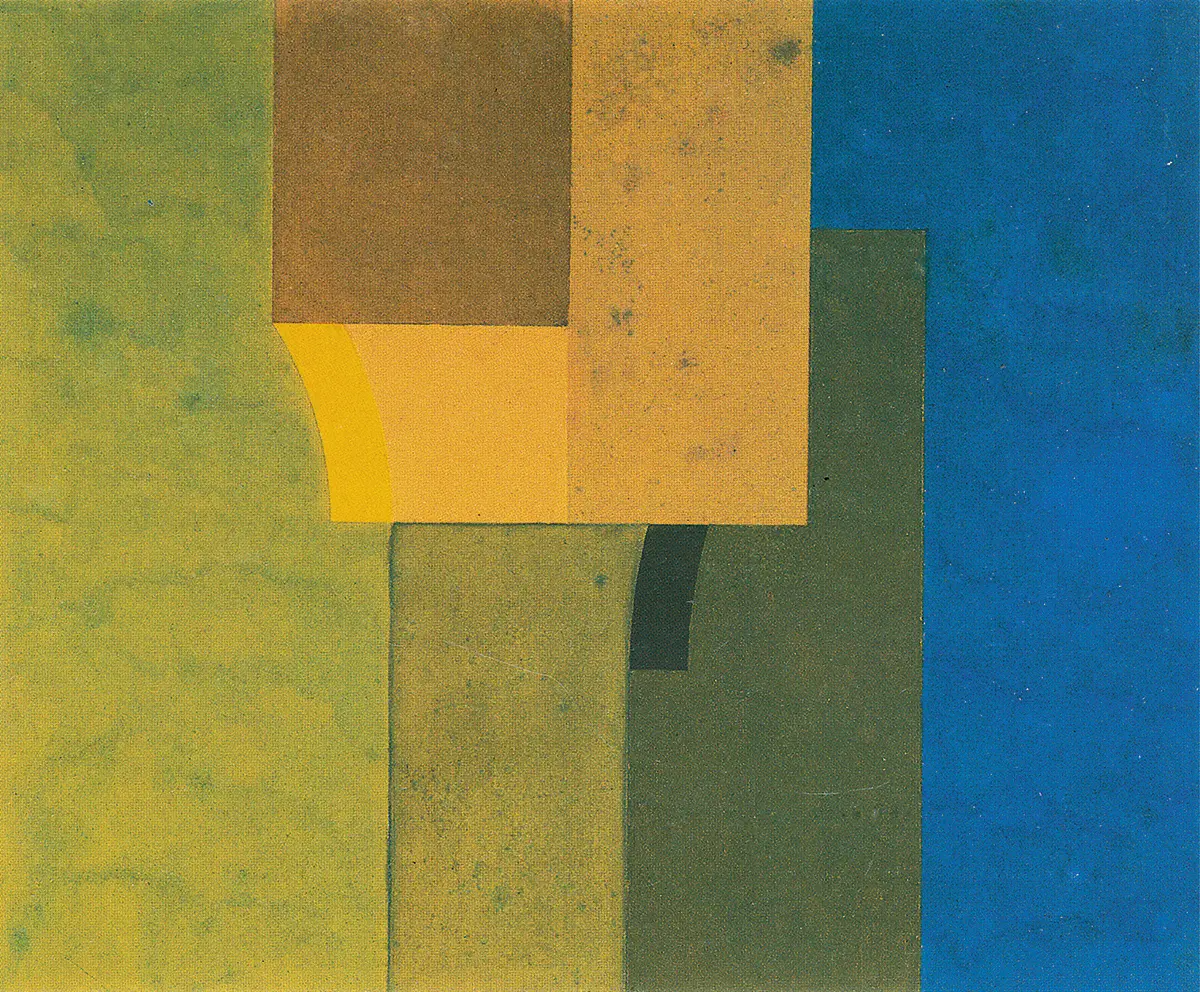
From the collection’s modern art segment, unique in its broad chronology, its rigor, and the quality of its pieces, Paulo Herkenhoff strategically selected 160 works dating from the early 20th century to the 1980s, instead of following the assumed conceptual purpose of establishing and then positively defending a show’s historical character. Herkenhoff referred to the birth of aesthetic modernity in São Paulo and the contested "historical hegemony" and "immense symbolic weight" of the year 1922. This is his answer to those who are considered a historic acquisition, or those who confuse the terms "modern" and "modernist." The curator brought to light the polemics that separated Brazil’s two capitals and their ancient rivalry in the attempt to achieve cultural primacy.
Sergio Fadel is a carioca (a native of Rio), a word that also identifies other great Brazilian collectors such as Gilberto Chateaubriand, Raymundo de Castro Maya, João Sattamini, Roberto Marinho, and Luis Antonio de Almeida Braga. According to Paulo Herkenhoff, the Fadel Collection was assembled in Rio "allowing for modern art production to be discovered in its place of origin," which is why the exhibition reflects this idea so central to the Nineteenth century and shows how modernity’s specific conditions and forms established themselves in Rio as tangible signs of change both in art and in society. "To collect in order to transform a financial center into a symbolic center" is how Herkenhoff describes this process in his introduction, and such is the goal not only of the Fadels as collectors but also of the show’s organizers, who emphasize the artists from that particular collection. For Rafael Cardoso, of the Rio University, the primacy of Rio de Janeiro was supported by the development of novel expressions in art and literature between 1900 and 1930, constituting an early modernist tradition. Beyond that, we shouldn’t forget the isolationist attitude among modernist groups in São Paulo, who thought of Rio as an old and tired artistic scene, as exemplified by the exclusion from the Modern Art Week of artists such as Belmiro de Almeida, just as São Paulo, then a minor province, was to become the important cultural center it is to this day. Herkenhoff describes this as a "political maneuver" and a "blind process of centralization," resulting from "the symbolic projection of São Paulo’s rural oligarchy and its strategies to capture national power." According to him, "the modern history of Brazil has been construed by way of ‘hagiographic’ and moralistic writing on the backs of martyrs (Malfatti) and through a reductionist satanization of Rio de Janeiro (the bohemianism of its population, its swampy terrain, the carioca propensity for bare skin). There is an excess of adulation, and a dearth of riskier contradictions and of didactic thinking."
The Exhibition
The collection, the exhibition, and the book form a coherent theoretical and aesthetic unit, but their respective structures are clearly distinct. We will see later that the book’s thematic propositions are derived from the collection, but the exhibition was conceived by Herkenhoff as an independently articulated interrogation of modern art. Herkenhoff regrouped the selection of works around stylistic, thematic, and formal axis consonant with the space available at the Banco do Brasil Cultural Center. The show’s rhythm comes from the confrontation between different works, the forceful moments within a single artist’s oeuvre, or the exaltation of individual pieces around a correspondence of thematic or formal elements. The emphasis on the sequential course is abandoned in favor of the scenic project —as a chronological journey— that visitors found, in general, added value to the show with its simplicity and its didactic character.
Herkenhoff expresses his scenic concept by emphasizing two temporal poles. They are the two emblematic works around which the show’s meaning is built: Belmiro de Almeida’s Garden with Flowers (1891), which emerged from an early interest in modernity, and Lygia Clark’s Os bichos (Bugs, 1960). which confirmed the conquest of autonomy of language. As a preamble to the exhibition, space was given to a synthesis of the modern impulse before the official modernism of 1922, followed by Brazilian abstract art, from Concretism to Informalism.
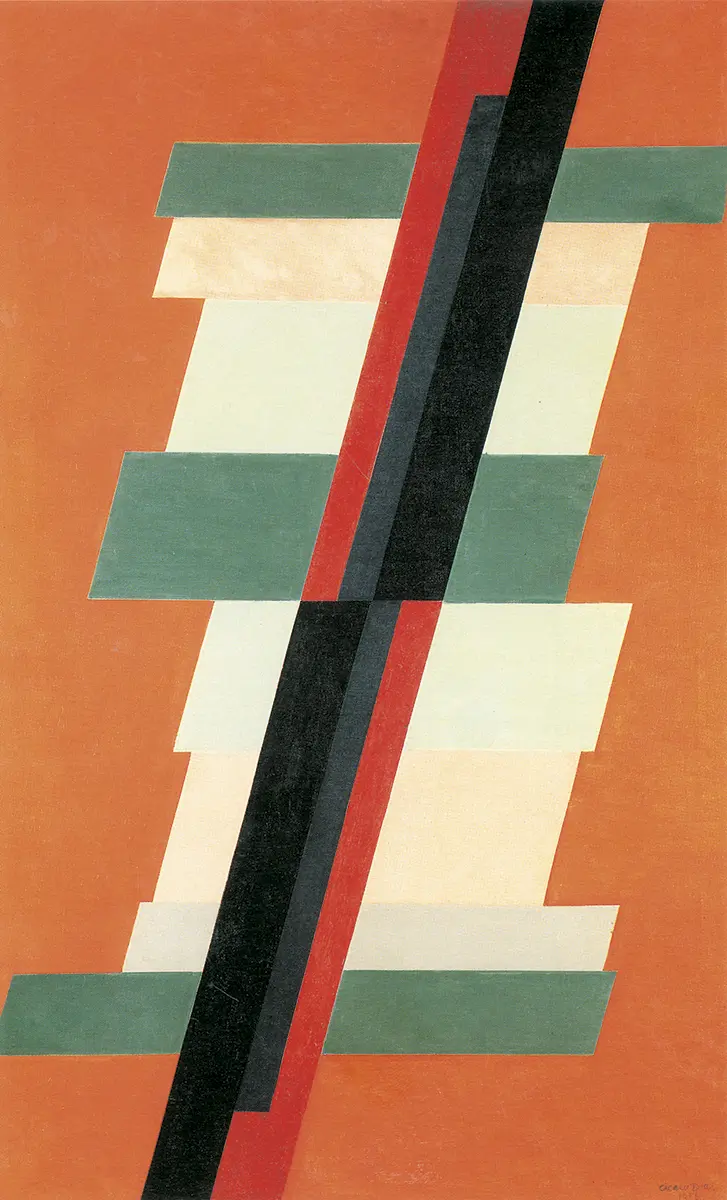
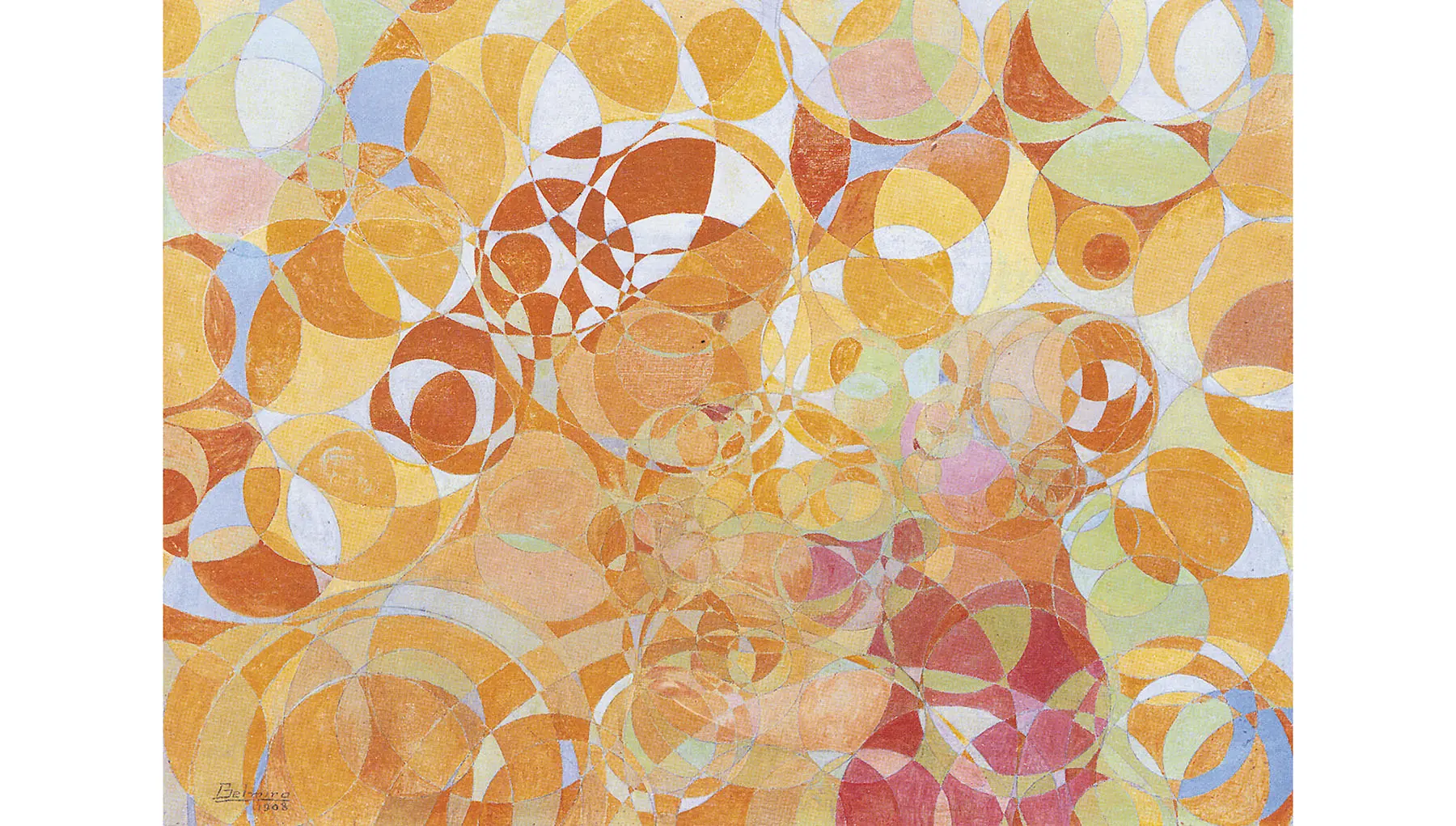
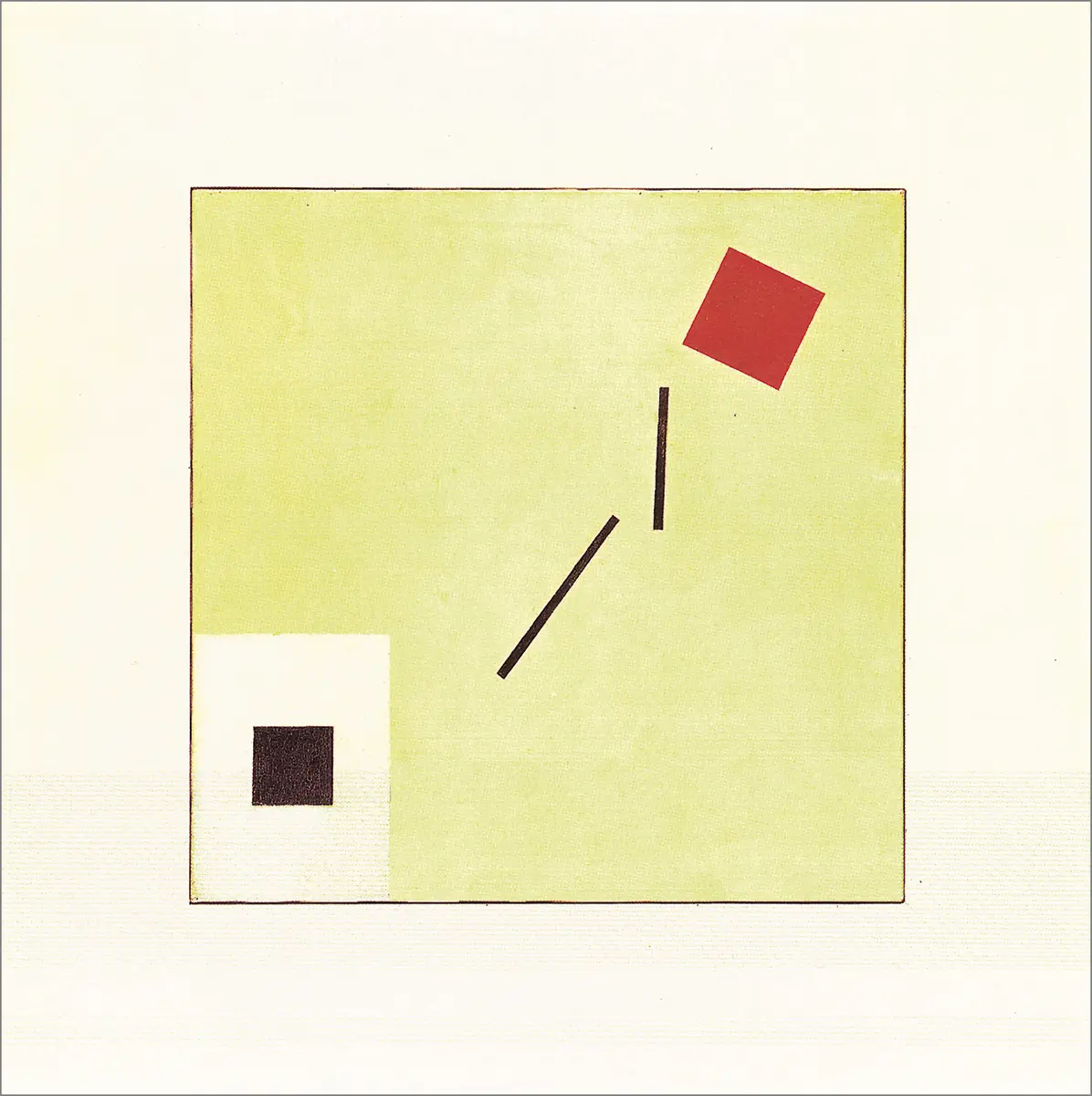
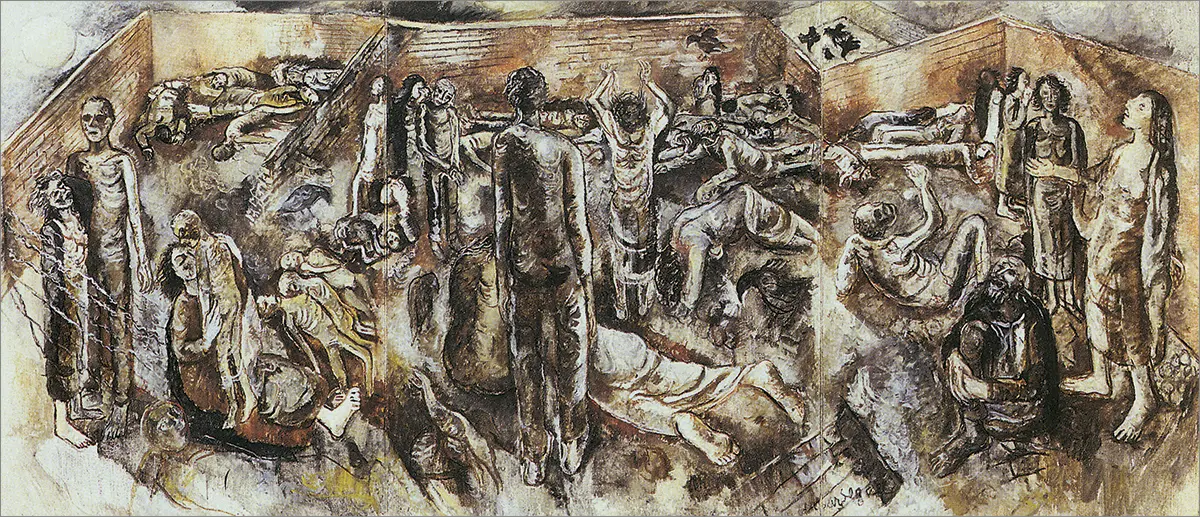
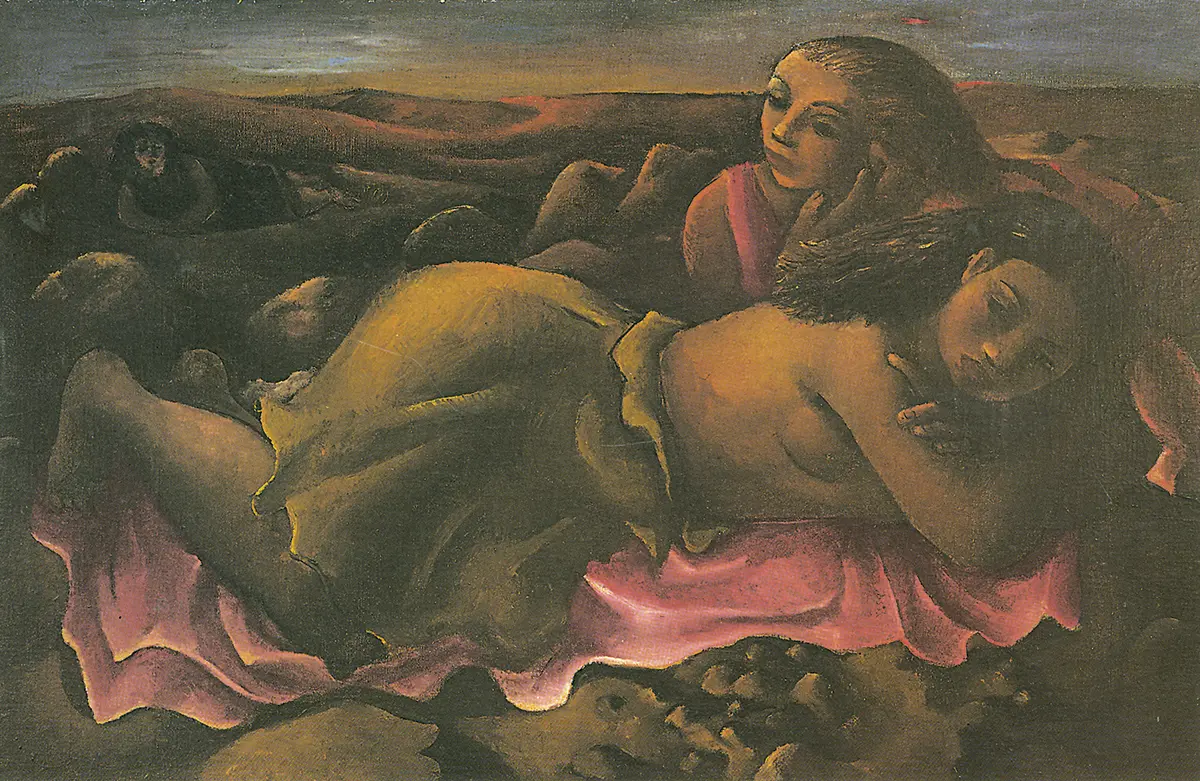
In the first room, titled "The Modern Before Modernism," Herkenhoff gathered the main modernist works around artists such as Eliseu d’Angelo Visconti, Oswaldo Texeira, Anita Malfatti (La Onda, [The Wave] around 1915), and Belmiro Barbosa de Almeida with Maternidad en círculos (Maternity in Circles, 1908), the most important pictorial work in the show. Then he moved directly into abstract art with a red, close-up canvas by Franz Krajcberg, Flores y sombra (Flowers and Shadow), which marks a decisive transition. There are important works here, such as Mira Schendel’s Composición (Composition) of 1981, Alfredo Volpi’s Ampulhetas (around 1950), two pieces by Hélio Oiticica, dated 1955 and 1957, and the extremely beautiful Quebra da moldura by Lygia Clark (1954) facing another work by the same artist, dated in 1957. Later we enter a room with a greater matter-centered charge, titled "The Vigor of the Real," with works by Camargo (Desdoblamiento, [Doubling], 1972), Antonio Bandeiras (Fábula [Fable], 1958), and Cícero Dias’ geometric work Composición geométrica (Geometric Composition, 1958). After that, we arrive at Neo-concretism, with its reaffirmation of the value of form and sensorial perception (Oiticica, Amilcar de Castro, Lygia Clark). The exhibition continues with a group of works that question historical knowledge and overarching official discourses —works such as Lasar Segall’s Campo de concentración (Concentration Camp, 1945), Alberto Guignard’s Ejecución de Tiradentes (The Execution of Tiradentes, 1961), and Livio Abramo’s woodcut Mulata (Mulatto Woman, 1954).
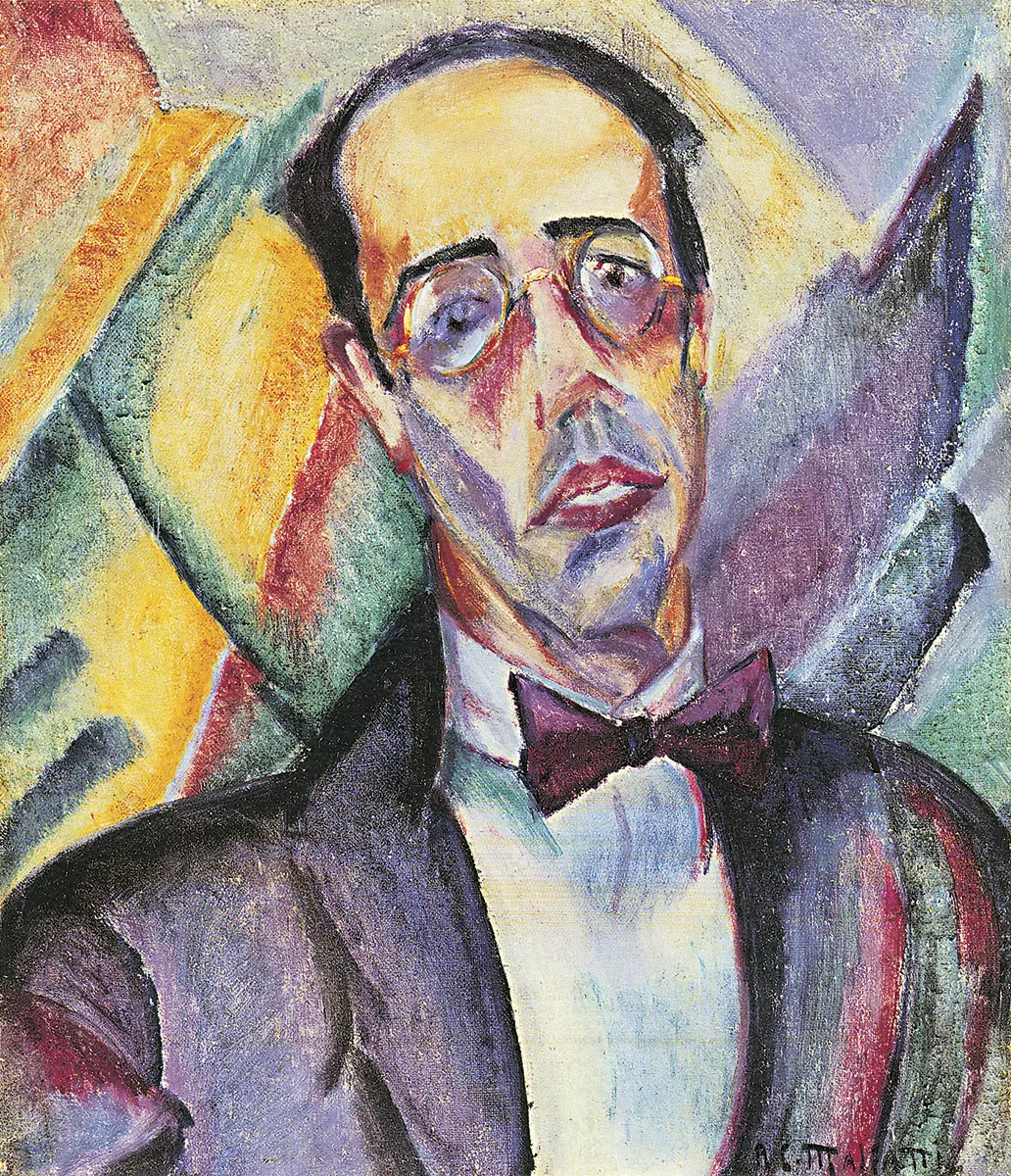
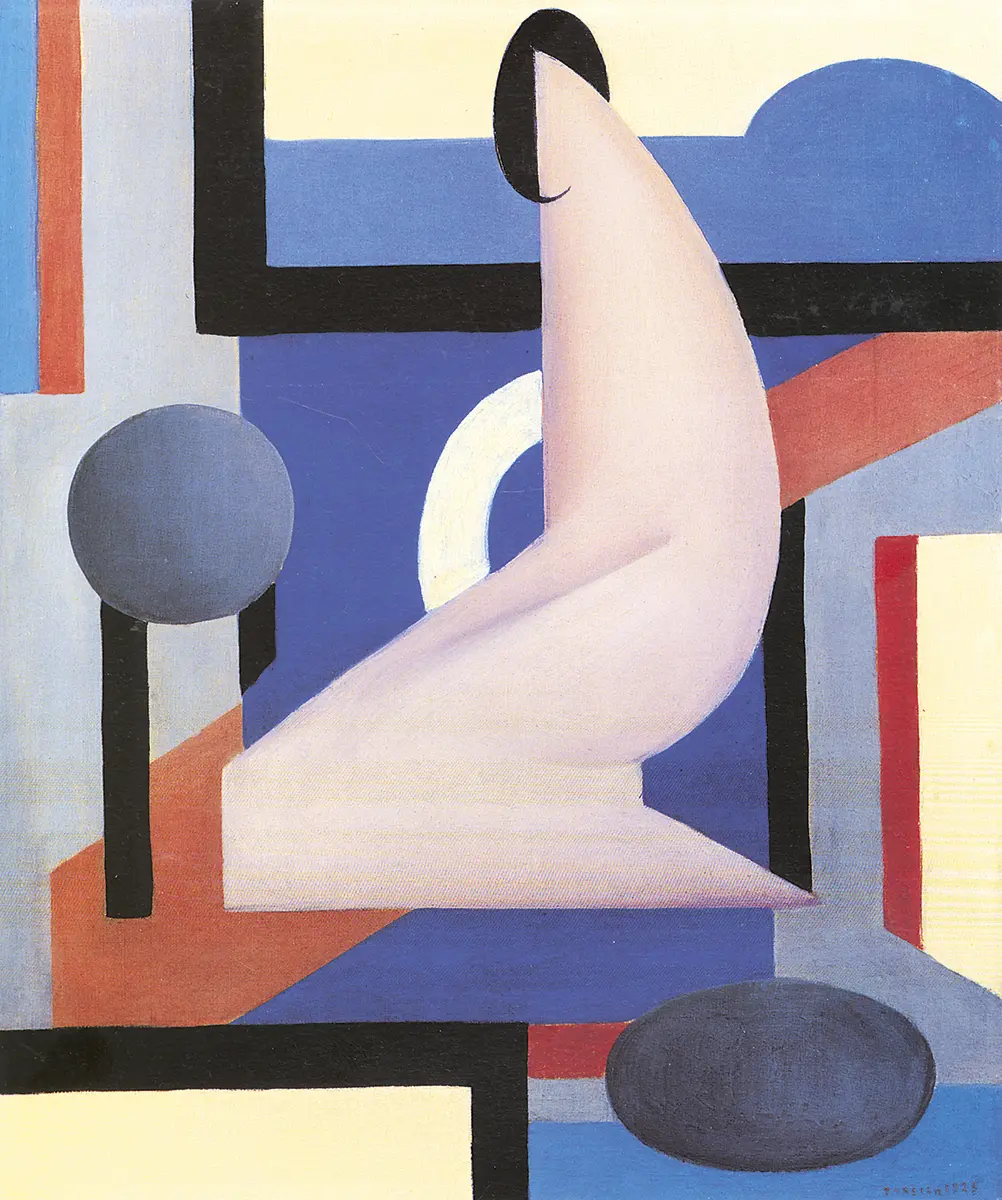
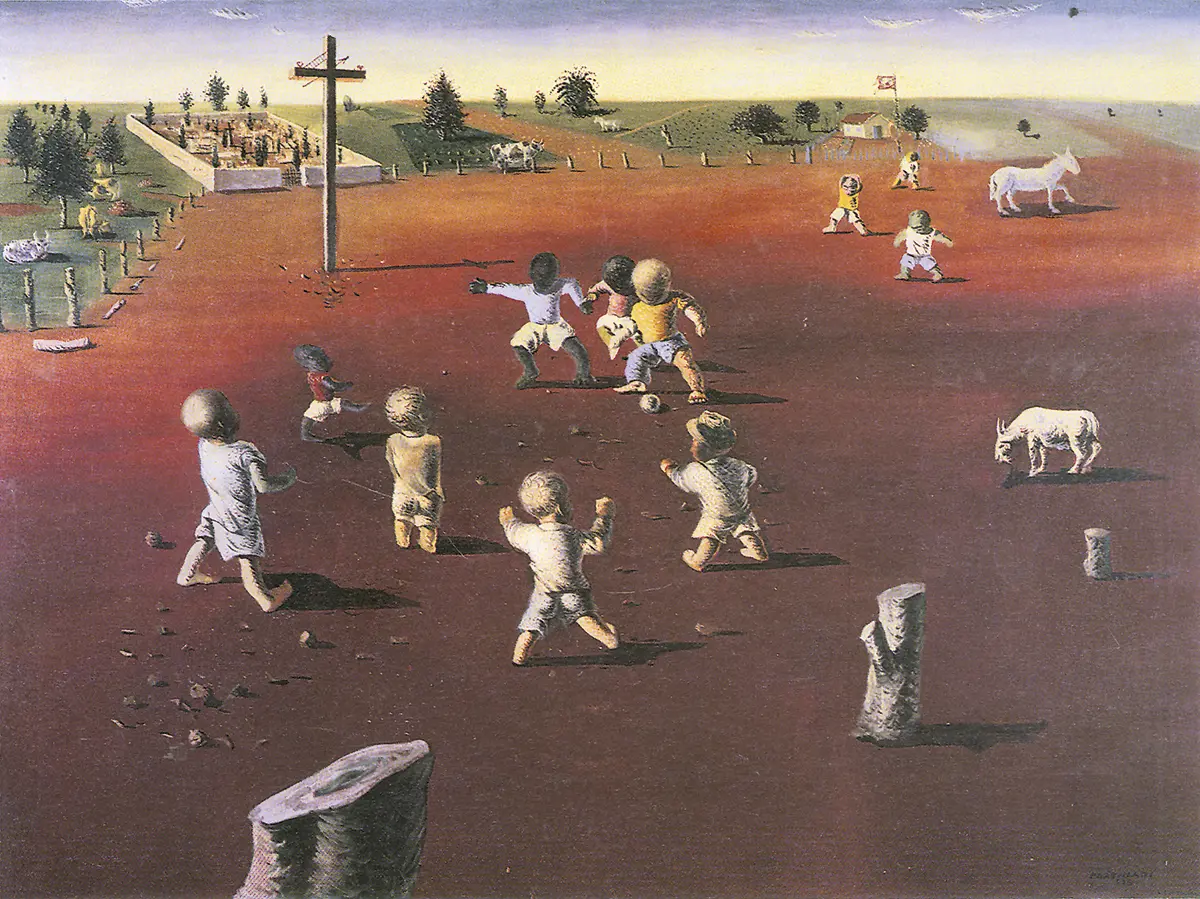
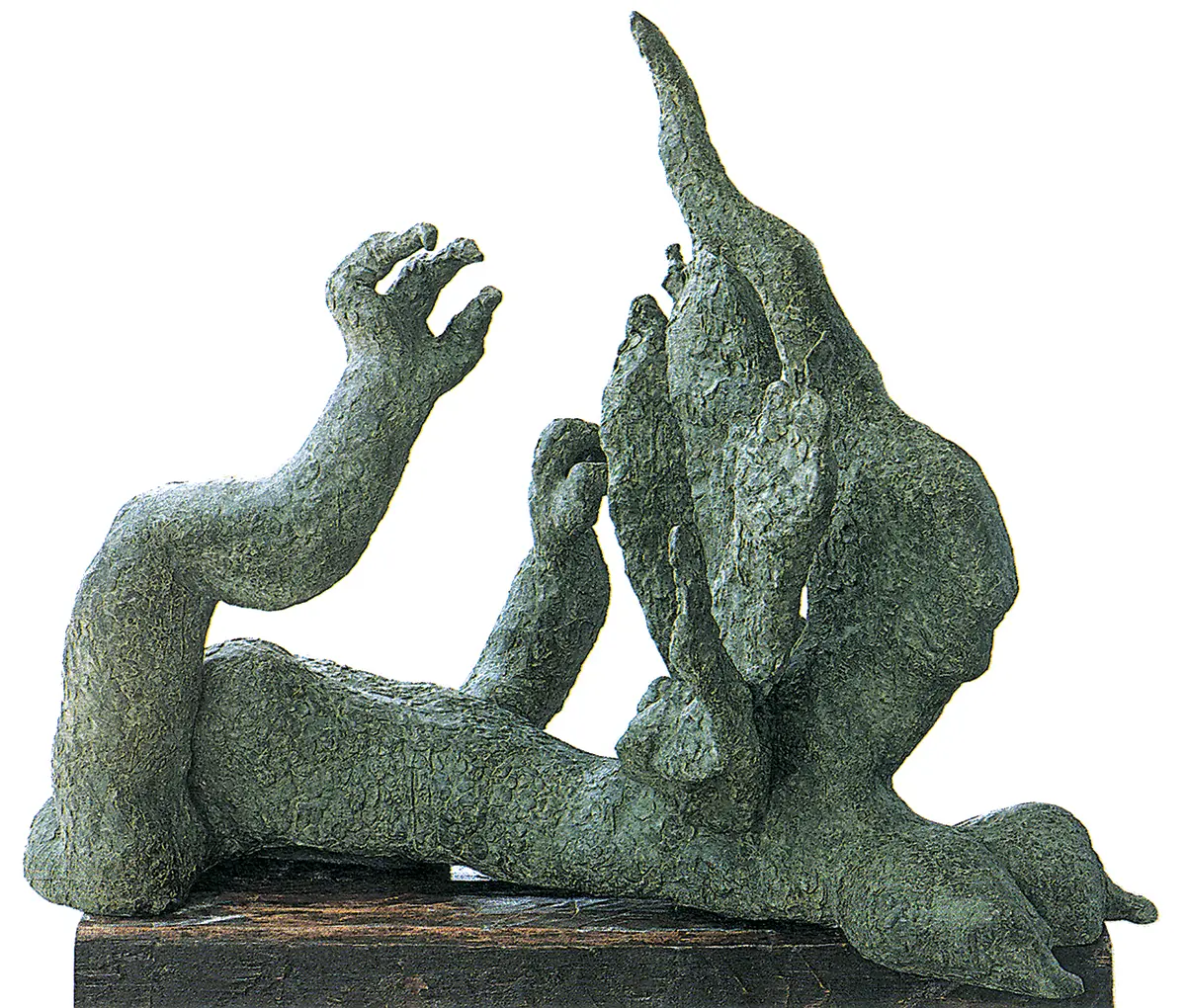
In a room dominated by the color blue and titled Nocturne, Paulo Herkenhoff placed the more "somber" expressionist work, such as Ismael Nery’s mysterious portrait Figura femenina con piano (Female Figure with Piano, oil on canvas, undated), a series of woodcuts by Oswaldo Goeldi (1940-1950), Alberto Guignard beautiful oil on ceramic Noche de São Joao (The Night of Saint Joseph, 1953), and a very Chagallian untitled watercolor of 1928. In fact, Días’ four aerial watercolors make us think of what’s to come, in the majesty of color matching matter in the work of Oaxacan artist Rodolfo Morales (architecture, angles, vanishing women…). A work by Cavalcanti deserves special mention: Quase noite (1940), a transparent piece with Picassoan accents. The next room, titled "Watercolors from Brazil," confirms the South American country as a symbolic "chromatic system" where the land is a "social index" and a "social construct" among other things. Do Rêgo Monteiro presents A descida da Cruz (1924), Cícero Dias offers Porto do Recife (Recife Harbor, 1930), and from Cándido Portinari we see Futebol (Soccer, 1935). There are also four beautiful works by Tarsila do Amaral, of which O modelo (The Model, 1923) and O lago (The Lake, 1928) are particularly interesting. The presence of Alfredo Volpi is also of interest, as are María Martins 4-piece group sculpture Nao esqueças nunca que eu venho dos tropicos (1942), and Antonio Gomide’s undated Banhista (Bather). We then enter a room titled "Impermanence of the World," dominated by eight works by Alfredo Guignard, among them two imaginary landscapes of 1941 and two large canvases following Douanier Rousseau and placed face to face, Floresta ao amanhecer (Forest at Dawn) and Floresta ao entardecer (Forest at Dusk). In the "Portraits" room, four works deserve notice: Retrato de Burle Marx (Portrait of Burle Marx, 1955) by Flávio de Carvalho, Duas figuras (Two Figures, 1928) by Ismael Nery, Guignard’s 1955 self-portrait, and Caáit. The exhibition ends with a room that Herkenhoff titled "Affinities," freely expressing the dialogue between works of different periods and the confrontation of different aesthetic discourses. We find, for instance, Gignard’s and Aleijaidinho’s versions of Saint Sebastian, Rubem Valentin’s, and Alfredo Volpi’s reference to Afro-Brazilian culture, as well as the same reference in works by Viara da Silva and Lygia Clark.
The Book: Brazilian Art from the Fadel Collection. From the Preoccupation with Modernity to the Autonomy of Language.
The book is at the same time a support for the show’s historical and theoretical logistics and a didactic tool for the understanding of the collection owner’s thinking. In his introduction, Paulo Herkenhoff indicates that the writing establishes an imaginary scene based on the selective rigor displayed by the Fadels. From Impressionism to Neo-Concretism, the sixteen short essays work like doors into, or clues for, the comprehension and analysis of the works included in the excellent collection. Each essay takes on one issue, analyzes the most representative works, and defines and differentiates the modern processes and the constant questions arising from them.
These sixteen essays propose a new interpretation of artistic expressions that emerged in the 19th century and continued until 1980, following this sequence: "The Modern and Official Modernism;" "1922: A Year Without Modern Art;" "Identity in Transit;" "Aristocracy;" "Five Melancholic Subjects;" "Land;" "Land Without End: From Vitebsk to Sertào;" "Floral Nudes;" "Clouds," "Tempera;" "May God Save Us;" "Imaginable Axioms;" "Autonomous Art;" "Clarks;" "Vigor of the Real;" "Rules and Regulations."
In each essay, analysis, statements of position, and information bring a new meaning to the revaluation of historical events, and at the same time, they refer us to the places and characters that influenced Brazilian modernity Through historical quotations, Herkenhoff dispel widespread myths surrounding Tarsila and Oswald de Andrade. He also mentions Anita Malfatti, denouncing the excessive prestige she was invested in within the early years of the 20th century, when "her aesthetic influence in Brazilian art was null," and characterizing her as "an occasional expressionist." In the twelfth essay, Herkenhoff dubs The Expanse from Castelo to Rio the most radical modern work of 1922 and insists on the importance of Haussman’s urban reform —Gloria and Copacabana Palace hotels in 1922, and Avenida Paulista in 1905. He also posits that Oswaldo Texeira’s Praça Floriano is in itself one of the best paintings ever made in Brazil. Herkenhoff reinforces his argument about Rio’s precocious modernity in his essay "Land Without End," mentioning the importance of art nouveau in the city and insisting upon the domination of nature and landscape. Later, in "Identity in Transit," he takes on yet another set of widespread, apparently unmovable myths surrounding the Tarsiwald duet. Herkenhoff emphasizes their opportunism in adopting an interest in black culture, explaining that "it is important to remember that a large part of Brazilian modernism was financed by agrarian capital with slave-owning roots." He adds, poignantly, that "Brazilian modernity was launched as the daughter of a slave’s mother, dressed by Poiret." Herkenhoff also underlines the fact that no modernist artist in 1922-1923 could have surpassed Di Cavalcanti’s historiography, by virtue of his being "mulatto, black, carioca" and his belonging to the Brazilian Communist Party. If his appraisal of Lygia Clark, "architect of instability in space," is enthusiastic, his criticism of Sergio Camargo in "Norms and Rules" is equally forceful. He critiques Camargo’s artistic and social career alluding to the artist’s time in Paris, his assiduous networking and socializing, and his use of such contacts to fluff up a biography (Herkenhoff uses the term "professional strategy"). The artist is not vindicated by the work in this case; the historian locates with precision the gaps between Camargo’s modernity and the reality of others’ modernities.
This is an important book, whose "hook" is to be found in the well-argued historical clarifications and the new information provided. Herkenhoff’s contribution to the history of art is supported by positive argumentation in the context of a debate about the reinterpretation of Brazilian modernity. Intellectually stimulating, the book’s tone has the right dose of precision and freedom, and it’s not devoid of power. This text needs to be read with an eye toward the hidden stories, confronting and defending received and widespread notions. It should be noted that some private collections are a true joy for their originators, and they prompt us to journey through them and arrive at unexpected insights about their contents.
CHRISTINE FRÉROT