
Skin is our largest organ occupying approximately 18 square feet of surface area on the adult human body1 It functions as a protective barrier, a container, and a regulator of body fluid and temperature. The multilayered sense organ registers pain and pleasure, responds to heat and cold, communicates emotional and physical states, and carries nerve endings that provide us with our sense of touch. It is a self-repairing membrane that is both living and dead—the outermost stratum is continually sloughed-off and renewed in an endless cycle. This ability for regeneration, however, has its limits—skin records the aging process, losing its elasticity with time it exhibits the fine lines, wrinkles, and sagging skin that a body has earned over the years.
In For Skin, a show organized by guest-curator Henrique Faria, eleven artists were brought together for their visual and conceptual associations with the theme. From allusions to genetic replication, tissue engineering, and racial identity to the suggestion of a social skin or protective barrier, the subject served both a literal and a metaphoric role. A major focus of the exhibition concentrated on the body and the ways in which the human form can be artificially manufactured, altered, and abstracted using contemporary technology. This aspect was largely represented by photography and digitally-manipulated images —although sculptural objects by Nicola Constantino such as a flesh-colored soccer ball covered with simulated human nipples were pleasurable and compelling inclusions.
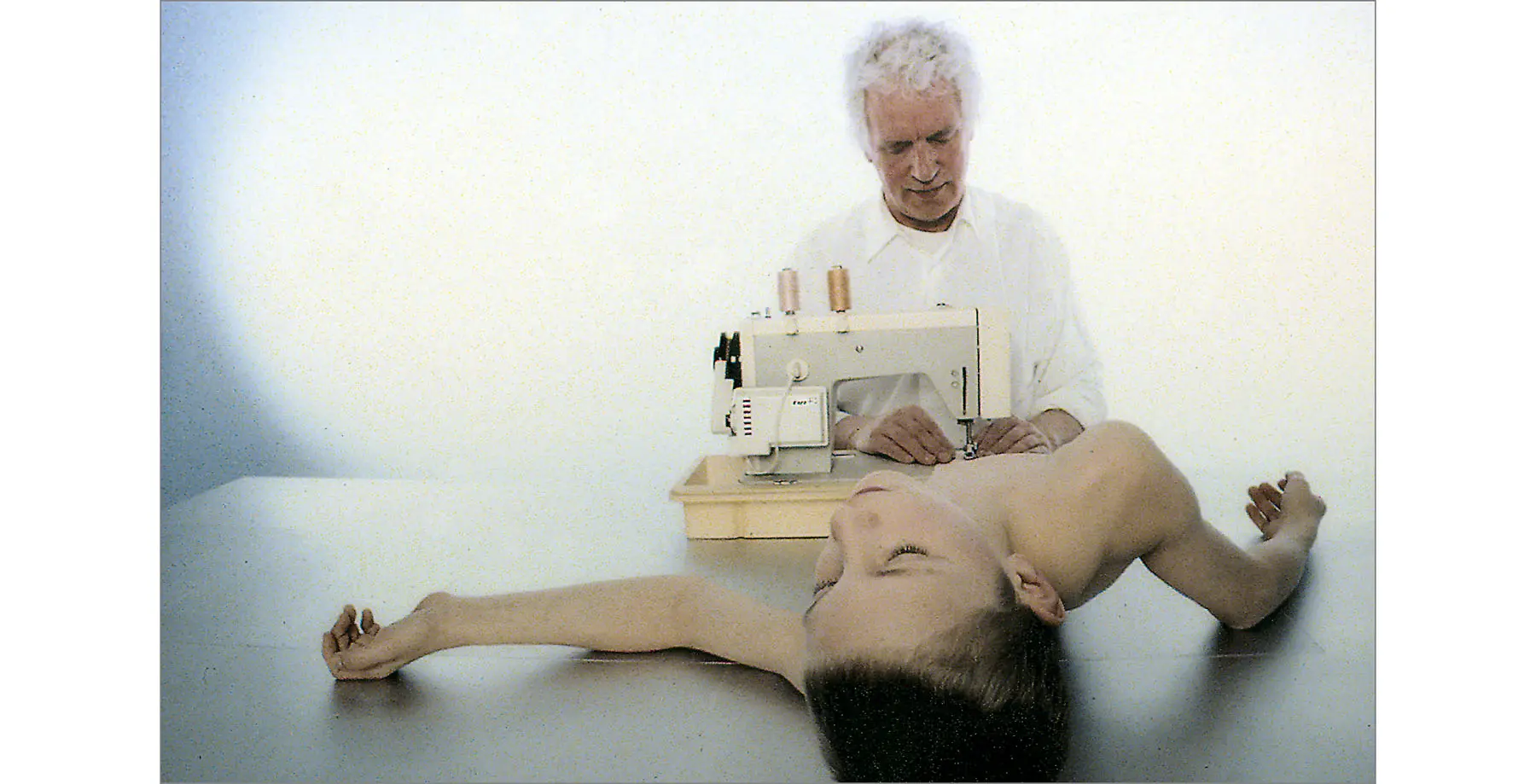
Visual modification of the human body brought to mind new advances in biotechnology and regenerative medicine. Human cloning was suggested by the work of Anthony Goicolea whose staged scenarios incorporate multiple self-portraits and alter-egos in eccentric and erotic fantasies. Works such as Margi Geerlinks, Gepetto I, depicting a fatherly tailor drawing the skin of a preadolescent boy through a sewing machine, remind us that human conception can take place outside of the body. Geerlinks’ digital photographs underscore the technical capacity for artificial reproduction of humans and body parts, yet as an alternative to the representation of biotechnological tools, the artist depicts conception through more traditional forms of labor such as knitting, crocheting, and sewing.
The technologized body is addressed in Aziz & Cucher’s Interiors series of enclosed stairwells and corridors that transform the public architectonic skin into a private and psychologically charged space. Lining the walls, floors, and ceilings of these environs with epidermal tissue complete with freckles, pores, hair follicles, and moles, the artists provocatively merge exterior and interior space creating a hybrid of the human body with the architecture that it inhabits.
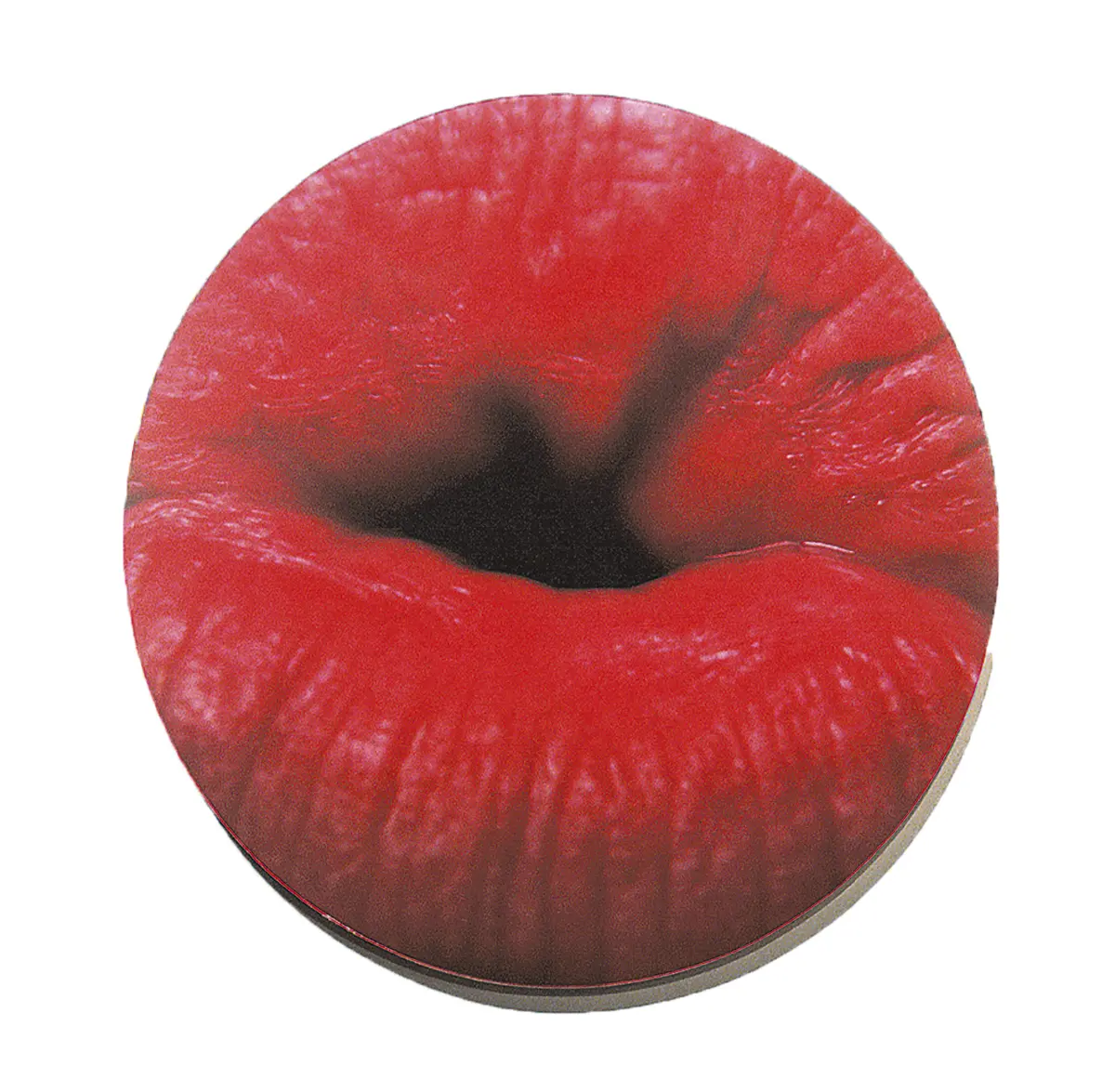
A more traditional, yet no less interesting look at human skin was represented by photographers Mathais Kessler and Sandra Bermúdez. Creating formal abstractions using the twisted and semi-submerged bodies of his corpulent models, Kessler follows in the tradition of such Modernist photographers such as Edward Weston and Irving Penn.2 Immersing his models in a vat of opaque liquid, sculptural forms emerge from the fluid producing a landscape of abstracted and voluminous flesh. Similarly, Bermúdez’s closely cropped images of her own lips saying common phrases such as I Miss You, are highly sensualized in such a way as to suggest both her mouth as well as female genitalia.
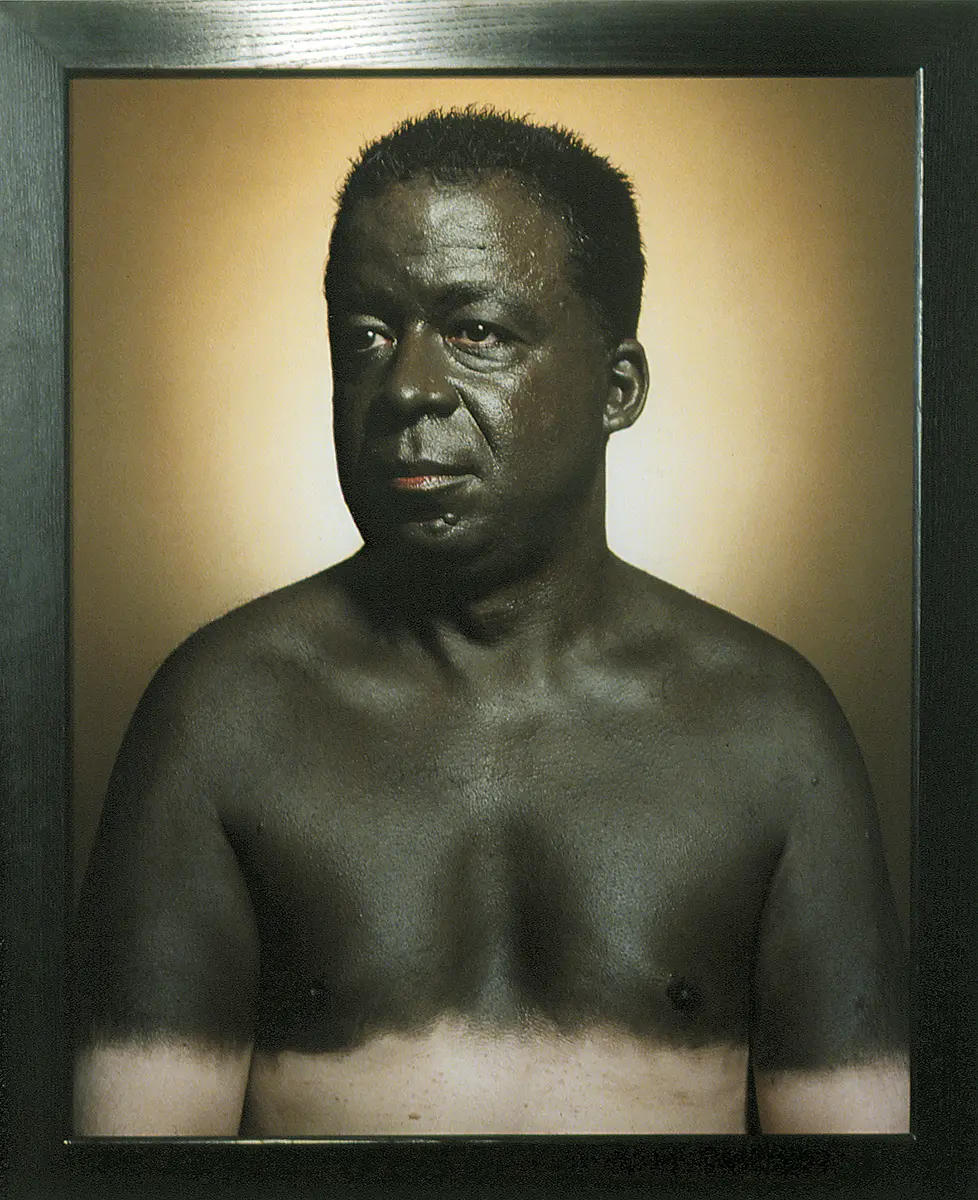
The issue of race, an obvious connection with the skin, was addressed by Andres Serrano in White Nigger. While the title of this photograph is highly disturbing—typical of the shock value that Serrano is known for—the image itself is fascinating for its ability to illustrate how the production of melanin in the skin, hair, and eyes can actually alter our assumptions about the personal history and circumstances of an individual.
Other works in the exhibition deal with the theme in a more abstract way. Ana Adarve’s Ne-uter 2 refers to the development of a social skin generated to shield urban dwellers against their external environment. Adarve’s photographs of desolate and neglected streets in Bogotá are meant to function as neutral sites that suggest our own disinterested attitude toward strangers in large urban cities. According to the artist, the work looks specifically at the day-to-day lives of Bogotá residents whose lack of human interaction with other anonymous city dwellers serves as a form of survival.
The provocative title of the exhibition, a clever play on words suggesting the male foreskin, captures the fetishistic quality of the show with its various allusions to the body, skin magazines, and fashion. With the recent surge in cosmetic surgery, it was surprising that artworks that deal more directly with aging and the technologies developed to counter its effects were not included as this seems a perfect fit for the subject. Digital and architectural design are other areas that have also been omitted from the project, yet given the small scale of the exhibition, it would be impossible to include it all. Interestingly, although the theme of the show stresses the idea of skin, the subject seems to be loosely interpreted—it is often difficult to differentiate between the outer layers of the body and the body itself. Where the “skin” begins and ends and exactly what is being addressed through the artwork is a point of debate.
In the end, what seems clear is that technology and medical transformation play a central role in the future of our bodies both as cosmetic commodities to be acquired and also as ways to prolong and enhance our lives. Whether biological, industrial, or aesthetic—engineered skins counter the inadequacies of our natural skin, making the body increasingly dependent upon the artificial. What’s most interesting about this phenomenon is the ways in which our perception of interior and exterior space are necessarily altered, as our ability to distinguish between the porous boundaries of our bodies and the surrounding environment becomes increasingly amorphous.3
NOTES
1. 1.67 square meters.
2. Unconventional and formalist images of female nudes by Irving Penn were recently presented in the exhibition, Earthly Bodies: Irving Penn Nudes, 1949-1950 at the Metropolitan Museum of Art in January 2002. Penn’s photographs depict voluptuous masses of folded and twisted flesh in images that are reminiscent of Neolithic fertility sculptures.
3. In Celeste Olalquiaga’s, Megalopolis, the author describes the phenomenon of psychasthenia, whereby the subject is incapable of making a distinction between the boundaries of its own body and the external world as it loses itself in the mediated and simulated experiences that surround it.