The Short Century: Independence and Liberation Movements in Africa 1945-1994, an exhibition of African art organized by Okwui Enwezor, director of Documenta 11, opened in Munich at the Villa Stuck in February of last year, and thereafter traveled widely, arriving in 2002 at P.S.1 in New York City.2 The title of this exhibition is both a description and a comment. Descriptively, it refers to the fifty years falling between two defining moments for Africa and the world: 1945, when the project of ending European colonial rule in Africa was formally and collectively initiated by African nationalist émigrés at a Pan-African Conference held in Manchester, England; and 1994, when Nelson Mandela was elected President of South Africa, signaling the demise of apartheid. As a comment, the title of the exhibition is rich in reminders and implications. It reminds us of something too easy for European and American audiences to forget or downplay—that under European colonial rule, African societies were being restructured to serve European interests as recently as fifty years ago. By the same token, however, the title also implies that European colonialism in Africa was brittle and shallow, unable to withstand for very long the exhilarating force of nationalist ideals and movements.
One of the distinguishing features of this brilliant exhibition is the seamlessness with which its central tenet—the intimate connection between culture and politics—is addressed. The exhibition suggests that the experience of colonial rule presented African peoples with two profound challenges: it superimposed boundaries that divided ethnic groups and recombined societies in completely arbitrary ways, and it legitimized its preemption of political power by developing and propagating ideologies degrading African peoples. In this exhibition, the first challenge is elegantly summarized at the very beginning, with a concise timeline of geopolitical events relating to Africa. The opening entry in which is 1884, the year Chancellor Bismarck of Germany presided over the Berlin Conference where it was “decided” by European states that Morocco, Ethiopia, and Liberia would be permitted to remain independent, and that all the rest of the continent would be divided up and parceled out as colonial possessions. The exhibition introduces the second challenge through a variety of quotations from African writers and intellectuals such as Leopold Senghor, the Senegalese poet, philosopher, and politician; Sékou Touré, the Guinean political leader who defied De Gaulle in 1958 leading Guinea to “early” independence; and Franz Fanon who wrote with the fierce passion of the social and psychological deformities perpetrated by French colonialism in Algeria. One quote, from Alioune Diop, from a speech given in 1955, bluntly summarizes the second challenge: “There is this scandalous allegation of peoples without culture. While it is true that those who were really responsible for colonization knowingly fabricated this myth, it is nonetheless surprising that generations of cultural and spiritual authorities have conceded that men could live in a community and have no culture.”3
Understanding the challenges posed by European colonialism is the key to appreciating the extent of Enwezor’s achievement in The Short Century. His astonishing accomplishment in this exhibition covering the continent of Africa is to leave the viewer with a powerful sense of unity within diversity. It becomes very clear through the galleries of PS1 that Africa is a continent of breathtaking heterogeneity—ethnic, religious, racial, ecological, and linguistic. And yet there is coherence. It is a coherence, Enwezor is suggesting, that is derived from the common experience of modern European colonialism and the experience of a common project of resistance and endurance, of reshaping both politics and culture to reclaim self-determination. The subtitle of The Short Century is important here, for it signals that what was at stake in 20th century Africa was not only decolonization, in its political sense, but liberation in a cultural sense—liberation from simplification and invisibility. In the prologue to the catalog of this exhibition, Glen Lowry, Director of MoMA (with which PS1 has been affiliated since January 2000), congratulates his institution for having long taken an interest in Africa. Cited as evidence in support of this praise are three events: in 1944, an exhibition from MoMA’s art collection traveled around the continent; in 1972, MoMA put together and circulated through the U.S. an exhibition of African textiles and decorative arts presented as “important African traditional art;” and in 1978, the museum presented a cycle of Senegalese films. Seen through the lens of The Short Century, institutional history is not only pathetically meager, myopic, and patronizing but is also a sign of the difficulties this exhibition must have encountered to take place.
Let us consider first the range of this exhibition. Forty-eight artists are represented here, from all points of the continent—the north, the Horn, the west, the east, the center, and the south. There is work from the 1940s to the 1990s, from the English-speaking and French-speaking regions of Africa. There are works by blacks and whites, by immigrants from Europe, and expatriates in Europe. There are videos, photographs, paintings, sculptures, installations, architectural drawings, conceptual works, and documentary films. Interspersed throughout are documents and testimonials, chronologies, and texts providing context.
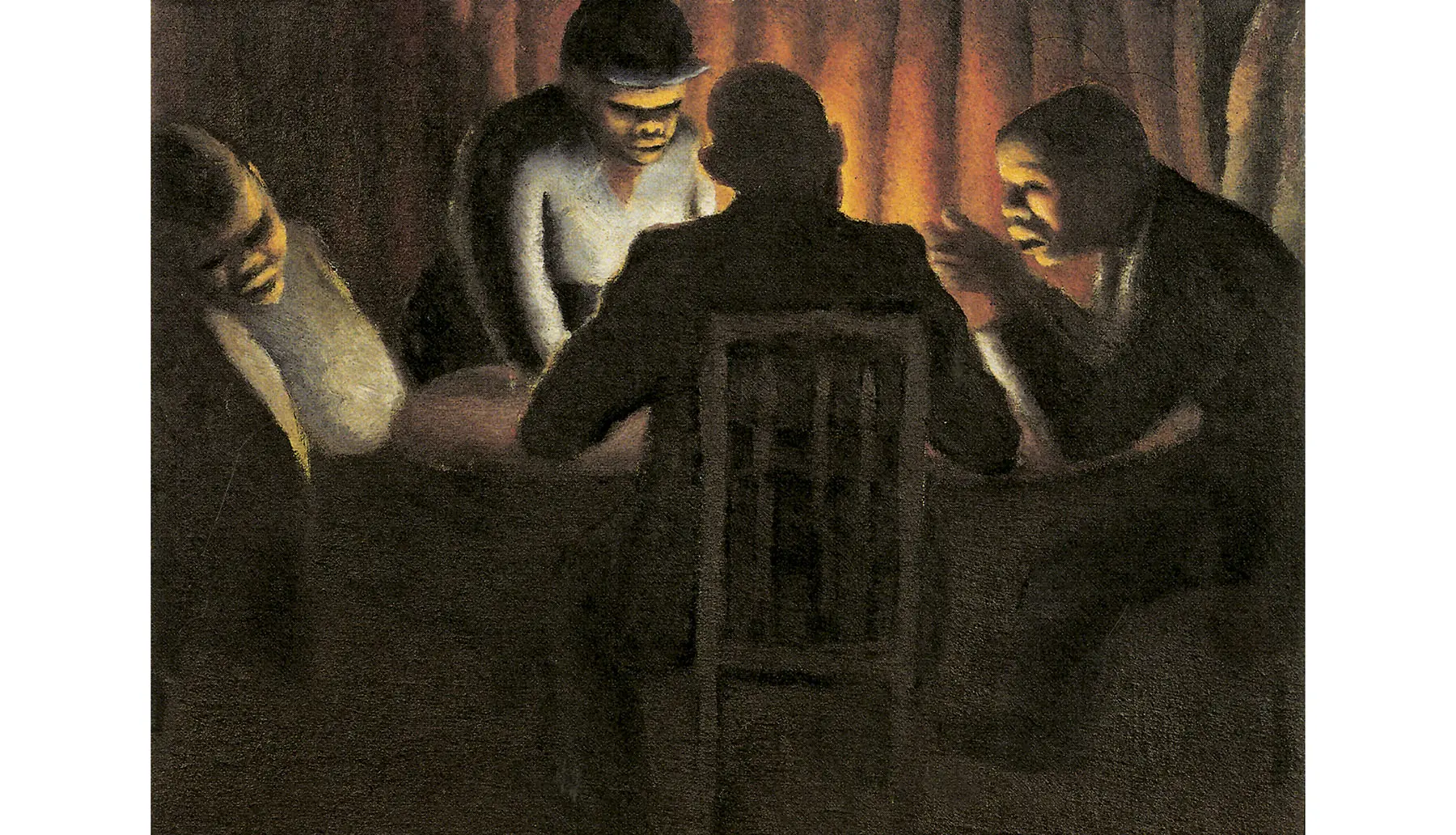
Among the artists is Ernest Mancoba (1904), who immigrated to Paris from South Africa in 1939 and later moved to Copenhagen, where in 1948 he became a co-founder of the COBRA group. In his youth, studying art with a missionary nun in South Africa, he became aware of the considerable influence of African art on 20th-century European art, and in his own work, he aimed to complete the circle, creating a bridge between African abstraction and European gesture painting.
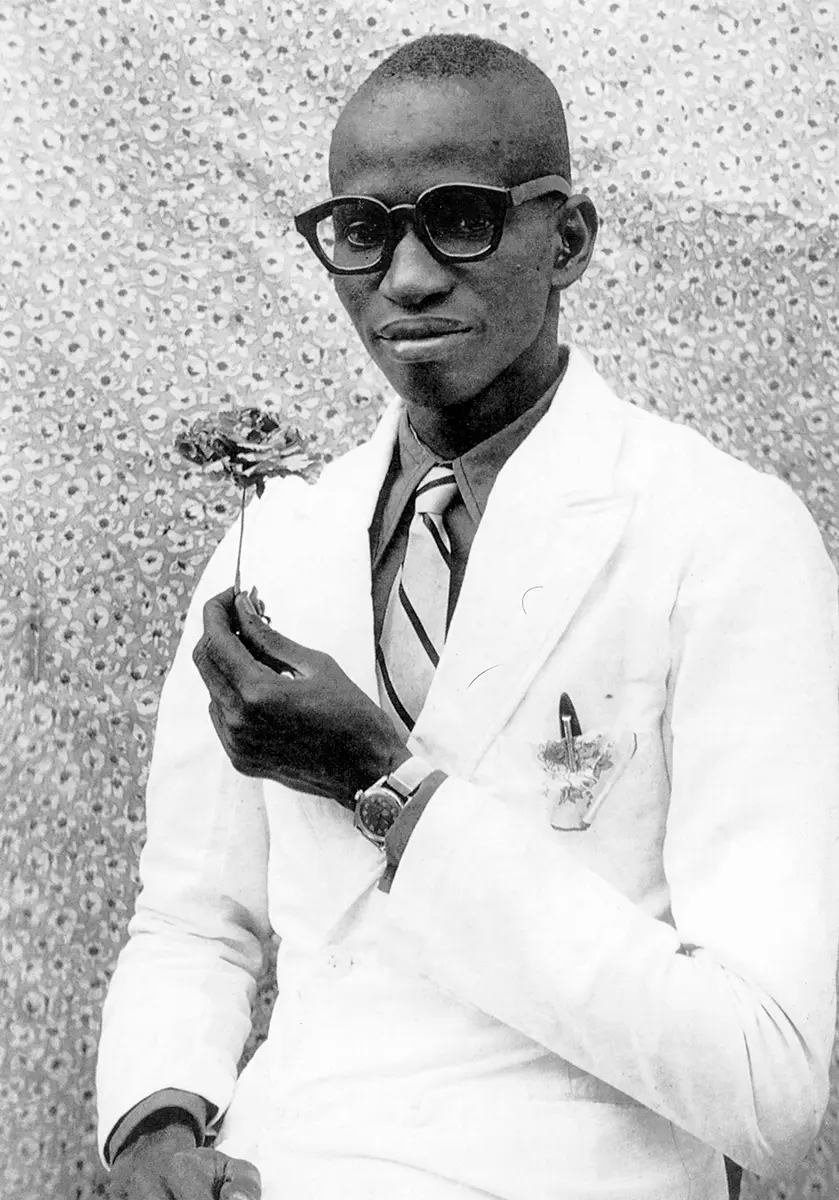
There is Seydou Keïta (1923-2001), a self-taught photographer from Mali who spent his life portraying the customers coming to his studio. His popular success led to his appointment as an official government photographer when Mali achieved political independence in 1960. In his studio, he would use his own vividly decorative bed sheets as backdrops for his clients and made them available to those who preferred, European-style fountain pens to hold or flowers to insert in a lapel. According to Keita, the bed sheets sometimes complemented the clothing of his clients, and sometimes not. In either case, he limited his shoot to one negative per client, achieving extraordinary force by seemingly capturing the very soul of the thousands who sought him out. Toward the end of the 1970s, Keita came to the conclusion that color photography, which held no interest for him, had taken over public taste, and he simply ceased work. It was not until 1989 that his photographs were shown outside Africa.
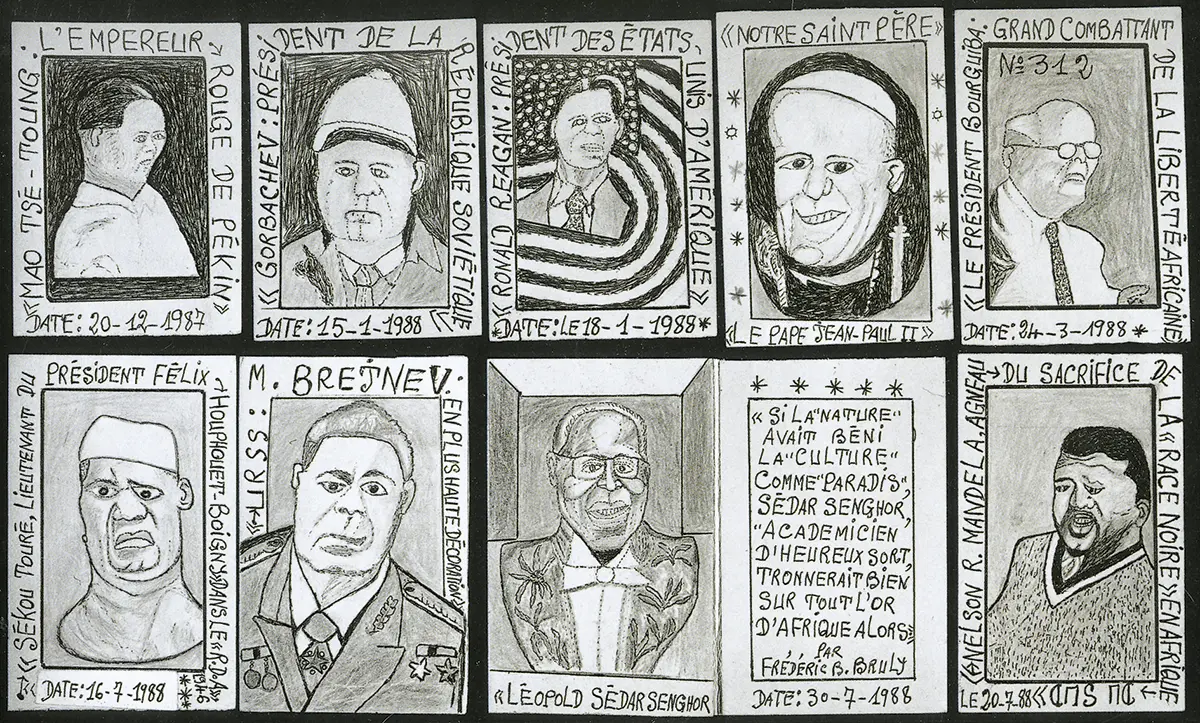
There is Frédéric Bruly Bouabré (1923), better known in the West because of his friendship with Italian Arte Povera artist Alighiero Boetti, with whom he exhibited several times, and also because of his participation in a well-reviewed exhibition, Magiciens de la Terre at the Centre Pompidou in 1989. Bouabré is an archivist of the knowledge of his people, the Bete, of Ivory Coast. In 1948 he had a vision that instructed him to call himself “he-who-does-not-forget” and led him to create an alphabet and a pictogram system with which to document the oral tradition of his people. This unusual and moving work, published in 1958, consists of books and postcard-size sheets synthesizing ideas, linguistic elements, and magical images in a manner pertinent but without parallel in Western conceptualism.
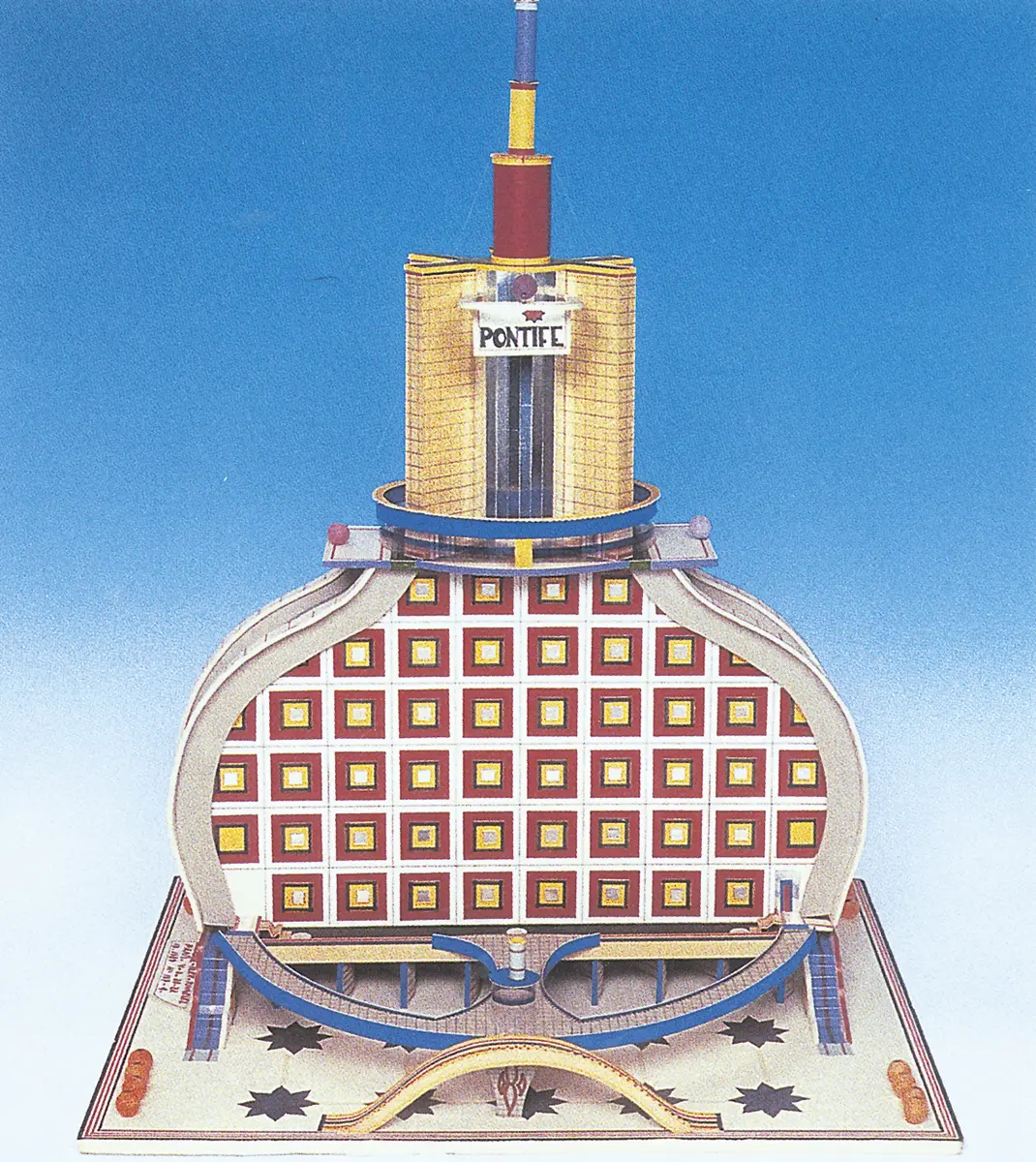
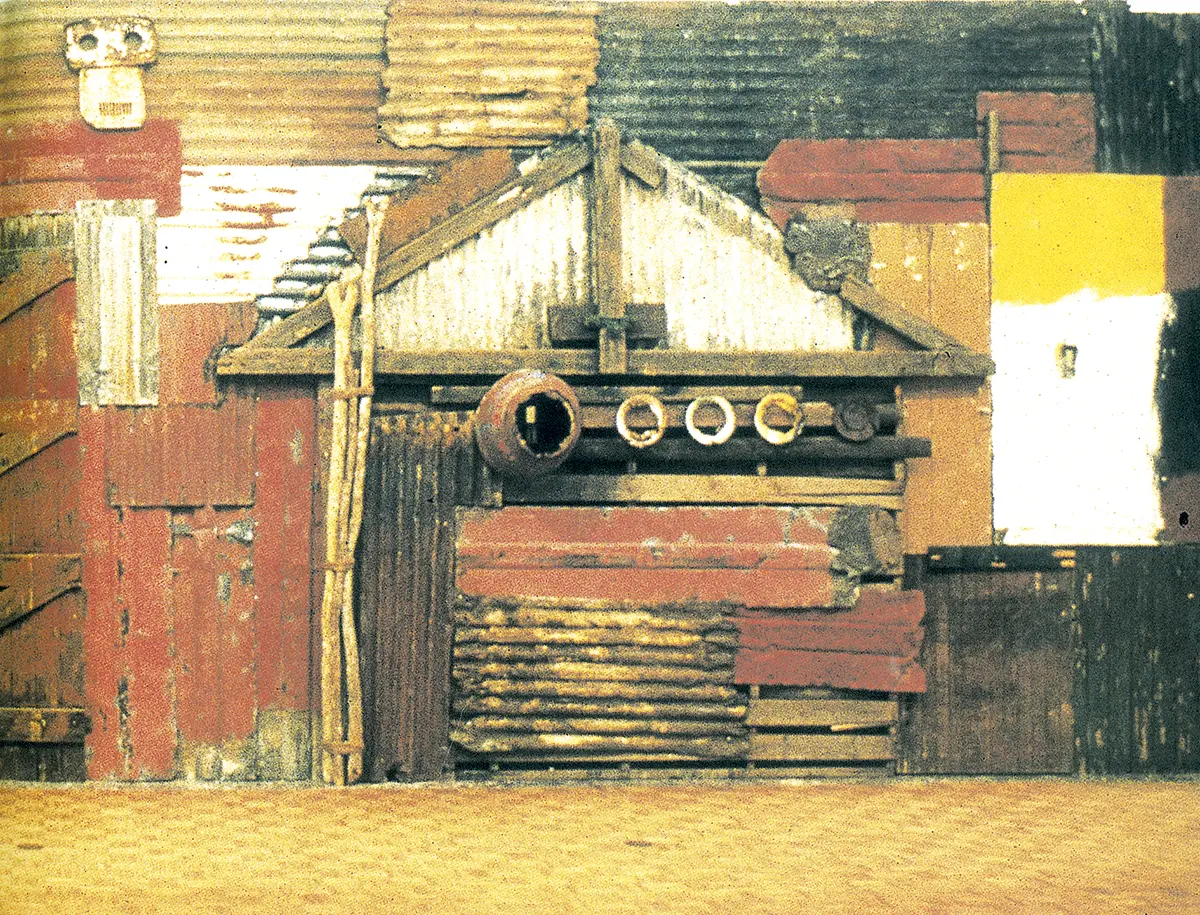
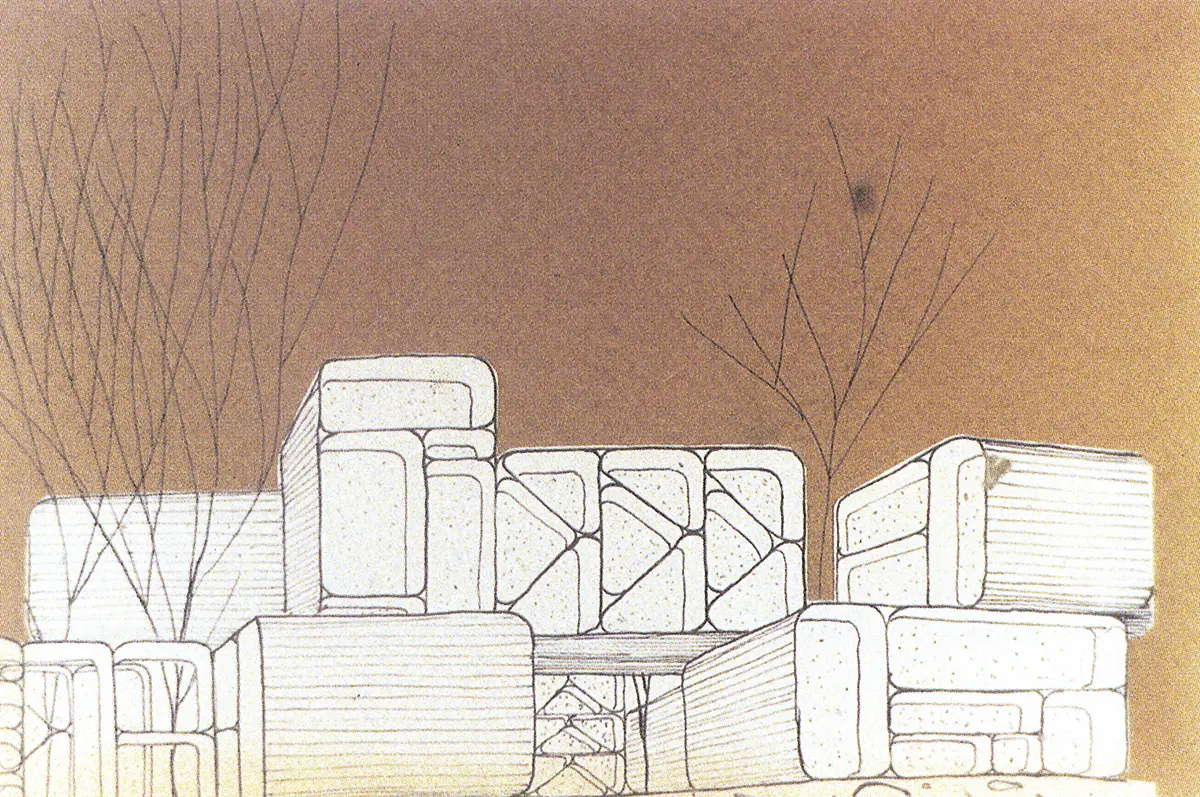
Several artists work with the organization of space. Body Isek Kingelez (1948), for example, a Congolese artist who was also included in Magiciens, frees himself from the architectural concepts imprisoning cities of colonial origin and embraces instead a utopian vision that takes the Las Vegas-style consumer-baroque kitsch to unexpected extremes of fantasy. Antonio Olé (1951), of Angola, whose Margin of the Limit Zone consists of a huge wall, built of local materials that, in asserting the principle of segregation, hints at both effects and causes of the culture of poverty. Whereas Kingelez, self-taught and a dreamer, gives shapes to his fantasies, Olé, informed and skillful in the modernist strategies of Western art, aestheticizes architectural scraps and dramatizes the violence of inaccessibility.
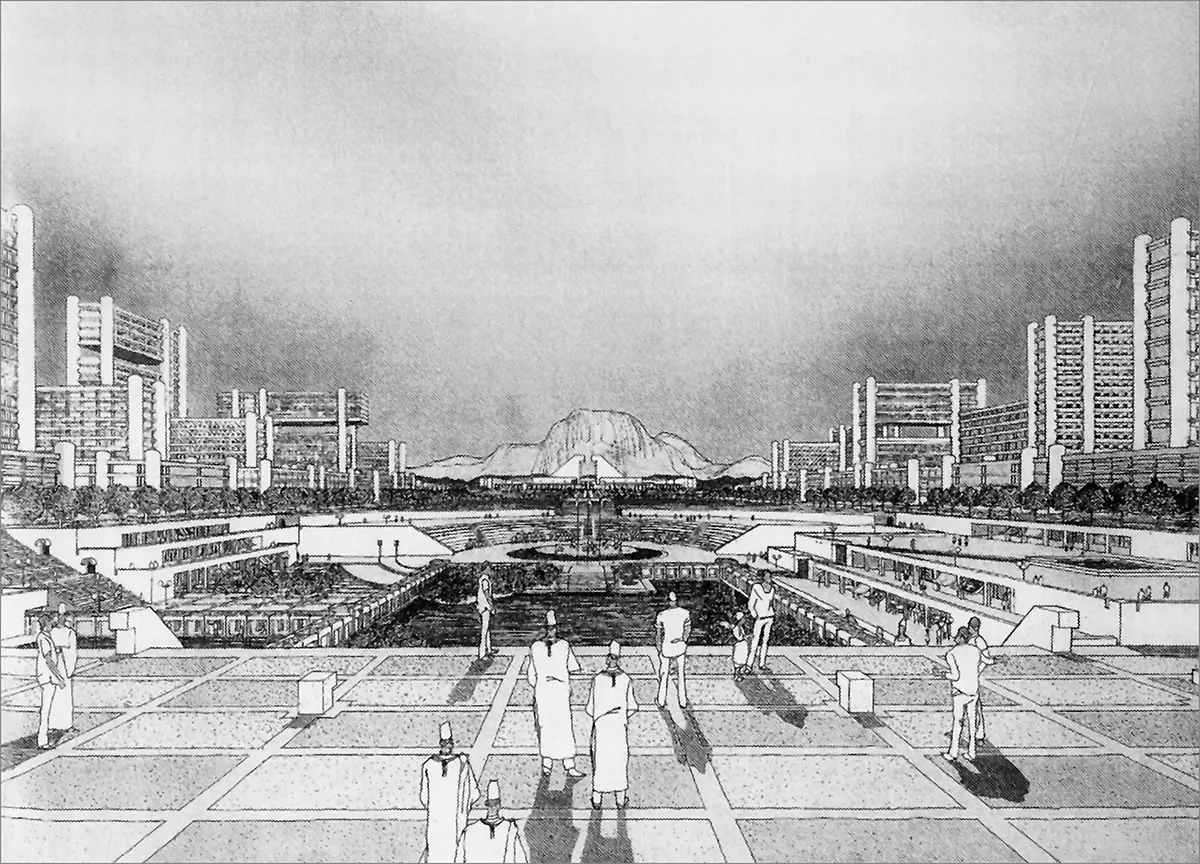
Architecture has an important role in the exhibition and a particularly sharp story is embedded in the contrast between the architectural plans for the new capital of Nigeria, Abuja, by the Philadelphia firm of Wallace, Roberts & Todd, and the late 1950s drawings and models of Yona Friedman. A Hungarian-born architect who studied and worked in Israel and now lives in France, Friedman, who was interested in “mobile” architecture, designed “cylindrical dwellings” for emigrants of the Sahara in 1953. In 1958 he came up with a set of “African Proposals.” The Abuja plans, typical of internationalist architecture in style and including important designs by Kenzo Tange, provided for a city of 200,000 which now must accommodate 1,000,000, a development hardly unpredictable given the demographic trends on the continent. Friedman’s drawings and models, on the other hand, envision airy buildings derived from the needs and design notions of the potential inhabitants and local resources. While his visions were evidently never built, their presence in this show is a useful and charming statement on behalf of thinking inductively and locally about space, a point underscored by the placement of his work here among the internationalist projects of Tange, Candilis, Chomette, and others.
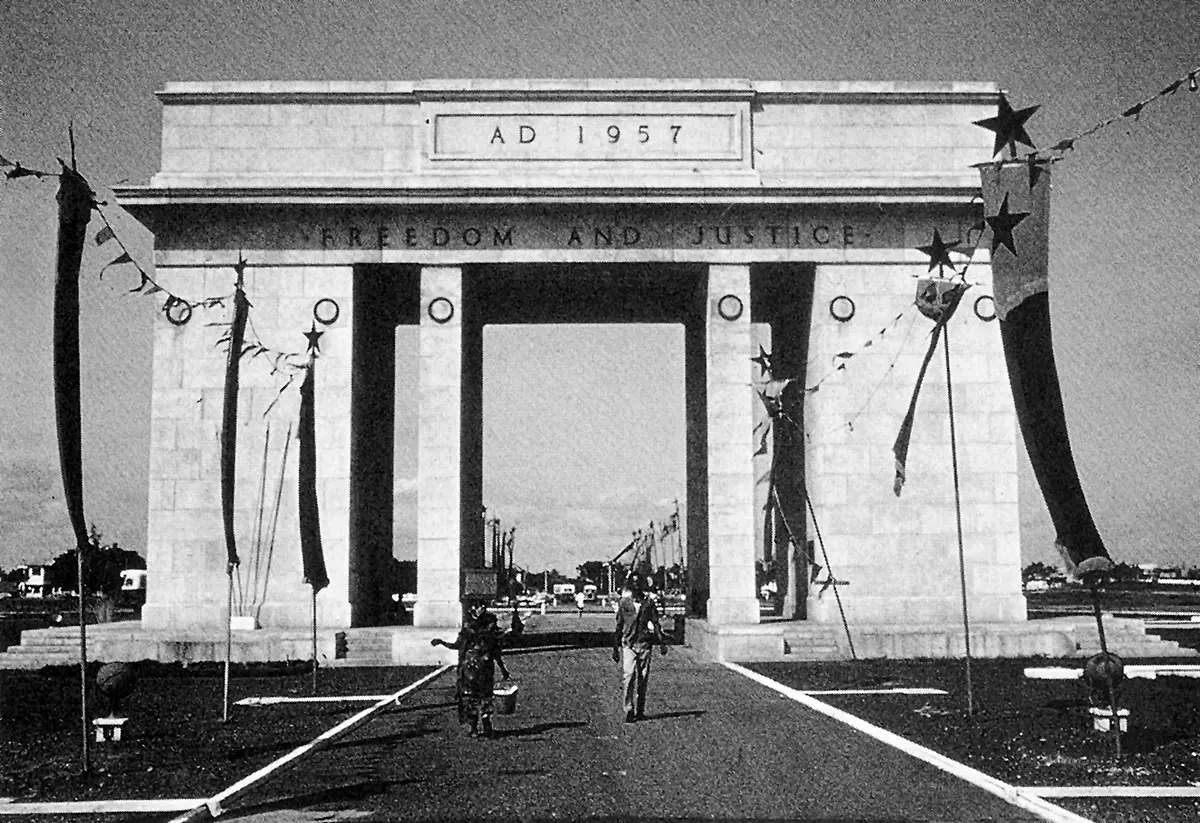
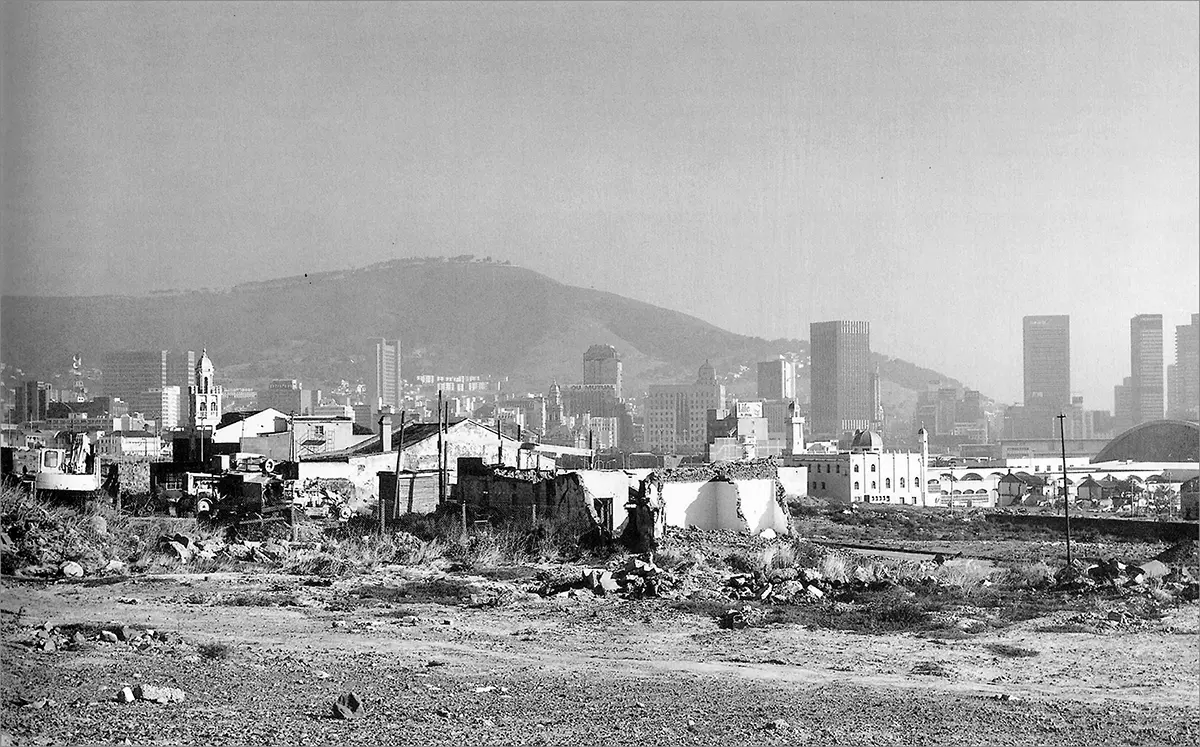
There are other reflections on space in this part of the exhibition that move even more deeply into issues of power and status, such as David Goldblatt’s photographs from the 1980s of black residences demolished by the apartheid regime—ethnic cleansing as “spatial design”—and Marion Kaplan’s photographs from the 1970s of public monuments to white heroes of whites in Africa (e.g., Cecil Rhodes and King Leopold II). One of the strengths of Enwezor’s presentation is that work of this kind cannot be mistaken either as platitudinous or preachy. It assumes an unexpected and refreshing complexity. Nnmadi Elleh, in the catalog, explores this complexity in his comments on a monumental, European-style arc that Kwame Nkrumah commissioned to celebrate the independence of Ghana.4 Elleh observes that the selection of a statement that could have been made by Mussolini rather than one rooted in local styles is not as easy to interpret as one might assume. It could of course be an expression of an inferiority complex nurtured by three generations of colonial triumph. Or it could represent a turning of the language of the oppressor back on himself —defiance of oppression, a permanent gesture of triumph in reverse.
Though Elleh does not mention it, The Short Century, in its totality, hints at yet a third possible interpretation—that Nkrumah and the other nationalist heroes of Africa honored in the historic photographs in this exhibition, were embarking on a project much newer than self-government, which after all had been the political condition for a very long time among the peoples of Africa before the late 19th century. The nationalist project in Africa, and this of course brings us right back to the subtitle of this exhibition, was not merely to return African peoples to self-rule, but much more—to transform the arbitrary geographic jurisdictions imposed on Africa by Europeans into countries that meant something to their residents, capable of generating identity and eliciting loyalty. This was the ticket to membership in the international club of states; it was in fact the only ticket to self-government. It wasn’t merely a new culture that was in the making, but new politics as well. Nkrumah’s arc may have been no more homegrown than a written constitution, but visual statements of national unity were as essential to the project of national political independence as Seydou Keita’s photographs were to the project of cultural liberation.
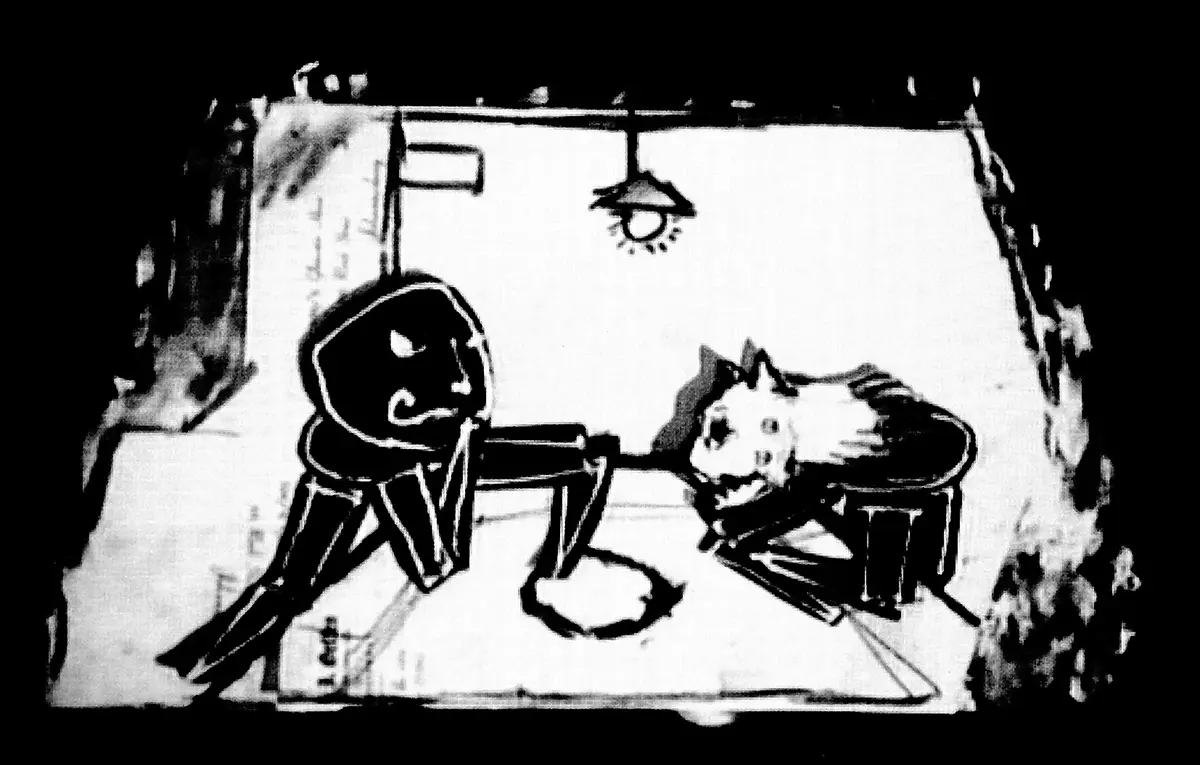
It isn’t possible to explore here all of the artists represented in A Short Century, but it is appropriate to take note that several have names well recognized outside Africa—artists such as Ghada Amer, Willem Boshoff, and Willem Kentridge. Their work testifies to the fact that visibility is a project well on its way, and their inclusion in this exhibition also helps the viewer to see that their strengths are not to be understood as discrete, individual, or disconnected, but rather as continuous and resonant with a process underway throughout the continent. Energy is finding an expression that fits neither of the false categories once imposed on Africa, that is, neither reproducing a mythical “primitive” past nor imitating without reflection a colonial archetype.
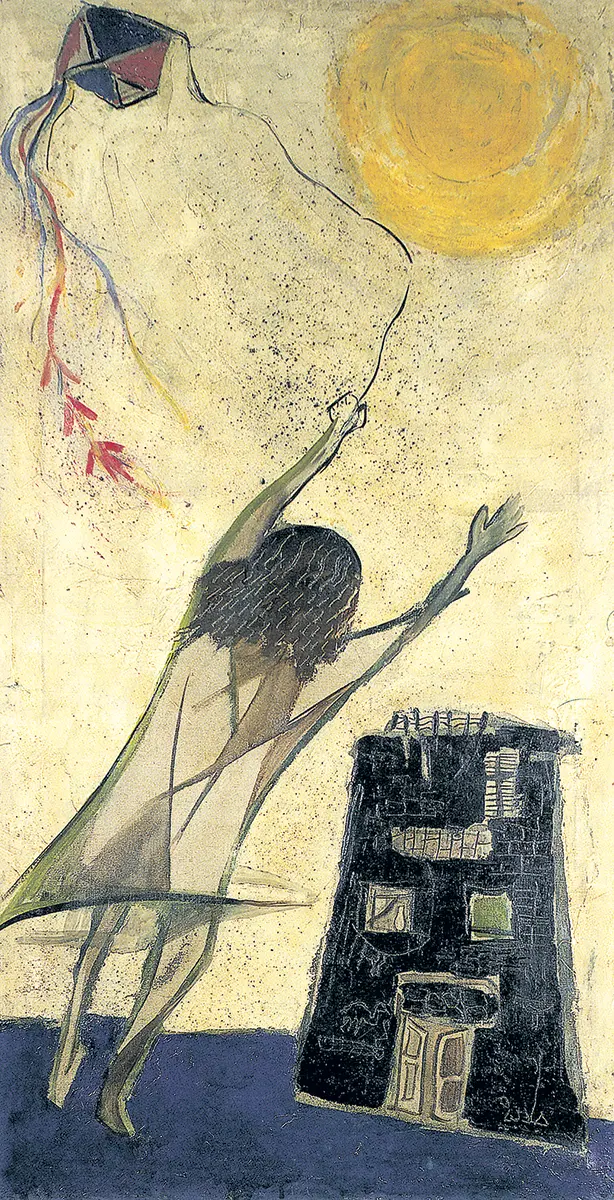
A coincidence of timing invites a comparison of Short Century to Body and Soul, an exhibition of Brazilian art at the Guggenheim Museum in New York City. Both exhibitions were intended to inform a neophyte audience. Both focus on a region of the world marked by the experience and consequences of European colonialism. But the similarity ends there. While Body and Soul is a spectacle of exoticism, manifesting itself through colonized ideologies, for an audience presumed to be tourists, The Short Century researches human ingenuity in the face of dehumanization. Thus in Enwezor’s show, some images that could seem trite and corny such as Gazbia Sirry’s paintings of a child with a kite or a moon held in his hands like a ball, or Ucho Okeke and Malangatana Ngwenya’s crowds of mask-like faces are revealed as expressive of a deep conflict arising from the project of decolonization. They show the simultaneous desire both to be part of the international club, but at the same time to avoid deracination; to pull from local energy, and at the same time to avoid the folkloric production expected and rewarded by external markets. It is a process type in the Third World that in its time created its own “international style.” Lacking the political and cultural critique with which The Short Century is so richly endowed, Body and Soul implacably lands on the viewer productions as corny as Victor Brecheret’s sculptures, puffing them as historic contributions without a modicum of insight to light our way. It is not an issue that the African work is “better” than the Brazilian. It is a matter of presentation. Lacking pomposity and obsession with stardom, The Short Century makes room for the viewer to empathize with the drama of the artists’ experience, including the failure of Abuja that, ironically, had tried to improve on the failures of Brasilia. By contrast, Body and Soul present the strange delirium of Brasilia as a reflection of architectural genius without any reflection at all on its social and political implications.
Finally, it should be noted that The Short Century, in attempting to enrich our appreciation of the transformative energies at work in Africa, focuses quite consciously on the heroic moments in the political liberation of the continent. This means, in effect, that the political events highlighted in historic photographs and supportive documentation are, almost exclusively, those relating to the rise and triumph of the nationalist movements (the 1950s and 1960s) and, in South Africa, of the long and ultimately successful resistance to Apartheid. Virtually left out (there are few oblique references) is the betrayal of the dreams of political liberation by African political elites in the decades following independence. Is this a serious flaw? I think not. Though North American and European audiences are ignorant of many important things about Africa. It can fairly be presumed, and undoubtedly Enwezor did presume, that the one big thing they do know is that the people of Africa have suffered much in recent decades—from tyranny, corruption, famine, war, and disease, for it is these afflictions that occasionally earn fleeting attention from the international press. The contribution of The Short Century was to make vivid the life-giving transformations that within recent memory shook the continent, raising hopes and fueling expectations. That these hopes have in so many respects been dashed is true. But it is also true that there was a time of heroism and ideals, of unity and sacrifice. This is good for us, outside Africa, to know, and for Africans themselves to remember. It is energy on which to draw. Indeed, it is undoubtedly the energy on which current heroes in Africa, anonymous and otherwise, are drawing in their resistance to the new challenges African peoples are facing.
NOTES
1. This article was made possible thanks to Selby Hickey, who helped both in the addition of content and in the editing of the English version.
2. The Short Century: Independence and Liberation Movements in Africa. 1945-1994 began in Villa Stuck, Munich, 2.15-4.22.01; went to the Martin Gropius Bau in Berlin, 5.18-7.22.01; Museum of Contemporary Art, Chicago, 9.8- 12.30.01; and finally at P.S.1, New York, 2.10-5.5.02
3. Alioune Diop, inaugural speech delivered at the First Congress of Negro Writers and Artists, Paris 1955, reproduced completely in The Short Century, Munich: Prestel, 2001, p.236, pp. 413-415
4. Nnamdi Elleh, “Architecture and Nationalism in Africa, 1945-1995,” from The Short Century, p.236
LUIS CAMNITZER
Emeritus Professor at the SUNNY College, Old Westbury.