Throughout the centuries, on the Central American map, Belize has been that other country drawn almost as an appendix. Like Panama, it has had to construct itself out of an ambiguous relationship between Latin America, the continental isthmus, and the Caribbean. It has stood in its solitude, stemming from eternal border discrepancies with its neighbors, and in recent years, at the end of one of the last processes of English decolonization. It is enough to see the maps hanging in the schools and public buildings in Guatemala to realize that Belize is still considered to be Area 23 of Guatemala’s territory. It is in these silent forms of transmitting hidden desires that it becomes clear that ignorance of the reality of things still lives. We are mistaken. We barely cross the jungle border between Guatemala and Belize, through the city of Benque Viejo, the old received ideas and the supposed Englishness that we attribute to Belize from a distance begin to crumble. Belize is a country unto itself. Its complex culture of various origins confirms this—Creoles, Garifuna, Mopan Maya, Kekchi Maya, German and Dutch Menonites, Mestizos, Chinese, Lebanese, blacks, and whites1—in conjunction with all these common circumstances that turn us into modern Latin American nations: poverty, violence, drugs, migratory issues, tourism offers, institutional crises, the winds of development, and new urban and demographic orders.
As a way of understanding things, if there is something that contributes to and allows us to fill voids in the history of any country it is its art; and in this case, it is the work being produced by Belizean artists today, which we find under the suggestive title of Zero, a show that has been traveling since 2000 and is passing through Guatemala at a moment of political situations where the old frictions between both countries are re-emerging. Based on the design of a more complex curatorial script, works by the artists from Zero will be shown simultaneously at the Centro Iberoamericano de Formación de La Antigua Guatemala, Sol del Río, and the Colloquia project for contemporary art. It had previously visited the Centro Cultural de Mérida Olimpo in Mérida, Mexico, the Instituto de Cultura La Capella in Barcelona, and the Galería Latinoamericana de Casa de las Américas in Havana, Cuba.
Leaving aside the political anecdotes that the show stirs up, the most interesting thing about this collection of works lies in its logic of arranging, which seeks to emphasize a point of departure, a zero point that indicates the pressing need for a revision of the art of recent years, where we see a surge of a rather interesting artistic core. Zero also includes the coordinates for reflecting on the principle of the country’s period of independence since 1981. However, the original dynamics of this cabalistic title are the result of a greater adventure. In 1992, artists Iván Duran and Yasser Musa created a show titled Minus 8. Deeply rooted in the spontaneous tone of the creators, it sprang from the mixture of different materials and media, repeating those collective experiences which are at times jumbled and tend toward installations, through which it would seem that young artists must pass in order to break their own barriers and mark their own territory in society. Minus 8 was an effective experience; it attacked Belizean society, which was accustomed to art shows in the framework of the traditional tourism offer. As a participatory experience, it wavered between the safety of the known world and elements that refer to urban spaces that are generally scorned, alarming, and violent; it burst onto the exhibition hall of the Instituto Bliss in Belize City, combining paintings, installations, music, and contemporary dance, thus creating a stage that invited the public to recognize, in a neutralized space, the symbols of the environment, the graffiti on the walls, and the resounding landscape of the city.
After this initial experience, other intermittent activities took place with titles like Minus 5, Minus 4, and Minus 3. In the intermediations of that path marked by events, Yasser Musa established the Image Factory Art Foundation, a space that is also an art gallery and which has been tied in recent years to different generations of Belizean artists, especially the younger ones. We also find the curatorial work of Joan Duran, who was key in the development of this image factory, from its evolution, professionalization, and movement, to the opening of its doors to international circuits.
As is the case with other Central American countries, the Image Factory Art Foundation has become one of the few choices for carrying out shows of recent production and of those places that come to develop multiple roles in the local art scenes. In addition to stimulating a rather unconventional market of works for the public, it develops an agenda as an alternative to the scant cultural movement, it combines show-related activities with those of an artistic formation through engraving workshops. Recently, as a result of internationalist interest, it has begun to define a bridge of communication with the outside. Also, it is the only center where a certain theoretical interest in recent art can be found. And like many similar centers established in the area, it is a product of the recent phenomenon of organizing international cooperation aimed at supporting cultural activities.
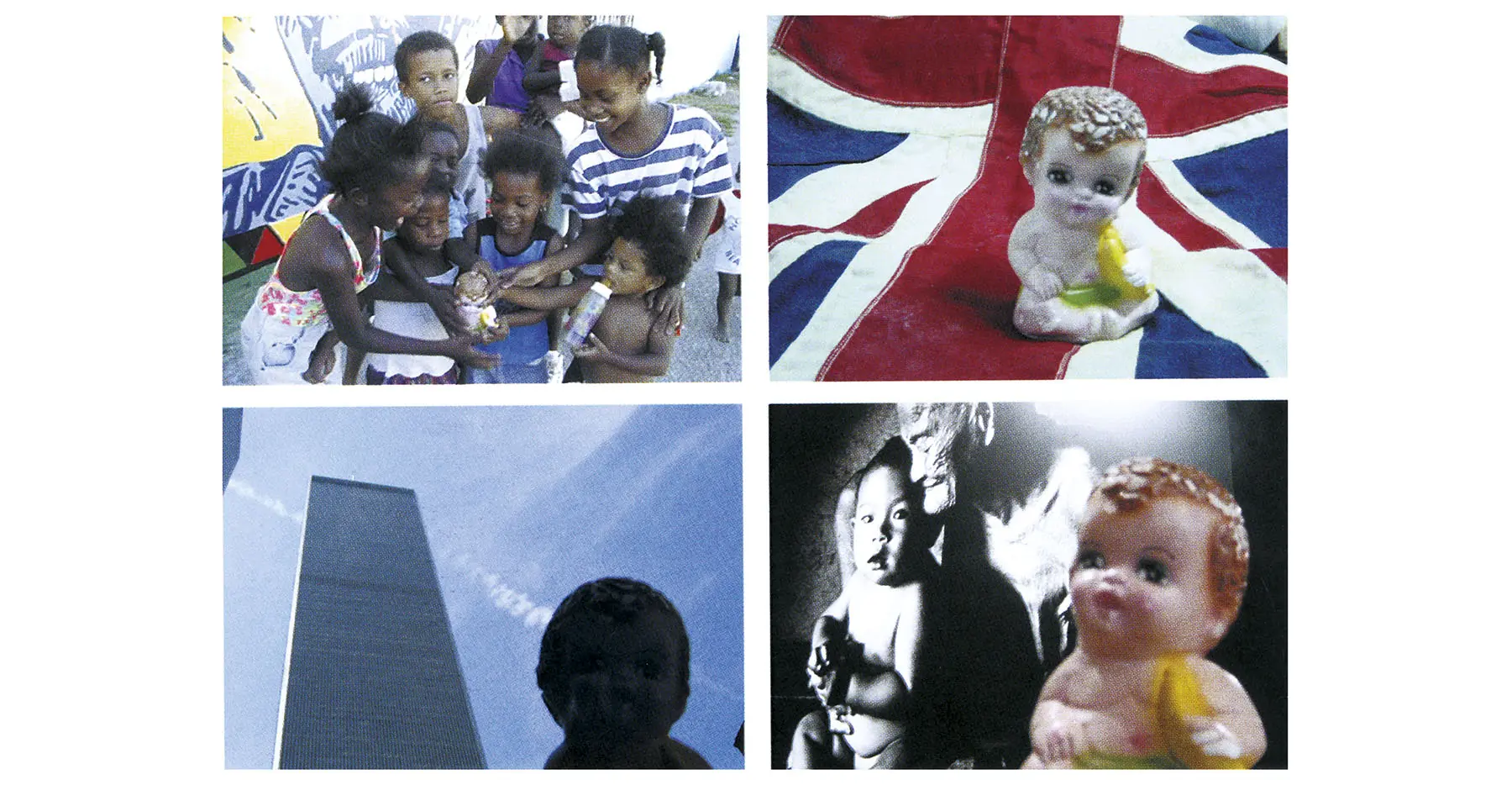
The names that have passed through its halls are gathered in Zero as the most representative artists of the moment, and some of their exhibited works have become true emblems and codes for understanding to a large extent the Belizean imaginary today. To be sure, what sums this up is Yasser Musa’s piece titled Banana Boy, which recently won a prize at the 4th Caribbean Biennial celebrated in November 2001 in Santo Domingo. Comprised in its entirety of 840 digital images, it is an exhaustive compilation of shots that are tied together by the presence of a central character, which is the figure of a boy made of ordinary ceramic decorated with acrylic pigments of natural tones that reveal his serialized artisanal origin and his purpose of tourist consumption. Holding a banana in his tiny, deformed hands, this banana infant reflects in his bulging, round eyes—which bring to mind the archetypes of cartoon series of past eras, like Betty Boop—that invariably immature character that draws an analogy with visions and stereotypes that still persist about developing countries.
The core of Musa’s work would seem to be the recovery of the icon of this fruit and of the well-known historiography that embraces all of the countries where large companies were established to exploit the agricultural resources and the cheap labor. As a result, a critique of what has been generated by the figure of the banana, the fruit which defines the cliché of the banana republics and the mentality of their inhabitant's par excellence, the fruit which, in the eyes of the powerful, still preserves the nuance of ingenuousness in the face of development. However, the interesting thing about this character does not stem from the obsession with the historical past, and it does not aim to elaborate on the Ten Commandments of a banana ghetto. Instead, it implies a new negotiation. It takes advantage of the data that already exists in the subconscious and takes them freely through situations and contexts which only appear to be distant. In a game that uses the goodness of the readymade as an enclave, the figure of Banana Boy saunters silently and furtively before New York’s recently disappeared Twin Towers, through the Frenchified neighborhoods of New Orleans, next to street characters in Belize, in the cabin of a transatlantic airplane, before a work of classical art in the Prado Museum; or he could even surprise us before a monument in India, Nigeria, or Pakistan. The idea—between the apparent innocence of the character confronted with the rather difficult framework of locations—is to redefine his presence and to promote a journey without restrictions, which approaches the discursive strategy of humor and allegory, which are found both in the postmodern and in the postcolonial. Recalling the inhabitants of Salman Rushdi’s texts or Manu Chao’s songs, it redefines the position of the learned third-world migrant, it delves into the terrain of different symbolic, political, and social spaces in order to declare the exact sense of the visa signed by secrecy, which, along with its ability to displace and imitate itself, demonstrates an occult power behind the disguise of marginality. Banana Boy becomes a character of many nationalities, or he absorbs them in order to establish an intercultural dialogue, as well as to travel the world without bringing along identity as a burden.
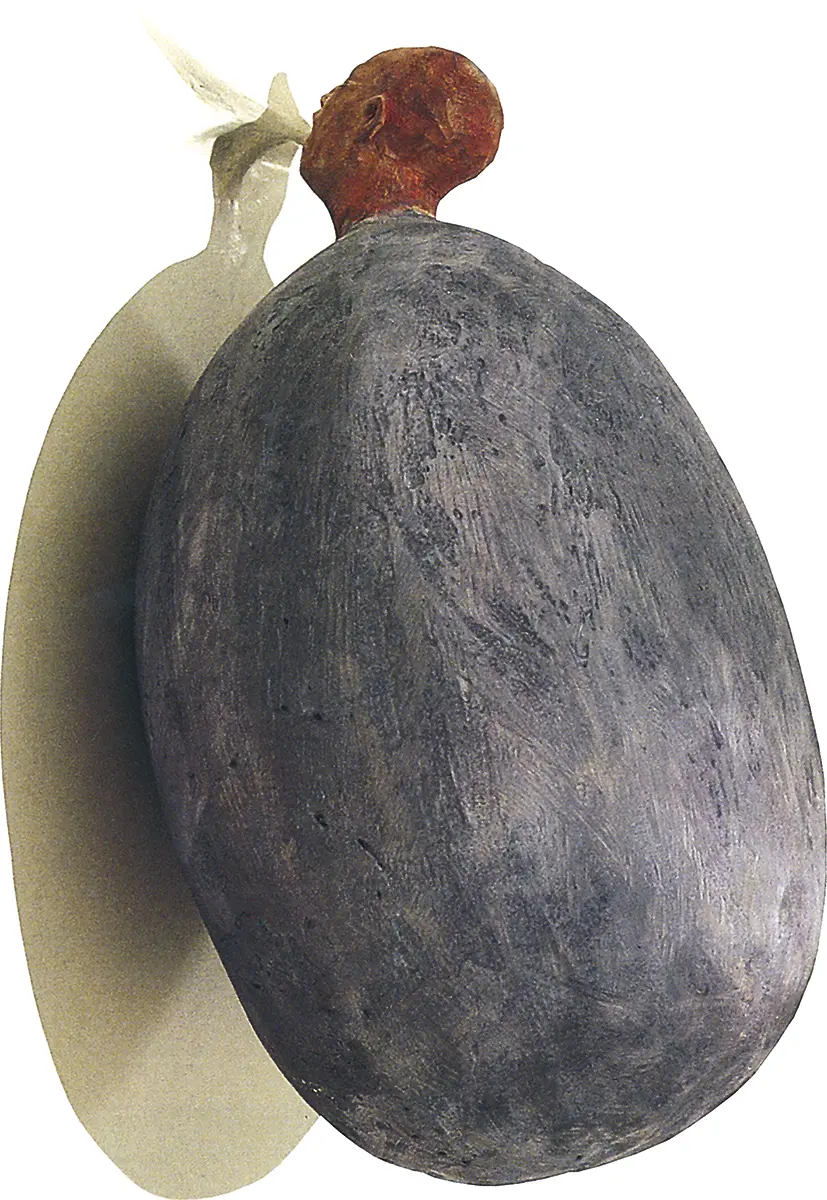
Santiago Cal is one of the few artists who currently practice sculpture in terms of classical techniques. In Zero, he includes his series of sculptures titled Ticks, gigantic humanoid ticks that are fastened to the wall of the exhibition halls. Their bodies, like inflamed spheres, hang in the void and are held up solely through the mouths of human heads that suck the wall and invade the visual space.

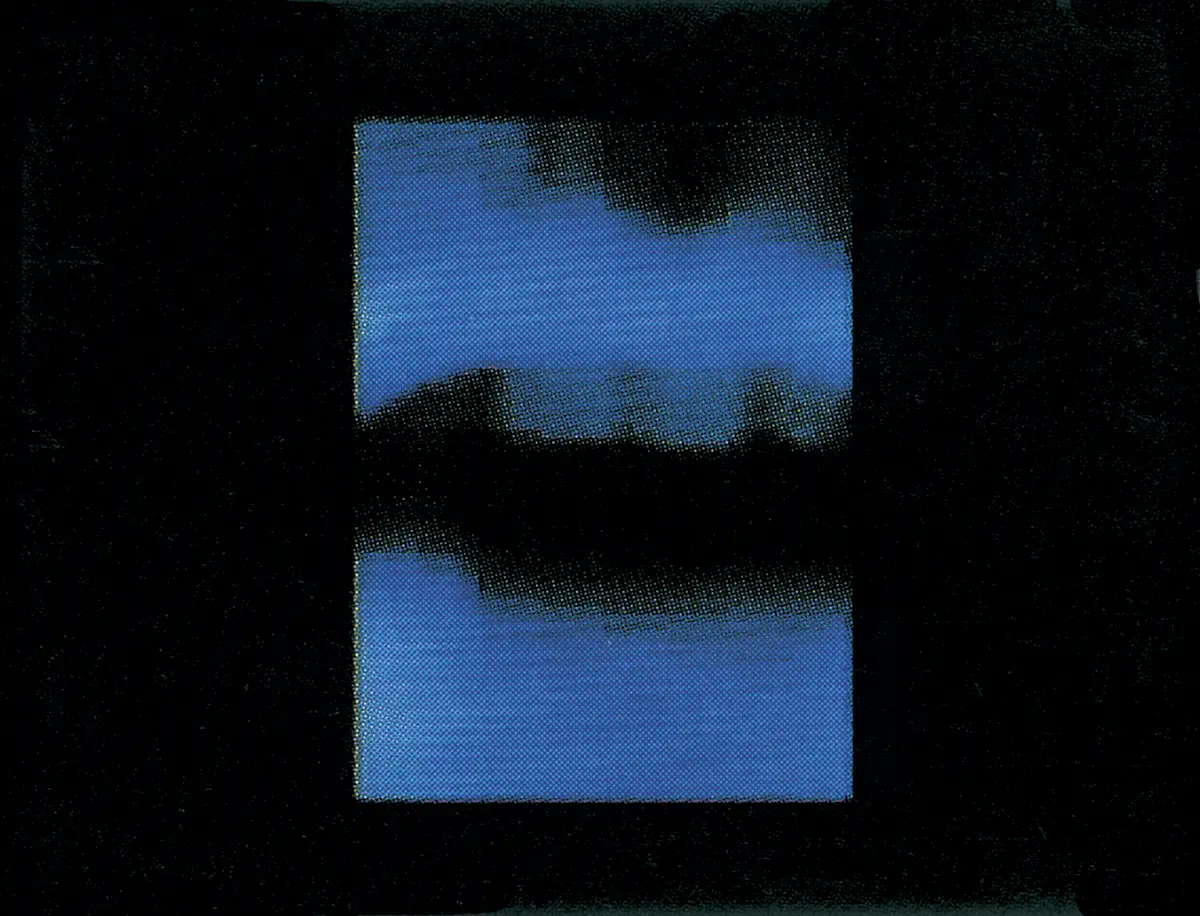
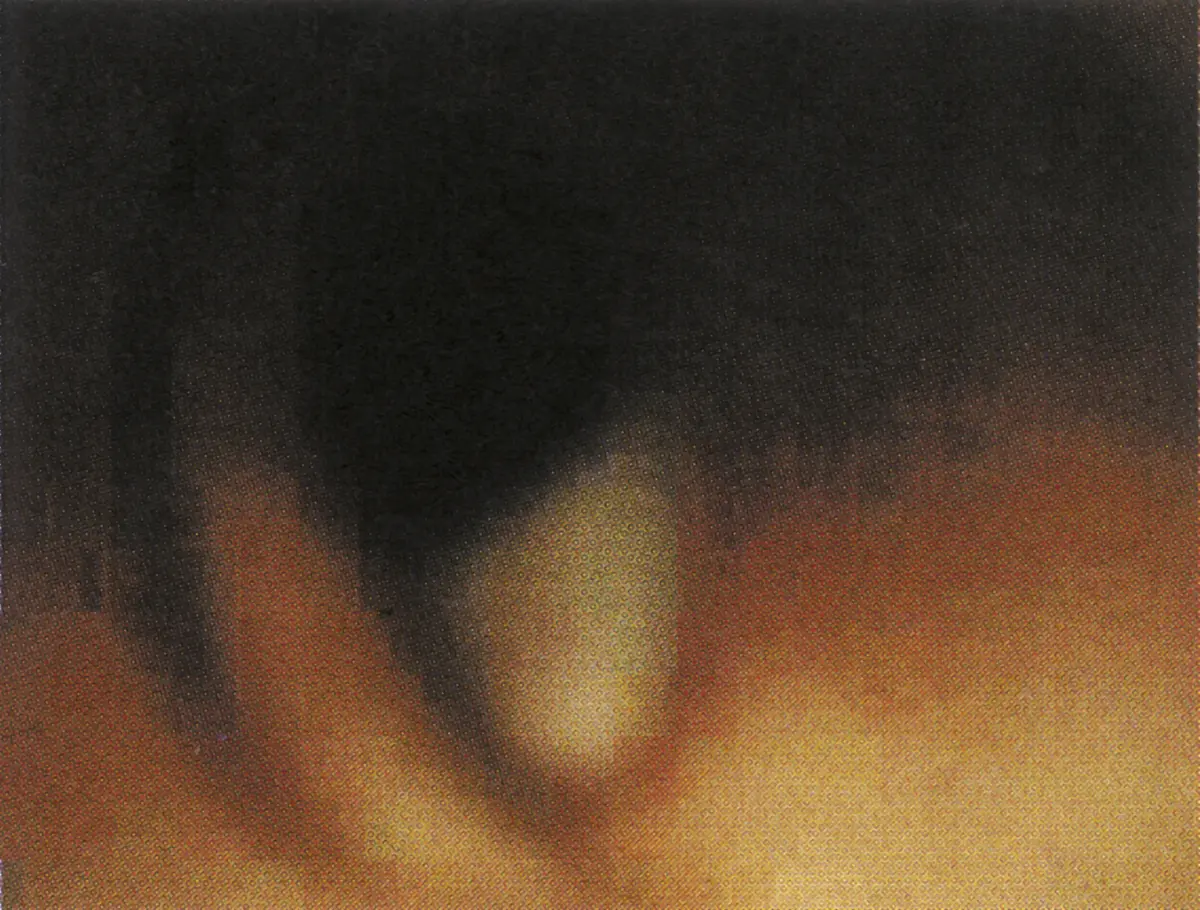
Although the image that gave rise to the ticks is related to a daily childhood memory, Cal’s work is able to spark off individual reflections in the viewers, reflections which are generally oriented toward the human being in conflict and the tragedy of parasitism in contemporary society. But, placed in the artistic space, it gives off a mordant critique of the systems that sustain the world of art and its ethical implications.
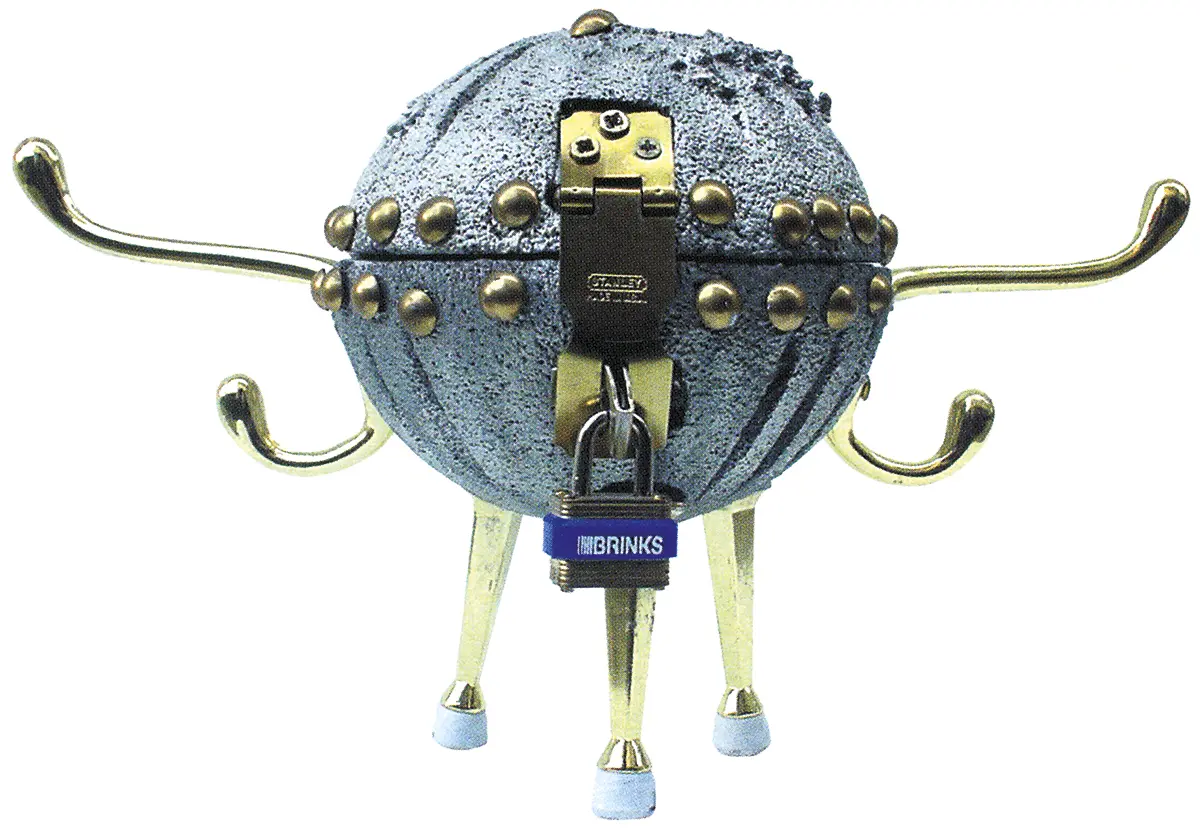
Damian Perdomo’s sculptures are objects in which different types of metallic elements are randomly fused. United and showing a taste for hyperdecoration, he returns them to the viewer as pieces to exhibit in museum showcases, where the original defunctionalization of their components is the key to admiring them. Acquiring both an alien and an organic aspect, his useless urns and objects are comparable to the fantastic forms that have been produced by interest in robotics and cinema, futuristic visions of the past. But, poking a little deeper, we find that Perdomo’s pieces translate that urgent need for modern societies to produce and consume useless objects. Like second-class heirs of that dream of modernity in which technology would be able to resolve our life and our simpler tasks, the artist postulates a code of values that run collaterally in relation to the capitalist system and which have to do with the “omni-impotence” and unimportance, the uselessness and practice, of waste.
At this point, it must be mentioned that the artists confront different dilemmas added to the problems that persist in their relationship with the State. Despite the fact that an educational level exists that is obviously higher than in the rest of Central American countries, with the exception of Costa Rica, it is difficult to begin to define solid artistic and educational processes. Hence, as Lorna Scott Fox indicates, the artists at the Image Factory have taken the initiative to consider popular creativity as a key to the development of national identity. The coextensive validity of “polite” and “innate” art is recognized without compromising quality.2

On the same stage with Musa, Perdomo, and Cal, we find works by Alfonso Galvez and Michael Gordon creating an extreme contrast, especially if we consider technical knowledge and conceptual development. And nevertheless, they dialogue openly like children from a single origin.
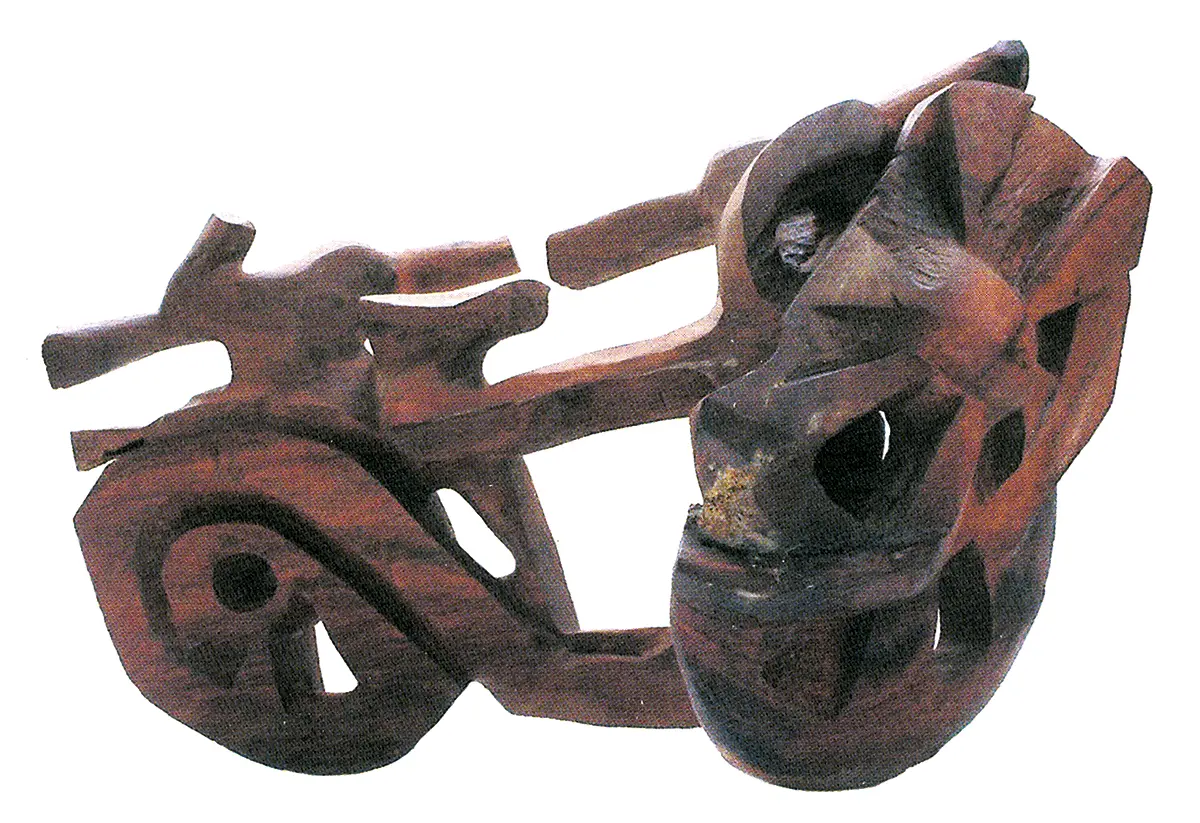
We are talking about autodidactic artists who are motivated by daily life and who, in spite of the fact that they lack formal studies, are carried by their intuitive intelligence to create images that precisely reveal the current state of things. Galvez, a resident of Benque Viejo del Carmen, a rural area that neighbors the municipality, finds support in the suggestion of the natural shapes of tree trunks. Using the machete as his only tool, he chooses precious woods from the area to carve pieces that would seem not to coincide with the bucolic surroundings. His work titled Bike, a life-size motorcycle, is probably what best defines his ability and attempts to apply to the natural world shapes that have to do with industrial production, which is a way of competing with nature instead of reflecting it.
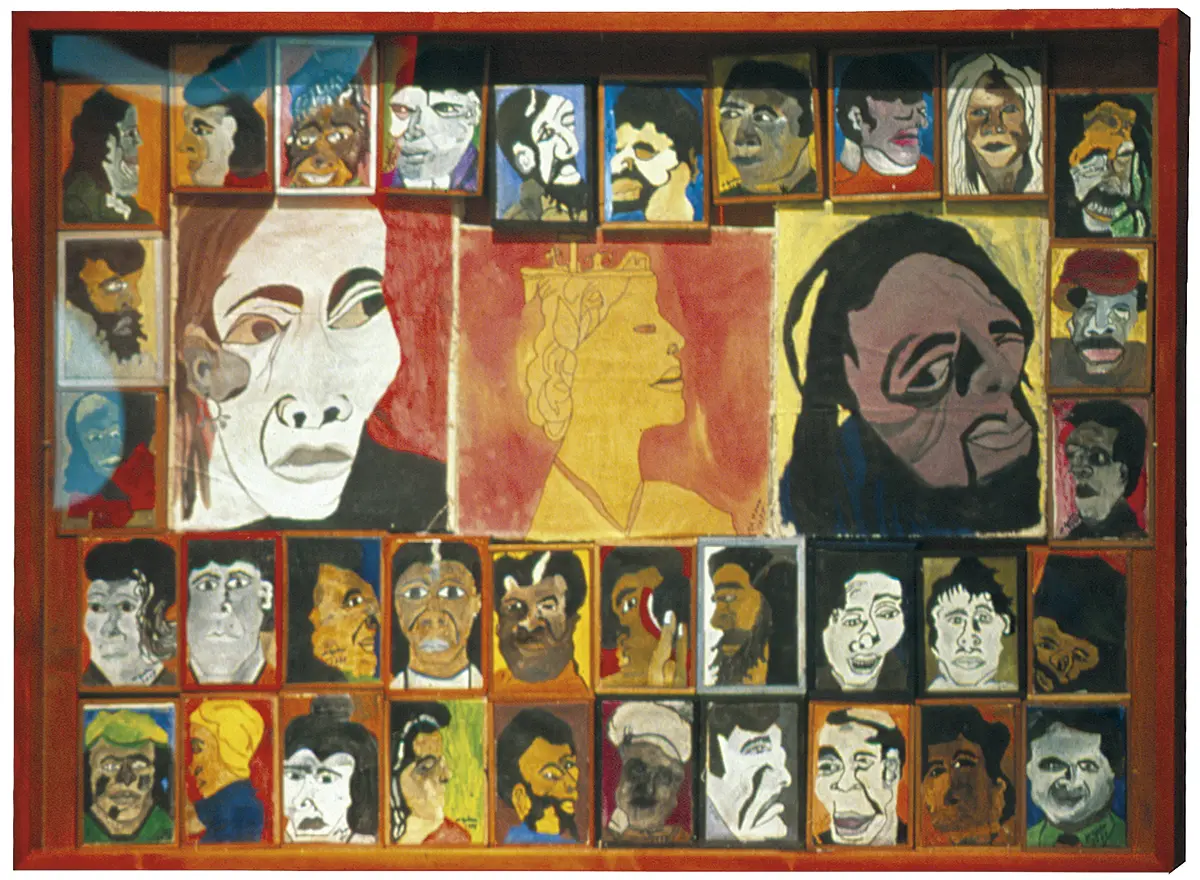
On the other hand, Michael Gordon selects his themes from the Belizean urban environment. His pictorial motifs address the elaboration of an extensive gallery of characters that stroll along the streets and coasts, leaning out of the windows of shops, or spending hours in front of their houses watching the pedestrians pass by. Their portraits are linked to the roots of the artist’s expressive and spontaneous language; they are a result of his nature as a patient observer of the common citizen, particularly tied to the lower layers of Belizean society.
In the case of Gilvano Swasey, another autodidactic artist, the portraits also acquire a role of importance. However, his equally urban experience (one generation later), a product of television and exposure to mass consumption and globalization movements, gives, as a result, work with certain critical nuances and some conceptual achievements. In it, the calligraphic aspect of his portraits and notes is juxtaposed with the coldness of intentionally unprofessional photographs. These photographs, generally of containers of supermarket products, explore correspondences between the human and the industrial, they lead to reflections on the conditions of contemporary man, and they create simple similes which nonetheless imply a critical and well-wrought opinion. In the exaltation of the cultural waste of today’s society, Swasey returns to the strategies of pop that attempted to suppress the separation of art and life, gathering the designs of labels, containers, and cans placed on cupboards in order to demonstrate once more reality through his ordinary aesthetics.
Iván Duran’s work is probably one of the most enigmatic of Zero. The creator of the audio Machete Chemistry & Panades Physics (1994) is known as one of the country’s most important producers in the field of music and discography. Through his producer, Stonetree, he investigates and documents the great cultural wealth conceived by Belizean musical rhythms. But here he includes a piece of personal information, a video titled Speaker, which is added to the aforementioned audio in order to translate a resounding landscape where the rituals of Protestant churches are immediately recognized: strident chants that in their climax break with the silence of the rural areas and join the infernal racket of the cities. In Belize, as well as in the rest of the isthmus, these religious practices—which find their origin in North American Protestant churches, and whose family tree is drawn through migration trends—have come to be a new form of exhorting the ex-Catholic believer to the need of converting to more fanatical and united forms. Brought to an artistic and critical space, Iván Duran’s work suggests that prayers, the massive events that they convoke, are deified signs as well as new strategies of colonizing domination.
In its totality, no one overlooks the fact that Zero looks too much like a patriarchal club, exclusively for men. This does not mean that there are no women artists producing works of interest or that women’s names are not found in connection with the dynamics of the Image Factory Art Foundation. At any rate, we recall that Zero is that number that demarcates a point of conclusion and a departure toward the future, where all kinds of reconsideration and self-confessions are possible. The works collected for this show are the most outstanding production of Belize today, and they comprise a particular history in works that, although they already are beginning to form part of the past, spark the interest in what is yet to come.
For now, on the Central American map, Zero marks a precedent and nourishes that recent thirst to know what is happening on this side of Latin America. It helps to supply that different Central American scene. And in its unusual presence, it erases every excuse to be unaware of it in the future. Any future.
NOTES
1. Assad Shoman, “Chapters of a History of Belize” (Belize City: The Angelus Press Limited, 2000).
2. Lorna Scott Fox, “Impactos y dilemas,” in ZERO: nou art de Belize, catalog for the exhibition at the Instituto de Cultura La Capella (Barcelona, 2001).
ROSINA CAZALI
She lives and works in Guatemala City as an independent curator. She directs the project La Curandería.