At least three of the four shows in the Arte Concreta Paulista series, presented by the Maria Antonia University Center to commemorate the 50th anniversary of the Ruptura group’s first exhibition, were true exceptions to the norm for this kind of art event in Brazil. In general, memorial art shows such as this are limited to the repetition of common knowledge and accepted truisms; they tend to reiterate mainstream points of view rather than engaging in an authentic critical reevaluation of the issue/artist/movement at hand. Arte Concreta Paulista, without aspiring to be movement’s definitive retrospective, did approach its subject with originality and was able to shed new light on one of the most interesting periods in Brazil’s recent art history.
The Ruptura show at the São Paulo Modern Art Museum in 1952 signaled the emergence of the Concrete Art movement in the country, establishing a clear dividing line between those artists affiliated with abstract painting in its constructive mode, and those artists affiliated with informal or expressionistic abstraction. The Ruptura manifest, presented on the same occasion, was signed by Lothar Charoux, Kazmer Féjer, Anatol Wladyslaw, Leopold Haar, Luis Sacilotto, Geraldo de Barros and Waldemar Cordeiro. Cordeiro’s restless intellect and provocateur spirit turned him into the movement’s theoretician and pivotal figure. It was Cordeiro who thought up and organized the I Exposiçao nacional de Arte Concreta (First National Exhibit of Arte Concreta) in 1956, bringing together the Ruptura artists with members of Frente, the group formed two years before in Rio de Janeiro by, among others, Iván Serpa and Lygia Clark. It was also Cordeiro who established and maintained Ruptura’s contacts with the Arte Concreto group founded in Argentina by Tomás Maldonado. It should be noted that the spread of constructivist principles throughout South America, linking geometric order with values such as lucidity and modernity, was given an important boost by Max Bill’s conferences and exhibitions in the region during the early 1950s.
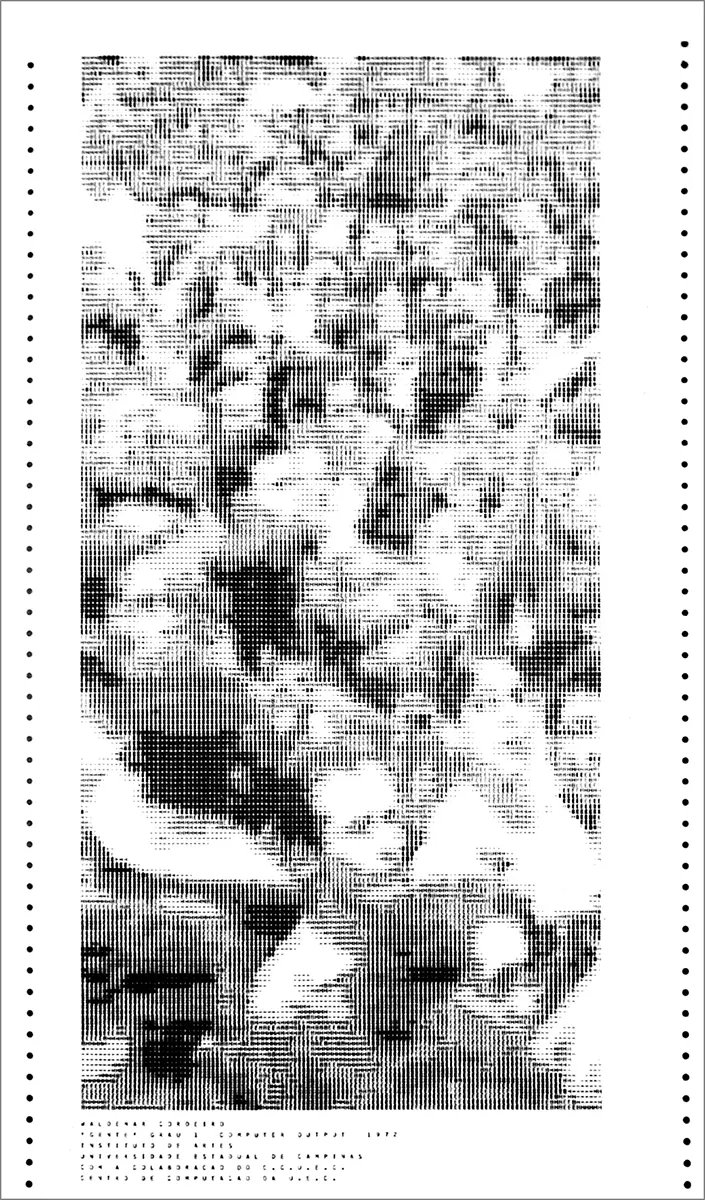
It was inevitable, then, for Cordeiro to be one of the protagonists of any homage to the 50 years of Ruptura, and the curators of the Arte Concreta Paulista project assumed this challenge head-on. Avoiding Cordeiro’s better-known pieces from the “historic period” of Brazilian Concrete Art, they prepared a small, excellent show focusing instead on those works that have photography as their organizing thread. Yet, more than Cordeiro-as-photographer, what Waldemar Cordeiro and Photography make evident is the persistence of constructivist ideas in this artist’s oeuvre, expressed in the original way in which he combined the notion of art related to industrial processes, governed by mathematical principles, with a newfound preoccupation with social activism and a growing interest in semiotics and communication theory. His Texto abierto (Open Text, 1966) is an example of his exploration of “signifying structures”. Here Cordeiro proposes a sequence of photographed letters, forming no coherent text; as they are brought into focus by the viewer, they morph into ever more incomprehensible strings of writing. There are also landscaping projects, and experiences in the transcription of images into computational language in the early 1970s, offering a glimpse of this unique artist’s wide range of interests.
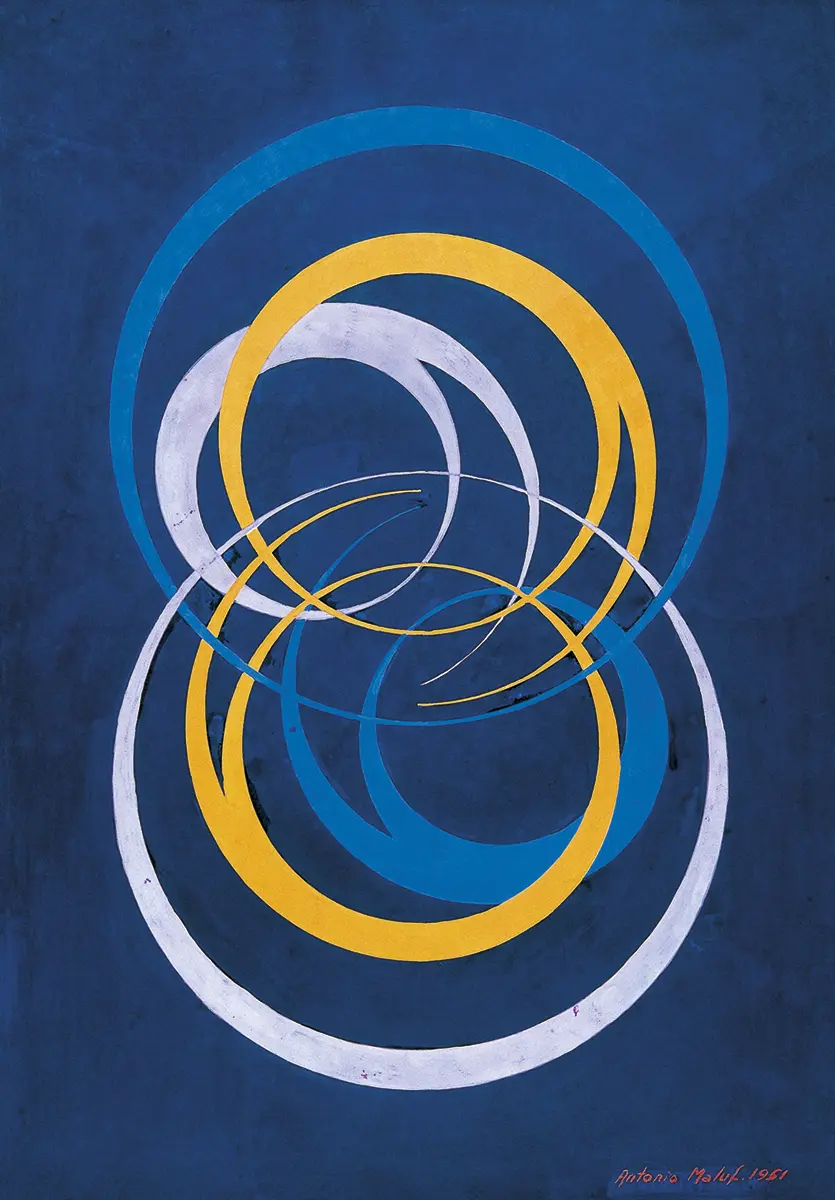
Cordeiro’s name unquestionably belonged in a series such as this one; the case of Antonio Maluf, however, was very different. To devote an entire exhibition in the series to his work was a controversial, bold decision. Maluf was never a member of Ruptura, and in fact maintained a certain distance from the group, in particular during its moments of more radical and combative activism. He became known as a graphic artist after winning first prize in the poster contest for the I São Paulo Biennial in 1951, and he is widely regarded as the precursor of modern graphic design in Brazil. The show at the Maria Antonia Center is the first retrospective of his work, and it gathers canvases and small gouache pieces, graphic design projects, and textile prints. Of special interest are the photographs and studies for ceramic tile murals in buildings designed by Fabio Penteado and Lauro Costa Lima in the 1960s —a time when Brazilian architecture was striving for a synthesis of the arts. Seen as a whole, Maluf’s work shows an impressive cohesiveness; it reveals a methodical, disciplined exploration governed by the strictures of equations and mathematical progressions.
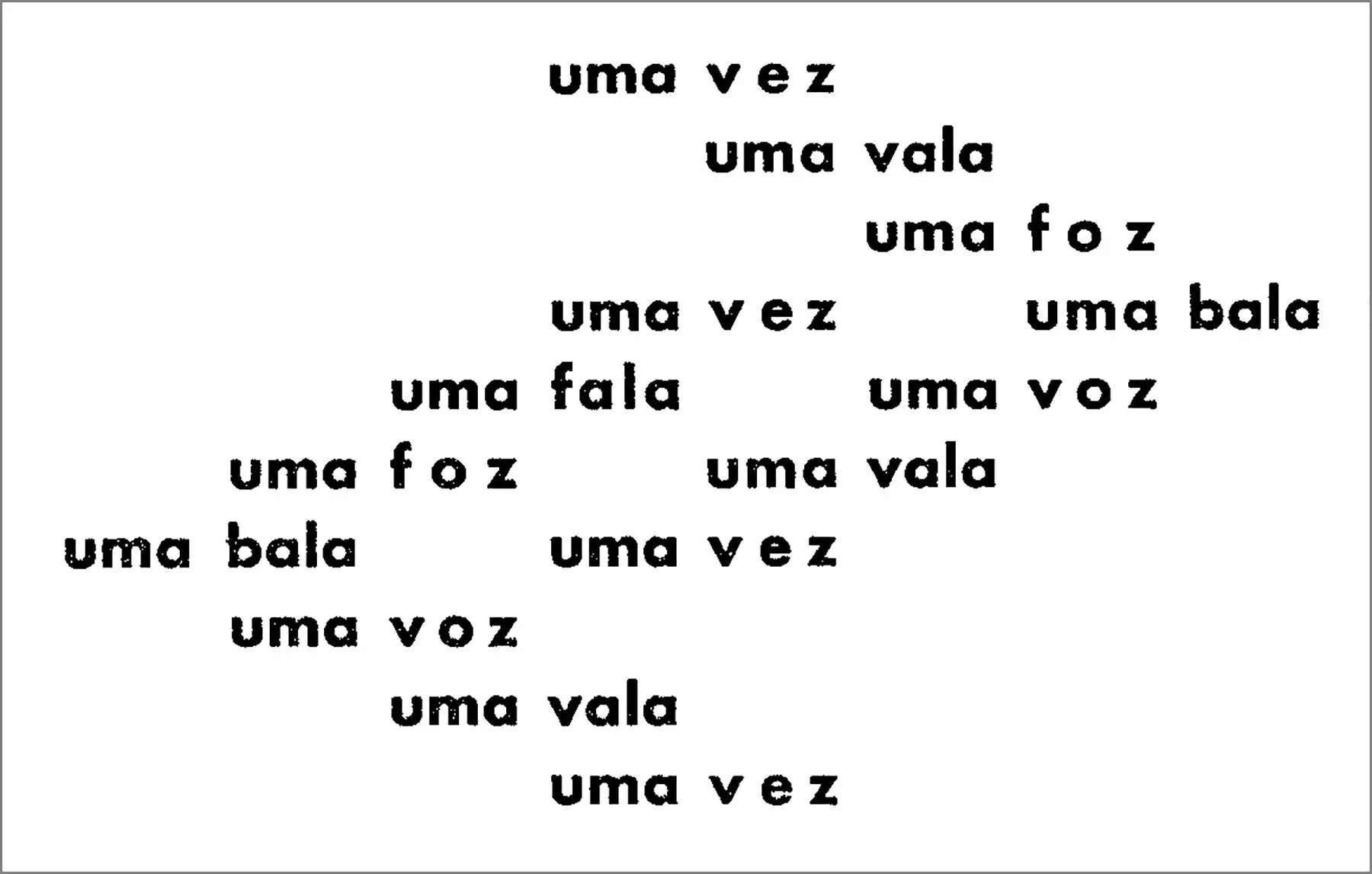
The topic for the third show was the concrete poetry of the Noigandres group, formed by Décio Pignatari and the brothers Haroldo and Augusto de Campos between 1952 and 1962. The choice is apt since the poets of Noigandres worked in close collaboration with the Ruptura artists. However, the very idea of organizing a show about poetry posed a significant challenge, given the nature of the material. It is true that concrete poems are visual constructions, yet there was hardly any other choice than to place original editions behind glass displays and to reproduce on the walls the movement’s texts, none of which, in these times of abundant technological resources, seemed the most attractive presentation possible. Indeed, Grupo Noigandres is not the most visually appealing of art shows, in particular for those members of the public not already interested in the Campos brothers’ and Pignatari’s semantic games, which tend to be dry and highly intellectualized. On the other hand, and seen as part of the whole series, this show of concrete poetry illustrates to what degree the desire to break with traditional syntax and structures goes beyond the visual arts field in this period, spilling over literature and announcing what was to happen in Brazilian popular music towards the end of the decade, with the emergence of bossa nova.
The only underwhelming moment in Arte Concreta Paulista is, paradoxically, the show titled Grupo Ruptura, which should have been the event’s centerpiece. The main problem here derives from the obviousness and naiveté of the initial idea: to recreate the São Paulo group’s first show at MAM. Since many of the pieces have been irretrievably lost, the recreation could only be achieved through period photographs, in many of which it was even difficult to make out what the artwork was. To further complicate matters, the curators decided to fill the gap left by some of the lost works with different pieces deemed similar. As a result of all this, the show was no more than a vague approximation to the Grupo Ruptura 1952 exhibition, with none of the sense of critical revaluation of which I spoke at the beginning of this article.
This failed attempt, however, does not compromise the series proposal. The series’ principal accomplishment is to avoid the condition of exhibition/homage as it is commonly practiced. Beyond facile formulas, Arte Concreta Paulista brought to bear themes that continue to be relevant for the practice of art in today’s Brazil. The series’ individual shows dialogue with each other, and all of them contribute to contextualizing the initial moments of a process —indeed, the moments of actual ruptura (breaking with tradition)— in which reconciliation is reached between values that are posited as universal and the particularities and limitations of the local art scene. These shows reveal the ultimate impossibility of carrying out an orthodox constructivist project, and they let us see the interstitial spaces that would allow for the emergence of the Neo-Concrete movement as the times changed in the 1960s, as a reactive vindication of the subjective, organic side of the work of art.
VALERIA PICCOLI