Dis+Art+Tec (Design, Art, and Technology), a project presented yearly since 1999 by Costa Rica’s Museum of Contemporary Art and Design, included in its fourth edition, corresponding to 2002 and curated/coordinated by Rolando Barahona and Ernesto Calvo, two approaches to video art: Contaminados. (Ex)tensiones de lo audiovisual (Contaminated. Audiovisual (ex)ten–sions) and the first Central American video creativity competition, Inquieta imagen (Restless Image). Both were attempts to gain greater exposure and legitimacy for the new modes of expression in contemporary audiovisual art —a still marginal, albeit growing area in which the Central American region is only starting to define its initial explorations and achievements.
Contaminados. (Ex)tensiones de lo audiovisual, an international exhibition, covered a wide spectrum of video art manifestations, with works that ranged from the documentation of artistic actions or performances to pieces engaged in the questioning and exploration of audiovisual language itself. The bold montage mixed simple projections and video installations with computer-based interactive pieces and included works that combined different artistic disciplines: from painting and photography to literature and dance —an attempt, precisely, to achieve a dynamic and effective contamination between media and languages. Further contamination took place at the thematic and conceptual levels: there were investigations of hybrid identities, transculturation, and sexual travestism; there were references to the classics of film history, the various aleatory components implicated in interactive propositions, and video-mail. Among other things.
The show brought together projections like Paper Sex, a minimal and sensual appropriation of sculpture by the Germany-based Japanese artist Takehito Kogenasawa, and JCJ Junkman, an interactive piece by American artist Ken Feingold, an anarchic and ludic deconstruction of signifiers that evinces the clashing meanings of objects and words from different languages and different origins.
Some interventions were situated halfway between memory, photography, and the space-time interplay that’s implied in audiovisual expression. Such was the case of Technologies of Repetition, by the Pittsburgh-based Chilean artist Andrés Tapia, or Square Times, by Karim Schneider and Nicolás Guagnini (from Brazil and Argentina, respectively). Schneider and Guagnini’s work is based on a text by the architect Emilio Ambasz and images from New York’s Times Square, and it achieves a disquieting counterpoint of sound and image through a sinuous parade of bright images full of referents but devoid of stable meanings, a kind of funhouse mirror for the complex nature of the modern Babel.
Contaminados included Apple Core by Txuspo Poyo, a Basque artist living in New York. A suggestive appropriation of Stanley Kubrik’s classic film The Shining, it is organized around a kind of parody of persecution, between the real and the phantasmagoric. In a strand characterized by filmic (and musical) references, we must also count Santiago Echeverry’s entry. This Colombian artist presented three short pieces, collectively entitled Alteridades (Alterities): Lover Man, Cesárea (C-Section; also a female name in Spanish), and October. Somewhat Almodovarian in their exploration of homosexuality and travestism, these works were at times playful, and at times full of pathos.
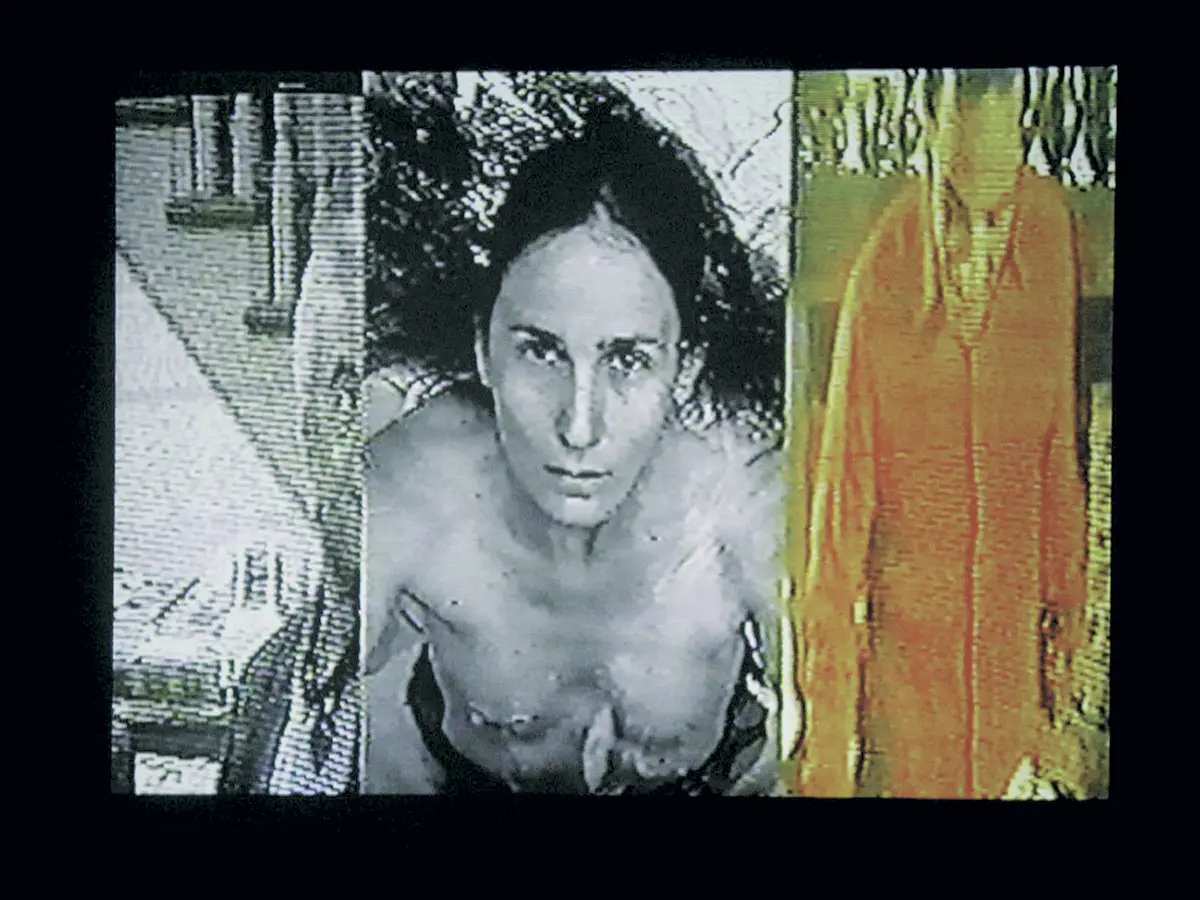
In the field of video performance, we found Guatemalan artist Renata Galindo’s sober, existential documentation of Autocanibalismo (Self-Cannibalism), an obsessive exercise in self-mutilation marked by the narrow space in which the body is trapped. Also present Chicano artist Guillermo Gómez-Peña, with his imaginative and penetrating videografitti works exploring the hybrid, transforming the character of the Latin American migration to the U.S. —which can be extended to many other contexts where the «center/periphery» tension manifests itself.
Closer to a reflection on the pictorial is Gestures Responsibilities, an interactive video by Fabián Marcaccio, from Argentina. Here Marcaccio continues to explore, through the recreation of a moving image from his “mutating paintings”, the multiplicity of meanings in the emerging material and in the gestuality through which it is executed, in the process of a pictorial creation that attempts to reach beyond itself without losing its roots. Fernando Llanos’ video-mail pieces are on the opposite extreme: they are short, effective, and eclectic interactive pieces ranging from the most personal exorcism to disquisitions on a variety of aesthetic and cultural topics.
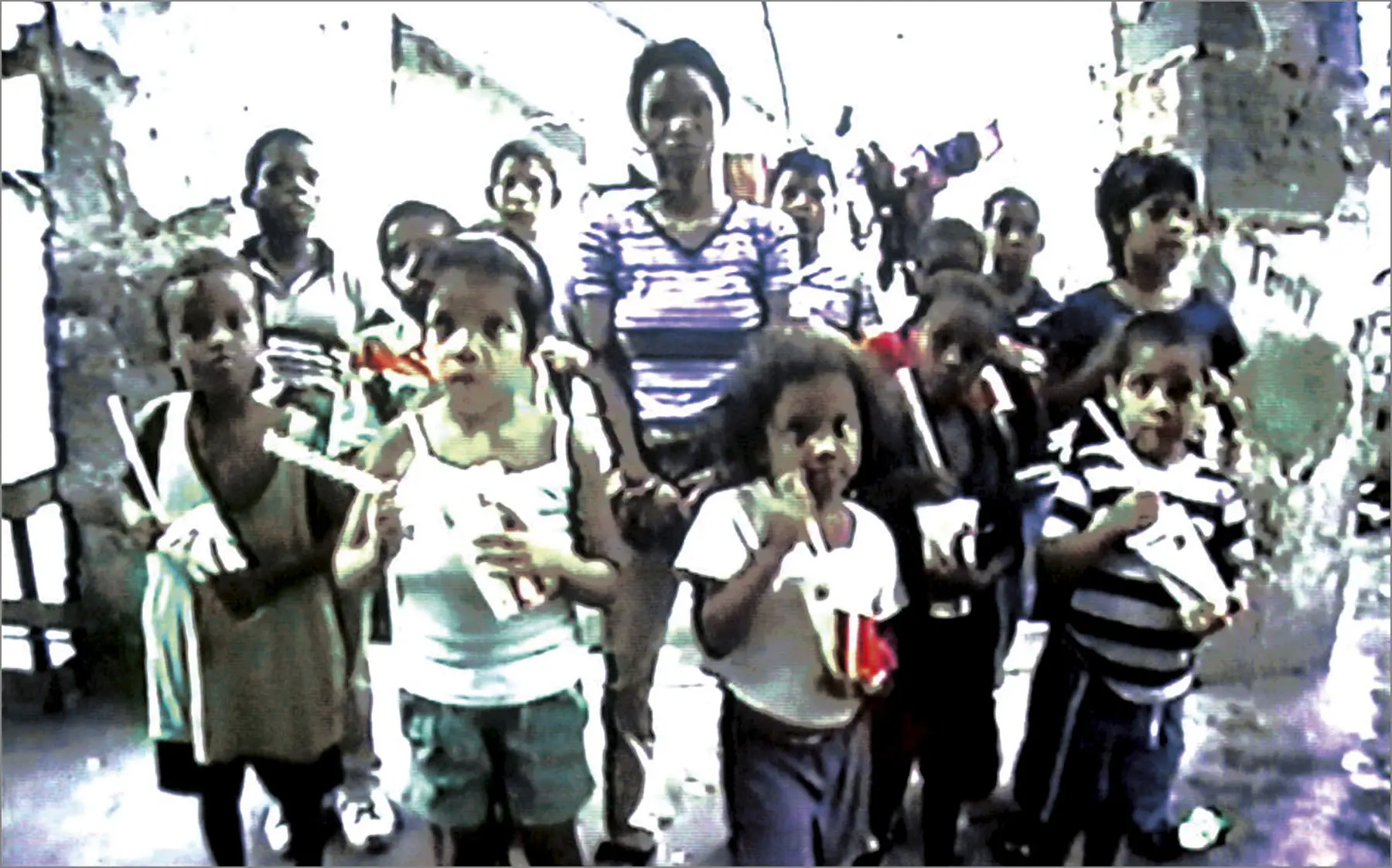
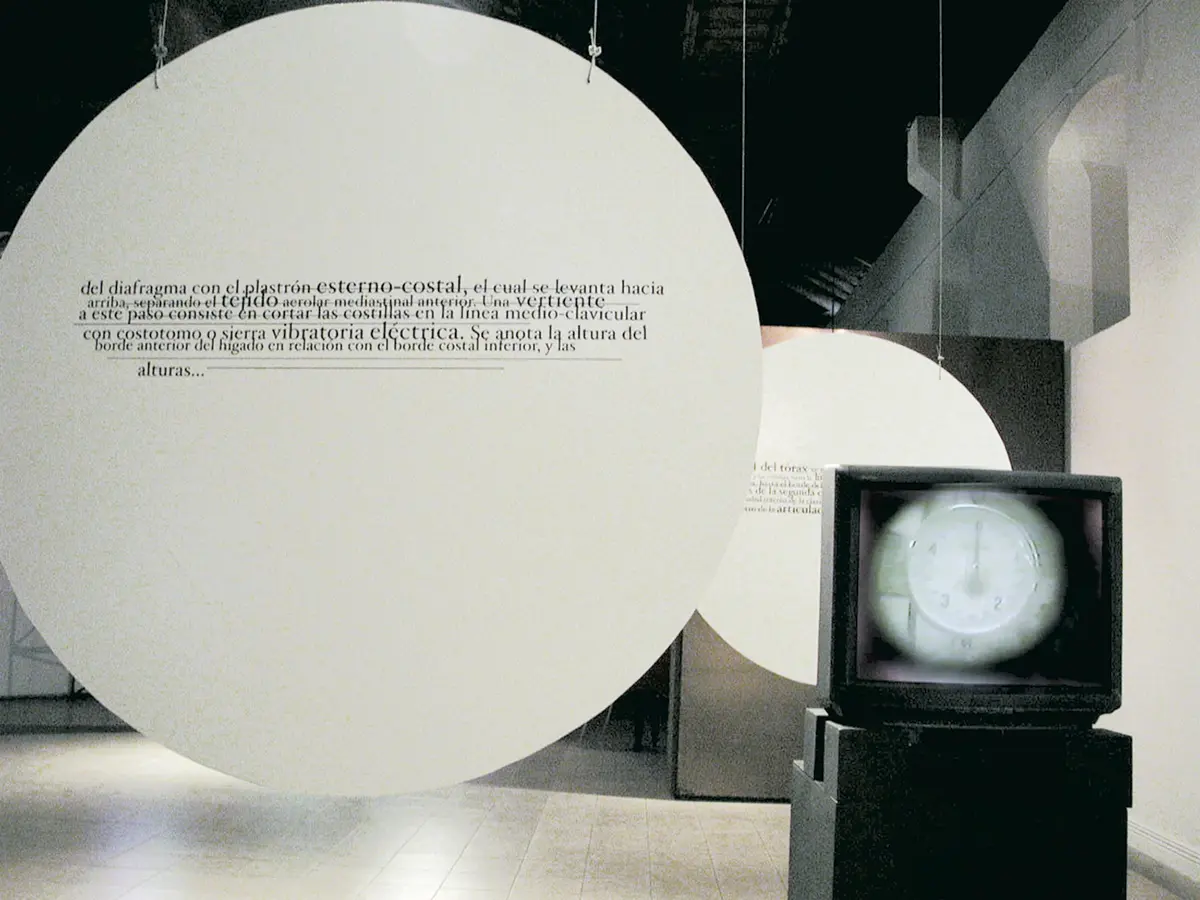
This artist and others invited to Contaminados were joined by the winners of various prizes and honorary mentions in the Central American video competition. First Prize went to Panamanian artist Brooke Alfaro, whose Aria guided us on a suggestive tour of a ruined building with the off-camera voice of an opera singer generating a richly metaphoric reference to the relationship between high and low culture, wealth and poverty, and symbolic power in Latin America’s deeply unequal societies. The second Prize went to José Alberto Hernández, from Costa Rica, for his photo-videoinstallation Auto-opsis, a raw exercise of voyeuristic documentation executed in a morgue, which observed the process in the coldness of a medical site. Joaquín Rodríguez, also from Costa Rica, received Third Prize for Agua, viento, fuego (Water, Wind, Fire), an interesting audiovisual counterpoint based on a triptych screen format and the confrontation of a poem by Octavo Paz with the noise of regular TV images.
With such a diversity of proposals, Contaminados very ambition resulted at times difficult to apprehend, due to the excessive superposition of sounds and themes —a meaning of contamination that surely went beyond what the curators intended. Similarly, the commitment to a slow, studious reception of audiovisual pieces runs the risk of having many viewers leave the show without seeing the whole show and understanding its purpose as a whole. Dynamic and interactive, Contaminados demanded an open, unprejudiced attitude towards artistic media and languages that Central America’s artists are only beginning to explore.
TAMARA DÍAZ BRINGAS