
This show represents both a laudable aesthetic achievement and a political mistake. A political mistake because it is the second such show organized by Rafael Doctor, recently appointed for the task at Casa de América. Doctor has decided, willy-nilly, that all art exhibits to be held from now on at this cultural center will be curated by himself, excluding everyone else. Not an entirely unexpected development, it must be said, since this has been Doctor’s commissar-like style wherever he has wielded authority and similar responsibilities, be it the Sala de Exposiciones del Depósito Elevado Canal de Isabel II or Espacio Uno, reserved by the Reina Sofía Museum for projects by young or clearly innovative artists. What is more difficult to understand is why would Casa de América’s political directors allow one single individual to exercise such exclusive power over the program, in an institution originally conceived as an official, State-sponsored place of encounter for the arts and cultures of Spain and Latin America. So wide and generous a purpose cannot be subjected, as far as the visual arts go, to the arbitrations of just one person, particularly one person who has yet to demonstrate a deep knowledge of contemporary Latin American art. True, the decision to create a position such as Show Coordinator and to give Doctor the title responded to a specific need —the need to deflect pressures exercised upon the direction of Casa de América by numerous Latin American diplomats accredited in Madrid, who want to see their favorite artists exhibited without necessarily repairing on aesthetic considerations. But the solution to this problem cannot be entrusted to one single professional, authorized to organize all the exhibits deemed necessary. A wiser solution would be to appoint a committee of competent critics and art historians, reporting to the Direction, and empower them to greenlight or reject projects presented by independent curators from both Spain and Latin America. The current situation under Doctor (no doubt, a talented professional, but also a limited one —a whole continent of art cannot be the province of a single man) boils down to replacing clientelism with autocracy. And this is, certainly, a political mistake, even a diplomatic one, which perhaps the Spanish foreign service cannot afford to perpetuate indefinitely.
The political mistake casts a shadow on the very structure of this show, which, despite what its title suggests, does not include Latin American artists but Spanish artists who have traveled to the region and, on the basis of that experience, have realized specific projects. Of course, Spanish artists have the right to travel and to create works that elaborate on the experience of their journeys, which are often more beneficial than trips taken by bankers or politicians. But it seems questionable in Madrid, where there already are enough exhibition spaces for contemporary art, for Casa de América to devote its own space to Spanish artists instead of Latin American ones. Given the economic and social crisis currently experienced by most Latin American countries, it seems evident that regional artists have a greater need for spaces where to bring their projects to fruition and show their work.
So far for the political mistake. As for the aesthetic achievement, it derives from Doctor’s decision to include in this show two extremely relevant artists, Rogelio López Cuenca and Sergio Belinchón. These artists’ work balances the inclusion of a third one, Jorge Galindo, much less interesting. Galindo’s project, two canvases covering two wings of the Casa de América stables in their entirety, was not a Great Work but a large one — evidently not the same thing. On those canvases Galindo had stamped amplifications of an early-20th century postcard depicting the main square in Oaxaca, Mexico; on top of these images, he painted an arm covering and at the same time extending the square’s fountain. Very nostalgic, very remote, very unsurprising.
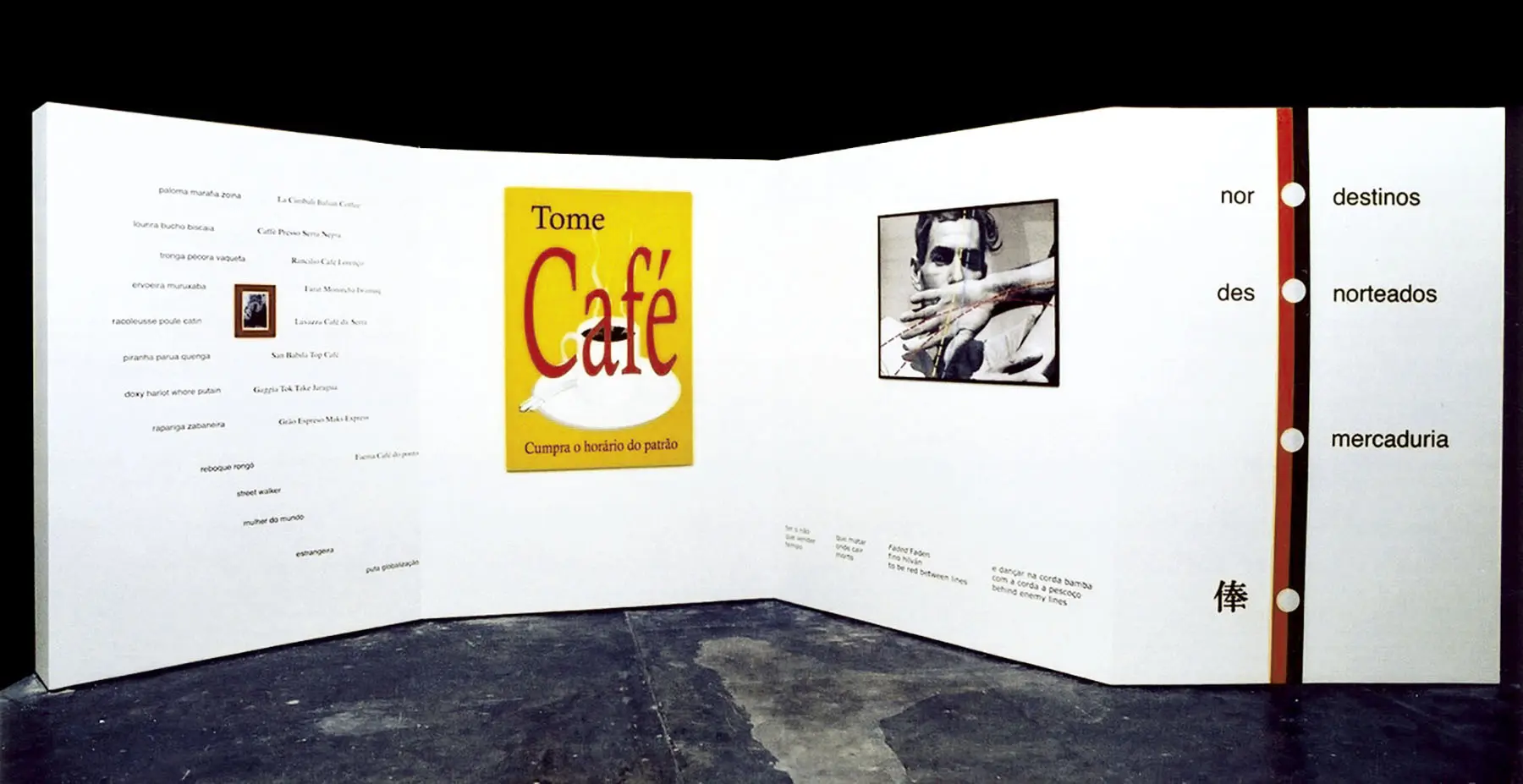
López Cuenca, on its part, presented a series of paintings, or diagrams if you will, using as leitmotiv the map of São Paulo’s subway system in an attempt to offer an image at the same time synthesized and suggestive of the cultural, ethnic, and linguistic diversity that characterizes Brazil’s megalopolis. The second part of his work was a video installation devoted to a group of street musicians who preserve and renovate the traditions of popular minstrel and of peasants in an inexorably urban context.
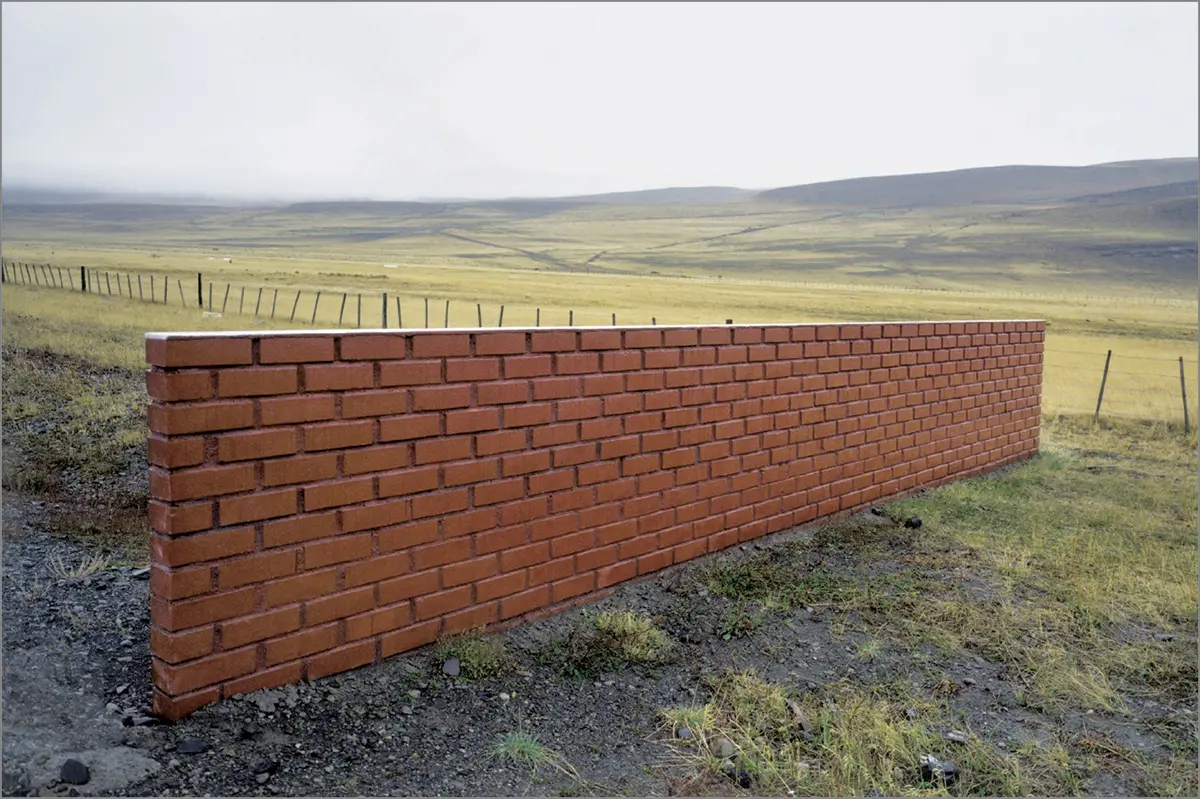
All in all, Sergio Belinchón’s work seemed to me the best of the lot. It is a large photographic sequence of the Atacama desert of Northern Chile. Beautiful and intense, these photographs evoked the desert not as much as a territory of irreversible barrenness but as a space of desolate feelings, of equally irreversible loneliness. Magnificent work.
CARLOS JIMÉNEZ