With the recent inauguration of two new contemporary art spaces —the Tokyo Palace (near Trocadero) and the Plateau (a popular neighborhood in the city’s West side)—, the high level of exhibitions presented by different Parisian institutions —retrospectives of Mathew Barney at the Modern Art Museum, Max Beckmann at Beaubourg, and Louis Bourgeois at the Tokyo Palace, plus Manet/Velásquez at the D’Orsay and Cézanne/Picasso at the Grand-Palais—, the rise of French artists in the international scene after several years of absence, and the support of a generation of very active collectors —especially within the ADIAF, Association for the Promotion of French art—, Paris is once again one of the central cities of contemporary art, something it has only intermittently been during the last three decades. We are witnessing the rise of new market dynamics, despite the bearish stock exchange and the insistent drums of war against Irak.
Two simultaneous events held the attention of the art world towards the end of October, just before the 80 shows planned for Photography Month in November and the Paris Foto (November 14-17 at the Louvre’s Carrousel). The two modern and contemporary Art fairs opened at the same time in Paris and were proof of the city’s artistic effervescence. They were both based on different conceptions of modern art and contemporary art. In the case of FIAC modern art and in the case of Art Paris a “classic” modern art, along with a more or less international projection, the presence of the usual collectors, and the chance for anonymous buyers and the general public to discover new artists at one fair or to satisfy their need for a more “traditional” treat at the other with more affordable prices.
Art Paris was born in 1999 as a FIAC splinter event. Initially, its organizers vowed to distance themselves from a “globalist view of the art market and its dictates”. Some galleries, in fact, a decent number of them, such as Durand-Dessert or Maeght, deserted FIAC and joined the new fair. Ever since the exchange of galleries between the two events has continued. Instead of the “globalist” vision, the founders of Art Paris, who chose the prestigious Carrousel (High-flying commercial annex to the Louvre) to hold their event, sought to give all artistic expressions the place denied by FIAC, which is increasingly geared towards the newest expressions. Art Paris president, Henri Jobbé-Duval (a co-founder of FIAC), speaks of the presence of historically important galleries in his fair and emphasizes the inclusion of “historical” modern art, insisting on the term “classic” to describe the preponderance of printmaking, sculpture, and painting at Art Paris. It should be added, however, that the birth of Art Paris was also the result of a special environment in France’s academic and critical circles during the 1990s. There was in those years a latent dispute, at the same time semantic, aesthetic, and political, between the defenders of contemporary art and those who reject the newer modes of expression. It was, in fact, a debate between painting and installation, and it remained implicit in the discourse and the mentality of critics and artists, as well as among the public.}
It is in this context that Art Paris has in three years become an essential event, at the same level that FIAC, even if it appears more “Frenchified” than its rival, and even if it attracts a public with more “traditional” tastes —a public befuddled by the often bizarre trends shown at FIAC in recent years, a public with the potential to purchase art, a public intent on satisfying personal preferences. This year, Art Paris presented 85 exhibitors (ten more than in 2001), including 23 foreign galleries, 20 galleries from the French provinces, and 55 Parisian galleries. There is little or no artist selection; Art Paris leaves everything to the discretion of every exhibitor. Present were important galleries, like Farideh Cadot, Paris with Carlos Garaicoa; Bernard Cats from Brussels with Dubuffet, Christo, and Tapiés; Liliane; Michel Durand-Dessert Panamarenko; Maeght with Marco del Re and Rapul Ubac. Yet despite this, and despite the fair’s 30,000 visitors, there was little indication that this widely diverse event had a clearly defined concept: Art Paris gives the impression of being still in search of its identity.
FIAC, on its part, continues to combine, as it has since its inception, the classic art of the 20th century with the trends that define the dawn of a new millennium. The fair’s 29th edition was especially attentive to its international side, and for the first time in FIAC’s history, it presented more foreign galleries than French houses. Moreover, 30 percent of the galleries present were new to FIAC. Some countries represented this year were also new to the event, such as Greece, Israel, Russia, and China; also, the "Perspectives" section hosted avant-garde galleries that have never brought their artists to Paris (14 houses from New York, Berlin, Tel Aviv, London, Vienna, and Athens). The “big” countries in the international art markets were widely represented: Great Britain with 12 galleries, the United States with 13, and Germany with 11 (among them, for the first time, Berlin’s Carlier Gebauer). The CoFIAC —the selecting committee presided by Yvon Lambert— justifies this drastic selection as “a search for quality”. FIAC’s new orientation has a simple and at the same time ambitious goal: to gain an international audience for the fair and to create a credible alternative to the ArtBasel Fair. For Emmanuel Perrotin, a Parisian gallery owner and a member of CoFIAC, “Paris must be recognized as an international stronghold. The New York Fair never interrupts the work of the city’s galleries; much to the contrary.” Gallery owner Anne de Villepoix, also a committee member, adds that “Paris has all the opportunities to return to its privileged place. We are truly contemporary; New York has nothing on us. We are open to trends and to different countries, while the United States tends to be very specialized.” With this new internationalist strategy, and with confidence in Paris’ artistic excellence, FIAC’s avocation is confirmed and the “modern” label disappears —40 galleries left the fair— in favor of the “contemporary."
Smaller, then, and more international, FIAC evolved around five areas, simplifying the visit: "Perspectives," "Editing," "Video-Cubicle," "Collective Show," and "Individual Show." There were 900 artists from 19 countries, represented by 169 galleries; of the latter, 55 percent were non-French. The Café des Arts, a place of encounter and conversation created by FIAC some years ago, gathered a panel of critics and art professionals (mainly French; the exception was Souren Melikian of the International Herald Tribune) to talk about economic issues —“Will prices in contemporary art crash?”, “Art and Money”— as well as aesthetics —“What are the criteria to judge the quality of contemporary art?."
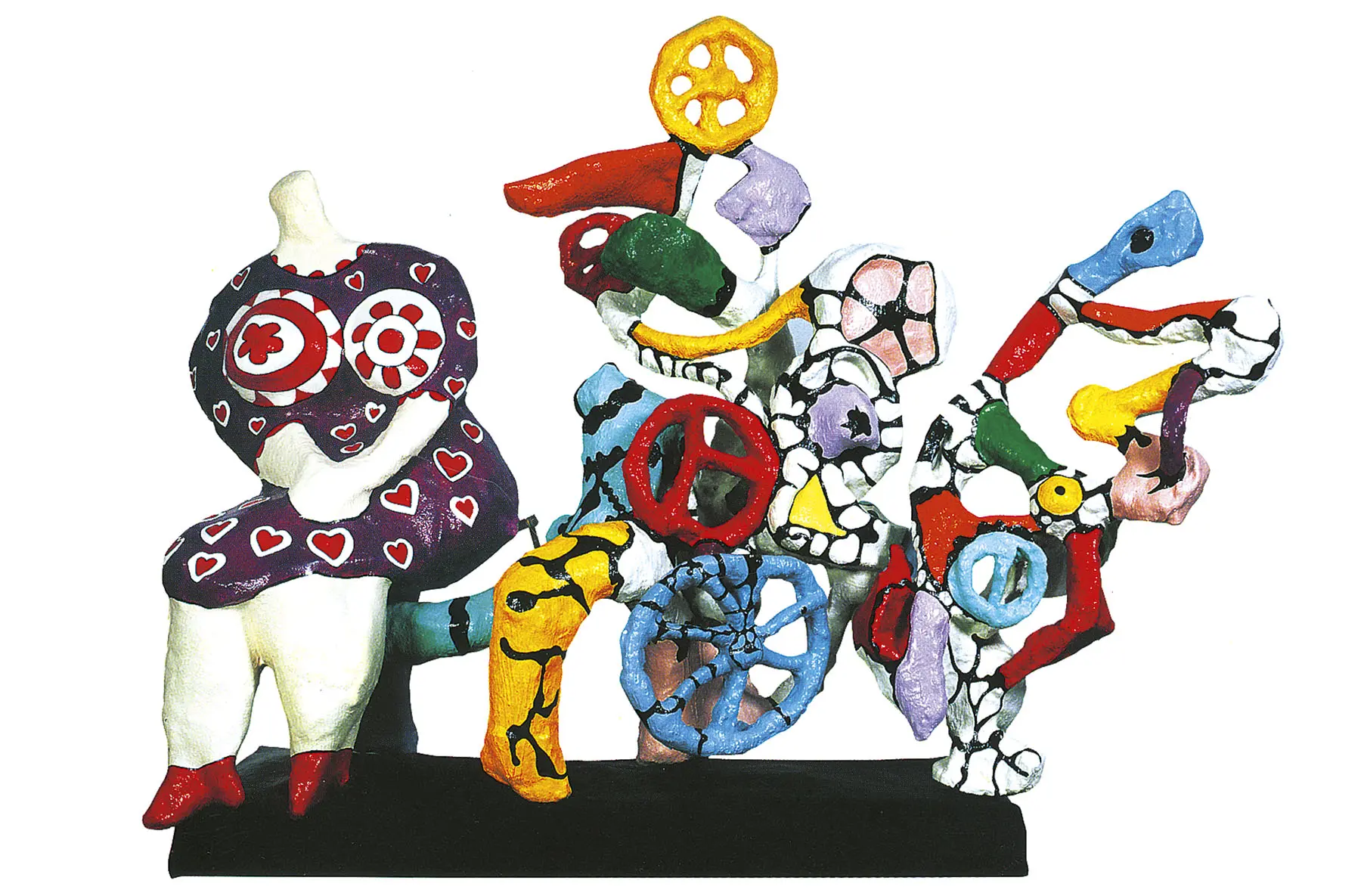
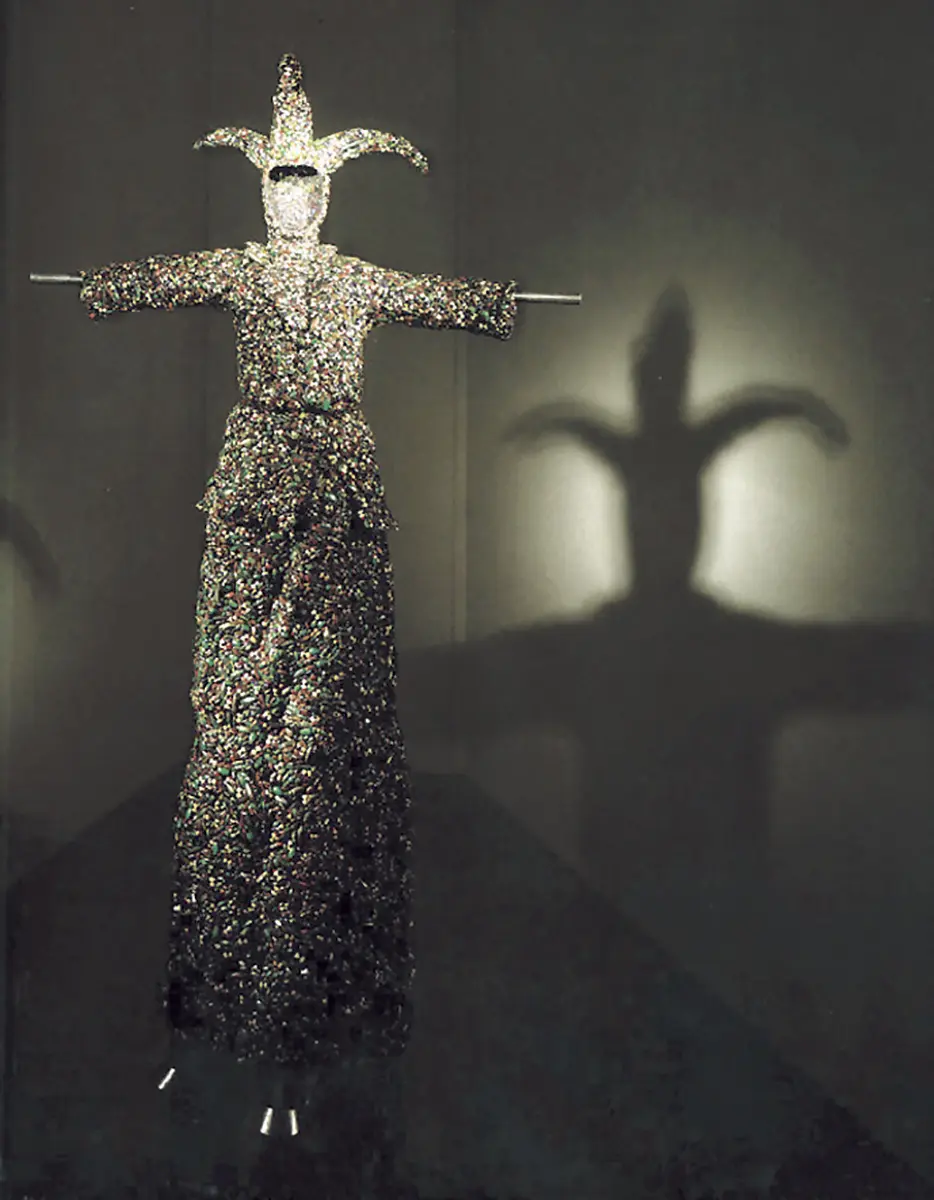
Already presented in 2000, the number of individual exhibitions grew this year to 45. Visitors were invited to follow a chronological route, from the oldest to the most contemporary, concluding in the areas devoted to video and to young galleries. The journey started with The Dream Machine, a beautiful piece by Niki de St. Phalle, who recently passed away, presented by JGM, and with a series of splendid collages and drawings with color markers by Eduardo Chillida, who died in September and who was also the subject of a homage by Galería Colón XVI of Bilbao. From Paris’ Galerie Daniel Templon, we encountered Self-Portrait as Harlequin by Jean Fabre, a steel coat of arms with a Harlequin hat and the body of beetles, strange and majestic, along with paintings by Gérard Garouste, Jean-Michel Alberola, and Philippe Cognée (in the latter case a strange image of the Pompidou Center in a state of liquid decomposition, titled Beaubourg #2, 2001). There were also two decorative objects from Tunga, sculptures in glass and a burnt material titled Magnetized Love, 2001, but they seemed somewhat lost in this space so devoted to painting. London’s gallery Marlborough presented a collective show with well-known artists. Among them London School representatives such as Lucian Freud, Francis Bacon, and Auerbach... In the Beaubourg gallery, we can see that Arman continues to find joy in the game of repetition, cut-ups, and transformation, in a beautiful work titled Panache in Benin (2002), which brings together two cultures in a well-realized aesthetic mixture: it is a striking African decorative object in wood, cut into four sections on which fragments of a crushed copper tuba have been inserted; the tuba’s body serves as headdress for the figure. We also find here an extraordinary, very kitsch portrait by the French painter Francis Picabia (1859-1953). His 1943 Yvonne Printemps, as well as other portraits by the same painter of the 1930s and 1940s, the second Picabia retrospective in Paris, Grand Palais, 1976 scheduled for November 16, is perhaps not altogether different from the other Picabias of the 1930s and 1940s presented by Galerie Patrice Trigano along with, and with the complicity of, photographs by Spaniard artist Carmen Calvo, whose caustic humor combines a dose of malice with a dose of visual pleasure.
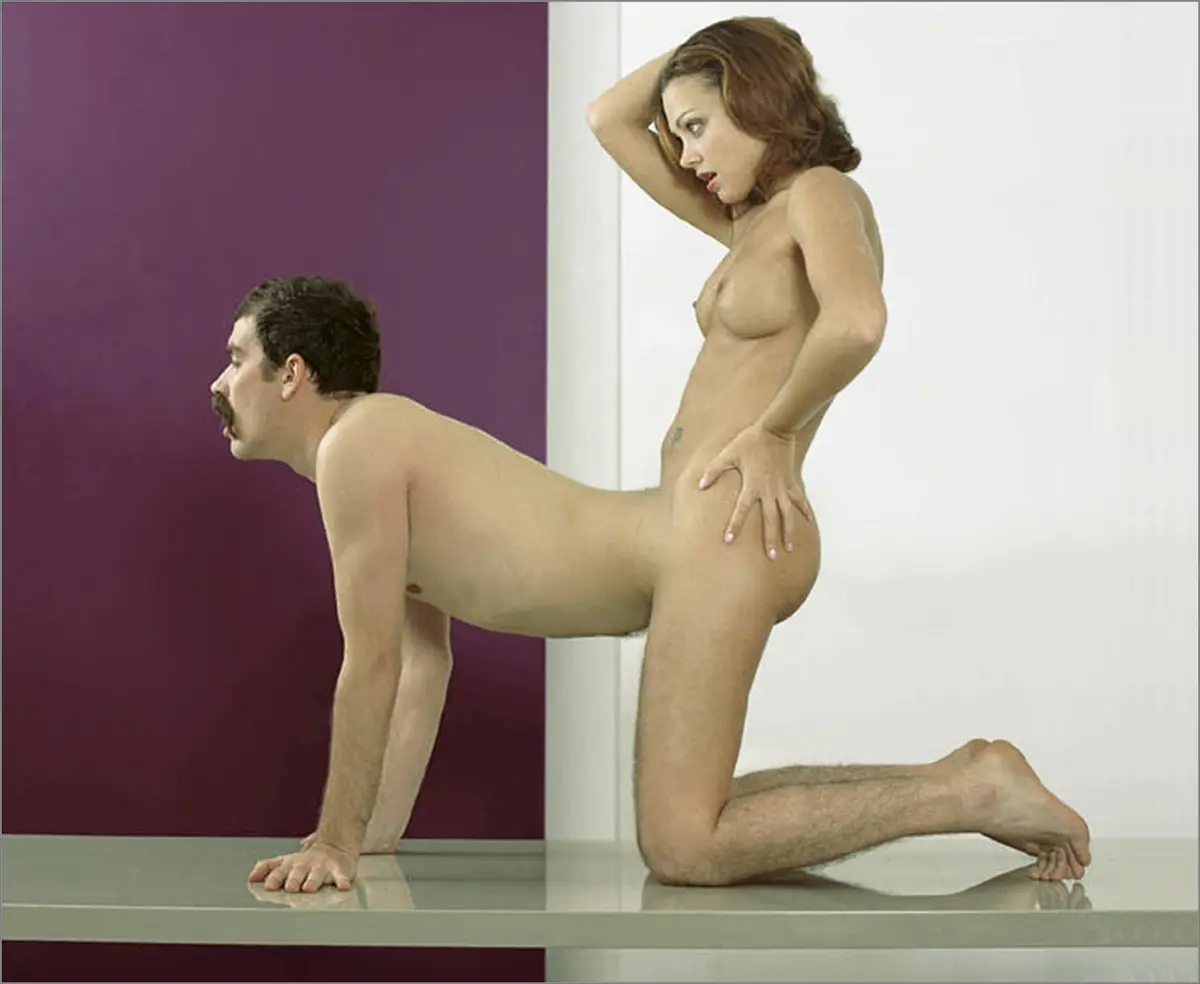
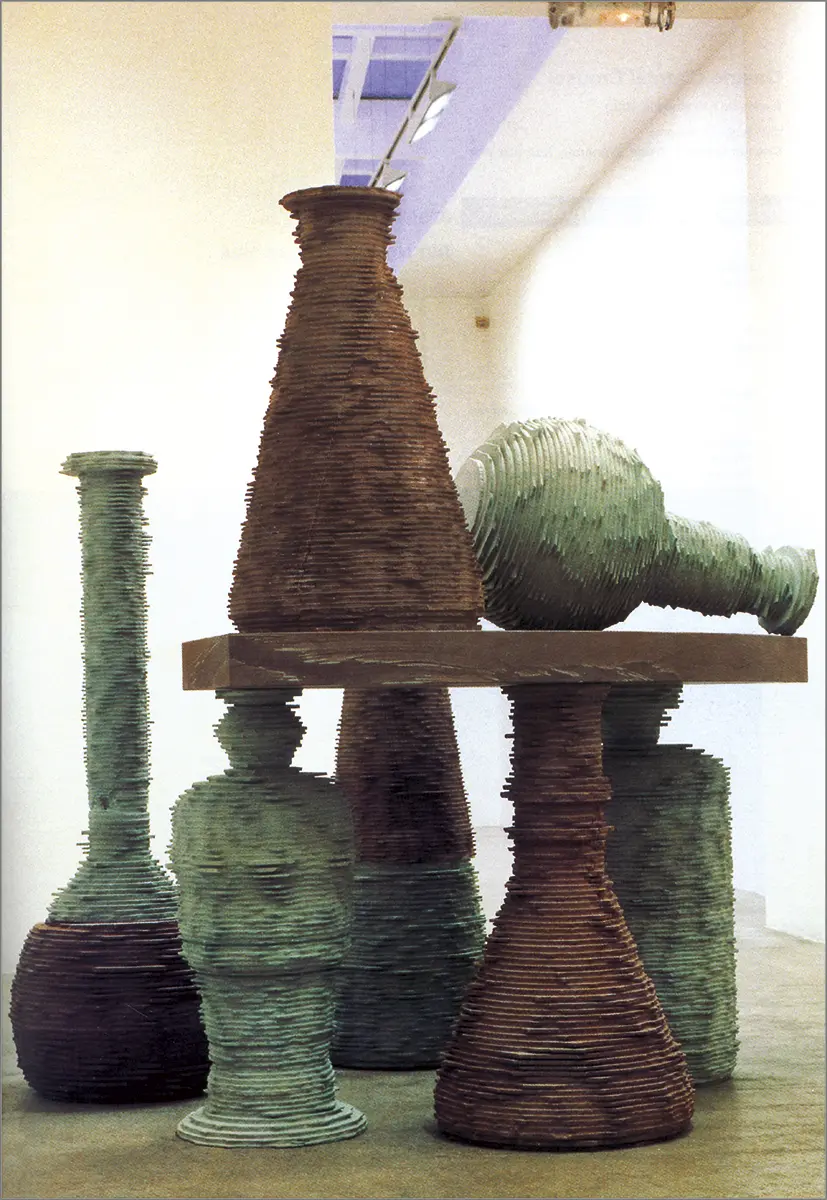
There was a succession of rather spectacular works, large format pieces strategically placed as “attention-grabbers” for the different galleries so that visitors would feel attracted to them. Chinese painter Chiang Xiagang presented The Large Family, a large oil-on-canvas (200 x 300 cm) at the Galerie de France, while at the Sperone Gallery, there was a three-dimensional, realistic scene in between drama and humor, representing three lost and sick alpine mountaineers, by Italian artist Not Vital. David March’s Fucking Bear was at Jerôme de Noirmont, also in a highly theatrical setting where the works were intensely lighted against dark backgrounds as if to recreate the ambiance of a cabinet of curiosities for its thematic exhibition Zoo. The crazed, marvelous room created by American artist Kenny Scharf, Closet #16, was at Hans Mayer with its display of fluorescent objects, sounds and reflections in the spirit of the cartoon and along the lines of many artists of the 1980s such as Basquiat and Keith Harring, of whom Scharf was a close friend; there was also a bed with tiles covered with white and red seeds by Japan’s Yayoi Kusama, created specifically for FIAC. And who could ever forget Tony Cragg’s beautiful Bearings of 1999, clay in two colors, at Galerie Chantal Crousel, to name only a few. At Giorgio Persano, Mario Merz’s 1985 and 1990-2000 installation Potager er verger covered the space in its entirety.
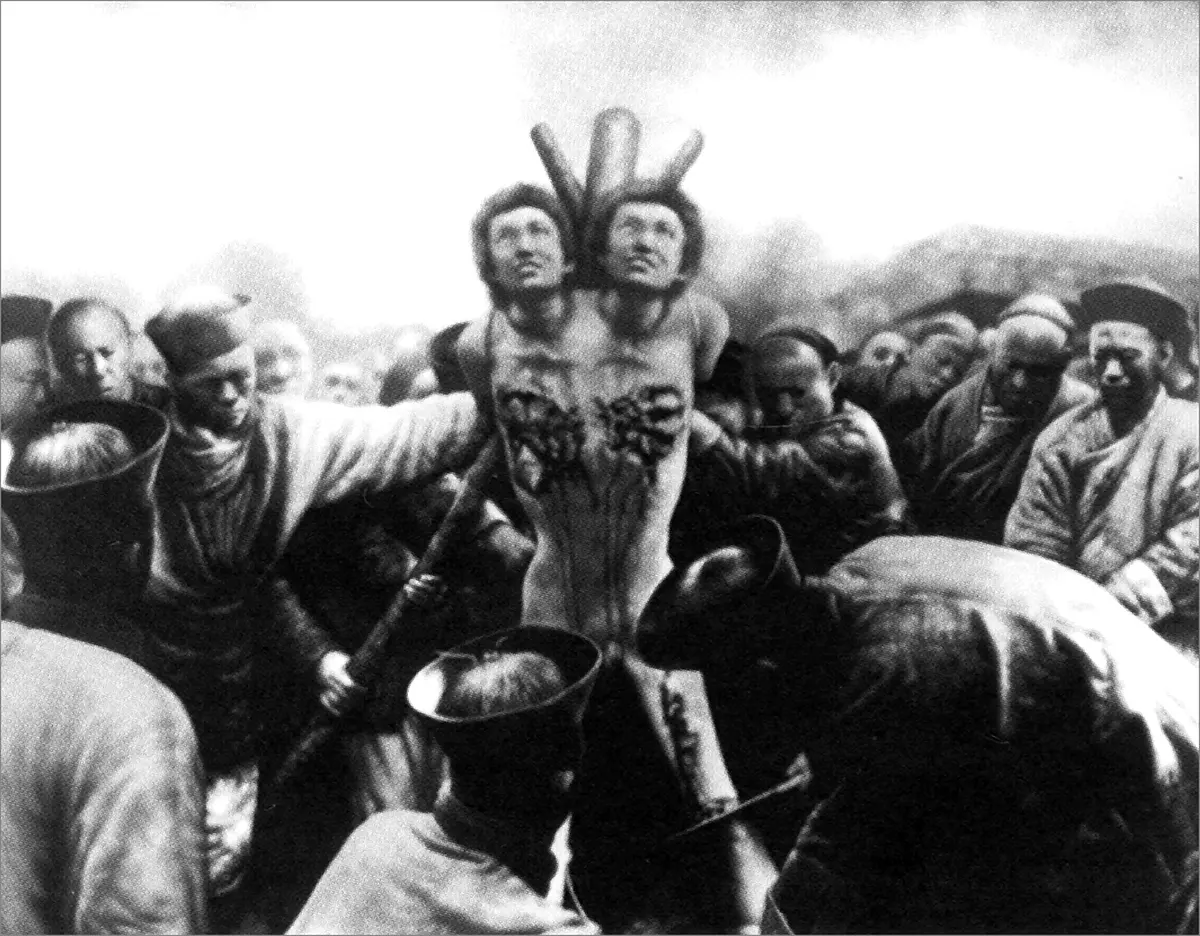
Among the distinguishing characteristics of this FIAC was a quite aggressive positioning of photography and video art next to painting: 193 galleries presented photography and video works, while not as many offered installations. At Galerie Lelong (Paris), photographs by Jan Dibbets and John Copland shared the space with paintings by Antonio Saura and Alechinsky, and with two very interesting mixed-technique sculptoric boxes by Jaume Plensa, titled Heart and Skin. At Jerôme de Noirmont we encountered photographs by the French artists Pierre and Gilles, and Bettina Rheims’ series Animal. Galería Luis Adelantado presented works by several photographers: Carles Congost from Spain and from Latin America, Marta María Pérez Bravo, Milagros de la Torre, and Priscilla Monge. At Marian Goodman (Paris-New York) we could see photographs by Thomas Struth. At both Chantal Crousel and Yvonne Lambert, we had the same selection: Nan Goldin, Robert Mapplethorpe, and Roni Horn. Mexico’s OMR presented a variety of works, but the absence of paintings was notorious; its selection was dominated by objects and photographs by Melanie Smith, Mauricio Alejo, and Xavery Wolski.
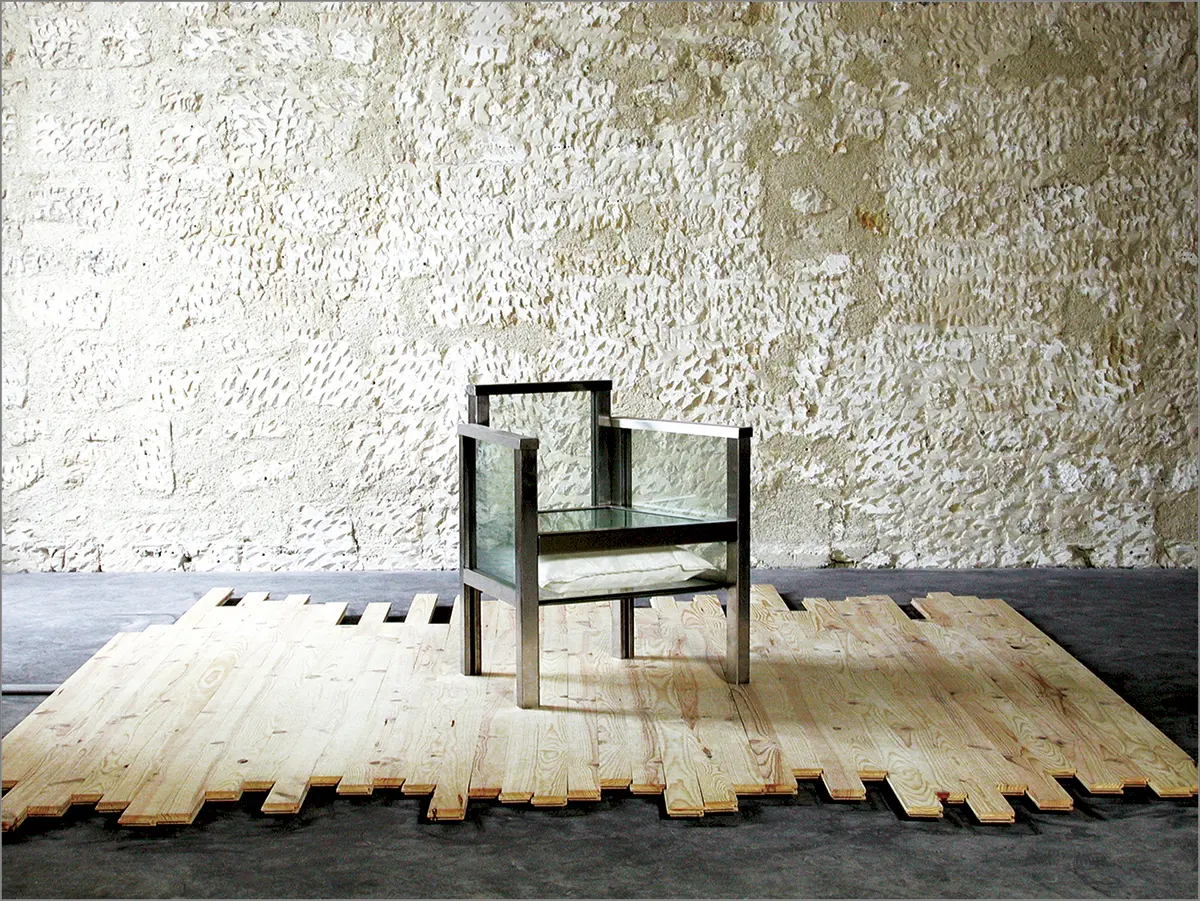
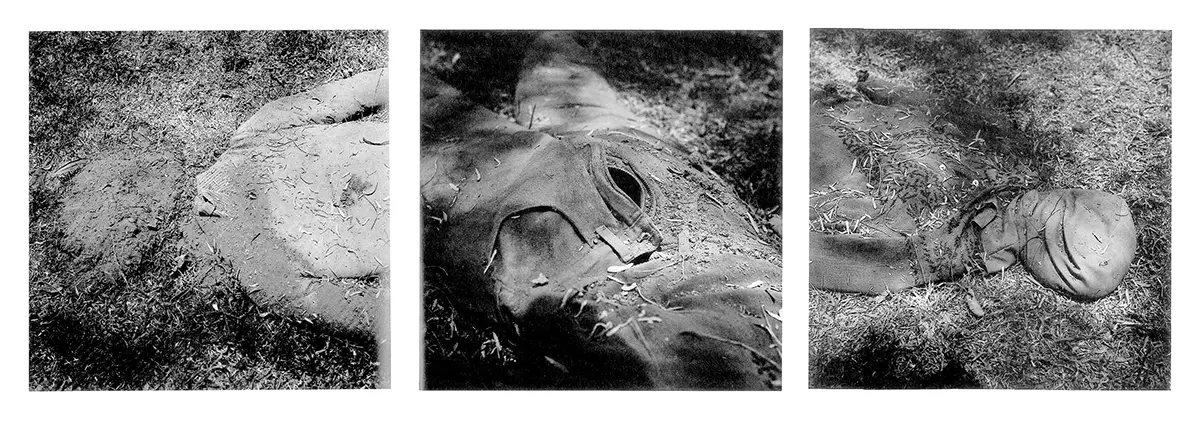
Even more surprising was the selection of photographers presented at Alain Gaillard’s gallery, such as Chen Chieh-Jen from Taiwan, one of the precursors of body art in Asia, who worked with archival images in his Obice 1, 1934-1997; or France’s Natacha Lesueur, who at Praz Delavallade’s and with a wink to Man Ray presented a nude back. At B & D Studio, Paul Smith (England) caused hilarity with his centaur-like figure, called Doggy.
In the "Perspectives" section, Athens’ Unlimited Contemporary Arts gallery presented an individual show of works by Germany’s Bernhard Martin, who combines painting and photography; the same mixture could be observed in the work of Spanish artist Ximo Lizama, a number of whose pieces were presented by Valencia’s Galería Punto.
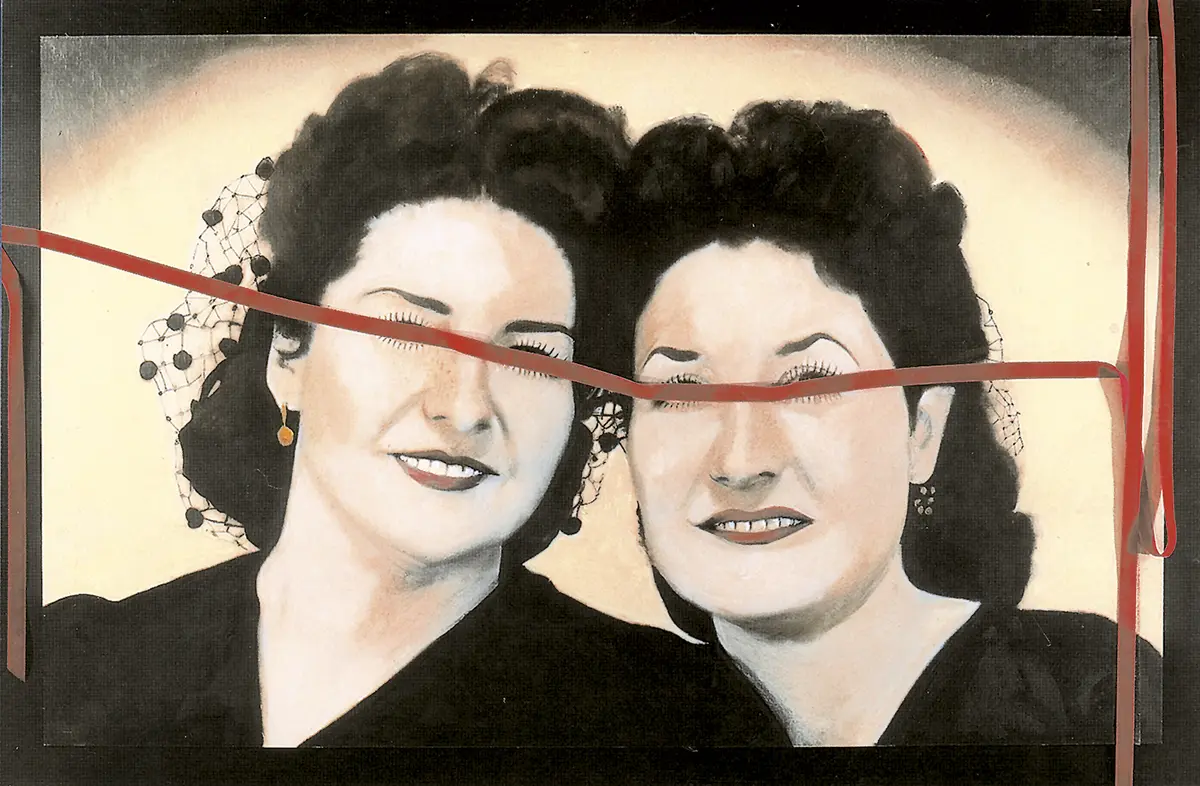
At Senda (Barcelona), Spain’s Chema Alvargonzález explored the idea of the city through a series of open suitcases in which photographs could be seen through their reflections in mirrors. Meanwhile, Israeli photographer Adi Nes (1966) offered a highly stylized and highly symbolic vision of his country’s armed forces in his La Cène, shown by the Dvir Gallery of Tel Aviv.
The shortage of Latin American artists and galleries was notorious at this FIAC. In terms of galleries, there were only three: Mexico’s OMR, Rio de Janeiro’s Jean Boghici, and Paris’s Yvonamor Palix. In terms of artists, there were few younger names, although we did find some of the better-known artists such as Lam (at Anton Weller, Marwan Hoss, and Nathalie Seroussi), Matta (at Claude Bernard, Gallerie de France, and Teresa Hold), plus Torres-García and Gurvich (at Guillermo de Osma, where we also found Matta and Lam). Or Le Parc, which presented Soto and Cruz-Díez as usual in the beautiful show by Denise René. Some newer artists were dispersed throughout, such as Kuitca and Vik Muniz at Sperone, or Carmen Mariscal from Mexico who had two photographs at Senda. Brazil’s Julio Villani had a mural video, photograph, and painting at Galerie 1900-2000, a very well-done parody of Lucio Fontana titled Las Fontanas, 2002, where the famous laceration is recreated mockingly with a white thread. There was an expressionistic Seguí in the carborundun prints of 2002, presented by the publishing house Fanal. Yvonamor Palix presented an individual show by Argentinean artist Pablo Reinoso, whose intellectual and formal explorations revolve around the representation of a chair, where he brings together his Breathers of the 1990s with a constructive architecture of sensoriality and transparency. His The Last Chair is particularly illustrative of his current ideas.
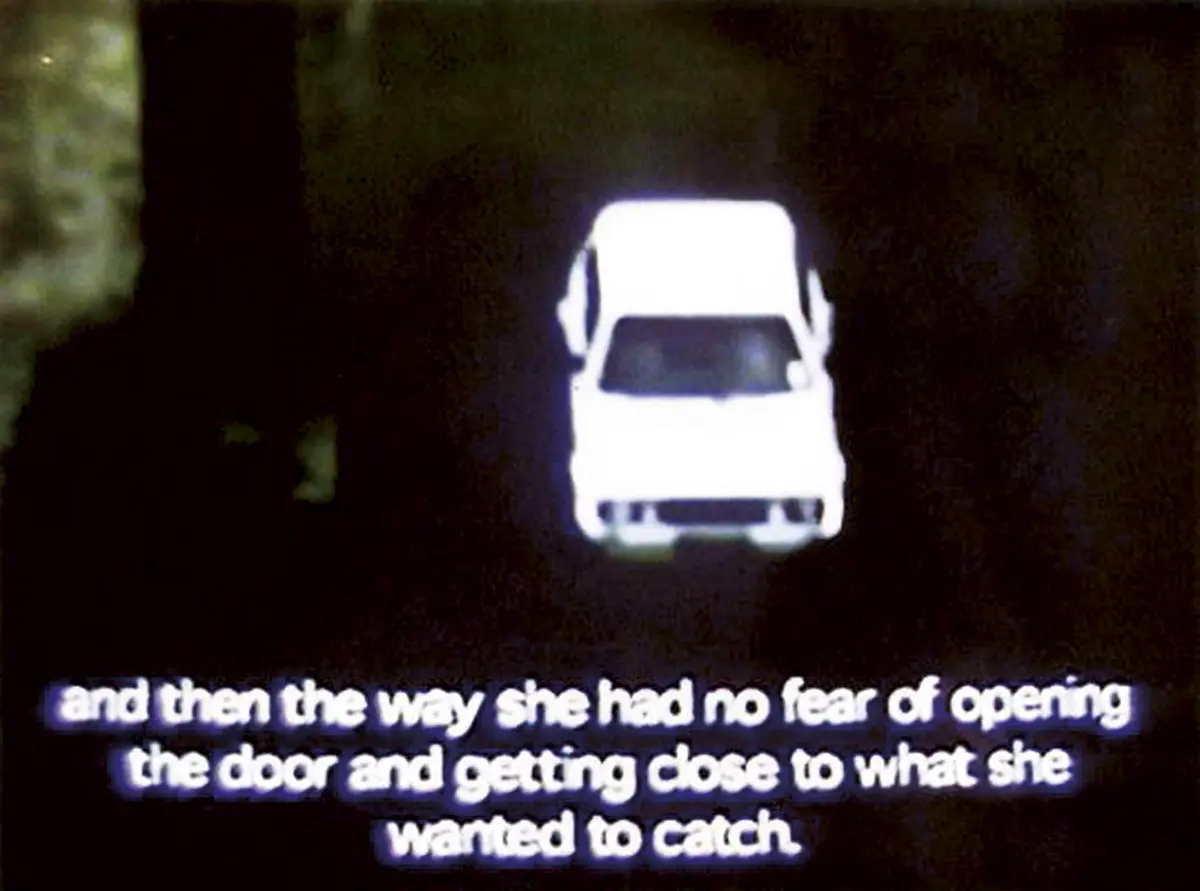
In the "Video-Cubicle" section, established in 2001, FIAC presented 12 videos of recent data, some shown for the first time here, none of them seen previously in France. For the Argentinean artist Sebastián Díaz Morales (1974), presented by Berlin’s Carlier Gebauer Gallery, video is an instrument for critique, a militant mode of expression geared towards the questioning of social ills. This artist explores, in The persecution of the white car, a narrative documentary realized for FIAC, the racial tensions arising in Durban, South Africa. Meanwhile, Vietnamese artist Nguyen Hatsushiba (1968), presented by Chantal Crousel, offered an evocation of current problems in Vietnam, with the highly allegorical images of rickshaw carts being pulled underwater. The title of his work is Memorial, project NHA trang, Vietnam towards the complex for the courageous, the curious, and the cowards. Swiss artist Pipilotti Rist’s Kleines Vorstadhirn: Small Suburb Brain (1999-2001) was presented by Hauser and Wirth; it is a work where the body and its perceptions are always present in the alternation of projected slides and video backgrounds. Beyond two video pioneers such as Belgium’s Marcel Broodthaers (1924-1976), presented by Erna Heces, and the US Dara Birnbaum, presented by Marian Goodman, most of these artists belong to the age of the moving image, which emerged towards the end of the 1960s and the early 1970s and promoted the crossing of boundaries —in art as well as in geography—. Their work is increasingly stronger, and it has gained notoriety in the international scene.
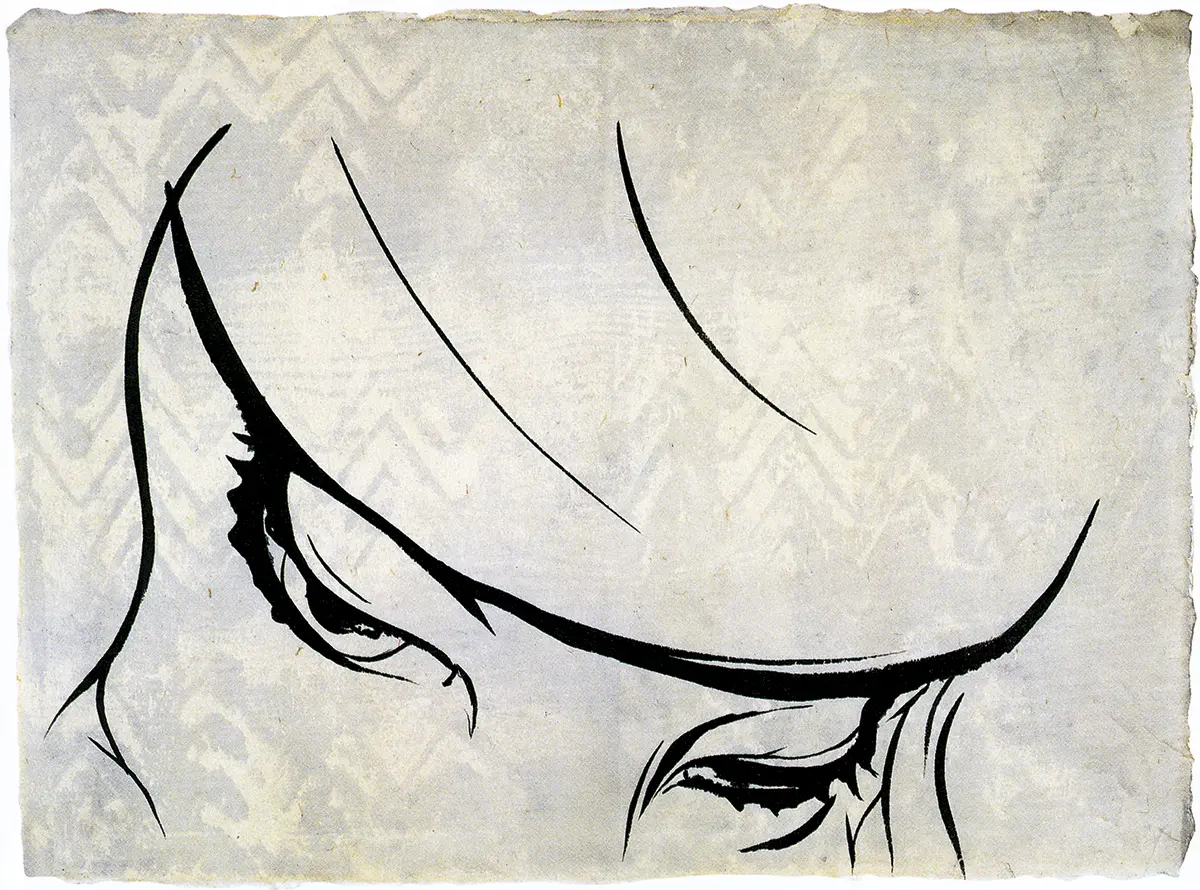
Finally, it remains to be said that this was a measured, peaceful FIAC, but also a rather monotonous one, with its emphasis on “safe” modern and contemporary values and its preoccupation with what amounts to a very French notion of “good taste”. Yet, a number of Asian and Anglo-Saxon artists, besides those already mentioned, such as Carmen Calvo, Chieh-Jen Chen, Ximo Lizama, and Adi Nes, captured our interest with very different lines of exploration. Chinese artist Wang Du, in Paris since 1990, was presented by the Baronian Francey Gallery. His piece was a five-piece installation with American President George Bush as the central figure. This installation, with components in a variety of sizes, in acrylic and polyester, was created on the basis of current events images in three dimensions, mixing irony, sarcasm, and humor in a warped conceptualization of contemporary realities. In the American artist Bonnie Seeman’s at-once realistic and kitsch objects of the series Biomorphic Relations (at OMR), we find quite the same elements of irony and warped representation. Yoshitaka Amano’s show at Michael Janssen Gallery and Leo Koening (New York-Cologne), the work of this Japanese video artist and Television producer grabbed our attention with its use of manga techniques, mixing drawings, tints, and canvases. Another artist from Asia, South Korea’s Yoon-Hee (who lives and works in Paris), presented almost monochrome (shades of white) sculptures that combined strength and sensibility, especially her group comprising three large aluminum pieces, Three Craters. Ci-Gong Gallery (Daegu, Korea) presented two more Korean artists, Lee Bae with a sober black and white painting, and Boo Moon with a video piece. At Gimpel Fils Gallery of London, we could appreciate the plastic and gestural strength of color as applied to the mobile space of British artist Gillian Ayres, especially the vital potency of her Rising of the Dog Star.
CHRISTINE FRÉROT
Art historian and critic, researcher, and teacher. School of Advanced Studies in the Social Sciences, Paris.