In Mexico, where the absence of official State interest in art collecting, the scarcity of galleries and exhibition spaces, and the dearth of specialized periodicals have all conspired to cause the dissolution of historical memory and the repetition of past errors, making it impossible to trace back artistic genealogies, the opportunity of seeing a show such as Ulises Carrión: Personal Worlds or Cultural Strategies? is truly precious and gratifying.
It is important to highlight here Martha Elión’s curatorial effort and research on Carrión’s work, because, although this artist’s work is central to any understanding of contemporary Mexican art, very few of his pieces are preserved in Mexico —and none of them is in a public collection.
Carrión started out as a literary man, but prodded by his curiosity and his skill, his work promptly expanded into other fields. With language as his primary material, Ulises Carrión took on the task of creating different narratives in different media, continuously seeking to promote reflection on language as a tool for human communication.
The show’s first section presents works and exercises in “mail art.” Here, books, printed matter, and typography are message and medium (work of art) at the same time. Among these projects, we find Definitions of Art, 1977, which involved sending a letter asking the addressees for a one-sentence personal definition of art in response. Carrión’s mail art brought the traditional mail system to a new level, turning regular mail users into co-authors of the work of art.
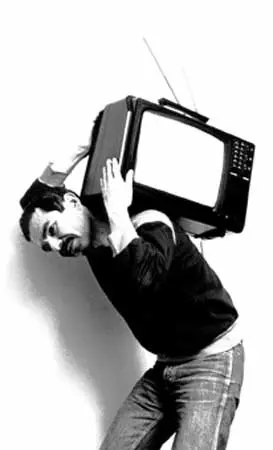
The next group of works includes Carrion’s pieces around mass media such as radio, TV, and video. The artist sought to provoke thoughts on the nature of the mass media and the way language is used by them.
In TV-Tonight-Video/Video de TV-Tonight (1987), Carrión projected in a monitor images taken from a variety of television programs, creating a visual narrative that reflects, firstly, on the issue of communicative freedom and, secondly, on television’s manipulation of images.
TV-Tonight-Video/Video de TV-Tonight seeks to clarify the differences between art, life, and reality, while at the same time elaborating on the idea of objectuality in art. Carrión says emphatically that art is “a sign, a function, not an object.” Through this piece, dating from the second half of the 1980s, just as video clips reached the climax of their popularity, the artist explores the differences between television and video: “Reality is television’s basic material”, “video borrows everything from TV, but it is freer”.
Threesome and Boleros, 1983 is a sound work organized around a narrative construction similar to what we could hear in a radio program —in fact, we hear it through an old radio. Here Carrión traces the genealogy of the bolero. Reflecting on significant figures in the history of this musical genre, such as Agustín Lara and Toña La Negra, Carrión says that “in boleros, the world is only described allegorically.”
One of the most interesting pieces in this show is Lilia Prado Superstar (1984), where Carrión attempted to “transfer a celebrity from one specific culture into a culture with completely different values.” Carrión organized a festival of Lilia Prado’s film work, to be held in Amsterdam. Prado was a figure of Mexican cinema but is scarcely known outside her country; in showing some of her films, including one directed by Luis Buñuel, Carrión wanted to provoke a sort of “Lilia Prado Fever” in Amsterdam and to jump-start a debate on multiculturalism. Prado’s visit to the Dutch capital was noted in newspapers, and several critics commented on Mexican cinema and its star system, but the debate never took off, since (as Claudio Goulart explains in the text that accompanies the piece) the Dutch public did not know how to react to the whole intervention. Lilia Prado Superstar records Carrión's efforts to convince the diva to travel to The Netherlands and his research of Prado’s filmography, ending with images of the Prado’s arrival in Amsterdam and a tribute she receives in one of the city’s theaters.
Despite being almost 20 years old, Lilia Prado Superstar is unusually current —something we don’t often find in contemporary art, which tends to come with very short expiration dates. In very specific ways, Carrión’s piece touches on the multicultural debates of the 1990s and of today.
This show reveals Ulises Carrión as an artist who worried about the imposition of new media on our daily lives, and the changes this would mean for human perception and the essence of humanity. It also shows him as a visionary, an artist who was way beyond his time, and one we would benefit from revisiting now.
ANA ELENA MALLET