Brazil’s institutional circuit has been well-stocked with surprises in recent years. Many of these surprises have been negative (the delays in the São Paulo Biennial and the erratic behavior of many Paulista institutions), but the first Ceará America Biennial, sponsored by the state government of Ceará at a cost of US$1 million, qualifies as a very positive surprise. One tends to regard new biennials with reservation, and they are inclined to fall back on an instinctive bureaucratism; the Ceará event, however, disproved both assumptions.
Taking their clue from a concept developed by Joaquín Torres-García (the Uruguayan artist’s famous drawing of an upside-down Western Hemisphere, El Norte y el Sur) to name the event De Ponta-cabeça (Upside-down), curator Joan Hoet and his adjunct Philippe Van Cauteren, both from Belgium, took into account geographic and institutional specificities in order to address an agenda centered on geopolitical issues and on the renovation of artistic circuits. Van Cauteren traveled the hemisphere over a period of six months, ultimately selecting forty-five artists to engage in dialogue with a very touristy city of the Brazilian northeast. Fortaleza, the capital of the state of Ceará, is marked by a gaping social abyss that separates its affluent seashore from the misery of its interior and peripheral neighborhoods. “It is as if the city had a double existence,” Van Cauteren writes in his presentation text.
With the intention of questioning the North’s hegemony from that point of view (and being European), the Biennial gathered Brazilian artists that are (with some exceptions) little known in the São Paulo-Rio axis. Similarly, representatives from the United States and Latin America were selected mostly from the ranks of the up-and-coming, which made for a very refreshing exhibition. Many of the pieces on display were created specifically for the Biennial, which also sought to expand the boundaries of what constituted the exhibition space, spreading over a museum, an old office building, and two large sheds that belonged to a railroad company. This selection is a sort of counterpoint to, for instance, the São Paulo Biennial, which has a space in the same building.
Those works that needed a “white cube” to be most appreciated were on display at the state-managed Contemporary Art Museum, in the Centro Dragón de Mar. It was the weakest space in the Biennial, starting with the building’s horrid architecture, but it held a number of interesting pieces. Summer Garden (all the works are dated 2002), an installation by Sergio Vega of the United States, was mounted at the museum’s entrance and functioned as a critical initiation to Latin American issues. It carried a particularly ironic meaning in this Biennial. Small images and texts on the walls alluded to New World stereotypes—Ruben’s and Titian’s renditions of Adam and Eve, Margaret Mee’s plants, an American Airlines billboard showing ararás, and fragments from the writings of Brazilian critic Sérgio Buarque de Hollanda, among other things. Covering this Latino tableaux we found tins of potted palm leaves; in order to see the images and read the texts, viewers had to push the vegetation apart with their hands. The installation makes reference to the colonizing gesture and its contemporary manifestations, adopting site-specific characteristics that reflected the Brazilian northeast, for instance, the region’s prosperous sex-tourism industry, which attracts many people in search of stereotypes.
Other works shown in the museum revisit the topic of the city and its organization. Utopian visions dominate both U.S. artist Shirley Tese’s installation of complex urban structures in monochrome polyurethane, which transform the city into an intimate phenomenon, and the video presented by the Rio-based duo of Rosana Ricalde and Felipe Barbosa, in which the artists appear playing a game of eenie-meenie-minie-moe amid rush-hour traffic at a busy intersection. Undoubtedly among the best works presented were the installations by Paulo Climachauska, from Brazil, and Jorge Macchi, from Argentina. Macchi showed Feu d'Artifice, a sophisticated game of shadows and light with textures on a wall, all in reference to the opposition of visibility and illusion, intention and accident, fiction, and reality. Climachauska also used the wall for his Profundo, an installation of large drawings created with abacus beads, a reference to the mechanics of accumulation in a capitalist economy. Climachauska’s work is close to formalism and to narrative, unusual in an artistic context such as Brazil’s where those categories generally are kept apart.
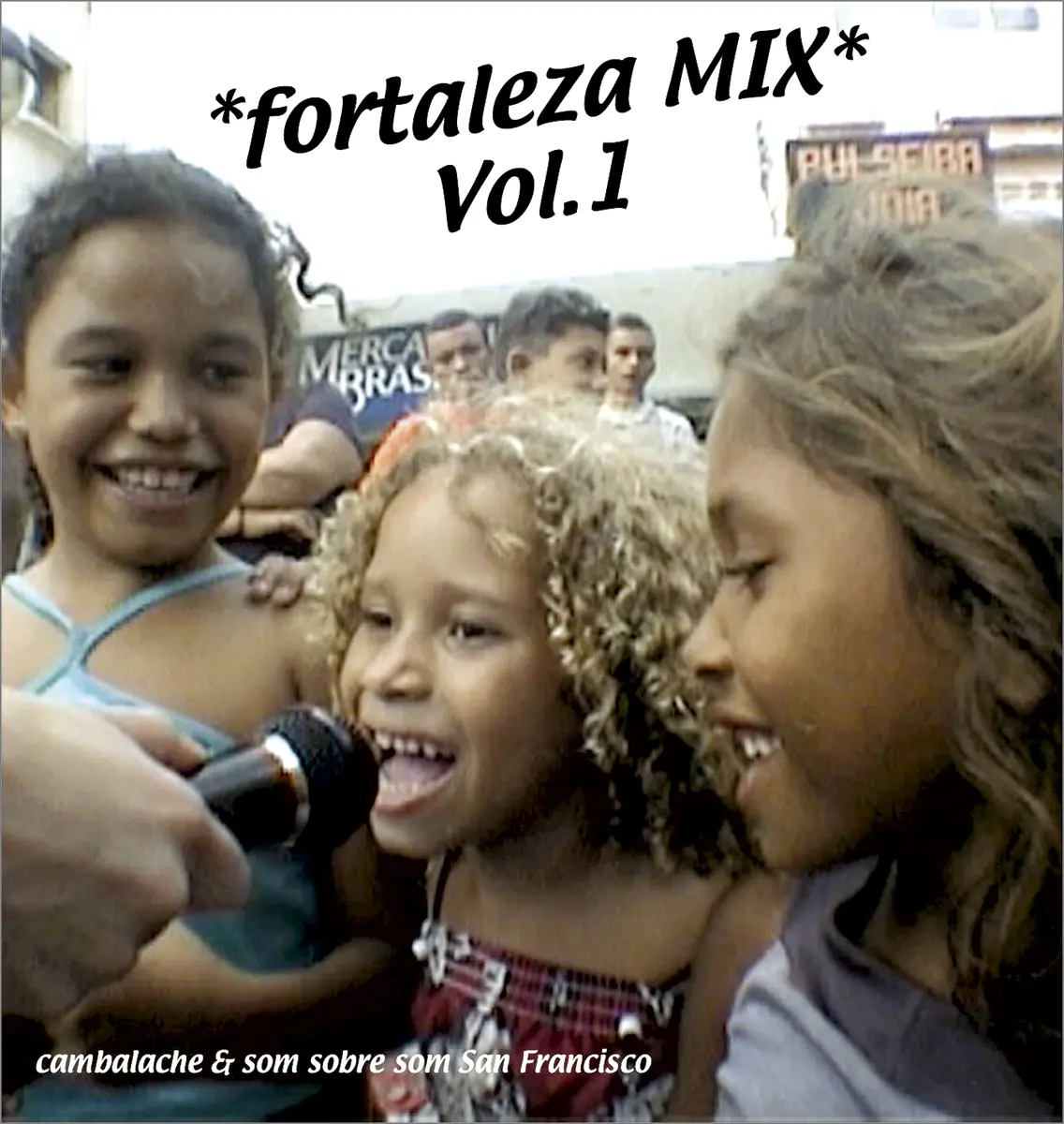
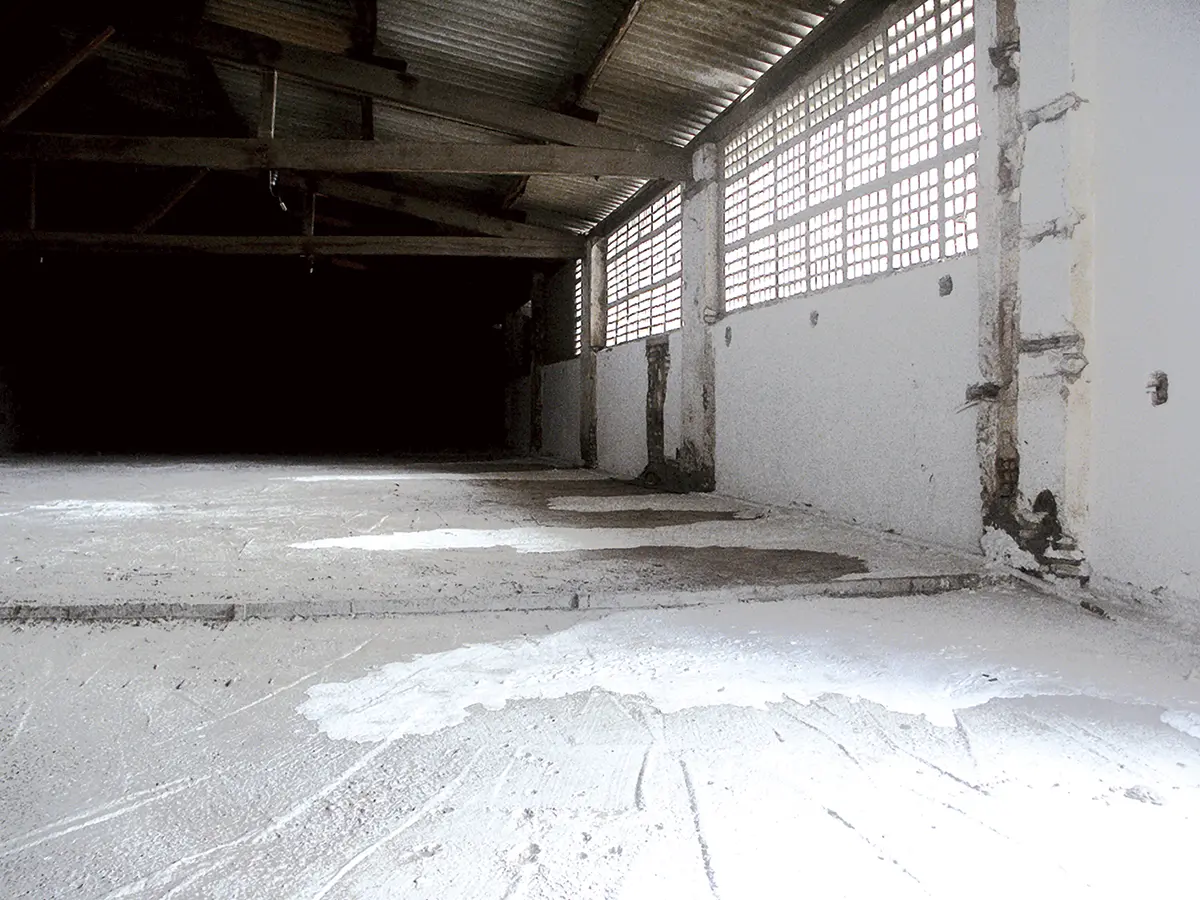
The Boris Fréres house, a nineteenth-century building now occupied by import-export offices, was the most challenging of the Biennial spaces, and some of the most disquieting works on exhibit were located there. Among them was the Fortaleza Mix project by Colectivo Cambalache, from Colombia. This collaborative work featured Chico, a traveling DJ who went around Fortaleza’s streets with a little musical cart and asked people to sing and play on his improvised sound system. The entire project was recorded on four CDs, which were reproduced together with videos and other materials. The result is a quilt-like work about the role of popular music in the dynamics of the city and the country. In the same building, Ceará artist Jared Domício presented his installation Lugar soluble (Soluble Place), a somewhat formalistic piece where the white walls of a hot attic appear to “melt” thanks to the illusion created by white paint stains on the floor. The metaphor is that of the dissolution of the “white cube,” ironically caused by the effect of heat in the extremely hot northeast region of Brazil.
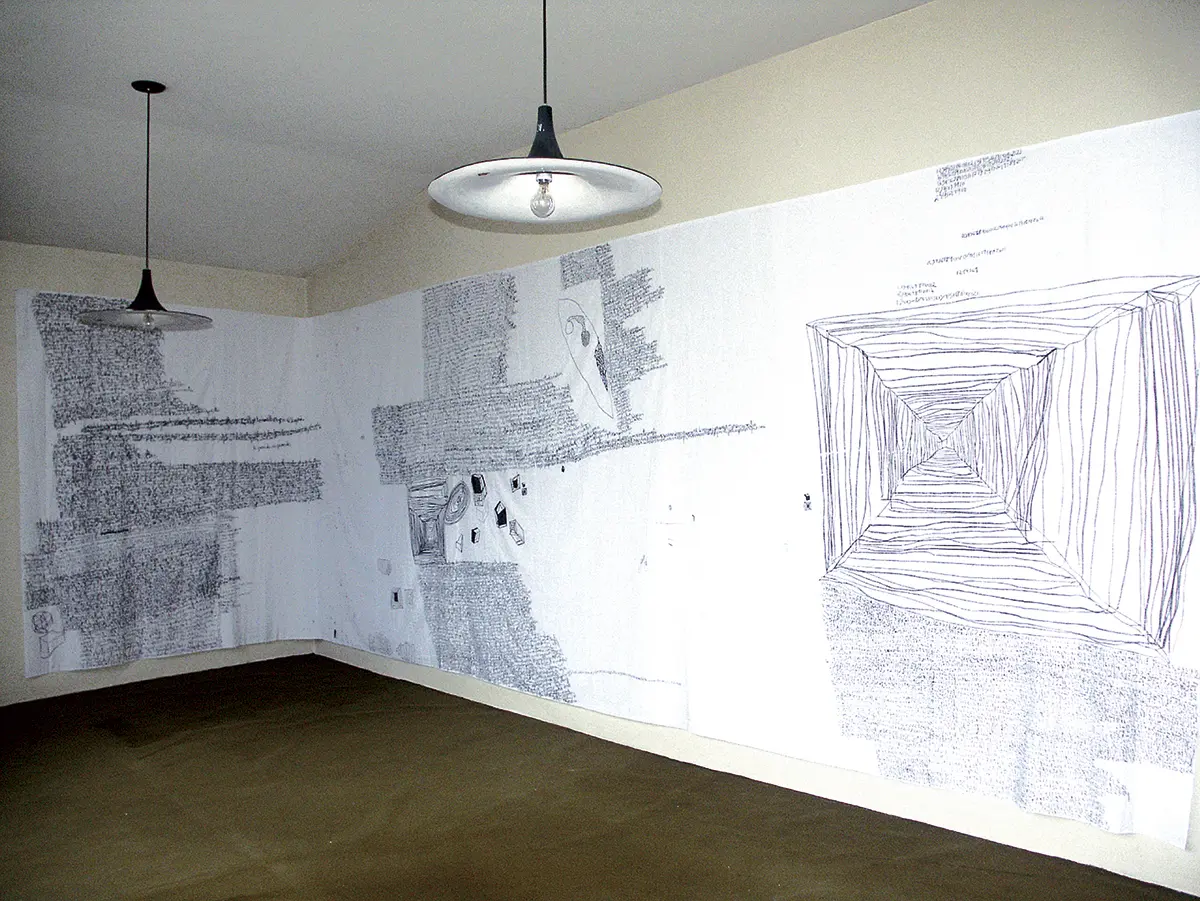
Exploring the oppositions of idleness/tourism and work/introspection, two of the Biennial central themes, Paraguayan artist Paola Parcerisa exhibited two photographs in one of the old railroad sheds, creating a situation of cultural contraband with a game of mirrors. In her images, two visitors held up mirrors that reflected a seascape back into the city’s workspaces (the sheds). Drawings by Brazilian artist Adrianne Gallinari were placed on the walls of the Biennial’s three spaces. They referred to private universes and complex symbologies, diluting the distinction between the figurative and the abstract, between text and image, and put us in mind of Mallarmé and other artists who questioned the distinction between written and visual poetry.
One of the Biennial’s most successful works was presented by Mexico’s Erik Beltrán, who plastered the walls of Fortaleza with signs that appropriated images published on the cover of local newspapers over the period prior to President Lula’s inauguration. To these images, printed the same day they were published, Beltrán added speech balloons like those of a comic, which were left blank. Viewers were free to write speeches for the different political figures depicted, with results that were often hilarious and that always bore witness to the people’s engagement with politics, even through the mediation of the work of art.
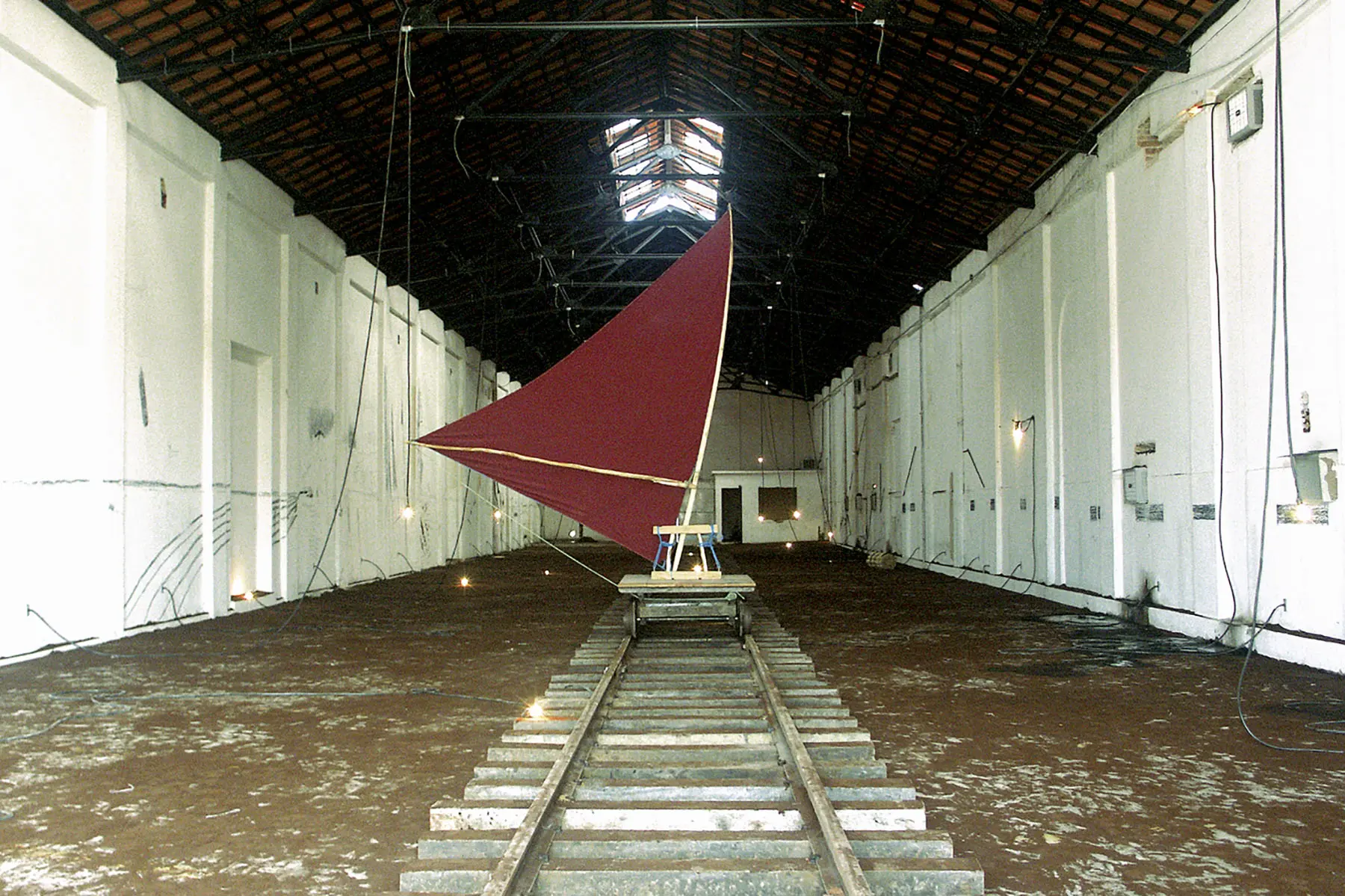
Finally, special mention should be made of Artur Barrio’s work. A Portuguese artist living in Brazil, Barrio’s installation took over one of the old railroad sheds in its entirety, about one thousand square meters. The installation was created with coffee dust, incandescent lamps, and texts written on the wall of a long wagon that cut over the rail. Over the rail, the artist placed a jangada, a type of boat typical of Ceará that was specially outfitted with wheels for the occasion and its sails painted red. Barrio was the Biennial’s only veteran artist, and his presence, as well as his reference to an icon of the region’s economy, had a highly symbolic character. He is an artist known for his commitment to political contestation and to a radical subjectivity, precisely the themes that the Biennial sought to bring to Fortaleza, in the process finding its identity and its relevance for the city and for the calendar of international Biennials.
RODRIGO MOURA