
Prepared by Dr. Hans-Michael Herzog, curator of Daros Latin America, the show offers an ample selection of works by nine Latin American photographers, from the Collection’s catalog of recent acquisitions.
Conveniently located on Limmats–Trasse Street in the city’s manufacturing district, Daros Services shares the industrial-looking Löwenbräu building with the Kunsthalle, the Migros Museum of Contemporary Art, and some of Zurich’s best ultra-contemporary art galleries. Daros Services1 impressive collection is divided into three sections: The Daros Collection, Daros Contemporary, and Daros Latin America. The part of the collection devoted to Latin America was begun in the year 2000, and, according to the curators guided by an open and insightful sense of selectiveness and has sought to avoid the pitfalls of a folkloric or “ethnic” look at Latin America (geographically defined as the countries between Mexico and Tierra del Fuego). Today, Daros Latin America includes works by more than fifty artists and it is poised for expansion and in-depth development, embracing the totality of the region’s culture.
Dr. Herzog, the exhibition’s curator, and Ruth Schmidheiny explain the initial concept for La mirada (The Gaze): “The gaze here does not refer only to that of the camera and that of the photographed subjects; it includes the way the photographer sees art itself, and the way we, as Europeans, see Latin American art."2 La mirada, then, spans the diversity of photographic practices in Latin America. Although to speak of “Latin American photography” is inherently problematic, the curatorial concept coheres with the collection’s general perspective. The point of departure is an interest in generating, through the diversity of the selection, a dialogue that transcends the idea of a dominant stereotype of Latin American. Thus, the selection ranges from documentary works to the representation or construction of images whose final result engages the very definition of photography. There is, however, a subtle unifying thread between the works selected: photography is no longer the record of a referent taken from reality but is also the representation, mise-en-scene, ritual, and deconstruction of the image. Even in the more documentary-like photographs, reality per se does not exist; what is there is a utilization of space, of landscapes, and of symbolic representations. Photography is no longer employed to document the immediacy of the moment— as it was so often in the past—in the process of stabilizing an image of the black or Indian Latin America. Cartier-Bresson’s “decisive moment” has ceased to be a paradigm.
The show was presented in two sections, separating the nine artists into two groups. This division allowed the viewer to ponder at leisure the selection of works by each photographer. The curator decided on an in-depth presentation of the photographers’ oeuvre and placed them individually in independent rooms. La mirada thus worked as several individual exhibitions within a larger setting. The show’s first section, presented from October 25, 2002, to January 4, 2003, displayed works by Vik Muniz, Marta María Pérez Bravo, Rosângela Rennó, Miguel Rio Branco, and Maruch Santiz Gómez. In the second section, from January 17 to March 29, Mario Cravo Neto, Paz Errázuriz, Luis González Palma, and Manuel Piña shared Daros Services’ first floor. The show was accompanied by an impressive catalog in four languages (Spanish, Portuguese, English, and German). Like the exhibition, the catalog was divided into two books. The first book, Catálogo, introduces the show with a text by Dr. Herzog and Ms. Schmidheiny, excellent reproductions of the works by the nine artists, an essay by David Levi Strauss, and finally the list of works and biographical notes for the artists. The second book, Conversaciones, gathers a series of interviews with the artists by Dr. Herzog. The interviews are unusually open and honest, and give the artists latitude to comment on their own work, on artistic issues in general, and on Latin American topics in a colloquial, free-style manner.
In the works of the five artists grouped in the first section, the gaze of the photographed subject does not appear directly; that is, as viewers, we are not confronted with the eyes of another subject. What is present in the photograph’s image, its mise-en-scene, or its deconstruction, is the artist’s gaze. Such is the case in the works of Muniz, Pérez Bravo, Rio Branco, and Santiz Gómez; Rennó appropriates already existing images.
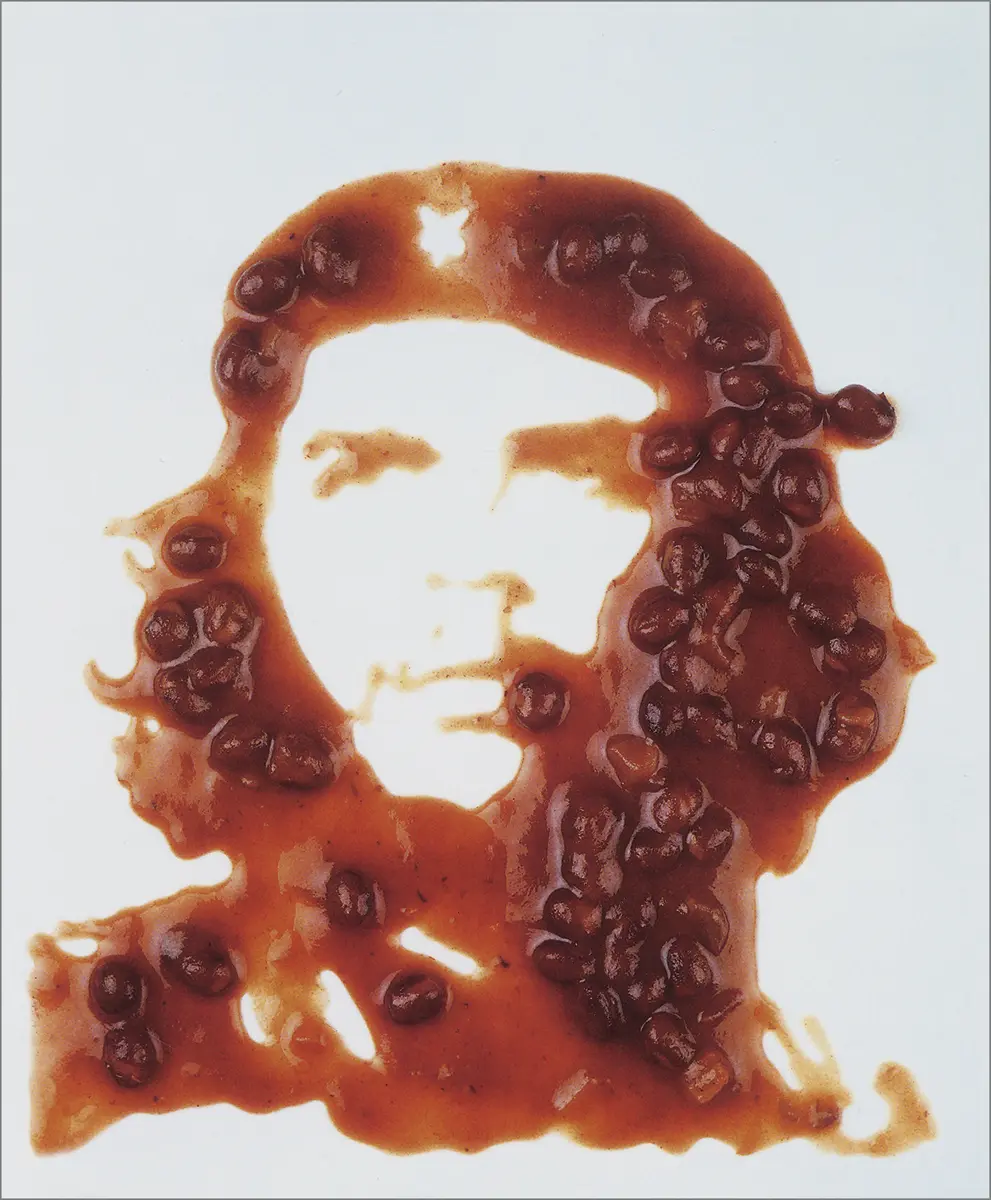
The collection acquired examples of well-known series by Vik Muniz (Brazil, 1961): Pictures of Thread 1995, Pictures of Chocolate, and Pictures of Dust 2000. Muniz’s provocative images are immediately fascinating. A painter and sculptor before becoming a photographer, Muniz brings forth a pictorial gaze in his representations. Here, photography is organized strictly to capture an ephemeral three-dimensional moment on the paper’s two dimensions, using the traditional techniques of development and printing. What runs against the grain of traditional photography, however, is the reinvention of images on the basis of already existing representations from the worlds of art and advertising, using heterodox materials such as marinara sauce, black bean soup, chocolate, dust, and thread. The key to Muniz’s strategy resides in his fusion of drawing and photography, in the collision of diverse media with the pairing of existing things in order to create new ones.3
Sigmund, 1997, is one of Muniz’s portraits in chocolate. The work refers not only to a well-known photograph of Freud but also to Pollock’s expressionist gestures on the pictorial surface. This treatment, and the very skillful work with the gradation of chocolate, gives the image an almost tactile pictorial quality. A similar effect is achieved in Che, 2000. Che Guevara’s iconic, romantic visage is made edible through a drawing in bean soup. The image has a realistic tone, but it is almost an eschatological realism. In the series Pictures of Thread, the artist “copies” landscapes by Courbet and Corot. The landscape is reproduced through a jumble of threads piled on each other to recreate the effect of light and shadow of the originals; the density of the colors patch in the representation of geography. The titles are based on the length of thread used: 12,000 yards or 16,000 yards, as if the amount of material on the surface, or the amount of manual labor could determine the work’s value. A whole setting is carefully built with intertwined threads perceived as a second register, in this case, a photographic register. In his series Pictures of Dust, Muniz employs a similar but minimalist resource. Muniz uses the dust accumulated on artworks and recreates them. His “trick” gives us back—in perceptual terms—the photograph of a pictorial creation, which ends up being a representation of photography, painting, and drawing.
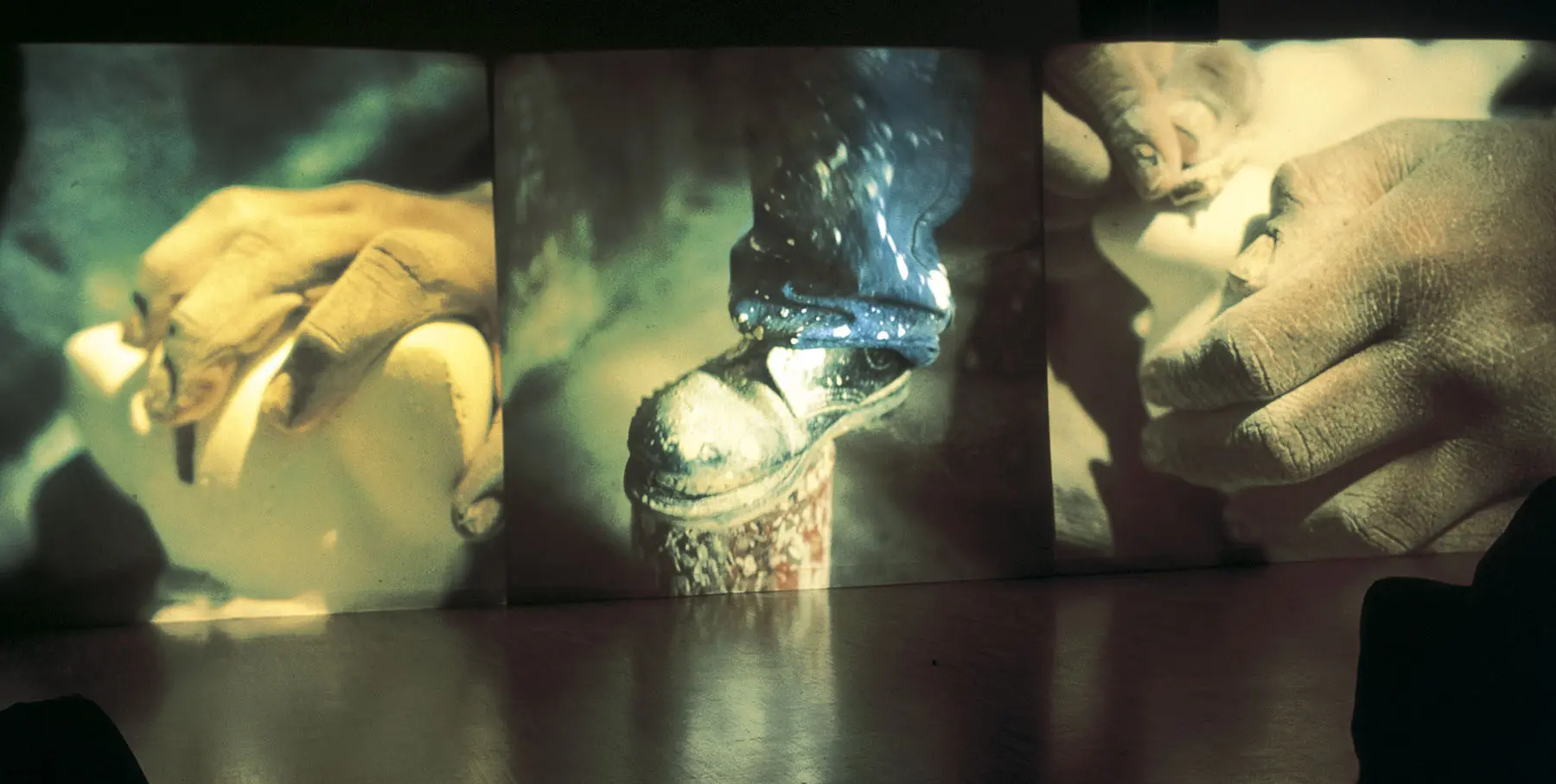
A multimedia installation was selected for the show from the works of Miguel Rio Branco (born in Las Palmas de Gran Canaria, 1946: lives and works in Brazil): Entre los ojos, el desierto (Between the Eyes, the Desert). It comprises six continuous projections on a wall of 486 color slides, with light and background music composed by the artist Ronaldo Tapajos. Created for inSITE 97—a project on the conflicted San Diego/Tijuana border—this extremely complex work transcends the purpose of the original project, addressing the more general issue of communication. The poetry of Entre los ojos, el desierto extends beyond what can happen with the gaze of two people to communicative isolation and the desert as a symbolic landscape. These photographs were made by Rio Branco in different desert locations, sometimes without any point of interest, and incorporate banal images of objects that fall under our own idle gaze, as well as other objects that we explore obsessively. The many fragments are linked to each other in a continuous sequence that flows in front of our eyes like a film. The images are organized so that a landscape appears parallel to the detail of a human or a horse’s eye, fragments of a body, of a place, or of an object. The photographic register is that of a gaze that moves around the details of objects, and a subjective perception of reality.
Entre los ojos, el desierto is a multiplicity of perspectives, the sublimated association of different projections; meaning is generated by the insistence on the interconnection and recovery of landscapes or textures. These visual relationships, the transitory nature of the moment in time in which we perceive them, and the intimate mood fostered by the darkened room, create an atmosphere of unconnected, fragmentary sensations, like the images that populate memory and remembrance.
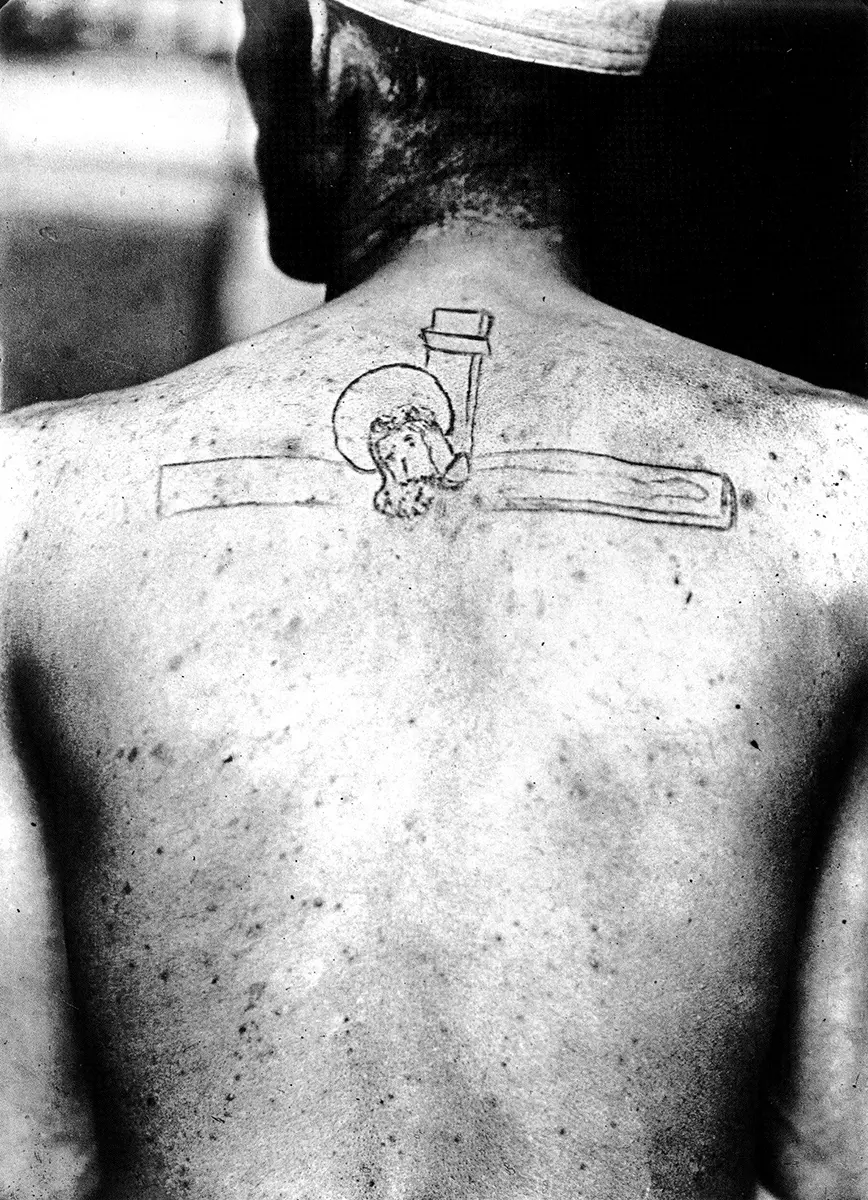
The recuperation of memories is also among the themes explored in the photographs by Rosângela Rennó (Brazil, 1962) that were selected for La mirada. Penitentiary Museum–Scar, 1997/1998 is a black and white series of photographs of skin, a close look at the intimate body of an anonymous subject, of whom all we can perceive is a tattoo on a fragment of either the back or the chest. The series title and the subtle position of numbers on the frame of some of the photographs, place us immediately in the context of these identities. We are faced with Adolph Loos’s negative notion of the tattoo and its relation to crime.
This series of photographs does not reveal the date or the origin of the images. The question arises as to why some of the photographs appear marked, scratched, and even with stains that cover parts of the image. Taking into account Rennó’s strategy of appropriating images from anonymous history, such as those of a found family album, a second-hand photograph, or an old postcard bought in a flea market, we know that these images come from some sort of register.
Indeed, Penitentiary Museum–Scar is a selection of images from among 2,000 glass negatives found in the archives of a São Paulo corrections museum. Photography was used in this context to document the prisoners’ tattoos and body marks in order to better identify and control them. A complete database managed by the Criminal Bio-typology Service, “which followed a Late-Nineteenth Century Positivist theory of criminality and physiognomy."4 Rennó transferred these images to the computer and produced a digital Iris printout. The result is an amplification of the original photograph on the paper surface and the transformation of a tool used by the police for identification into a rather sensual image. The rugged surface of the drawn-on skin is anonymous for the viewer, yet it clearly identifies a specific individual. Rennó has salvaged these lost histories from the oblivion of time and social amnesia.
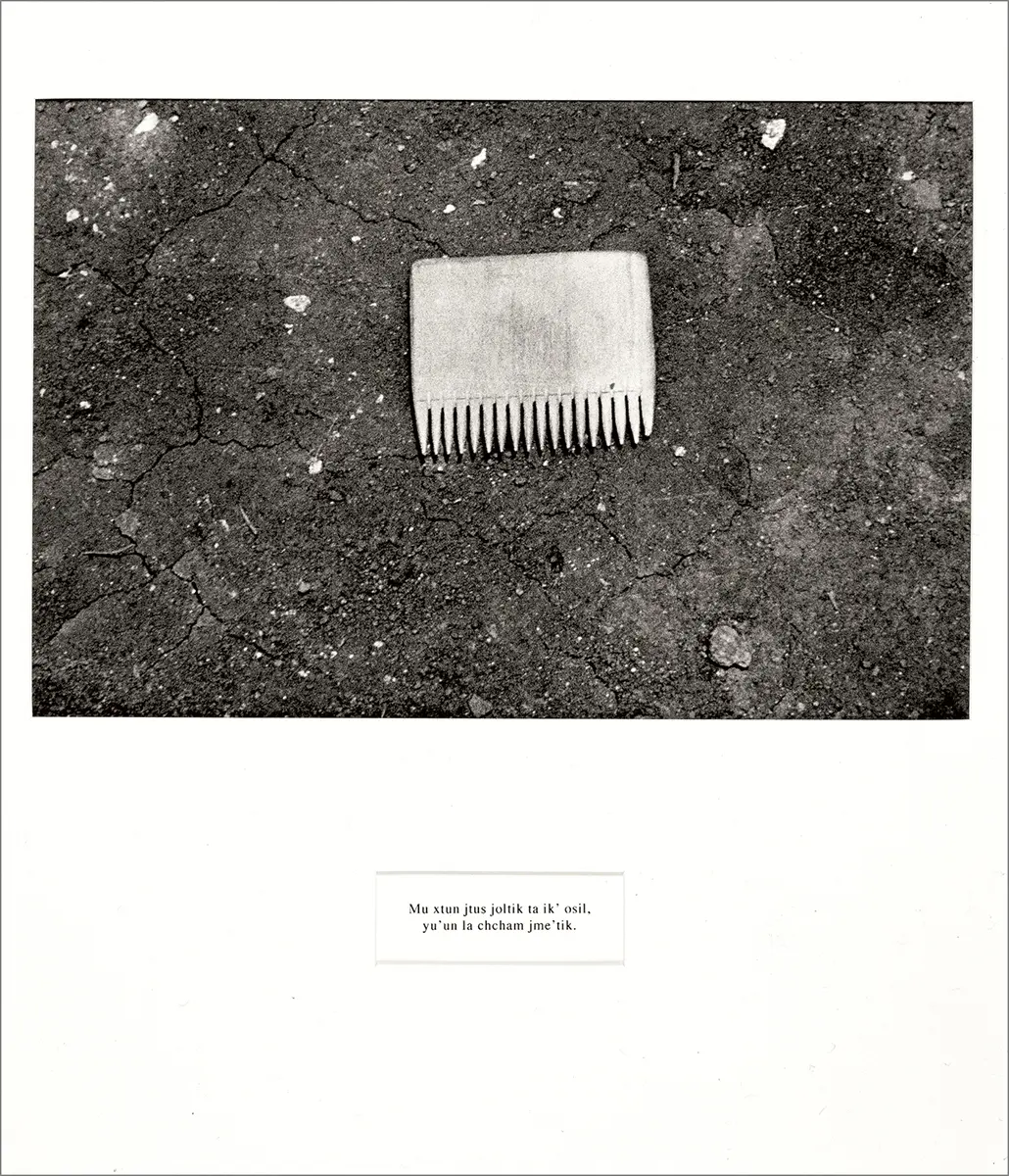
The themes of memory and the preservation of a cultural community’s beliefs are, similarly, what drives every work in progress by the young photographer Maruch Sántiz Gómez (Mexico, 1975). Combining texts and images, Sántiz Gómez’s series Creencias comprises a series of extraordinarily simple black and white photographs, usually in the same format (78 x 64 cm), showing a variety of objects, some posed on the ground and others in the context of a house’s interior or exterior. Each one of these photographs is accompanied by a text written in Tzotzil, the artist’s native language, as well as in Spanish. The texts were later translated into English. While the writings describe beliefs that the community has retained through its oral tradition since ancestral times, the photographs visualize them.
Sántiz Gómez, a Mayan Indian born in San Juan Chamula, in the state of Chiapas, Mexico, began working in black and white photography in 1993.5 Creencias began with a series of old sayings from her community’s oral tradition that the artist was intent on preserving; these were first put on paper and later used for the creation of images. As the project advanced, both processes were carried out simultaneously. Santiz Gómez’s naive and certainly anthropological gaze turns two “truths,” or belief systems into a paradigm of what is “real:” on the one hand, History as it is described and told, and on the other hand the real-world object that is used to make History visual. In one photograph we see a hand-sewing needle, with thread, lying on the ground; the text reads: “Avoid sewing at night because you could go blind even in your youth.” Another reads: “It is bad to comb your hair at night because it is said that your mother will die.” The simple image of a comb contrasts starkly with the darkened ground. This approach to photography, freed from cliché and historical reference, gives Santiz Gómez’s work a special freshness and is not out of place in a collection intended to introduce a variety of Latin American perspectives.
The sophisticated art of Marta María Pérez Bravo (Cuba, 1959) inhabits a similar world of alternative realities and beliefs. Pérez Bravo is represented in La mirada by works dating from the early 1990s to the year 2000. Her iconography introduces us to an exploration of the world of Afro-Cuban religious beliefs. For the Zurich public, these mysterious, highly symbolic images were perhaps rather cryptic; especially since the titles of the works are highly personal interpretations by the artist of her own experiences with the Yoruba tradition of Santería and Palo Monte in Cuba.
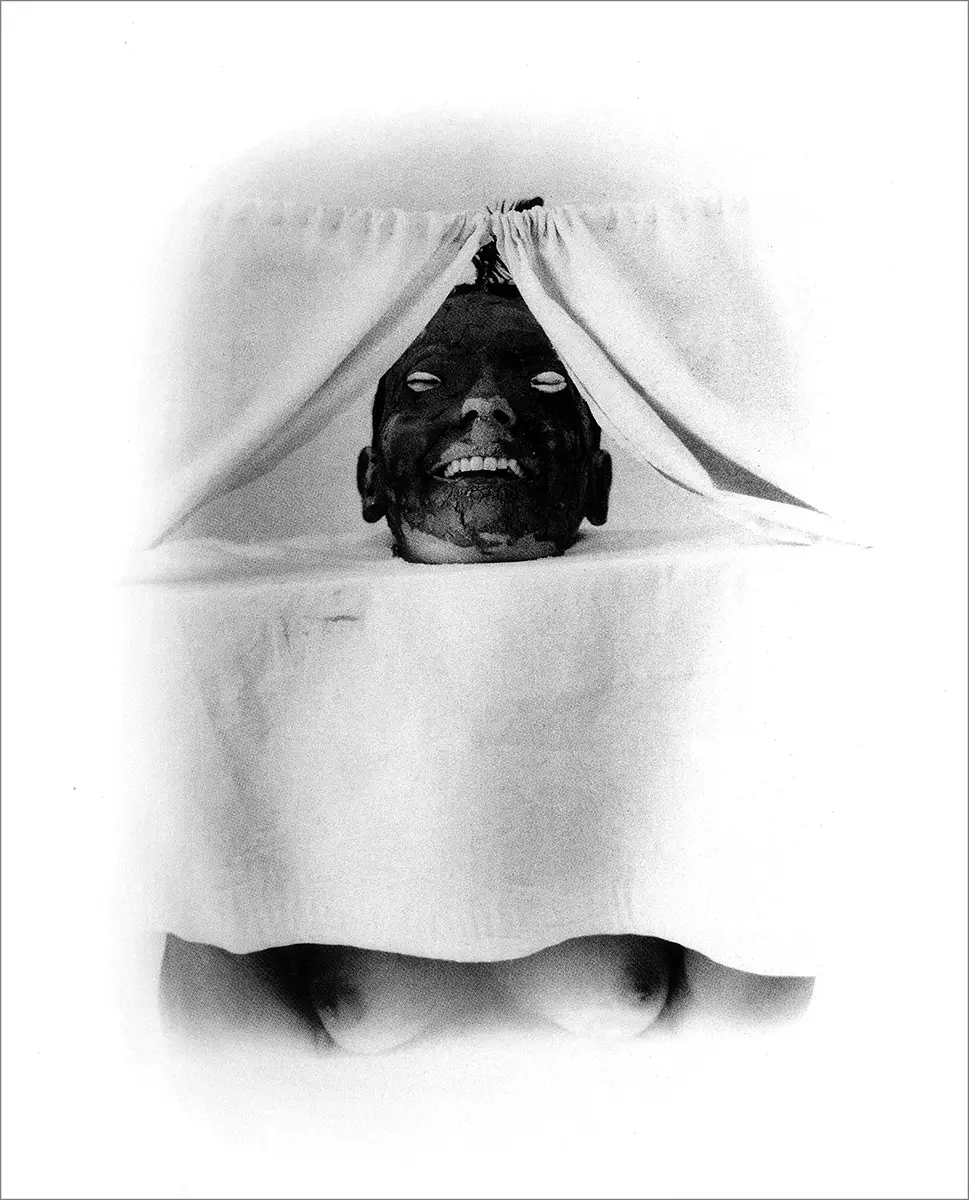
The use of the body as the space of ritual representation continues to dominate Pérez Bravo’s photography. The body is a support, object, and site for formulations and interpretations; it is doubly charged with materiality and spirituality. This abstract unity of the body, sometimes invisible, is what communicates with the viewer, like those objects and offerings left at the altarpiece of a religious entity (orisha). At times, a segment of the body is an extension of the object, as in Mbele (Knife) 2000, where the hand is a continuation of the blade. In Pérez Bravo’s work, with very few exceptions—such as Para la entrega, 1994— the identity of the face is barely visible. In Está en tus manos, 1995, a head on a table is completely transformed into the image of Eleguá. The body, absent and hidden under the altarpiece’s white cloth, seems completely unconnected to the mask that is the face.
Pérez Bravo has created a powerful visual identity through the way she produces images. Her figures, always in the center of the composition, appear suspended on a white background and assume an aspect of decontextualized, atemporal vignettes. Despite the fact that the image is always in black and white, the artist respects the original colors of the objects. In Santería, white means Obtalá. In her interview with Dr. Herzog, Pérez Bravo mentions these details, even indicating that the resulting image has not been subjected to any kind of manipulation, nor has it been placed under any special lighting.6
Manuel Piña (Cuba, 1958) is another Cuban artist in the show. His work, printed in monumental formats, opened the second section. With the exception of Piña’s black and white images, this section of the show emphasized the gaze of the photographed subject. In the works of González Palma, Cravo Neto, and Errázuriz we find the faces of individuals who look back and confront us from non-European backgrounds and contexts. Each of them has a place in an extended gallery of characters who seem to transcend the frozen space of the photograph in order to tell a story.
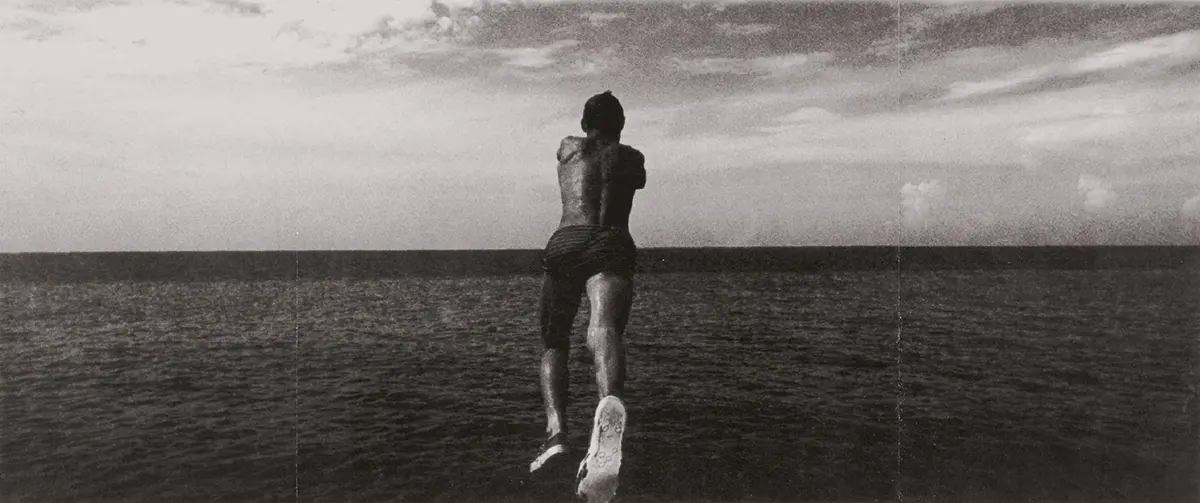
Manuel Piña delivers a narrative in which the absence of anecdotes and the omission of characters are balanced by the horizontal, repeated vision of the sea through Havana’s famous ocean-side walk, el malecón. Only in one of the photographs in the series, Las aguas baldías, 1992–1994, do we find a human character. It is an anonymous person at the waterfront, of whom we only see the back. The body seems suspended in mid-air, one foot towards the foreground as if jumping forward into the immense, close-up surf. The displacement of the individual by the presence of a single subject—the ocean—or the subject who faces the ocean, speaks to a code that will only be familiar to the people of Havana: a gaze that ignores the city and prefers to lose itself in the infinite horizon.
The malecón is a romantic image that one infallibly finds in picture books on Cuba and the mythical Havana. Here, however, the monochrome drama of its rendering functions as a metaphor for absence and silence. Sometimes the materiality of the malecón fades away and it becomes fused to the ocean. Corroded by the salt air and by the passage of time, stained by oil, and scratched by people, this malecón tells us a different, less romantic story.
Las aguas baldías is far removed from any documentary intention; the formality and the monochrome beauty of the three planes in which the photograph’s surface is divided eclipse the notion of documentary photography. In their abstraction, these works remind us of Sugimoto’s images of the seas. Yet in Piña formalism is a disquieting presence; it is not Sugimoto’s contemplative vision that we encounter here. It is, rather, a feeling of loneliness and absence, a disarming sensation of waiting before the vast expanse.
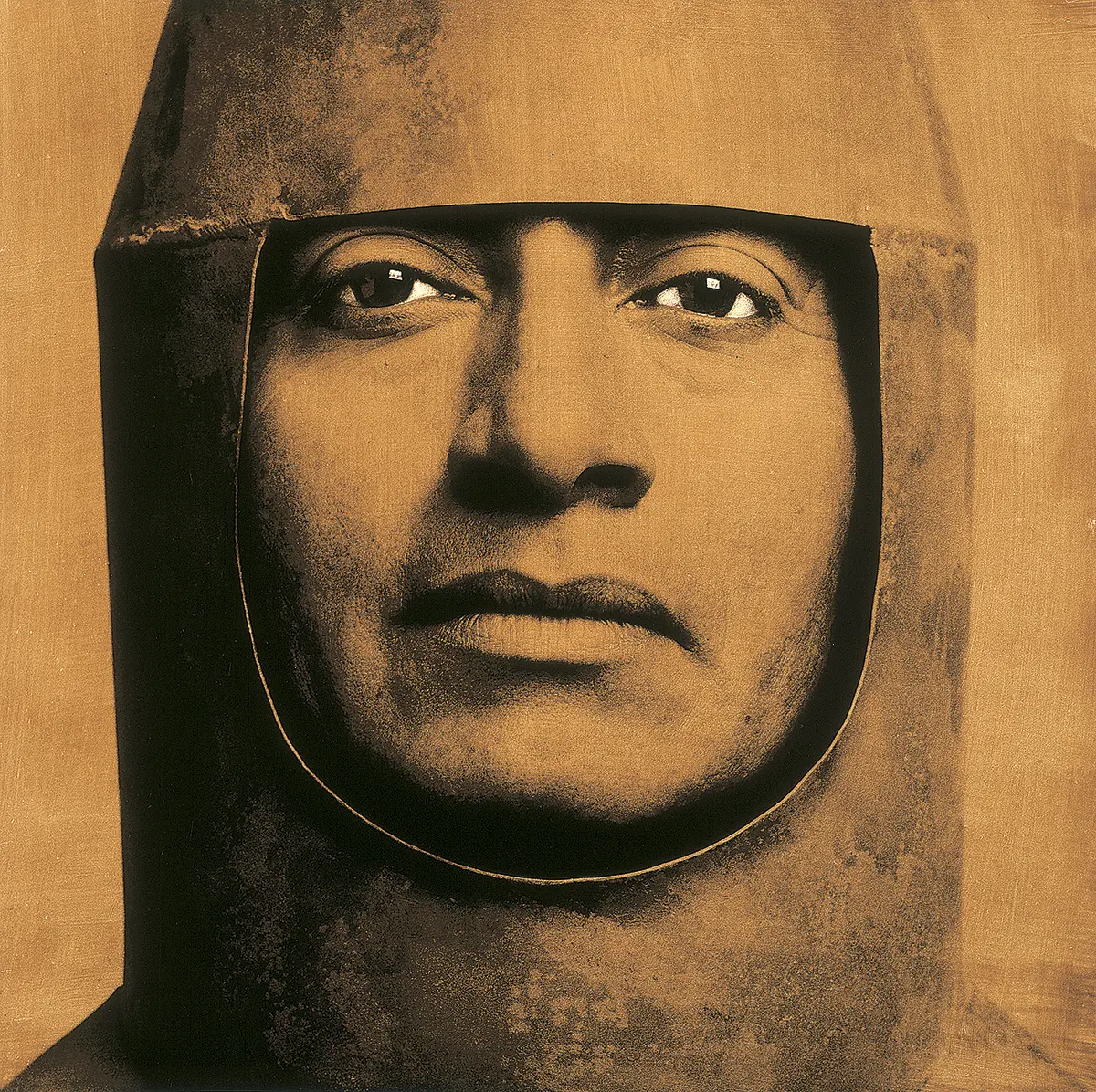
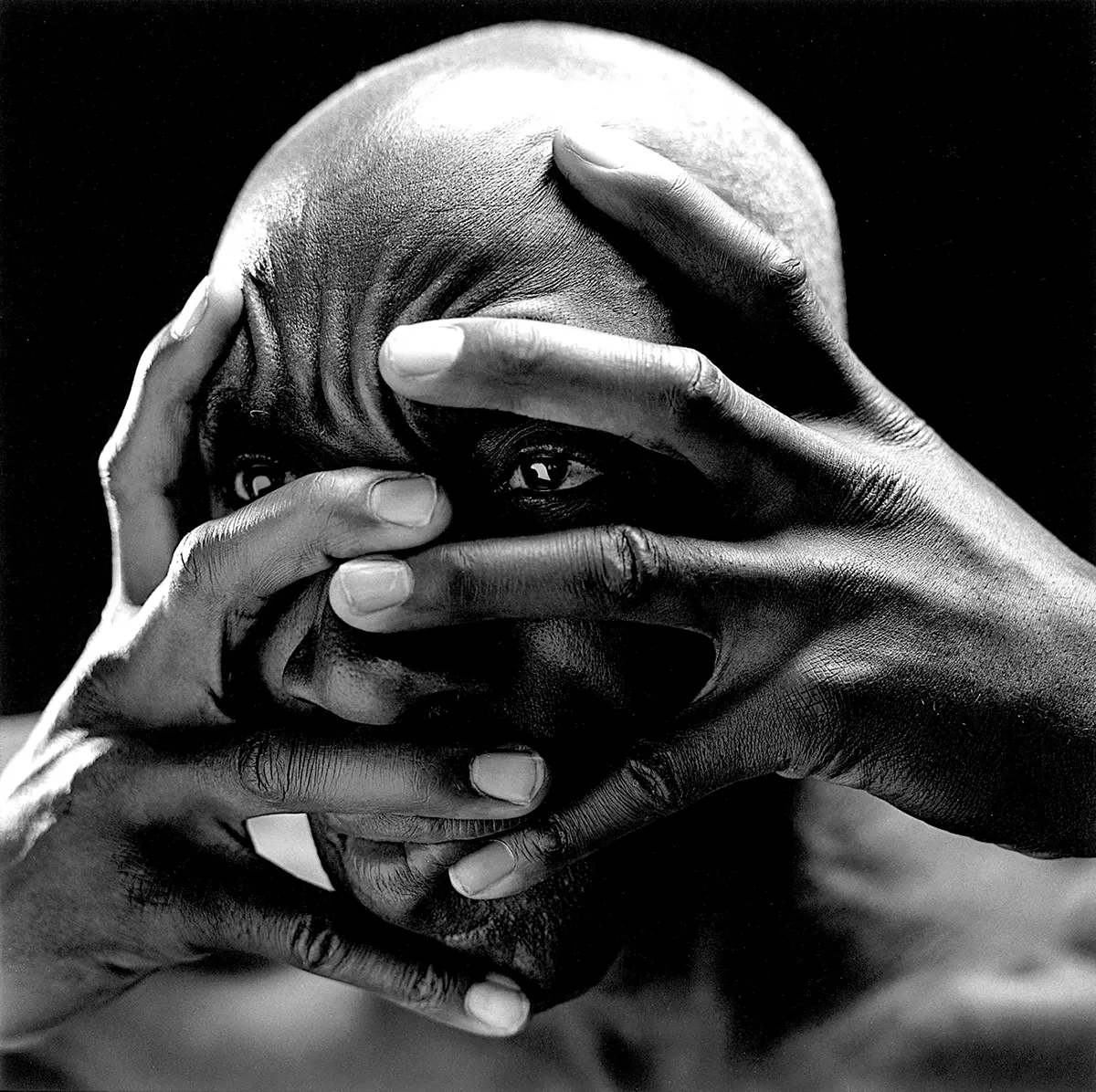
Mario Cravo Neto (Brazil, 1947) is without a doubt one of Latin America’s better-known photographers. His iconography is immediately recognizable. His portrait of Clyde Morgan, in 1994 was selected to represent the exhibition as a whole. In the room where Cravo Neto’s work was displayed, muted lighting helped create an atmosphere for the reading of his photographs as the documentation of ritual objects or scenes. Perhaps the intention was to heighten the contrast between the figure and the black background that is characteristic of almost all of Cravo Neto’s pieces selected for this show. Cravo Neto’s aesthetic is primarily dependent on exquisite work with the contrast between black, white, and gradations of gray; light and shadows; and the strange encounter of textures from two different realms: the inanimate and the animate.
With a background in Brazil’s rich mestizo culture, where ritual lives in the every day (just as it does in the case of Afro-Cuban religion), Cravo Neto finds transcendental meaning in the continuous interaction between humans, animals, and objects. The aesthetic reality he builds in his studio seeks beauty in these diverging contrasts. Cravo Neto uses photography in order to appropriate objects7 and he creates poetry in the displacement of objects from one context to another. By introducing a different nature or a presence in his portraits, as in Tinho con hueso, 1990, Carlinhos Brown como Esú, 1996, and Akira con la piedra de Shangó, 1992, he facilitates the encounter of the sacred or symbolic with our everyday lives.
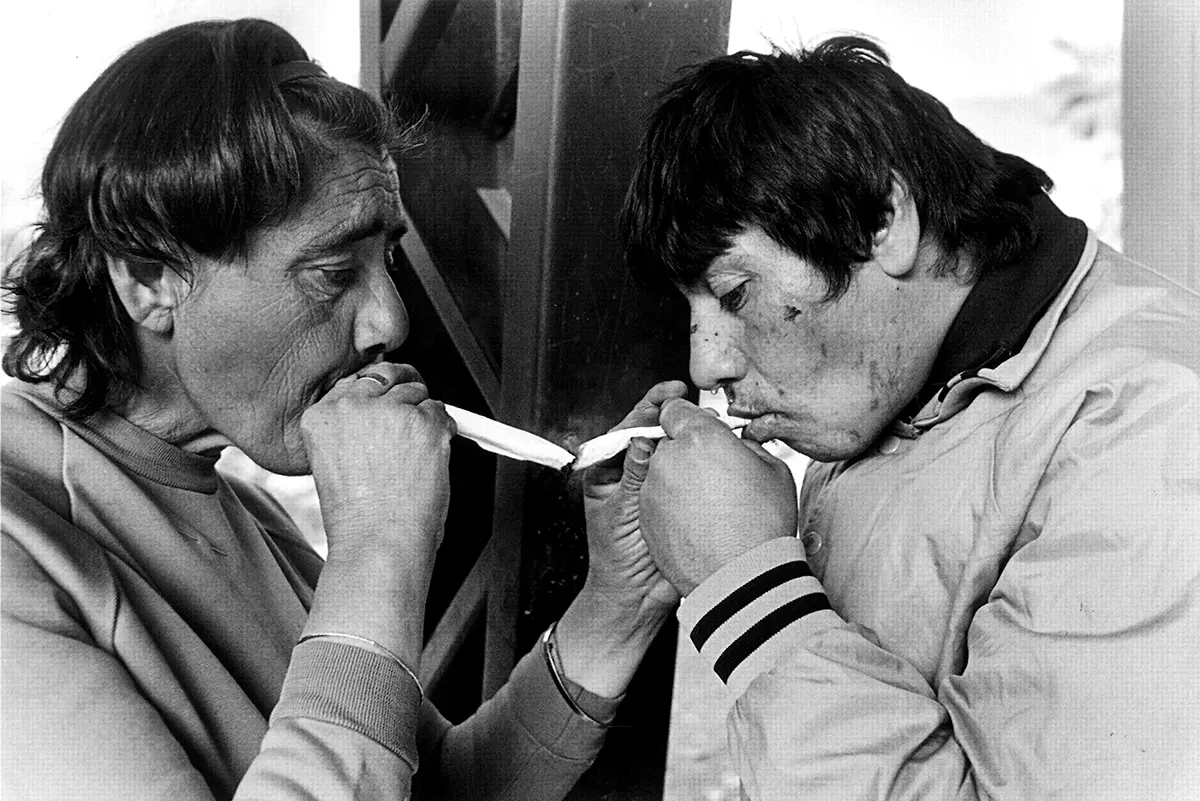
Paz Errázuriz (Chile, 1944) does not approach her subjects in this aesthetic manner in the seven series acquired by the Collection and amply displayed in two rooms. Like Rennó, Errázuriz is interested in uncovering the history and identity of marginal, stigmatized subjects in a society of exclusion. But in contrast to the Brazilian artist, Errázuriz does not explore collective memories through anonymous archives; she approaches her subjects through lived experience, sharing a certain intimacy with them. This approach becomes obvious in the gaze of her subjects. They regard us with the same familiarity with which they regard the photographer. In Miss Piggy 2, 1984, from the series Circo, a midget in drag presents a mask representing a character from popular culture. In El ángel blanco, from the series Los luchadores, a semi-nude, masked man poses with a thuggish attitude.
Using black and white and a repeated 30 x 40 cm format, Errázuriz seeks not only to give uniformity to her work but also to maintain control of the whole process of development and printing. At a formal level, the simplicity of black and white helps her avoid the danger of excessive pathos in images that are already quite disturbing, as in her series of photographs of female mental patients Antesala de un desnudo, 1999. Her photographs of the hospital bathrooms create a sense of intimacy entirely free of voyeuristic overtones. In this alienating, hostile context, a group of women display nude bodies that are vulnerable rather than sensual. The photographer’s familiar actions reveal a fragile humanity to us. The opposite occurs with the schizophrenic couples posing for the camera in her series El infarto del alma, 1994. Here the subjects confront the camera and are fully aware of her act of photographing. The subtlety of this double intimacy—between man and woman, and between the couple and Errázuriz—turns us into participants in the communicative process.
The Chilean photographer’s somewhat anthropological work with marginalized groups could not be considered a mere act of documentation, in the manner of the German artist, Auguste Sander. The subjects’ closeness to the camera and their relaxed poses in a familiar environment could not have been captured by the fortuitous act of documentary photography.
In the work of Luis González Palma (Guatemala, 1957), the monumental format, the frontal positioning of the subject, and the emphasis on the subject’s gaze give every portrait a majestic character. González Palma’s photographs in La mirada can be identified by their manipulation of the paper’s surface with sepia tones, the whitening of the subject’s eyes, the presence of Mayan Indians, and similar details that highlight the mise-en-scene character of the works. In his photographs selected for the show, we find familiar faces that are immediately recognizable and suggestive of the representation of religious myths. Many of them have been shown and published widely. Some of them, produced in the late 1980s and the early 1990s, such as Lotería I, 1989 and El soldado, 1993, remain among the most representative of González Palma style. His portraits try to change the way in which these characters have been depicted in nineteenth and early twentieth-century photography, with their folkloric approach and their romantic, melancholy-infused stereotypes.
A tour of the art gallery scene in Zurich makes abundantly clear how important it is for a collection such as Daros Latin America to offer the European public a look at the artists of Latin America. Yes, one might question the variegated selection of artists, as well as the absence of some names, and the selection of specific works. However, the curatorial criteria must be commended. It presents a heterogeneous view of the region’s production; it includes representative works by the artists; and, more importantly, the collection has a valuable in-depth character. Something else that is in La mirada also offers an entirely legitimate cultural parallel between the three Daros collections what is contextually shown in the city, and the vision of the selected artists.
NOTES
1. Daros Services (AG) was named by Stephen Schmidheiny, founder and owner of the Collection, and Jacques Kaegi, Chairman of the Board.
2. Hans-Michael Herzog and Ruth Schmidheiny, “Prólogo,” in La mirada: Looking at Photography in Latin America Today, ed. Hans-Michael Herzog, (Daros Latin America (AG), July 2002), p. 9.
3. Vik Muniz in “Conversaciones,” La mirada, p. 20.
4. Rosângela Rennó in “Conversaciones,” La mirada, p.27.
5. Thanks to a project taken to the area of San Cristóbal de Las Casas by the photographer Carlota Duarte. “Conversaciones,” La mirada, p. 38.
6. Marta María Pérez Bravo, “Conversaciones,” La mirada, p. 66.
7. “The art of photography is an appropriation. . . .Photographing we appropriate things, we appropriate people.” Mario Cravo Neto in “Conversaciones,” La mirada.
DERMIS PÉREZ LEÓN
Dermis Pérez León is an independent critic and curator. She is working on a Master’s Degree at the Center for Curatorial Studies, Bard College, New York.