
At first glance, Pedro Ruiz's oil paintings—at least his diminutive landscapes, portraits, and still lifes—look like the work of a capable Sunday painter with rather ordinary, if intent, predilections. Here are the usual fascinations of a visitor to our shores: sunbathers, art-deco hotels, and the more picturesque varieties of wildlife and nightlife. Some of the friendlier faces of Miami's gallery scene appear, waving jauntily, as well as a toqued fry cook at Pollo Tropical, a crosswalk sign lost in palmy foliage, and a dandelion growing in the seam of a street.
There are oddments—a faithfully rendered, worse-for-wear dollar bill, scenes of havoc on a portable TV, an amazingly huge-haired black woman—but they're never too odd.
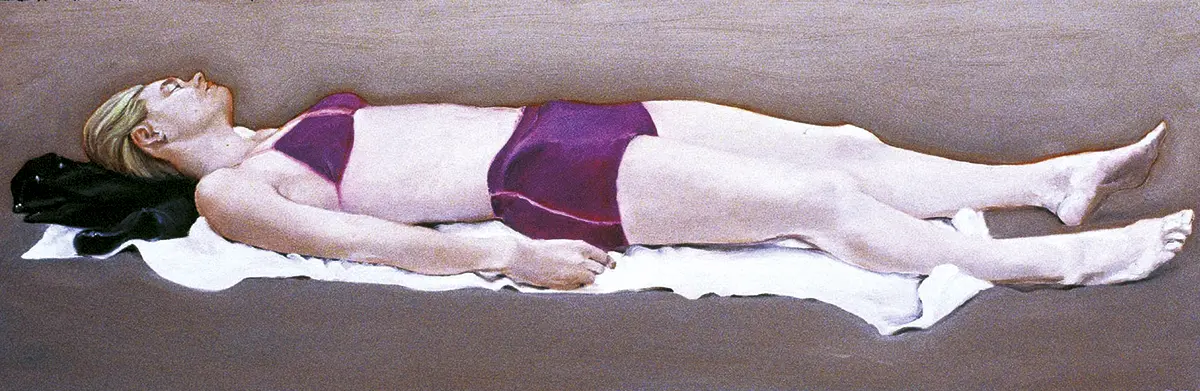
If you know anything at all about the subjects of these miniature mise en scènes, however, you recognize that Ruiz has really nailed our environments and its inhabitants. And he's done it in a way that's surprising for so traditional-looking an oeuvre, by being expertly reductive. There is never too much information in his tableaux, and always just enough. His eye is true.
Does it really matter that Ruiz paints from video stills? Might it not be just a play to give his work the imprimatur of techno-modernity? The video that introduced the exhibition wasn't terribly exciting, apart from catching fleeting, often pixilated glimpses of one's pals. But the video connection was not entirely inconsequential either, and combined with Ruiz's old-guard devotion to dense, brisk brushwork in the service of economical effects, there were some startling moments in the show and an intriguing body of work overall.
The very small paintings were lined up around the gallery in a narrative, frame-after-frame style, interrupted here and there by much larger works taped directly to the walls: profiles of masked superheroes, intensely close-up and weirdly smutty-looking. The story opened with a video camera on a table, followed by a lovely view of hilly Bogotá, then a tiny Colombian flag, a jet passenger plane, a small American flag, and from there, plot lines shot off like a clutch of spilled marbles.
Assume for a moment that the show was a kind of tourist's scrapbook, a random and frankly déclassé assortment of things that seemed to arouse the artist's curiosity. His whims went something like this: It's Miami, let's go to the beach. There are a bunch of openings tonight, and we shouldn't miss those. What's on TV? Wouldn't it be fun to walk around Miami after dark? The skyline is something out of a cartoon, and that classic Vespa is very cool.
Brash color is key for Ruiz, but not everything. Let's call it an indicator of character, which seems to be the artist's true subject. Not just human character, either, but doggy character, the balletic posture and resilience of urban plant life, the messages of media, and the joys and sorrows of consumer products. Ruiz is so taken with American soap bottles that he devoted a couple of paintings to Ajax and All as if paying homage to our gods. In addition to colorful plastic, birds were also painted: One piece portrayed an elaborate birdhouse surrounded by the comings and goings of its indistinguishable but jaunty avian residents; another showed an impossibly pink, spoon-billed creature in flight, such as those that only the Florida tropics can offer.
What made these tableaux artful inventions as much as remembered snapshots was a combination of unusual, often cinematic perspectives; color schemes borrowed from MTV at its most pulsating; and a way of abstracting subjects as elements in a graphic scheme—somewhere between icon and celluloid transition—while still maintaining a vivid sense of the body heat, chlorophyll, chortling, cheeping, and other qualities of the living world.
There are several possibilities for what the artist meant by all this. One plausible explanation is that the show was an inquiry into that confounding realm of the moment, the intersection of video and real life.
Indeed, our friends the gallery goers looked a bit like populist Latin American office-seekers on the stump. So we get Miami nightlife portrayed as an entirely trumped-up theater. New acquaintances are made to resemble the endless parade of ineffably minor celebrities studying the small-box cosmos of soap operas, variety shows, and other confessional and self-help revels. And moments of casual passing are transformed into the chiaroscuro of heart-thumping but entirely disposable melodrama.
This might help to explain the dubious presence of the vast mugs of superheroes. Perhaps their hugeness and thoughtful expressions were meant to indicate crucial cinematic close-ups. The half-lidded eyes, and the absurdly sensual tumescence of brows, lips, and chins suggested nothing so much as outsized filmic presences, the main players in Ruiz's video of the mind and perhaps, the libido. Thus, the surrounding small paintings could be seen as mere excrescences of the stars' imaginations, little thought balloons of reality in their cartoon existences, so to speak.
It's a likable enough possibility; and though not entirely original—think of Wings of Desire—it poses an amusing reversal of life as we know it. Imagine the drab and mundane as but a lovely dream of the superhero, whose larger-than-lifeness means one tediously great feat of derring-do after another. The quotidian details of a ramble through the city become the woozy longings of a superhero's meditation.
Such a ridiculous setup wouldn't bear the weight of time for long. The presence of the video—there are also collaged grids of stills here and there in the show—and the stunning effigies of Batman, Captain America, and Flash may indicate that Ruiz has an argument to make. But since the painting is so good, the artist will still have accomplished something even after the video ceases to strike us as novel, ambiguous, somewhat goofy, and more than a little creepy. Perhaps like the indispensable painters of the medieval court, that something is a discerning look at our lives, making them seem, in the end, no bigger, or smaller, than they really are.
JOEL WEINSTEIN