This past Fall New York was invited to celebrate and reflect upon one of the more poetic and complimentary artistic partnerships of the last twenty years or so. Cecilia Vicuña and César Paternosto have each in their way managed to bridge countries, cultures, and centuries with their art. At the Latincollector Gallery and The Drawing Center, one was able to survey their individual and collaborative art from the last few decades up to the present.
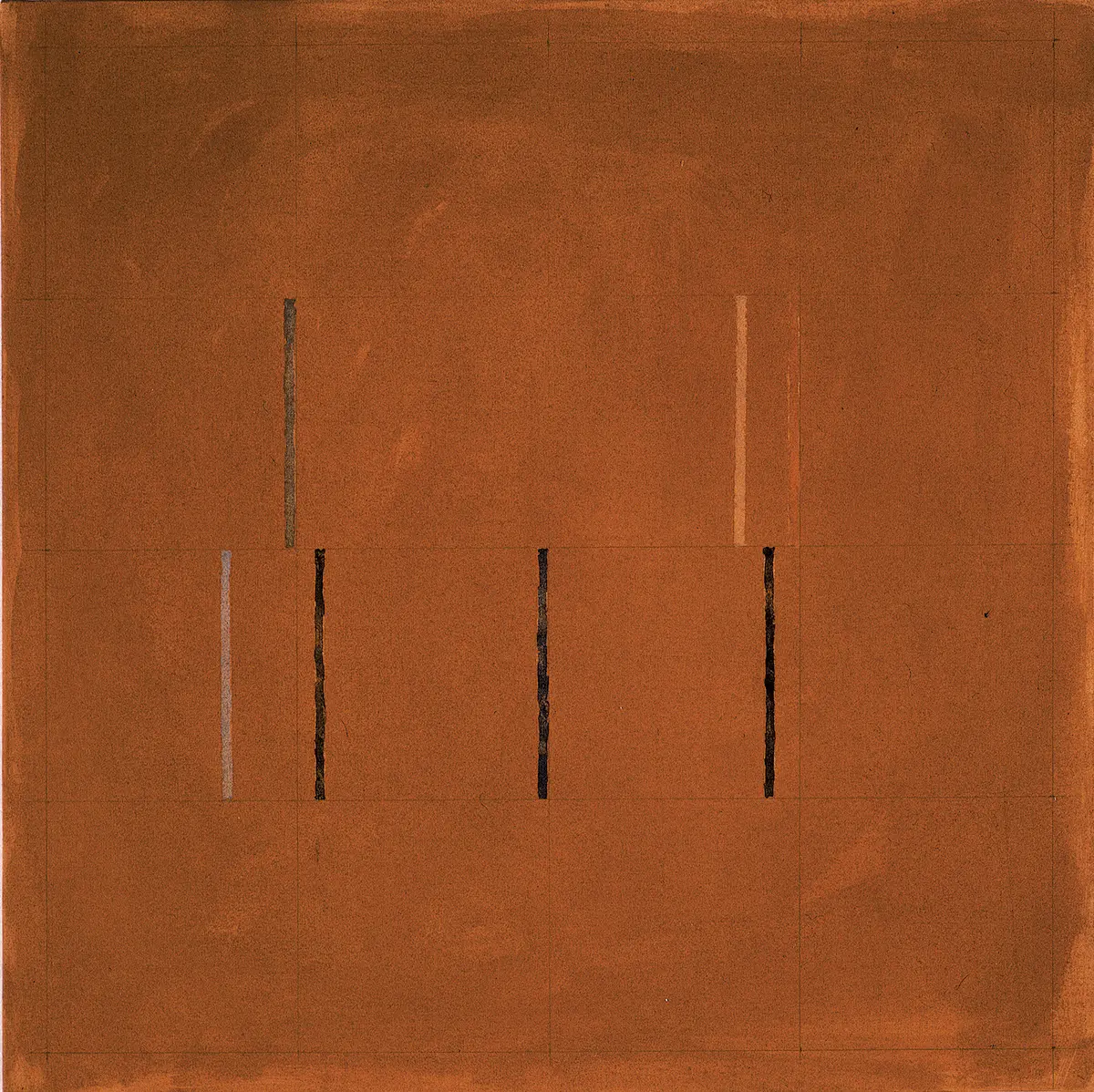
Paternosto works in more conventional media than Vicuña and his works have a simple subtlety. His paintings vary in scale from small and vertical to quite large, square wall pieces. Paternosto’s palette varies from painting to painting but stays within a fairly limited tonal range within each work. The works look like variations on a minimalist theme of geometric formal abstraction and feature rectangular forms carefully stacked and arranged with each other. What makes these works more resonant than mere formal exercises is that their visual language comes from Incan masonry and design patterns. Those stone arrangements and textile patterns, thoroughly researched by Paternosto, were meant to have particular spiritual significance and are the systems that he references in each canvas.
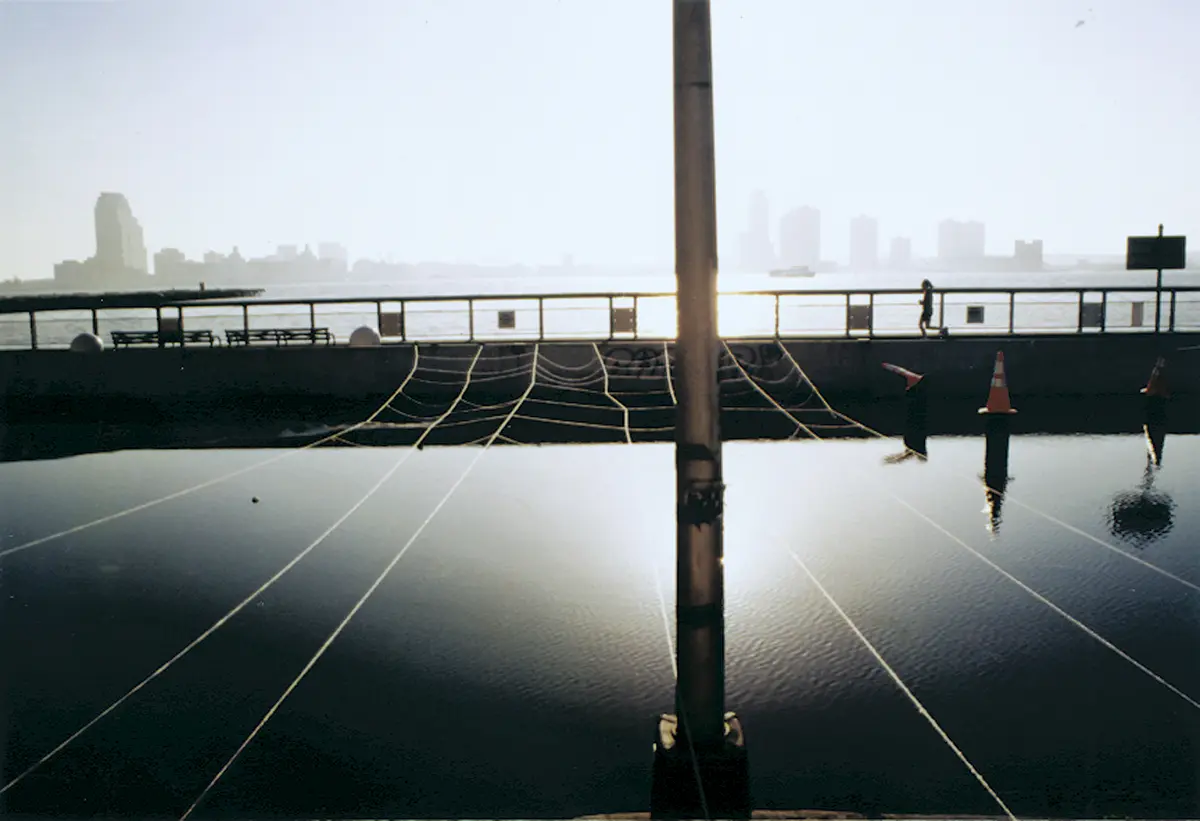
Vicuña has also found ways to combine post-minimalist form with longstanding cultural tradition. Utilizing the strategies of performance and site-specific installation to combine her poetry (some of which have been published) and her textile works (which can bear a superficial resemblance to the work of Eva Hesse), Vicuña has created a body of art that, more often than not, is temporary and ephemeral. Recognizing the spiritual, and even at times political histories that textiles, thread, and weaving have had in Meso-America, Vicuña has engaged in special events in which she recites her poetry and weaves, knots, or ties her fiber work while ritualistically enacting the placement of the piece. The thread pieces tend to use the minimalist formula of series and repetition, although their strict geometries can be subverted a bit by their hanging. The placed fibers remain as a trace relic of the performance/ritual and transform the space in a subtle yet profound manner.
Vicuña’s installations require documentation since they are not intended to be permanent, and Paternosto is one of the recorders of these works. His body of color photographs of various installations over the years, thereby also becoming a longstanding documentation of the partnership between the two artists.
The exhibition at Latincollector was not overly full of works but it told a very complete story. The space contained by the walls that displayed Paternosto’s paintings was filled with an ethereal and beautiful arrangement by Vicuña of many vertical threads that hung from the ceiling with shell or leaf-like forms attached to them. Pairing the work of the two artists in this way has quiet, intense poetry about it, more so than the photographs, which can appear a bit clinical and impersonal.
A similar collaboration between the two artists was housed in the new annex of The Drawing Center. Entitled DIS Solving, the exhibition began with many of Paternosto’s works on paper displayed on the walls, and a few of Vicuña’s colorful, braided threads hung down the middle of the narrow vertical space. For the duration of the exhibition, as part of an ongoing performance, Paternosto and Vicuña intervene with the space at regular intervals. He would remove some of his drawings while she added more threads. By the end of the show’s run, the walls were studded with nails and hooks that supported nothing and made their own sort of pattern, while the entire interior space was filled with brilliantly colored threads. With this show the artists engaged in the fullest sense of exchange: Paternosto’s works assumed the ethereality usually accorded Vicuña’s installations, whereas her work was built up until it assumed an almost architectural mass. With one another as a source of support and mutual inspiration, Paternosto and Vicuña still seem to be able to work endless variations on their central themes.
JOHN ANGELINE