
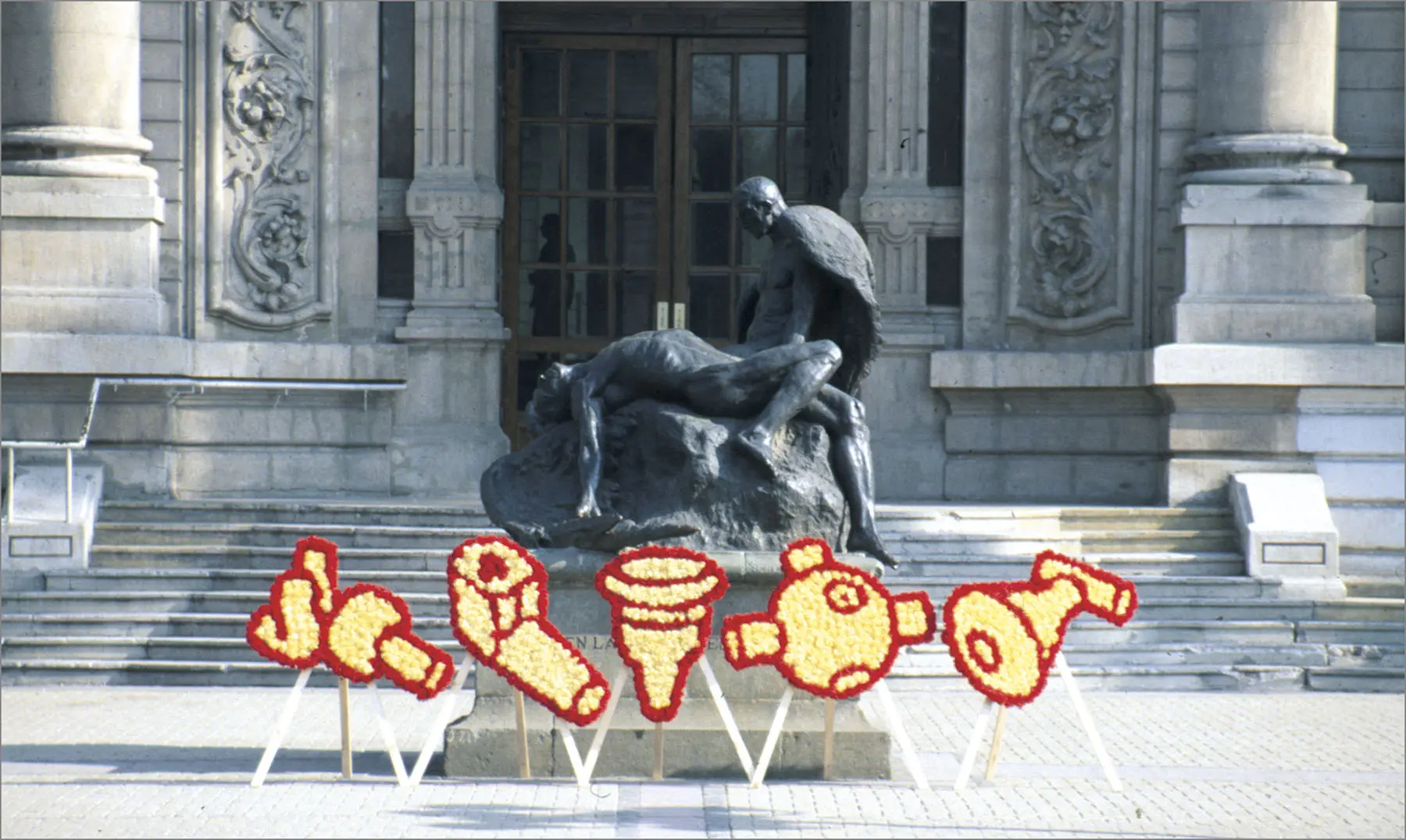
Not too long ago, a curator who is now organizing Latin American art shows in the United States spoke of the dangers implied in justifying a group of works on the basis of purely regionalist criteria. Ultimately, these words pose the question of whether there is such a thing as Latin American art, and of whether it is worthwhile to make explicit its supposed characteristics. This curator thought it of the utmost urgency to change the “for export” stereotypes of Latin American art (we all know what they are: exoticism, mestizo hybridity, and a dose of naiveté), but not in order to replace them with a more current stereotype but to do away altogether with the idea of creating art on the basis of regional identities. Yet, this kind of curatorship applies to those spaces that can be reduced to a eurocentric perspective. For instance, the many departments of Latin American Studies found in Europe and the United States, where cultural expressions of the southern part of the Western Hemisphere are studied as if their belonging to the same geography offered a sufficient interpretive key.
All right, then: there is a way of observing ”the other” that is inevitably reductionistic. Such reductionism is, in the end, the result of distance: from afar, things always appear simplified, summarizable, and digestible; it is upon closer inspection that complexities are revealed, diversities made evident, and understanding problematized. Yet, regional or national categories, as well as generational classifications, do serve a purpose: they allow us to determine the boundaries of our field. They shouldn’t be dismissed out of hand, then. They should be understood as a methodological resource that is, as such, useful but incapable of providing specific content.
Perhaps identity does exist as a shared cultural experience; it does not exist, however, as an essential image. Perhaps rather than abandoning the concept of identity, we need to re-semantic it, away from its essentialist implications; identity not as a genetic condition, but as an ever-changing circumstance. Perhaps the illustrative cliché of identity is nothing more than a cheap way of circumventing the experience of the real.
Promises On Hold
There is, then, no such essential field of meaning from which Chilean art can be explained. What is there is a shared climate shaping certain sensibilities, attitudes, and urgencies. I have in mind the very concept of transition, which has spilled over the boundaries of the political realm to inform all spaces of experience in Chile. Let us summarize the situation by saying that the end of the military dictatorship in 1989 marked the beginning of a period of “democratic transition,” a concept deployed by the country’s new rulers to avoid confronting a deeply damaged system. “Transition” is an intermediate stage: a dictatorship no longer, not yet a full-fledged democracy. It is a space of ambiguity —but an ambiguity charged with promises: we are ”in the process of” developing and democratizing. Like beaten-up but still naive adolescents, we don’t know as of yet what we are, but we do know that we will soon become something else. We are in a commercial break, which holds the promise of a future that hasn’t yet arrived. For the time being, the country needs to live with economic injustice, social misery, and institutional abuses; all of this is justified as part of a process, part of the pending matters, of the issues yet to be negotiated. “Transition” is the time of symbolic negotiations, of the exchange of transitory meanings, the euphemism for a great semantic catastrophe.
This is to say, the key to the identity of recent Chilean art —let’s say, beginning in the late 1990s— is, precisely, the crisis of identity in the absence of stable local meanings. The newest artist share a context, but they do not respond to it; their works cannot ignore the local history of which their own genesis is a moment, but, above all else, they obey the commands of their own autonomy. These works do not want to be Chilean; they desire to be read as diversified and movable to any other physical or cultural context. They are, indeed, worldly.
Among those artists belonging to the newest generation with a significant presence in the local scene, we find Patrick Hamilton, Andrés Vio, Sebastián Preece, Maximo Corvalán, Caterina Purdy, Demian Schopf, and Cristián Silva Avaria, among others. To them, we should add those artists who are in between a previous cohort and the current one, and whose work has achieved maturity in recent years, such as Pablo Rivera, Francisco Valdés, Ximena Somoza, Kika Mazry, and Josefina Gillisasti. Of course, many other names could be included here, but the point is not to have an exhaustive list but, rather, to take a look at the sensibilities in circulation, keeping in mind of course that this group reading has specific human individuations.
The Symbolic Marketplace
A variety of concept courses through the semantic field opened by transition. We need to ask, then, for the subject in transit here. This subject, the Chilean Artist, would be by definition a transitory being, a transient entity, someone who never fell under the spell of life-fixing, mind-making discourses; someone who, to put it bluntly, does not believe in discourses at all. A skeptic, yes, but not necessarily a disenchanted individual.
A relevant point; the most significant phenomena in Chilean transition —along with the growing capitalization in the system— has been the informational openness and diversification. Unlike artists of previous generations, whose works were much more anchored in local themes and in Chilean political history, the members of the new generation have not only found themselves on hold from local historical commitments but have also had access to an overwhelming amount of information and to narratives of most varied provenance. This thematic dispersal helps them move out of a claustrophobic enclave, but at the same time confronts them with the acrophobia of an unmanageable amount of data. The artist, then, is left without the safe narrative of idiosyncrasy and without access to the disquieting fiction of the global. What an artist does in this situation is to remain rigorously in a transient condition, choosing small-scale personal strategies for survival. The basic operational move is to permanently negotiate meaning, carefully considering the risks and advantages of every action.
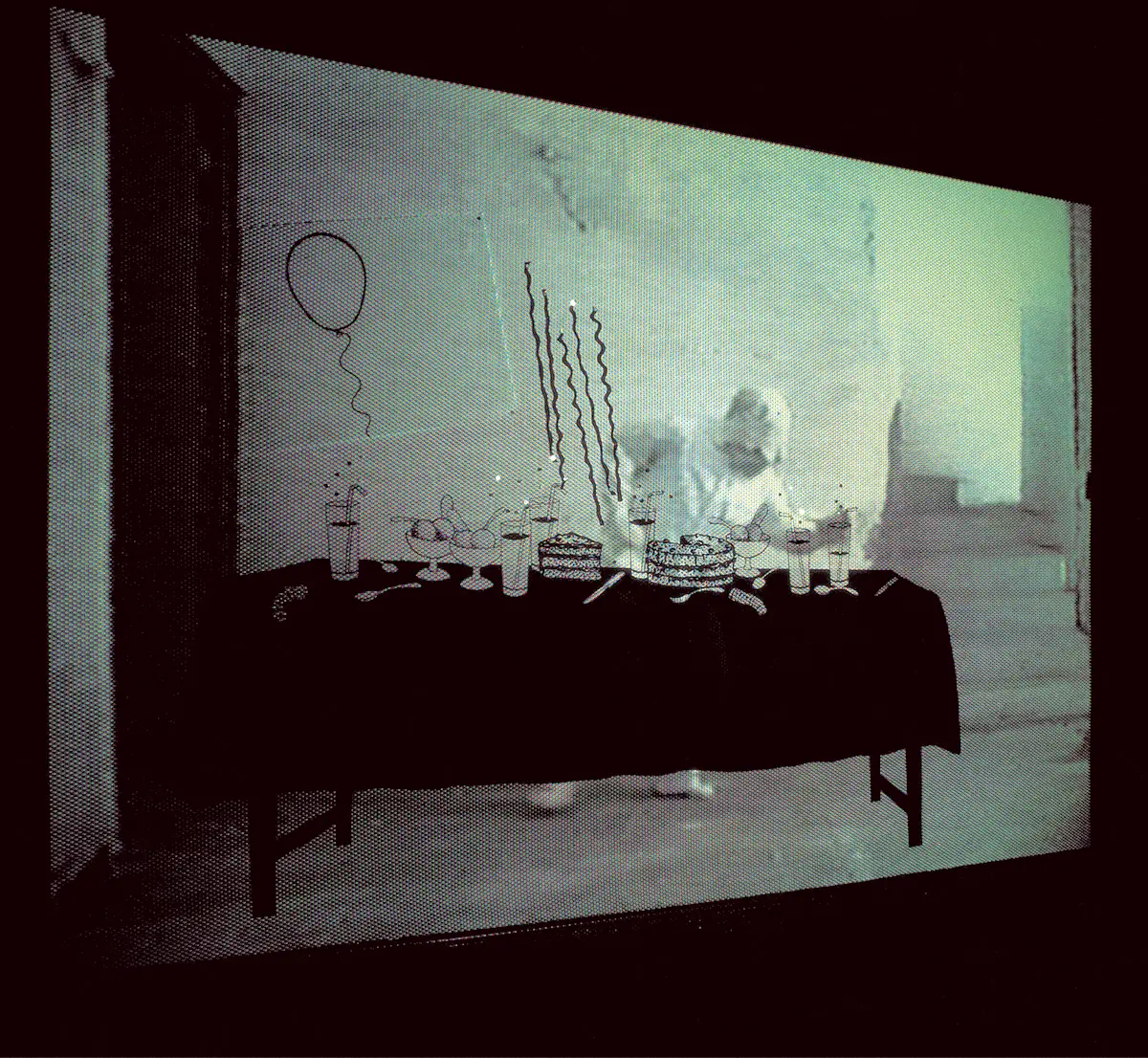
Perhaps finding themselves in such an uncomfortable mental place is what facilitates their swiftness of movement. There is, tellingly, an inversely proportional relationship between discourse and fleetness when one compares the generation of artists that emerged in the late 1980s and the early 1990s –artists formed during the years of dictatorship— and the newer cohort. The former worked decidedly with local metaphors, and were given to the discursive justification of the work; their works expected to be appreciated from outside the visual. Many of these works incorporated writing. In contrast, much of recent Chilean art is fundamentally anchored in the visual. There might be anecdotes circulating around a specific piece, and there might be connected readings, but the work itself comes to us as a visual event and demands, from itself, an autarchic economy. In fact, writing has almost disappeared from these montages. Inversely, more discursive works have had a reduced range of movement. A local acknowledgment and adhesion to their discourse was a sufficient inscription for them. The newer artists, in contrast, have a demonstrated desire to expand into different circuits, and they are open to readings that can be generated in new contexts. None of these readings will be definitive or legitimizing, but all of them will be valid, and all of them can be capitalized.
As defendable values become increasingly scarce, new artists erect personal micro values destined to compete in a symbolic marketplace devoid of the old hierarchies. In the past, “market’ was an almost immoral word; today it is assumed, without major fuss, that even symbolic goods are traded there: one needs to play the game. It could be thought that the competitive, individualist model has finally triumphed and that there is no sense of local belonging because there are no common values. Yet, for that very same reason, there emerges a need for connection beyond the familial level, capable of projecting the image of an unknown, distant interlocutor. The work of art, then, travels to the encounter of new viewers. Lacking a univocal, closed meaning, it can only become complete in the communicative act itself.
The Absent Family
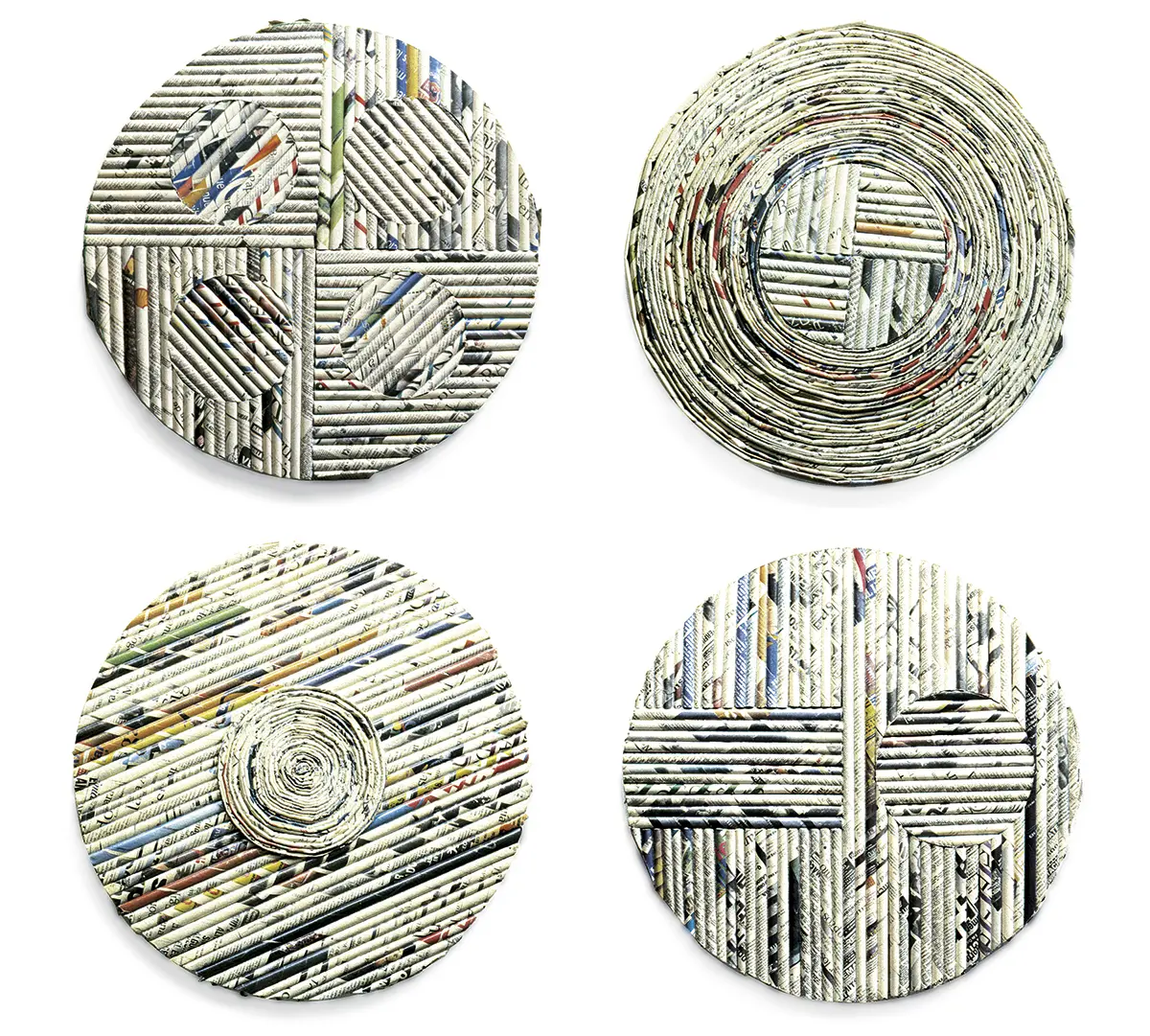
Orphaned, yet communicating works of art; works of art with no family, without country, in permanent transit. Many of these works exist only in the moment of their mounting and viewing; others use fleeting elements such as flowers, newsprints, and hairs; all or almost all of them question the very possibility of the image and its danger of disappearance. These works include in themselves operations of permanent accommodation and travesties, be it in their materials, in their codes, or in the changes they undergo as they are mounted in different spaces.
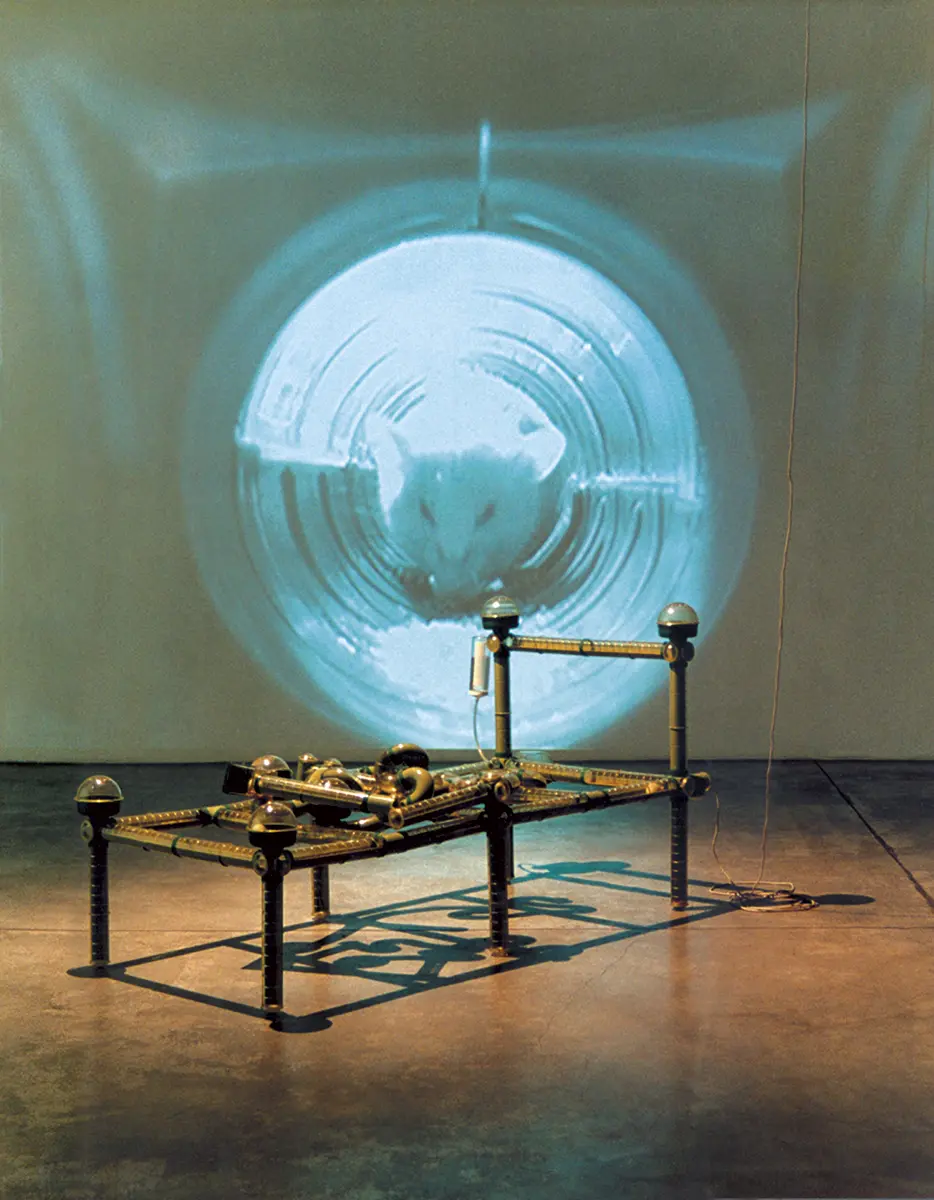
Paradoxical, but understandable: one is always talking about what’s absent. Much of Chile’s recent plastic production thematizes the family and the space of the domestic. This has to do, often, with the impulse to tempt the viewer with everyday elements, which offer a kind of safeguard for reading the work —only to betray it in the process. Pablo Rivera, for instance, uses such materials as straw in his works or, more directly, the image of a house. But his straw furniture is not furniture, and his house is uninhabitable. In a different mode, Patrick Hamilton incorporates the aesthetic of decoration and the materials of domestic labor, but in the last instance, his use inverts their meaning, turning the familiar into a menacing gesture. Francisco Valdés’ work is more focused on the problems posed by the image, but it also questions the assumed domesticity of certain icons, bringing them to the point of disappearance by exacerbating the realism of their representation or, inversely, by maximizing the fragility of their material presence.

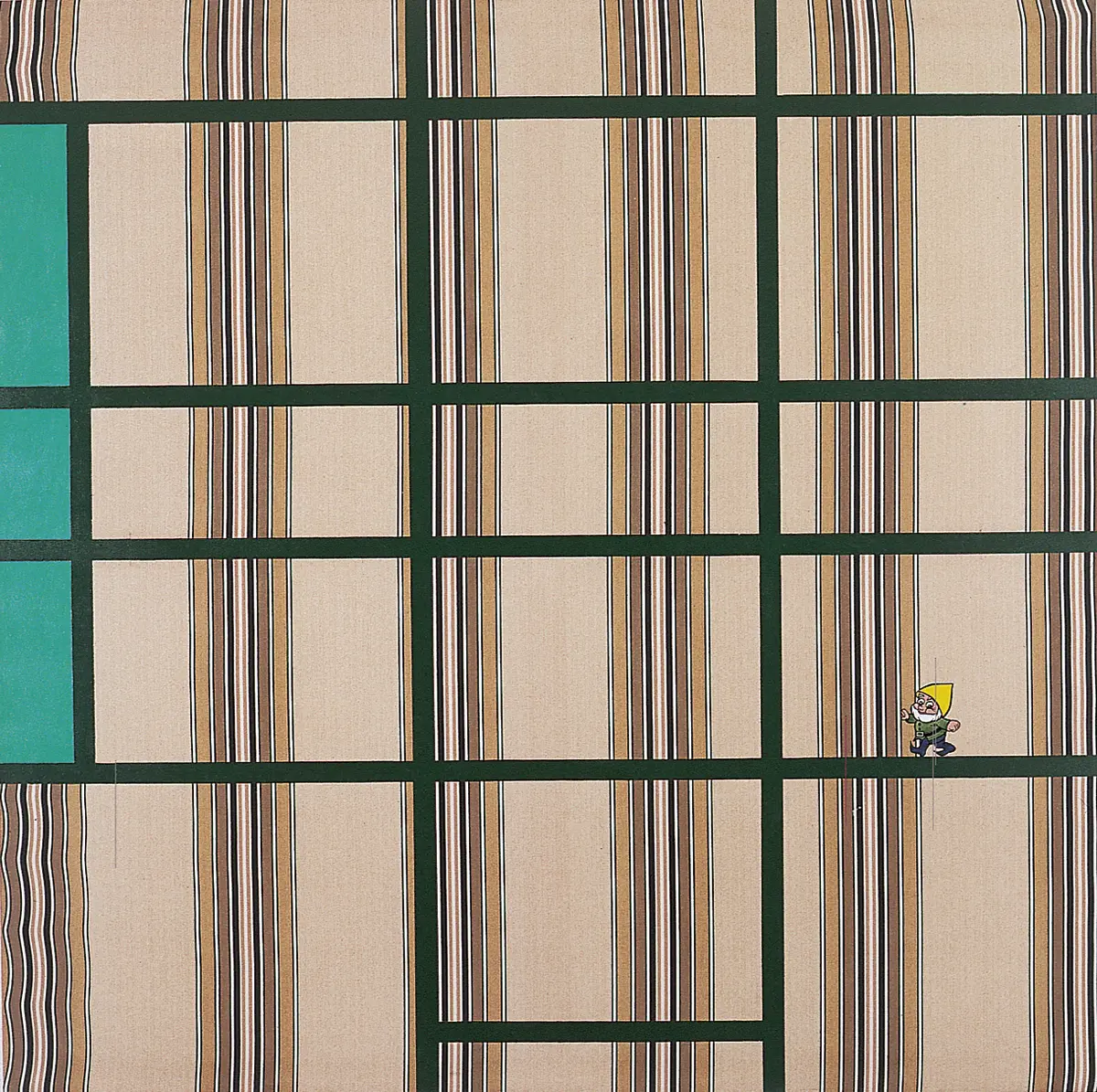
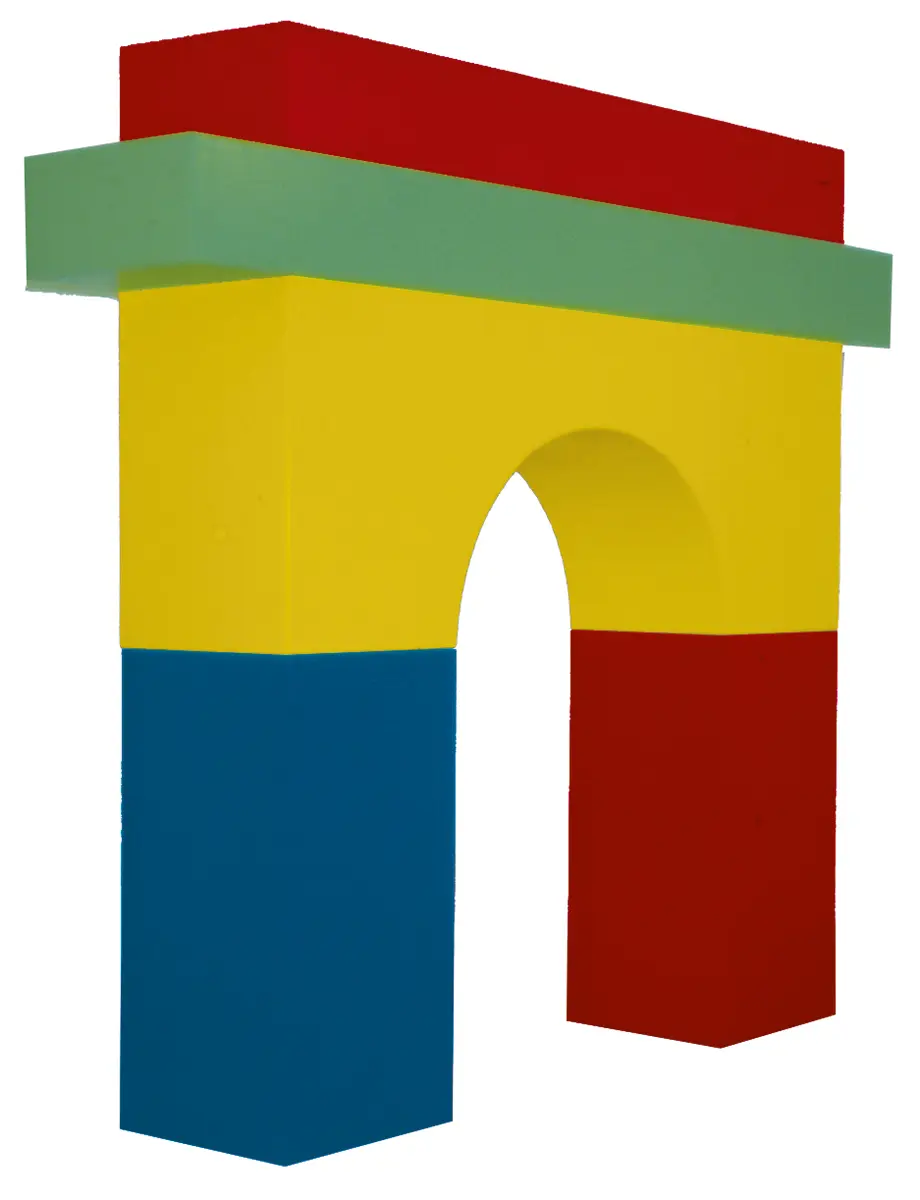
In much of this art, the image of the familial and the domestic is encoded in the discourse of play, an exemplary metaphor for negotiation (think, for instance, in the stock market as a betting game). The notion of the game works at different levels here. As a cultural inscription, the game signals the competitive and undramatic style with which these artists exist in the circuit. As a communicative strategy, it reflects the way in which the work seduces the viewer, be it through the delivery of recognizable codes or through the chance to interact physically with the artistic object. At the formal level, many works are parodies of toys or seek to incorporate ironically the clichés of childhood.
This is the promise of domestic security –entirely unfulfilled. The commonplace platitudes of the happy family, are deconstructed. Perhaps there is a kind of ironic revenge for those who do not belong. But, then again, the cultural transition enters our mental space and reminds us of those transitional objects of the psychiatric discourse. Stuffed animals, little dolls, and toys children use to negotiate the anxiety of separation from the mother. In the new Chilean plastic we find, indeed, a complete inventory of pets invoking affective malnutrition, there are miniatures and gigantographies, there are little houses reminding us that we have no habitable house. Objects that point out the absence of a home; fetishes for the displacement of identities in crisis.
NOTE
Some of these works were included in the show PLAY New Chilean Art, presented last September at the Artco Gallery in Lima, Peru.
CATALINA MENA
Lives in Santiago de Chile. Journalist and art critic, she has written extensively on recent Chilean art. Curator of the show PLAY.