Not long ago The New York Times published a review of the work of Ivan Edeza, a young Mexican video artist. His work was included in the retrospective Mexico City: An Exhibition about the Exchange Rates of Bodies and Values, organized by Klaus Biesenbach, curator-in-chief of the P.S. 1 gallery in New York. In addition to the imprecisions and omissions by Holland Cotter,1 author of the review, it is interesting that the final section is dedicated to one of Edeza’s pieces, a video composed of a segment taken from a documentary film that might be categorized as a “snuff” piece. The film, which can be obtained on the black market, shows a real human hunt in the Amazon. Edeza’s video presents a digital retro-projection of horror-provoking scenes, scenes that make the viewer complicit in the crime of the hunters who shoot Indians in cold blood from helicopters, pile up their dead bodies, and cut them into parts as if collecting macabre trophies. In his review, Cotter accuses the artist, the gallery, and video art itself of complacency towards those who commit the murders and barbaric acts, under the pretext of presenting these acts in a work of avant-garde art. Cotter maintains that all they are after is immediate notoriety.
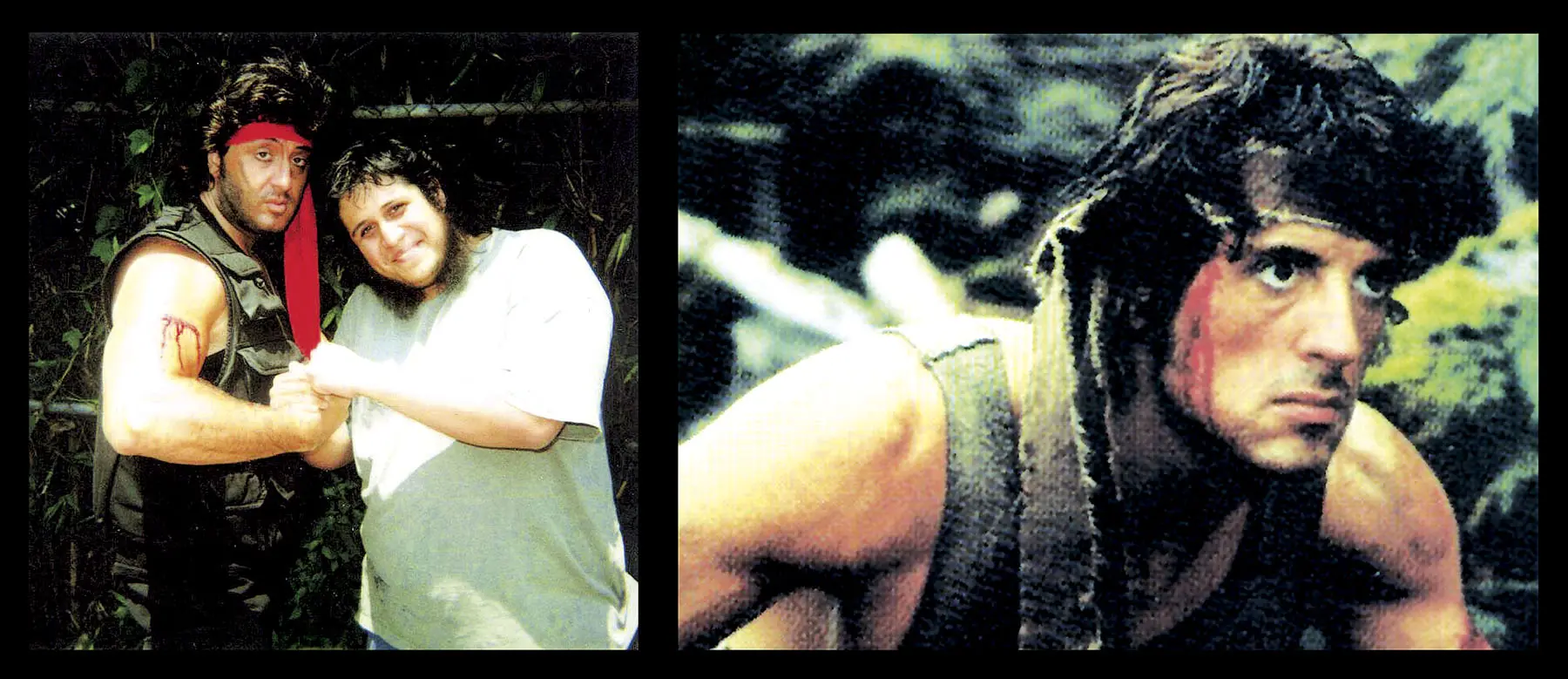
Contemporary Mexican video art has employed raw images, superimposed realities, settings, and a viewer-as-participant perspective in a variety of ways, turning video artists and the medium itself into one of the most potent and penetrating contemporary visual referents in the artistic realm. Edeza, for example, began to work with pornographic films some time ago, blacking out certain body parts as well as the more graphic scenes, and forcing viewers to read the images in a different way by focusing attention on specific aspects of the image. This strategy has also been utilized by Artemio, another young video artist, who presented his version of Sylvester Stallone’s Rambo (Artemio’s Cut) in the Carrillo Gil Museum in Mexico City. His twenty-minute rendition presents a different plot in which the former Vietnam combatant is seen as a maladjusted youth with an acute oedipal dilemma, who seeks redemption from the father figure. The video was presented in a room made to look like a guerrilla trench with bales of hay and camouflage fabric.
Mexican video artists of the new generation, who have grown up with television, video, cable, and video games as part of their everyday visual diet, have the potential to comment on, critique, and parody the video images so prevalent in the culture, without using traditional artistic media. They take advantage of and employ more precarious resources, such as re-editing, intervention, and mise-en-scene, instead of resorting to painting, photography, or experimental film, the favorites among artists of the pre-video generation in the seventies and eighties.
The language of video has replaced visual strategies such as perspective and collage (both of which correspond to specific historical periods), to become in a way the new version of God’s eye: ubiquitous and capable of seeing everything through the camera lens and magnetic tape. The spontaneity of the video camera and the low production and reproduction costs allow a level of penetration that surpasses that of any other visual imaging technique.
Artists like Alejandro Jodorowsky, Juan José Gurrola, and Julio Pliega had already used 16 mm film in the sixties to create paraphrases and parodies inspired by happenings, in documentary as well as commercial filmmaking. These endeavors had been considered a variant of auteurist filmmaking. Film was and continues to be considered the seventh art; therefore alternative film practices have been non-problematically understood as artistic practices. The videomaker’s intentions have given artistic status to video, and it is Edeza’s intention that validates the piece so vigorously critiqued in the Times. Edeza takes a preexisting image and presents it for the viewer to judge. This is what is expected of art nowadays: to present and to intermediate between a harsh reality (like the cold-blooded genocide of the indigenous peoples of the Amazon) and our sense of moral repulsion. We are simply accomplices if we want to maintain the comfort of ignorance. Edeza’s intention is to provoke us into awareness through what is made visible (which is the etymological meaning of the word video, from the Latin for “to see”).
It was only a decade ago that video gained artistic status in Mexico, despite the fact that artist Pola Weiss used cameras and electronic editing media in the seventies to create interpretive images that were neither narratives nor documentaries. The extensive use of television cameras, first in news coverage and then in the production of music videos, has heavily influenced the new generation of video artists. Yoshua Okón and Miguel Calderón, founders of the alternative Mexico City gallery La Panadería, and contributors to the P.S. 1 exhibition, have exploited the instantaneous character of the video medium, and in a certain sense, the built-in credibility of the electronic image after years of its use in news coverage. In order to create realistic images the artists decided to work alongside automobile thieves, videotaping their thefts in real time. In a city well known for the increase in its incidence of violence and theft, to be a witness through video to acts that normally cannot be seen or stopped caused viewers to accept these mini-documentaries credulously, albeit sardonically.
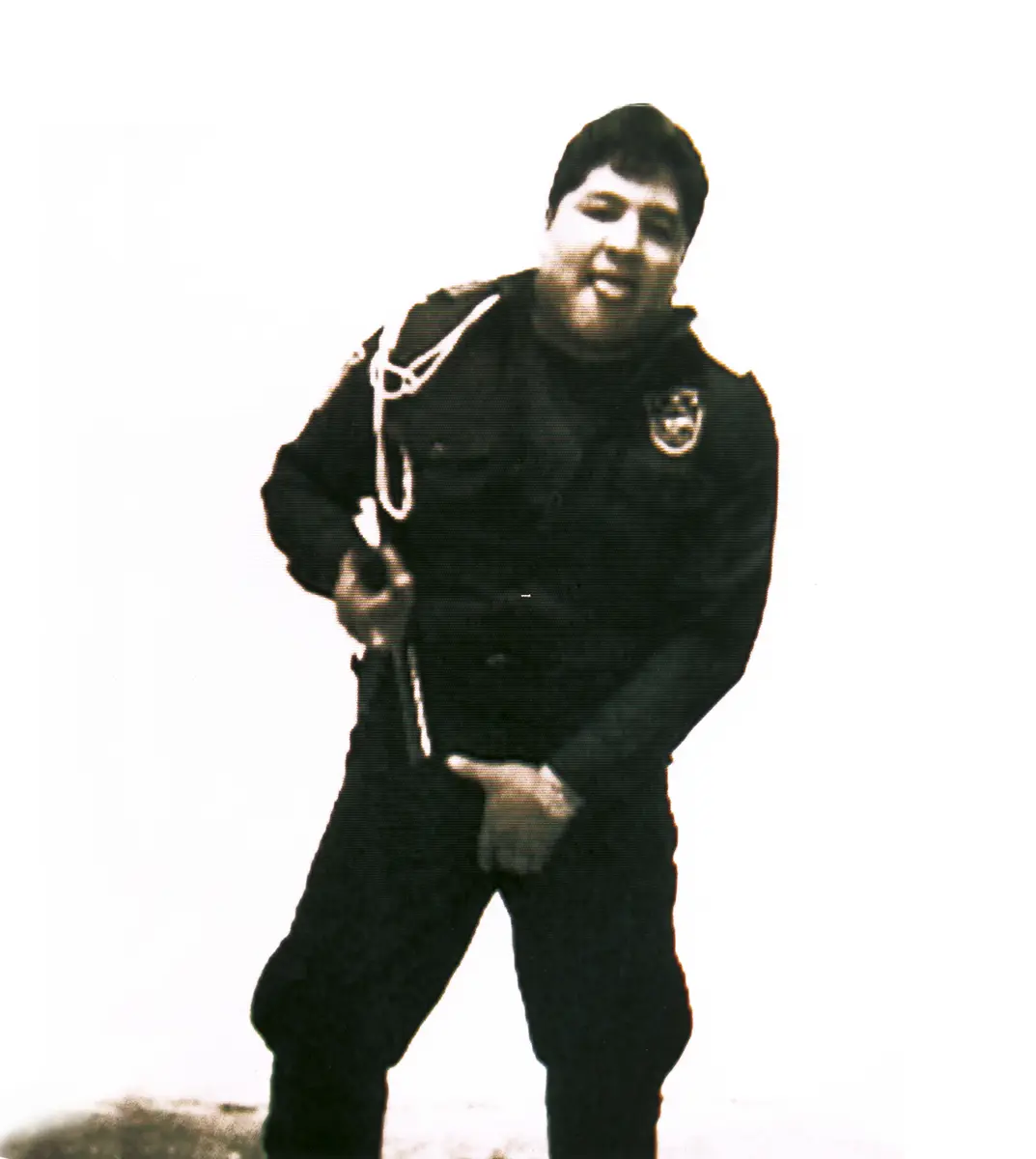
Working on the border between fiction and reality has been one of the trends in Mexican video art. Francis Alÿs presents both sides of this coin in his most recent video work. In his first video, he is seen scanning the zone known as the Historic Center of Mexico City. Dressed like any ordinary citizen and wearing sunglasses, the artist is followed by the camera as he walks the streets carrying a gun, yet not aiming at anything or anyone in particular. After quite a long time uniformed police stop the artist and question him about his possession of a weapon in public places. Alÿs is able to convince the police that this is for a video art project and he asks them if they will participate in the recreation by following through with their procedures up to the point of apprehension. The structured repetition brings out the contrast between real acts and recreations, reality, and fiction.
Melanie Smith and Rafael Ortega also work at the intersection of technology, image, and reality. Seis pasos hacia la realidad is a project consisting of a set of two videos. The first video shows a white cube that is progressively filling up with water. The second one, projected in the same space but inside a wooden cube, documents the highly sophisticated production of the first video.
Yoshua Okón has realized several videos (Ori–llese a la Orilla, for example) in which he asks uniformed police to dance or execute choreographed movements with their clubs in front of the camera, in exchange for a small amount of money. The viewer is unaware of this last detail, and therefore the performance by police officers creates a comical effect, based on the distinction between presentation and representation. Nevertheless, there are videos in which Okón has provoked angry, aggressive responses from the police for videotaping their actions while on duty. For some the effect of the videos implies something more than the duality of fiction/reality. They are the meeting or confrontation between social classes represented by the video artist himself and his subject, a poorly paid public employee. This aspect, in which the artist is included in the presentation, whether as an actor or as the one in control of the video camera, reveals how the artist’s intention becomes the controversial aspect of video art.
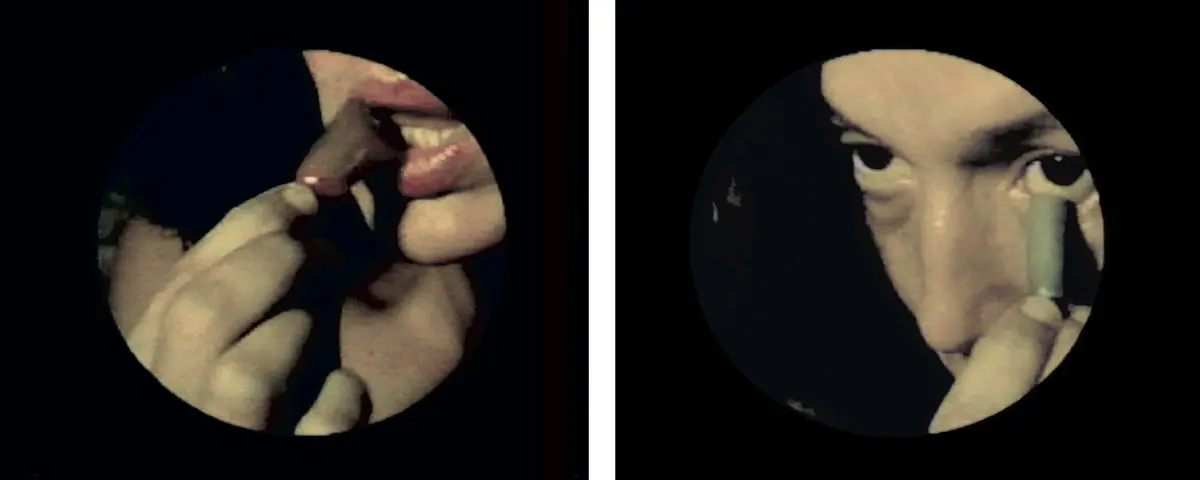
Moving to the other end of the aesthetic parameter of video it is necessary to talk about the work of Ximena Cuevas. Leaving aside improvised documentary video, Cuevas uses the camera as an extension of her body, reflecting her creative impulses and the roles she has had to assume in order to cultivate her expression. In El Diablo en la Piel, the artist desperately tries to cry after an apparent emotional breakdown, utilizing every means at her disposal. She is seen looking at the camera (a mirror) while rubbing Vick’s Vaporub on her eyelids. She even places the end of a green chili pepper on her eyelashes. Her attempts are fruitless, generating feelings of extreme anxiety in her and the viewer.
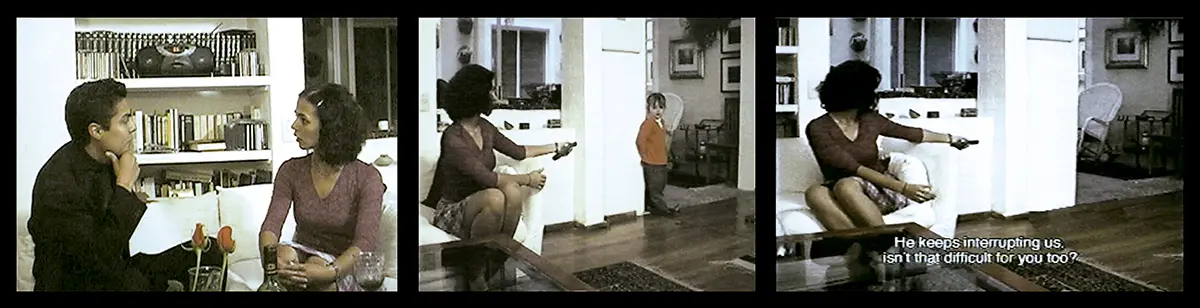
A number of works are also based on established genres from commercial television, a medium that has also utilized alternative video techniques, in reality, shows, for example (El Show de Christina and similar programs), and in the well-known show Big Brother, which does nothing but feed the voyeuristic inclinations of its viewers. The format of soap operas enables Teresa Serrano to take advantage of simple tricks and narrative strategies that impose a false reality on the viewer. Control Remoto, a plot-based video, is about two young lovers, who argue over the presence of the woman’s son during their rendezvous in her house. Despite being an independent single mother who is trying to defend her lifestyle—including her son—her true desire to for the child to disappear is seen through an inserted sequence. The melodramatic narrative and the recreation of real spaces are rationalized by the credibility the media confers on these stereotypical reconstructions of everyday life, and by the viewer’s own credulity.
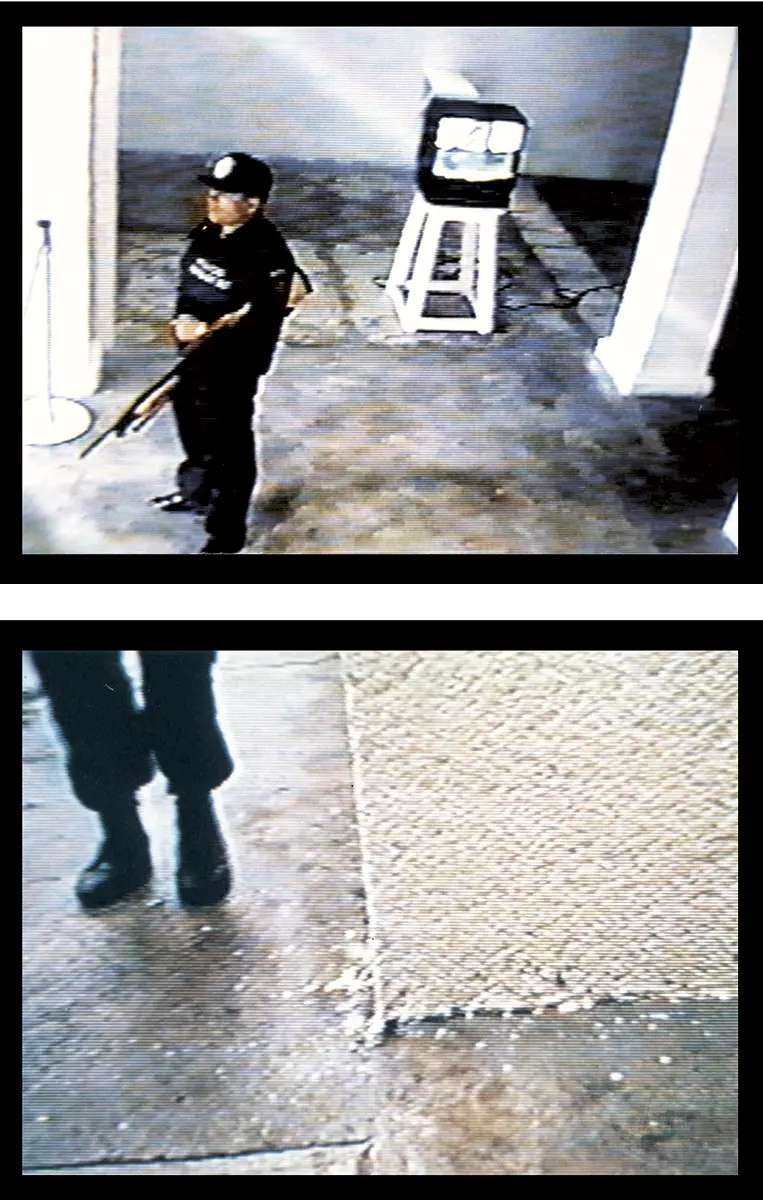
Given the fact that video’s basic arsenal includes camera movement and location, the work of reconstructing experience is particularly important in the video installations of Enrique Ježik and Santiago Sierra. Ježik uses images symbolically, transforming the context of his videos into the content. His works Terrario, Diez Tiros, and Guardias represent situations in which the image is framed in very close shots. In Terrarios, hands are seen digging a hole in the ground, and in Diez Tiros hands are firing a rifle against an adobe wall. Guardias shows a double image in which a police officer (again the theme of the seeing eye) receives instructions to watch over a room where a television set is showing the officer’s own image reproduced by a surveillance camera.
Sierra uses video as a documentation of actions in which he has paid indigents to carry out a variety of absurd acts, like holding a piece of drywall for a period of time or masturbating in front of a television camera. In these cases the video asks us to recognize the public space outside ourselves, turning the museum, the biennial, or the art fair (where these videos have been shown) into allies of the system of poverty he is trying to illuminate.
Video artists at the turn of the millennium increasingly have directed their attention to the use of collage, assembled using recorded images on only one video channel, and frequently using animation, sound, and the Internet. These narratives have opened up a space for content and technique that combines high technology with the more precarious media, creating hybrids such as Zoo Sónico, in which Octavio Hernández and Salvador Ricalde create a combination of images and musical ballads from the Mexico–U.S. border (specifically from Tijuana). The work is a response to Nam June Paik’s statement thirty-five years ago: “Film is contemplative and distanced. It separates viewers from reality and from the present moment, turning them into spectators. The technique of collage (in video) has taken the place of painting and the TV monitor has taken the place of the canvas."2 The viewer is motivated to recreate his or her own images in video, giving them an eminently personal character similar to that of painting in the last century.
Fernando Llanos has worked on what could be called video verité, mixing random takes from informal videos (for example, a dog walking in the street), translating them into a digital format, and sending them to a list of e-mail subscribers. These are small attempts to eliminate the distance between producer and viewer that generate a stock of interactive images.
The videos of recent graduates from La Esmeralda school, Carol Esparragoza’s animations, Anabayuleti Gamboa’s anti-advertisements, and Karla Enríquez and Benjamin Guerro’s advertisement campaigns, all illustrate the growing popularity of the medium among the younger generation. These artists recognize its ability to create communicative messages that critique media content, including the uniformity of that content; the television networks directed at a younger audience; as well as the passivity of a society that continues to be dominated by conventional images and the morbidity of the voyeur.
NOTES
1. Holland Cotter, “A Mexican Anti-Fiesta Full of Uneasy Realities,” The New York Times, July 5, 2002.
2. Michael Rush, New Media in late 20th Century Art, (London: Thames and Hudson, 1999).
JOSÉ MANUEL SPRINGER
Writer and art critic.