
Historians, critics, and curators interested in Latin American art tend to focus on the issue of modernity and the nature of the contemporary. Among the more relevant problems in the field are a critical assessment of the 1950s-1960s abstractionism and constructivism, an analysis of the eruption of conceptual art in the 1970s, and a study of those artists whose influence, if not always acknowledged, has been fundamental to these processes. Such efforts allow us to establish new understandings for a more comprehensive and heterogeneous genealogy of the region’s creative practices.
These efforts have not only helped attach importance to the work of Lygia Clark, Hélio Oiticica, or Gego, to name but a few examples, but they also have opened the possibility of studying in greater depth the contributions of figures like Antonieta Sosa, among the most tenacious and lively artists in Venezuela. Born in New York City in 1940 and a resident of Caracas from an early age, her career includes the formal study of psychology at the Universidad Central de Venezuela (1960-1962), as well as the study of fine arts (1962-1964) and choreography (1964) at the University of California at Los Angeles. Throughout her creative life, Sosa has explored the reflexive possibilities of different media languages, including painting, three-dimensional objects, performance, and installation. This has resulted in the development of a permanent investigation of the plasticity of space and its perceptual connotations, including the body’s “natural phenomenology.”
Sosa’s work is a bridge, although not without conflicts, between the constructivist tradition’s emphasis on structure and search for playfulness, and conceptualism’s transitory nature, and its privileging of the idea and process over results. In the tension coexisting between these two extremes, Sosa maintains an attitude of openness towards the intuitive universe, moving through intimate, every day, and cosmic spaces.
The artist herself defines her poetics as a process that moves from surface to object and from there to the body and from there into a vacuum. Each one of these stages implies a particular relationship to space, that is to say, a specific way to express her creative theories. Her trajectory encompasses different languages related to different strategies for discursive articulation: the illusory regularity of the pictorial surface, the activation of the sculpted object, the grammar of the body, and the subjective magnetism of emptiness. In each case, Sosa’s work responds to a secret causality that is supported by the use of meticulous processes and austere media.
Paintings
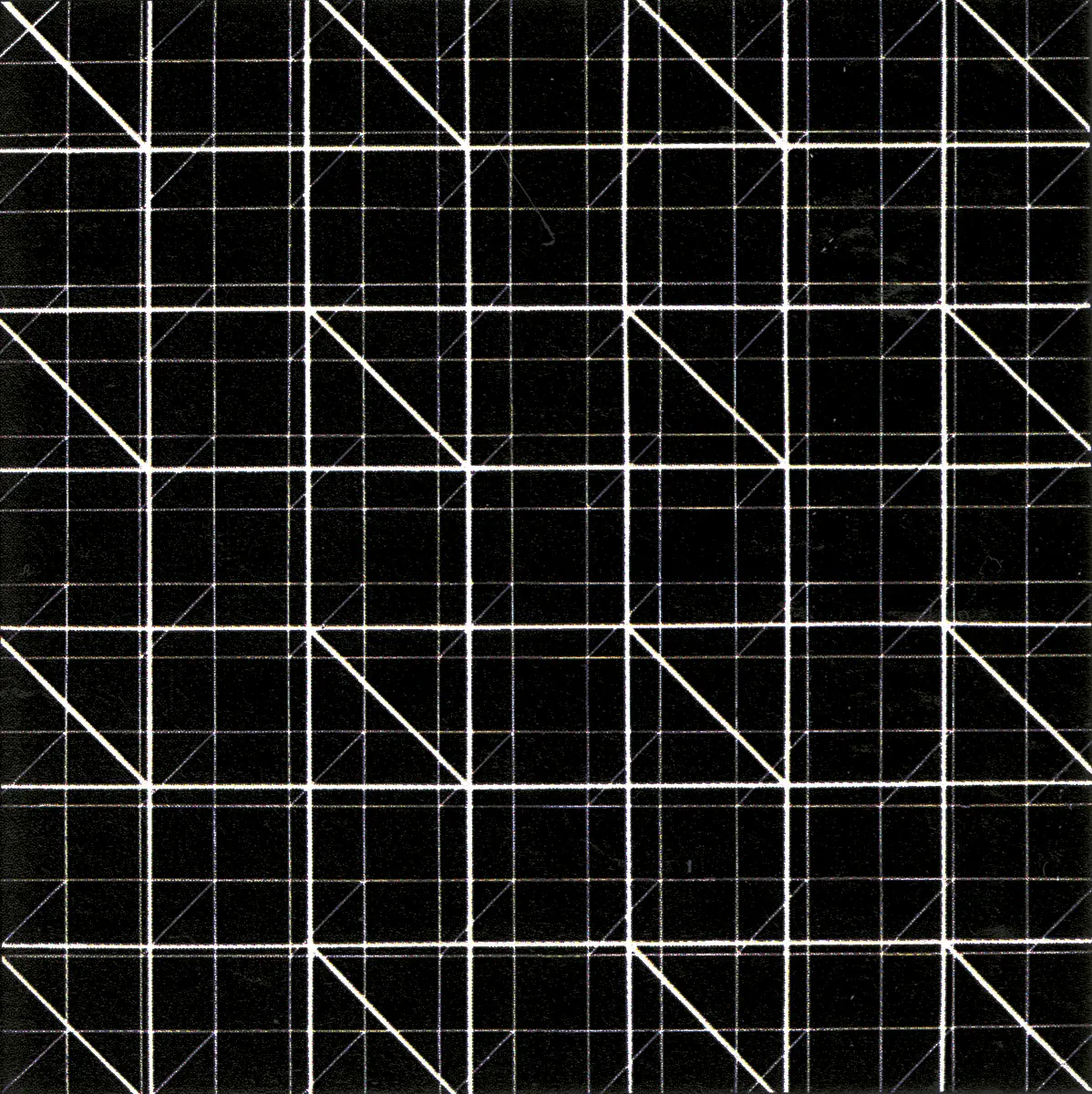
In her paintings of the 1960s, Sosa minimized her expressive resources: she worked in square formats and with basic elements (line, square); and her palette was limited to just a few colors, primarily black and white. In her explorations during this period, geometry became a tool to avoid symmetrical solutions and aestheticism. The work of art was a propitious space for perceptual investigation and the accompanying problems.
Estable inestable (1965), dominated by a reticular structure based on horizontal, vertical, and diagonal lines, plays with the notions of shape, direction, and depth. The intricate grid suggests the presence of cubes of different sizes and spatial orientations entering and leaving the plane. This dialogue between the planimetric of the surface and the potential of space anticipated Sosa’s later explorations of three-dimensionality.
Pantalla para imágenes posteriores (1965) is a composition of irregular squares that attempts to subvert the impenetrable, static character of the pictorial surface. Sosa’s colored shapes are rhythmically spaced throughout the edges and center of the work, generating the perceptual effects of distancing and approximation that break the stillness of the plane. In this case, space becomes a virtual configuration, not in the sense of its unreality but as a potential, or possibility of being, that is, as a field traversed by opposite forces where the support’s physical irreducibility counteracts the dynamism of the visual relationships. A variation on this theme appears in 1984, in a group of four pieces —Superficie blanco-negro; Superficie negro-blanco; Superficie blanco-blanco; y Superficie negro-negro— where the artist revisits the central irregular squares and perforates the plane, to return to the themes of depth- and size-perception. In these instances, the “wall,” or painting ceases to be a mere spatial reference and opens itself up to an unknown world.1
Objects
In the late 1960s, Sosa began to explore three-dimensionality and created participatory structures, usually of wood and Formica. Siete objetos blancos (Ateneo de Caracas, 1969), an exhibition of some of these works, proposed a direct and spontaneous relationship with the viewer and brought to bear notions of weight, balance, and touch. These pieces were conceived for playful manipulation rather than for pure visual contemplation.
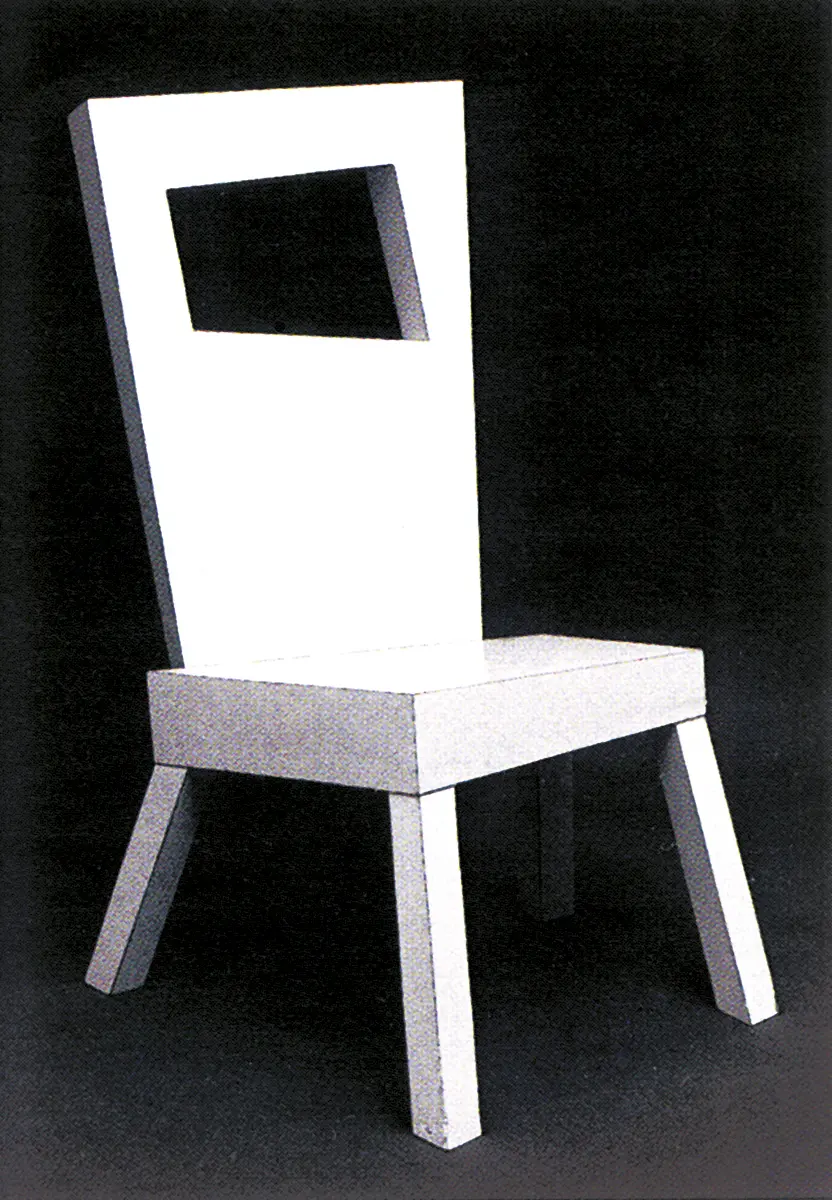
Sosa’s chairs appeared almost simultaneously with her participatory structures. The chairs are paradoxical objects whose form and function are directly linked to the human body. Sosa approaches the chair as an evocative structure that possesses a variety of physical, tactile, and stylistic meanings. Framed within this concept, her Silla cubista (1969) articulates irregular elements that contradict the principles of ergonomics. Another instance of a chair being transformed into a speculative motif is Punto cero de la silla (1981), which comprises three geometric modules that connect to form a compact volume.
Sosa defines her three-dimensional works as objects, not sculptures. This, she says, is due to the fact that her initial explorations are rooted in painting. In truth, her work consciously moves away from all discipline and genre compartmentalizations and is not subjected to rigid processes but to the designs and requirements of Sosa’s own poetics.
Actions
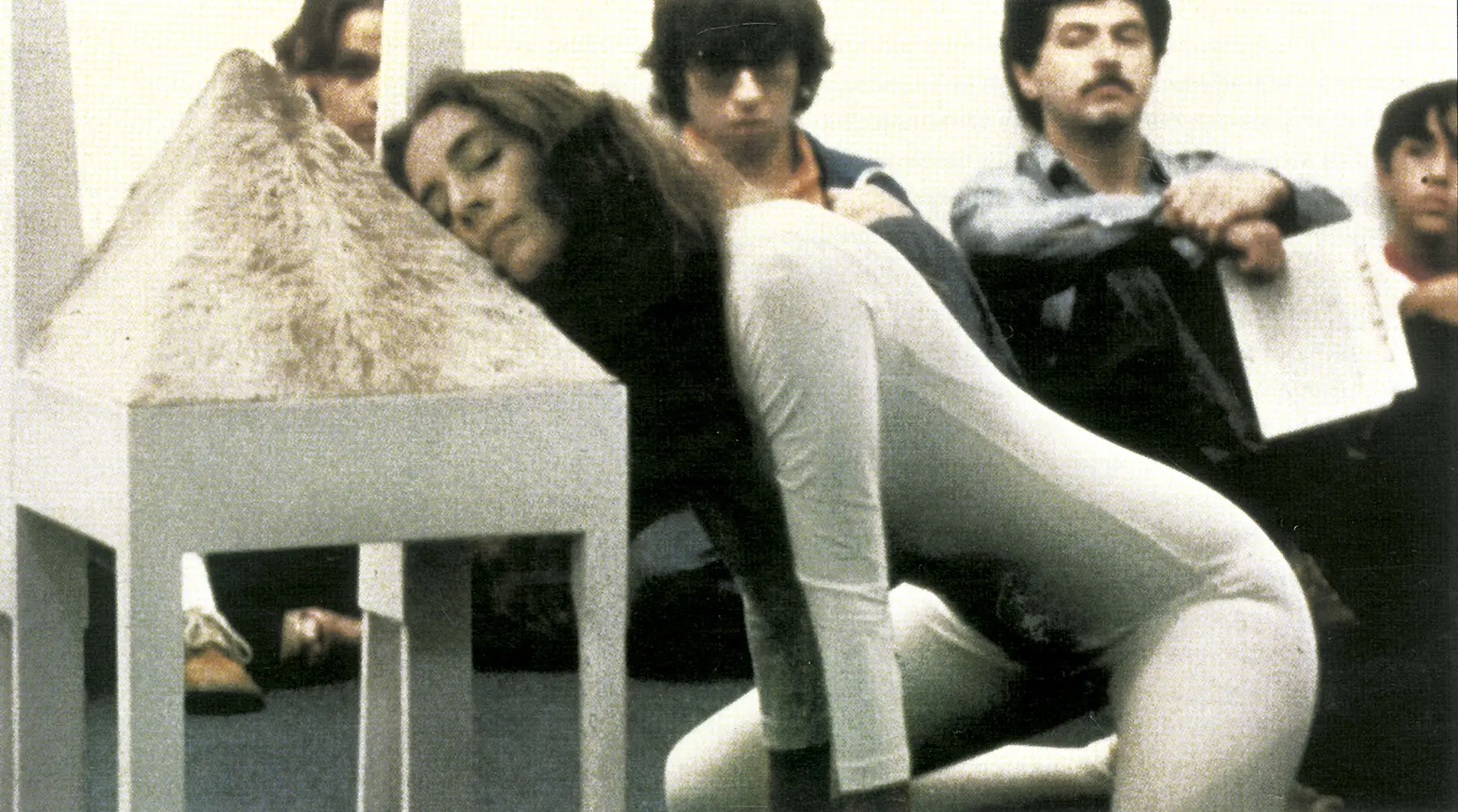
Both the participatory structures and the chairs carried the seeds of what would become Sosa’s body actions. Plataforma II (1969), conceived for the Siete objetos blancos show and publicly destroyed when the show ended,2 signaled a transition from surface to object, and at the same time bound the latter to a relationship with the body. The work was a nine-piece volumetric structure held together by springs that allowed viewers —especially children— to move across it. On September 5, 1969, days before the work was destroyed, Rafael Pineda —coordinator of the Pro Ciudad Bolívar Museum Committee at the time— asked Sosa in an open letter “not to destroy her work” and to “donate it instead” to the Ciudad Bolívar Museum.3 Sosa replied, also in an open letter, that she intended to destroy the piece “because otherwise the idea…would be truncated by a conciliatory gesture towards the notion of protecting and preserving works of art, turning them into untouchable, frightening objects."4 The destruction of Plataforma II and the debate that surrounded it established an important precedent for both the development of Sosa’s work and the evolution of body art in Venezuela.
Between 1973 and 1975, Sosa was a member of the Contradanza group, which presented body-art experiences the artist would later use in her own work. Gesture, voice, and the lived experience of space became part of Sosa’s creative repertoire, always with the intellectual rigor that distinguishes her. Subsequent actions would also incorporate elements already present in her previous work, particularly the chairs.
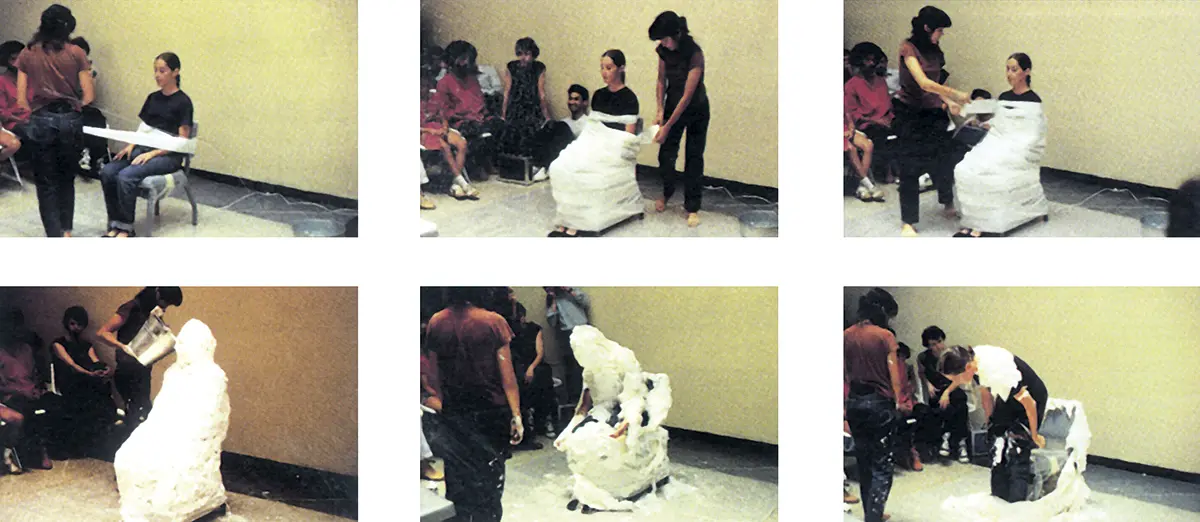
In Conversación con baño de agua tibia (1980), Sosa is wrapped in white toilet paper while she listens to a recorded conversation about art. The action ends when the artist is splashed with cold water and her flimsy wrappings break. Words and forms as components of a fleeting ritual dissolve into the relative nature of meaning.
In the midst of the boom in body art that took place in Venezuela in the early 1980s, Sosa took part in Acciones frente a la plaza, a 1981 event organized by Fundarte’s Department of Visual Arts and held around the Caracas Federal District government building. Here, Sosa presented ¿Y por qué no?, a piece in which she broke ten glasses using different parts of her body, against a background of images and sounds of breaking glass. This work combined moments of anxiety and catharsis.
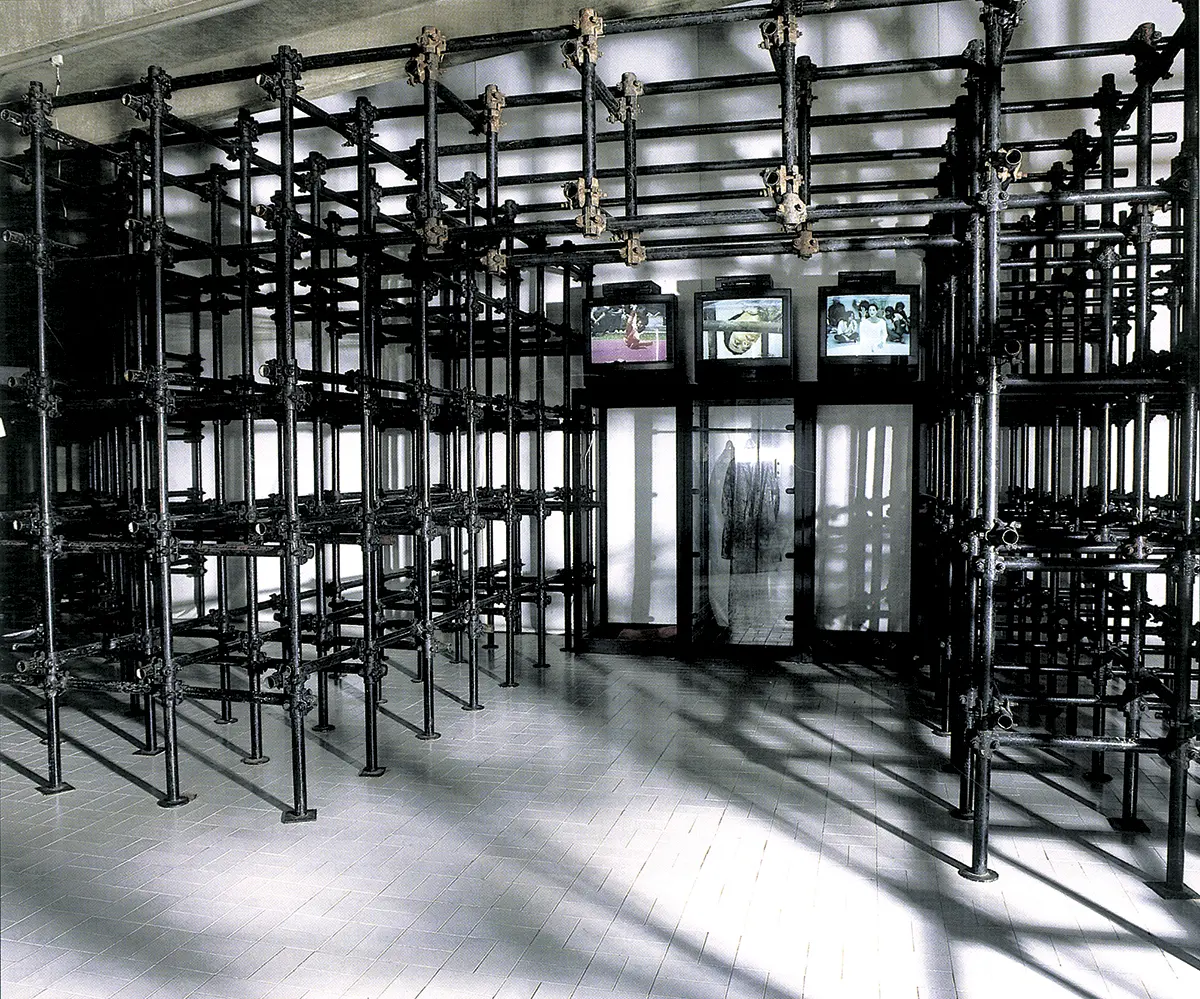
Del cuerpo al vacío, a three-part performance, summarizes a number of constants in Sosa’s work. Already at the height of her development as a performance artist, Sosa used a scaffold that referred to the geometric structures of her 1970s paintings. Space, body, and object flow into a sublimated synthesis of the internal (voice and scream) and the external (the city’s sounds and its visual and tactile stimuli).
Sosa’s actions are usually dominated by opposite forces, creating pendulum-like oscillations between rationality and instinct. As Juan Calzadilla writes, “…the objective is to break harmonies and balances, proposing risks that subvert them for the benefit of a freedom that follows its own course, a freedom that also opts for chaos."5
Installations
Sosa’s works are articulated on the basis of antithetical relationships, in particular the physical and subjective contrapositions of inside and outside. This is clearly expressed in Situación titulada casa (1981), an installation of four exposed-brick walls crowned with broken pieces of glass. Both the walls and the cutting instruments that protect the singular space refer to the problems of urban insecurity and confinement, regardless of on what side of the wall one is found.
In Sosa’s installations, space and body are parts of a single experience. In order to express that connection the artist has invented the anto, a measurement unit of 163 cm, derived from her physical height, which allows her to measure the world according to her own scale. By this means, the perceptual process transcends conventional measurement patterns to approach a Merleau-Pontian perspective, according to which “experiencing our own bodies teaches us to root space in existence."6
The relationship between body and space was strongly emphasized in Cas(a)nto: Una propuesta de Antonieta Sosa (Museum of Fine Arts, Caracas, 1998), an exhibition that condensed three and a half decades of work by the artist. Sosa recreated her own home —bedroom, kitchen, living room, backyard— within the exhibition space, placing a series of drawings, paintings, objects, photographs, and videos throughout the areas. To this, she added everyday activities such as dusting or taking tea. With this, Sosa’s home became an open space; what was private immediately became public and intelligible.
Teaching
Sosa’s artistic work is closely linked to her activities as a teacher to children and older art students. A large part of these activities has taken place at the Armando Reverón University Institute for Advanced Fine Arts Studies (IUESPAR) in Caracas, where Sosa has been a faculty member since 1992. There she has taught classes on the language of the visual arts and has contributed to the education of a number of artists who have an important national and international presence.
“For me,” Sosa says, “teaching is a laboratory, a large laboratory. I move on a wide communicational spectrum. I studied psychology and have a distinct interest in pedagogy, and all that drives me to find connections among things, to find relationships. I never assume that something that is over here is unrelated to something over there. Something, maybe many things, connects them in the present moment. Teaching always poses the problem of the Other, and that is a very good thing. It is healthy for me. If I work only on myself, I suffocate. Working exclusively on myself is like having some kind of indigestion. I don’t live in a glass tower."7
Final consideration
Sosa’s paintings, objects, situations, and installations, as well as her positions regarding perceptual and conceptual problems she has had to face, place her among the select group of Latin American artists who establish continuity between the Modern tradition and the contemporary moment. Her questioning of geometric art’s purist utopia without wholesale rejection of its philosophy, and her embracing of the exigencies of an art conceived from and for reflection, are laudable efforts. Sosa’s development has been molded from the margins of hegemonic discourse, rejecting epigonic options and in each case searching for a personal, substantial, edifying solution.
The different moments in Sosa’s oeuvre —surface, object, body, and vacuum— become analytical nuclei for successive speculations. This is the outline of a philosophy and a body of work that has grown over time into expressions ever clearer and more pertinent.
Sosa has built a non-exclusive poetics, whose resolution is both heterodox and clean. This has allowed her to play with autobiographical and contextual elements without falling into the emptiness of confessionalism or the picturesque. Everything Sosa does flows from an internal meditation channeled through careful stagings where the language of the body works as an axis.
*All images illustrating this article are photographs from the documentary files of the artist. Courtesy: Museo de Bellas Artes, Caracas.
NOTES
1. Cf. Carmen Hernández, “Los múltiples tránsitos de Ca(a)nto,” in Cas(a)nto: Una propuesta de Antonieta Sosa, Exhibition catalog, (Caracas: Museum of Fine Arts Foundation, 1998), p. 14.
2. Plataforma II was destroyed at 12 noon on Sunday, September 7, 1969, in front of the then Museum of Fine Arts of Caracas. This action was part of a protest against Venezuela’s participation in the X São Paulo Biennial, as a means of denouncing the Brazilian dictatorship.
3. Rafael Pineda, “Rafael Pineda solicita de Antonieta Sosa reconsidere su decision,” El Nacional, Caracas, (September 5, 1969), Section C, art page.
4. Antonieta Sosa, “Antonieta Sosa destruirá hoy su Plataforma II,” El Nacional, Caracas, (September 7, 1969), Section C, art page.
5. Juan Calzadilla, “Siete eventos para una nueva lógica del arte venezolano,” in Acciones frente a la Plaza. Reseñas y documentos de siete eventos para una nueva lógica del arte venezolano, ed. María Elena Ramos, (Caracas: Fondo Editorial Fundarte, 1995), p. 26.
6. Maurice Merleau-Ponty, Fenomenología de la percepción, 4th Edition, (Barcelona: Ediciones Península S.A., 1995), p. 165.
7. Antonieta Sosa, “Vivo encadenando el arte,” interviewed by Rubén Wisotki, El Nacional, Caracas, (2001).
FÉLIX SUAZO
Venezuelan art critic and researcher.