
The last retrospective exhibition of Francis Picabia’s work was held here, in this same museum, in 1976. Picabia (1879–1953) has been the subject of many selected presentations throughout the world since then, each of them focused on one or another specific period of his career. With its pointedly meaningful title, this new Parisian exhibition is more than a retrospective; thanks to the presence of a large number of works from different periods, it also facilitates a synthetic reading of a body of work that seems to lack unity. Emphasizing Picabia’s eclecticism and his “marginality,” the show also responded to a strong sense of anticipation among the museum-going public, at a time when artists are increasingly finding a point of reference in Picabia.
Born in Paris to a family headed by a father of Spanish origins who had made his fortune in Cuba, Picabia had it all: wealthy and strikingly handsome, he possessed the elegance and the self-assurance of a born ladies’ man, and he was gifted as a poet, novelist, journal editor, screenwriter, and ballet librettist. Picabia was also a successful organizer of parties and events. His skills as a polemist, his caustic sense of humor, his charm, his “instinctive strategy of scandal,” and his “taste for the blasphemous” generated both admiration and rejection, and they probably distorted the way in which his work was received. He was one of those artists —like Frida Kahlo, perhaps— whose resplendent and depression-ridden private lives attract the most sensationalist kind of commentary, and drown in anecdote the true nature of a body of work whose principal position questioned the figure by means of its exaltation or elimination. The essence of Picabia’s creative curiosity is found in his sudden artistic and stylistic shifts, which express, beyond the artist’s passion for painting and for images, his fear of disappearing.
The new retrospective at the Museum of Modern Art of the City of Paris is a timely event, occurring at a point when painting has for the most part vanished from the French capital’s exhibition halls and dares to appear only under the protective aura of the historical. A number of excellent exhibitions seen recently in Paris, from “Manet/Velazquez” to “Matisse/Picasso,” bear witness to pictorial and iconographic relationships between painters, and to the insidious temptation of mimesis that arises, despite the artists themselves, from their mutual admiration. For Picabia, the “other” is not a figure of danger; on the contrary, it is a fortunate circumstance to be able to use and mold the “other” according to one’s own desires. Picabia is unique in the sheer diversity of his sources, although he always insisted on his artistic autonomy, which he saw as an essential freedom of choice and interpretation. “The painter selects a model,” Picabia wrote, “and then he copies what he selected, the distortion of which constitutes Art.” Faced with an artist’s entire oeuvre as in this exhibition, any observer will attempt to find an intrinsic coherence, a construction of the creative essence over time. Picabia, however, demands a different approach, since it is precisely the lack of coherence —which ultimately is merely superficial— that gives the artist’s career its unity, more of a playful stance before art and life than a rigorous, systematic analysis of the creative process.
The exhibition was conceived as a chronological survey, and it gathers almost two hundred works that evoke the varied aspects of Picabia’s artistic creativity, as well as his interventions in poetry and literature (collaboration with the journal 291, 1915–1917; founding of the journal 391, 1917, in Barcelona; publication of poetry collections, 1918–1919; collaboration with the journal Literatura and several avant-garde publications, 1919; creation of Relâche, 1924, for the Swedish Ballet around music by Erik Satie, and Entr’acte, a film collaboration with René Clair). In 1938, along with Arp, Bryen, Delaunay, Duchamp, and Kandinsky Picabia signed the Dimensionist Manifesto written by Charles Sirato.
From his earliest work, at the turn of the century, when he painted in the manner of the expressionists, to his final Puntos (Points) of the late 1940s and early 1950s, the brilliant, provocative, nonconformist eclecticism of Picabia’s “kaleidoscopic” work (Duchamp) confirms a statement made in 1922 by the poet André Breton: “For a change from Picabia, nobody better than Picabia.” This was a prophetic declaration about an artist who would never cease to renew his relationship with images and with life, in a seldom-equaled whirlwind of forms and techniques. By the time Breton wrote those words, Picabia had already traveled through Impressionism and Neo-Impressionism, Fauvism, and Orphism, and he had rubbed shoulders with Dadaism through a surprising variation on the theme of machinery, with copies based on mechanical illustration published in scientific magazines. Throughout his artistic life, Picabia asserted himself as a free-spirited creator to whom the slogan of May 1968, “Enjoy Without Hindrance,” could apply perfectly. He was free to experiment with different materials, to approach different subjects, to change his style, to leave his own prior investigations behind, to return to images previously abandoned, to find inspiration in photography and in Nietzsche’s writings, and to obliterate all representation in order to end art, painting, and his own life. In summary, he could revel in rupture and change, to become the typical “anthropophagite,” according to the definition of this term that emerged from the Semana de Arte Moderno in São Paulo, in the 1920s.
With Les Cygnes (The Swans), Picabia abruptly abandoned previous work that was squarely inscribed within the impressionist style of Sisley or Pisarro that he had adopted between 1902/03 and 1909. These were years of intense productivity. Picabia is known to have created close to a thousand pieces. “This idiotic and petulant work,” wrote G. Breerette in Le Monde, “is to a degree emblematic of an exhibition that reveals how distanced from reality the painter has become, working his images through intermediaries such as photographs and magazine reproductions.”
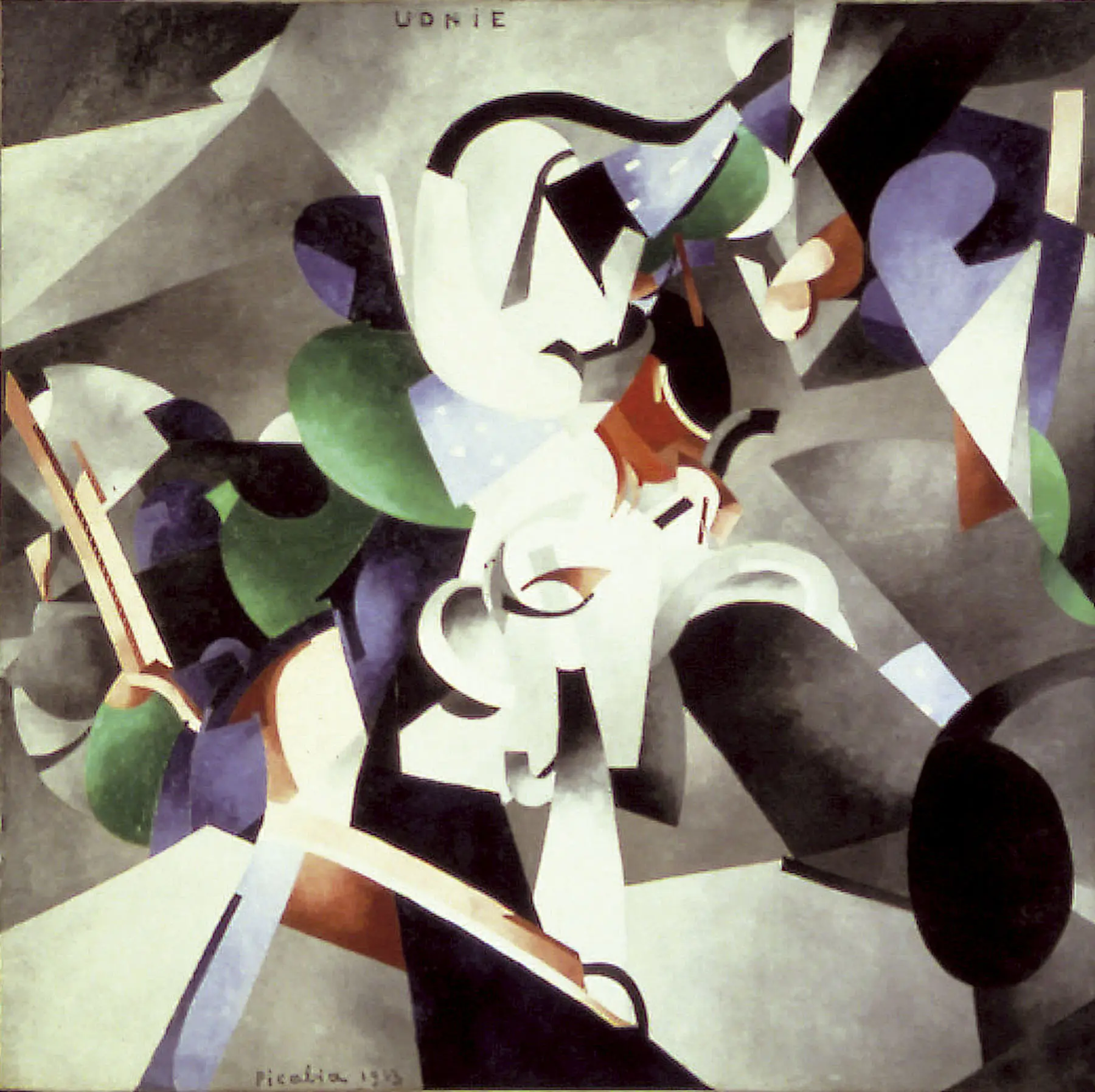
The retrospective opens to a space titled “Orphism,” where we can appreciate the lessons of cubism as expressed in canvases like Udnie, Mariage comiqué (Comical Marriage), and Je revois en souvenir ma chére Udnie (I See Again in Memory My Dear Udnie, 1914). In the case of the latter two, the post-Fauvist construction is shot through by organic forms that infuse geometry with a warm and voluptuous sense of humanity.
In 1913, Francis Picabia, the only French artist who was able to travel to New York for the Armory Show, reestablished contact with Marcel Duchamp, with whom he had become acquainted in France in 1911. In 1915, Picabia returned to the United States to work in a new plastic language with the machine as its essential referent: Picabia took from industrial design its precise, technical draftsmanship, shortening the gap between the artistic object and the manufactured product. Trés rare tableau sur la terre (Very infrequent painting on the Earth) is the first example of collage in Picabia’s oeuvre, and “it clearly shows Picabia’s project at the time: to produce art of an absolutely new kind, devoid of referent, thematically self-sufficient, capable of obliterating the difference between the work of art and the industrial product.” The complicity that developed between Picabia and Duchamp, as well as the resulting mutual emulation, turned those years into a period of intense creative activity, as witnessed by a large number of works (paintings, inks, drawings, gouaches, and watercolors, all well represented here) and a significant literary production (carefully displayed throughout the exhibition, especially those issues of the journal 391 that included contributions by Picabia.)
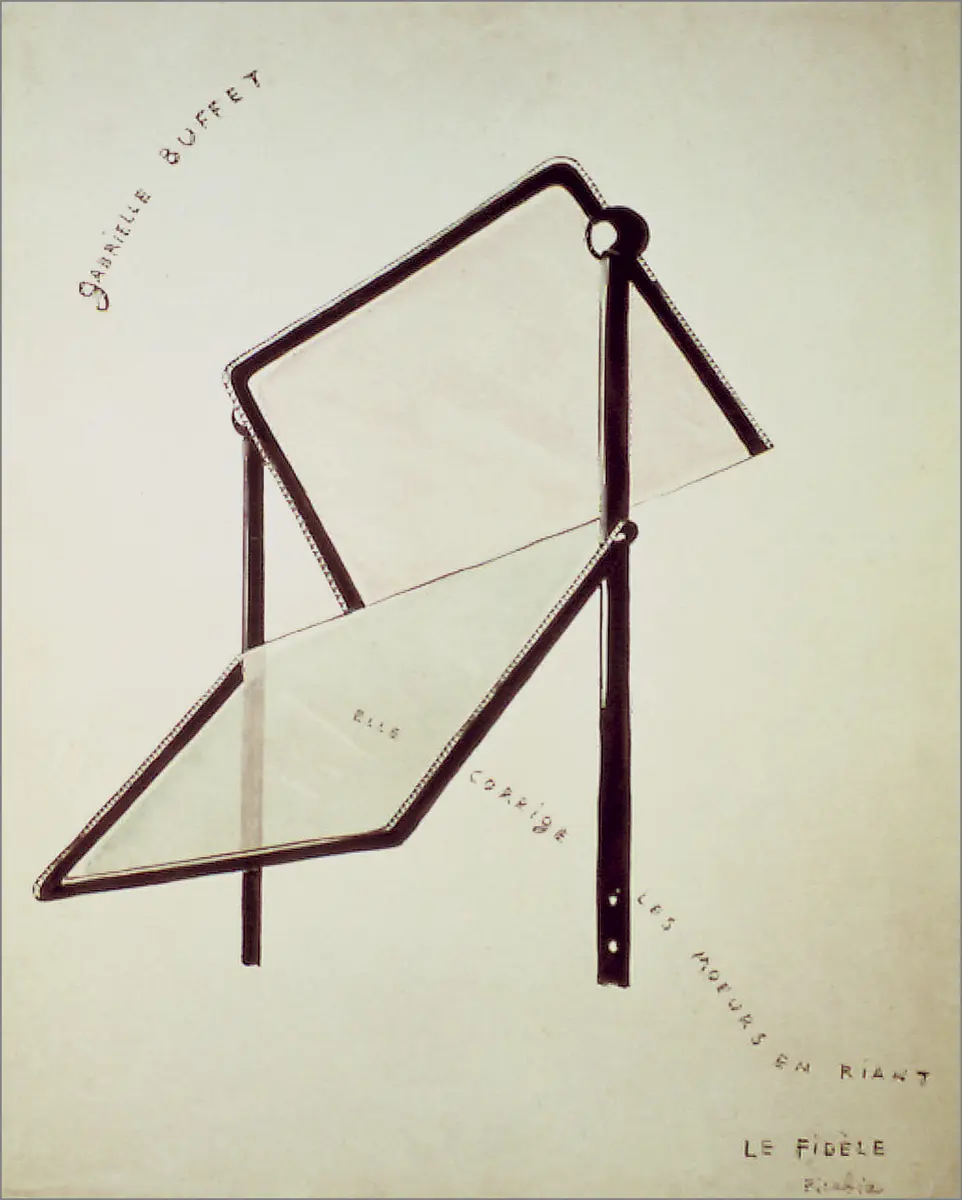
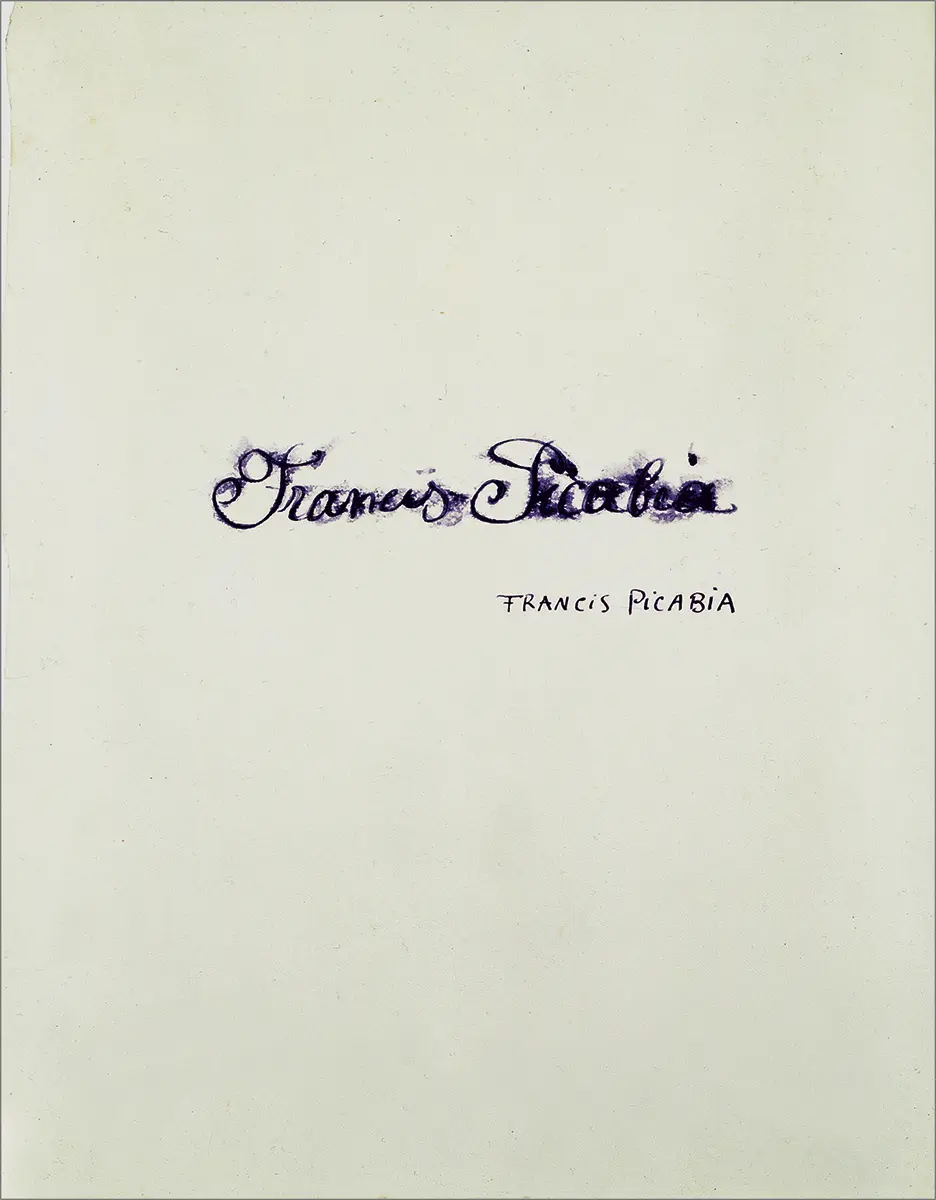
Next, we find Gabrielle Buffet. Elle corrige les moeurs en riant (Gabrielle Buffet. Correcting Customs with Humor), which deserves special mention for a number of reasons. On the one hand, the use of glass reminds us of Duchamp’s Bride; on the other hand, the inscription of the text/title on the work itself refers us to definitions found in the Petit Larousse dictionary, a procedure Picabia used exhaustively in many different media. In the case of the work cited, the definition corresponds to the word “comedy.” Two provocative works from 1920 are also displayed in this section of the show, devoted to Picabia’s Dadaist period —a period that these pieces humorously illustrate. They are La Sainte Vierge (The Blessed Virgin), whose absent image is reduced to a black, amorphous dripping, and Jeune fille (Young Woman), evoked by a white space traversed by a black circle, on top of which the title appears. Later, with L'oeil cacodylate (The Cacodilatous Eye, 1921), Picabia made the notion of authorship relative, inviting his friends and other people to intervene in the creation of the work by signing it or by writing short texts on the canvas. With Francis Picabia, the artist carries this logic to the limit, by making his signature the entire work of art.
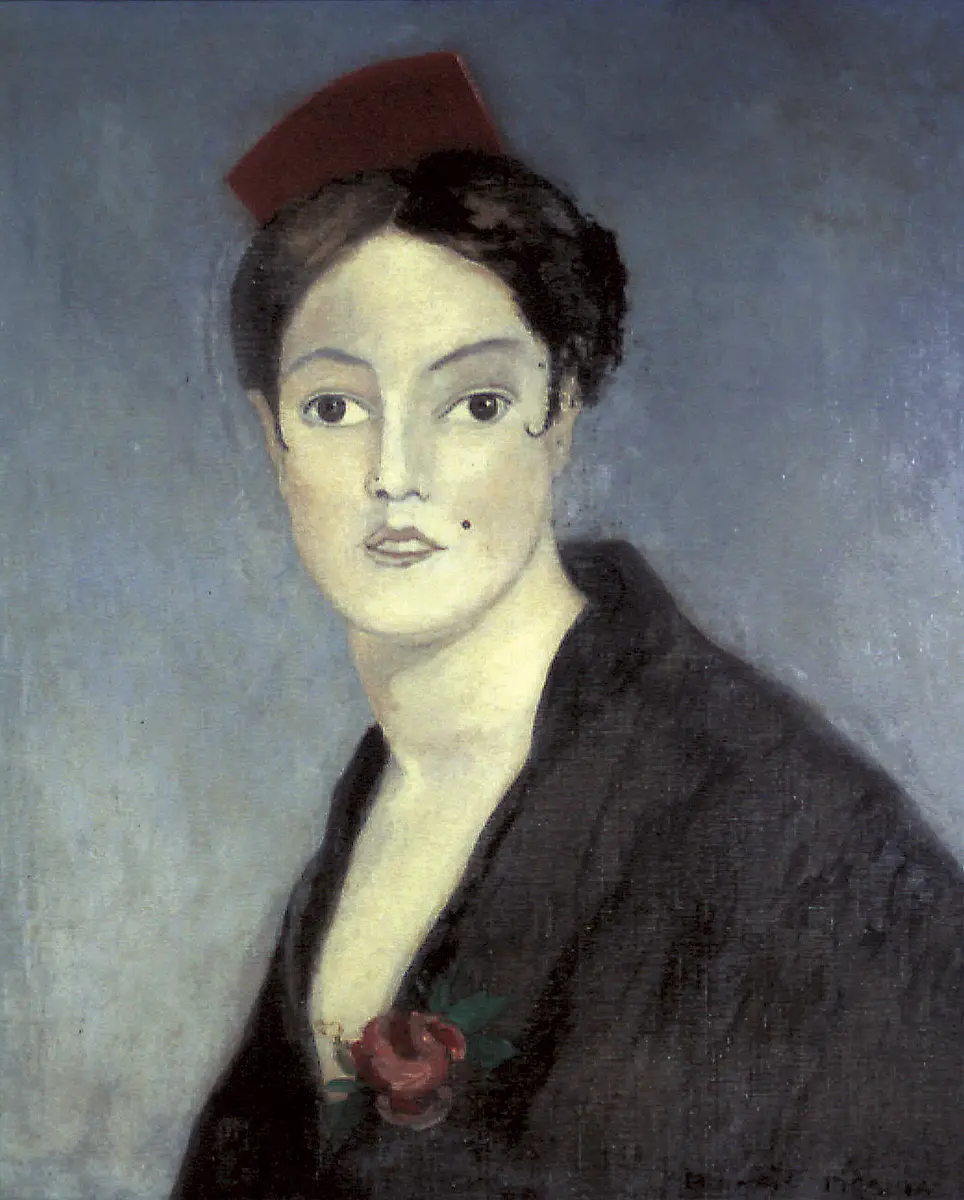
Picabia’s intense membership in Parisian Dadaism ended on 11 May 1921, when the artist loudly broke with the movement —even if he never renounced its philosophy— and moved to the south of France, settling in Mougins, near Cannes. In 1927, Picabia wrote: “I invented Dadaism like a man who, as the flames advance toward him, ignites a circle of fire around himself in order not to burn.” Between 1930 and 1936, in his new geographic environment and beset by financial problems, Picabia was forced to become an organizer of unconventional galas and events, original spectacles animated by his surrealist spirit. Yet it was in this same period that he embarked upon a new adventure as a painter. Inspired by Spain, an influence already apparent in his 1902 oil portrait Espagnole (Española), he produced works using industrial decorative techniques that emphasized the effects created with paper cutouts and paste-ups. The motif of the bull’s eye also appears around this time, inspired by the shooting games found in carnivals. La nuit espagnole (The Spanish Night) is the most emblematic painting from this time and it ushers in a new period in the artist’s development. Heterogeneity becomes a conscious “system” in Picabia’s work, who declares himself an “artist in all genres” (1923).
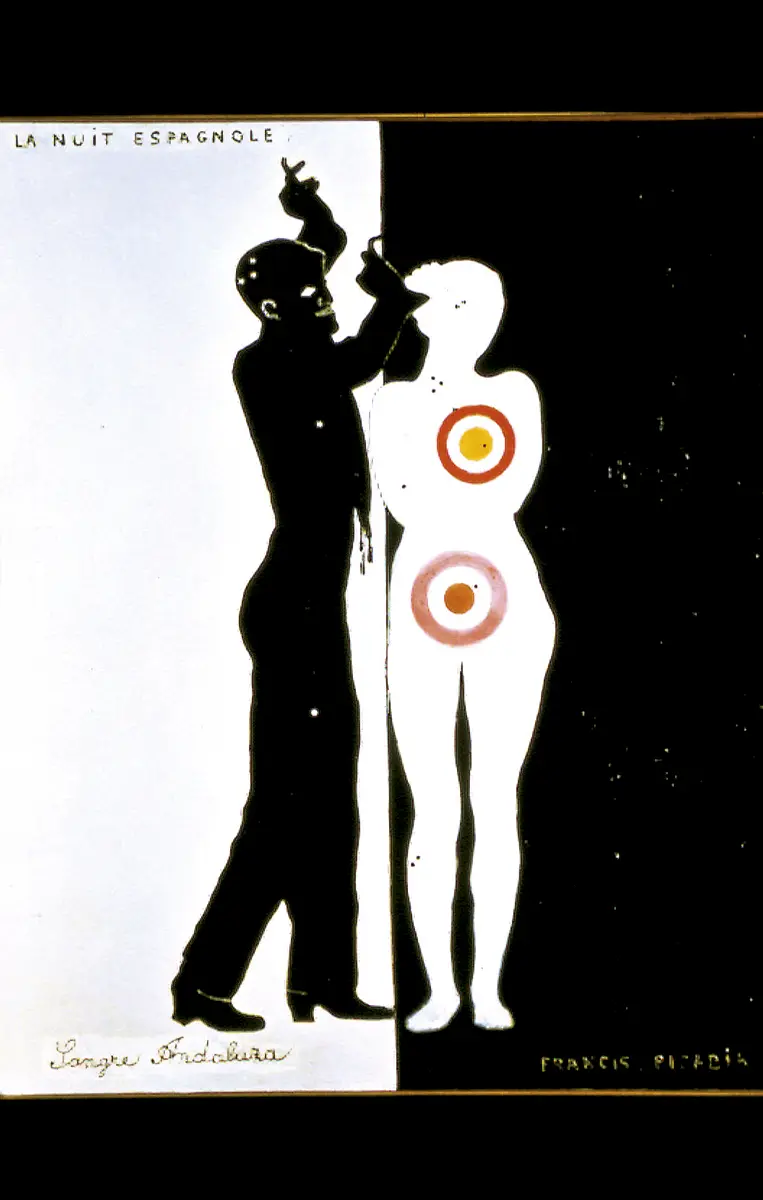
As he prepared his exhibition for the Dalmau Gallery in Barcelona, Picabia planned to send The Spanish Night to the Autumn Salon. These two exhibitions happened simultaneously, and there is a relationship between them (Andalusian Blood). Picabia placed the Españolas series among his mechanical drawings, creating a contrast that reinforced Dadaist irony. Regarding the Españolas the artist wrote: “In my opinion, one should appeal to different tastes. There are people who dislike machines: I offer them some Españolas. If they don’t like them, I will make some French ones for them. When I show my work, it is also because I am after some publicity. And I expect my paintings to sell well.” (From an interview with Roger Vitrac, Journal du peuple, June 9, 1923.)
Having reached this point in the show, and having already discovered the many shifts in Picabia’s career, the artist’s fertile creativity no longer surprises the visitor. Picabia’s new chosen way is the re-direction of popular motifs in collages with all kinds of different materials and ingredients, such as feathers, macaroni, lead threads, straws, etc., held together with a coat of industrial paint. These everyday materials result in paintings in strident, flat colors —works that clearly remind the viewer of the postcards that Picabia used for inspiration and from which he took his “romantic” themes: embracing couples, kisses, and love scenes of all kinds. This series, entitled Les monsters (The Monsters), and the grotesque elements that characterize it, the exaggeration of the stroke and the color, do not obscure completely the varied influences of the great masters, especially Rubens and Titian.
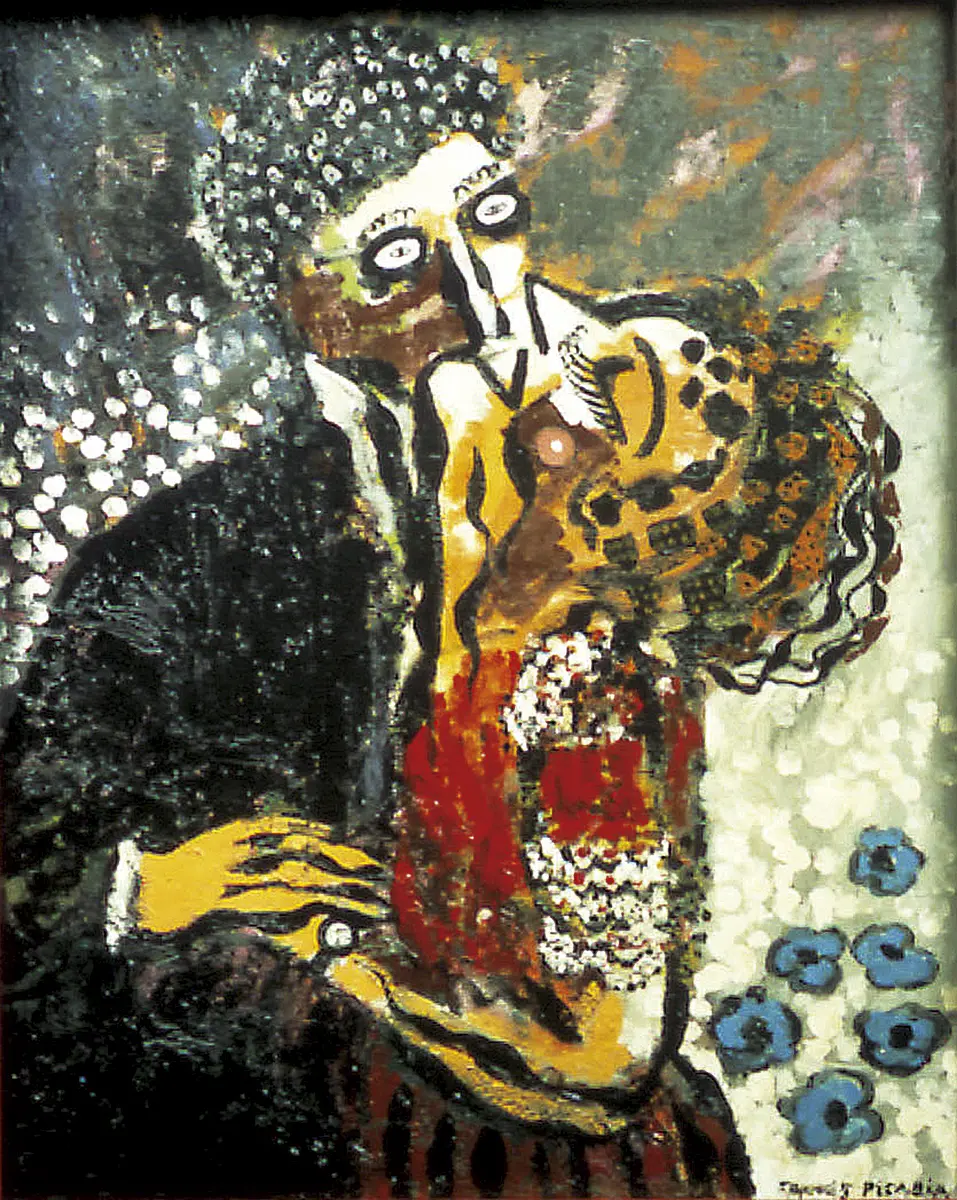
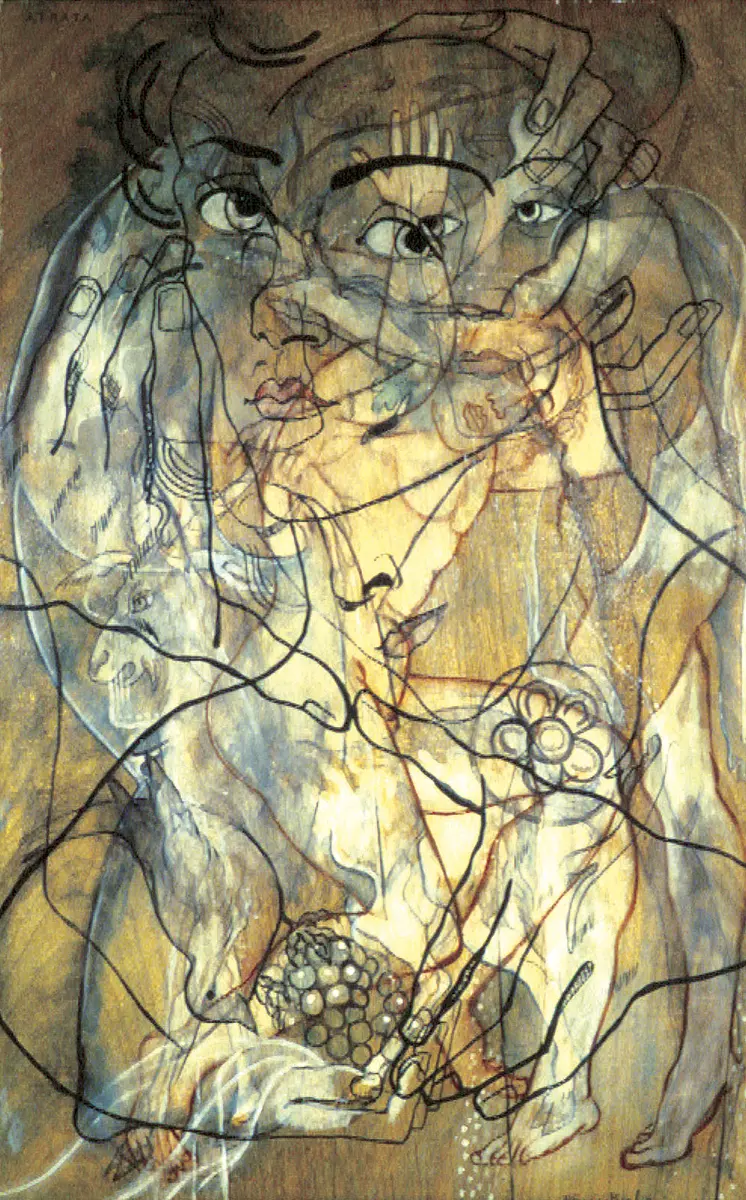
Picabia’s raid into art history continued with a series of large-format works created between 1927 and 1932. Entitled Transparencies, the pieces were plastic exercises in which he superimposed or mixed transparent images from a variety of sources (Botticelli, Piero della Francesca, Catalan art, illustrations from encyclopedias, etc.). The titles for these works were drawn from the Bible (Salomé, Judith) or from Greek mythology (Minos, Apollo). With such a melting pot of influences and references, Picabia once again showed his interest in the relationship between popular and erudite culture, including an interest in time and in film. The pictorial technique employed here characterized by veils and coverings, is also a demonstration of great refinement.
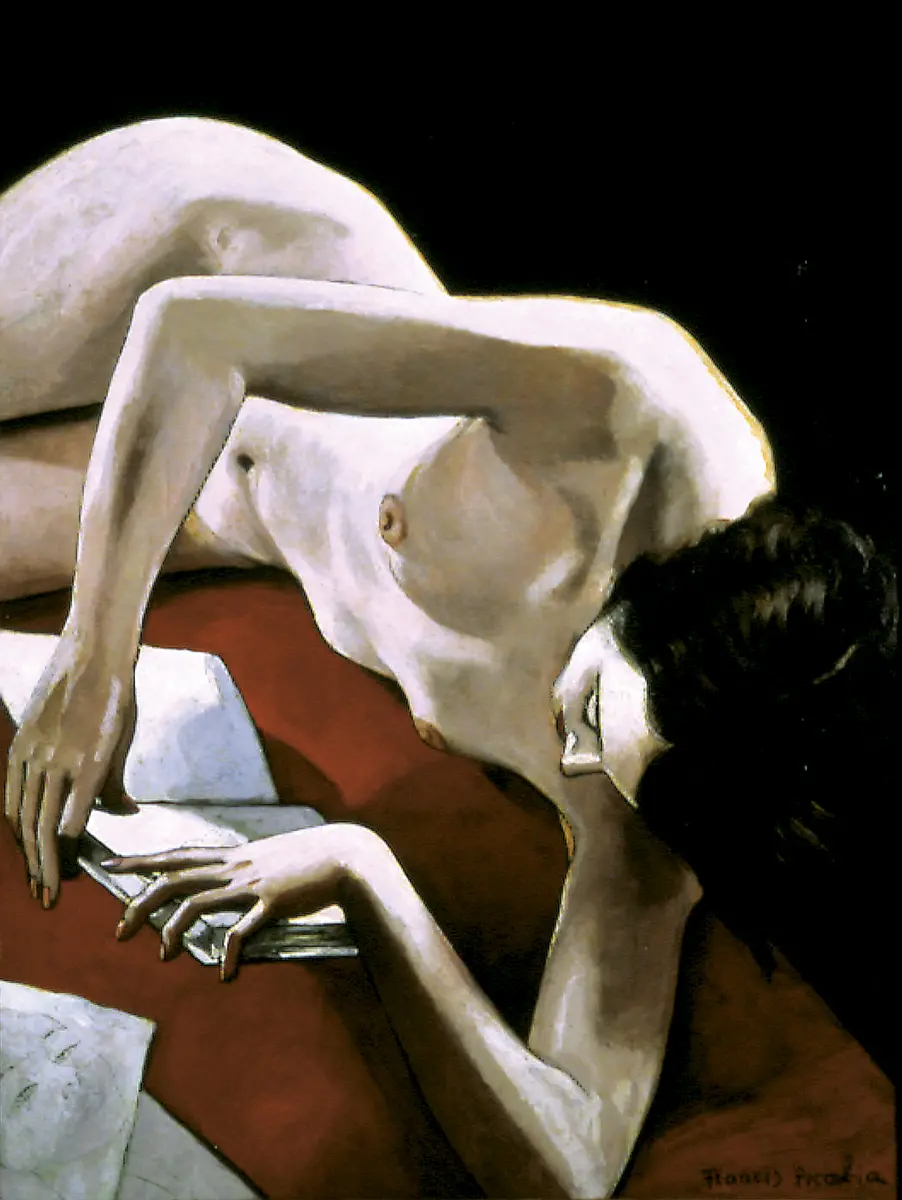
The second half of the 1930s was a period of anxiety and confusion for Francis Picabia. Starting in 1935, he alternates works of a formal and austere realism Portrait de Gertrude Stein, Le Clown Fratellini (Portrait of Gertrude Stein, Fratellini the Clown) with more abstract pieces (7091). From 1941 on, Picabia developed a new series of works that were already evident in his figurative canvases of the 1930s, specifically in Nude Figure With Landscape of 1938. Beyond the imagery inspired by popular magazines such as Mon Paris, Paris Sex-Appeal, Pour lire à Deux, etc., the Nus (Nudes) series makes explicit the topic that had motivated Picabia since the times of Dada. But next to those hyper-realist figures that express a naively idyllic sense of happiness, such as Cinq femmes (Five Women) (1942) or Nude Figure Reading, Picabia creates more complex works, especially Femme á l’idole (Woman and Idol). In his writings, he castigated repeatedly those with an excessive enthusiasm for African art. Here, he seems to be playing with words and images, turning African fetish figures into icons of erotic fetishism.
Picabia’s last years, between 1945 and 1951, were extremely productive. Back in Paris, the artist interacted with the young painters in the Abstractionist movement, such as Hans Hartung, Pierre Soulages, Henri Goetz, and Jean Michel Atlan. Without locking his art in any one category, Picabia moved between figurativism and abstraction, from the very informal to a highly personal iconography where more or less explicit, more or less visionary primitive symbols intermix with sexual images or symbols. Puntos, presented in December 1949 by the critic and poet Michel Seuphor at Galerie des Deux-Iles, is Picabia’s last work, and an epilogue on a few paintings done in 1951. With Puntos, he reviews old paintings and by reducing the format and minimizing the “motif,” materiality becomes more evident. This last period “which required all the previous ones” summarizes Picabia’s entire duality: affirmation and negation. Puntos also signify the drama of the last combat in life and in art.
To contemplate and examine an artistic oeuvre in its entirety is to seek in it a constructive coherence. In the case of Picabia, a different state of mind is required, since it is precisely in its lack of coherence that the meaning of Picabia’s work resides and finds its justification. The surprising shifts that punctuate Picabia’s career can then be seen as the expression of a playful attitude towards art and life, rather than a questioning of his own work.
The “rehabilitation” of Picabia to the pantheon of Modernism’s fundamental figures is not only an artistic, intellectual, and historical phenomenon but also a mediating event and a question of power. A show that attracts such a large number of visitors is also a successful commercial operation. On the other hand, the success of such an event is interesting in that the large presence of younger visitors could signify a newfound influence of Picabia among living artists, as support and comfort for some, as a repulsive force for others. All of this means that, at a moment in the history of art when the meaning of art itself is not always clear and easily understood, the lucid, playful trajectory of an artist whose oeuvre will soon be one hundred years old demonstrates that for true iconoclasts the future is promissory. It also shows that “to do what one wants to do,” as Rabelais prompted, is an option that in some cases, may well open autonomous and enduring avenues of work.
*All images illustrating this article are ©ADAP, Paris, 2003.
CHRISTINE FRÉROT
Art historian devoted to criticism, research, and teaching. School for Advanced Studies in the Social Sciences, Paris.