
The second edition of Muestra 2, Contemporary Art Fair, took place between April 3 and April 7 at the World Trade Center (WTC), in Mexico City. Although it was not its explicit intention, Muestra 2 has come to replace the old Guadalajara Fair, which lasted for seven editions and whose cancellation took many of its regular participants by complete surprise.
Muestra 2 also provides a sense of continuity following the first edition that was held in the northern city of Monterrey. According to the catalog by Graciela Reyes and Zélika García, Muestra 2 assembled twice the number of participants than the first edition and attracted more than 6,000 visitors.
In practice, Muestra 2 is the first contemporary art fair held in Mexico City. As with all first editions, two or three years will need to pass before its development, organization, and evaluation come into their own, and those small glitches that only appear when the fair is already set up are fixed. García tells us that the 2004 edition is again slated for Mexico City, although whether the WTC will continue as its venue is still being debated.
A pre-inaugural visit by collectors, scheduled for two hours before the general opening, attracted a smaller number of buyers than had been invited. Despite the fact that in subsequent days many collectors came to the fair (especially towards the evening hours), a large number of gallery owners and operators had fewer sales than anticipated, and many noted that the buyers were people already in their portfolio of clients. Yet, most of the participants left the event without financial loss, and even if expectations were not met, most of them admitted their intention to return to the Fair in spite of the cost per square meter (comparable to ARCO), because they appreciate the importance of the Mexican market.
Forty galleries participated in Muestra 2: 23 from Mexico (12 from Mexico City, 6 from Monterrey, 2 from Guadalajara, 2 from Oaxaca, and 2 from Guanajuato). Of the remaining exhibitors, 5 galleries were from the United States, 4 from Spain, 3 from Colombia, 2 from Venezuela, and 1 each from Cuba, Germany, and the Dominican Republic. Six institutions were also present, along with 32 publications, and 12 sponsors, some of which even had a physical space inside the fair. The event was the occasion for a dialogue that moved in many directions but always coincided with the promotion of contemporary art.
Very few exhibitors opted for so-called academic art or restricted themselves to well-known pieces by artists who already occupy a place in modern museums. Thus, works by widely recognized figures such as Jesús Soto, Édgar Negret, Fernando Botero, Ana Mercedes Hoyos, Manuel Mendive, Andy Warhol, Alfredo Zalce, and Enrique Guzmán shared the space with the work of much younger artists.
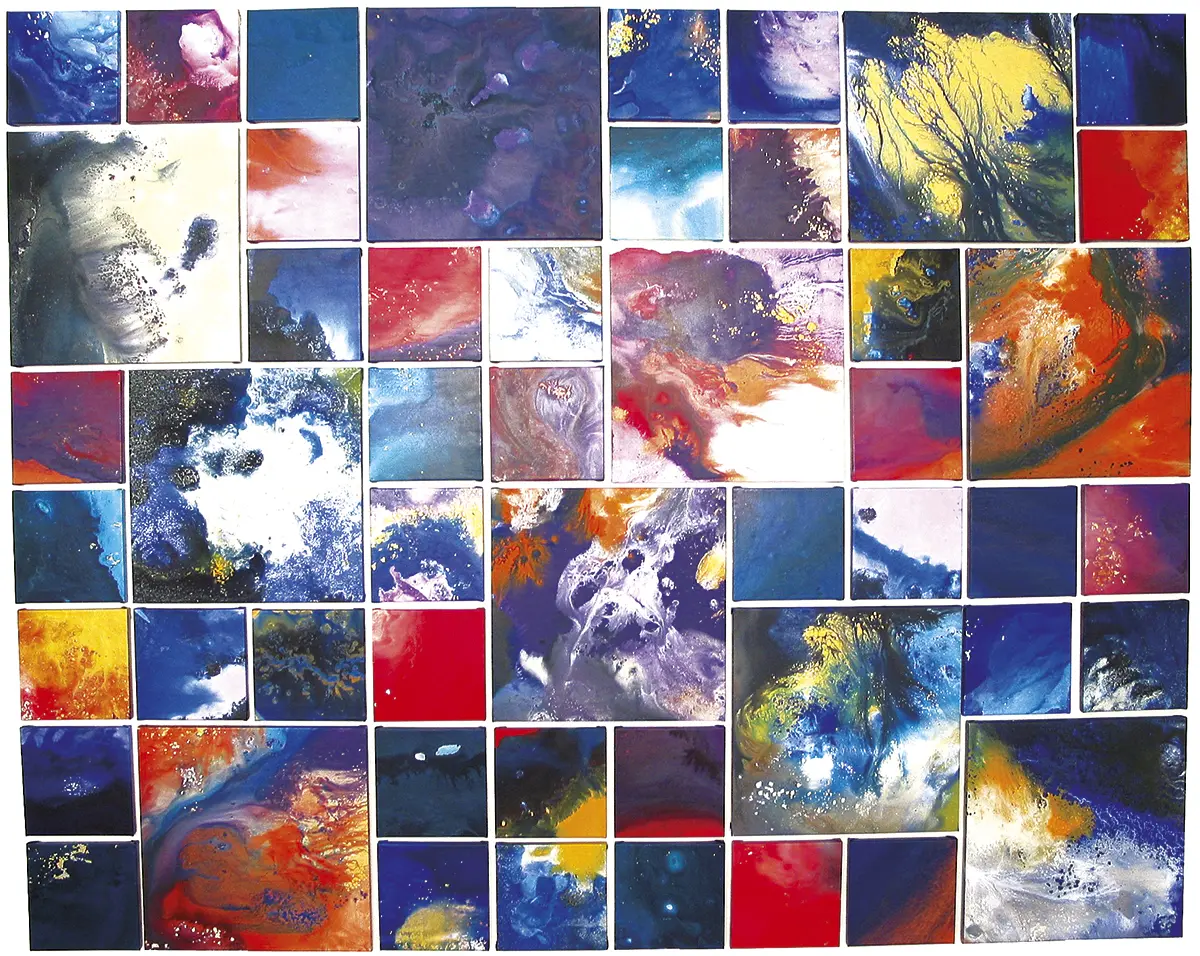
Among the surprises at Muestra 2 was the Drexel Gallery’s presentation of the work of, among others, the late Enrique Guzmán. The more contemporary artists in this gallery included Judith Elizondo, with a kind of acrylic macro-raindrops that evoked giant sperm, or worms crawling towards the floor. Gerardo Azcúnaga, winner of the Monterrey Prize, was represented with some small-format sculptures, and Fidel Figueroa presented paintings of impeccable language and craft that still bring to mind important artists of the previous generation (like Boris Viskin), which makes them no less attractive. Maribel Portela and her disquieting sculptures, Irene Clouthier with works from her Plastic Landscape series (somewhat related, conceptually, to Jiae Huang, who came with the Latinarte group), and the late Juan Caballero made this space one of the most interesting in Muestra 2.
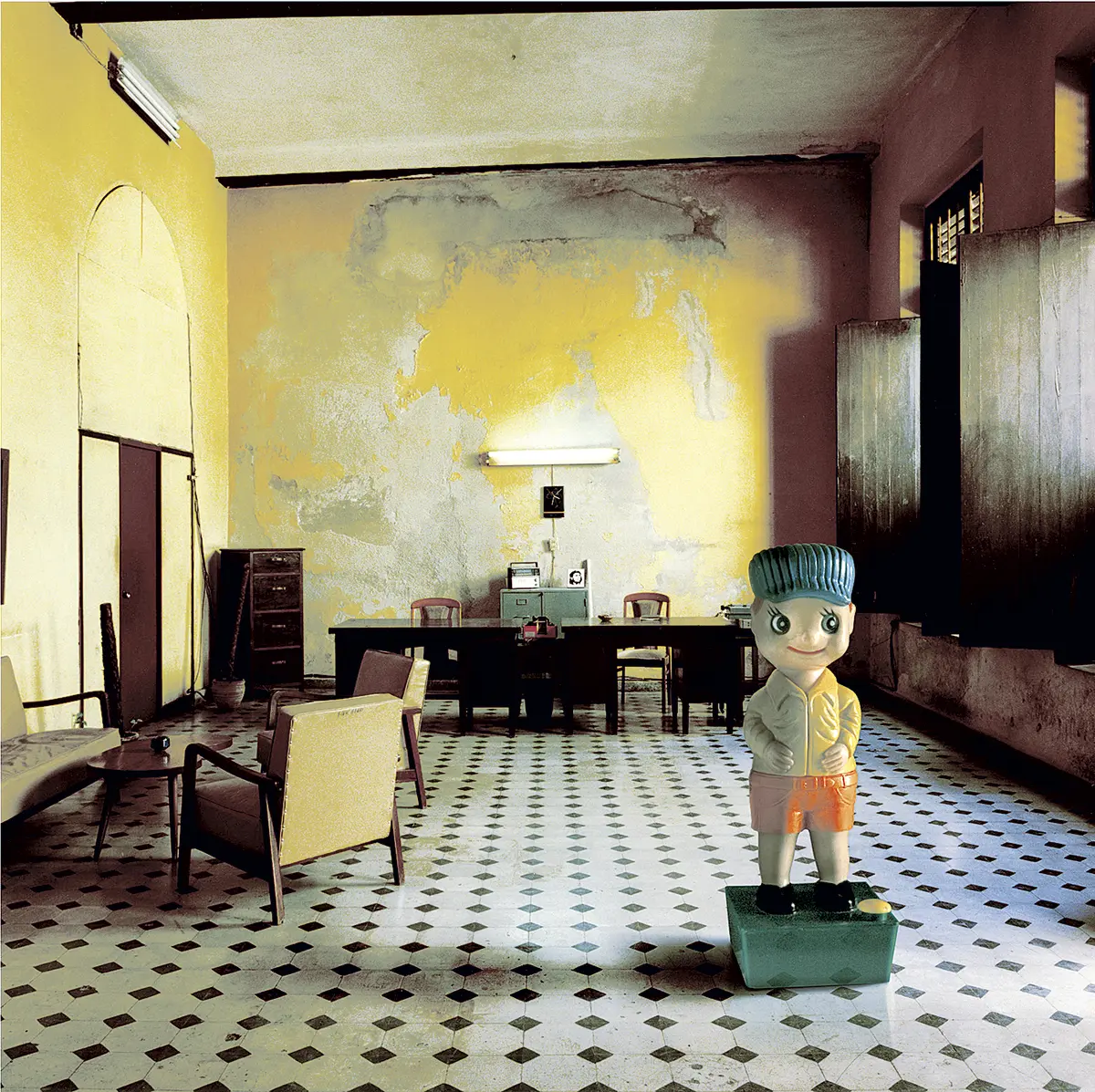
Latinarte deserves special mention, with Brígida Baltar’s nostalgic video Collecting the Sea, and Álvaro Zinno’s painting, celebrated among those who de-sanctify and re-signify the personalities of characters previously used to represent commercial brands or establishments. In Zinno’s work, they come to tell us a variety of different things; they tell different stories, and they live in different places. In photographs where she is the central subject, Jiae Huang tells us a story halfway between dream and desire. We see her buying gigantic doughnuts and being transported by her own inescapable hallucinations to a world whose colors and objects belong to an aesthetic that is basically Oriental—and one more frequently present in contemporary art.
The Kunsthaus Santa Fe gallery, managed by the painter and promoter Lothar Müller, also grabbed our attention with artists of a more independent background whose careers have not progressed along the usual paths to stardom. Located in San Miguel de Allende in central Mexico, the gallery has been able to create a space for itself in the world of visual arts by selecting the artists it represents very carefully. Of these, perhaps Marta Palau has the longest resume; the rest are young artists inclined toward political or ecological messages. These two lines of work deserve mention since many fairs seem to insist on de-politicizing art and blunting its critical edge in the name of greater commercial viability.
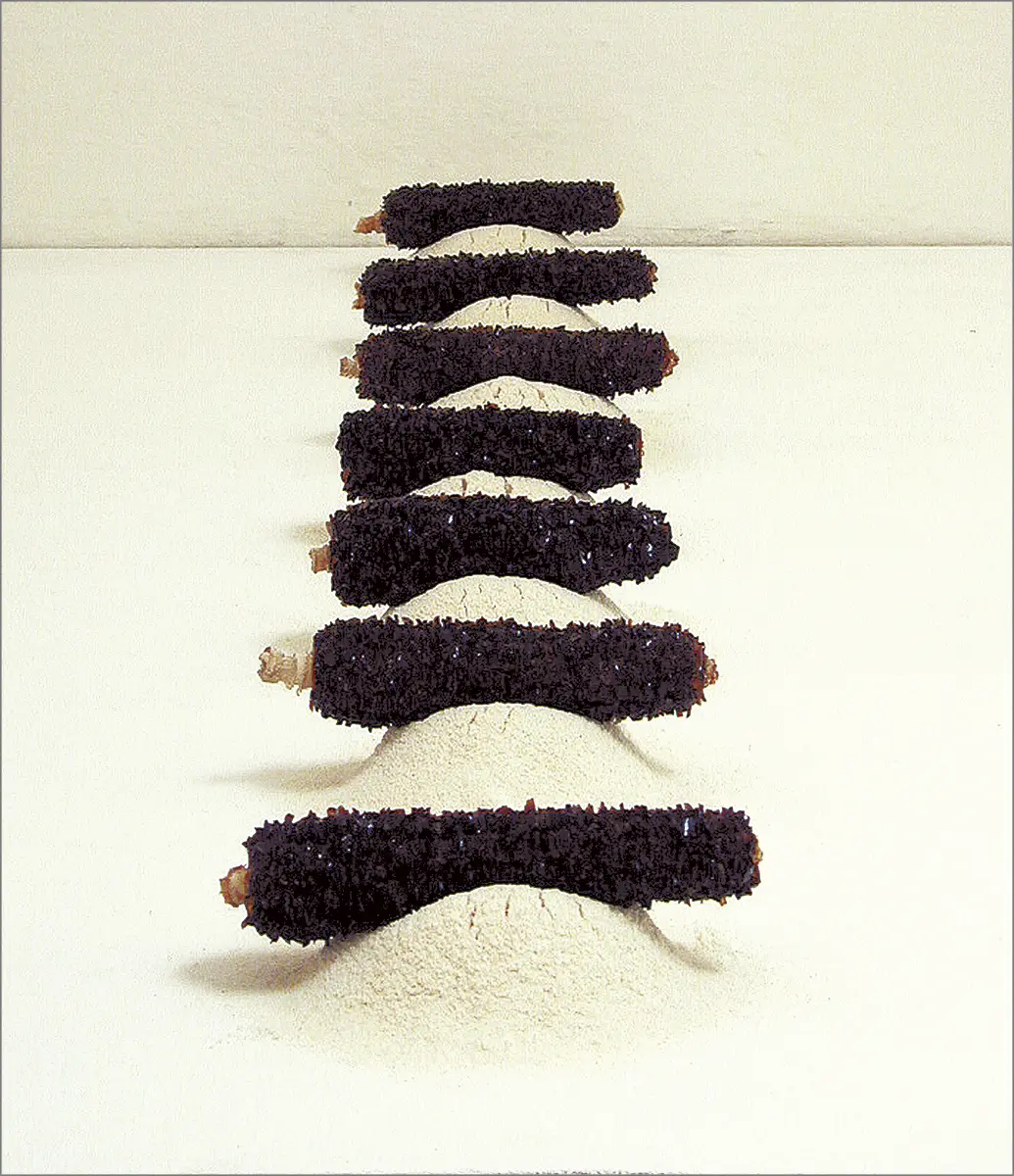
In that sense, as well as for its visual language, a highlight of the Kunsthaus Santa Fe display was Ana Quiroz’s Maz/horcas (el campo después del Tlcan), which comprises fake flakes of corn made of glass and silicon, placed atop delicate mounds of flour. Mexican agriculture, as the press reports daily, has not fared well as a result of the North American Free Trade Agreement (Tlcan, is its Spanish acronym), and Quiroz’s piece deals forcefully and precisely with this complex issue of the nation’s economic life.

Ramis Barquet was present, but in a photograph; his image was on the side of a truck with Monterrey license plates, pointing with his finger at the public much in the manner of Uncle Sam in those World War II, I Need You posters for military recruitment that lured many young men to the battlefield. The public was invited to board the truck, the interior of which changed daily, and included small-format works on canvas, graphic works, and models of Betsabeé Romero’s most important site-specific projects. Complementing this installation Romero placed a passenger truck with interior lights on the street next to the WTC, opposite the entrance to Muestra 2. The second truck was covered with tape and cut-up hand-written words repeating the phrase “I Must Believe in Peace.”
Marco Arce evoked other artists in a number of small-format works, such as Bird Tale, which quoted Joseph J. Martínez and his overflowing bowels. Lorenzo Ventura, an artist with an interestingly hermetic language, shared a wall in the same stand with Marta María Pérez Bravo and three of her most recent photographs from the series A Dark Road, which was visibly derived from her previous work.
The Mexico City gallery, Galería Myto, less than a year old, presented works by Liset Fernández (see ArtNexus 48), Fernando García Correa, and Ricardo Ríos. Special mention in this group should go to the work of Colombian artists Margarita and José Antonio Monsalve. The light boxes and photographic assemblages of their series Station use montage techniques to create the illusion of perspective. An undoubtedly significant photographic piece with clouds and grass by the young Cuban artist Yunior Mariño was also on display here.
The Arcaute Gallery is another very young space that presented a decidedly erotic line of work by Juan José Rivas. His works Sick, Virginity is Never lost, Love and Whore, are indebted to Pop Art and, specifically, to Roy Lichtenstein. In the first piece, a woman seated on a toilet examines her genitals. In the second piece, a woman is just about to engage in fellatio. In the third piece, these same two figures enter the composition accompanied by the face of a woman with an ecstatic expression.
Héctor Falcon, a multifaceted artist whose work has received important attention in publications and in group shows, was also represented here. He presented photographic works documenting his body actions, and since he always deals with aspects of contemporary life, such as tattooing, hair dying, and the reaction of the skin to sun exposure, he opened the door for an important debate in aesthetics.
Photographer Andrés Serrano was present with pieces from his most recent work, belonging to the America show organized by Chac Mool Gallery earlier in the year, which brought to the public eye some of the pieces created especially for this show. America dealt with the US’ racial, professional, and social diversity. Serrano’s gaze is not exempt from the impact of 9/11; as a matter of fact, among his models is fire-eater Darrel Dumbar, whose work, like that of his colleagues, has become emblematic of the spiritual and symbolic reconstruction of New York City. There is also a homeless person, a Black Panther leader, a street peddler, and even a set designer. All of them are usually far from the spotlight and the media. They don’t attract our attention. Yet they have been treated here with a detailed closeness, and reproduced in Serrano’s impeccable manner. Serrano is an experienced investigator of social realities, and he has pointed his camera at the heart of American society.
A number of major Mexico City galleries such as OMR, Enrique Guerrero, Nina Menocal, and Praxis, each with a clearly differentiated group of artists, filled some of the spaces that other galleries have vacated, for a variety of reasons. Pablo Vargas Lugo, Ximena Berecoechea, and Laureana Toledo were represented in OMR; Graciela Fuentes in Praxis, Santiago Sierra, and Carlos Amorales in Enrique Guerrero, which timed its exhibit in Muestra 2 with an individual show of this Mexican artist’s work in its Colonia Polanco site. Amorales also has been selected by the Netherlands to participate in the Fiftieth Venice Biennale.
Galería Nina Menocal presented works by Claudia Fernández, Carlos Aguirre (whose work was a stylized eye inspired by Martha de Fox and created with images from gossip magazines), Boris Viskin, José Bedia (who also had his first solo show in the city in 10 years at the gallery’s main site), a video installation by Torolab (which in some ways recalls the possibilities imagined by Krzysztof Wodiczko), and the impeccable photographic works of Manuel Piña and Laura Barrón.
We should highlight the presence of one of Venezuela’s most powerful artists, Carlos Zerpa, who also has a special significance for his Mexican colleagues. Galería Moro presented some of Zerpa’s strident objects and canvases based on recondite moments in Latin American popular art.

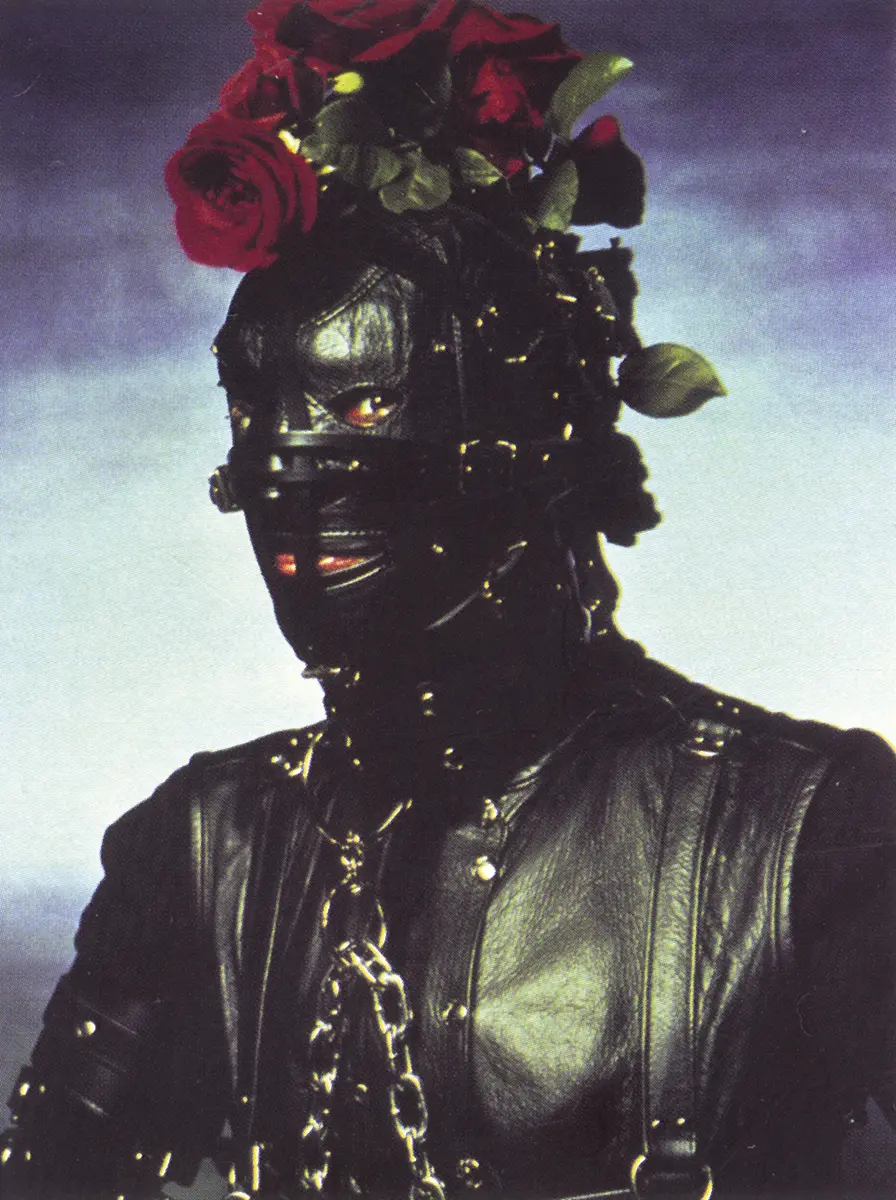
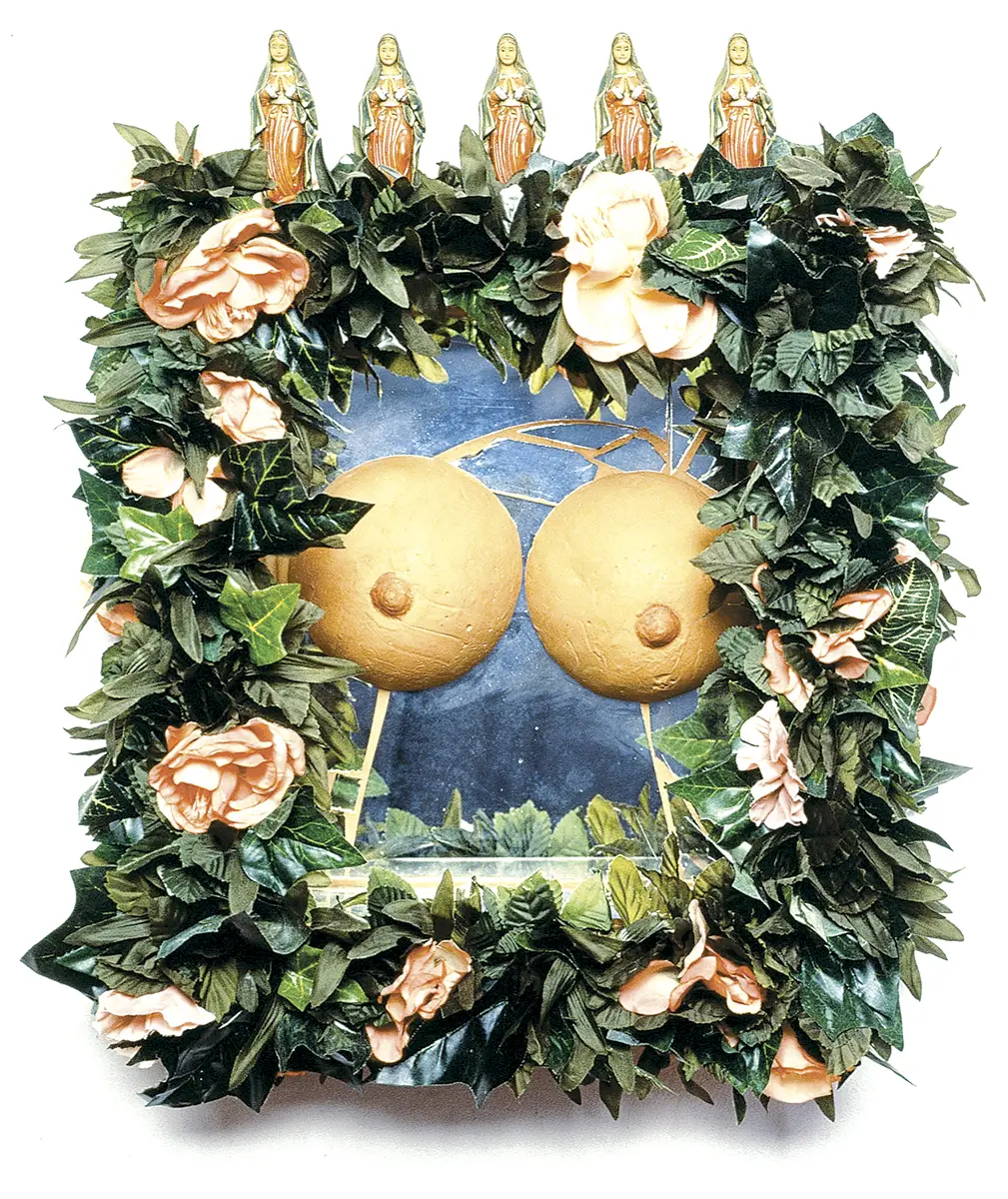
Equally important was the presence of Lezlie Milson in Galería Mateo Sariel, with Pray for Me and Corporal Box, which links this work by Milson with the prosthesis and bodice works of Cindy Sherman and Betsabeé Romero’s works with flowers. Also noteworthy were Gitte Daehling and Jesús Lugo in Galería Quetzalli; Rubén Gutiérrez’s digital work at Emma Molina, and Luis Fernando Pradilla at Marcos López.
The presence of Galería Habana-Mexico with Carlos Alberto García, Alexis Leyva (Kcho), and Arturo Montoto, gave a clear indication of the plurality and vitality of contemporary Cuban art, which seeks to gain greater exposure with events like this. The work of Kcho, widely known in Mexico since his earliest days, was the main attraction in this gallery.
Although it can still be improved upon in terms of organizational engineering and publicity, Muestra 2 seems to have broken what appeared to be a jinx against the success of any art fair in Mexico City. The selection of work presented, as well as the youth of many of the artists, guarantees that in its subsequent editions, Muestra will be the means to become acquainted with and acquire the most recent expressions of contemporary art.
Historically, Mexico has been a country with abundant artistic production, in many different disciplines. Unfortunately, perhaps due to its geographic location, the nature of its market, or its peculiar tariff system, the circulation of cultural products from Latin America, the United States, and Europe has been limited in Mexico.
It has been only in the last 10 years that the work of the younger generations has begun to be noticed abroad in spaces previously reserved for artists in the so-called mainstream. Muestra 2 opens a wide path for both well-known and emerging artists. Fortunately, such a challenge is counter to Mexico’s commercial immobility. Many of the Mexican exhibitors present at Muestra 2 make most of their sales abroad. Increasing the number of art collectors is one important challenge; another one is to offer works of conceptual and formal solidity. Muestra 2 is a fundamental step towards placing Mexico within the circuit of relevant international fairs.
Parallel to Muestra 2, the Ninth International Forum on Contemporary Art Theory was held in the WTC’s Antonio Gutiérrez Prieto Auditorium, under the title To (Mis)Understand the Past: Reactivation of Histories in Contemporary Practices. This edition of the forum, chaired by the artist Mario García Torres, attempted to “revise expressions that intervene, manipulate and/or link artistic and non-artistic events of the past, with the intention of generating new discourses capable of questioning our ways of seeing and construing history.” This Forum has three parts: a publication circulated before the event itself; the debates that took place on April 4 and 5; and a final publication that will include the results of the work done during the course of the Forum.
SANTIAGO ESPINOSA DE LOS MONTEROS
Mexican art critic, curator at Mexico’s National Endowment for Culture and the Arts, and contributor to La Jornada.