
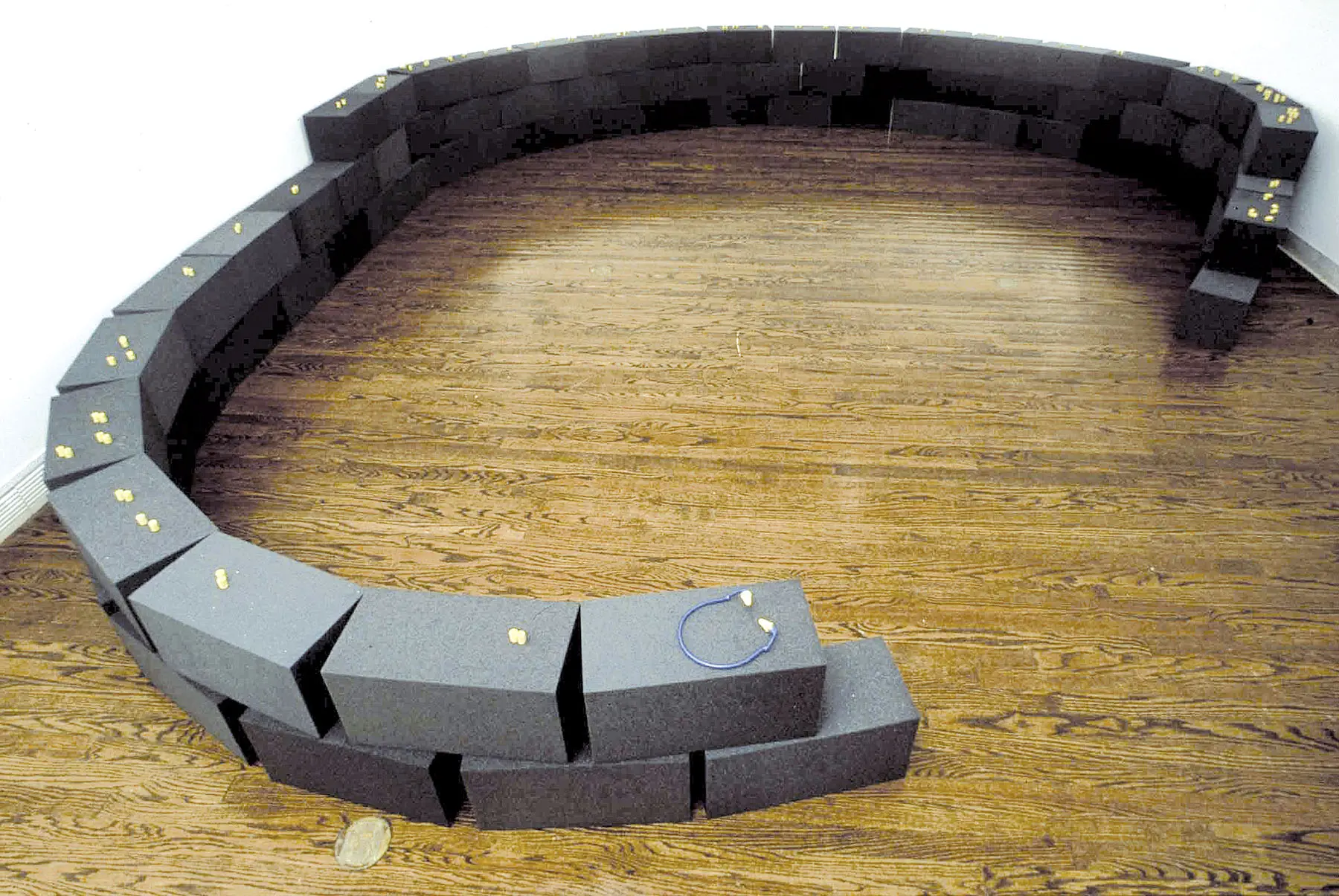
Quisqueya Henríquez's first individual show in Santo Domingo, held at the Larrama Art Gallery in 1998, displayed many of the elements that characterize her artistic production as a whole: a distilled conception of form, with frequent minimalist overtones; a sober and effective sense of space and of the dialectic between space and object, in visual terms as much as in conceptual terms; and an ability to symbolize, in a direct and frank way, through everyday objects, yet allowing for enough openness and enough ambiguity as to favor readings that are complex and rich in meaning, allusion, and nuance with The Idea of Fragmentation.
Taking apart the pieces of a clock and displaying them on panels, Henríquez was able to, on the other hand, take the elements of the myth of Chronos closer to pure form, even suggesting the way in which, as though in a Heraclitean war, time and infinity unite in a deadly embrace, an embrace that gives them their Being and destroys it at once.
Born in Havana, Henríquez attended the Cuban capital’s Instituto de Arte Superior and Santo Domingo’s Universidad Autónoma. Her 1998 exhibition traveled to Miami, New York, Mexico, Milwaukee, and Rio de Janeiro; since then she has been part of eleven group shows. The most recent of these was Curador Curado, presented last year in collaboration with Fernando Varela and Jorge Pineda at the Museo de Arte Moderno in Santo Domingo. It turned out to be an important point of reference in contemporary Dominican art, thanks not only to the high quality of the individual works displayed, but also because of its poignant critique of curatorial practices (or lack thereof) in the Dominican Republic and many countries in the Caribbean region, and its reconfiguration of the relationship between artists, art, and institutions.
Several ways to build or give aesthetic meaning to space are present in the work of this artist named like an island (Quisqueya is how Santo Domingo was known to its indigenous inhabitants). Often, what concerns her are form and vacuum —the latter at times the site of movement, at times the reference to a geographical-cultural reality— on other occasions, she is interested in structures, in physiology, and in experimenting with those “doors of perception” (our senses) through which the world appears to us, beyond the mere “boxed space” created by Ucello and Della Francesca, by Galileo and Newton, even by the philosophy of Nicola Di Cues. The point is to access, quantitatively and qualitatively, a perceptual and spatial universe that can only be opened up in a post-cubist, post-relativity, post-indeterminacy world, but which in a qualitative sense includes all those local references that only become readable in a multicultural context, such as today’s.
In Autodestrucción and Jardín de silencio, presented at the University of Wisconsin between December 2002 and March 2001, Henríquez experimented with minimalist elements and with sound, in an exploration of the processes of construction and demolition, of Nature and Order.
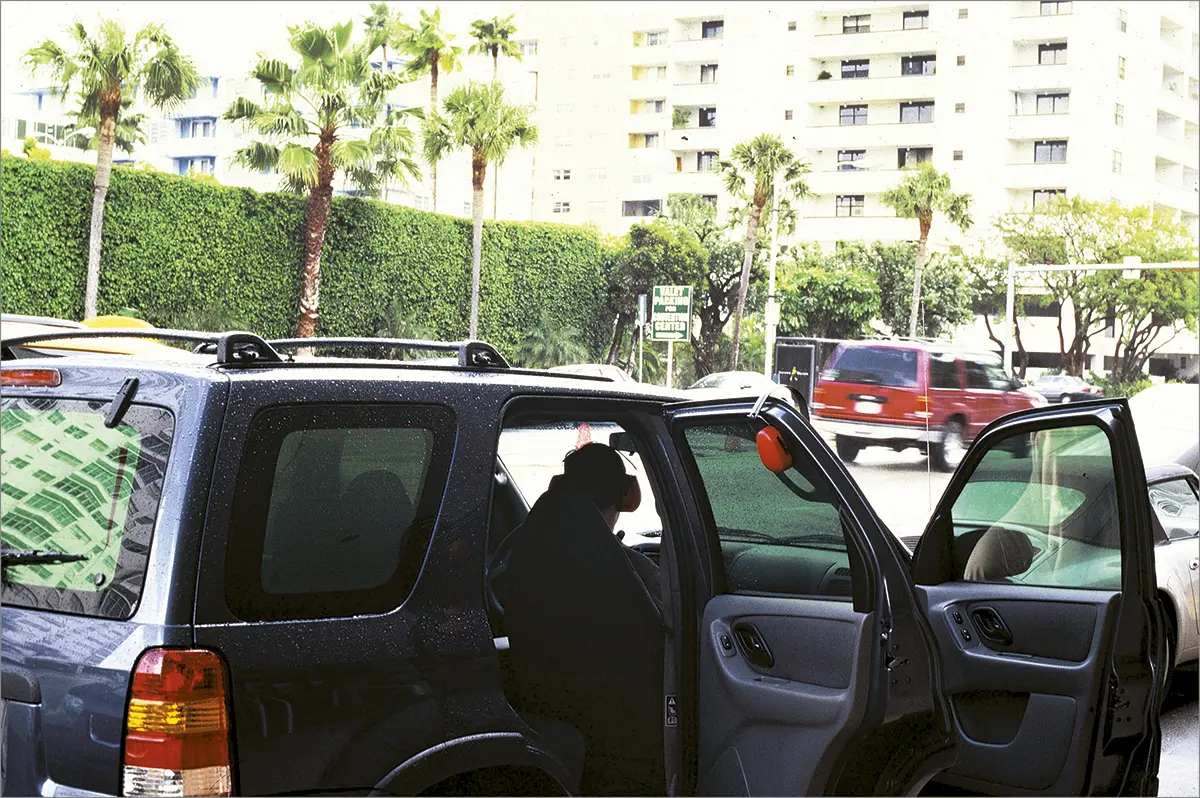
In Paradise of Greenness, presented at the Miami Fair in 2001, the point was to subvert a commercial event by creating a sub-event within it. The sound was perceived inside two cars identical in the model, make, and color, which could be used by any visitor. These cars represent American visual culture and refer to cities that require us to use automobiles in order to move around. The sound element came from a variety of sources and environments, from demolition sites to electric power plants to an airport. In this piece, as in later ones, the connection between everyday reality and reality as it is given meaning by the artist becomes very fluid. Also in 2001, the installation El centro puede estar en todas partes plays with the idea of mobility by displaying a chair outfitted with little training wheels, in reference also to the mythology of the throne and of the center, as well as to the late Twentieth Century (and today’s) idea of cultural de-centering.
In her project for Mexico’s Museo Rufino Tamayo, September-November 2000, the goal was to transform one space into another, defined by the opposite architectural attributes. Angular contours become curved, and the new space retains remnants of the old one, so that space itself incorporates time and even movement, in the sense that walls are invaded by video images showing the process of construction while the sound element contributes a perception of the act of demolition. By infusing perception and the psychological states derived from it, with an enhanced complexity, Henríquez alludes to the process of destruction of history, a part of life in contemporary cities, with their cult of novelty.
Panorama is, to our mind, among Henríquez’s most interesting projects. By redefining the function of the frame —the very element that keeps at bay the surrounding reality and allows us to focus on the image’s pure visual nature— Panorama forcefully introduces into Henríquez’s work a possible character of intentional simulacrum, which brings to mind Baudrillard’s analysis of contemporary culture.
Perception and spaces that are inhabited and shaped by culture are also the central theme of this exhibition, at the Centro Cultural España in Santo Domingo in 2000. Some of the motifs here, such as the accumulation of refuse and detritus, reappear in Henríquez’s 2001 series Burlas, or in her intervention in the group show Cada cual sabe lo suyo at the Carmen Rita Pérez-Arte Actual gallery in 2002. Of particular interest in this series is Henríquez’s work with the cultural stereotypes about the supposed "heat" —emotional, expressive, sexual, meteorological, and of every other nature— that defines the Caribbean and its people, and the need to have "cold-blood" and to protect ourselves from excessive exposure to the sun, where the thermal metaphor is also the metaphor of a space and its inhabitants, conditioned by culture and geography.
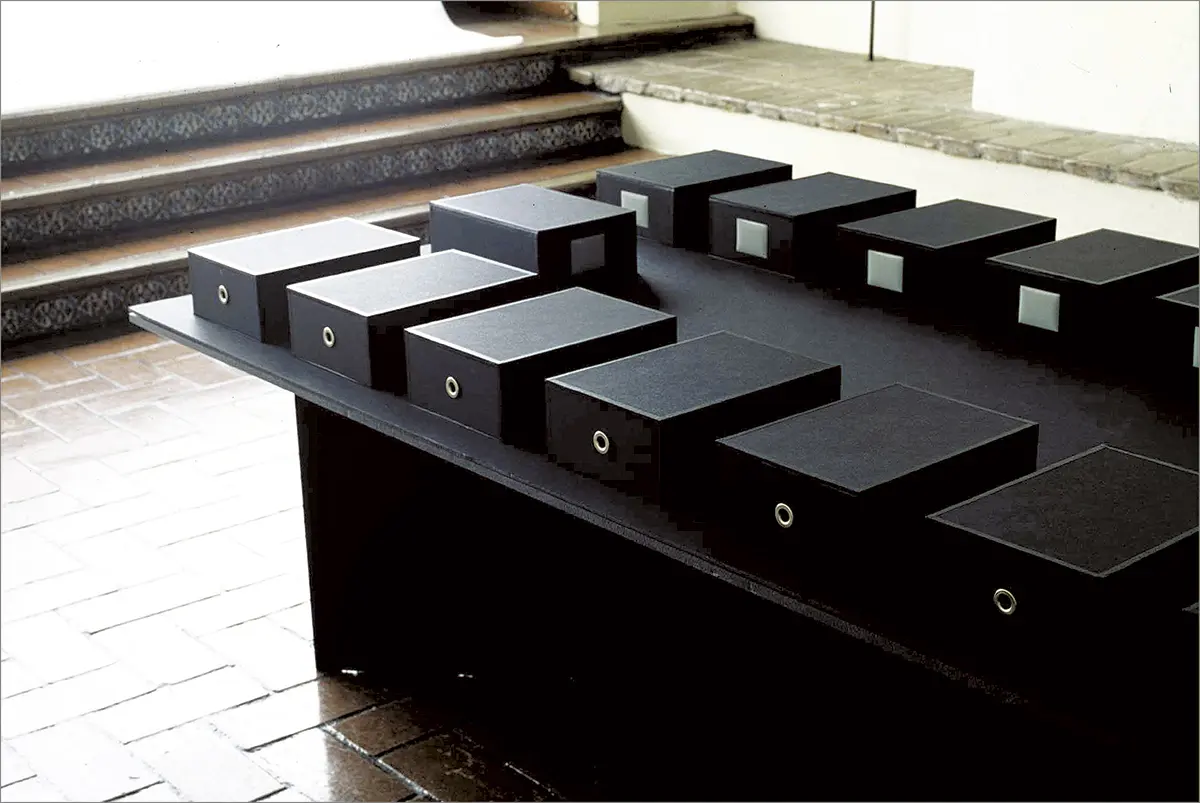
Curated Curator
Quisqueya Henríquez’s presence in the September-October 2001 show Curador curado has very special connotations, within the context of the project’s conceptual framework, which in a way moves beyond the interests expressed in Cada cual sabe lo suyo and in this show of recent works. Besides working, like her two companions, as co-curator of the show, the artist took an important step forward in the elaboration of an artistic discourse of increased complexity but equally cohesive and meaningful.
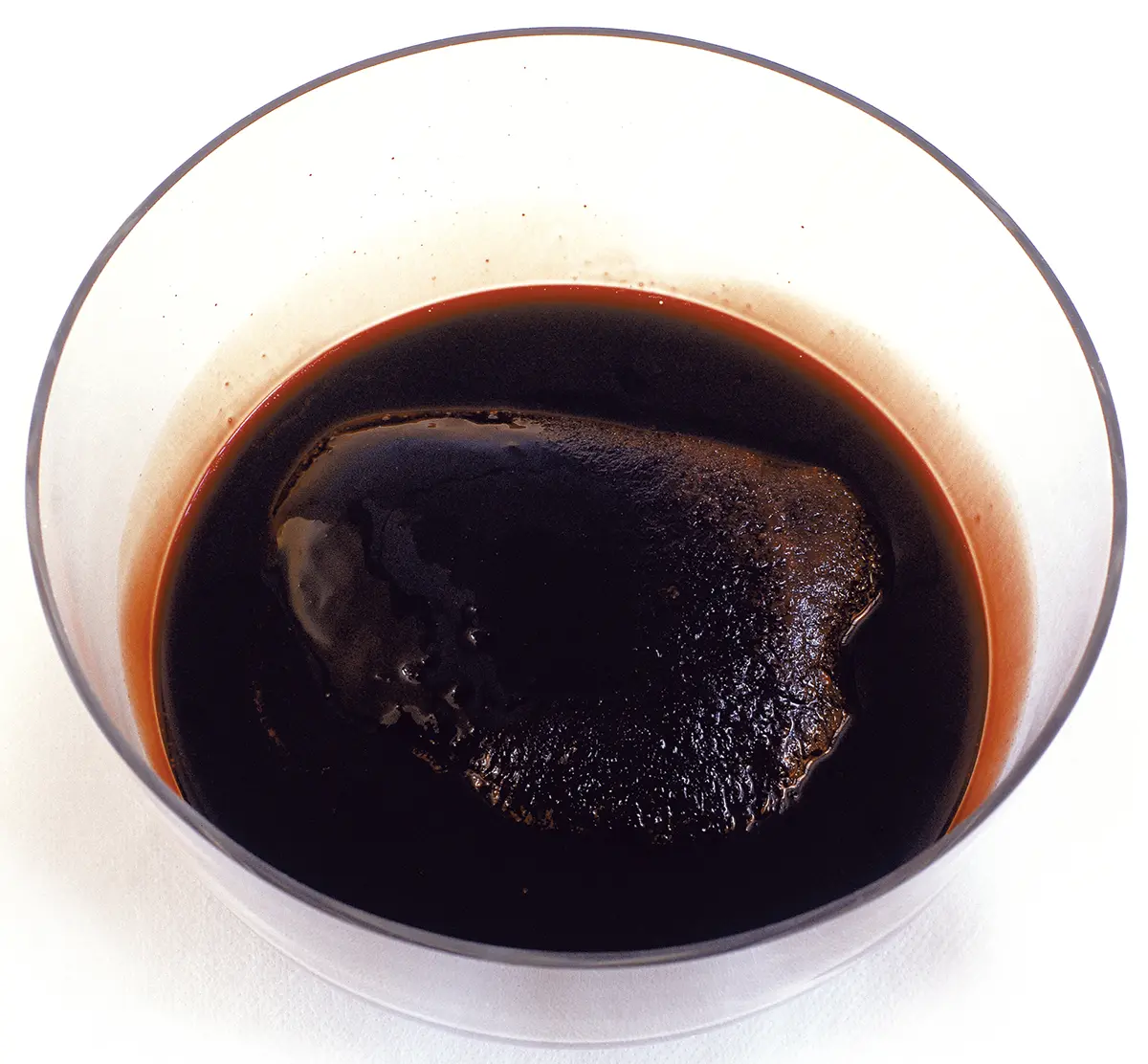
It is important to highlight the ecological implications in Isla de mierda. This ecological interest is related, to and surpassed, by her recent focus on the urban environment and its metaphors. As Teresa Millet has said, these images warn us of what is happening to our Caribbean paradise, with accumulations that bring to mind those by Tony Cragg in the late 1980s.
But what is most interesting is the ironic turn that she infuses into cultural stereotypes, in the sense in which Rosalind Kraus has defined postmodern practices, as those that “are not defined by a given medium… but rather by logical operations on a series of cultural terms.” It is in this sense that Henríquez’s ironic interpretation of sport as an artistic practice, or her surprising installation around the image of a navel, where she plays with the symbolism of the center as a somatic location and as cosmic Omphalos, becomes intelligible.
But it is above all in her temperature-related metaphors, the photographs of frozen blood, or those items of clothing in similar condition, where she has great fun at the expense of the stereotypes of the Caribbean, when climate and personal aspects are mixed, temperature and passion, in the more established and typified images of the Caribbean being. Those photographs of a subject who both sunbathes and must defend himself against the sun and the ultraviolet rays more or mystified and secret aggression, related to invisible powers, belong in the same web of meanings.
Recent works
In her Recent Works show at the Carmen Rita Pérez/Arte Actual gallery in Santo Domingo, there is a deepening of Henríquez’s previous explorations, introducing at the same time new issues and interests to support the project as a whole, issues, and interests that give said project a new cohesiveness and internal coherence, the continuity of a development that makes her proposal a solid one and places it among the most significant in contemporary Dominican art.
In a series of pieces in which photography abounds, and into which she also incorporates video and a variety of audiovisual resources, Henríquez creates something that is more an installation than an ambient. It is appropriate to speak of ambient art, where elements of the environment are recuperated and resignified, and where the limit between reality and simulacrum are barely marked and interchangeable.
The idea of the city as a filter dominates the show, so a metaphoric relationship is established between the urban body and the individual physiology. The contemporary obsession with the corporeal is exaggerated, to the point that one and the other are presented as Microcosmos and Macrocosmos, between which a relationship of mutual correspondence is at work. What is essential in both cases is that the City and the Body share that function that Henri Bergson identified for the human body alone: the function of the filter. Thanks to the overabundance of nutrients —like the overabundance of information— the filter decides what we retain and what we can do without; in consequence, like the skin, it assimilates the function of protecting our excretory function. A kind of archaeology of the present is what allows the artist, and the viewer through his or her gaze, to determine what will be discarded after use for being worthless.
An expedition to the city’s dumpsters and other places where garbage and detritus accumulate, often hidden from view by dirt or vegetation, like a romantic ruin, will provide a significant picture of our postindustrial society’s shadows, which is to say, of its deepest and most disturbing secrets.
Among the show’s most interesting pieces is a white helmet, similar to those used by bikers but with built-in headphones through which we hear the sound of an 80-minute route completed by a garbage truck. This ready-made sound piece, even if edited after its recording, captures an authentic slice of the urban soundscape, deploying it in order to evoke all the connotations and associations it carries for the viewer.
Voices and sounds, the noise made by an engine and by the garbage cans being overturned, recreate moments of distraction in the midst of the city’s traffic, or maybe moments of domestic tranquility when that noise that we do not want to hear nevertheless persists, reminding us of the city’s excretory function, and the journey of garbage across the entire city, almost as an anti-myth, the opposite of the mythical and the triumphant journey. The process’ ritual character comes from its cyclical nature, and its bothersome insistence implies an acknowledgment, even if not necessarily or voluntarily assumed, of the irruption of the real into the everyday unreality of our consumerist universe.
In an approximately hour-long video, Henríquez records sequences of a stream of urine, documenting the body’s excretory function over a whole day. The reading of this video is the same, in general terms, as that of the helmet with headphones, although in this case, it is the body and not the city carrying out its cleansing ritual; there is an identical monotony and the same secrecy, a subjection to intimate miseries that are not proclaimed loudly. Both pieces establish on their own a metaphorical link between the physiology of the city and that of the body, which runs through the whole expositive discourse.
On the other hand, it should be noted that the images’ aseptic tone, the whiteness of the helmet and of the toilet bowl seen in the video, introduce an element of aesthetic idealization and, at the same time, of emotional distancing, similar in a first level of reading to that introduced by Duchamp with his famous “fountain,” by assuming as “art” a fragment of reality separated from its context, and at the same time take a step beyond in a rather postmodern spirit, decoding and bringing to the fore a series of meanings that are customarily hidden or negated by the structure of the everyday. This way, far from negating the object’s connotations, the object becomes the connecting thread that guides us on a journey through its secret or forbidden meanings.
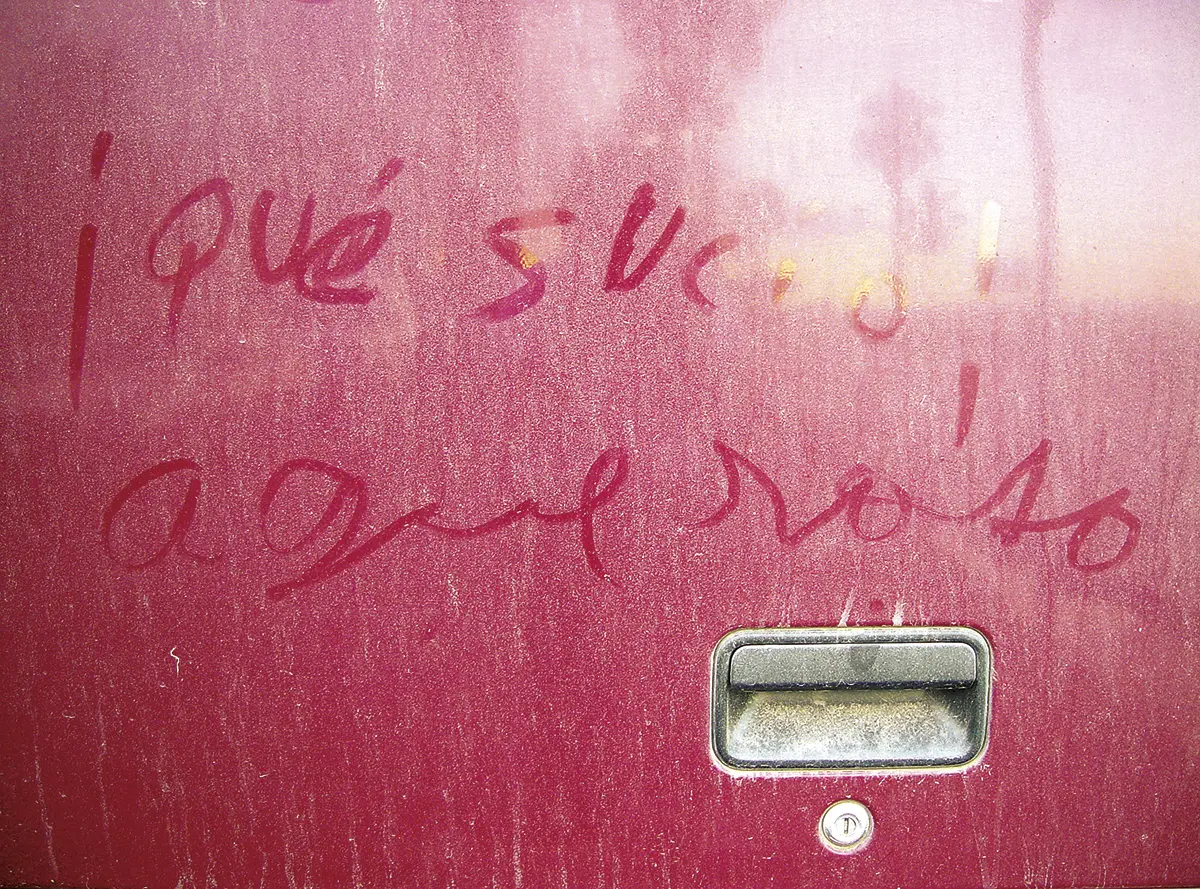
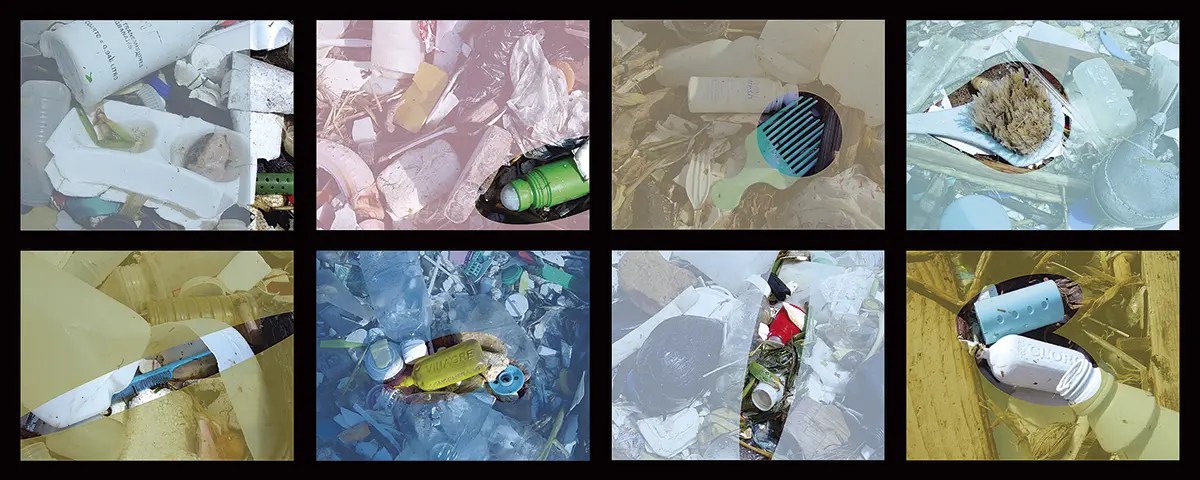
In another piece, titled Profilaxis, Henríquez has gathered in the same spirit eight photographs showing a variety of objects. Each of the photographs has been created with a colored filter, which brings an increased pulchritude to the vision of a discarded object at the same time it isolates and emphasizes it. Five bands, each with four photographs, reiterate this obsession with objects in Lo que no sirve se bota, where we can see things that range from a totaled automobile to items of clothing, sneakers, and more. There is also a wooden structure with a curtain, introducing the architectural element of the window and giving the viewer a more active role to play.
Each of these objects has the character of sign and symptom. Nothing gives us a clearer portrait of our society than our residues, that which we discard as worthless or after it has lost its usefulness. Sometimes the accumulated dust, of the very variegated character of the pile of things, covers the object with something like a film of aging which is not necessarily related to its actual chronological age but is linked to its obsolescence. Consumer society appears thus before us as a society of obsolescence, and the death of each object is the material complement of a time that is painfully linear, and of a Chronos who devours his own offspring at a higher rate than ever before. In the case of Profilaxis, the objects relate to the cleansing of the body. We find, for instance, a brush, a hair curler, deodorant, a comb, vinegar, and liquid chlorine. The process through which the new becomes the old —what is “of the age” quickly loses that status, and the body as well as the city get rid of its refuse— is also incorporated into the purifying ritual of our daily ablutions.
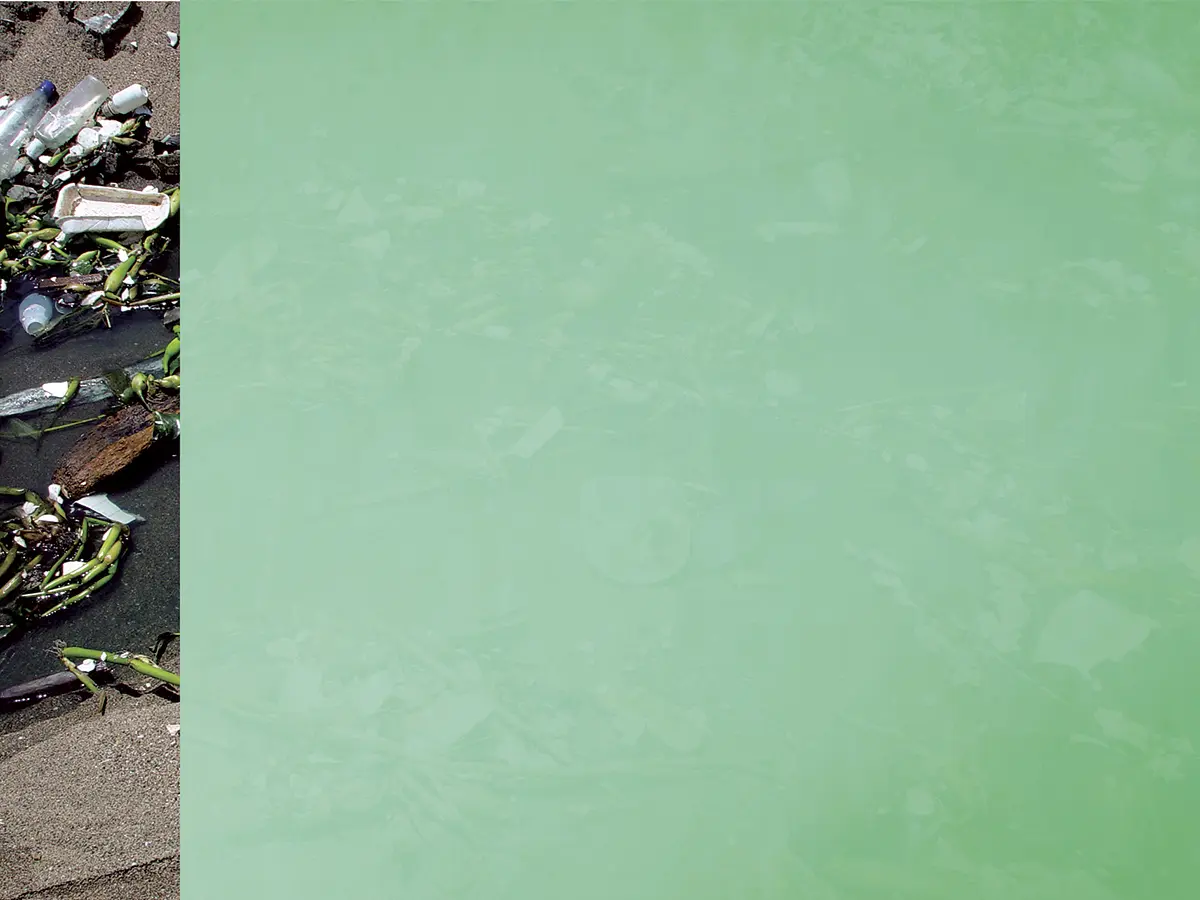
In another piece, titled Secuencias, Henríquez revisits some elements of Green Paradise, a project she presented at Miami’s Mega-Fino, curated by Peter Dorochenko, and in Bonn and Rome, respectively curated by Magda González and Jerome Sans. In that project viewers were able to drive around in late-model automobiles and to see, through the vehicle’s green-tinted windows, the city’s environment while listening to a recording of urban sounds.
Now the protagonists are the small buses known as voladoras, the most popular mode of public transportation in the city of Santo Domingo. The film that often covers the voladoras’ windows covers now Henríquez’s photographs, prompting a vision of a whole urban and interurban subculture in the Dominican Republic, the subculture of the trip to the interior from Santo Domingo.
Secuencia includes seven photographs of an object towards which we, as if following an obsession, move closer and closer, identifying it each time amidst a pile of garbage. The image, obscured behind a green screen, reflects the face of the viewer, and the interplay of reflections is also a dialog between what is hidden and what is manifest. Similar to the relationship between the formal pulchritude of the helmet and the sonic chaos hidden within it, the reflected face hides the accumulation of garbage that each individual leaves behind, and the visual and perceptual dialectic becomes that of a reflection that is also semiological and socio-cultural.
Like the body, the city excretes
Henri Bergson defined the human brain as a filter, the function of which was to discard information more than to absorb it —to allow through only that which is useful or possesses meaning, thus saving the individual from the chaos of madness, or from non-functionality.
The city, like the body, is a filter, and like the body, it gets rid of what is not essential to the physiology of consumption. Inorganic and organic residues mingle here, with a clear dominance by the inorganic, transparent, the viscous. The pure and the impure turn into each other sequentially, so that there develops a natural reaction, and a reaction to the eschatological, such as repulsion. There appears on occasion the image of a plant that only blooms among garbage, a product of the contamination of water, and at the same time a filter for the fluids of the environment.
Similarly, a piece that incorporates a movable bathroom mirror serves again to contrast the terms of pure and impure in public spaces with the body as the site of privacy, to the nature of culture, while at the same time, it functions as a kind of absorbent sponge to clean the skin —a new icon for the idea of the body as a filter. The mirror can be used as such, a mirror, in a game of semantic superimpositions.
In every one of these cases perception is prospective, almost predatory, a veritable search for something that, nevertheless and in reality, remains unknown. In every one of these cases we encounter objects —discarded, yes, but capable of acting as catalysts for our experience of meaning; objects that are in a sense fetishes, in an exploration akin to that of an archaeologist, but without the impersonal character that defines a scientific view of reality. Rather, it is with the character of the diver, the subaquatic explorer who is submerged in the very reality under investigation, with whom the artist identifies, inviting us to a similar experience.
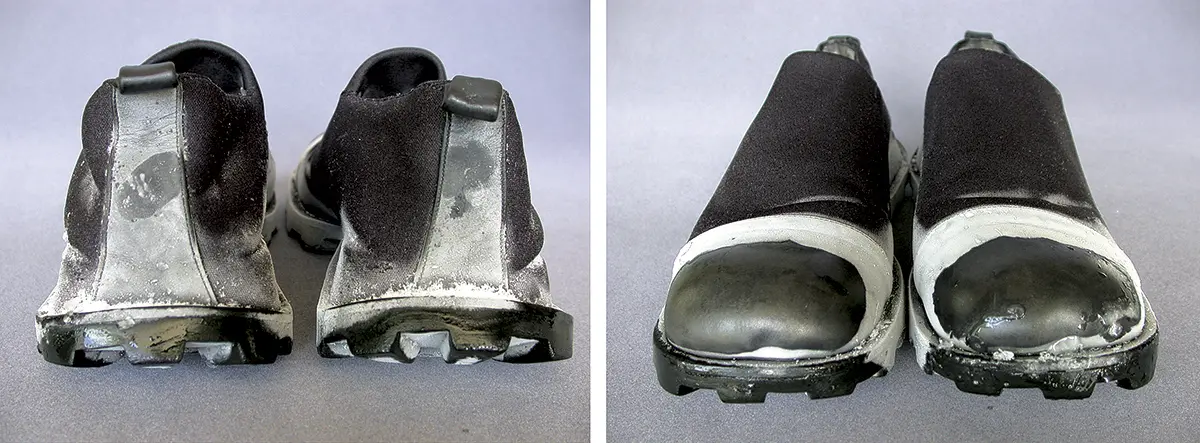
Another one of Henríquez’s pieces comprises two photographs of the soles of a pair of white sneakers, of a different model but both number thirteen. The idea of luck is related here not only to the Neo-Dada or Surrealist aesthetic of found objects but also to the images’ own content. Thus reemerges the idea of the subaquatic diver as someone who has the ability to find something of value in a pile of garbage.
An infinite number of meanings can be extracted from this, and the magma of detritus and excrements is the raw material and the proper space for the very exploration that motivates today’s artists. Seen in the past as a shaman, as divinely inspired, as a mediator, in Hölderlin’s words, between human beings and then “celestial fire,” the artist of today moves beyond Duchamp’s decontextualizing work. The point is not anymore —not only— to transform the discarded object into an artistic object through an act of the artist’s will; the point is now also to bring forth what is hidden, to situate it in the space of the visible, so that the shadow of that which has been repudiated becomes the space for a return of light. The darkness from which we all descend, better loved than the flame as Rilke has it, does not impose limits on the world. It gives support to everything.
The notion of things that are hidden is also important in the idea of gift wrapping paper decorated with images of garbage, with which we could wrap any object. The usual thing is for a formally perfect creation such as Henríquez’s helmet to hide within itself a vision of chaos and disintegration, or for what seems comfortable and pleasurable, such as the ice cream with water from the Caribbean in a piece honored at the 19th E. León Jiménez Art Competition, to hide the germ of destruction. In this way, the whole project of Quisqueya Henríquez’s show of Obras Recientes appears as a gigantic baroque Vanitas, like one of those still life creations whose formal plenitude evoked the idea of the eschatological, of universal obsolescence, and of death contained within things such as a seed, a call to sanity, a consideration of the ephemeral and banal nature of our problems, as lucidly dramatic as those images that resemble a pictorial wake of the dead by Juan Valdés Leal.
LAURA GIL FIALLO
Doctorate in Art History. Professor at Universidad APEC, Vice Director of the Museo de Arte Moderno de Santo Domingo, and President of the Dominican Association of Art Critics.