
Last year I ended my comments on the 2002 edition of ARCO by comparing it to a magnificent video by Spanish artist Martí Ansón, in which the moments immediately preceding a penalty shot in a soccer game were indefinitely suspended in time. This suspension generated a feeling of uncertainty and anxiety similar, it seemed to me at the time, to that of the first post-9/11 presentation of this fair. This year’s ARCO took place in the context of even greater global economic and political uncertainty. From the moment of its inauguration until its closing, opposition to the imminent war in Iraq was explicit, on the part of most visitors as well as of a number of participants. Objective conditions of the world have not become less critical, yet the tension was experienced differently this time around.
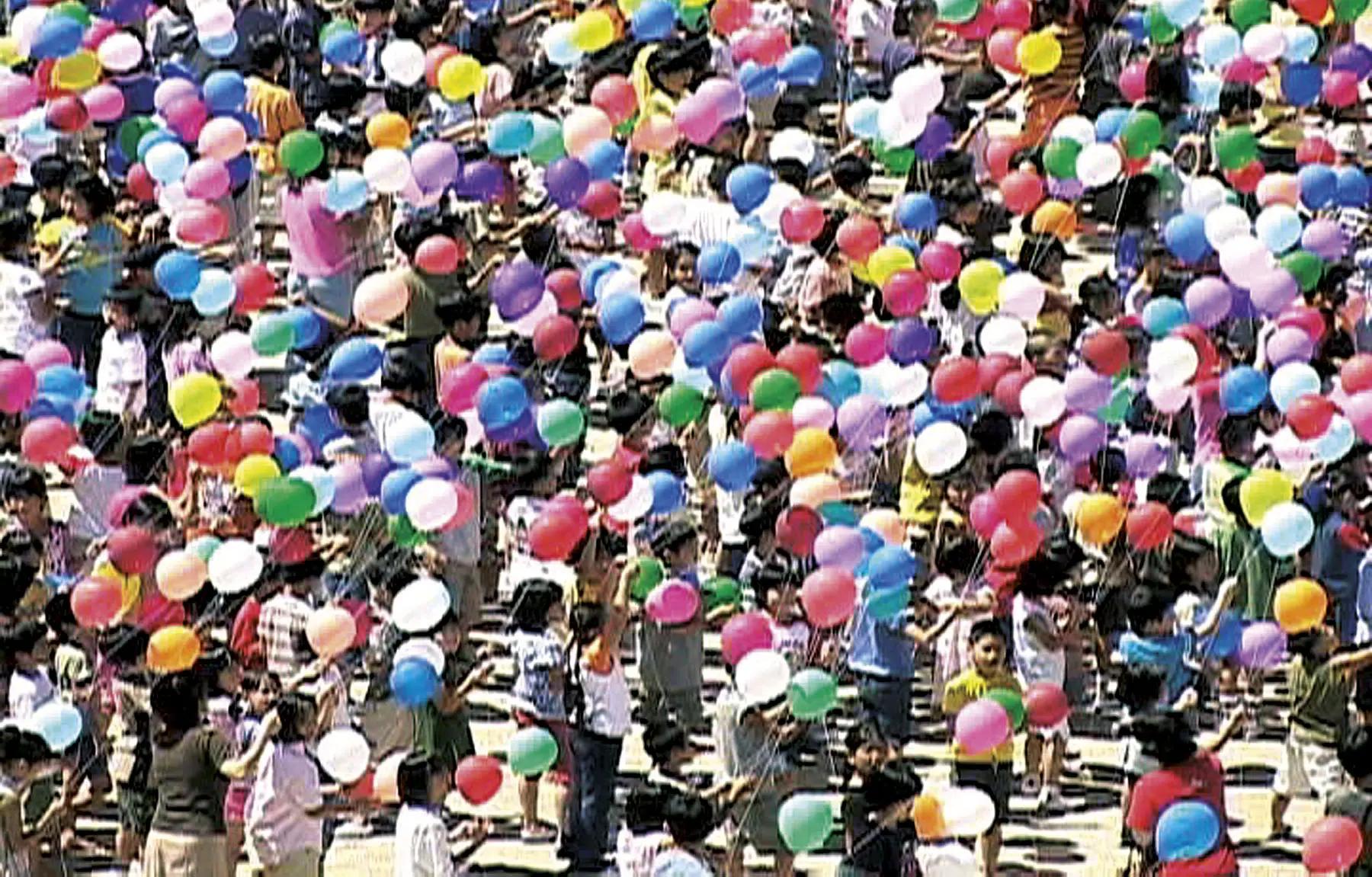
To continue the comparative exercise, Japan’s Mizuma Art Gallery presented another tension-charged video this year that depicted yet another moment suspended in time. In For Every Daydreaming (2002), Koki Tanaka gathered a thousand children and their parents in a stadium and distributed more than a thousand balloons in different colors (blue, pink, red, yellow, and green). The video shows the beautiful giant rainbow formed by the balloons and the thousands of faces, while on the soundtrack in the background, we can hear the children’s laughter as they get ready for the signal to let go of their balloons. But the signal never comes. Instead, this image alternates with one of a beautiful blue sky. Similarly, this year’s fair chose to be optimistic about a crisis that would perhaps never reach a climax but would remain forever a kind of omnipresent angst.
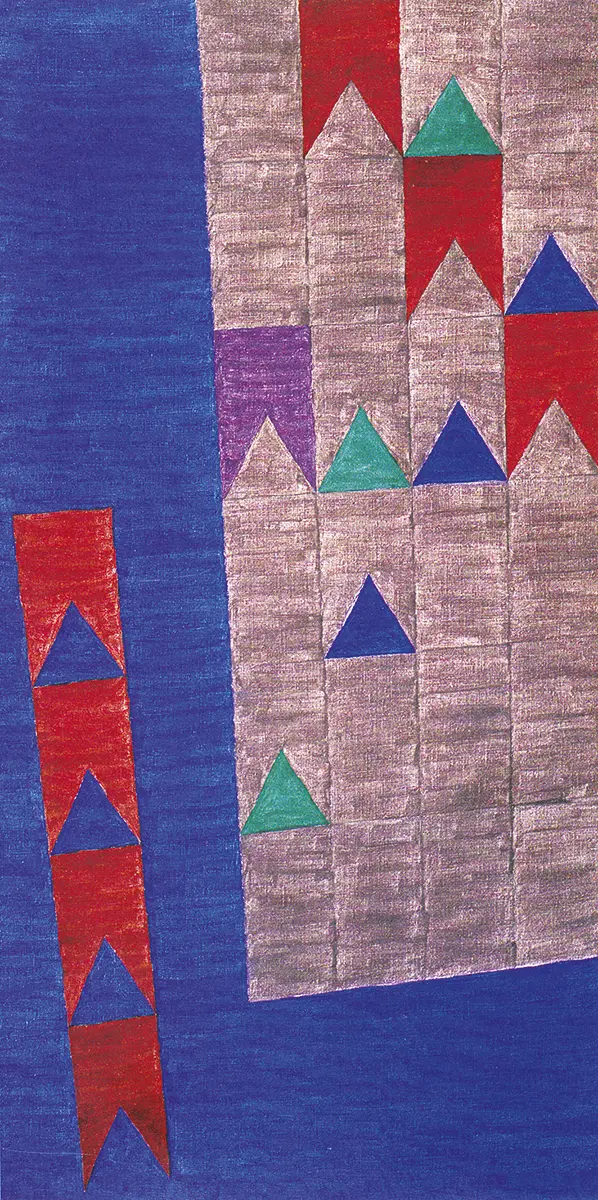
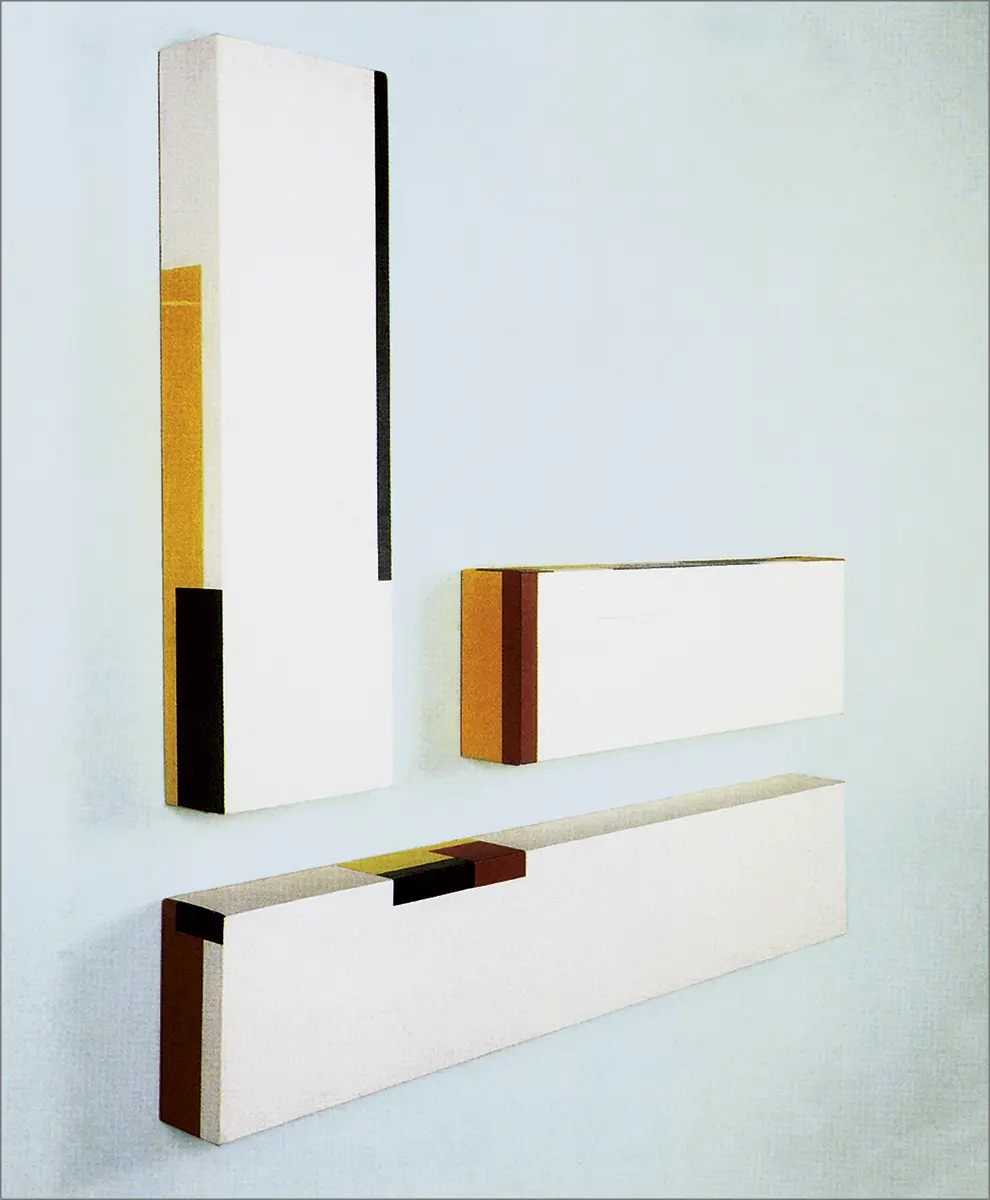
Undoubtedly, such optimism was associated with the participation of Switzerland as the guest country. We must remember that this European nation has given us, especially in the second half of the twentieth century, artists as eccentric as Yves Klein, Daniel Spoerri, Niki de Saint Phalle, Thomas Hirschhorn, and Rippilotti Rist. Switzerland is also home to some of the most important galleries and collections in contemporary art, as well as the Basel Art Fair, the ultimate paradigm for this event. ARCO rose to the occasion not only from the organizational point of view but also in terms of what was presented by the participating galleries. Renewed levels of quality and professionalism were evident. The organizers strategically sought to ensure the participation of Swiss galleries such as Krugier and Beyeler, which automatically raised the level of what was shown, particularly in Pavilion 7, which focused on the early twentieth-century avant-garde. It was in this area that the presence of first-rate work was more noticeable. Interestingly, this created the opportunity for a confrontation between the European avant-garde and its Latin American counterpart and resulted in a fascinating dialogue between two facets of a single moment in the history of art —a moment in which there were more coincidences than missed encounters. By far the most remarkable presence here was the Jorge Mara-La Ruche gallery, which presented an exhibition of Argentinean Concrete Art of a quality that surely surprised more than one visitor unfamiliar with modern Latin American art. This exhibit was well received and it fit well in the context created by a number of other Latin American galleries that specialize in this period, such as Dan from Brazill, with works by Alfredo Volpi, Galería Sur from Uruguay, and Del Infinito Arte, also from Argentina.
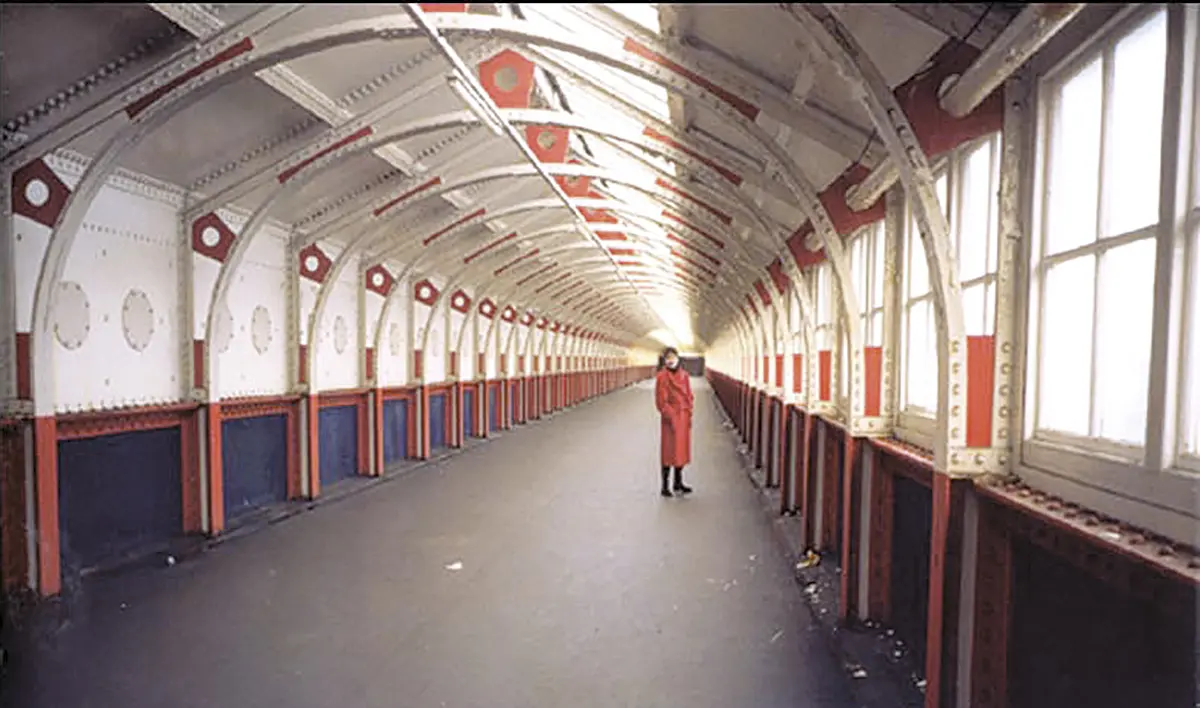
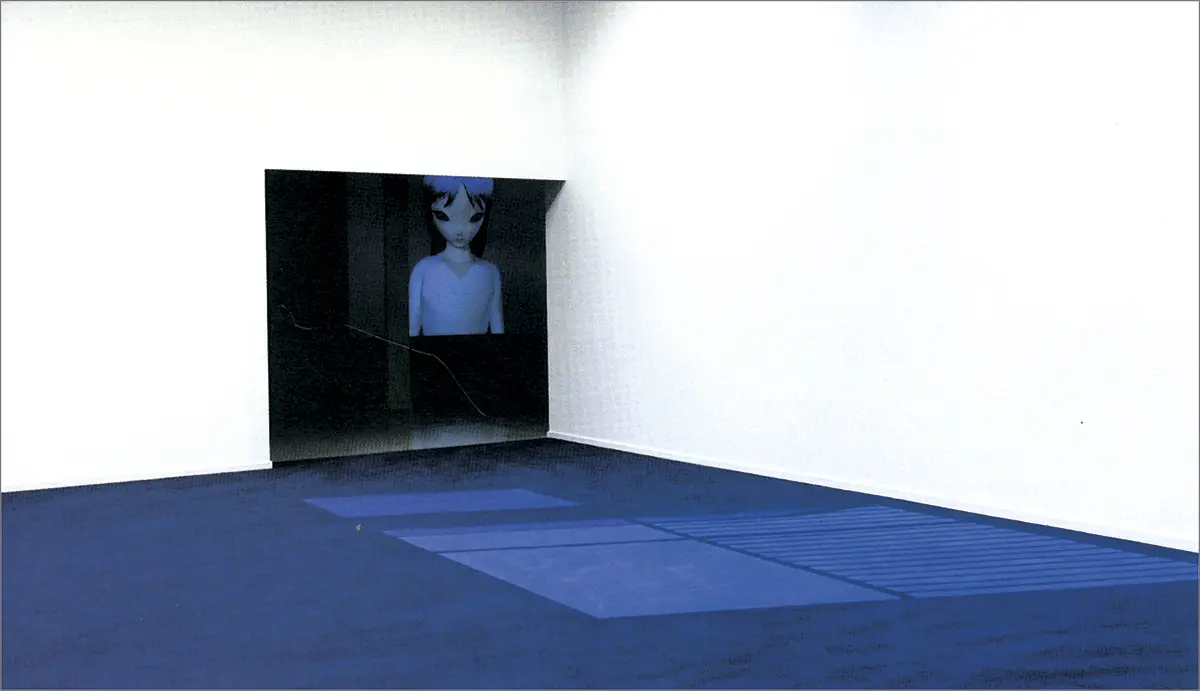
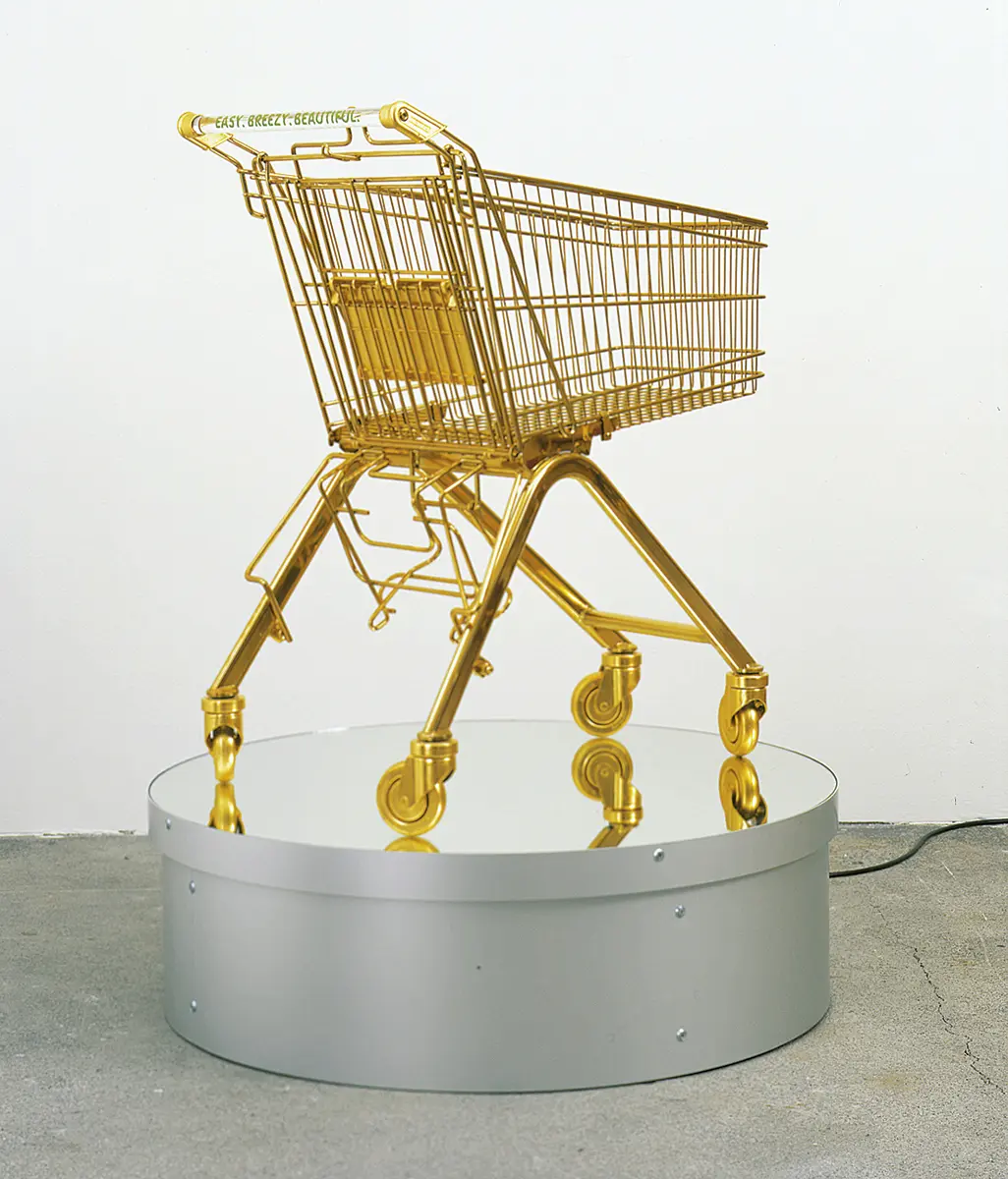
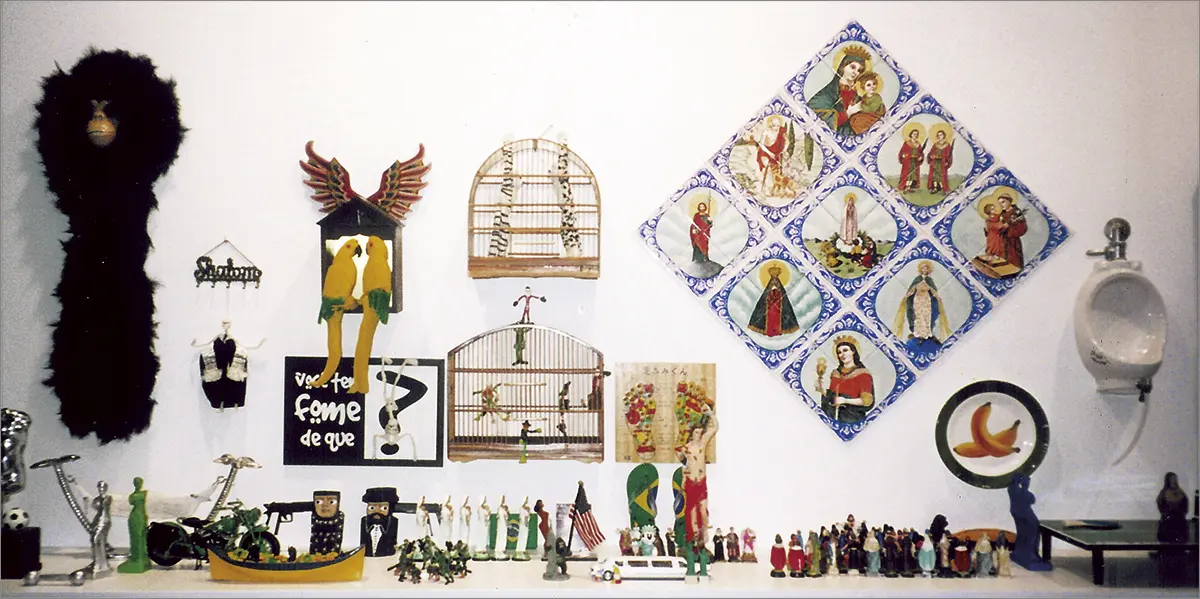
The Swiss participation was organized by Martin Schwander and its influence was felt even outside the fair proper, in events held in museums and art centers throughout Madrid. Taking advantage of the fair’s median appeal, the galleries and parallel exhibitions devoted to Switzerland focused on less well-known artists, so that often-publicized names such as Hirschhorn or Rist did not dominate. The whole event turned into a promotional opportunity for the most contemporary and least accessible —even for art-world habitués— Swiss art. Perhaps one exception was the omnipresent Sylvie Fleury. At any rate, the concept of programming a guest country seems increasingly obsolete for an art system characterized by geographic mobility and by the accelerated globalization of its markets and structures of circulation. This is perhaps a good time to re-think the notion, just as ARCO’s organizers successfully reviewed and restructured sections such as Cutting Edge and the Project Rooms, which this year gave way to the Art Unknown and Futuribles programs, that were more attuned to the way in which contemporary art is developing, as well as to emerging gallery concepts. It was in these sections, in fact, that some of ARCO’s most interesting works were to be found: Marian Goodman Gallery presented Pierre Huygue in collaboration with Philippe Parreno, and their model of an arborescent lamp in a booth whose floor was covered by their 06.00 pm 2000, a carpet onto which the silhouette of a different place is projected. At Vous Etes Ici, Dressens & Verstappen presented an almost-invisible work: the movement inside a long display case of a small iron piece that morphs alternatively into a key, a figure, a chess pawn, or a peanut. Also worthy of note were the presentations by LA Raven at Ellen de Brujne’s gallery. These offered a peek at the underside of a group of adolescent ballet dancers’ lives. Finesilver Gallery presented recent works by Thomas Glassford, a series of magnificent sculptures created through the manipulation of pre-fabricated materials such as aluminum sheets or racks. Following the success last year of his foosball set, Nelson Leirner offered his extraordinary installation O Armazém (Grocery Store) at Brito Cimino. Once again, he corrosively introduced contemporary popular images into the world of art. Among the many innovative Latin American projects were Yoshua Okón at Chac Mool Gallery; Claudia Fernández at Iturralde Gallery; Cesar Martínez at Marco Noire; all the offerings at Puerto Rico’s Punto Gris gallery; Sala Alternativa Elvira Neri from Venezuela; La Casona and Catálogo from Cuba; Carmen Rita Pérez from the Dominican Republic; Animal and Forum from Chile; Nara Roesler with orks by Arthur Omar, Casa Triângulo, and Laura Marsiaj Arte Contemporáneo from Brazil; and Costa Rica’s Klaus Steinmetz.
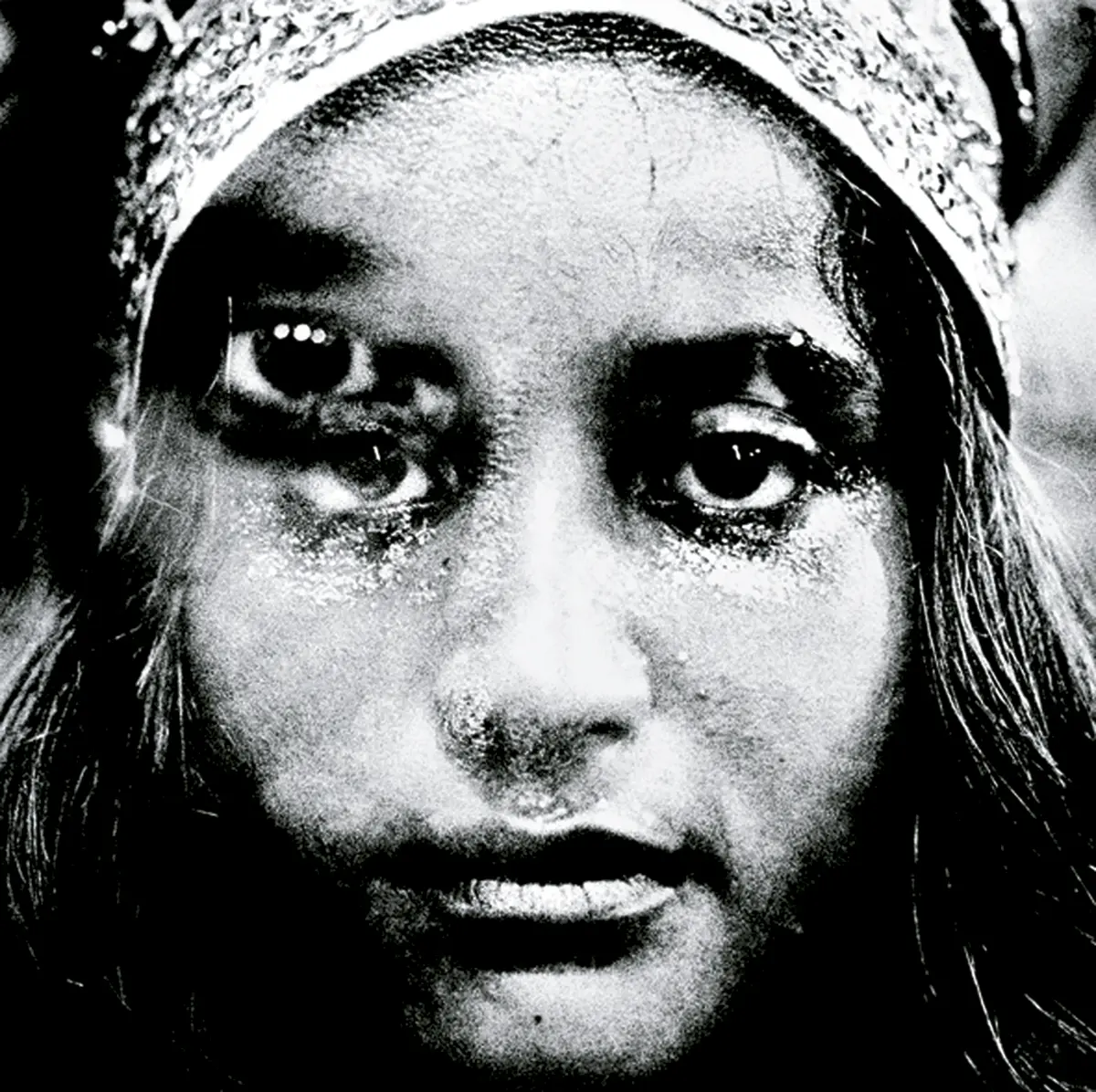
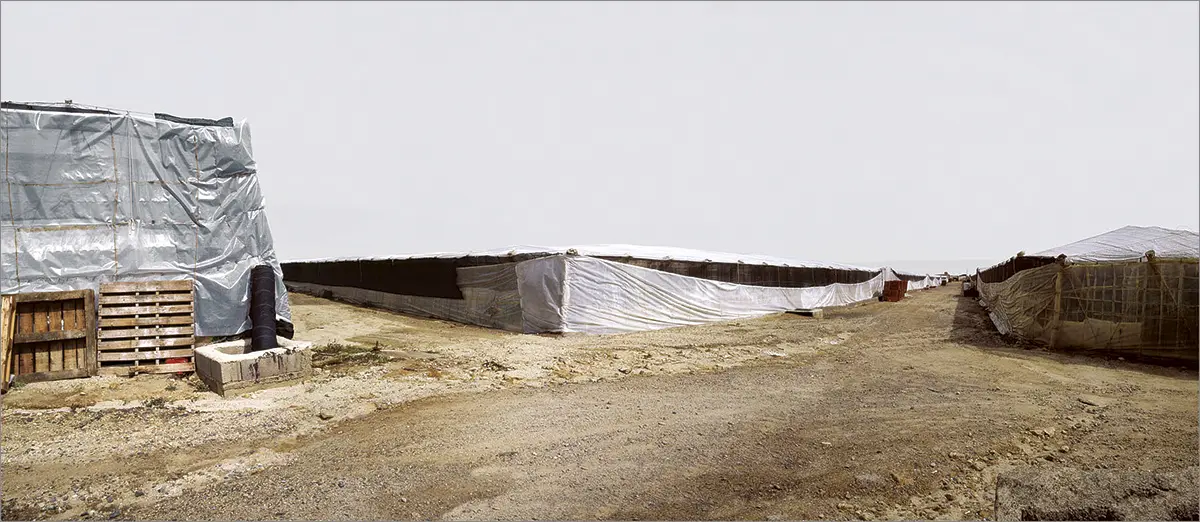
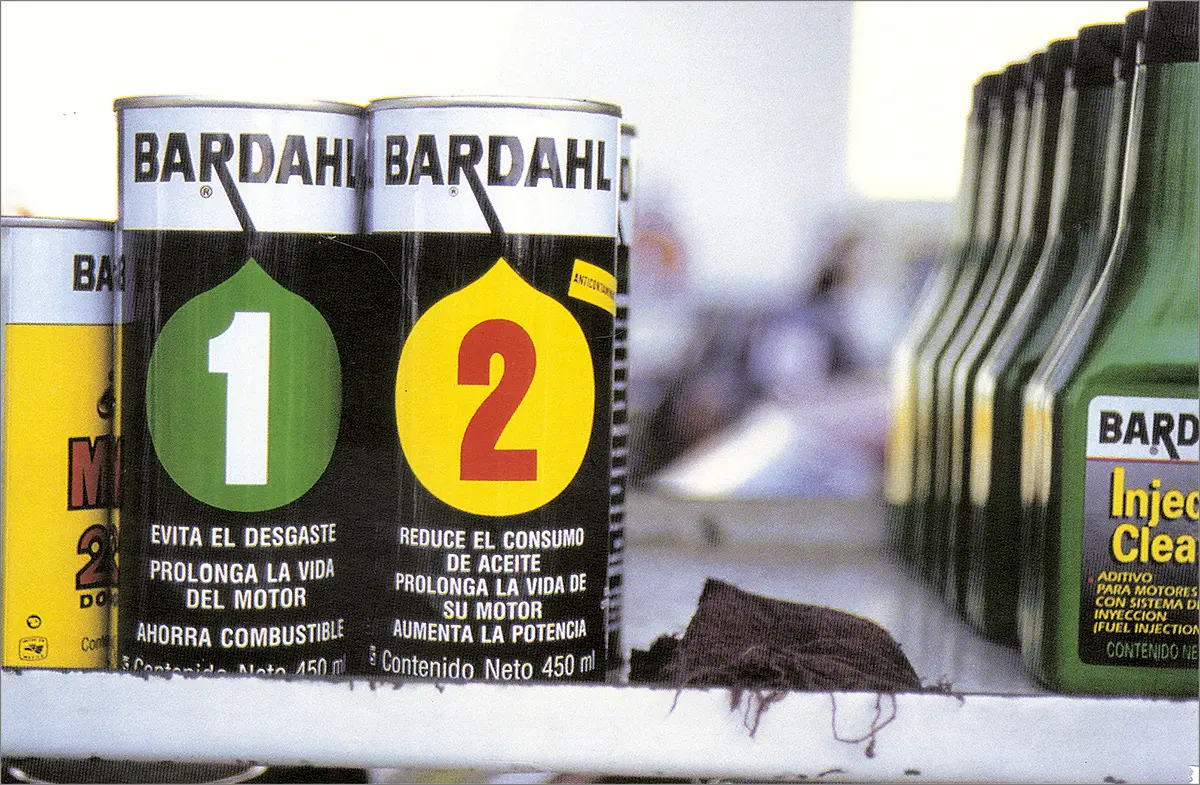
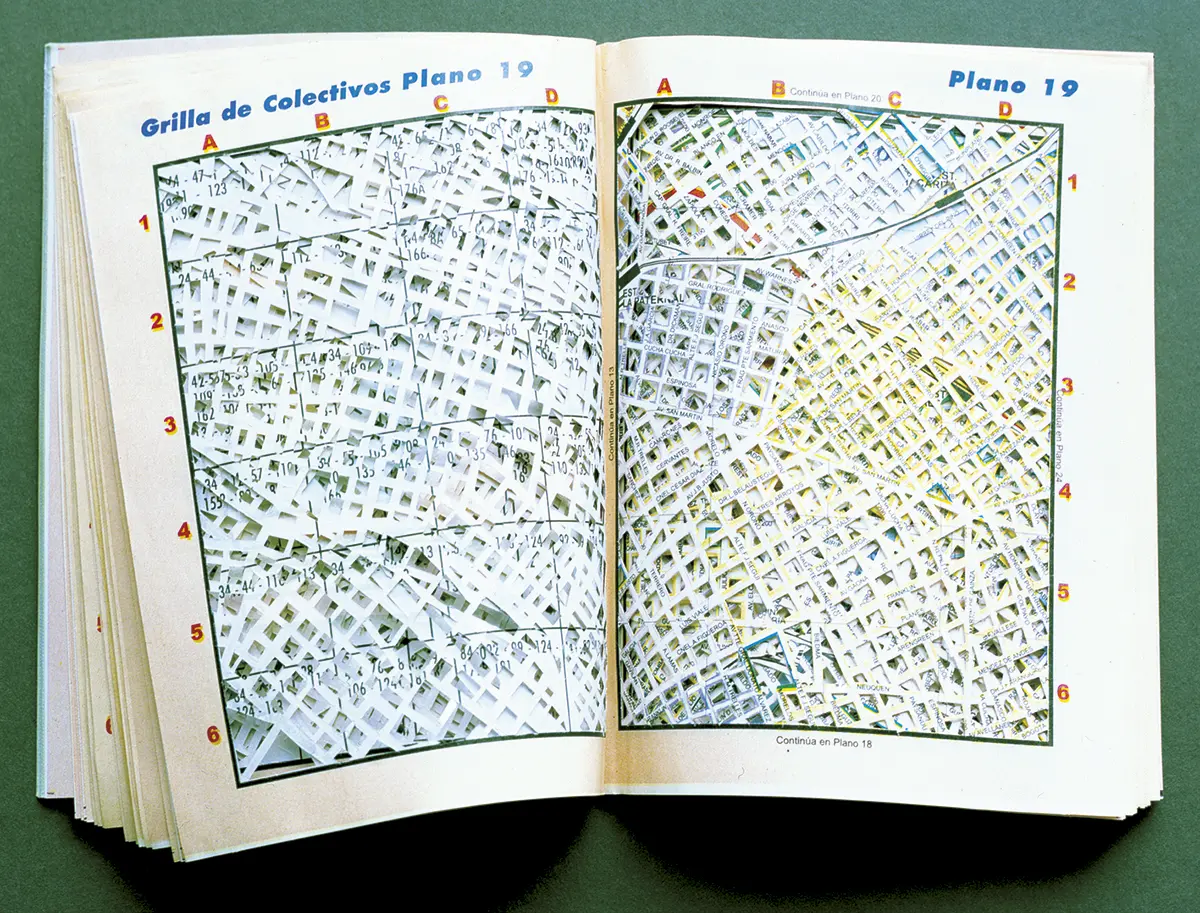
The general program of galleries also included some highly interesting works, such as a variety of pieces by Julian Opie, presented by several galleries (although the best were probably to be found at Lisson, particularly the medium-format paintings that moved away from the human figure and centered around less evident themes in the artist’s work, such as landscapes or seascapes). Christopher Grimes brought a great series by Allan Sekula, one of the most interesting artists working today. The Isabella Brancolini gallery discovered Leta Peer’s pictorial installations, while OMR offered an excellent display of works among which special mention should go to Pablo Vargas Lugo’s large digital print of his motif of satellites caught in a tree’s branches, superbly suited for the large format. Mario Sequeira Gallery presented an impressive work by Pedro Cabrita Reis which, along with a sculpture and drawings by José Pedro Croft seen at Quadrado Azul, confirmed the vitality of current Portuguese art. Another powerful piece, also nearly invisible, was Abraham Cruzvillegas’s installation with maguey leaves at Kurimanzutto. The simplicity of his gesture of nailing nine leaves to the wall to let them wither, in fact, fossilize, carried an unexpected impact. In addition, this gallery also showcased important works by Damián Ortega. Ruth Benzacar Gallery presented Jorge Macchi’s peerless works, this time architectural designs for two cities punctured (Città Aperta) in such a way as to leave only the network of streets like a paper embroidery. The work was poetic and, as is always the case with Macchi, conceptually charged. Another artist to follow is Luis Macías, who presented works at Madrid’s very young Garaje Regium gallery. Montserrat Soto’s photographs at Helga de Alvear confirm that she is one of the most interesting photographers of her generation, a rather too discerning comment in an environment busy with mostly banal, large-format photography. Deewer Art presented a Panamarenko piece that turned out to be the fair’s most spectacular presentation, not counting the chillouts.
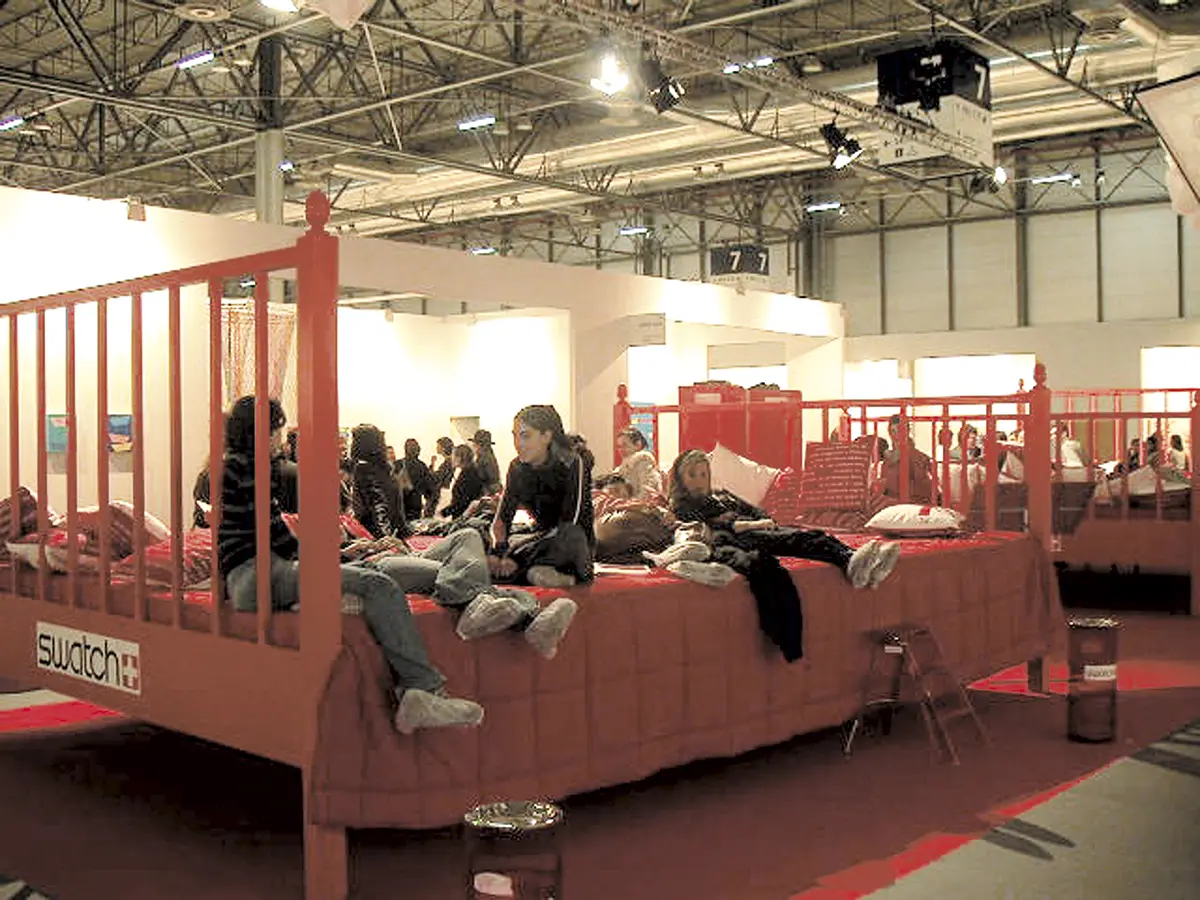
This has been perhaps one of the most critical points of contention at ARCO. Given the characteristics of the pavilions at Parque Ferial Juan Carlos I, and the massive attendance, ARCO’s spatial and architectural project acquires a particular relevance. The result this year was among the most successful, apart from the section devoted to journals and publications —where the only Latin American publication to be found was ArtNexus— which failed in many respects (what happened to simple, functional white tables? what about lighting required for reading?) The fair walkways were wider, the stands were distributed to achieve greater visibility, the movement of the public was made noticeably easier, and the fair in general seemed more focused. Rest areas, however, were turned into mega-designs sponsored by private companies, and generally, they were not well-received, particularly by gallery owners whose stands were located near them. Perhaps the hundreds of youngsters who appropriated those spaces had a different view. It is conceptually important to incorporate notions of comfort into such a large event, but in retrospect, it seems a good idea not to turn the rest areas into spectacles, since ultimately it is not the visiting public but those who come to ARCO to work who are most in need of respite.
A few days after the inauguration, the comment was made that with this edition ARCO was becoming the world’s second most important art fair, after Art Basel, and indeed the artistic offerings could not have been better. However, there is still space for debate as to how to incorporate and promote both Spanish and international collecting. Perhaps the guest country program should be directed towards the presence of collectors, rather than galleries. Similarly, the round table discussions, which seem to multiply from year to year, are no more than accessories. The number of presentations could be limited and more focused; with better logistics, this aspect of ARCO could become a genuine point of encounter and reference for critics, theorists, and curators. The Art Theory Forum that was held some years ago in conjunction with the Guadalajara Fair in Mexico is a model —albeit imperfect— to build upon.
ARCO today is at what seems an optimal moment to look back and move forward with some minor adjustments that in no way would detract from its achievements as a contemporary art fair with a bright future.
ISSA MARÍA BENÍTEZ DUEÑAS
Art historian, specializing in contemporary art and art theory. She is currently working toward a Ph.D. at Universidad Carlos III in Madrid.