
De lo que soy/Of what I am is a group show dealing with issues of women and identity. There are thirty-five works by twenty-two contemporary female artists with roots in twelve different countries in Latin America and the Caribbean. Strong references to magical realism, Mother Earth, suffering and pain, syncretism, pre-Columbian symbols, maternity, sexuality, and cross-cultural identity are explored in a variety of media including painting, sculpture, drawing, video, installation, photography, fiber art, and printmaking.
The exhibition was organized by Susan Hoeltzel, director of Lehman Art Gallery, and independent curator Patricia Stevens, and focuses on current views of women’s self-portraiture and autobiographical work. The strength of the exhibition lies in its interestingly and cohesive thematic approach and in the multi-layered dialogue that arises from the diverse works. The delicate task in any dealings with this genre is avoiding the clichés and stereotypes abundant in female self-representation. The influence of iconic artists such as Frida Kahlo and Ana Mendieta is strongly felt throughout the exhibition. Kahlo’s exploration of pain, betrayal, and suffering, and Mendieta’s bonding of her own body with nature are reflected in many of the works on view. In some cases, the artists pay direct tribute, and in others, they challenge the parameters established by these canonical figures.
A sculptural installation of Puerto Rican artist Marina Gutiérrez takes up themes explored by Kahlo. Though Gutiérrez does not work with self-portraiture in a traditional way, she does, like Kahlo, utilize personal experience to express pain and suffering. Gutiérrez’s piece Disillusionment Gown, 1997 refers to the loss of love. Its papier-mâché face is covered with the written text of Pablo Neruda’s poem "Los Versos Mas Tristes." The bodice of the dress is metallic and armorlike, and the skirt made of chicken wire is adorned with small, house-shaped cages containing objects that represent the trappings (and entrapments) of domestic life such as babies, cosmetics, and furniture. The installation is suspended from a coat hanger, like an article of commerce hanging from a store rack.
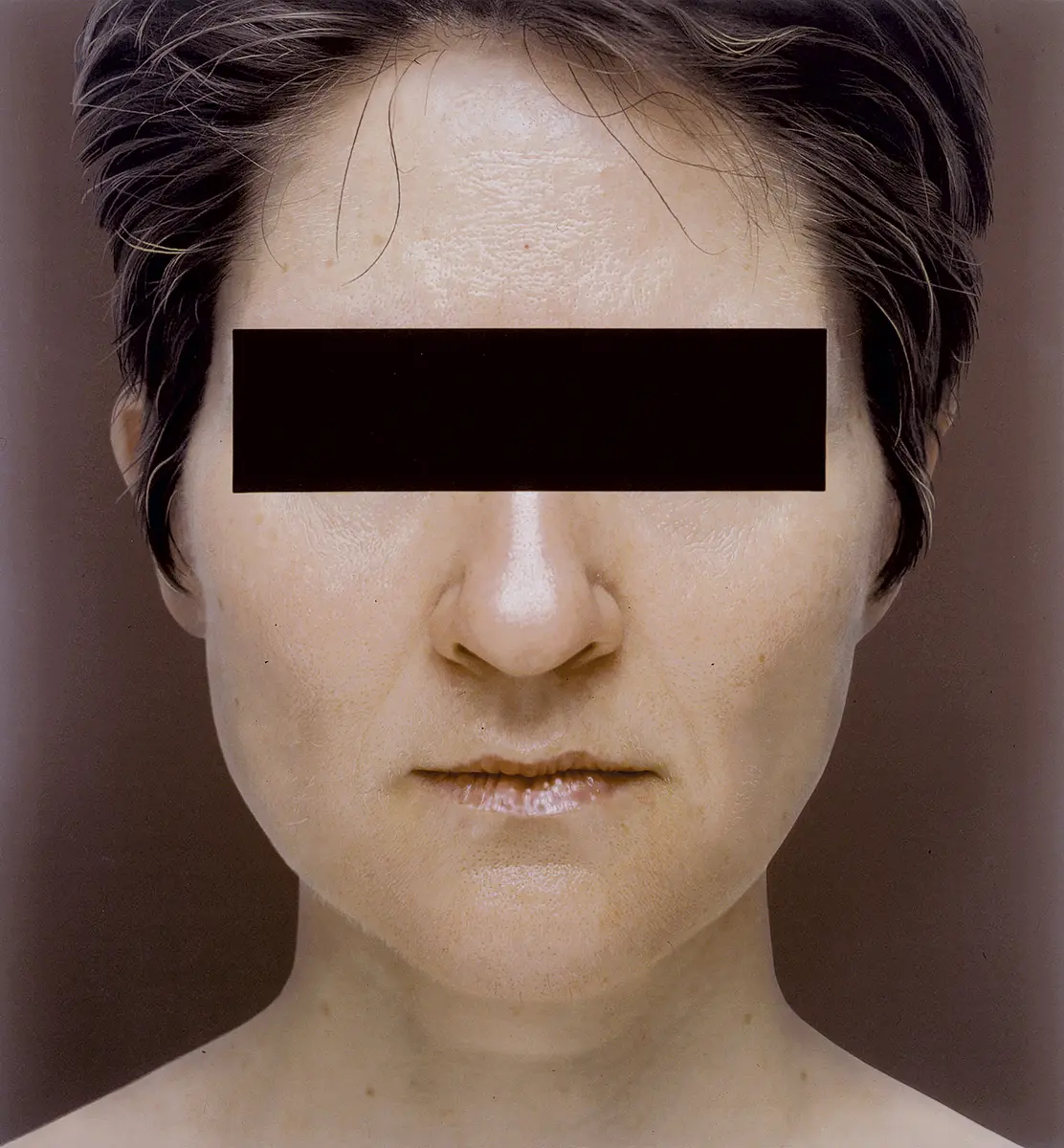
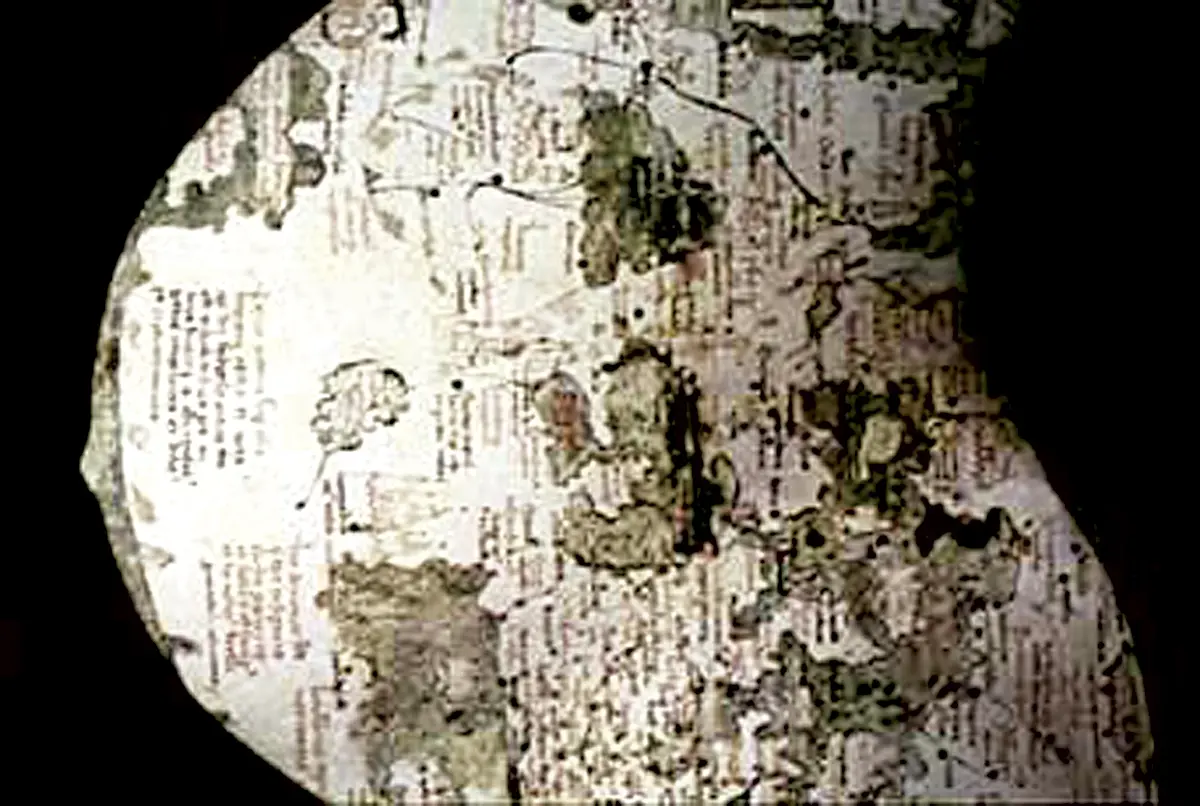
The legacy of Frida is also evident in the work of Mónica Castillo. Her piece challenges the Kahlo myth so deeply rooted in her native Mexico. Castillo’s fiberglass cast of her face and torso is totally devoid of self-revelation. The artist covers her likeness with debris, such as cigarette butts, aluminum can pop-tops, insects, discarded papers, orange peels, and foliage, questioning the common assumption that a self-portrait must reveal one’s persona. Kahlo is also echoed in the work of Colombian-born artist Esperanza Cortés in the way she conflates the notions of motherhood and nature. Cortés uses clay in low relief to depict a pregnant indigenous woman against a blue encaustic ground. Veins radiating from her womb metamorphose her body into a tree of life connecting her to the earth. The sculpture is installed like an altarpiece with a metal bowl containing holy water at her feet and suggests rebirth through maternity. The theme of motherhood is also one of the themes explored by Mexican-born artist Tatiana Parcero. In her photograph, Nuevo Mundo #10, 1998-2000, Parcero superimposes a transparency of her pregnant belly over the image of an early New World map, creating the illusion of tattooed skin. Exploration and conquest becomes a metaphor for new beginnings and possibilities.
Cross-cultural identity is reflected through many different approaches and media and provides a subtext for several of the works in this show. In Annalee Davis’s installation (up) rooted, 1997, roots are used in a literal way to address issues of cultural identity. In her piece, a small wooden house suspended from the ceiling is connected to the gallery floor through long vines. Davis’s family origins are in Barbados, but she has lived in many countries and the work suggests that Davis’s home is with her wherever she travels. The idea of carrying one’s own home is also explored in the mixed-media printmaking of Brazilian artist Josely Carvalho, in which a turtle represents the artist’s alter ego.
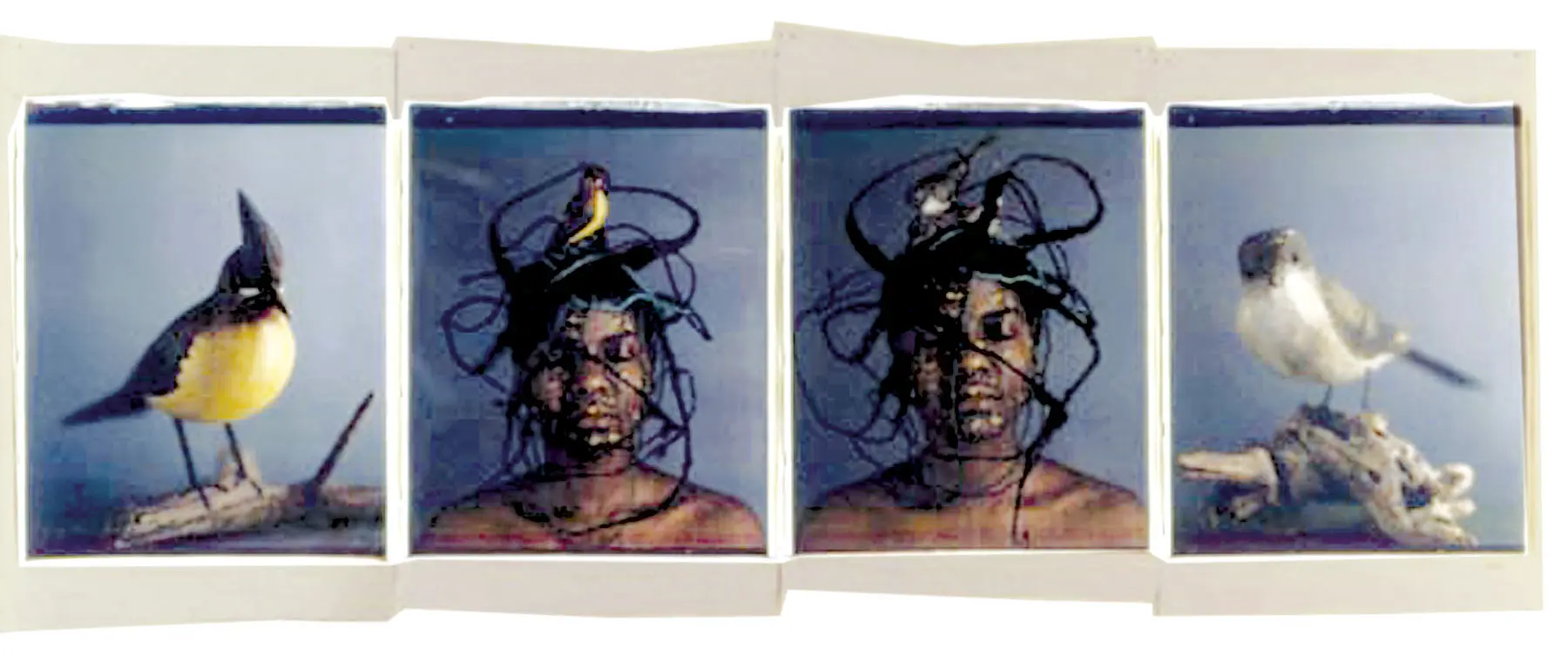
The concept of cross-culture and syncretism is similarly explored in the work of Cuban artist María Magdalena Campos-Pons. In her four-panel Polaroid work, Nesting I, 2000, Campos-Pons presents herself with hair braided and beaded to look like a nest, and the image of birds on top of her head. Flanking this dual image are two pictures of North American birds. The African beads and the yellow marks daubed on her face suggest the practice of Santería, a religion rooted in Catholicism and Yoruba religious practices. Aztec goddesses Tonatzin and Coatlicue, the Virgin of Guadalupe, and the Virgin Mary are invoked in paintings by Lydia Negrón and Marina Gutiérrez and in the two pink-painted crib mattresses by Scherezade García.
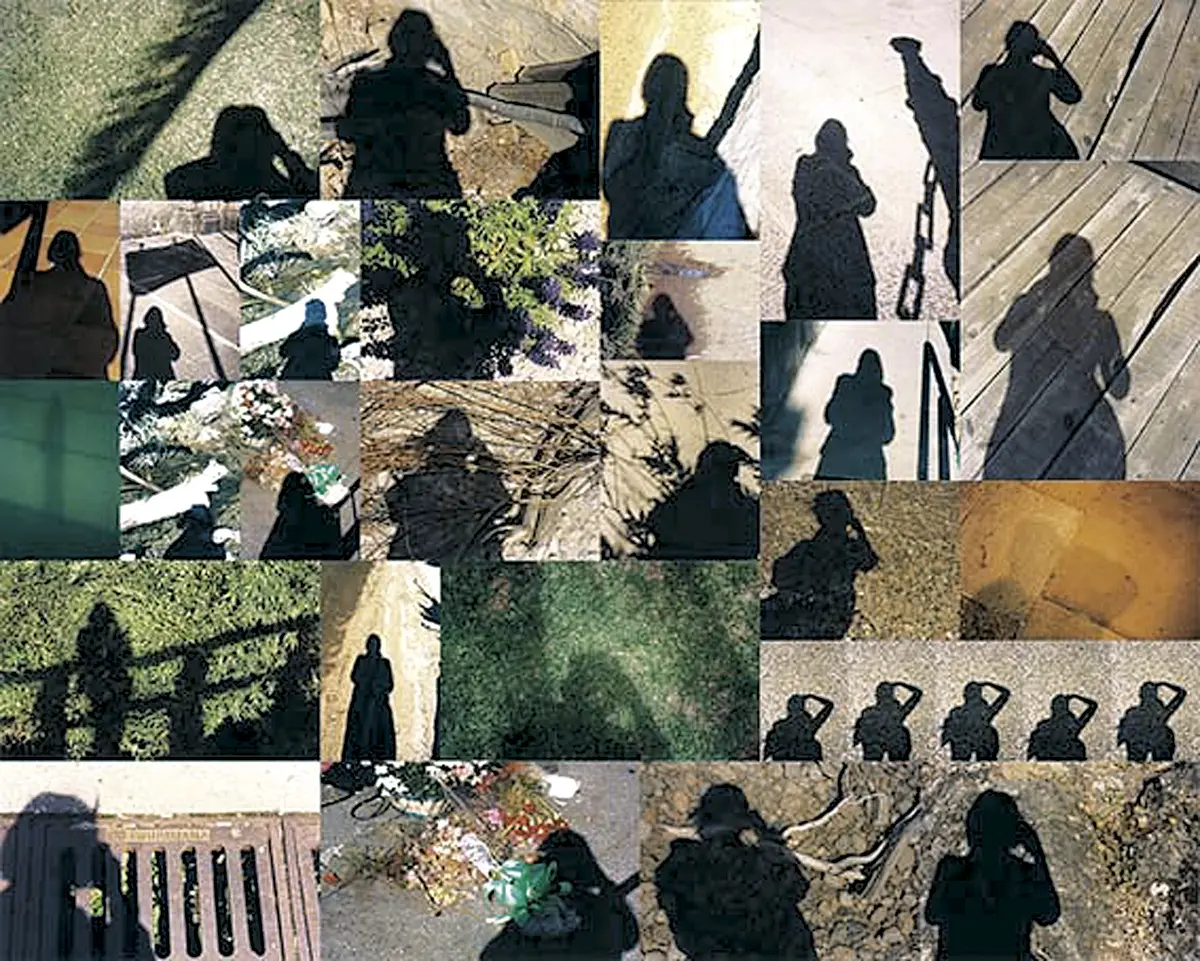
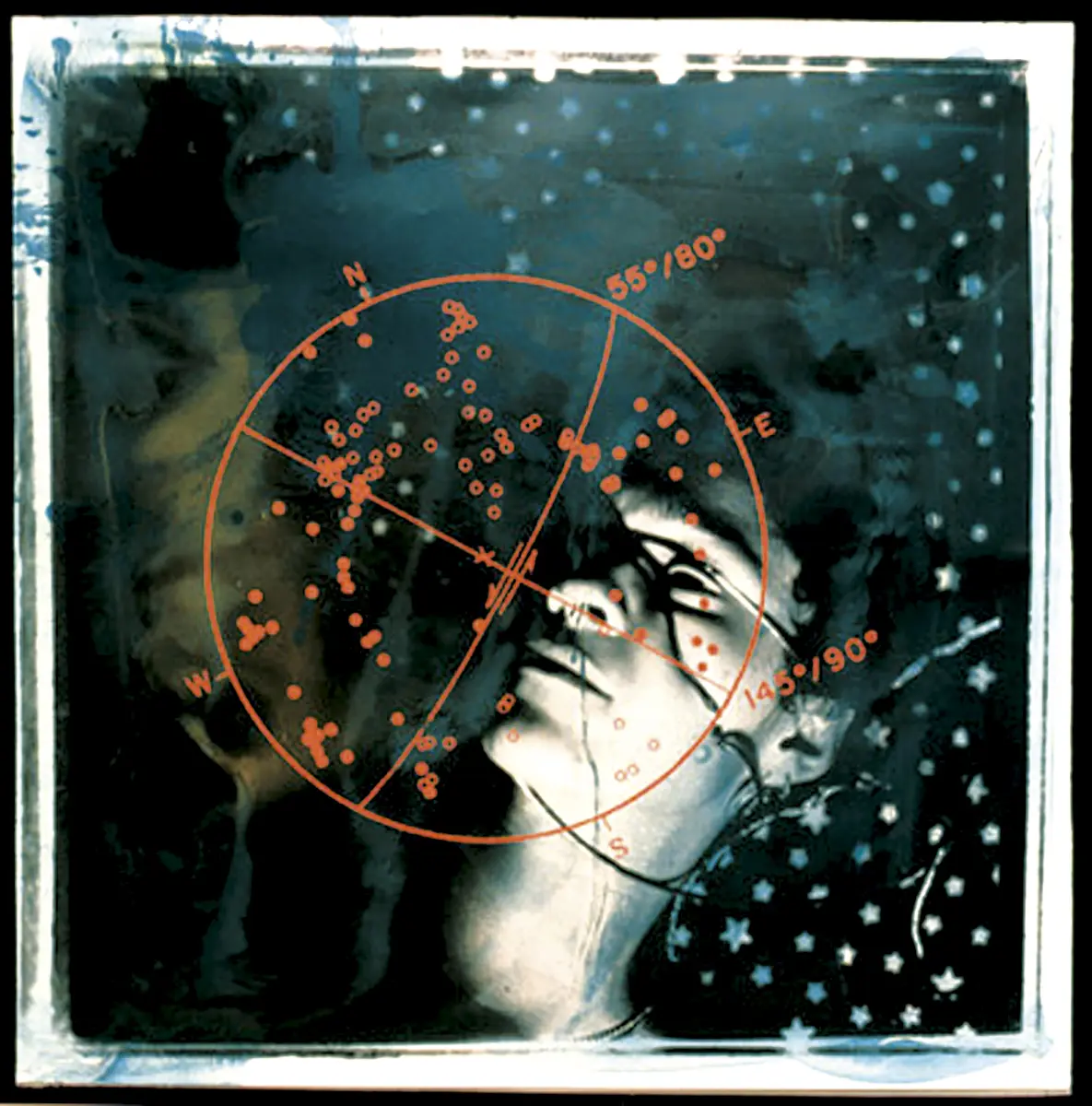
The idea of the body as a mark in the landscape, a concept deeply rooted in the work of Cuban-born artist Ana Mendieta, is also present in the large-scale photographic composition by Argentinean Matilde Marín and in the mixed media works by Patricia Villalobos Echeverría. Marín’s Itinerary, 2003 is composed of thirty-one photographs of her shadow on a foam board, created over a period of years, in many countries at different times of the day. Laid out on a grid, these images give physical form to time’s passage. Patricia Villalobos Echeverría’s work deals with her experience of the 1972 earthquake in Managua, Nicaragua in a series of mixed media photographs of 1997 titled Epicentro I-IV. Her image lies in the epicenter of seismological graphs. Villalobos’s body is bound with wire and her eyes and demeanor have the lifeless, frail, and powerless look of an individual in the center of a cataclysmic event.
Landscape bearing the wounds of history is the theme of September 10, 2001, Uno Nunca Muere La Vispera, 2001, Monika Bravo’s five-minute video shot from the window of her ninety-second-floor World Trade Center studio on the night before the towers were destroyed. This piece surveys the city in time-lapse photography over the course of seven hours and is dedicated to the memory of Michael Richards, a fellow artist who spent the night in his studio and died the next morning. It is a simple yet dramatic evocation of that event. Interestingly, hers is the only work in the exhibition that deals with memory and history without a Latin American subtext.
Another video work in the exhibition explores issues of authority and trans-generational dynamics in a father-daughter relationship. In The Apple of His Eye, 2003, Kukuli Velarde, who was raised in Peru, presents an image of her father speaking about his desire for her to follow in his footsteps as a traditional painter. Velarde, however, chose to work in non-traditional media, going against her father’s will. In the show, the video monitor is surrounded by drawings done directly on the walls, using images that Velarde made as a child.
Feminism and sexuality are themes touched upon by Mari Mater O’Neill, Sandra Bermúdez, Elba Damast, and Anaida Hernández. Mari Mater O’Neill’s large-scale lithograph depicts two comic-strip heroines engaged in battle. The struggle is resolved in a sensuous embrace and kiss by the two protagonists. Sensuality is also the subject of Sandra Bermudez’s two circular-shaped photographs of very seductive, bright red lips, titled I Want You/I Miss You, 2001. In her painting This is the Way I Feel, 2002, Venezuelan Elba Damast depicts herself as a multi-headed hydra with menacing teeth, smoking cigarettes, and sticking her tongue out. Her body is enclosed by a barbed-wire fence, but the heads, which also read as hearts, are free and wild, in a reference to the seductive and destructive power of the femme fatale. Anaida Hernández’s interactive installation Multiples, 2003, consists of fifty small pink hand mirrors attached by magnets to a galvanized steel wall. Each mirror has a symbol having to do with aspects of fortune and fate stenciled on its back, and the viewer is encouraged to handle them. Vanity, destiny, narcissism, and desire are all themes reflected in this playful piece.
There are many promising avenues opened by this exhibition. It is well thought-out, and a quality ensemble of varied, provocative, and at times poignant bodies of works. Although many concepts related to self-representation have been addressed and elaborated upon, both visually and thematically, many others have yet to be explored. It will be interesting to see how Latin American and Latino female artists continue to push the boundaries of what has already been accepted as part of the common discourse about women and identity.
CLAUDIA CALIRMAN