
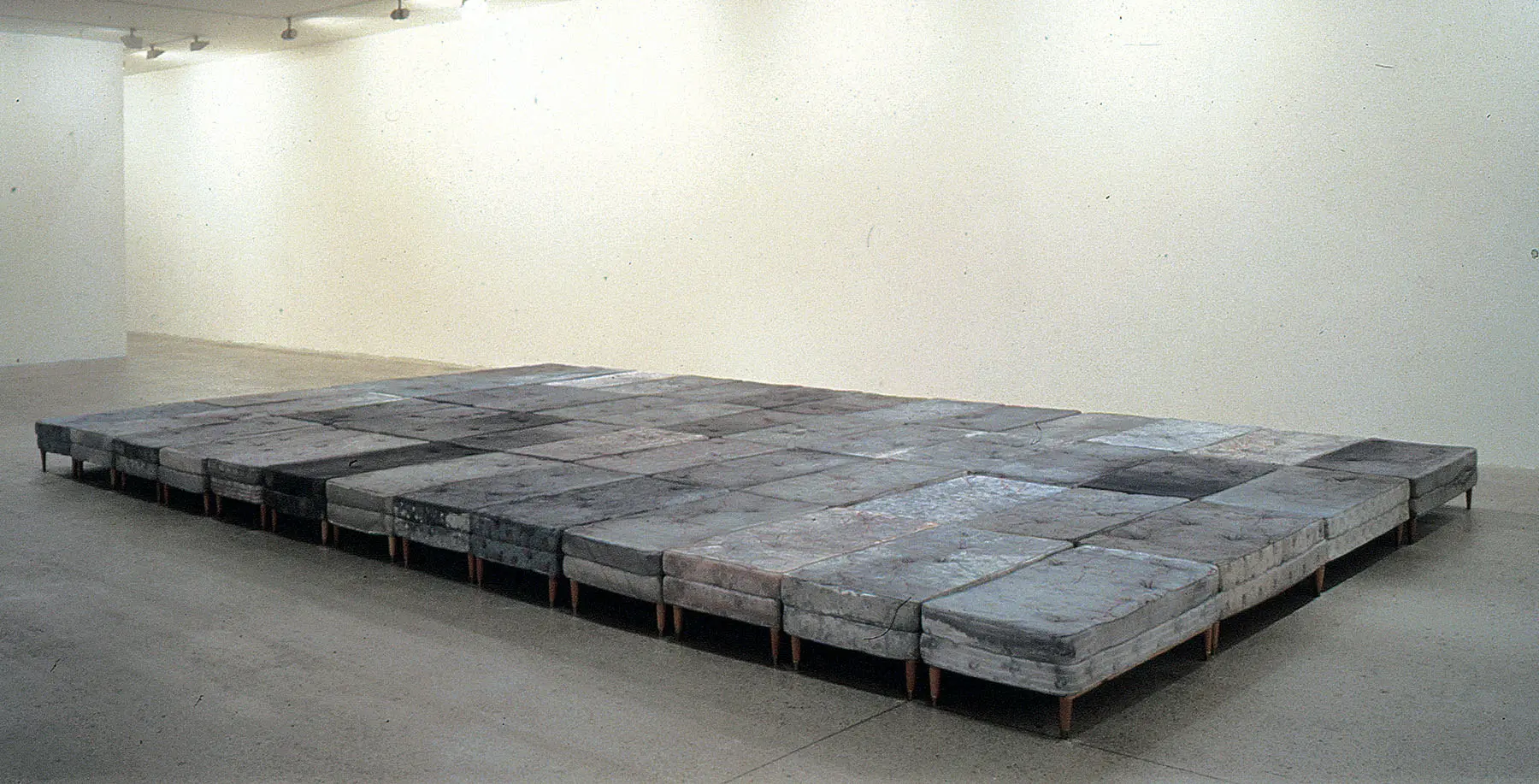
Guillermo Kuitca’s recent exhibition in the Palacio de Velázquez —a space that functions as an extension of the Museo Nacional Centro de Arte Reina Sofia (MNCARS)— simultaneously displays the vices and virtues that one expects from a retrospective, albeit one that is non-traditional and aspires to be a statement of legitimization. The Argentinean painter hardly needs this kind of promotion, so as a whole the exhibition fluctuates between two contradictory positions. On one hand, there is a historical attempt to recognize the artist’s pictorial production in order to place it within a larger historical discourse; all the early works, ingenious as well as amateurish, are located here and function as a point of departure for a study of the boy genius’ trajectory. On the other hand, which I consider the most interesting and worth emphasizing, the show is a very important gathering of Kuitca’s most recent work, which situates him as an artist who is not only young but also very current and who has already assumed a major role in the international market. He is in the heart of the creative process right now: open to experimentation, and ready to break free from the stereotypes that have been used to categorize him, as they have other artists of his generation. In short, Kuitca is an artist who continues to evolve and explore his extensive and far-from-depleted pictorial practice.
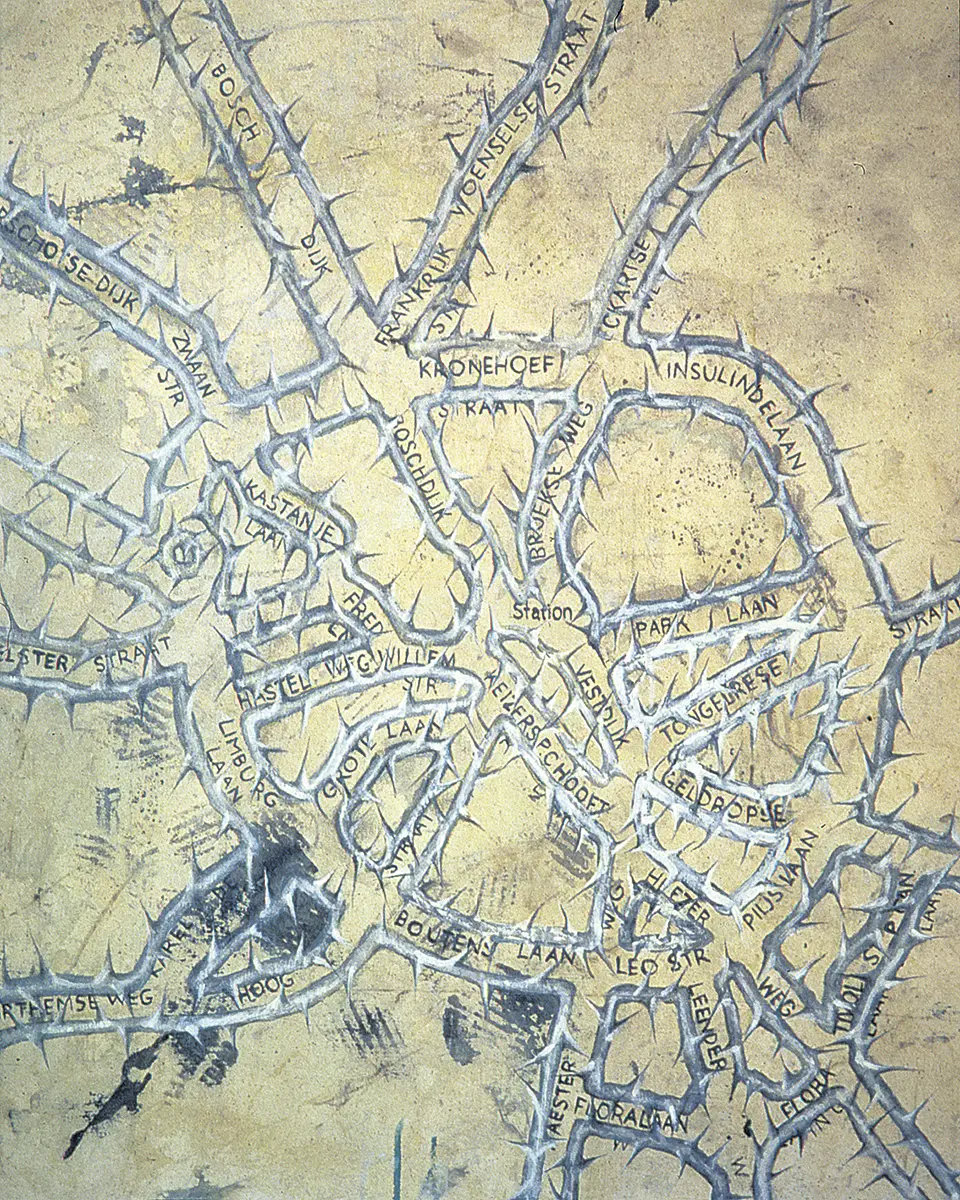
Kuitca’s show includes a selection of works —some are among his most paradigmatic— that range from paintings in which the significance of the bed is omnipresent (Nobody Forgets Anything, 1982) to the themes of crowns of thorns, maps, charts, and album covers.
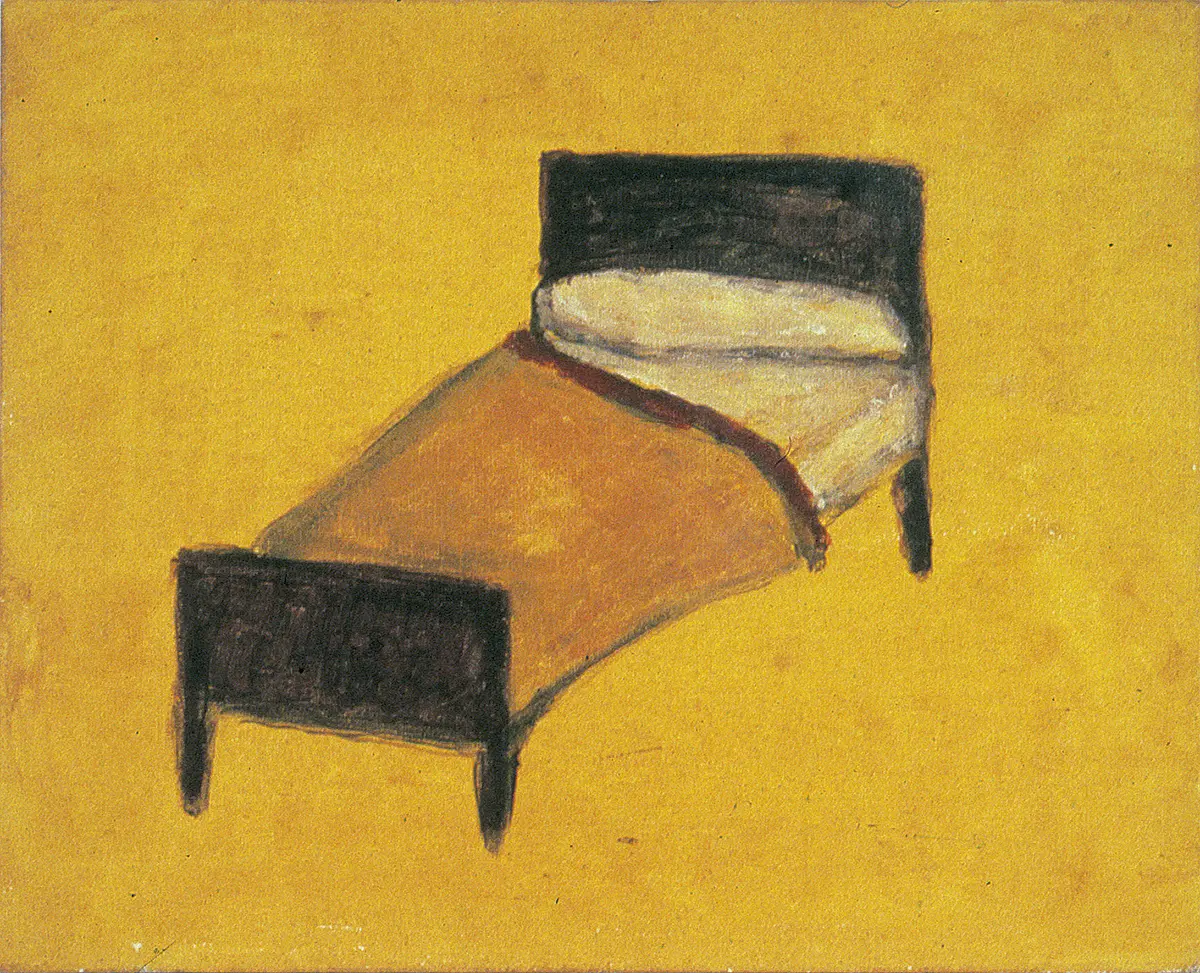
It is not surprising that the centerpiece of the show is the installation of fifty-two painted mattresses spread out in the middle of the main room. This clearly recognizable, even timely piece could be considered a milestone in recent Latin American art history. Kuitca plays with the juxtaposition of the private space of the bed and the public space of the map and at the same time draws attention to the interplay of scale and the relationships between “the world and me.” The idea of the map— in the end, an abstract representation of geographic space —painted on the mattress offers a reading of the world as if it were the grand stage on which life unravels. In this sense the associations that Kuitca attaches to the bed are clear: it is the place of birth, love, dreams, and death.
In some of his most brilliant recent series, Kuitca has extended the idea of the public/private space to a wide variety of places that he represents as painted architectural plans: theaters, of course, but also stadiums, legislative chambers, offices, jails, and peep shows. Functions that previously were bestowed exclusively on the bed, such as intimacy and individuality, are now distributed among locations that are simultaneously public spaces and sites that remain absolutely individual, but impersonal (like the number of a seat in a stadium or concert hall).
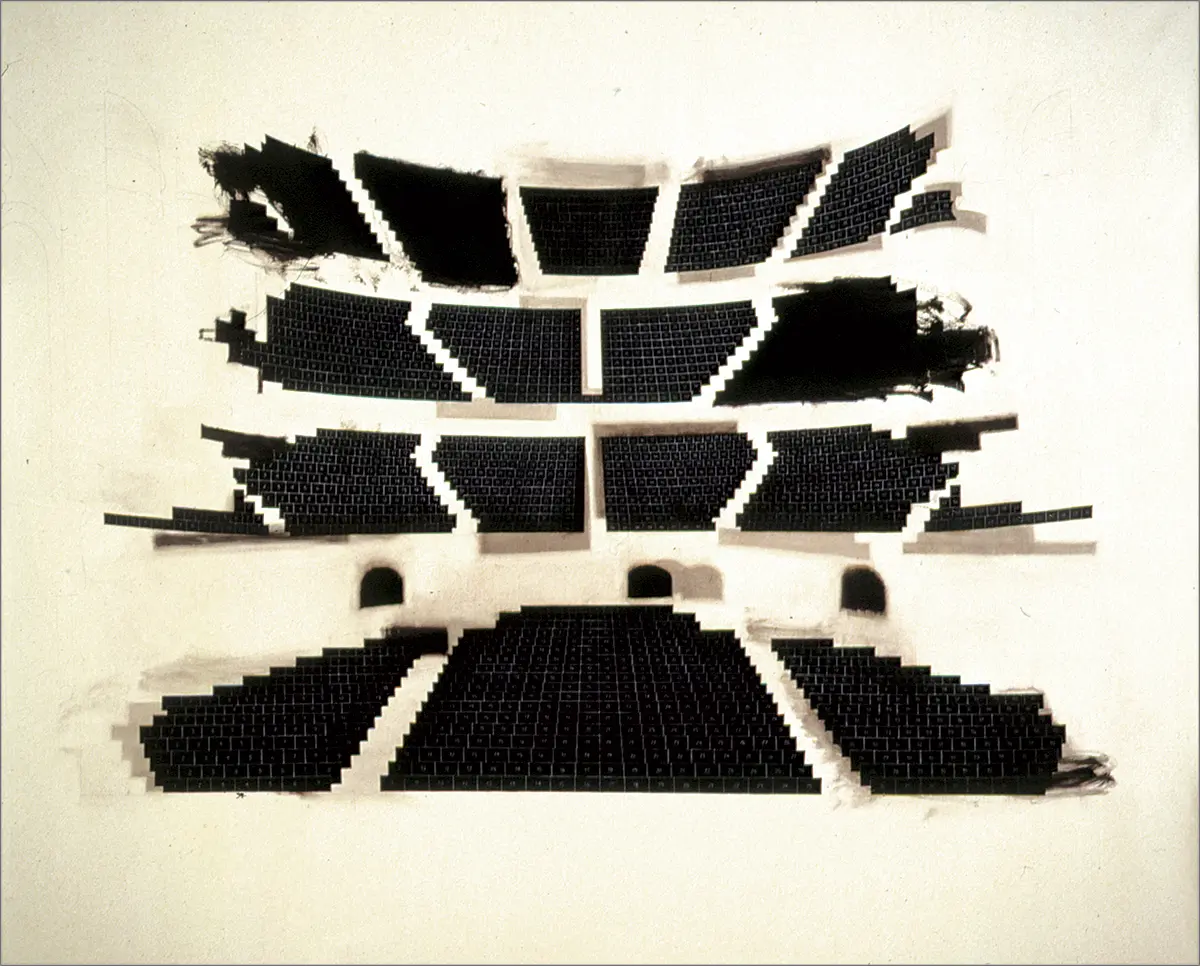
Kuitca’s insistence on painting and his withdrawal from the tricks of objectivism that are evident in the mattresses recovers a more mediated experience and therefore a more conceptual aspect of the pieces in which cleanliness and the precision of architectural drawings predominate. We only begin to think of “breakdown” when these scenes represent rooms full of confessionals, or of disconnected and impossible architectures. This is one of the more unbalanced and brilliant aspects of Kuitca’s most recent work —for the most part very interesting drawings— that not only deconstructs the spaces and illuminates the precariousness of the medium (the painting and drawing that erase or dilute each other), but also examines the fragility of the same architecture, or more accurately, of our place in these scenes, our place in the world.
In this sense, we encounter works that have taken a qualitative step toward what they suggest, compared to the previous plans and maps that, beyond their individual value, now appear weaker and more rhetorical.
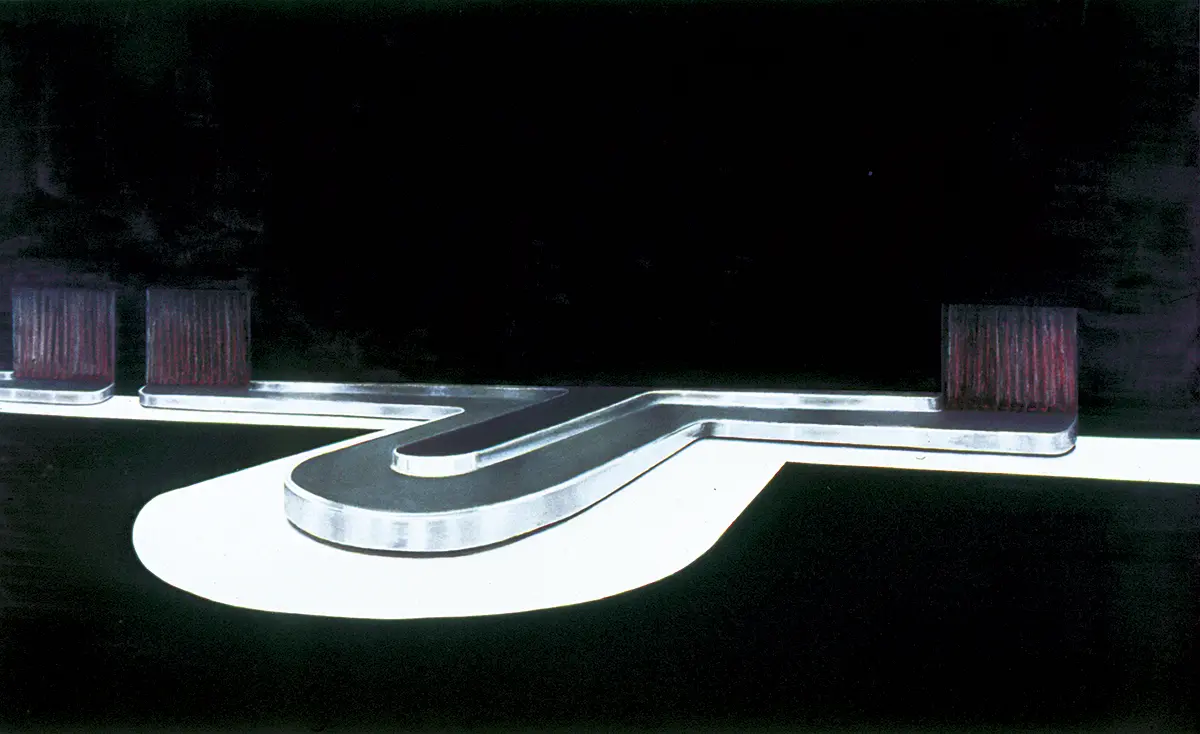
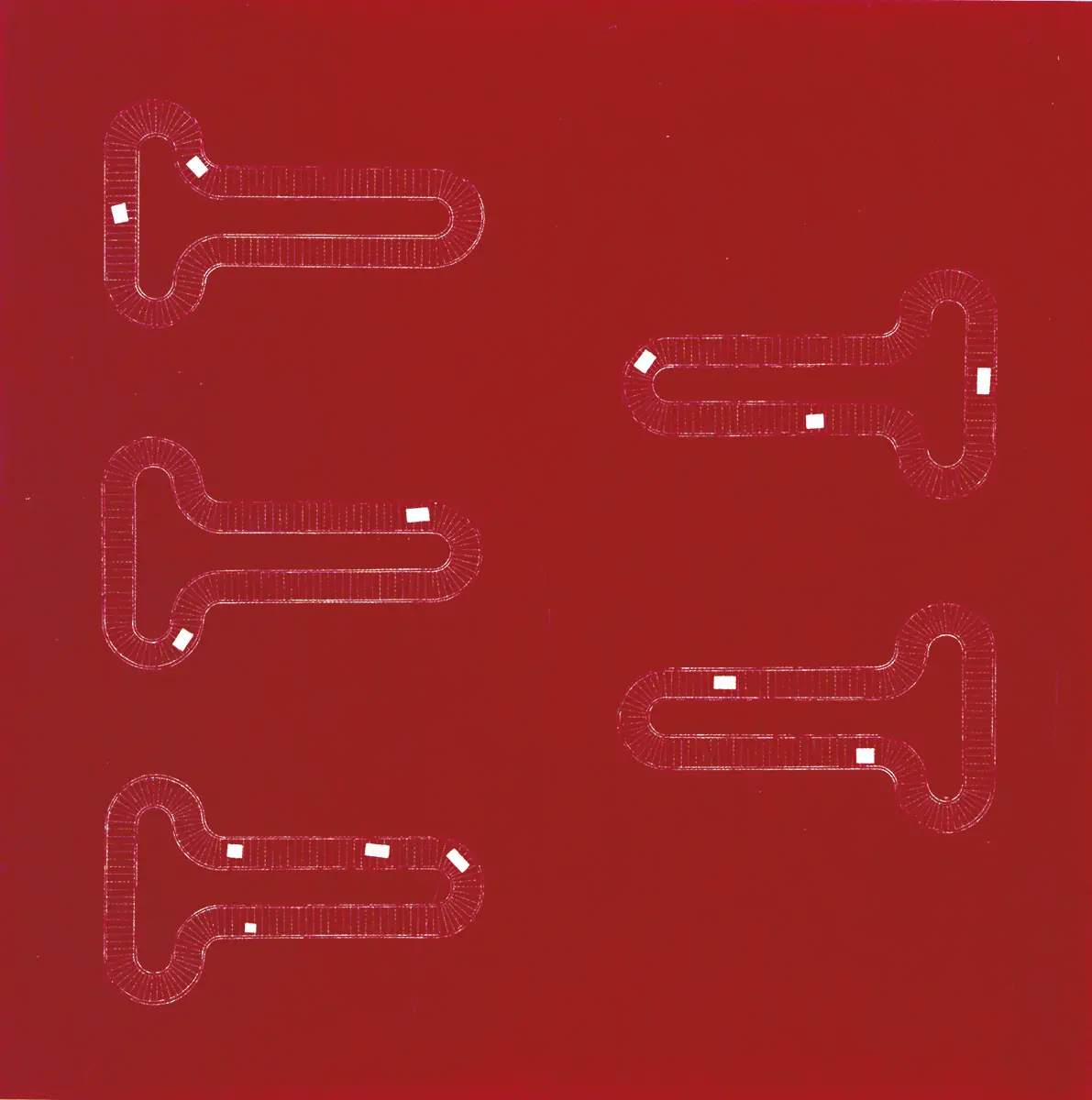
Two motifs appear with a certain consistency in Kuitca’s work of the last two or three years. In his 2002 series of drawings, Global order, there is an almost complete disintegration of space. What appears to be the blueprint of an apartment becomes nothing and only the shadow of what once existed remains. The second is the motif of the baggage claim conveyor belt found in all airports, places that by definition are non-places. In Untitled (Unclaimed baggage) from 2000, Kuitca remains loyal to architectural drawings on an extensive plane of color. Five conveyor belts are distributed over the canvas, and in each of them are two or three very small white squares or rectangles that represent suitcases. Are they abandoned? The sensation of desolation is as strong as or stronger than what is felt in Trauerspiel (2001), a more pictorial representation of the same conveyor belts. It appears that we do not even occupy our own place in the world. Now it is our baggage, or things, that inform us of where we are (not).
Following the showing at the Palacio de Velázquez from February 6 to April 28, 2003, where it was seen by 47,000 visitors, the exhibition will be presented at the Museo de Arte Latinoamericano de Buenos Aires (MALBA), where thirty pieces from local collections will be added. The event is eagerly anticipated in Argentina since it brings the public closer to a local artist who has achieved wide international acclaim. In conjunction with the show, there will be meetings with the curators and with the artist, film cycles, guided tours, classes, and lectures. MALBA will also publish a bilingual catalog with critical essays by the curators and other writers, a biography of the artist, a checklist of the exhibition, a bibliography, and more than two hundred reproductions.
ISSA MARÍA BENÍTEZ DUEÑAS
An art historian who specializes in contemporary art and theory. She is currently a doctoral candidate at the University of Carlos III in Madrid, Spain.