
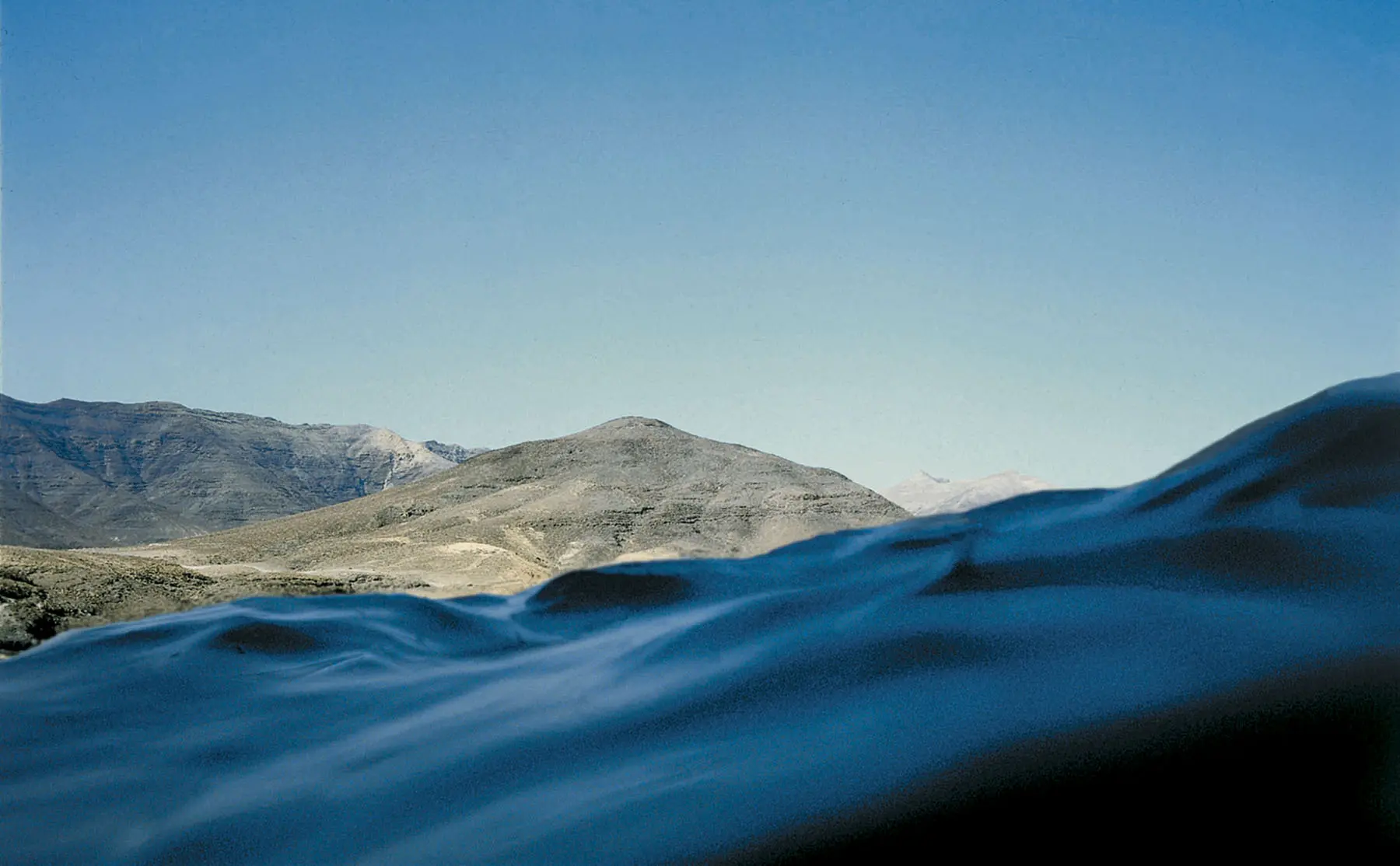
Revisitar Canarias is a joint initiative of gallery owner Elba Benítez, who conceived it, and the government of the Canary Islands, one of Spain’s most distinctive tourist destinations. The project sought to counteract any negative implications derived from this reality by exploiting the islands’ high visibility on their own terms. Seven non-local artists were invited to interpret each of the seven islands that form the archipelago. Undoubtedly, a major achievement was the selection of artists: Augusto Alves da Silva from Portugal was selected for La Gomera; Sweden’s Miriam Bäckström for Tenerife; London-based Nigerian artist Oladélé Ajiboyé Bamgboyé was chosen for La Palma; Olafur Eliasson from Denmark for Lanzarote; Britain’s Craigie Horsfield interpreted El Hierro; Miguel Rio Branco revisited Gran Canaria, where he was born—although his entire artistic career has been based in Brazil; and Catalan artist, Montserrat Soto examined Fuerteventura. These seven contemporary artists are at the peak of their creativity and possess successful international careers.
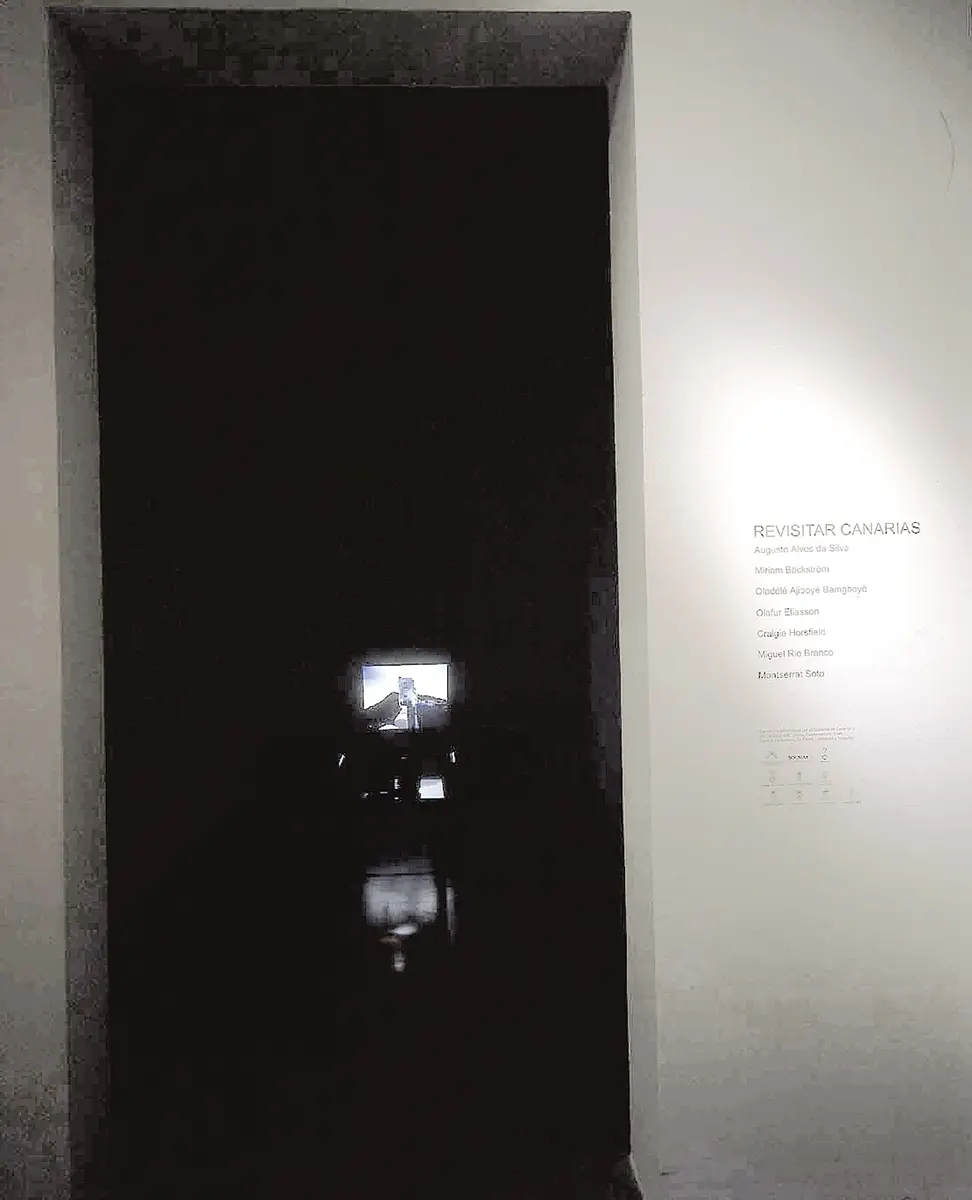
Each of the artists was asked to freely interpret the island assigned to them in any way they chose and without prior constraints. The final result is, on the one hand, an itinerant exhibition, and on the other, and perhaps more interesting, a collection of seven books recording the work of each artist with text written by a Canary Island author. Horsfield chose to include a variety of voices from El Hierro to accompany his work. The rich variety of visions assembled for this project is distinctly apparent in the publications. Thematic and aesthetic divergences among them serve to reinforce the artists’ individual works and their relevance, not only for the Revisitar Canarias project but for the artists’ own development.
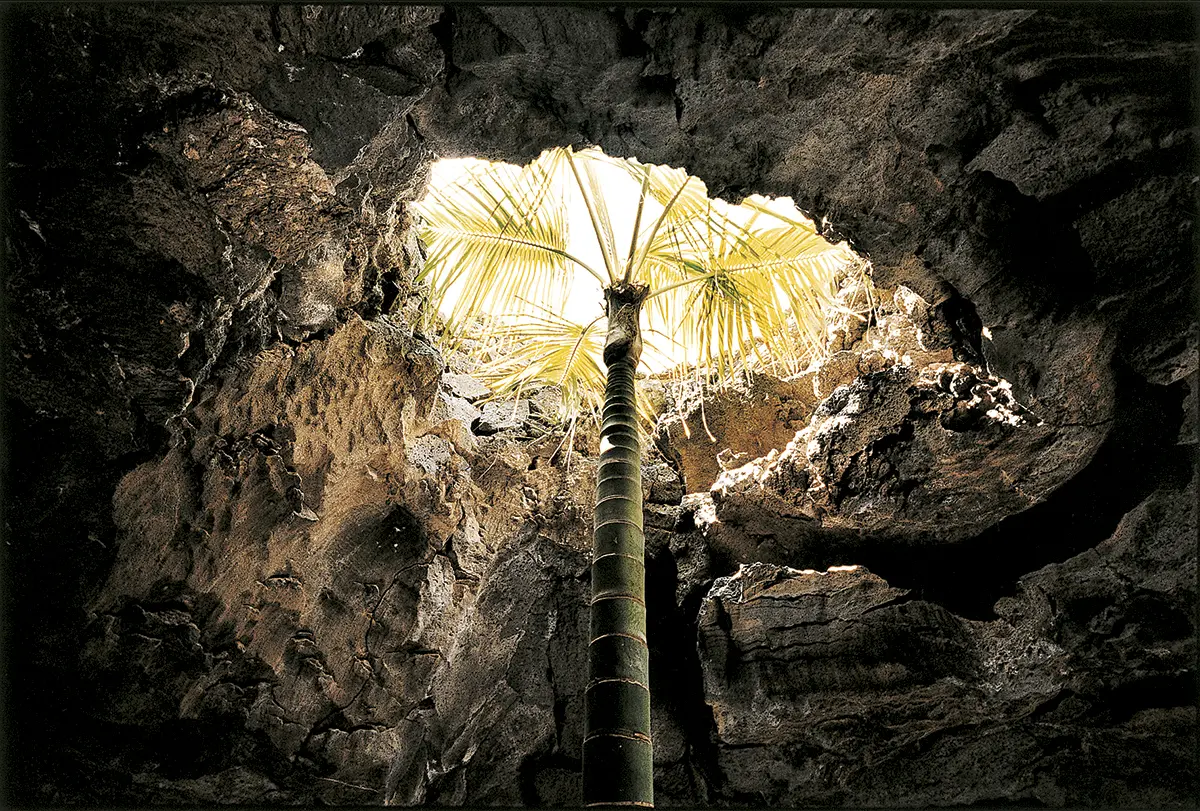
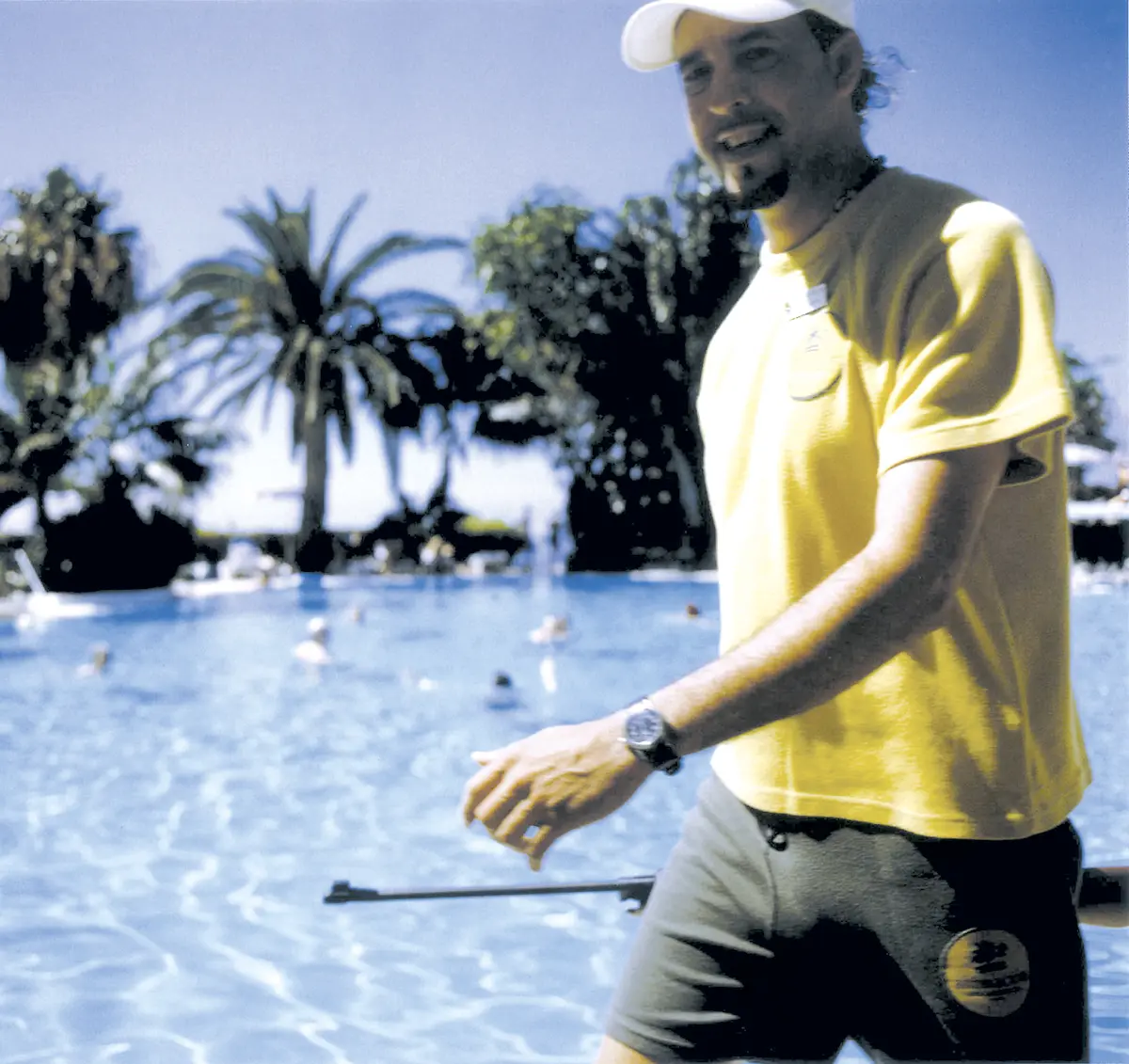
Montserrat Soto finds new densities and textures in her Fuerteventura seascape, which has nothing to do with the usual postcard-type coastal images. In Lanzarote, Eliasson discovers the natural counterpart to his own artificial moonscapes. Rio Branco reveals the disquieting presences that inhabit the no-longer-predictable resort environment, and so forth. Each of the artists has generated images devoid of any promotional intention that brings the island’s geographic, social, and architectural specificities into the foreground.
Spain today is among those countries where art is intensely promoted by official institutions. This is not necessarily beneficial, as evidenced by the disproportion between the large number of activities that take place year after year and their relatively slight impact, as well as by the generally scant relevance of Spanish contemporary art in the context of international art. The proliferation of projects of uneven quality tends to saturate the environment to the point that they become a kind of background music for political acts and for personal and local public relations events of no importance. Curiously, and against all expectations, the Revisitar Canarias project is an exception to this.
Beyond the quality of the artists and the works in Revisitar Canarias, the project’s organizers were right to structure part of the project as a series of wide-distribution photography books. These document the individual visions in ways that cannot be appreciated with the same clarity in a conventional art show, with its usual constraints of space, time, and budget. Although the final exhibition is not limited to the images reproduced in the books (in other words, these are parallel projects), the number of people who will have access to the show through the publication is relatively broad. Despite the fact that individual projects necessarily lose some of their impact in the format of a group exhibition, this initiative, amply publicized within Spain, should become a model for the dialogue, creativity, and openness that are essential for us to learn to see ourselves as others see us.
ISSA MARÍA BENÍTEZ DUEÑAS