
Despite all the radical changes that have taken place in the world of contemporary art, drawing continues to be a prevailing, even indispensable medium, in contemporary art. In the last few years, with the emergence of new practices and languages, and the invasion of new media, this millennial artistic activity has notably broadened its field of definition. This was proven by the exhibition titled Sólo dibujo (Drawing Only) that took place at the Museo de Arte de la Universidad Nacional and included a large group of drawings by more than sixty artists, the majority of them Colombian. Luis Cantillo, Lina Dorado, Mariana Varela, and María Morán were in charge of curating the exhibition.
According to the curators, “the exhibition explores the complex nature of drawing as autonomous work, as sketch or as part of the process of visual research and it includes a wide array of proposals in a diversity of techniques, pencil on paper, calligraphy samples, maps and portraits in embroidery, among others. Even though these projects are very different from each other—not only in concept but also in form—they all share drawing as a common language and in this way mark its validity in present-day practice.”
The origin of this exhibition can be found in a book of the same name by Villegas Publishers that was released in December 2001. On that occasion, the selection of artists was made by Luis Cantillo, but the initial idea belongs to him and Lina Dorado, two young Colombian artists who have been living in New York for a few years where they are currently obtaining their Master’s Degrees. Since 1994 they have completed various collaborative projects with the aim of spreading the word about Colombian art. One such project is Afuera (Outside), a series of photographs the artists took in several eastern cities, on their travels between 1998 and 2003. This exhibit was shown along with Solo dibujo in another room at the Museo de Arte de la Universidad Nacional.
These two artists, aware of the importance that drawing has had in Colombian art history, decided to put together a publication with the intention of compiling “works from numerous contemporary artists of various generations that use drawing as part of their work. In this sense, it creates an opportunity not only to appreciate multiple approaches to contemporary drawing but also a variety of artistic activity that is making their way into the country. The participation of some artists from abroad, who have so generously contributed with their drawings, expands and completes the overview of this exhibit."1 The foreword of the book begins with a very meaningful quote from Beatriz González that reads: “Drawing is the artist’s conscience.” This sentence clearly confirms the essence of drawing within artistic practice and beyond the boundaries of time and place.
The idea of doing an exhibition started to take shape after the publication of the book, and its form was influenced by other exhibitions that took place in New York and Bogotá; those exhibits corroborated the importance that drawing has had for several generations of artists in Colombia and the rest of the world. Among them was Drawing Now at the Museum of Modern Art, New York which included the work of Yoshitomo Nara and Murakami, two artists who were already included in the Cantillo and Dorado book; the Queens Museum presented 637 Running Feet: Black on White Wall Drawings by 14 Artists. For this show, the participants carried out a specific proposal for the museum and each one of them revealed a diversity of attitudes and beliefs that took shape through drawing. Here, Luis Cantillo became acquainted with the work of Patricia Zárate, one of the artists eventually included in Solo dibujo. Simultaneously, at the Drawing Center, a group of Canadian artists exhibited a series of collective drawings, and another gallery in New York City exhibited drawings by architects, further illustrating the importance of works on paper. Some of the works exhibited in these events allowed a glimpse of how a refined sensibility, with a foundation in comics, illustrated books, and animated drawings, is revealed among the newest generations.
Once the curators got in touch with Mariana Varela, the former director of the Museo de la Universidad Nacional, they gained access to the drawing collection of the museum, one of the most comprehensive in this field. The collection confirms the presence of drawing in national history, especially during the decade of the 1970s, when a generation of artists who draw emerged; many of them are still working today. All these factors began to establish the exhibition’s form, and in this way, the artists and various international galleries were contacted directly in order to broaden the number of artists included in the book and consequently give way to the exhibit.
A wide group of artists from Colombia and abroad exemplify the new sensibility towards comics, animated drawings, and illustrated books. Among the Colombians are Franklin Aguirre, Wilson Díaz, and Humberto Junca. Eunjung Hwang, Yoshitomo Nara, and David Shirley are among the artists from abroad, and all reside in the United States.
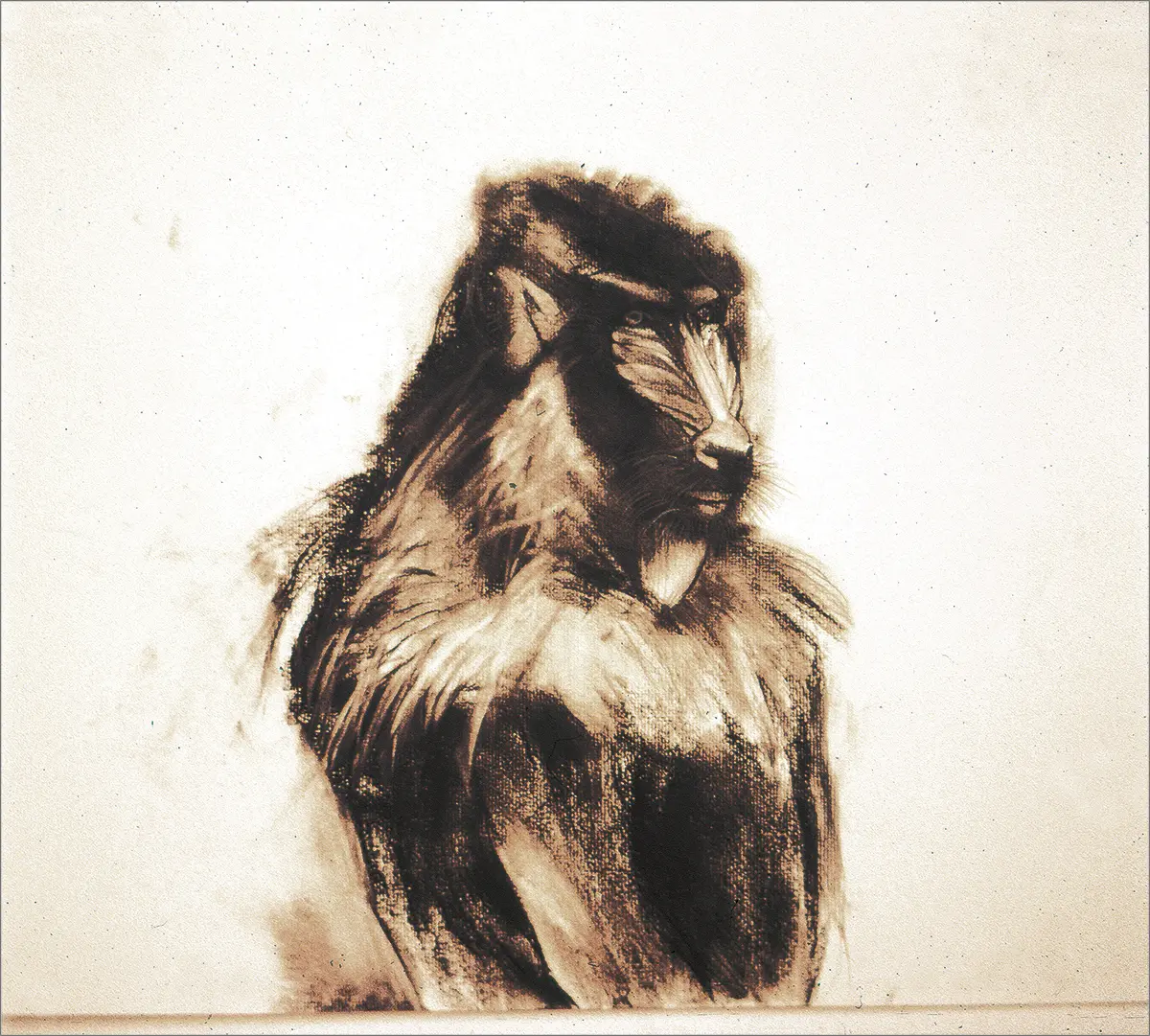
As mentioned before, one of the intentions of this exhibition was to make evident that drawing is a common language for diverse generations, and despite the range of interests, subject matter, and attitudes that determine the physiognomy of a generation, drawing is an essential medium—whether as a sketch or as autonomous practice— that has persisted throughout artistic practice. With respect to Colombian artists, works from artists that emerged in the 1940s were included, such as Débora Arango, as well as contemporary artists, such as Johana Calle, Juan Mejía, and Giovani Vargas, who have surfaced in the last few years. The generation of revered artists such as Juan Antonio Roda, Santiago Cárdenas, and Beatriz González was included, as well as the generation between them to which distinguished draftsmen such as Óscar Muñoz, Miguel Angel Rojas, José Antonio Suárez, Mariana Varela and Cristo Hoyos, among others, belong. In this way, the exhibition covers a broad spectrum of generations, although with no pretension of being comprehensive.
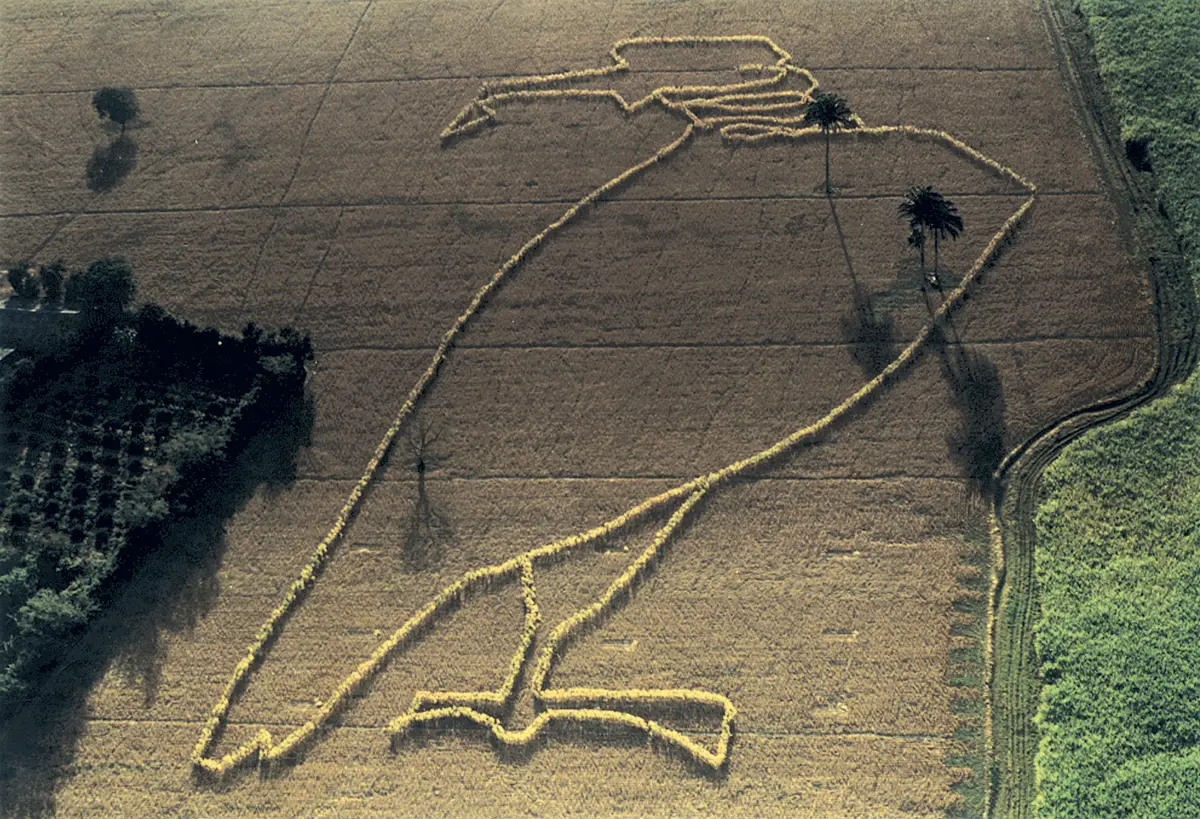
As noted in the beginning, the definition of drawing has broadened since the eruption of new artistic media such as earthworks and installation art, ephemeral works that require photography as documentation. In one of the works of Marta Cecilia Villafañe, a series titled En campo abierto (In Open Field), a field of corn and soy follows the outline of a turkey buzzard with one continuous line, covering a wide terrain. The sown field is an enormous ephemeral drawing on the ground; the photograph that documents the work was shown in the exhibition and published in the book. Two artists, the Brazilian Vik Muniz, and the Colombian Óscar Muñoz, presented photographs of their peculiar drawings. In both cases the shadow that the drawing projects typifies another property of drawing that goes beyond the manual execution, and in both cases, it is presented as a commentary, as a marking of conceptual order. Vik Muniz crafts drawings with chocolate, wires, and other unconventional materials, and for this exhibit he presented a delicate drawing of a chair done in wire. This three-dimensional structure projects a subtle shadow onto the paper, enhancing the line. A similar situation occurs in the work of Óscar Muñoz, one of the most persistent and significant Colombian draftsmen. Muñoz presented a photograph documenting a moment in the installation of ephemeral drawings made with charcoal dust that he created about Narcissus. The photograph presents the instant where a sharp line defines the face of a man on a glass that is positioned above a white washbasin; on this, another linear register appears with a slight shadow that is projected onto it. María Elena Bernal presented a kind of mural formed by various photographs of a rectangular shape, and several sketches in which color intrudes.
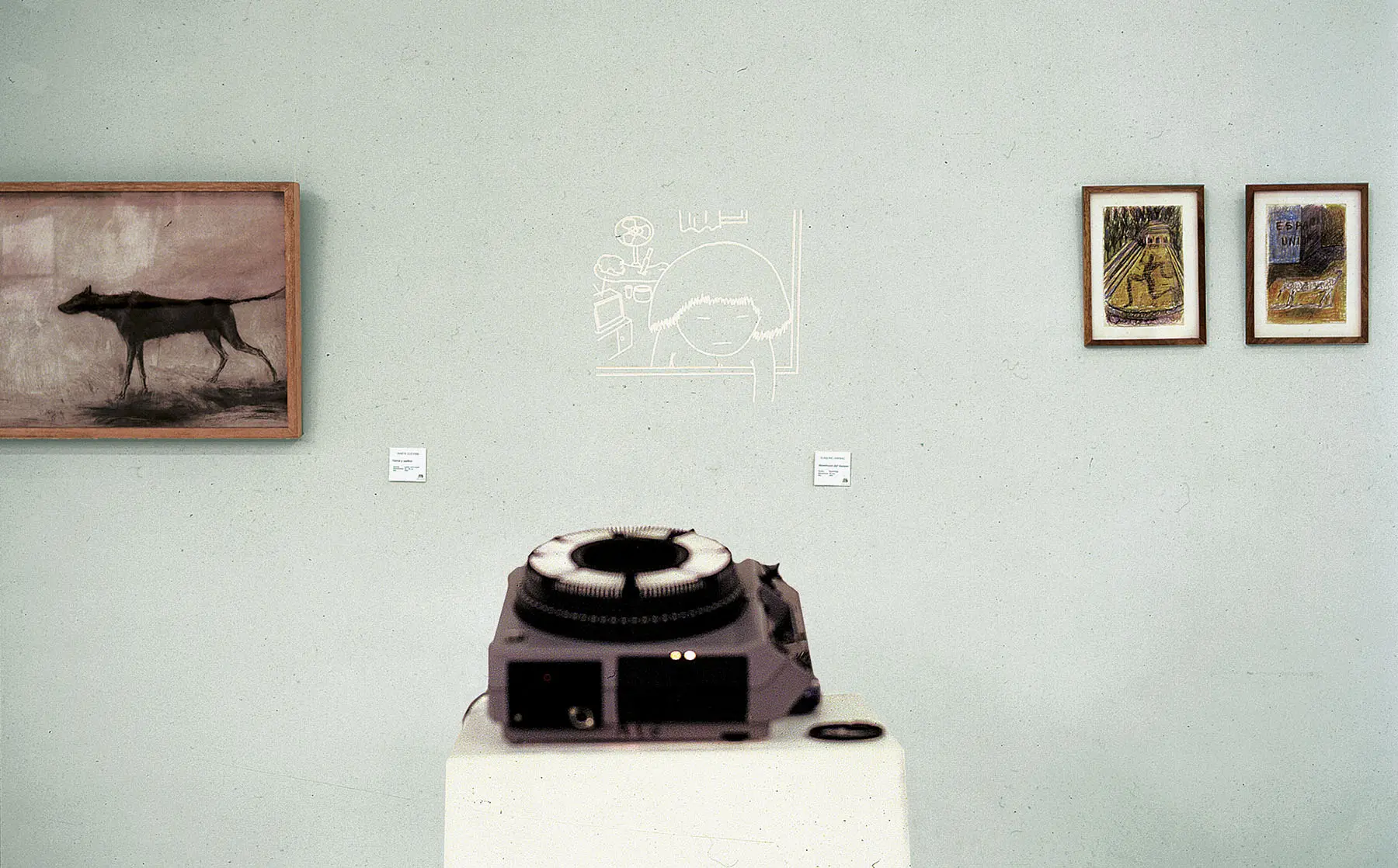
As mentioned, the eruption of new electronic media opens new possibilities to this essentially human practice. Such is the case in the work of John F. Simon who traces a line on the computer keyboard; this captures only a few of his strokes, which he then processes and from these, he elaborates a drawing that joins the gesture of man’s hand —its pulse and emotion— with the precision of the machine. Andy Deck is another artist who works with the computer. He presented a series of drawings that can be found permanently on the internet with the idea that they can be altered by other people. In the exhibit, a printout of what can be seen on the screen was presented, but it is merely a moment of these drawings that, through the action of the artist and the audience, are ever-changing. Enjung Huang, a Korean artist, also creates her drawings with the help of a computer. Her subjects are the images of dreams and nightmares; she deals with childish imaginings influenced by Korean animated drawings and she defines the figures with a simple line that outlines the contours of people and objects. She then takes a photograph of these on slide film and projects them onto the wall and with simplicity narrates the experience of a dream in which death appears in the figure of a small ghost that travels through the rooms in a house. Fundamental elements of drawing, such as its potential to schematically shape, with white lines on a black background, the essence of a complex experience such as dreaming, are preserved in these images.
Line, the fundamental element of drawing, was manifest in many different forms through more traditional media, such as pencil and ink. The works of Antonio Suárez frequently manipulate thin lines that in their multiple recurrences form the texture of a treetop, trace spirals, and grids, or give way to writing. Ana Mosseri and Ana Mercedes Hoyos showed drawings in which bodies are defined by a single, clear, and continuous line that determines volume with no need for shades or half-tones. The line of Juan Mejía turns into writing, and he presents various phrases on ruled paper that talk about a student’s experience. With his journeys and actions, Mejía traces an infinite number of lines beyond the universe of paper. Juan Manuel Jaramillo is a historian who has exhibited his drawings, with their strong lines and primitive imagery, in different events. He presented notebooks made during a visit to Caguán. Jorg Bachhofer, a German artist who visits Colombia frequently, presented three drawings in which a few precise lines on the paper suggest a three-dimensional volume. The curved, precise lines of Felix Angel and Nicolás Cárdenas indicate the pleasure of creating rhythms and movement on paper; in contrast, Giovanni Vargas’s broken, interrupted lines identify, with an incisive sensitivity, bodies, and objects that are barely implied on the white paper.
The line was also defined not with conventional media but with handcrafts such as needlework. Luis Roldán and Johanna Calle replaced paper and graphite with fabrics and thread, the former with three embroidered fabrics from the series Sueños (Dreams) that, from a distance, appear to be calligraphy or lines traced with varying intensity. Once you get close to the piece, you discover the embroidery of black thread in a variety of stitches. Johana Calle presented two children’s portraits embroidered with a sewing machine, that are part of the series Nombre Propio (Given Name). Olga Amaral’s collage demonstrates how the line is present not only in the open weft of fabric and on the surface of a wrinkled paper but also in more conventional black ink strokes. The Korean artist Myung, draws boxes with drawn lines, thread, and other non-traditional objects, giving way to a very delicate drawing.
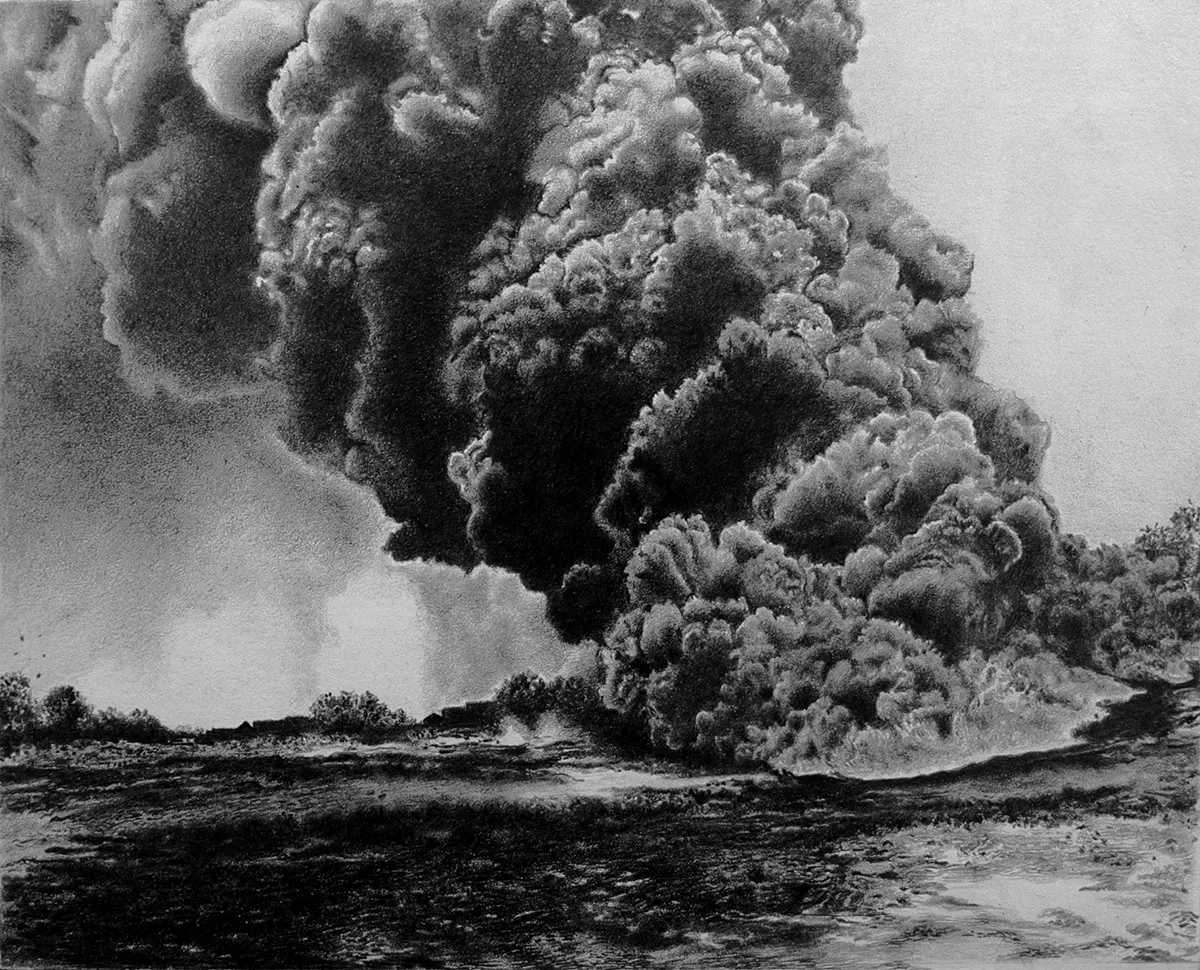
The curators, all of them artists too, also exhibited their own peculiar approximation to drawing through their own work: Mariana Varela, one of the draftswomen who emerged in the 1970s has since persisted in the practice; among the works exhibited there is a small format drawing that tells about careful handling of the pencil and gives way to a wide assortment of grays with which a big cloud of smoke, covering the surface of the paper, is drawn. The precision and delicacy of her traces are on one hand, comparable to that of the photographic camera and on the other, to the human eye’s astonishing capacity for observation.
Lino Dorado exhibited a series of drawings that form part of his project titled Obras públicas (Public Works) which has been presented in various events, like group exhibitions and in the book fair that takes place every year in Bogotá. The idea is that the audience actively participates in the production of the work: each person is given a mirror and a sheet of acetate to make their own portrait. For this exhibit, he chose a series of portraits done by the people of a town in France called Aurels. These were placed in a long line around the baseboard that surrounds the center of the main room in the museum. The drawings make evident the very human act, of artist and non-artist, of following the intricate features of a physiognomy with a contour line that forms an elemental, simple drawing, with no apparent technical or expressive pretension, but that still searches to capture the particular features of each face. This is an interesting experience where the artist hides and becomes merely a mediator; in many instances, she has not been able to be present at the event and sends instructions, someone executes them and the work is done by the actions of the audience. Luis Cantillo exhibited two drawings: two tracings, or frottage, one done on top of a commemorative plaque on the Brooklyn Bridge and the other one on a Rodin sculpture that preserves his signature.
Miguel Huertas is another artist almost exclusively devoted to drawing, and many small format drawings were included in the exhibit. Each one of them captures with precision and gentleness, the movements of a man who seems to be preparing to jump, and another who is about to dive into the water, through delicate strokes, sometimes softer, other times more defined and strong. These strokes make evident something that the artist states in regard to the properties of drawing; each drawing, Huerta says “plays on a particular condition of the body: the wide or subtle gesture, strong or soft, heavy or slight, a certain control over breathing and muscular movement."1 Indeed, these very essential drawings, because they only trace a silhouette, tell not only about the action of the represented body but also that of the person who executed them, someone who sees and observes keenly and then with wisdom transfers to paper the lines that form what is witnessed.
The drawings of Juan Antonio Roda, Santiago Cárdenas, and Beatriz González show three very different uses of the medium: the agile shapes of Roda’s ink—used on the book cover—convincingly define two precise silhouettes on paper; Beatriz González, through a slight and somewhat broken line, gently defines the head of a dead man; and Santiago Cárdenas, with great skill, traces abstract writings and names hyperrealist objects on a gray surface. Two abstract painters, Fanny Sanín and Manuel Hernández submitted two drawings that serve as sketches for their paintings; in both cases, the drawing works as a stage in which color and distribution of the figure in space are explored.
Some of the other memorable drawings in this exhibit are those by Lucas Ospina and Miguel Cárdenas. Each one presents —with a very different language— two drawing possibilities. The first uses watercolor and graphite lines to trace the silhouette of a young woman, whose face is hidden under a quick, light stain. It is a drawing of refined and concise color. Cárdenas reveals the potential of charcoal, the pleasure that tracing black surfaces yields, and the taste for leaving smudges and marks of the act of drawing next to the figure of a solidly constructed manatee.
As the curators state, “The exhibition, more than a selection, seeks to celebrate the diversity of creators whose works are a testimony of the constant art production in and out of Colombia, and aspires to create a memory of projects that find in drawing a meeting point.” In this way, the element that articulates it is the diversity of manifestations, media, and languages that continue to recur in drawing, as a possibility to sketch ideas or as a medium to definitively and certainly project them. The encounter with each drawing, with its particular scale: large or small, with agile and fast strokes, or slow and meticulous, throws us into a specific universe that understands the world in a different way; in this world, every image demands all our attention and concentration, because with his strokes and tools, every artist opens a new vision of the world and with it a particular facet of the act of drawing. Without a doubt, the whole of this exhibition, with its various manifestations, corroborates that “drawing is the conscience of the artist."2
NOTES
1. Luis Cantillo and Lina Dorado, Solo dibujo, (Drawing Only), (Bogota: Villegas Editores, 2001).
2. Miguel Huertas, Sólo Dibujo (Drawing Only), Universidad Nacional newspaper, Bogota, (April 20, 2003), p. 24.
MARTA RODRÍGUEZ