
The 4th Mercosur Biennial opened on October 4 in the Brazilian city of Porto Alegre, advancing its position as an epicenter of Latin American art and culture. The central theme of this edition of the Biennial was Contemporary Archaeology. With this proposal, curator Nelson Aguilar projected a map of the origins of Latin American peoples and posited questions derived “from mythical times, the remnants of early cultures, the scientific study of molecular biology as it relates to the peoples who first arrived in the Americas.” Aguilar thought it important to explore the complexity of the repertoire of that archaeology through artistic production as seen from the vantage point of today.
Among its seventy-six participants, the 2003 Mercosur Biennial included Mexico as a guest country and also presented artists from Europe and North America in a special exhibition titled Transversal, curated by Alfons Hug, the curator of the upcoming São Paulo Biennial. Transversal was inspired by Simón Bolívar’s utopian text, The Chimborazo Delirium, and it brought together twelve artists whose work explored the significance and the remains of Bolívar’s utopia.
Under the general direction of Nelson Aguilar, unlike previous editions, the 4th Mercosur Biennial also assembled a group of Latin American curators. Representing Chile was Francisco Brugnoli, Director of the Museo de Arte Contemporáneo de Santiago. Gabriel Peluffo Linari came from Uruguay. Javier Rodríguez Alcalá represented Paraguay; Cecilia Bayá came from Bolivia; Adriana Rosenberg from Argentina; and Edgardo Granado Kim from Mexico. The Brazilian selection was curated by Franklin Esparth Pedroso.
Accompanying the national delegations, two special exhibitions were presented: the more historical, Arqueología de las tierras altas y bajas was organized by archaeologists Eduardo Neves and Adriana Schmidt Dias, and displayed one hundred ancient items (up to four thousand- years-old) of the pre-Columbian period in the trans-Andean and Amazonian (Atlantic coast) regions, from Bolivia, Brazil, Colombia, and Peru.
This section devoted to archaeology in the midst of a contemporary art exhibition, explained Aguilar, was “a consultation with the oracle of time.” An interesting concept, since the development of both modern and contemporary art “attests to unexpected leaps of geography and history.” The idea of breaking with the linear and chronological view of art history and projecting a relationship between artistic production and its “civilizing” function has emerged in recent times, especially in Europe. This position has been adopted by the curators of exhibitions that deal with cultural topics and aesthetic problems; it penetrates into the cultural construction of the visual and explores the elaboration of visual thinking. Such a critical standpoint is useful for an understanding of the postmodern era in its time-related dimension.
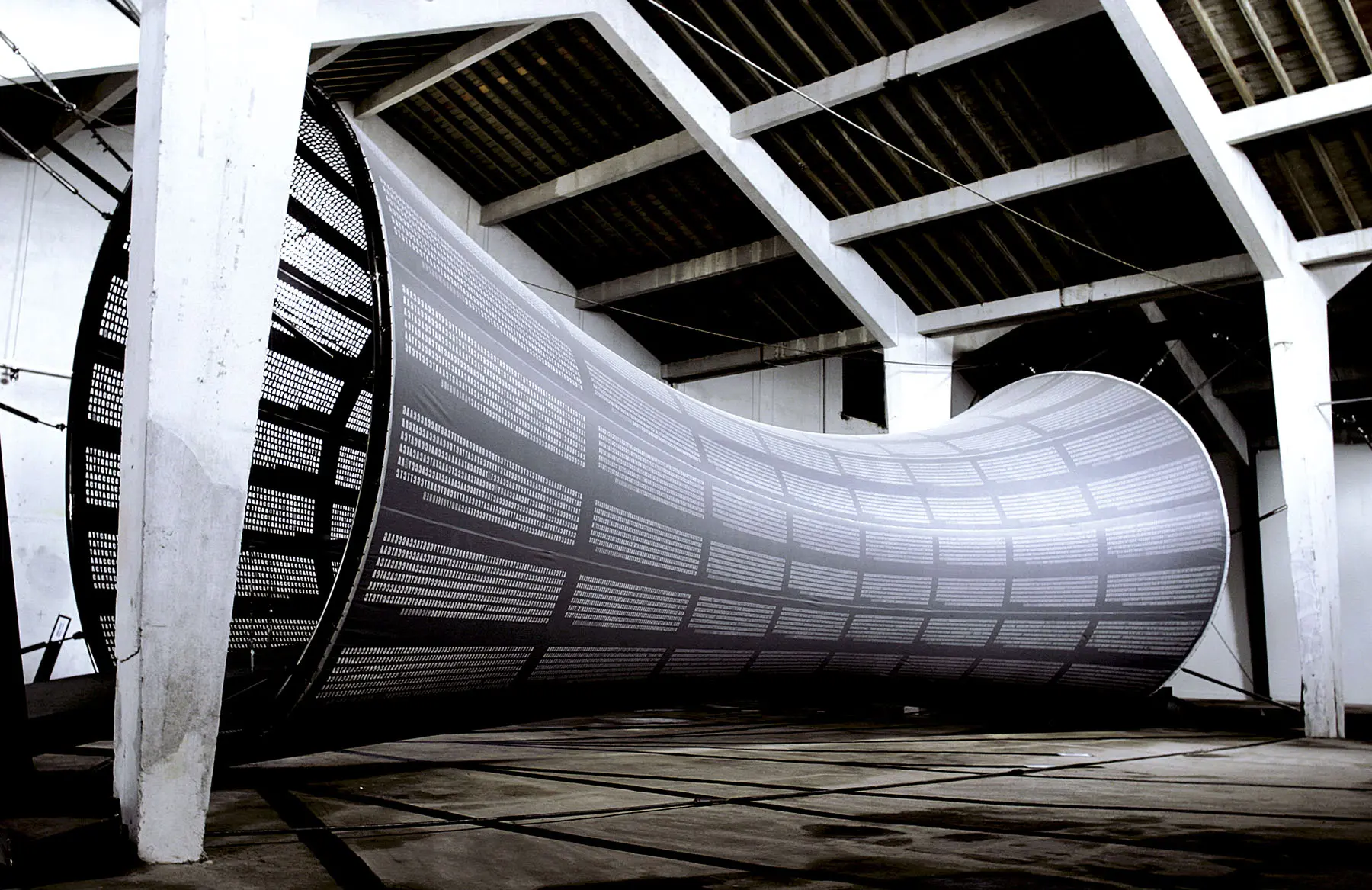
The second special exhibition, DNA, Arqueología genética, was an installation by Ary Perez. It presented a genealogical map of artists and curators present at the Biennial, based on the work of geneticist Sergio Danilo Pena. This work (resembling a fallopian tube) printed the results of a genetic investigation of the artists and curators on the walls; it revealed that among them the women have a greater component of indigenous or African ancestry, while the men are dominantly of European descent.
The curatorial premise of exploring the question of origins from the perspective of archaeology or memory, and the dimensions that constitute the human base as seen through the lens of genetics, is already apparent in the logo designed by Chico Homen de Melo for this event: two question marks, one above the other with the one underneath inverted. The logo itself is an interrogation, both from a historical and a cultural perspective. It is a subjective and collective interrogation, an inflection that penetrates and inhabits the consciousness and the imaginary of all Latin American citizens.
For the Biennial, one national artist whose work is already part of local art history was presented by each country. Argentina presented Antonio Berni (curated by Nelson Aguilar). Roberto Matta was the Chilean selection (curated by Francisco Brugnoli). Paraguay presented Lívio Abramo (curated by Javier Rodríguez). María Freire represented Uruguay (curated by Gabriel Peluffo), and Pierre Verger was the choice from Bolivia (curated by Alex Baradel). An important exhibition of works by José Clemente Orozco (curated by Agustín Arteaga) came from Mexico and Brazil presented an homage to New York-based artist Saint Clair Cemin (curated by Nelson Aguilar). In this way an excellent opportunity was created to study, up close and comparatively, the personal resources employed by these artists and their contributions to Latin American art at different stages in the development of the twentieth century.
The Antonio Berni (1905–1981) exhibition was dedicated to the memory of Pierre Restany, author of an unpublished monograph on the artist. Several chapters of his critical texts were presented in the Biennial’s general catalog that discussed the period of Berni’s work presented here: the 1960s. It was at that moment that Restany played an important role in international contemporary art criticism. His text is a discussion of the issue of “matter” in the artist’s “plastic” exploration. Around this time, Berni created a collage and assemblage series using garbage and discarded materials and combining surrealist techniques with the social interests that already were present in his previous realist period. This was the moment his street characters like Juanito Laguna and Ramona Montiel came into being.
Roberto Matta (1911–2002), a singular figure in Chilean art, was presented in his approach to the Surrealist movement in the 1930s when he was in Europe. A group of representative works such as The Day is an Attempt 1942, which belongs to the Museo Nacional de Bellas Artes de Santiago de Chile; The Process of the Rosemergs from Pietro María Bardi’s private collection, and Birth of America, 1952, from Chile’s MAC collection, were placed next to three-dimensional pieces.
Brazilian Lívio Abramo (1903–1993) was highlighted as a central referent in Paraguay’s artistic modernity, beginning in 1956, the year he gave classes in the theory and practice of xylography to a group of local artists. He moved to Paraguay in 1962, researched the religious imaginary of mission towns, and reinterpreted aspects of local landscape and architecture, exploring their formal characteristics. The exhibition devoted to this artist offered a contextualization of his Paraguay works, face-to-face with a series of photographs he took of Paraguayan landscapes —of nature and of towns. His works were also placed in a formal dialogue with Ñandutí1 canvases and mission textiles, which are characteristic of Paraguayan culture.
A similar relationship to place was explored in the Verger exhibition, which presented works from the collection of Salvador, Bahía-based Pierre Verger Foundation. Guided by an anthropological point of view, Verger photographed a series of images of the Oruro Carnival in Bolivia, which he visited on three occasions, in 1939, 1942, and 1946. This documentary essay, probably dating from his last Bolivian trip in March of 946, illustrates his sensitivity to the meaning of Oruro’s Diablada.
The presentation of María Freire, who was hailed as an iconic figure in the historical development of Uruguayan art, put the public in contact with an important group of works created by the artist from the 1950s when she made a commitment to researching geometric construction using industrial materials (wire, iron, wood, Plexiglas). The selection that was dedicated to Freire included canvases, and mobile, polymorphous sculptures.
A group of canvases, designs, and prints created by Orozco and belonging to important Mexican collections such as the Museo Carrillo Gil, and the Instituto Cultural Cabañas, among others, was also presented in the Biennial. The exhibition highlighted the human and aesthetic interests that marked the work of the Mexican artist. In addition to the pieces referring to social issues, like Zapatistas and Protesta (both from 1935), a second section was added, devoted to Orozco’s treatment of the body; on this topic he focused on the physical and spiritual frailty of the human condition. El Alanceado and Piel en Azul (both from 1947) reflect the metaphysical and mystical sides of Orozco’s work.
Saint Clair Cemin, the Brazilian artist celebrated in the 4th Mercosur Biennial, is a gaucho, a native of the state of Rio Grande do Sul that was host to this artistic event. The artist has lived in the United States —in New York City— for twenty-five years, but he has maintained his presence in the Brazilian art scene through exhibitions and biennials. The selection of works presented in this Biennial is from different periods in his work and is dominated by three-dimensional pieces, as well as some works on paper. The one piece that most intensely captured the public’s attention is a large-format design for a public space that will probably be in the city of Porto Alegre itself.
The current production from the Mercosur countries and from Mexico, the guest participant, will allow the viewer to encounter first-hand the language strategies of contemporary art. The selected works reveal the relevance of the multimedia nature of contemporary artistic language, the way in which this language transgresses the boundaries of the different expressive media, and the way in which the driving force in contemporary production focuses on “attitude” and how everyday objects are re-signified in the use of culture, making evident the importance of situations for the structuring of the work of art. These issues come to the fore in large-scale contemporary art exhibitions, such as a biennial, as markers of the times.
A review of the curatorial propositions and of some of the works exhibited will allow us to better understand these issues of language in the context of Latin American artistic production.
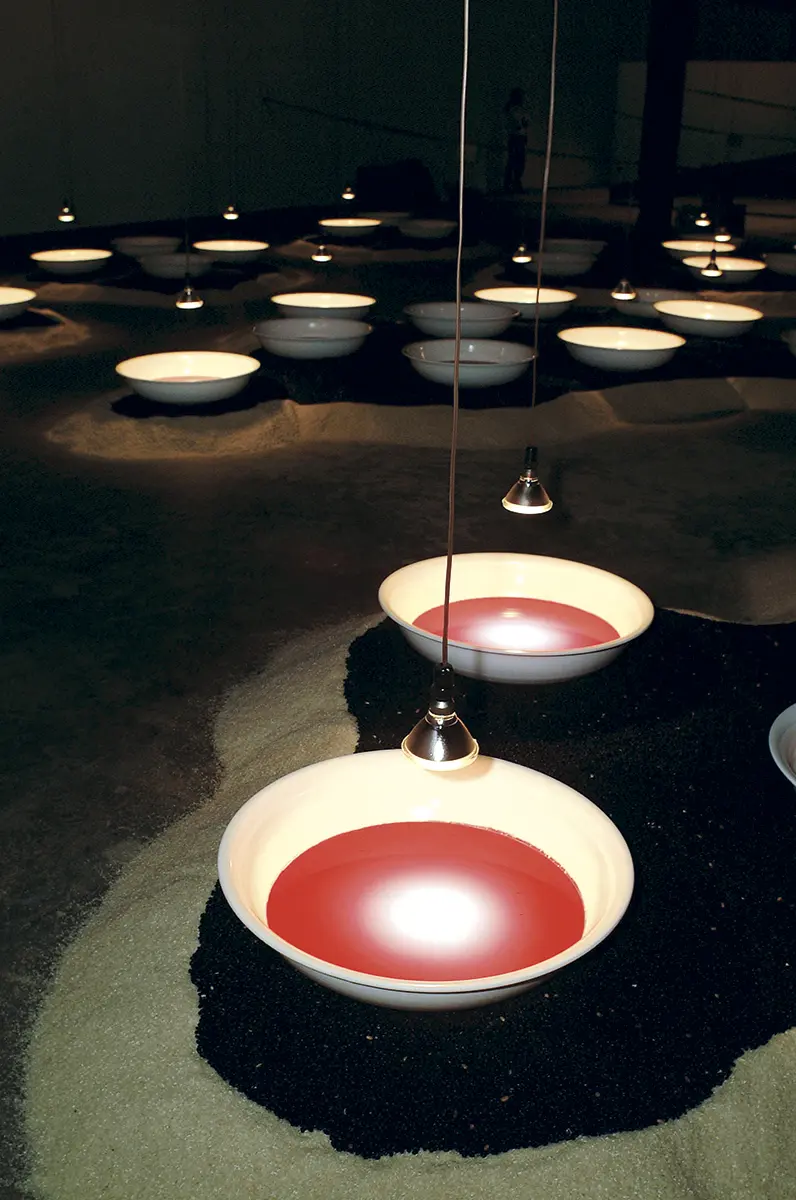
The curator in charge of the Brazilian delegation, Franklin Pedroso, suggested that artists project their work on the basis of the idea of a “genetic archaeology.” Within this proposal, especially striking are the pieces shown by Lygia Pape and Rosana Paulino. Pape presents a DNA installation using a substantial amount of rice and black beans (Brazilian food staples) strewn around a large area. On top of them, the artist arranged groups of round white containers, like those used in hospitals, filled with a red liquid that suggests blood, thus approaching the theme of genetic identity. Through her poetic construction, the artist foregrounds the following question: Is it possible to demonstrate the dominance of a certain genetic trait, or is it the case that, throughout generations, intermixing has given Brazilians certain specific qualities?
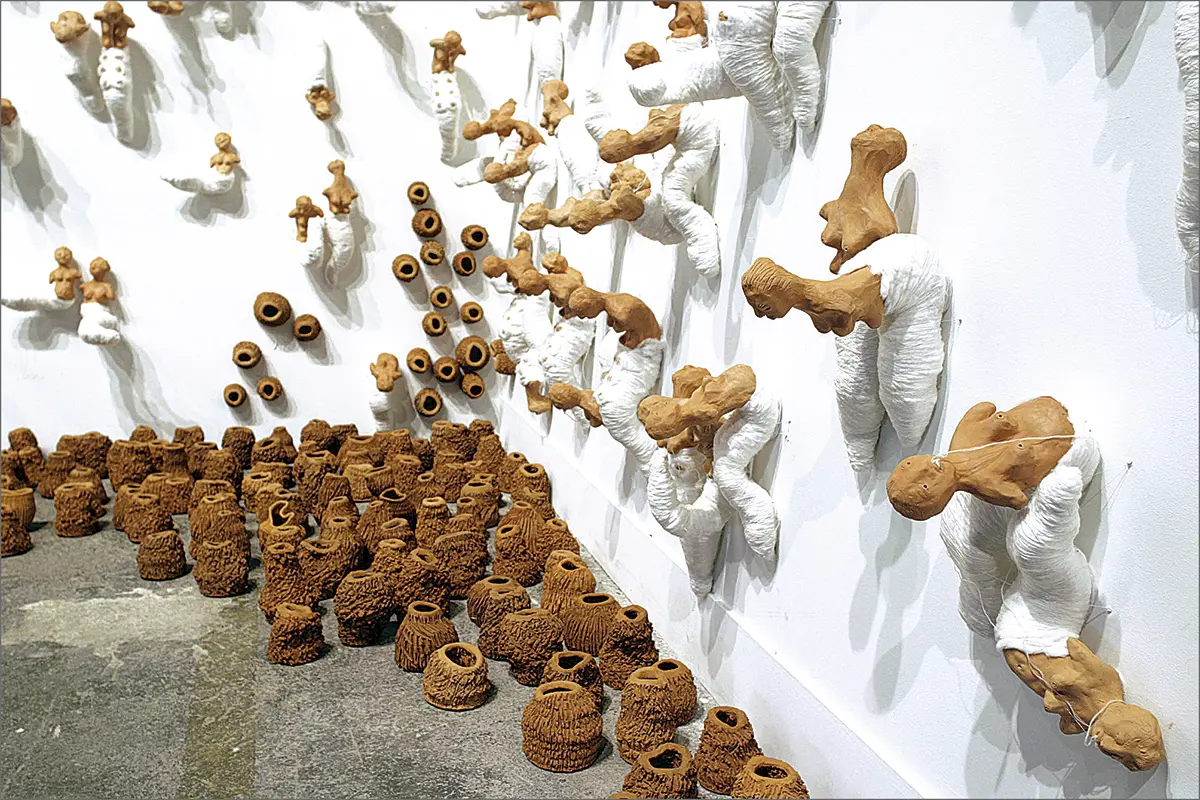
Rosana Paulino presented an installation developed and expanded on a wall, comprising mutant figures in clay or terra-cotta wrapped in white cotton wool threads. This piece is part of her series Tecelãs (Weavings). The figures are half woman-half insects as a result of genetic transformations. From their own abdomens flows the material (the white wool) that covers their mouths and isolates them from the external world. The “weavings” are arranged in series, as if to demonstrate their mutation as a result of genetic experiments.
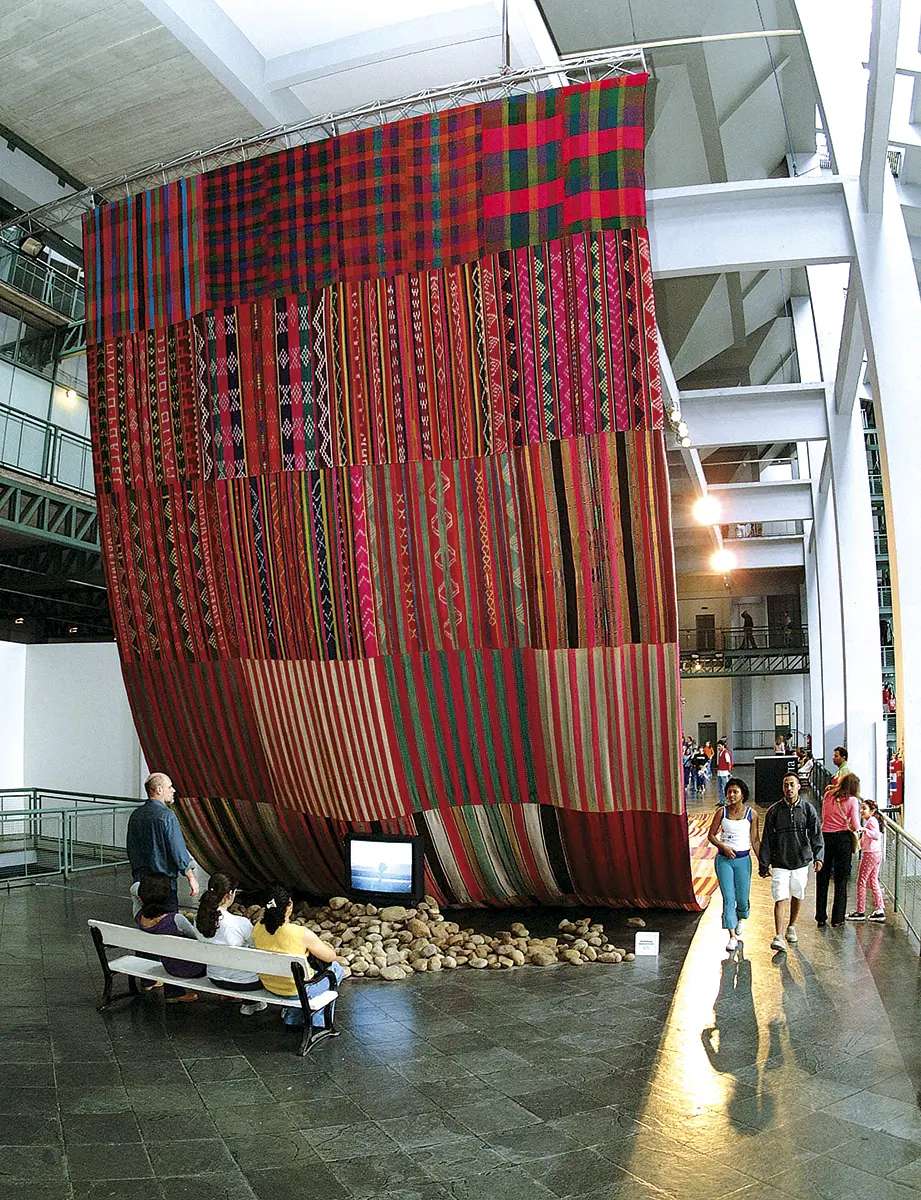
In the installations by Gastón Ugalde and Joaquín Sánchez (installation and performance), members of the Bolivian delegation, the search for deeper ancestral roots appears as a common denominator. Ugalde’s work, Marcha por la vida, resulted from a project developed by the artist in the Andes mountain range while researching the textile work of the region’s indigenous communities. The textiles refer to different ethnic identities and are used in rites marking different moments of the life cycle. Combining various textiles, Ugalde built a large sail (6 x 20 meters) capable of pulling an entire nation forward through the path of sensitivity. On the back of his giant “sail” of Andean weavings, the artist integrated a video recording of a popular social protest. In this action, stones were used to block a path; texts have also been arranged on the path, and they appear on the people’s clothing, affirming their strong cultural connotation.
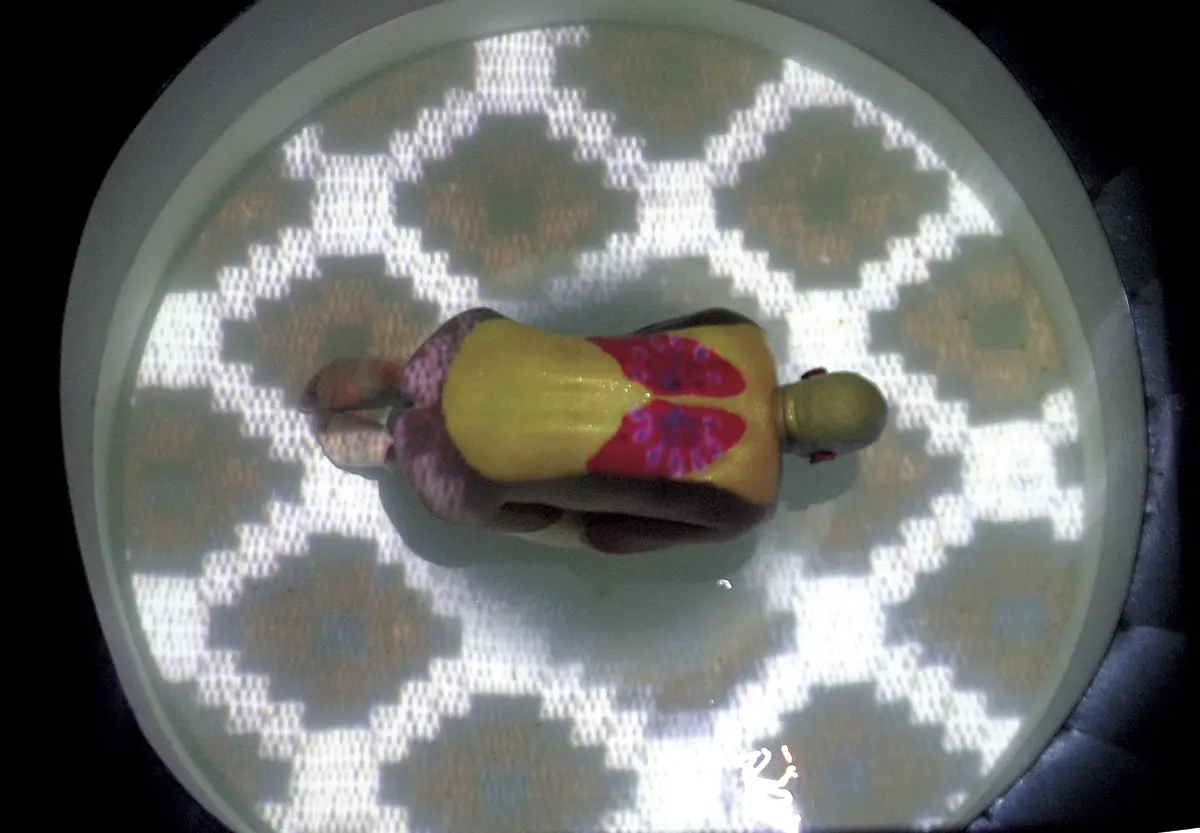
Joaquín Sánchez’s performance installation, Ciclo de Vida, was presented in a darkened two-story space. The public enters a dark room; from above they watch the action happening on the lower level, where there is a circular capsule filled with water. The artist is naked, his body completely hairless, in a fetal position. Sounds invade the space, and images are projected on Sánchez’s body, which starts to move in the water. The images projected on the body are the signs and symbols found in indigenous textiles as well as images of breathing lungs and a beating heart. The dance-like choreography emphasizes soft movements. The piece acquires the strength of a ritual that harkens back, through the movements of the body, to the origin of life, the essence of being, privileging its expressions of identity.
Fabián Trigo’s virtual and collective project, Argentinos seleccionados, was developed by a multidisciplinary group. Curator Adriana Rosenberg remarks that the proposal arose in response to the desire to emigrate expressed by many Argentineans as a result of the country’s recent economic and social crisis. The project is charged with incisive irony. In corporate action, the artists created a fictitious company that offered employment abroad to people with good résumés. They developed a complete marketing campaign with a website, printed leaflets, advertising billboards, and a campaign in the press. They also distributed explanatory forms about how to choose a profession. The result was three hundred online hits asking for information, and thirty thousand résumés received from professionals in many fields. According to the curator, such a response reveals a symptom of a collective psychological crisis. The wish to leave, to move out of the country in search of a different existential model, signals the drama of people’s lives. It is a wish “to not be.”
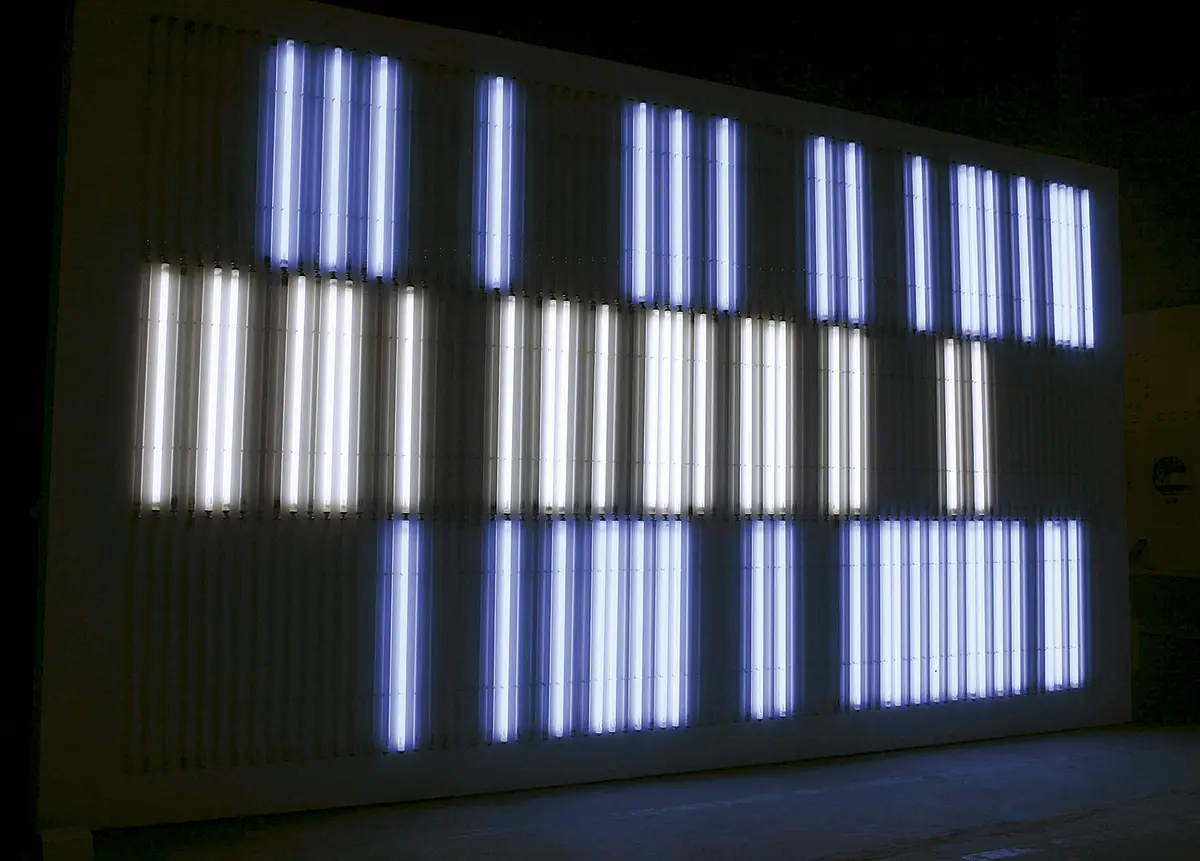
Moral and political judgments are also part of Argentinean artist Sergio Avello’s installation. Avello designed a course with lighting to give the symbol of a flag a metaphoric meaning. He used fluorescent lamps arranged in vertical bands, with the white and blue colors of Argentina’s flag. The lamps are kept lit with difficulty, and only part of the white and blue bands are lit at any given time. The lights tremble and go off. Only for a second does the flag light up in its entirety. The metaphor refers to that which is unreachable, to the impossibility of achieving balance.
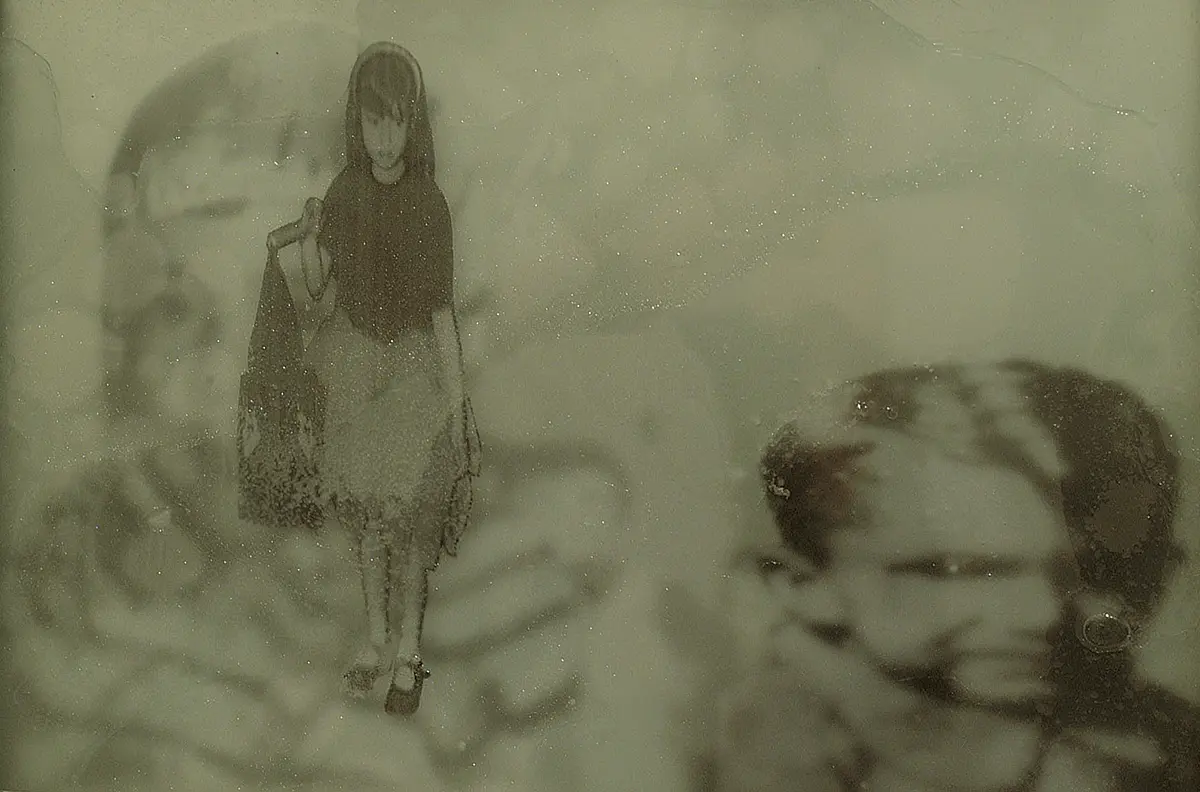
The curators of the Paraguayan delegation chose photography for their approach to the Biennial. Today photography is one of the most prevalent media in the country’s artistic scene. Javier Rodríguez Alcalá brought together ten artists whose works confirm a diversity of views. Natalia Patiño’s proposal originates in experiences with paintings of a material filiation, in the words of the curator. The material element is explicit in the use of paraffin to dilute our reading of the images. The artist uses family photographs (her own or someone else’s) to explore the topic of personal memory and to observe the subject in time, bringing feelings of absence and loss, and the diffusion of memory and dreams to the surface.
Jorge Saens’s work is related to journalistic photography. Both of his essays explore, in a raw, direct way, the consequences of service in the military and denounce the conditions in which penitentiary service is conducted. His images are black and white. The mood of his works emphasizes human frailty, and a strong political sense characterizes his approach.
In organizing the Uruguayan representation, Gabriel Peluffo emphasized: “coherent poetics as an archaeology of collective and individual memory, linking art to strategies of re-identification in a globalized society.” The Uruguayan delegation was one of the event’s most cohesive. The group of artists selected by Peluffo has experience outside Uruguay, and the curator understood that those life experiences crisscross the more local ones. Among the artists present are Pablo Uribe and Carlos Capelá. Uribe brought his Proyecto Vestidor, a video installation that makes reference to the work of Juan Manuel Blanes, a nineteenth-century Uruguayan academic painter known for the series of gauchos he created during his stay in Italy using Italian models. Quoting Blanes, Uribe’s piece uses two machines to project different but concomitant images; viewers can see, at the same time, two characters in action. In one of the videos the character wears gaucho clothes, and in the other one he takes them off and waves goodbye. Uribe brings into focus a view of identity that relates to external attributes (attire, landscape, and context) and not only to the fact of having been born in a given place (Argentinean or Uruguayan). The artist projects the idea of a mutant identity by deconstructing and questioning social archetypes.
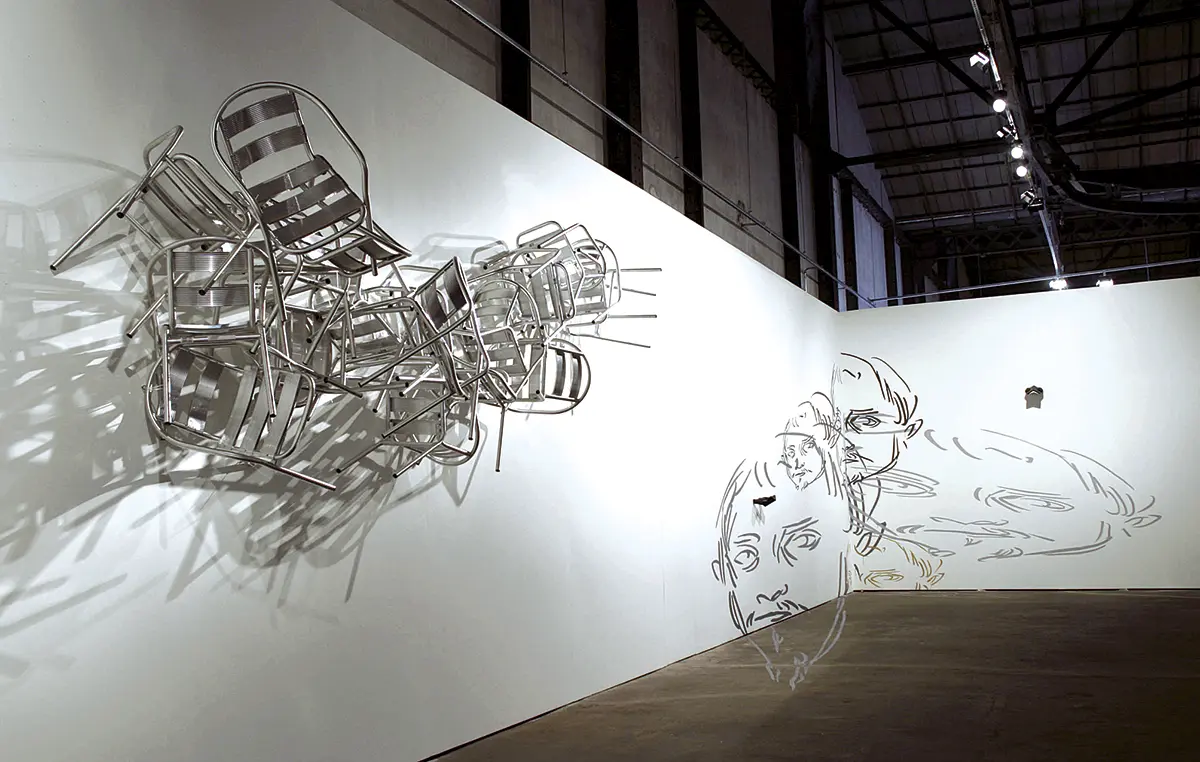
Carlos Capelán presented Solo tú. Here, through his own self-portrait, the artist deals with the notion of the gaze as an instrument of power. As the curator notes, this art history genre reiterates the representation of the ego. Capelán’s self-portrait appears repeatedly in the piece, in images that are superimposed on each other and extend along the walls and the floor; they are gestural images inscribed as graffiti. The self-portraits comprising the installation generate a discursive game for the viewer. The eyes, in general, have no pupils. It is then impossible to see the other, the interlocutor. Capelán alludes to “nostalgia of place” as a metaphor for the piled chairs, arranged in the same space. All of this constitutes a reflection of our image of ourselves.
The Chilean delegation brought up an interesting topic: the curator focused on the issue of consumption and its artificiality in contemporary society. Of the artists gathered by Francisco Brugnoli, Juan Céspedes is a good example. Céspedes presented an installation using video games as a medium to call attention, through playfulness, to the violence of urban life and the artificiality that shapes mentalities. Consequently, a taste for speed and for death appears in other components of the installation: a life-size doll lying on the floor next to his overturned wooden car.
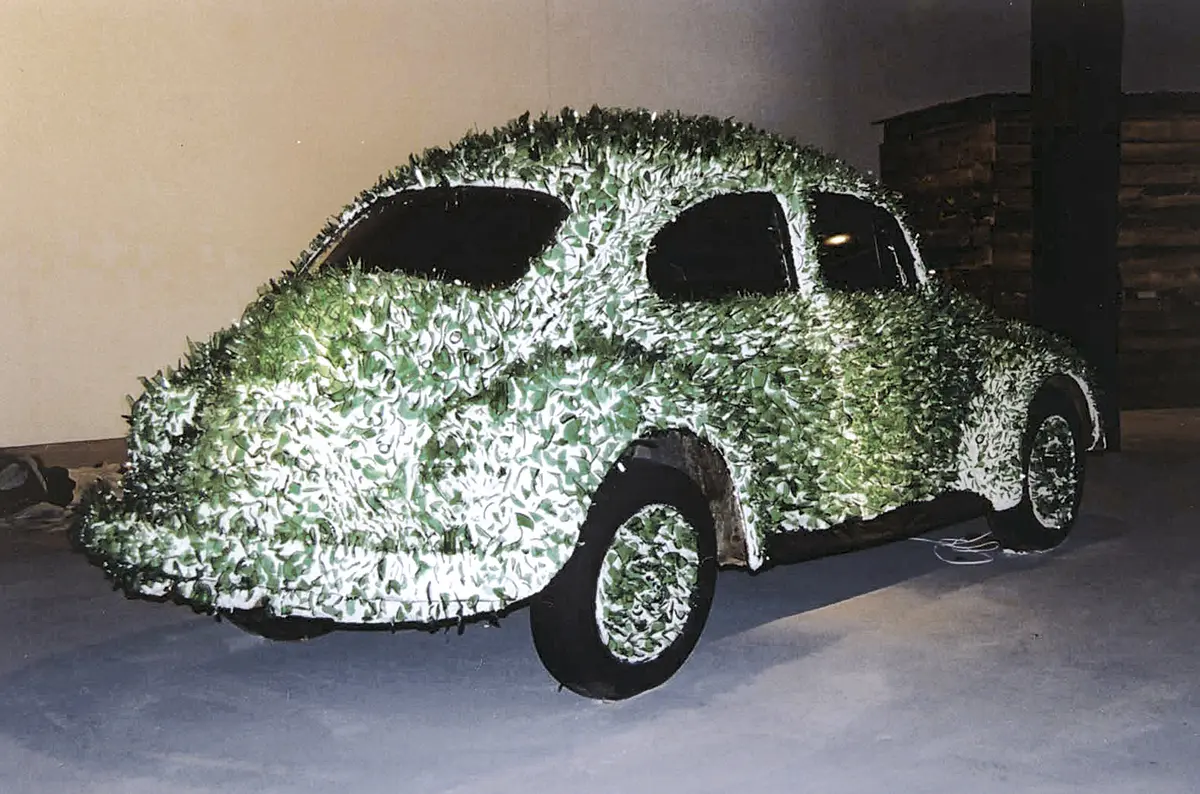
The tensions of urban life are also highlighted in Mexico’s delegation. As in the Chilean case, here the emphasis is on a “recent archaeology” of subliminal values that recur in the life of big cities. The Mexican curator, Edgardo Ganado Kim, asserts that the “archaeologization” carried out by some contemporary artists around everyday objects “becomes necessarily a reflection that brings together philosophy, anthropology, sociology, economics, and politics.” Betsabeé Romero’s piece, verde botella, verde seguridad, a site-specific installation, is a clear example of this. The artist covered an automobile with fragments of green bottles, directly alluding to the glass fragments often placed atop the high walls that surround private homes to deter invasions of property. As the curator observes, “These are boundaries erected to create a safe space for their inhabitants.” On the other hand, the automobile is a status symbol and, re-appropriated after its abandonment, brings up another issue: it becomes the object of a renewed identity.
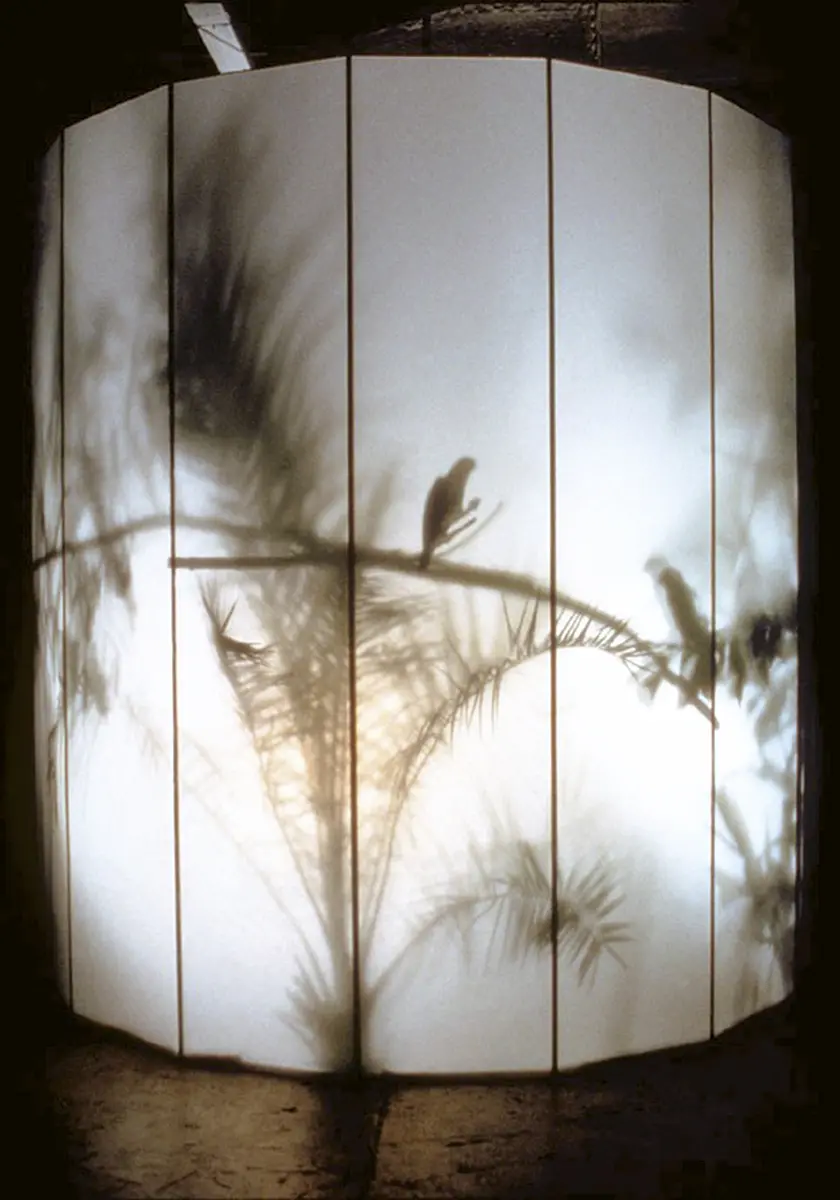
An installation in the Transversal exhibition captured the public’s interest: it was Rachel Berwick’s work, titled May-por-é. The artist sought inspiration from Humboldt’s journal of his Venezuelan travels. The scientist acquired a parrot from the Caribara Indians that was capable of speaking the language of the Maypure, a native group exterminated by the Caribara. Through the parrot, Humboldt was able to reconstruct aspects of the Maypure language. Berwick’s installation was built around the projection of the image of two parrots and rainforest vegetation on a circular space, forming a surface on which the images are reflected as shadows. The circular space alludes to a bird cage; the artist also uses forest sounds and the sound of Maypure words repeated by the animals: yuvi (time) sonirri (beautiful) vasuri (devil) nunaunari (friend.) The artist herself trained the parrots, with the help of linguists and ornithologists. With her recuperatory gesture, Berwick salvages for today’s world a series of cultural traits that were lost in time and in memory.
The 4th Mercosur Biennial was presented in five Porto Alegre spaces: the building of the old gasometer factory, which had been used before for cultural events; the Cais do Porto warehouses; and the institutional spaces of the Museo de Arte de Rio Grande do Sul, the Santander Cultural Center, and the Memorial de Rio Grande do Sul.
NOTE
1. A hand-made cotton weaving characteristic of Paraguay. The city of Tauá is famous for these textiles, which are used in tablecloths, bedspreads, hammocks, etc.
LISBETH REBOLLO GONÇALVES
Professor, University of São Paulo, and President of the Brazilian Art Critics Association (AICA/Brazil chapter).