
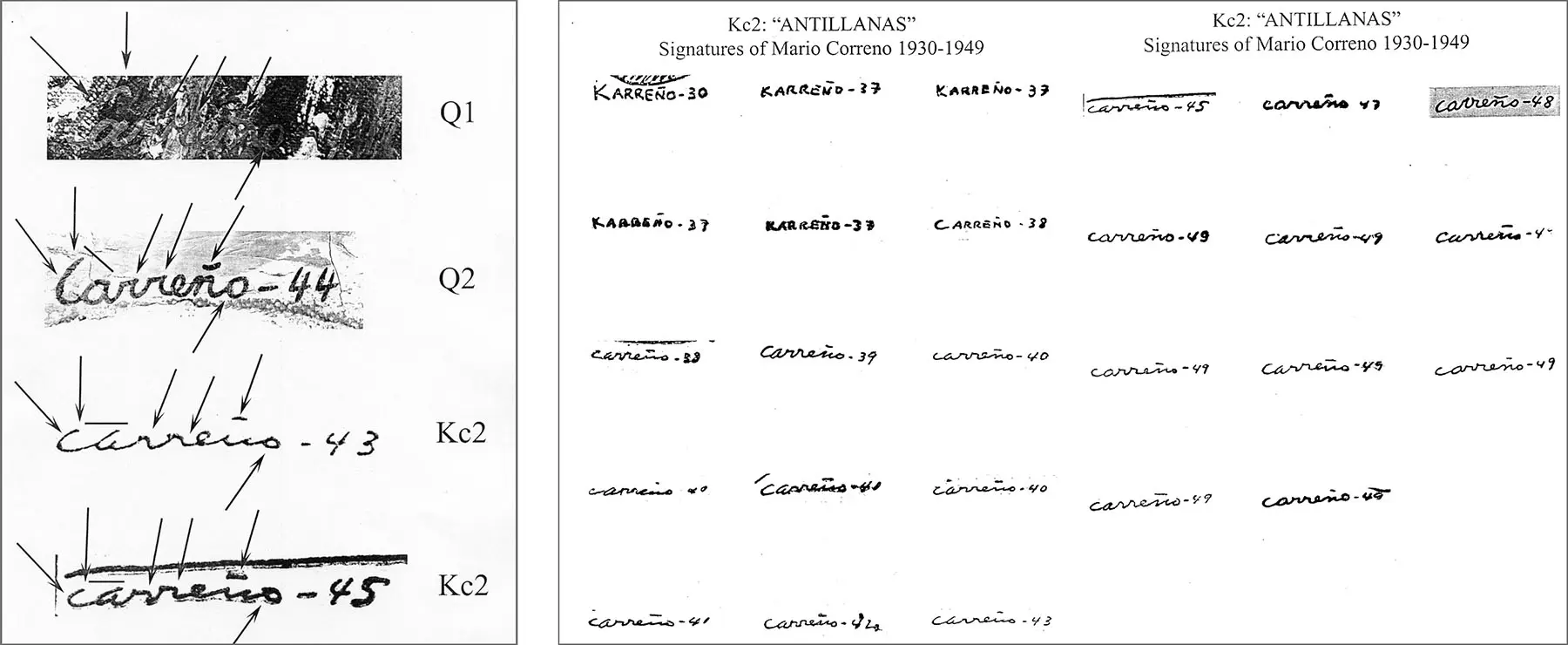
Few realities prompt opinions as polarized as the Cuban reality, and, as is to be expected, positions regarding art forgeries are not exempt from Manicheism. Given such hostility, it is difficult to find a neutral territory for analysis, one that would allow for a bias-free approach to the facts. The voices that have entered the fray express, with considerable clarity, the virulence of the conflict between the parties. The frequent imputations made by some sources —particularly the Cuban community in the United States— about the Cuban government’s responsibility in the forgery “boom” should surprise no one at this point; they argue that the Cuban regime facilitates and allows the entry of such works into the marketplace, at times accompanied by equally forged official documents. Although Cuban authorities have on occasion acknowledged the reality of counterfeiting within the country, they insistently deny the accusations of official involvement in the illegal traffic, claiming that the buyer has all the guarantees of a work’s authenticity and that, in the words of Ramón Vázquez, a distinguished Cuban art expert, “the counterfeiting of ‘classic’ Cuban art, the creation of false documents for them, and their smuggling out of the country violate norms that are well established in Cuban law."1 Questioned by ArtNexus about these norms, Vázquez declared that since March of 1999 the Cuban Penal Code establishes the confiscation and destruction of counterfeit art, and that this judicial figure was introduced by Law 87, which modified a previous version of the Code that did not deal with the matter. Rafael Acosta, President of the Consejo Nacional de las Artes Plásticas, in a recent conversation with Granma Internacional, commented, “When a serious collector wants to buy Cuban art, they come to Cuba, first of all, because in that way the problem of forgery is dispelled. Here they can acquire works either directly from the artists or through galleries, and that gives them confidence in its authenticity."2
The truth is that the insistent exchange of accusations only adds to the bitterness of the debate, while unscrupulous intermediaries, knowing the deep disagreements between the two camps and also knowing the consequences of these disagreements —the difficulty of contradictory information, reviewing bibliographic sources, consulting with experts on specific artistic periods, etc.— take advantage of the situation to reap considerable profits.
Already in 1998, Mark Hunter concluded in his essay “The Cuban Counterfeits” that the problem of counterfeiting Cuban art will continue until “Cuba becomes a more open society and the United States abandons its policy of embargo on the island."3 Five years later, the phenomenon has reached previously unsuspected levels and has become a profitable business. The constant outcry of collectors, the recent closing of one gallery in Miami (allegedly involved in counterfeiting), the mistrust that greets Cuban works brought out for auction, and the need to carry out quasi-forensic studies after acquiring one piece, are all evidence of the depth and the gravity of the problem.
In fact, buying works by renowned Cuban artists has become an exercise in anxiety. Once someone is ready to fork out a large sum of money for one of these pieces, it becomes necessary to incur the considerable cost of authenticating it as well, not to mention the often unwanted publicity that surrounds the process. Almost always lacking serious and competent advice, collectors and buyers are aware of their vulnerability in an environment that is hostile to them and where trust is a scarce commodity. The often-repeated warning about the need to be “extremely cautious” when buying Cuban art —a salutary piece of advice valid for any kind of investment— dissolves into a series of isolated anxieties (establishing the provenance, demanding certificates of authenticity, requesting confirmation from Cuban institutions, expert review of restorations, etc.) that still fail to safeguard the collector completely against the possibility of fraud.
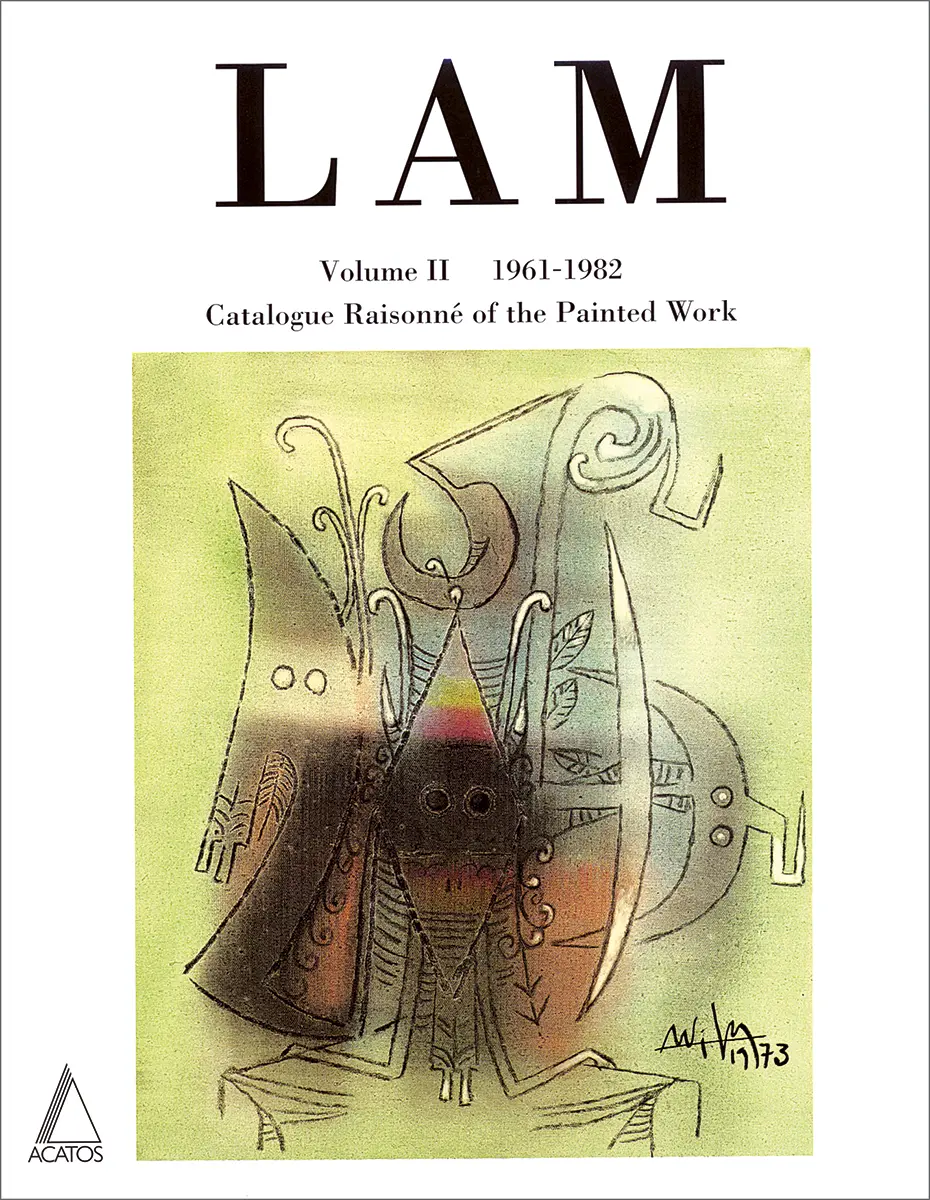
For Ramón Cernuda,4 owner of the Cernuda Arte gallery and a collector of Cuban art, there are several rules any buyer must follow when acquiring a work; among them, he includes the absolute need to establish commercial relationships with institutions of acknowledged reputation, seriousness, and history in the art market; demanding a certificate of authenticity in order to secure legal responsibility on the part of the selling institution in the event of a dispute; and consulting with competent and trustworthy specialists or, if possible, with the artists themselves. Others like Ida González,5 the wife of Cuban painter Mario Carreño and an artist herself, stress the importance of taking into account the opinions of those who, for reasons of personal acquaintance, friendship, or work, shared significant periods with the artists, becoming in a way experts on their work. Such is the case, emblematic in the art world, of Lou Laurin-Lam, Wifredo Lam’s wife of twenty-five years and a recognized authority on his work. In her effort to organize and compile Lam’s oeuvre, she has promoted the publication of the Catalogue Raisonné of the Painted Work, an event unprecedented in the history of Cuban art. Acatos in Lausanne already has published the second volume (Volumen I, 1923–1960 appeared in 1996, and Volumen II, 1961–1982 in 2002.) The most recent volume completes the study of the distinguished Cuban artist and affords a global overview of his pictorial work, an understanding of his various techniques, and his prominence in the world’s art scene.
However, given the most recent scandals in the international art world, nothing seems sufficient to curtail fraud; not only do we see “bad” art passing for “good,” the usual practice of counterfeiters, but also— and this is the worst part —sometimes it is the other way around. At least that is the accusation made of the Andy Warhol Authentication Board; according to a recent article in The Art Newspaper,6 the Board’s prestigious specialists, invested with the right to determine authenticity and aware that their opinions will be taken as valid and unquestionable, engage in widespread prevarication in their judgments and pretend to monopolize the truth about Warhol’s work. Undoubtedly, all of this further shakes the confidence of the buyer who already does not know whom to trust.
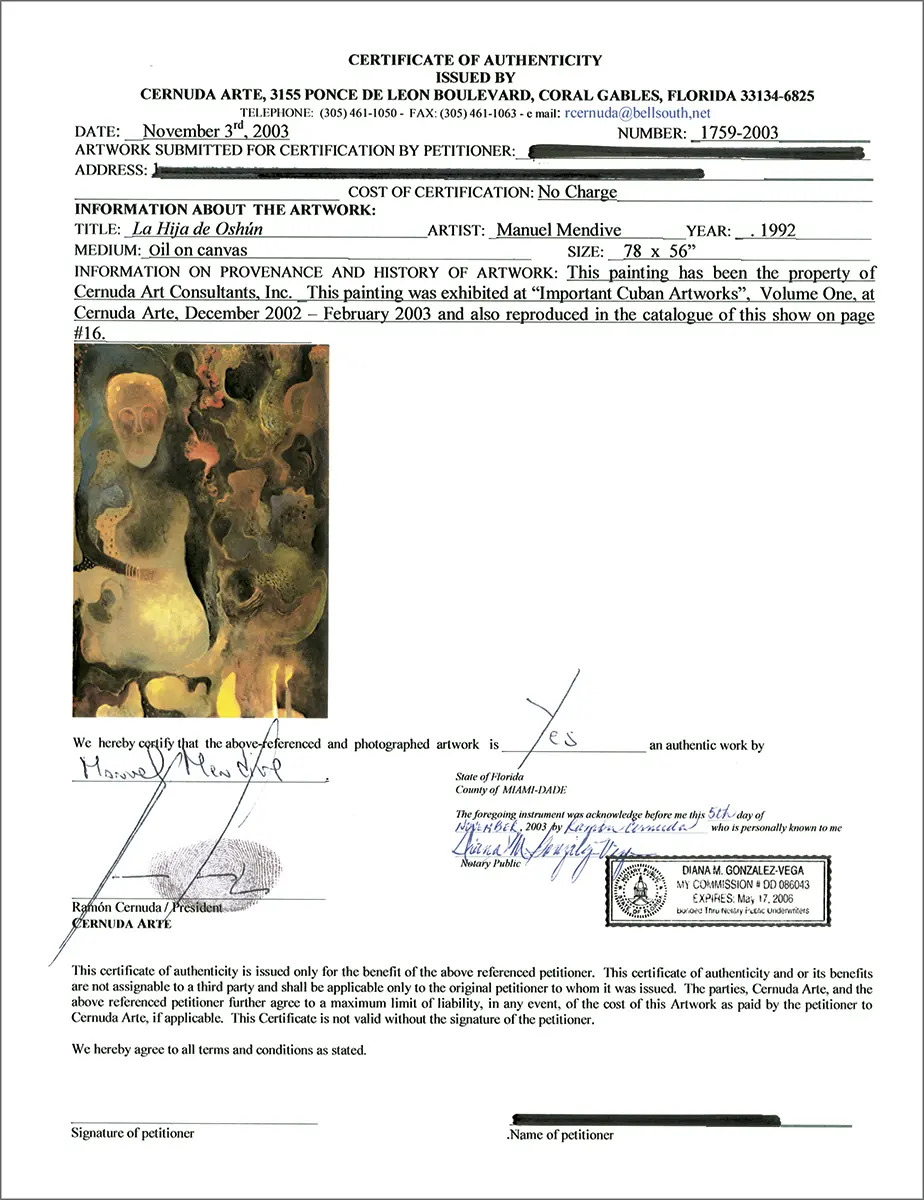
Yet the value of independent expert opinion on the work of certain artists cannot be denied. Indeed, the invariable recommendation is to go to the experts when it comes to investing in art —but in the case of Cuban art one of the circumstances that most aids counterfeiters is the lack of institutions and associations, official or private, that could function as authenticating entities. In the contemporary art world, the need for officially sanctioned certifiers who can guarantee, with all that this implies, the authenticity of any given work is amply demonstrated. Numerous international associations that value and rate art comprise professionals of various disciplines; The Appraisers Association of America, The Art Dealers Association of America, or The American Society of Appraisers, are a few that specialize in art, among other fields. These entities support their experts’ competence —they must satisfy strict requirements to gain certification— and the solid reputation of their members. Governed by a rigorous code of ethics, they guarantee the precision, impartiality, and trustworthiness of their judgments. Some of these associations also collaborate with legal inquiries into art theft and authentication, and the identification of forgeries.
It is true that in Cuba, whether through the Museo Nacional de Bellas Artes or through other cultural institutions, there are deeply knowledgeable specialists in Cuban art who are capable of accurate judgment on the work of certain artists, however, the obstacles to accessing these experts are well known. Consulted by ArtNexus, Vázquez points out that the release of certificates is each specialist’s personal and independent responsibility, and while acknowledging that in Cuba today there is no single institution in charge of such certificates of authenticity, he adds that “there are other mechanisms established for the purpose of guaranteeing the authenticity of artworks that are sold.” By way of example, he mentions the La Acacia gallery commission, set up by specialists from the Museo Nacional, the Dirección de Patrimonio, and the gallery itself, which “examines and approves sales proposals.”
Obviously, this is valid for artworks that are sold and purchased inside Cuban territory; yet the fact is that a large portion of works by classic artists circulates outside Cuba itself, Miami being at least one of the main centers for this commerce. The growing demand for art in Miami has fostered the formation of important collections of paintings by well-recognized artists. And although Rafael Acosta says, “Cuba is the world’s central market for Cuban art. Some people have pretended that this center is in Miami, or even in some European countries, where it is said that works of art leave the island to be sold, but that is not the case,"7 It is no less true that Miami opens wide commercial opportunities for both avant-garde and contemporary Cuban art. With a thriving art market experienced in the usual practices of art commerce, Miami is also fueled by the will of extraordinarily motivated buyers of proven financial solvency.
Many studies of this problem, as well as our sources, coincide in identifying Miami as a center for the commerce of Cuban art forgeries. Circumstances that perhaps facilitate the work of counterfeiters derive not only from the profile of the city’s commercial institutions —often managed by merchants rather than by true professionals with knowledge of art— but also from the kind of collecting that has evolved there. With some exceptions, many local collections were supported at least initially by budgets that are far from the spirit of collecting, while factors like the desire for status, the motivations of nostalgia, or mere speculation have become prevalent in determining the acquisition of Cuban artworks. This provides counterfeiters, on the one hand, with a set of institutions driven by mercantile considerations, scarcely specialized, and often ignorant of the product they sell, and on the other hand buyers with money but little knowledge, who are often more interested in the prestige that comes with purchasing an expensive work of art than in its artistic value and are undisguisedly intent on startling their social circle. Fortunately, as often happens, this phenomenon has been streamlined, and many who take part in Cuban collecting outside Cuba today have gained a well-deserved reputation while contributing to the preservation of a significant part of the country’s artistic heritage.
The controversy reaches not only the assignation of responsibilities for the forgeries, but also the characterization of these forgeries by experts, artists, dealers, and knowledgeable people. While some are of the opinion that these fakes display significant technical expertise derived from their author’s solid academic training (which sometimes makes it difficult to distinguish between the original and the copy and forces specialists to examine both the aesthetic and physical aspects of the work and the historical contexts surrounding it) others, like Cernuda and Vázquez, point out that they are poorly made and very unconvincing copies, and that very few of them could sneak by an even modestly trained eye. Vázquez wonders, “How has it been possible for these concoctions to progress and be sold for tens of thousands of dollars. A very high percentage of all Cuban works that are brought to market (even in that marginal circuit, circumventing the more established and prestigious galleries) are incredibly bad fakes (sometimes they are laughable) and it would not have been necessary to be an expert to set them aside immediately.” Similarly, Cernuda notes that these forgeries “can only fool the neophyte. Fortunately, what saves Cuban painting is the fact that the fakes are very bad, and have been executed without scientific care. Since passing them was so easy because the public was so naïve and unknowledgeable, the counterfeiters didn’t really make a great effort; they painted works from the 1940s on canvases from the 1990s.”
The drive to uncover the counterfeiters, to demonstrate the inauthenticity of their “creatures,” has facilitated the introduction into the art world of procedures from other disciplines, which come to enrich the traditional methodology for the validation of artworks. Although for Ramón Vázquez the back stories woven around a forged artwork are just as “clumsy” as the work’s execution tends to be, he acknowledges that these forgeries “are outfitted with all kinds of false histories and documents. They can be attributed to supposed (or real) collections by people who are well known in artistic circles or by Cuban intellectuals, but who are always already dead; family photographs and exhibition catalogs can be altered digitally; documents from Cuban institutions and certificates of authenticity from specialists can be fabricated.” Faced with such sophistication, the need arises to consult with specialized centers8 that can scientifically establish the physical parameters that under examination situate the work in a specific time and place. Artworks are subjected to exhaustive lab analysis in order to determine their age, detect restorations or repairs, identify the different kinds of supports, and establish the characteristics of the pigments used in their composition, among other things. Nevertheless, these techniques do not suffice when it comes to attributing authorship because they are limited to proving, by exclusion, those aspects that do not correspond to the historical-artistic context of the supposed creator (for instance, by finding extemporaneous pigments or support materials, and by revealing works by different authors under the painting’s surface, etc.)
Yet, no means should be spared in the authentication of Cuban artworks, and if one finally decides to buy, at least the guarantees required by common sense should be secured.
NOTES
1. Ramón Vázquez, interviewed by ArtNexus, October 2003. Comments by Vázquez cited in this essay are taken from this interview.
2. Mireya Castañeda, “El prestigio de un encuentro promotor del arte del Tercer Mundo,” in Granma Internacional Digital, September 9, 2003.
3. Mark Hunter, “The Cuban Counterfeits,” Artnews, November 1998.
4. Ramón Cernuda, interviewed at Cernuda Arte, Coral Gables, Miami, August 21, 2003. Comments by Cernuda cited in this essay are taken from this interview.
5. Ida González, telephone interview by the authors, October 22, 2003.
6. Jason Edward Kaufman, “Challenge to the Andy Warhol Authentication Board,” in The Art Newspaper, no. 140, October 2003: 4.
7. Mireya Castañeda, Granma Internacional.
TANIA IGLESIAS
Historian and critic of Latin American art.
MARISOL MARTELL
Historian and critic of Cuban art. Assistant to the Editor of ArtNexus.