

Who said biennials are out of fashion? This kind of international event serves to place a country like Turkey, a nation that since World War I has sought to westernize its citizens and is currently courting integration into the European Union, on the map. Istanbul, a city that is a palimpsest of approximately fifteen million inhabitants, located at the point where Europe and Asia meet and where it is not uncommon for street peddlers and bazaar owners to speak five languages, was host to the Eighth International Istanbul Biennial.
Officially on view from September 20 to November 16, 2003, the Eighth International Istanbul Biennial opened its doors on September 18 for participating artists, accredited representatives, international visitors, and members of the press. Antrepo #4, one of the four customs buildings in the city’s Bosporus port, was the event’s main venue. This enormous space —four thousand square meters— made it possible to exhibit sixty-one out of the total of eighty-five artists participating in this edition, which was curated by Dan Cameron.1
This is the fourth time that a foreign curator has been invited to select the subject and the artists of the Biennial; in keeping with the globalized times in which we live, the Istanbul Biennial continues to gain legitimacy in the international circuit. Under the umbrella title, Poetic Justice, Cameron introduced a new topic to the political discussion of globalism and its consequences for human relations.
In the essay he wrote for the catalog, Cameron builds a highly political and highly idealistic argument in support of his curatorial position. Seeking to define the term justice that is central to his position, Cameron presents the idea of globalization in a new light: he converts it into idealistic positivism. There are several central concepts in his argument. One of them is that of the global citizen: those individuals who are able to transcend notions of gender, political affiliation, class, and nation, and from that position are able to practice justice in an impartial manner. From this perspective, justice can only be achieved by global citizens, since each region or cultural group possesses differing notions of what is just. The only common point of reference Cameron finds in these global subjects is that they belong to the human race. And it is here that artists become the ideal based on their itinerant condition, that is their condition as global citizens in constant movement who have stopped “belonging to or identifying with” a series of nationalist ideas.2 Another idea in Cameron’s argument is the location of the artist as a religious visionary, who has been given the potential to create works that contribute to the evolution of human consciousness and the spirit of consciousness of being.3
This almost Hegelian argument can only be interpreted as a form of poetic idealism. Poetic justice, in this light, can only be achieved through art, the ideal medium for dialogue and communication; it can only be achieved through the artist as a global subject.4 What is the background for this debate in which our notions of identity and belonging are questioned? Can we interpret such arguments as part of that globalizing ideology that seeks to erase all national and regional specificities, using as justification things like ethnic wars and ethnic cleansing in the Balkans? Isn’t this characteristic of a position found in some artistic circles in the United States, a position that seeks to obviate, or at least to view as outdated, debates about multiculturalism, gender conflict, sexuality, feminism, and other polemical subjects of the 1980s and 1990s?
Now, how do these arguments carry over to the selection of artists and the works on exhibit?5 What is the place in this context of the event’s eleven Latin American artists and of the few Turkish representatives? Cameron specifies that the selection of works did not respond to a single criterion, ranging instead over a wide spectrum that assumed radical differences in terms of politics, subject matter, and style among the participants. The incongruent attempt to show “everything” is summarized in a universalistic discourse regarding the use of media: video, projections, urban interventions, interactive installations, and very few instances of traditional genres. Given the fact that video was the most abundant medium, and given the presence of artists with highly international résumés, the exhibition at Antrepo #4 and the aesthetics of the building (resembling a New York loft or warehouse) transported us mentally to any other European city or to any place in North America, away from the noisy and intoxicating reality of Istanbul.
Nevertheless, many of the works presented in the main venue dealt, subtly or explicitly, with recurring topics such as identity, repression and censorship, displacement, sexuality, the neocolonial condition, globalization, and the tension between tradition and modernity. This is to say, all those debates that arose in the context of multiculturalism and the questioning of identity.
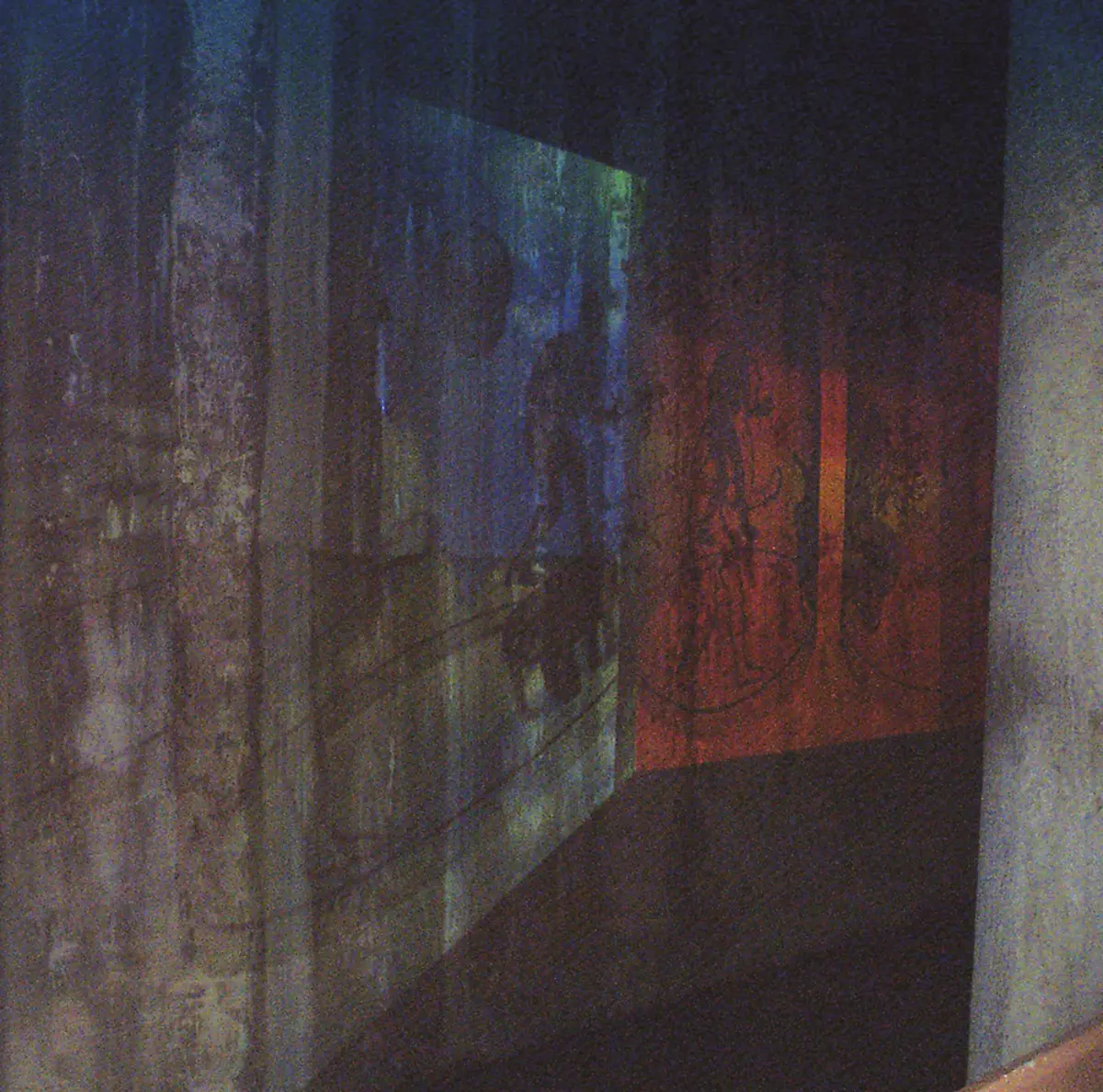
In that sense, it is worth highlighting Jun Nguyen-Hatsushiba’s video, where the artist affected a re-reading of the important celebration of the Lunar New Year in Vietnam while alluding to a particular historical event. His underwater images, metaphors for a country surrounded by channels of water, show the traditional dragon of the festivities carried by seven youths who “dance” around it. Poetic Justice, 2001–2003, by Cuba’s Tania Bruguera was another work directed toward repositing one element of identity, in this case, colonial reassimilation through the manipulation and reinvention of history. We moved through a long, darkened corridor, surrounded by the aroma of English tea coming from walls covered by used tea bags; also on the walls, small monitors showed documentary historical images. The installation established a parallel between the history of a colonized appropriation of a product originally from India, and the processes of deculturation occurring in other contexts.
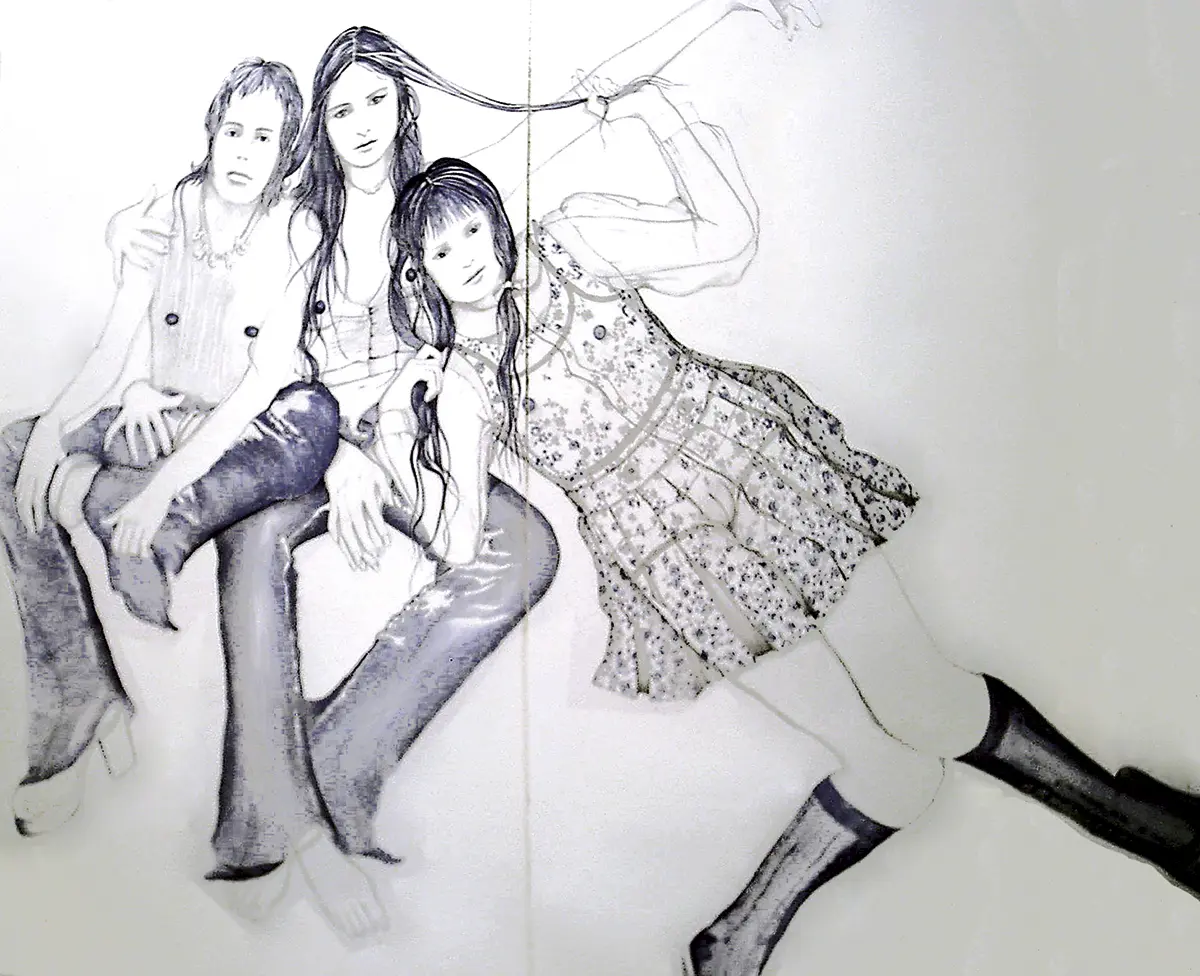
What I am looking for, is 2003, a series of sixteen digitally printed photographs by Venezuela’s Alexander Apóstol, pointed towards the colonized attitude on the part of some young people in Latin America who construe the European male as an idealized sexual stereotype. Nikki S. Lee’s photographs, on the other hand, offered a gallery of racial, ethnic, and class stereotypes in which the artist herself mimics the characters represented. Marlene McCarty’s monumental yet delicate drawings presented the sexualized world of American adolescence, which hides narratives of violence and crime in its background.
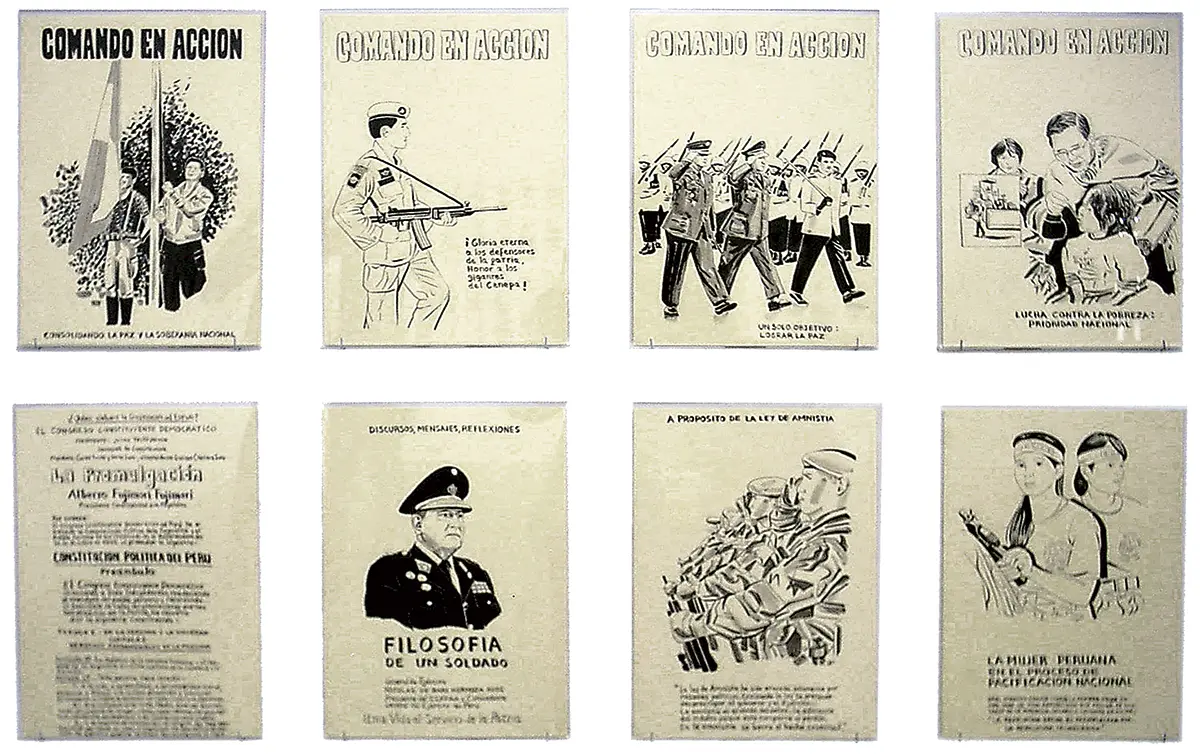
Another installation that deserves mention was Atlas Perú, 2001, by Fernando Bryce. Through an impressive display of 494 ink-on-paper drawings that employ a kind of comic book aesthetic, Bryce ironically commented on the history of the Andean country, mining advertisements, and the news media as his bibliographic source.
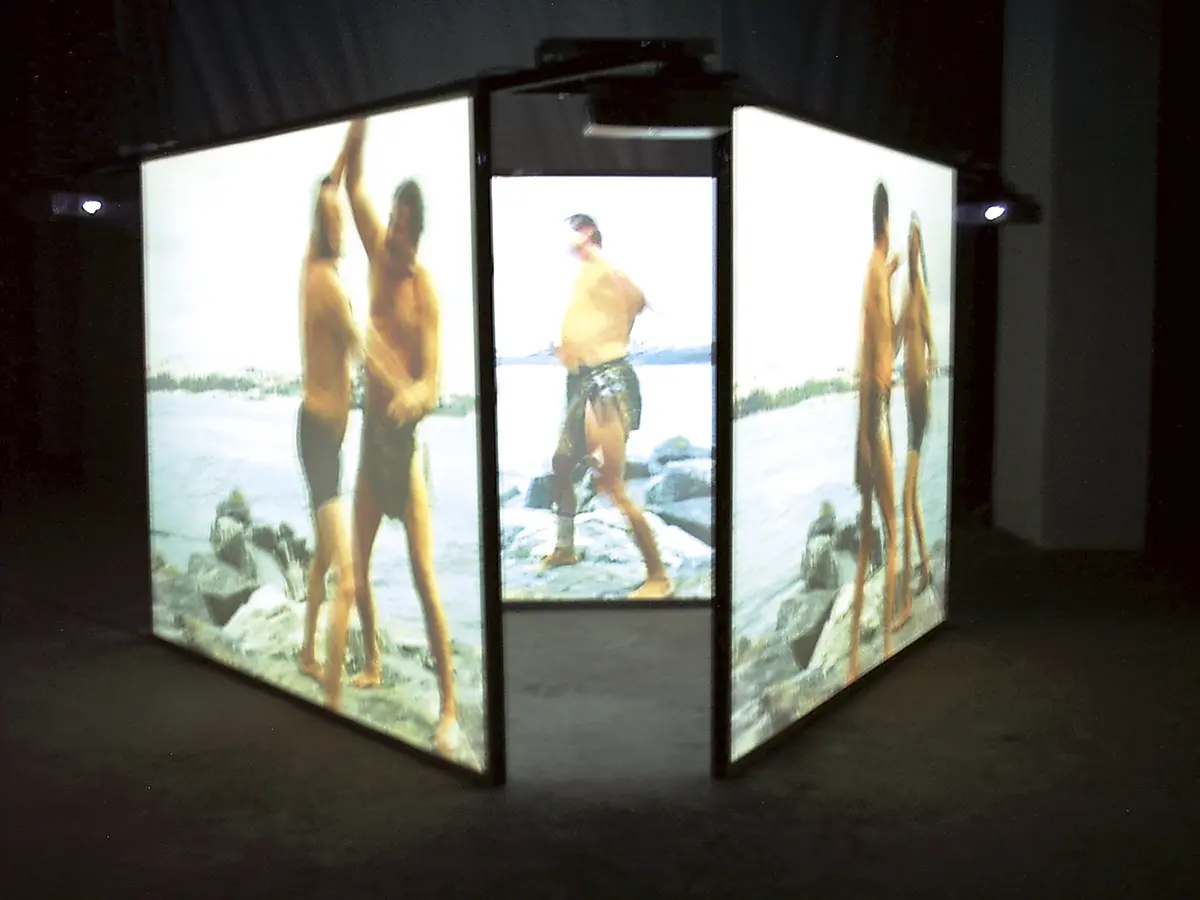
It is important to point out the interest on the part of some artists who had previously visited Istanbul, in creating on-site works that adapted their subjects to the specifics of Turkish society. Among them, we should mention Triangulation, 2003, a video by Mexico’s Yoshua Okon, who is able to create a dialogue between the city —through the character of Cetin Basaran-Tarzán— and the institutionalized stereotype of machismo, which he has dealt with in previous videos. Minerva Cuevas used the aesthetics of Persian miniatures —with the help of two researchers, two translators, two assistants, and two miniaturists— to create a painting about contemporary Istanbul.
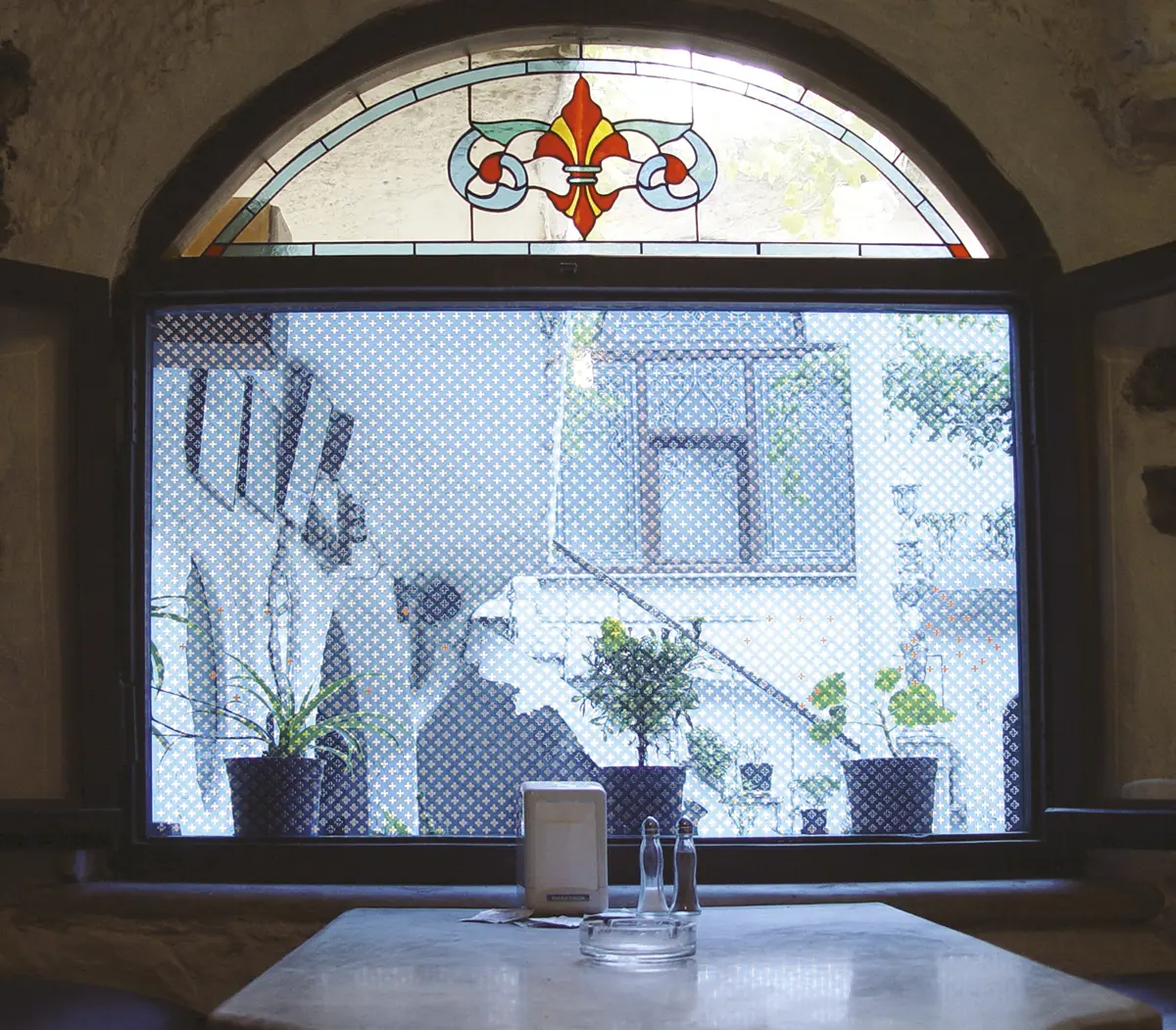
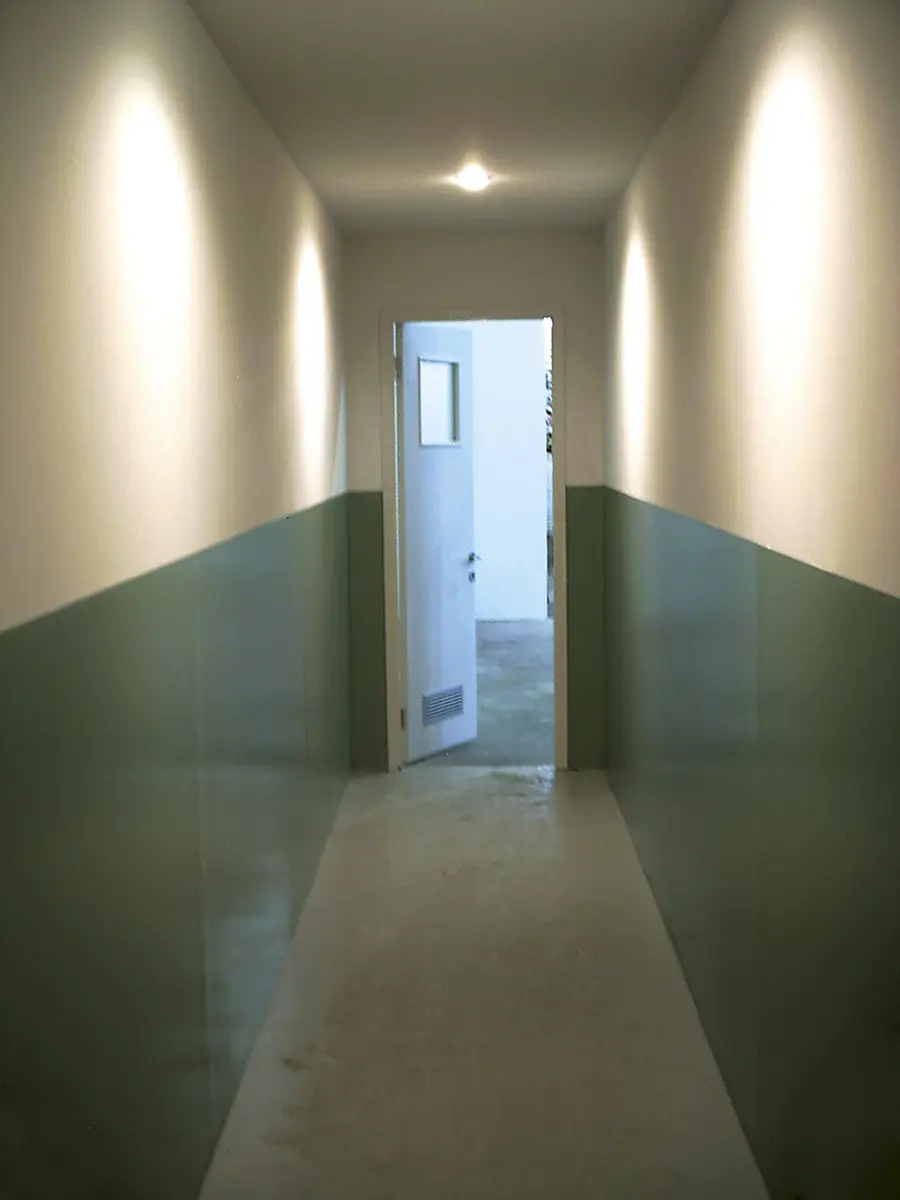
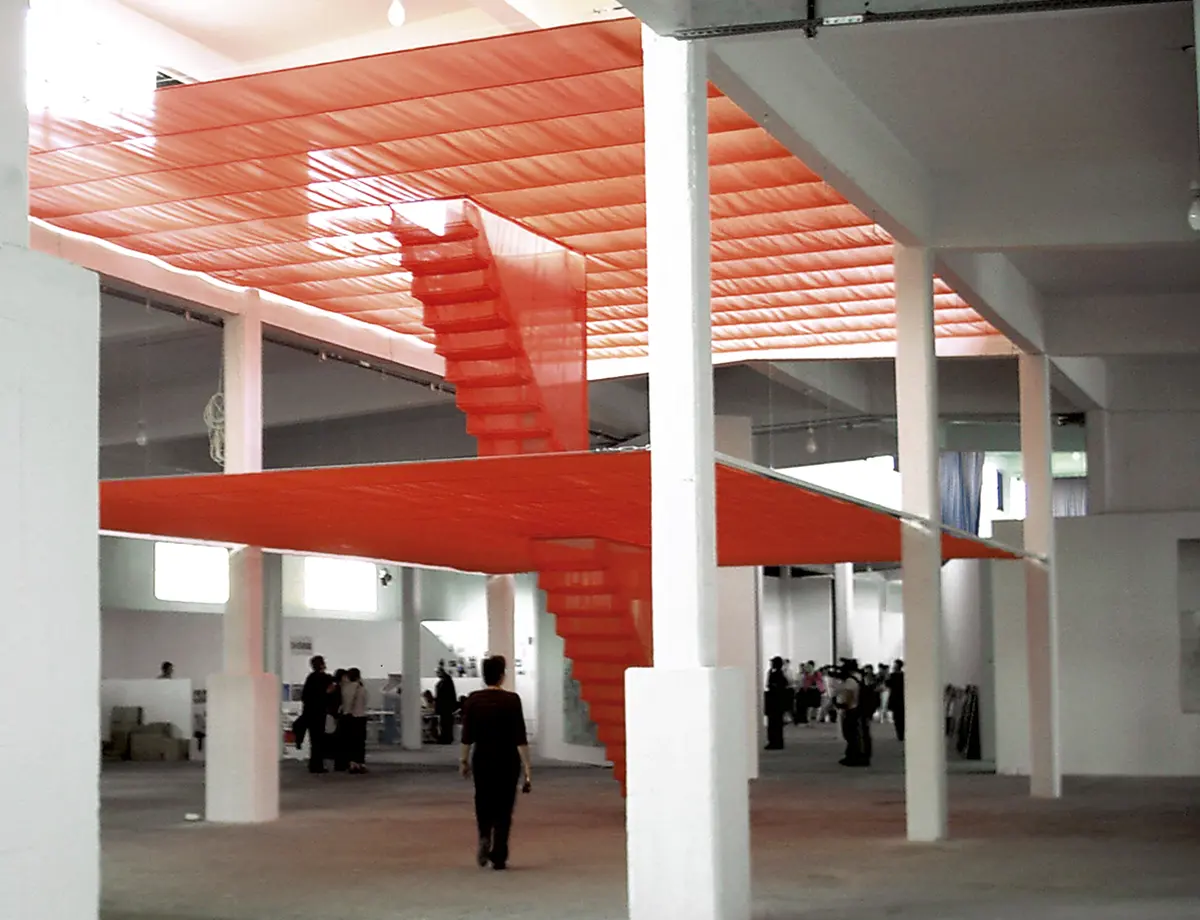
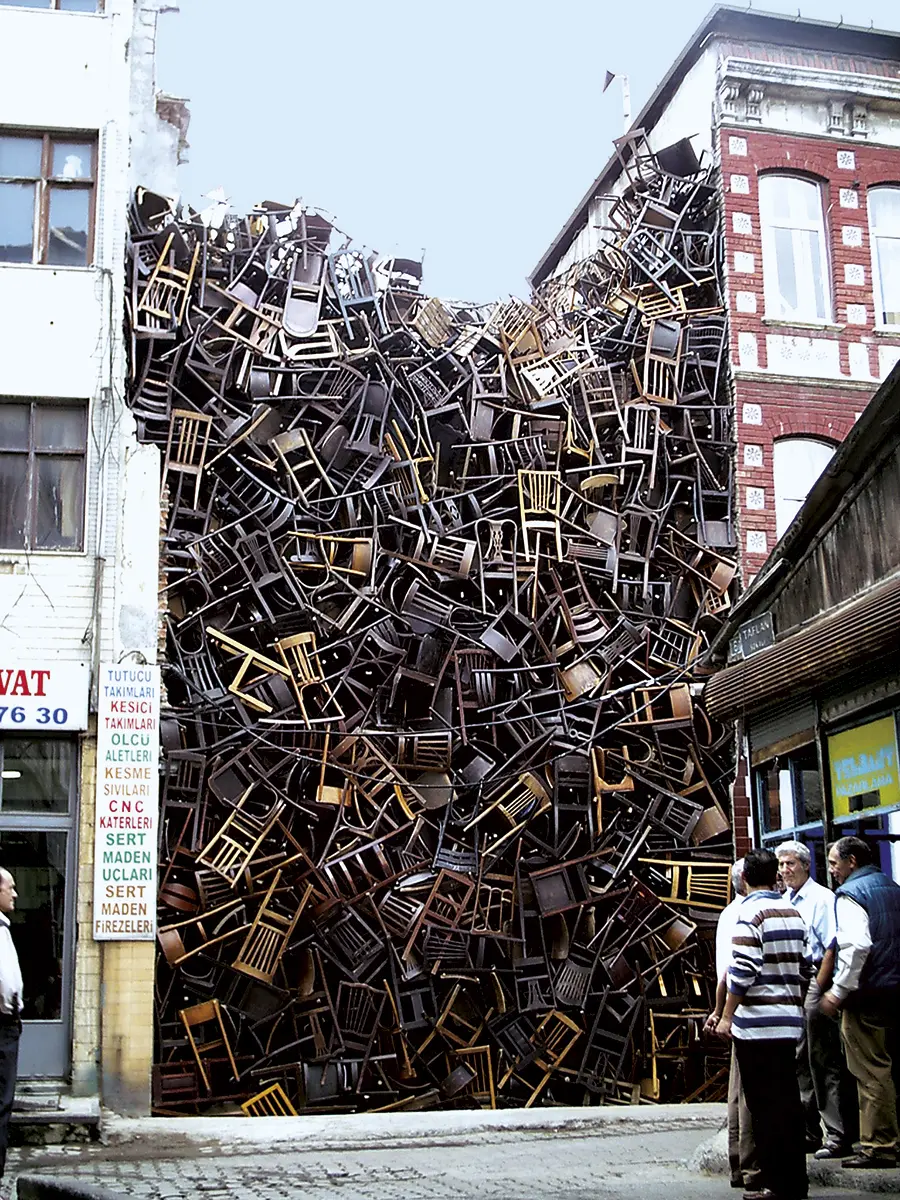
Several direct architectural interventions and on-site installations were situated in a number of Istanbul locations as part of the strategy of projecting the Biennial into the city itself. However, the almost surreal work by Doris Salcedo stands out. It was inspired by the forced abandonment of those who inhabited an architectonical space immersed in the urban plot of the ancient city of Galata. The current city is supported upon the ruins of another one, just like in this work composed by the overwhelming presence of hundreds of used wooden chairs, placed on top of each other, occupying the space that had previously contained a whole building. Such accumulation of chairs (which have become icons of human absence in Salcedo’s work, as anthropomorphic objects no longer in use) seemed quite inaccessible to the public at first sight. The viewer that stood in front of the monumentality of this piece, in a narrow street that delineated the frontage of two other semi-abandoned buildings on each side of the work, was crushed by the scene, which constructs another architecture by arranging and dominating the contained objects. This sculptural-architectonic project invites the public’s contemplation from the outside. The proliferation of details from each chair saturates visual space provoking certain blindness and turning it into a denied space, impossible to penetrate physically. The work silently narrates the life that has disappeared leaving traces of everyday objects and constructing the urban memory. Entirely different is the approach of Brazil’s Lucia Koch, who altered a popular, old Turkish bathhouse by placing patterns in different colors on its sources of light. In terms of architecture as a subject in the Biennial, we must note an excellent installation by Italy’s Monica Bonvicini, who transformed the staircase of the building’s second floor. Another construction of detective-like suspense was presented by Monika Sosnowska, from Poland; it consisted of a path through corridors with walls half-painted in green (the color of government institutions in some former Socialist countries) that took us towards an inaccessible back area full of half-opened doors. Korean artist Do-Ho Suh almost dematerialized architecture in the center of the second floor, and Ann Hamilton’s sliding curtains in the back created an atmosphere of levity and light —a true respite after the marathon projection of more than twenty-five videos on the first floor.
We must also mention that the museographic design of the exhibition at Antrepo #4, was evidence of the Biennial’s excellent organization. The building was adapted and transformed by architect Marcos Corrales Lantero in response to the needs of the works selected for display. As a result, all the installations on both floors of the Antrepo site could be seen fluidly and without interfering with each other. The highlight on the first floor was the way in which the problem of projecting twenty-five videos was solved by establishing closed quadrants and cylindrical modules, which created the required environment of isolation and darkness, while visually the constructions suggested the shapes found in the monumental architecture of Islam.
The same cannot be said of the Biennial’s other venues, except for the famous Yereban cistern in the Sultanahmet district. Its impressive column hall, built by Justinian in 532 C.E., created an ideal environment for the display of the works. Despite its dramatic overtones, Indonesian artist Fiona Tan’s video about water and the sea was tremendously suggestive in this site, as were Jennifer Steinkamp’s “animated” trees that were placed on walls and reflected in the water. Nalini Malani’s moving projections of traditional Indian drawings on the architecture of the site dematerialized the solidity of the walls. On the other hand, the magnificent and monumental architecture of the Hagia Sophia Museum distracted the visitor from the presence of six artists on its second floor, a situation not helped by the fact that their works were dramatically different and had no connection to the site.
The MSU Tophane-i Amire Culture and Arts Center, an old fifteenth-century gunnery, was located near the Antrepo #4 and nine artists shared this space. A variegated collection of aesthetics and media, from the specific subject of Cuba in Alberto Casado’s painting —appropriation of a popular kitschy technique to comment ironically on the game of charades— to Emily Jacir’s photographs and testimonies about the situation of Palestinian emigrants. Sarajevo-born Danica Dakic’s video, projected on a high-spinning circle, was almost a metaphor for the multiplicity and complexity of the worlds brought together by the Istanbul Biennial through the chorus of voices heard on seven speakers that read fragments of the sacred texts of several religions in unison.
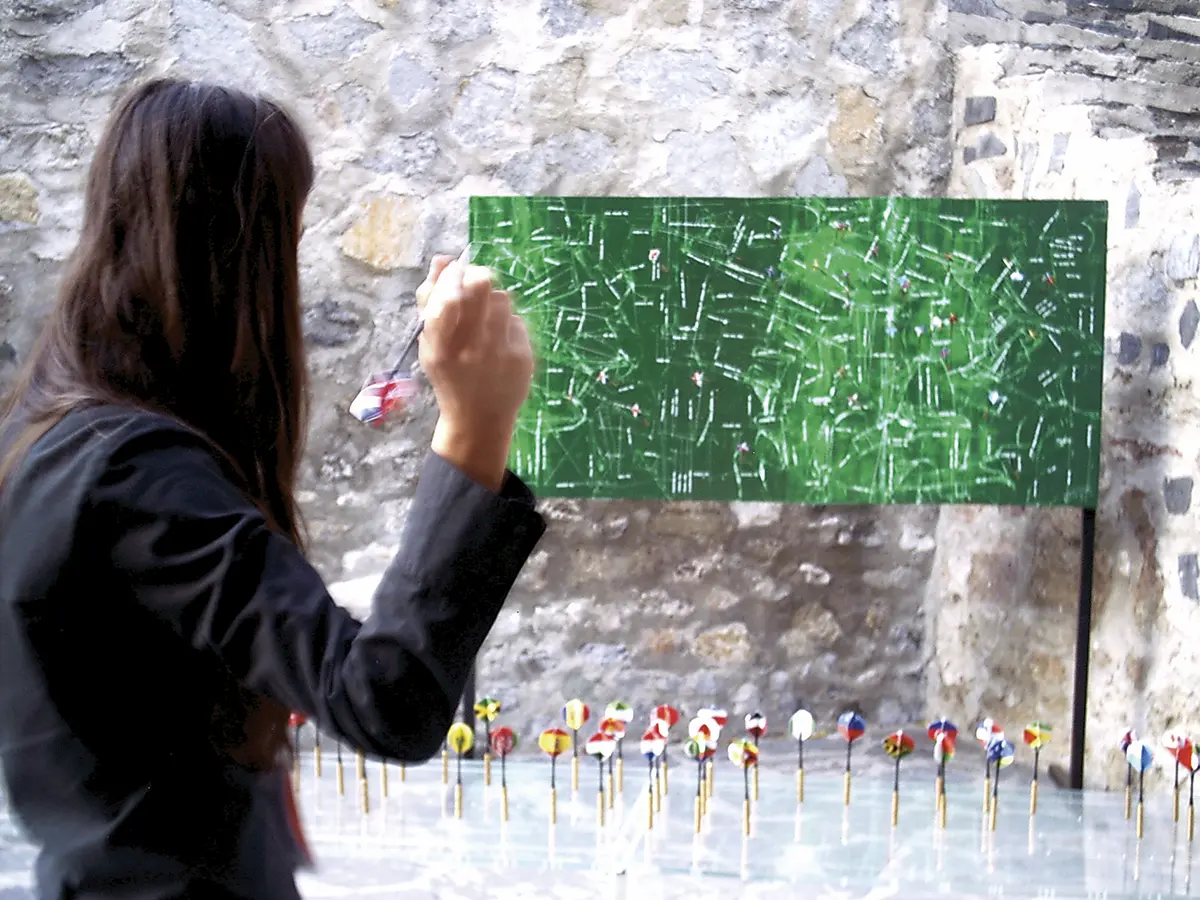
To talk of multiplicity and of voices heard in unison in a place like Istanbul is more practical than to point toward idealistic globalism in search of impartial poetic justice. It would be worse to end up as in Pascale Marthine Tayou’s interactive installation, where the viewer selected darts representing the flags of different countries; these could then be thrown against an imaginary picture of the world comprising member nations of the United Nations. At any rate, what may be said is that Dan Cameron’s curatorial work and the Biennial’s excellent organization gave us an event at the level of any biennial in a First World city —including a panel discussion, and a seminar with curators, institutional directors, and other members of the art world— but with the special flavor that emanates from the streets of a city as complex as Istanbul.
NOTES
1. Dan Cameron has been Senior Curator of the New Museum of Contemporary Art in New York since 1995; his extensive résumé includes paradigmatic exhibitions such as Cocido y crudo at the Museo Nacional Centro de Arte Reina Sofía in Madrid and one-person exhibitions such as those for Cildo Meireles and Paul McCarthy. He has been a contributing editor to Artforum, Flash Art, ArtNexus, and other publications since 1981 and is the author of several catalogs and monographs.
2. “The primary motivation behind choosing Poetic Justice as the central premise for the Eighth International Istanbul Biennial was to be able to explore a range of issues that relate justice to the art, using the notion of global citizenship as the basis for investigation.” Dan Cameron, “Poetic Justice,” in Poetic Justice, Eighth International Istanbul Biennial, (Istambul: Istanbul Foundation for Culture and Arts, 2003), p. 21.
3. Ibid., p. 23. “In this sense, the artists’ activities serve, first and foremost, the cause of the evolution of human consciousness.”
4. Ibid. “Their capacity to analyze and transcend the limits of all assigned forms of identity is intrinsically linked to the question of global justice and global citizenship.”
5. Many of the artists and works presented were previously exhibited at documenta 11; the most recent Manifesta; or in Art Unlimited, the parallel exhibition to Art Basel 2003.
DERMIS PÉREZ LEÓN
Independent critic and curator attending the Master’s degree program at the Center for Curatorial Studies in Bard College, New York.