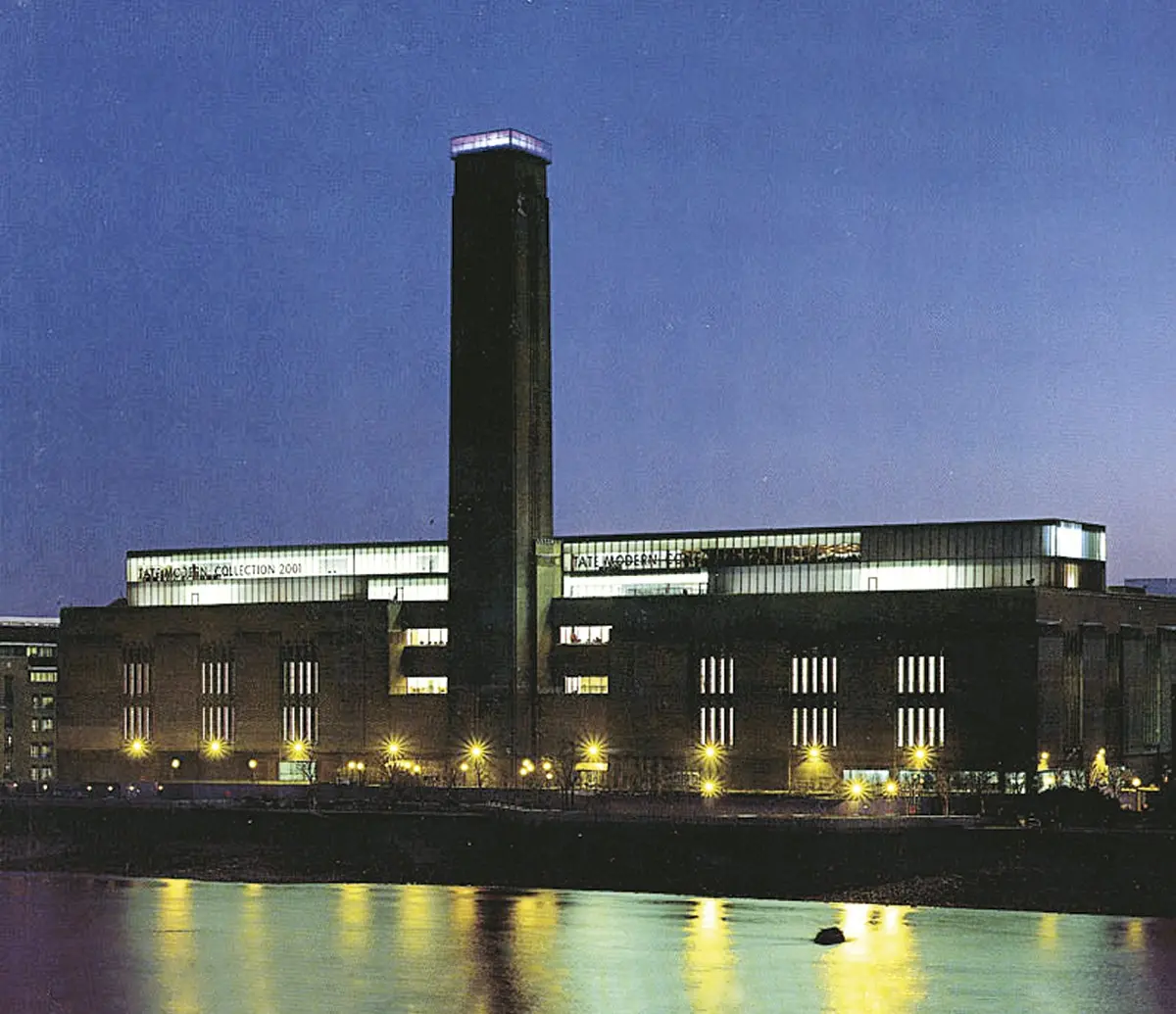
Beginning last June, the Juan B. Castagnino Museum in Rosario, Argentina was host to an educational seminar on arts administration, collection management, and exhibition design. The seminar was organized by the Fundación Antorchas in Buenos Aires with the support of the British Council and the Smithsonian Institution.
The program was conducted by local and international specialists, and twenty-two art professionals from Argentina, Brazil, and Chile were chosen as participants through a competitive selection process. Susan May, a curator at the Tate Modern in London, was one of the instructors at the first meeting. She presented Tate Modern’s institutional model and analyzed various contemporary curatorial strategies. Cristian Segura interviewed May during her visit to Argentina.
CS: How did the new way of exhibiting the Tate Modern art collection originate?
SM: With the project for the new museum, the question arose of how to present the international modern art collection. Some gaps in our collection made it impossible for the exhibition to follow a chronological line. On the other hand, Tate’s acquisition funds had been frozen for twenty years. This is why we found ourselves faced with the challenge of presenting our collection in a way that allowed for multiple readings. After studying the matter we concluded that from the time of their origin in the French Academy in the 1600s, genres had been the persistent classification mechanisms in the field of art. We identified four: still life, landscape, human figure, and historical narrative. These were to be the axes for the articulation, in four different spaces, of the story of art in the twentieth century. For each one, we employed complementary concepts to enrich the narrative. For still life, it was real life and the object; for landscape, the environment and matter; for the figure, the body and its action; and for history, society, and its memory.
CS: Among the gaps you mention, the Tate Modern has acknowledged Chinese art, political art, and Latin American art. Are there any acquisition programs in place to reverse the situation?
SM: The examples you give are the most accurate to understand what the Tate Modern lacks. It is also the case for conceptual art, which we had not acquired in the past but are now purchasing. We still don’t have many pieces from this period, for instance, British conceptual art from the 1970s, but we are trying to acquire them.
CS: And what about Latin American art?
SM: Our interest in acquiring Latin American art is both immediate and long-term. We are not doing it because it is in fashion, but because we want to make a commitment to the art being created in this part of the world. We currently have a benefactor who has made it possible for the Tate to focus on Latin American art by financing these actions, as well as by the support of the presence of a Mexican curator.
CS: Can you tell me this curator’s name and what his specific work is?
SM: His name is Cuauhtémoc Medina. He wrote a report for the Tate recommending some policies it would be helpful to follow in order to start adding Latin American art to our collection, and he provided guidance in terms of the best places to find the work. He also proposed individual artists and specific artworks. Those proposals are presented to an acquisitions committee for their analysis.
CS: Why did the Tate, which has a corps of twenty-five curators, approach an external curator for the development of its Latin American collection?
SM: Truly, we in London needed someone based in Latin America to advise us. Referring to books or catalogs is not the same. Cuauhtémoc Medina works in the region. He has done Latin American art exhibitions in England and understands the British context very well. He studied at the University of Essex and is also a writer and critic. He has worked very closely with contemporary artists like Francis Alÿs and has a clear idea of the area we want to cover. He is very qualified.
CS: Do you know whether Medina has suggested the names of Argentinean artists?
SM: I do know there are Argentinean artists on the list, but I can not tell you who they are yet.
CS: Although your trip to Argentina was for the purpose of participating in a seminar, have you had a chance to visit artists’ studios?
SM: Yes, I’ve seen around twenty artists in Buenos Aires and Rosario. I realize this is just a small portion of what is happening in the country as a whole, but for me, it is a way of beginning to understand the networks in operation. My visit to Argentina for this seminar has also been an excellent opportunity to see firsthand what is happening in both historical and contemporary art in this country. To understand what is going on now I need to understand what happened historically in the twentieth century. I believe artists are always looking to the past, as much as to the present and the future.
CS: Do you perceive any specific trend among contemporary Argentinean artists?
SM: The trend I perceive is that there are no trends. What I saw was an extremely vast field in painting, sculpture, object art, photography, installation, and video, from figurative art to the most absolute abstraction, from social commitment to personal obsessions, and from the political to the private.
CS: Tell us about the contemporary art commissions for Turbine Hall.
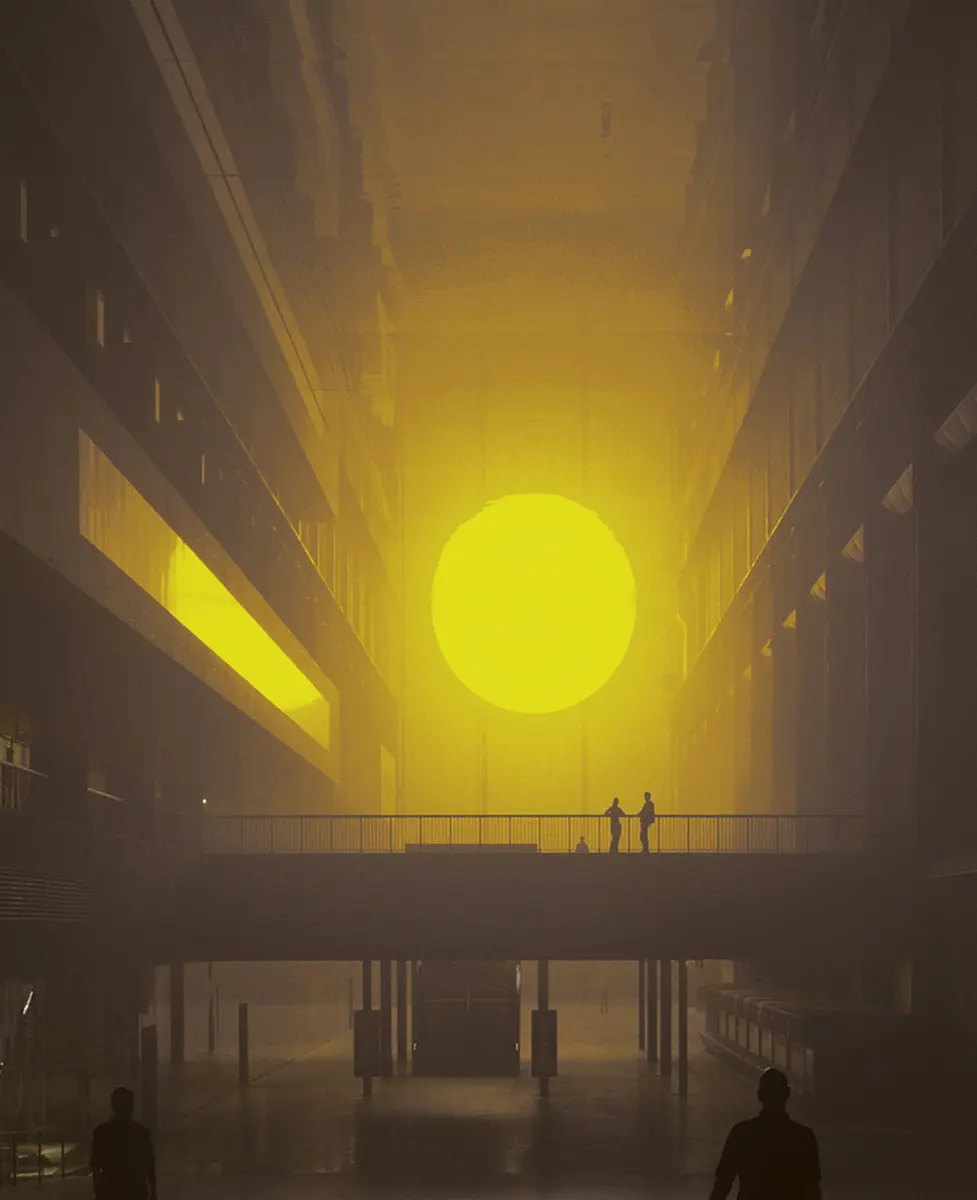
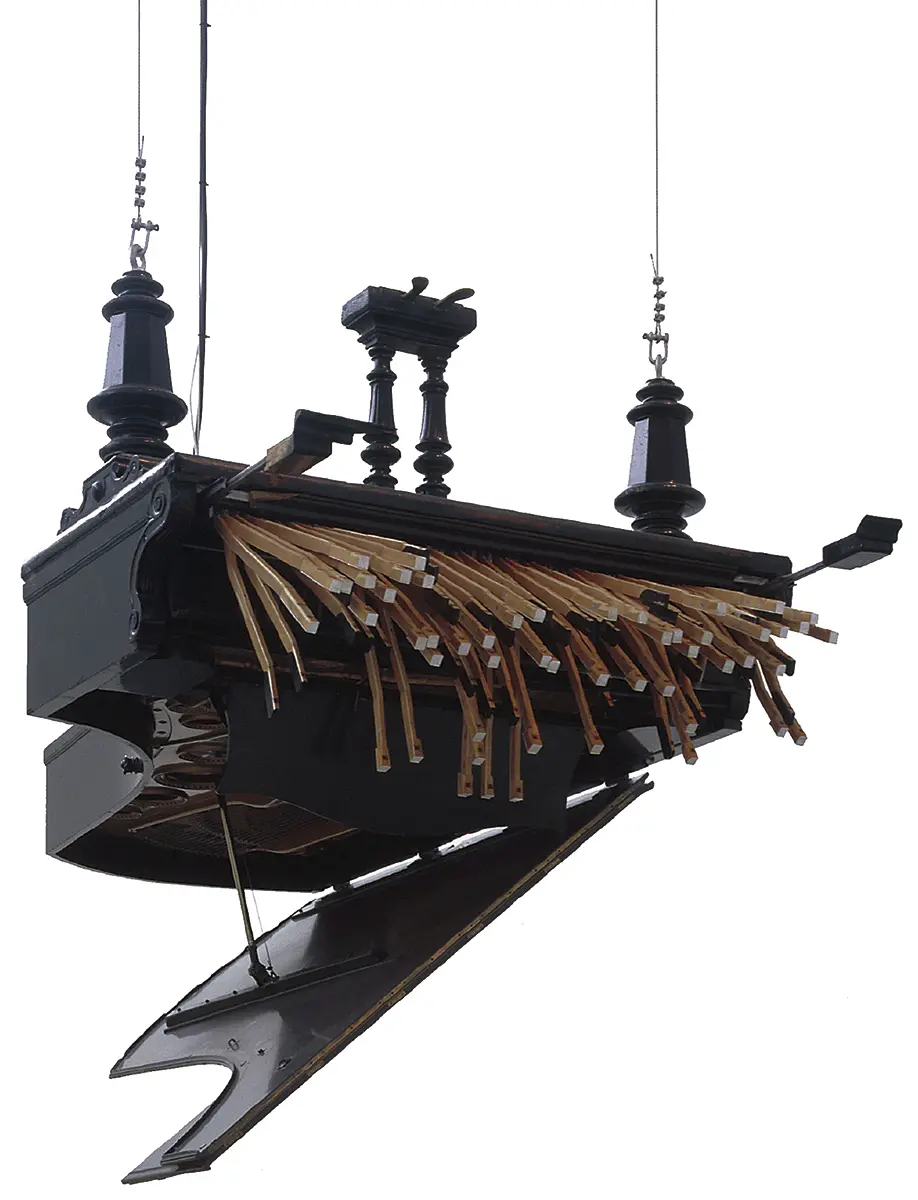
SM: Every year, with the help of a sponsor, the Tate Modern commissions a new work for Turbine Hall. We invite artists from all over the world into this space; we have presented, for example, projects by Louise Bourgeois and Anish Kapoor. In 2001, the Spanish artist Juan Muñoz produced what may be considered his last masterpiece; he died two months after completing it. For this year’s project, we commissioned a piece by Olafur Eliasson. Eliasson is considerably younger than the previous artists who have been invited, but he is gaining significant international renown thanks to the installations and sculptures he creates using natural materials like light, steam, water, ice, and wind.
CS: This visit has given you a view of the work being done by Argentinean artists and it has served as a foundation for you to begin to understand what is going on in this country. Can you now think of Argentinean artists for this space in a more balanced way?
SM: My work as curator is to find opportunities wherever I happen to be and the idea is to see as many things as possible. In looking at the work of Argentinean artists I’m always asking myself whether it has universal qualities. I ask myself, for example, whether somebody who sees it in London can say, “This is truly exciting work.” Each piece relates to the context in which it was created; the feelings in a particular work refer to a particular context. So, I need to see something there that someone from outside can also relate to. For instance, if an artist is working on something like the railroads in Argentina—a very specific situation—I am going to try to find other things in the work, such as the attempt to establish a relationship with the past. Perhaps it is something that has to do with a personal obsession of the artist, or some reference to formal qualities like image, color, or shape. In this way, although the work is based in an Argentinean situation, there are other things, other attributes that can be translated into any other situation or context.
CS: Opening the Saatchi collection to the public has been widely discussed. How has it impacted Tate Modern?
SM: I can’t tell at this point what the impact of this opening was for the Tate since it happened only a short time ago. There will be an impact, yes, because it is a collection of young British artists. Saatchi was very generous in collecting them at the beginning of their careers. Unlike us, he was able to go in with a checkbook in hand and acquire pieces directly. In that sense, the Tate, by virtue of being a public collection needs to define certain criteria before acquiring works for the collection. This is a long bureaucratic process that made it difficult for us to respond as nimbly as Saatchi did. Perhaps we missed out because of the fact that we weren’t able to acquire these early works by young British artists as quickly. It is a good thing that he did, though, because now we all can see them. Even if one needs to pay an admission fee (£8.50).
CS: Finally, I would like to know your opinion of large art exhibitions, such as Documenta in Kassel, or the Venice Biennale.
SM: The problem with Documenta in Kassel, or the Venice Biennale is that they are generally presented on the basis of a single vision. The most recent Documenta (June 8–September 15, 2002) was organized by a group of curators, and in a way that broke the single vision for such a vast show. I think the origins of those curators seeped through Carlos Basualdo, who lives in the United States but comes from Argentina, Ute Meta Bauer, Susanne Ghez, Sarat Maharaj, Mark Nash, and Octavio Zaya. They all brought different points of view, with different perspectives, but all the same, at the end of the day there needs to be a person who makes the final decisions; that was Okui Enwezor’s job.
Generally, these kinds of shows feed on each other. The most recent one has something from the previous one, for example, Catherine David’s documenta X had a political dimension, but her perspective was broader.
For the Venice Biennale (June 15–November 2, 2003), Francesco Bonami, the principal curator had other curators working with him. The title for this edition was Dreams and Conflicts: The Dictatorship of the Viewer, and they tried to take into account what has happened in the past in such enormous exhibitions. They tried to reverse the process, to focus on the viewer and not the object, and this is perhaps a reflection of what is happening with many artists for whom the viewer is the work of art, that is, the viewer’s experience of the object and response to it are the main thing, they are the work itself. With the change of emphasis from object to subject, the definition of what is an object and what is a subject is no longer clear. That may be a trend in current art. But it is very difficult to assert the existence of a trend because in reality there are many trends in art, there are many layers, and that is what makes it so exciting.
CRISTIAN SEGURA
Artist and independent curator. Former director of the Museo de Bellas Artes in Tandil.