All of Edgar Ladrón de Guevara’s recent work is based on the effects of visual illusions, mutations, and double entendres. He is interested in the ambiguous qualities of an object’s surface, its accumulation of meanings, and its broad range of artistic possibilities. His aesthetic curiosity transcends the rigid notions of a photographic print, placing him at the center of the most compelling tendencies in contemporary photography. However, even within this context, Guevara’s work is a rarity because it is so subtle. In the context of contemporary visual culture, subtlety is an element that has become devalued. Guevara’s most recent works seem to break away from the photographic tradition and are closer to the tradition of pictorial beginnings. Contemporary art criticism has begun to use the term pictorialism again to discuss photographic methods based on the mise en scène, the manipulation of the tripod, and the erasing of the subject. The end product, in Guevara’s case, is the self-sufficiency of the image; that is, a product that appears to be more concerned with itself than with events happening outside its form. Like paintings, his photographs spring to life as a system of signs that do not need to be justified in reality, but rather find meaning within the very logic that their representation has imposed on them. It is therefore not too far-fetched to discuss these works in terms of their expressive possibilities rather than in terms of their descriptive quality.
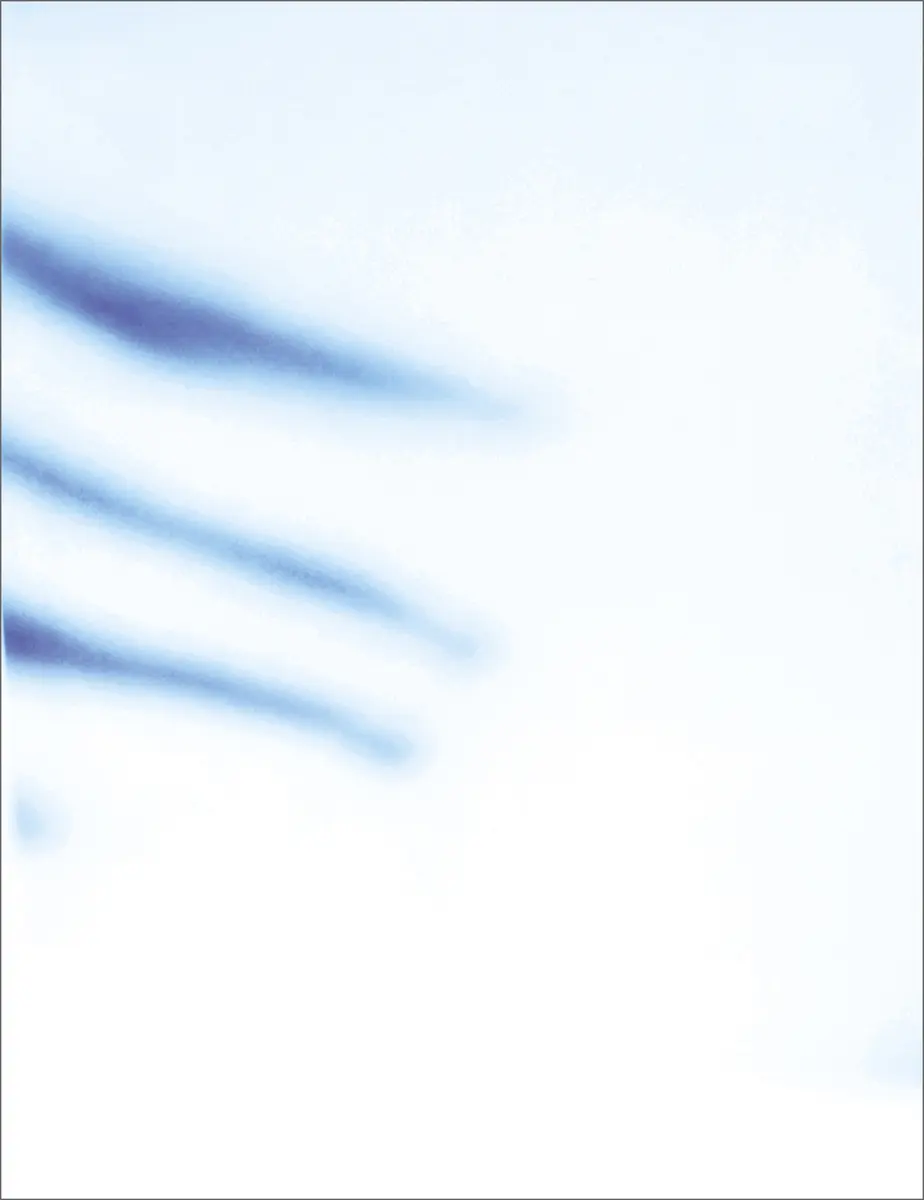
Ultimately, we are talking about signs that are depicted as a product of the exhaustive relationship between author, subject, and technique —a crucial element in the case of photography. Although in Guevara’s earlier series (Eye constructions, 1994–1995 and The essential kiss, 1997) the expressive intensity of the sign was still detectable, in his most recent series Calligraphy, 2003, the dominating traits are subtlety, ambiguity, and transparency. The effect is that the sign here does not appear as a nervous and frustrating entity. Rather, it seems to be retreating, looking inward as if to compensate for its tendency to expand by virtue of its diversity of meanings. On the other hand, as the title of the series indicates, the images have a calligraphic element, which tends to link them to drawing as well as to writing. This is especially true in some of the photographs depicting enlarged details of a person’s hair or of other small objects that are barely identifiable. Even in the most fully figurative photographs, what dominates is the line, yet it is a line that is an accidental stroke, at once concealing its technical origin while attempting to establish itself as a manufactured product. Emphasizing the line, the colors, and the textures, dissolving the context in which the subject and the photographed objects exist, and creating a practically atemporal abstract effect, Guevara suggests a personal proposal for the representation of the human body. The shapes are vague and undefined, as though floating in a fading landscape. Stripped of their weight (and almost of their flesh), the bodies become detached from any real signifier; they cease to be the objects they are supposed to represent and they become generic. They turn into nondescript statements that are almost universal.
This is probably one of the most consistent results of Guevara’s work. His art pieces are devoid of any localism, historicism, or particularism. They could have been made in any part of the world, using any kind of media, and relating to any kind of subject in any kind of setting. They have the quality —ubiquitous to the vanguard tradition— of commitment to themselves and to themselves alone. Perhaps we are finally talking about a phenomenon that today can only be viewed with a bit of nostalgia: the idea that the identification of art is, in the end, art’s only obligation.
JUAN ANTONIO MOLINA