
This year FIAC celebrated its thirtieth anniversary; thirty intense years of changes, challenges, surprises, and, at present, due to the force with which new fairs had entered the world’s art scene, a series of open questions about its future direction. Modern art or contemporary art has been the dilemma for FIAC’s organizers since the get-go, and it was probably this same conundrum that contributed to the "neutralization" of FIAC’s ambitions, even as the fair sought to renew itself on repeated occasions: the imposition of the "one-man show," unevenly appreciated by galleries; the creation of the "Perspectives" area for young galleries (both of which were changes carried out during the 1990s) and, in 2000, the introduction of a video department, dubbed the "Video Cube."
The differences that arose among successive boards, the ambivalence between a marked openness towards contemporary art and the attempt to maintain a "classical" image that privileged modern art, and the uncertainties of the French art market, are among the reasons that drove some French galleries to give up on FIAC. Although it is in no way a "fair of the refusés," it is undoubtedly one of the factors that contributed to the creation of Art Paris. The existence of two international events in the Parisian art market is a unique occurrence, and it points to yet another dissonance cultivated by the French in the world art scene: the "cultural exception" France invented and of which it has become the world’s preeminent promoter and defender.
When it comes to art fairs, the "cultural exception" is perhaps less brilliant than it would like to be. FIAC, which for thirty years has occupied a central place in French artistic life, is now at a crossroads.
Indeed, the fair is managed by two organisms that are in conflict, or at least in opposition: the CoFIAC, presided by gallerist Yvon Lambert,1 and the managing company Reed, a publicly traded entity (in charge of managing 560 fairs and salons throughout the world, fifteen of them in France) crystallize the difficult balance —desired by FIAC— between the cultural and the commercial, the commercial side having to achieve profitability for Reed in order for the fair to be justifiable. The "oscillation effect" observed between modern and contemporary art was confirmed by gallery owner Anne de Villepoix (a candidate for the direction of FIAC and a principal defender of the presence of young artists). She believes that "FIAC has not been aggressive enough towards the international market, and it hasn’t had a concept that is dynamic enough." And art merchants cannot avoid comparing time and again the Paris event with the Bâle fair, which has followed a brilliant path over the past ten years.
Despite these considerations, FIAC, with 70,000 visitors, is still the second-best-attended art fair in the world, with an average length of visit of seven hours. With 174 galleries arranged over 10,500 square meters, seventeen thematic exhibits, and eleven new galleries out of eighteen in the "Perspectives" section, the 2003 edition of FIAC produced a high level of excellence and considerable diversification. But one unprecedented occurrence somewhat dampened the euphoria: the desertion of several important galleries. We shall name only a few: the young American houses Anton Kern, Gavin’s Brown’s Enterprise, and Tanya Bonakdar; Anthony Meier from San Francisco; London-based heavy-hitters like Waddington and White Cube; Zurich’s Hauser & Wirth; and France’s Chantal Crousel. All of these exhibitors will be at the new European fair organized by the magazine Frieze, which will open in London four days after FIAC closes its doors.
Regarding the presentation of the works, there was really nothing surprising or new, either in concept or in the organization of space. The general global and chronological arrangement has not changed; the fair starts with art from the early and mid-twentieth century and advances progressively through time and the century’s various movements to end with contemporary art in the "Perspectives" and the "Video Cube" sections. It presented a traditional, historical "museography" that highlighted very few large pieces. While painting continued to occupy a preeminent place, and an important role was reserved for photography, installations were scarce. Overall, the selection was of good quality without big surprises, except for "Perspectives" which was rather disappointing and contained nothing truly new. On this point, we will mention just those pieces that struck us as interesting.
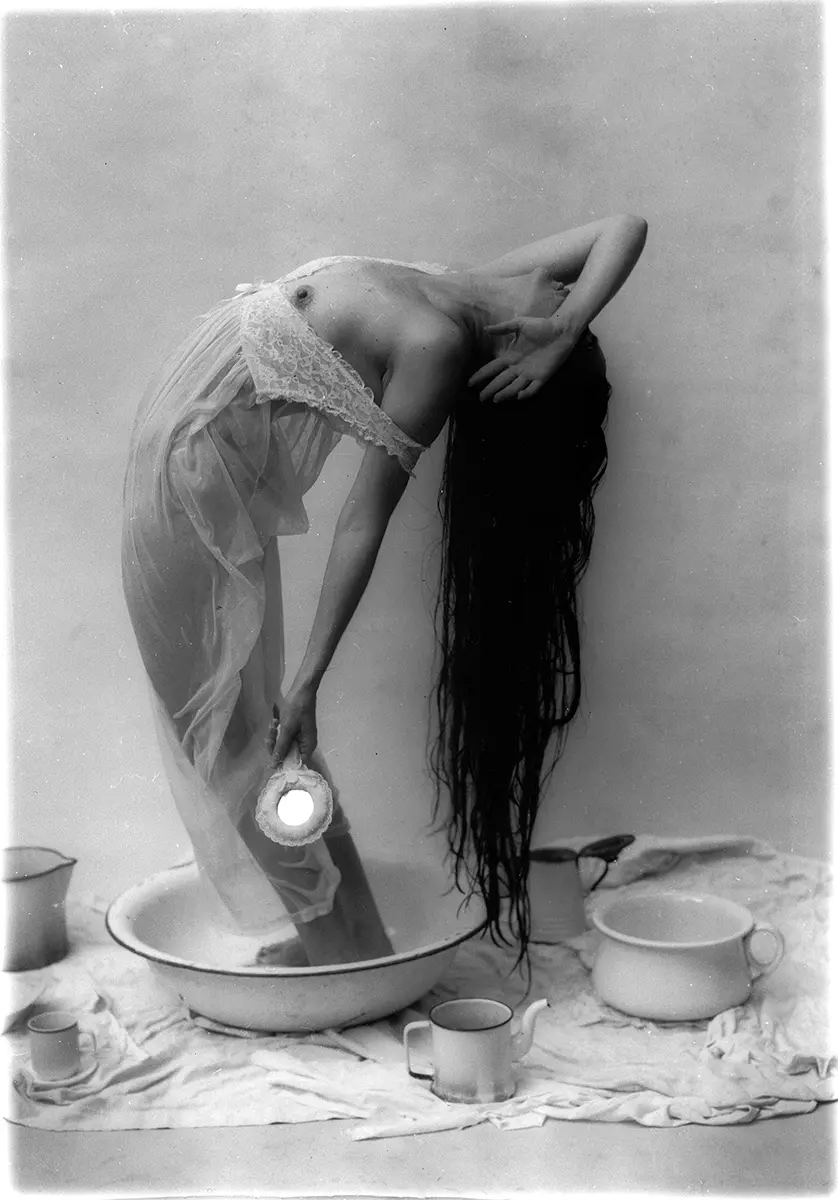
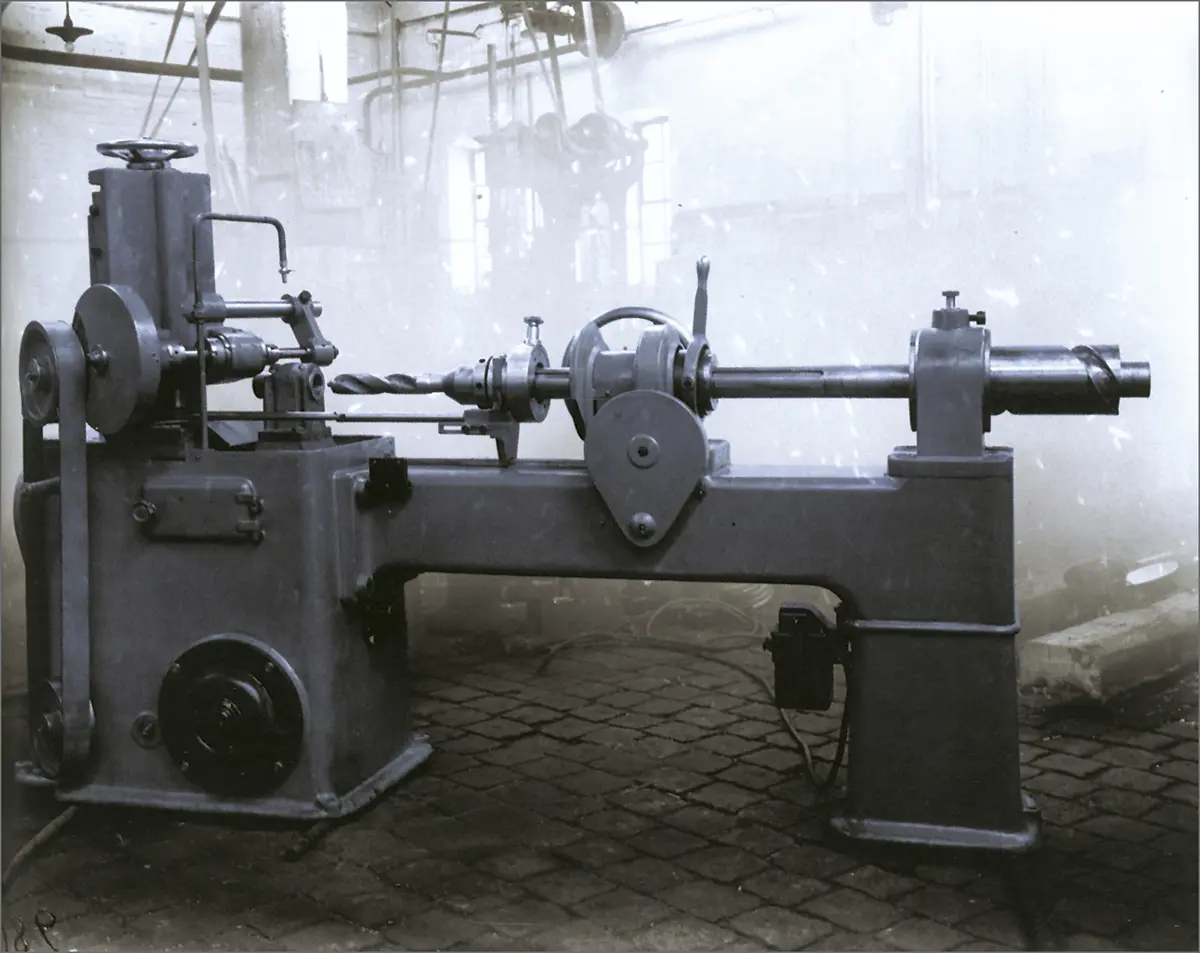
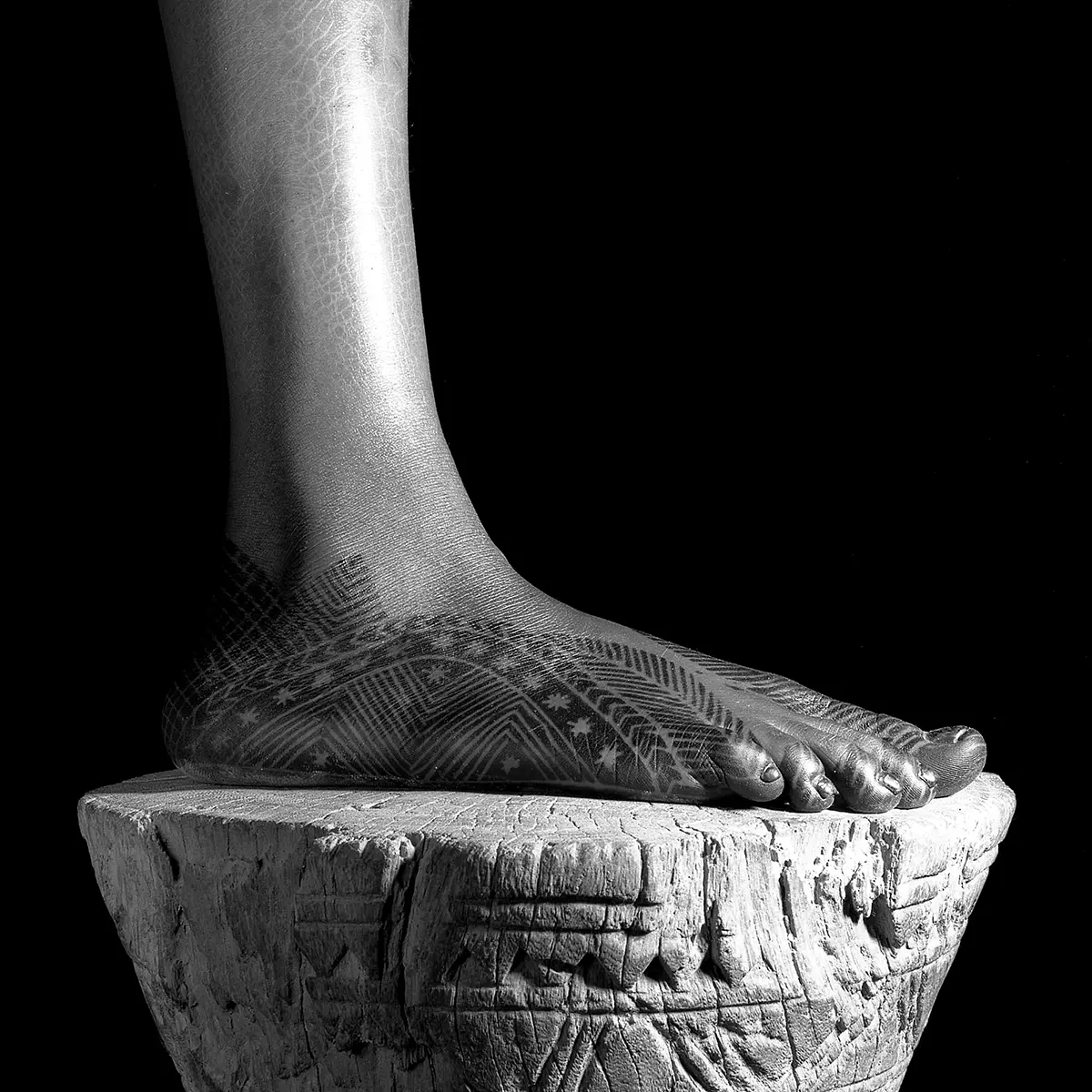
From the entrance, six large galleries presented themselves to the visitor. Attention was initially drawn to a group of large-format, multicolored, decorative art jars by Jean-Pierre Raynaud at Pieters (Knokke), but ultimately captured by an imposing wooden panel, painted in white by Louise Nevelson at JMG (Paris), Dawn Wedding Chapel IV, 1959–1960 (276.9 x 221 x 34 cm). At Claude Bernard, the one-person Roberto Matta show was canceled and replaced by a group show that included some beautiful 1975 drawings by Sam Szafran, and a large-format canvas by Armando Morales, Tropical Forest 1992. The Chillida space of Bilbao’s Colón XVI was filled with magnificent drawings and sculptures. The Malborough Gallery (New York) devoted its space to Zao Wou Ki (Beijing, 1921), the Chinese painter based in France since 1948. The influence of Michaux is noticeable in the subtle graphic and chromatic canvases and drawings of this artist. Louis Carré (Paris) presented an important retrospective of Hervé Télémaque (Haiti, 1937, based in Paris since 1961), the highlights of which were several never-before-seen paintings from the 1960s, which demonstrated the artist’s precocious modernity. As always, Denise René (Paris) devoted its exhibit to Latin American kinetic artists, but on this occasion, the highly eclectic, overly-filled space hindered the selection’s visibility. Marwan Hoss (Paris) presented sober and majestic photographs from Mali, in particular, the close-up of a decorated "foot" by Frenchman Jean-Baptiste Huynh (1966), who was also to be found at the Portuguese gallery, Mario Sequeira de Braga. Photography had less presence in this FIAC than in previous editions, but what was exhibited was of the highest quality, for example, Sophie Calle’s I Slept Atop The Eiffel Tower and Room With A View, both of 2003 at Emmanuel Perrotin’s gallery (Paris), and above all the German artist Thomas Ruff’s one-man show at the Nelson gallery (Paris). His large photographs worked in the manner of old prints and colored in blue-gray and sepia, soberly focused on a series of imposing and mysterious industrial machines.
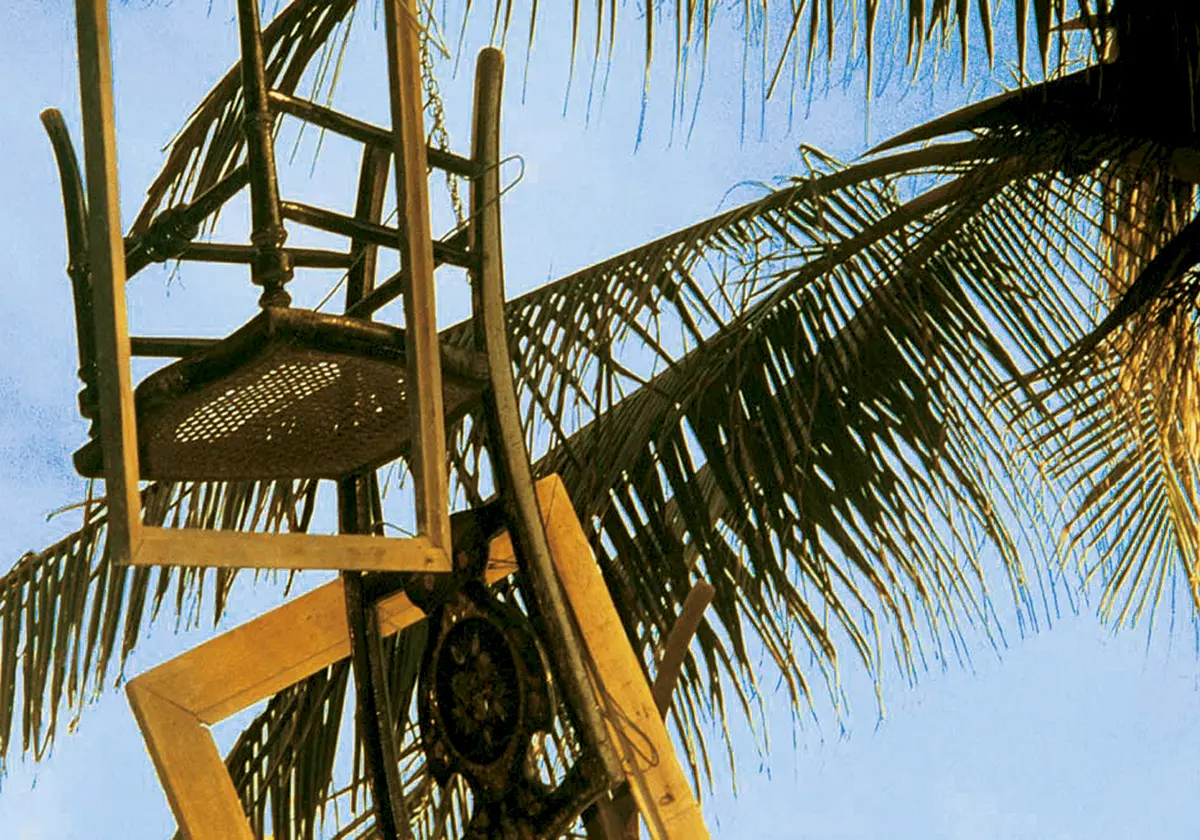
A total of fifteen Italian galleries participated in FIAC this year, demonstrating the fair’s European perspective along with their counterparts from Belgium (twelve), Germany (eleven), and Spain (ten). Italian galleries presented Italian artists, mostly representatives of Arte Povera. Galería Continua of San Gimignano presented, alongside Chinese artist Chen Zhen’s "modest" Light Altars, 2000, several works by Loris Cecchini (Milan, 1969). Cecchini’s installation Density Spectrum Zone 1.0 (monologue patterns), 2002, was presented at the 2001 Venice Biennale. Using computer-generated drawings, this artist develops and builds spaces in diverse materials where, in order to challenge technology, there is always a precarious note of everyday reality, in this instance, the chair.
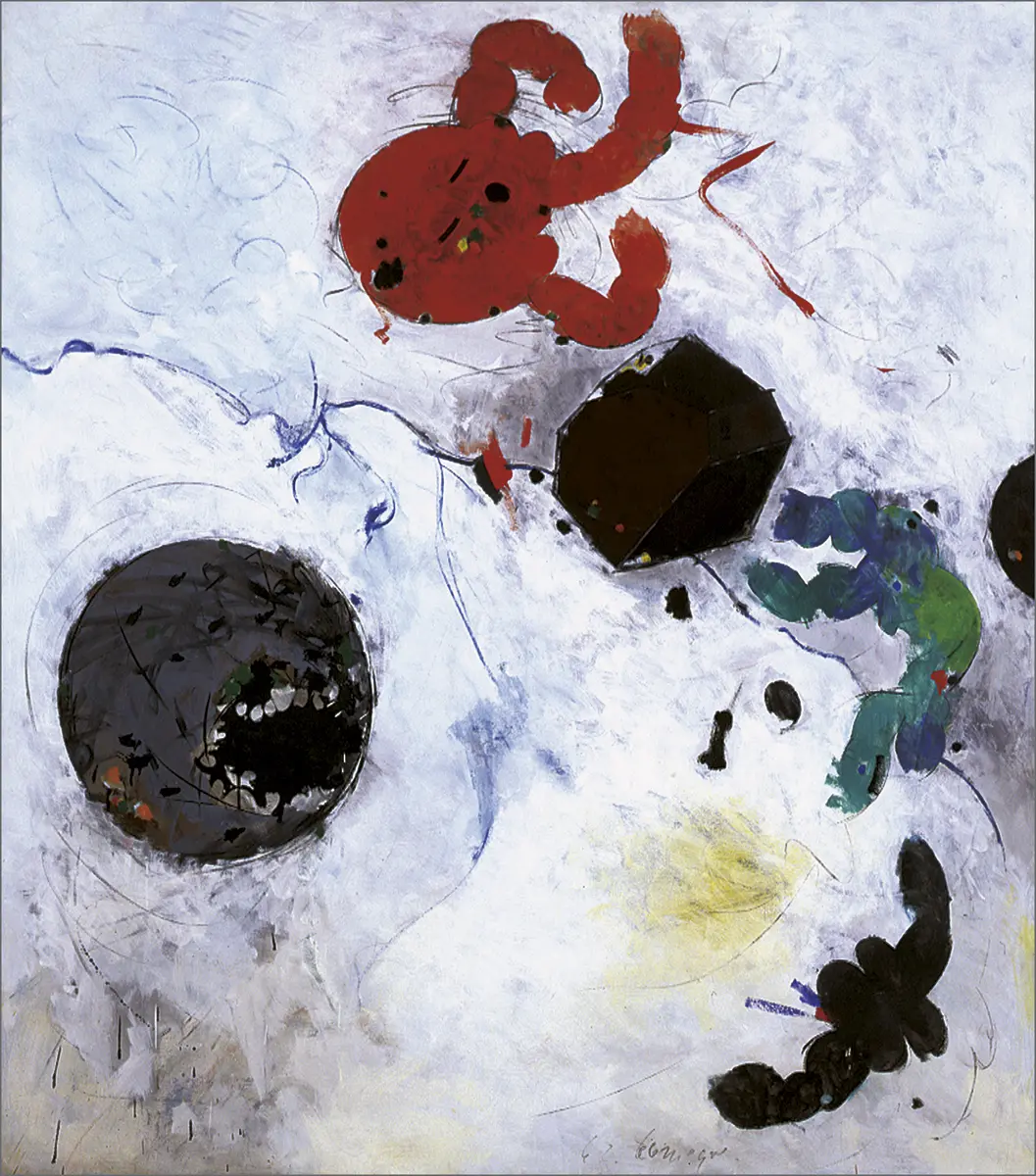
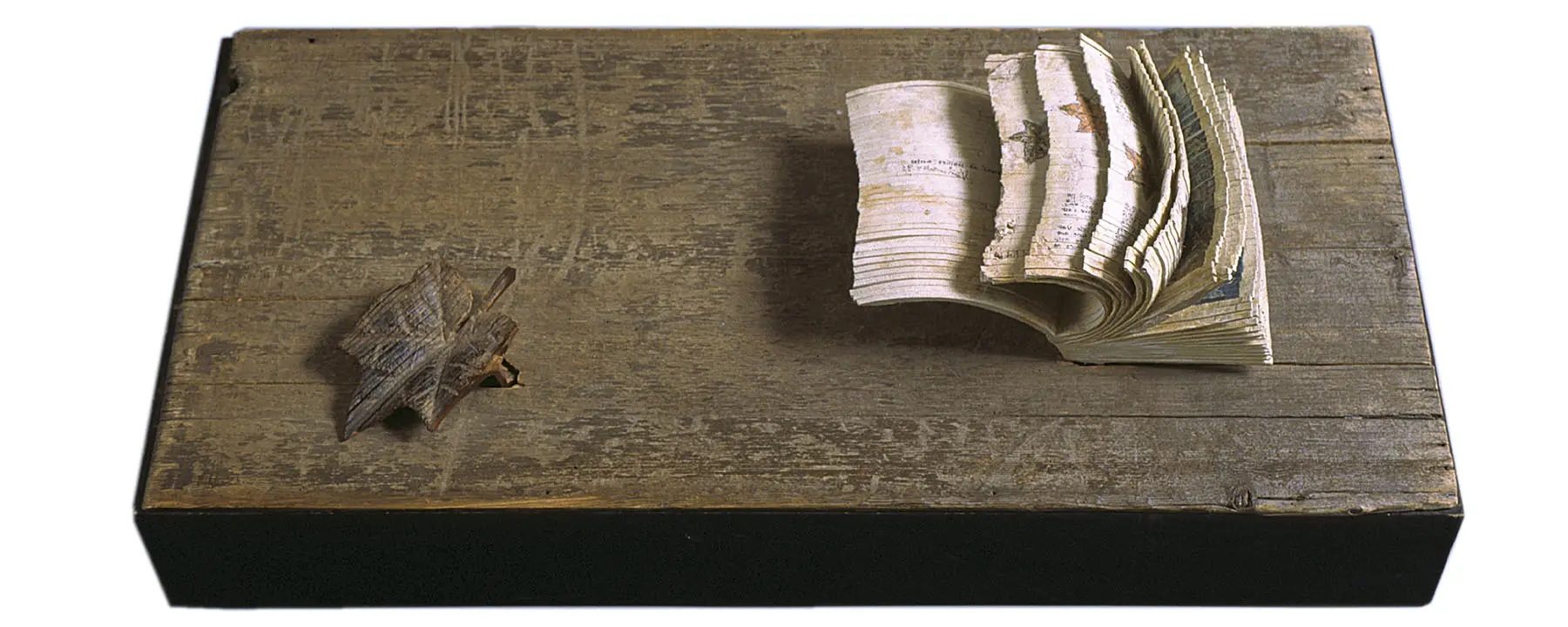
Latin American art was also missing this year from FIAC. Not only Latin American galleries (there were only three: Mexico’s Nina Menocal; Rio de Janeiro’s Jean Boghici; and Havana’s La Casona, the latter in "Perspectives") but also Latin American artists, who were dispersed among various exhibitors apart from those already mentioned. At Jean Boghici nostalgia for the 1960s was acknowledged by Flavio Shiro (1963), Krajcberg (1963), Soto, and Arden Quin, as well as two Brazilian modernists: Tarsila do Amaral’s Pont Neuf, painted in Paris in 1923, and Vicente do Rêgo Monteiro’s Woman’s Head, 1927. Vuelo de Hojas Muertas, 1991 (laminate, motor, and various materials, 76 x 40 x 20 cm.), a small animated sculpture by Argentina’s Jack Varnasky, an excellent artist born in 1936 and based in Paris, reminded us that his poetic and humorous work should be shown internationally more often. Nina Menocal presented several paintings by Mexican artists Miguel Ventura and Gabriel de la Mora, the latter alluding to globalization with his indigenous women "dressed" in Louis Vuitton. Of special interest were the photographs presented by two Paris-based Cuban artists, both architects by profession, Teresa and Juan-Luis Morales (1960 and 1961), who work together under the name of Atelier Morales. Mixing tropical landscapes with everyday images, they dealt with contemporary feelings of social and family chaos that took the form of an aesthetic-spatial disorder of great visual impact.
Havana’s Galería La Casona presented several photographs by Cirenaica Moreira (1969) with a poetic and mysterious focus on femininity and the body and its transformations that partly reminded us of Tina Modotti’s and María Marta Pérez Bravo’s work. Peruvian artist Jota Castro (a growing presence in Paris’s new contemporary art spaces) was well represented at Kamel Mennour (Paris) with his neon Mosquée-Night-Club and the silken French flag embroidered in Arabic, Chinese, and Urdu (the three most common languages of immigration in France); his ironic and provoking text Welcome, Foreigners; and lastly his 6-minute video presenting the complete record of a debate between Schultz and Berlusconi (on the first day of Italy’s presidency of the European Union).
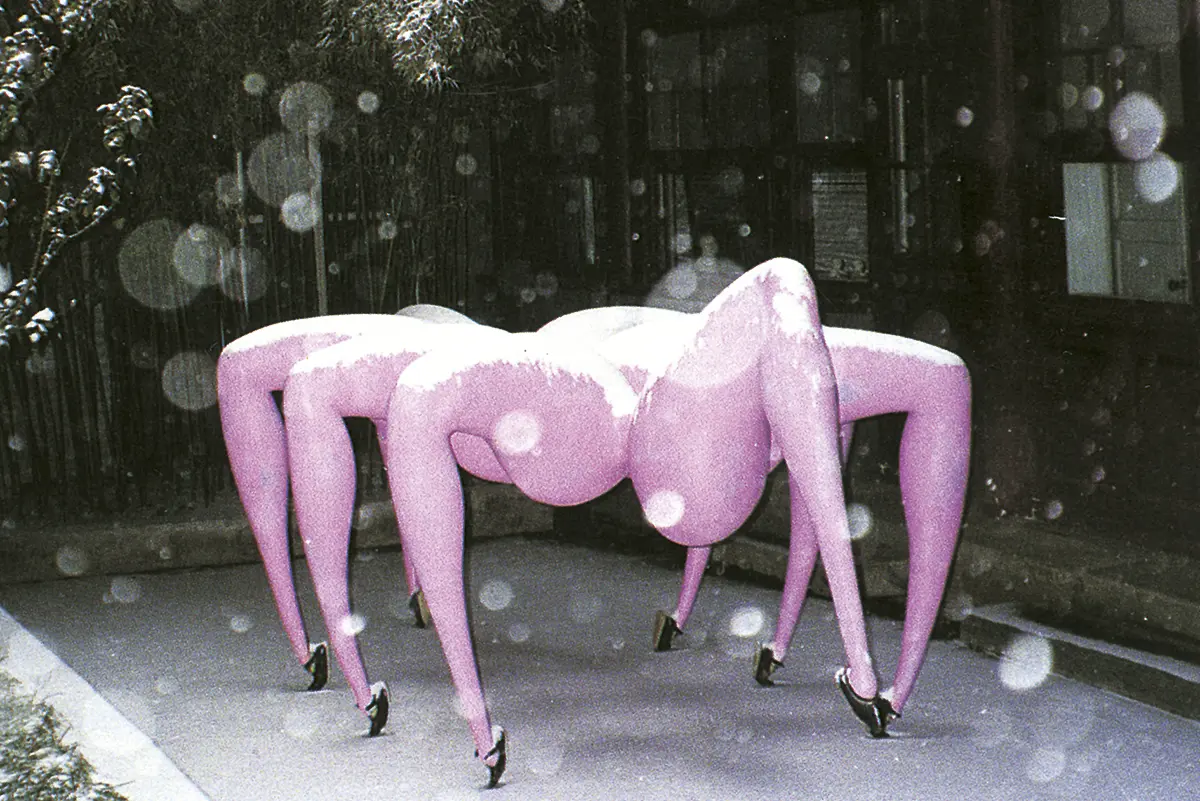
The true surprise at FIAC this year was the important presence of Chinese artists, both of the diasporas and from China itself, represented by Western and Chinese galleries. Their presence was undoubtedly favored by the "Year of China" celebration in France that included several simultaneous exhibitions in Paris as part of the official event: a multidisciplinary exhibition (visual arts, architecture, video, and film) of China’s young artists at the Centre Georges Pompidou; the first Chen Zhen retrospective (1955–2000) at the Tokyo Palace; and a Zao Wu Ki retrospective at the Ball Game Museum. The Gallerie of France presented Zhan Xiagang’s huge portraits, but especially noteworthy was the Lin Tian Miao (b. 1961, Beijing-based) series Focus #9 of five "faces" in gray and white with various added materials, threads, and cotton balls, which generated a kind of gravity-free presence. Fang Lijun’s magnificent triptych, etched on China paper using the graphics of traditional landscape art, was also exceptional. Two of the three galleries presented exclusively contemporary Chinese art, the Albert Benamou Gallery (Paris) teamed with Xin-Dong Chen Gallery (Paris-Beijing) for the occasion and presented recent photographs and paintings by artists working in China. Of the latter we must mention Feng Zhengjie’s oil-on-canvas portraits in acid or strident colors, using a technique taken from advertising, and Ma Liuming’s photographs, which rethink sexuality and propose a hybrid between men and women where the body is always deformed. A video from 2002 —almost the only one found beyond those at the "Video Cube"— by Wang Gongxin (1954) titled Karaoke presented a variation on close-ups of singers whose enlarged mouths and teeth were the main focal point. Photographer Weng Peijun (1971) presented an impassible adolescent, his back to the viewer, who contemplates the city and shares his invisible gaze with us. We must mention also Yunan-based Luo Xü’s (1958) spectacular and disquieting sculpture that represented a series of pink plastic legs, one foot ending in a small shoe of the kind that, up until the 1940s, young Chinese females were forced to wear to curtail the natural growth of their feet and to respond to a male-dominated society’s criteria of beauty (and alienation).
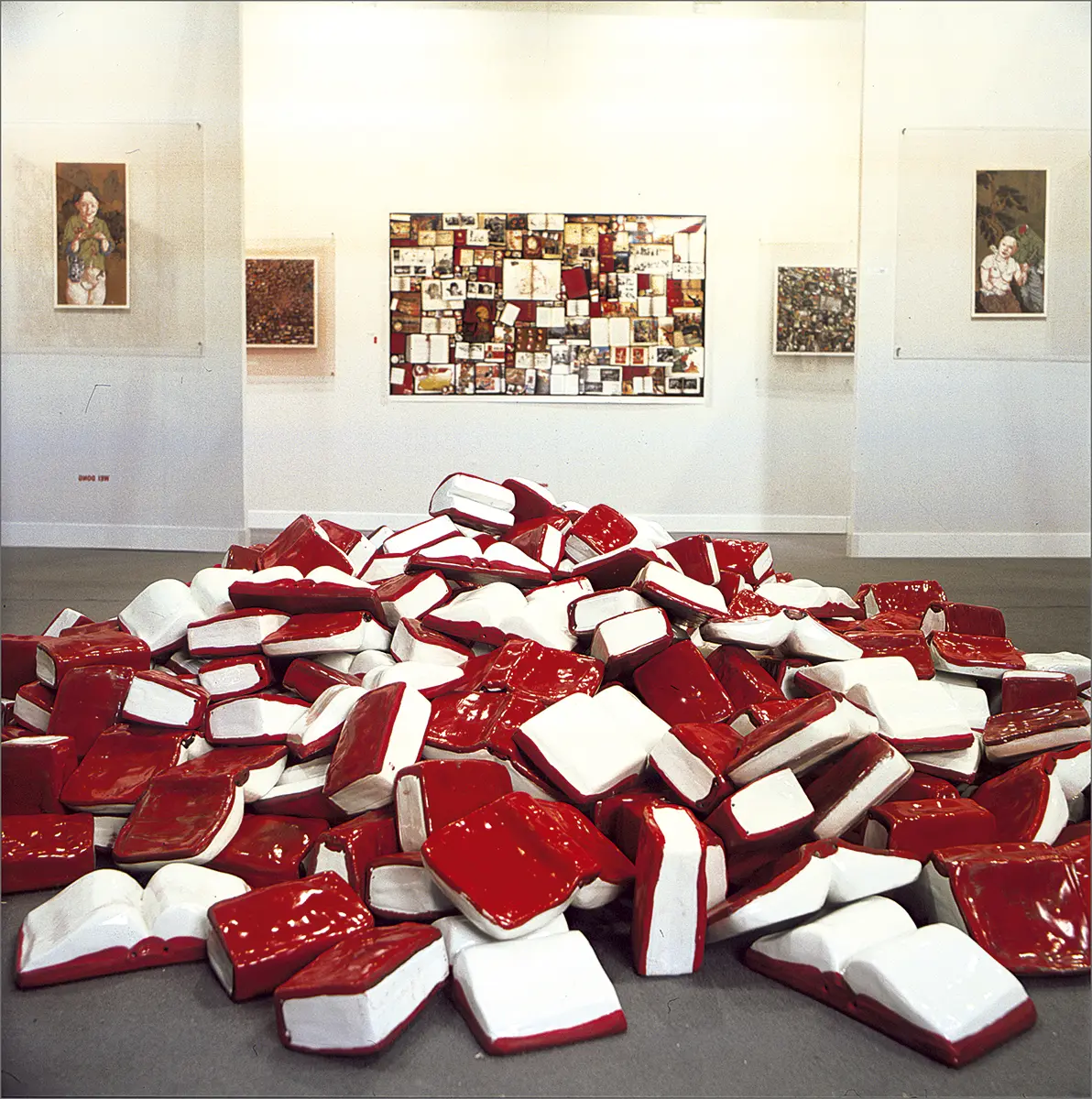
Another European gallery, London’s Chinese Contemporary Ltd. (created in 1995), was the first Western gallery to show art made in China exclusively. This gallery chose the topic of Mao’s Little Red Book, after verifying its recurrence in the work of many Chinese artists. Of this selection, we should mention a pile of 600 little red porcelain books by Xu Yihui, and Hong Hao’s (1965) photographs of Mao’s book. The extremely delicate paintings by Wei Dong (b. Mongolia, 1968,) definitely attracted our attention. Wei Dong is an artist who plays with the sexual ambiguity of his characters and with references to his country’s history —factual, political (red book, uniform, porcelain, cap, medals, etc.), and artistic (traditional painting in silk, landscape art)— in Souvenir #2, 2003 (ink and pigment on paper, 66 x 33 cm.).
Two videos deserve special mention: one by Norwegian artist Sven Pahlsson (Spencer Brownstone Gallery, New York) about the hell of shopping malls and consumer society, Consuming Pleasures or Shopping Paradise, 99 cent Heaven, a search of a better life and lower prices ever, 2003; and especially the 8.5-minute 2002–2003 video-installation Volta by French-American artist Stephen Dean (1968, Xippas gallery, Paris). Presented under a canvas tent, the video submerged us, with a trance-like rhythm, in the vertigo of delirious multitudes of Brazilian soccer stadiums.
As it did last year, FIAC organized several meetings during the week dealing with topics related to the current condition of the artist, as well as contemporary Chinese art.
This year, FIAC demanded a more complex exercise of memory, forcing us into familiarity with a new language (Chinese) and names that were not easy to retain. The abundance of new presences in this 2003 edition —thanks to a general level of quality that allowed FIAC to keep its preeminent place despite the competition by large international fairs— will be the subject of discussion, showing the way in which Europe reaches out towards a new continent. Indeed, the wait is over for Asian artists and the gates are open for their explosive imaginary, one of great formal richness, inscribed within the themes that for so long characterized Latin American art: the confrontation/mediation between the force of their culture of origin and their desire to express it, and that thirst for modernity and freedom that has allowed Latin American artists to reach and maintain an important place in the international art scene.
NOTE
1. A reorganization of the directorial team is scheduled after the end of Fiac.
CHRISTINE FRÉROT
Art historian and critic, École des Hautes Études en Sciences Sociales, Paris, whose work involves both research and teaching.