
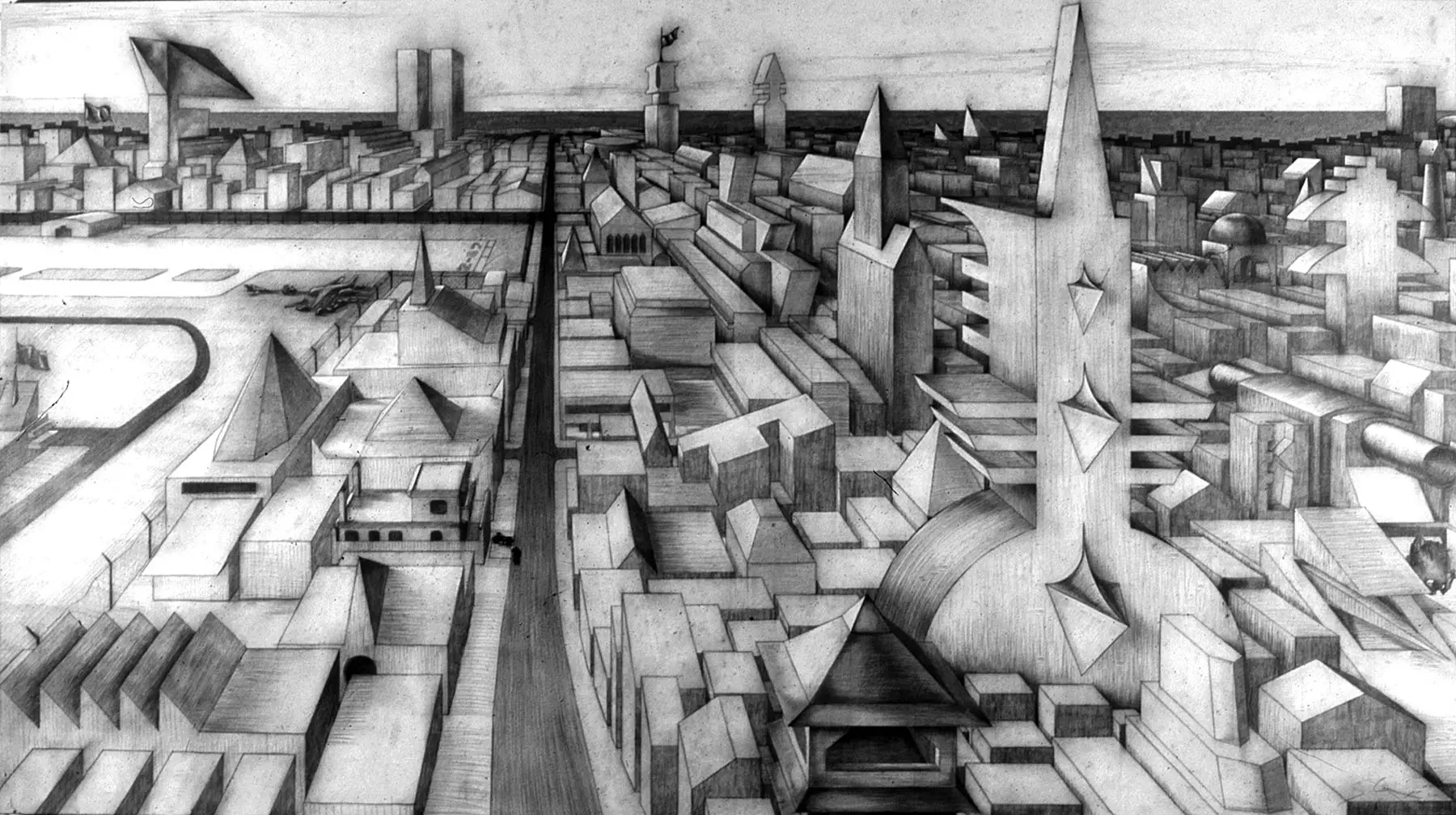
Glexis Novoa’s recent work summarizes a career spanning more than fifteen years. His graphite-on-marble drawings and wall installations are directly connected to the various periods of his artistic life, and at the same time, they show a level of technical and intellectual maturity much greater than what we saw in the late 1980s when Novoa first gained notice as a young representative of his generation of Cuban artists.
Novoa’s life in the arts began when he was a child. His mother, a well-known Cuban writer, introduced him to the visual arts, architecture, and film at an early age. As an adolescent he studied engraving, and in 1978 he signed up for the Taller Experimental de Gráfica de la Plaza de la Catedral. Over the course of three years, he created lithographs using old German machines (the same machines that were used to print the labels of tobacco products at the beginning of that industry) and acquired a taste for working with stone, evident in the current drawings on marble.
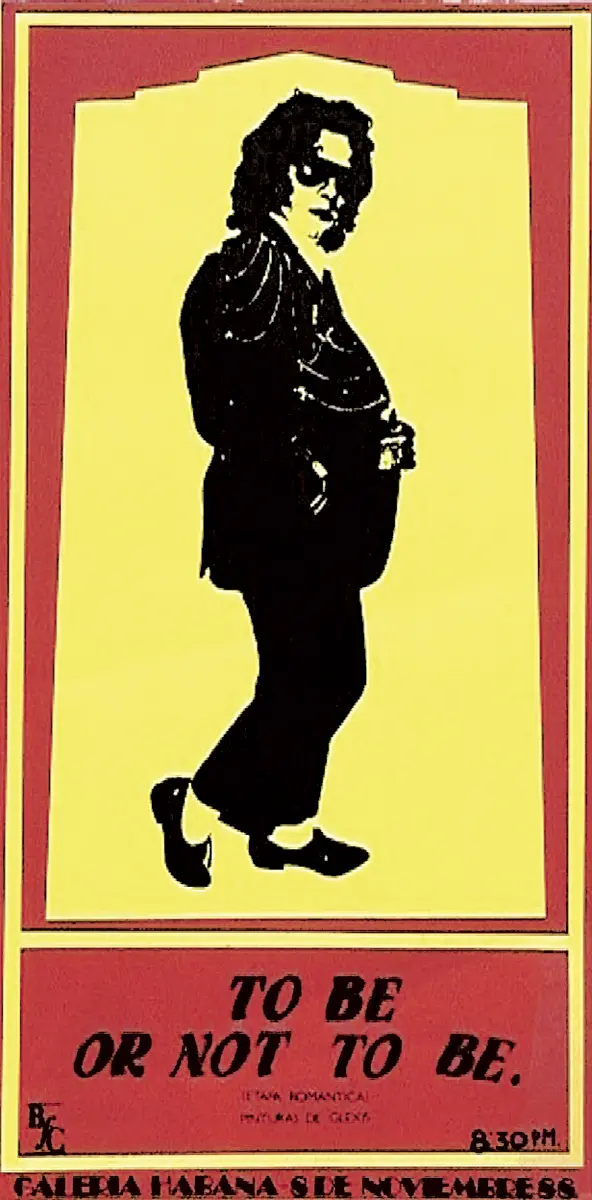
Novoa’s professional interest in art developed while he studied graphic design. He graduated in 1984 from the Escuela Nacional de Arte, Dibujo y Grabado, and two years later he was associated with the Taller de Serigrafía Artística René Portocarrero. The workshop’s founder and mentor, Aldo Menéndez, was an important promoter of young artists, among them, alongside Glexis Novoa, Segundo Planes, Carlos Rodríguez Cárdenas, José Luis Alonso (Alonso Mateo), Arturo Cuenca, and the Arte Calle and Grupo Provisional groups.
In Menéndez’s workshop, these artists experimented with technique and developed —and still produce— important works of art, and they held meetings and gatherings that cemented what Luis Camnitzer later called a Cuban renaissance.1 It was around that time that Glexis Novoa started showing his work and taking an active part in Cuba’s artistic movements of the 1980s.
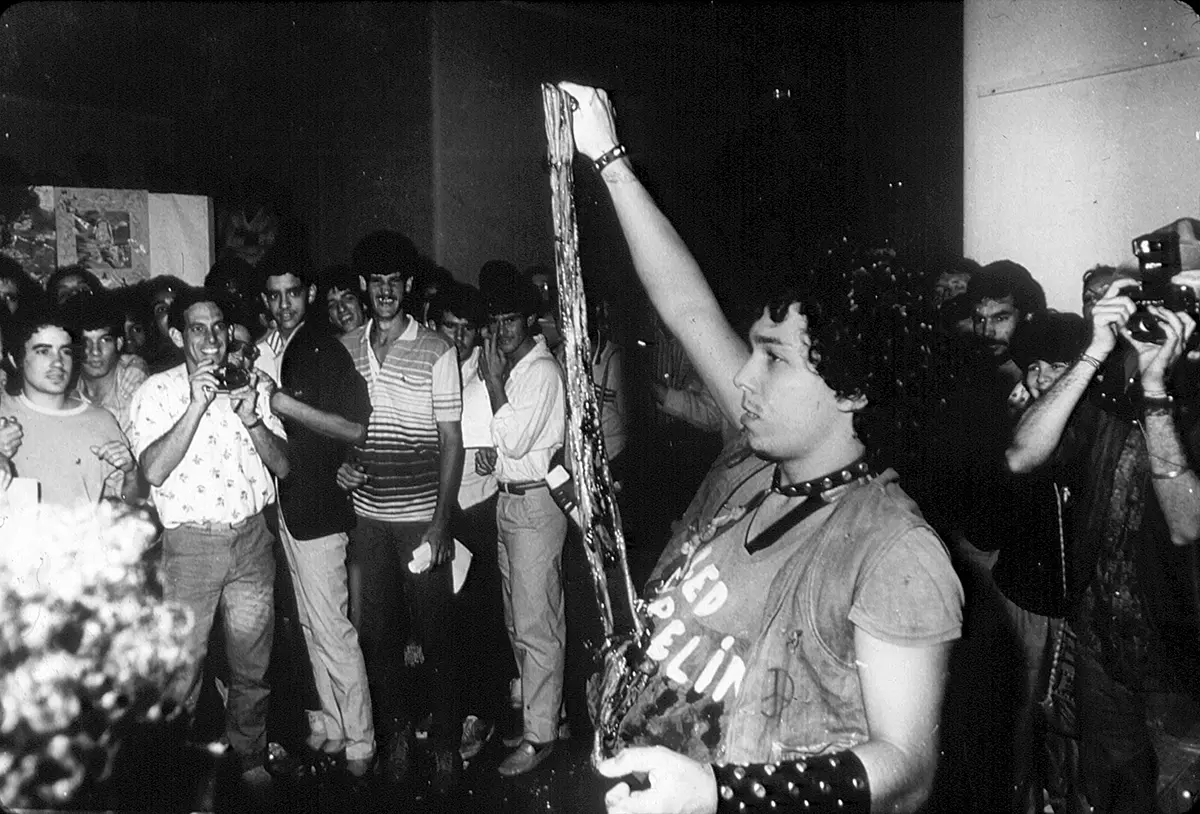
Initially, Novoa experimented with appearance and questioned viewers’ assumptions. For him, what mattered was the intention, more than the work itself. With an irreverent and self-assured attitude, he poked fun at the world and at himself in large-format works that featured invented nonsensical texts and were painted in the style of abstract expressionism. Known as Novoa’s “romantic period,” this series of works “responded to his emotional frankness and his idealism, which would end up constraining his options for action, when the value of his work was deemed insufficient to belong in the artistic circle.”2
Glexis Novoa played an important role in the performance art scene that characterized the late 1980s. However, like his painting, these performances transcended thanks to their critique of artistic and State institutions, rather than due to their aesthetic or conceptual value.3
Toward the end of the 1980s, the success of the Volumen I artists and the presence of Glexis Novoa and other young artists of his generation, like Carlos Cárdenas and Tomás Esson, in international shows such as The Nearest Edge of the World—Art and Cuba Now (1990), Cuba OK (1990), and No Man is an Island (1990), placed these young artists in a privileged position. More interested in socio-political critique than in aesthetics, they clashed with the government. Some of them were censored and even expelled from official events.
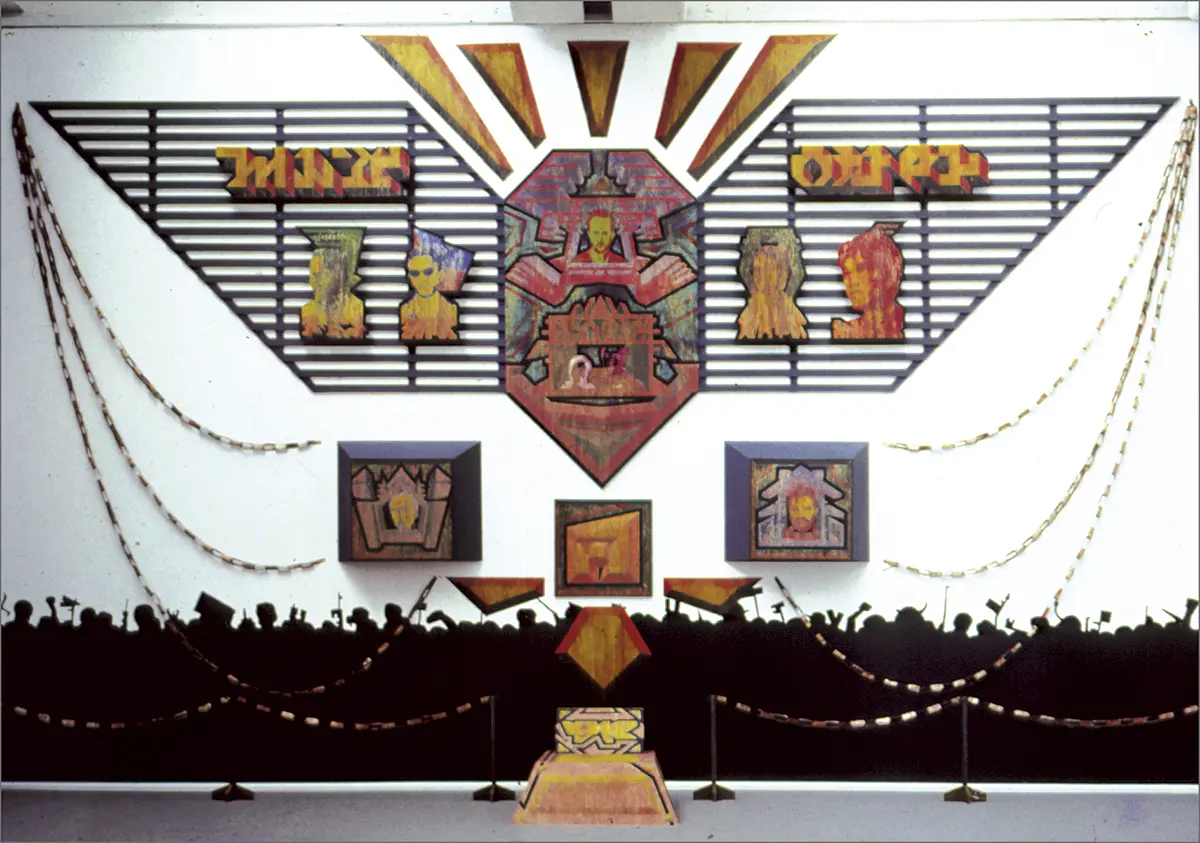
In order to avoid such censorship, and aware of the need to achieve recognition in the artistic realm, Novoa set himself the goal of designing a body of work that would allow him “to triumph, to sell, to be invited to exhibit internationally.”4 This new period, his “practical period,” included oil-on-canvas works that showed great technical mastery and demonstrated Novoa’s ability to create an interesting aesthetic language. Most of his paintings were part of monumental installations dominated by a symbolism inspired by socialist discourses (Russian, Chinese, Korean), and conceptualized from within the socialist/communist/totalitarian context of life in Cuba. The Castro regime had banned all use of “symbols of the Fatherland” —specifically, images of Fidel Castro himself, Raúl Castro, Che Guevara, the national flag, and the national seal— outside official discourse, but Glexis Novoa was able to manipulate these images to camouflage his true intended meaning. The faces of Fidel Castro, Arnaldo Ochoa —a Cuban general executed by firing squad in the late 1980s— and Che Guevara, as well as the flag, and the hammer and sickle, for example, acquired new values in the context of Novoa’s work.
Etapa práctica, Sin título refers to a work of the same title that was originally shown at the 3rd Havana Biennial in 1989.5 The installation was one of the event’s most acclaimed works. It comprised several canvases with lettering that, given their typography and their colors (red and orange on a black or gray background) resembled the Cyrillic alphabet used in the former Soviet Union. Both the letters and the general design were a covert critique of the regime’s policies. If, for instance, a profile of Che revealed itself to be a portrait of Novoa himself, the censors had no way to tear it down —it was and it wasn’t the beloved icon. This interplay of “masks” allowed Novoa to skirt around the censors and at the same time to develop that personal aesthetic language that local and international art critics would eventually come to accept.
In 1990, at the Stadtische Kunsthalle, in Düsseldorf, Novoa presented an installation6 inspired by the work seen at the Biennial, and similar to what was in preparation for The Nearest Edge of the World—Art and Cuba Now show. The piece at the Kunsthalle included political figures whose faces were exchanged for those of artists. The symbolic play in this piece was much more complex: by extending the installation in three dimensions and including new elements such as the “podium” and the chains separating the public from the work, Novoa’s critique of official monuments was more evident. In truth, the “podium” was a kind of tomb or sarcophagus that could be used as a podium because, in context, it was a space reserved for political leaders. Ironically, the show’s curator, Jurgen Harten, chose this space for the Cuban ambassador in Bonn to give his opening speech, and thus the diplomat became an unwitting participant in the artist’s game.
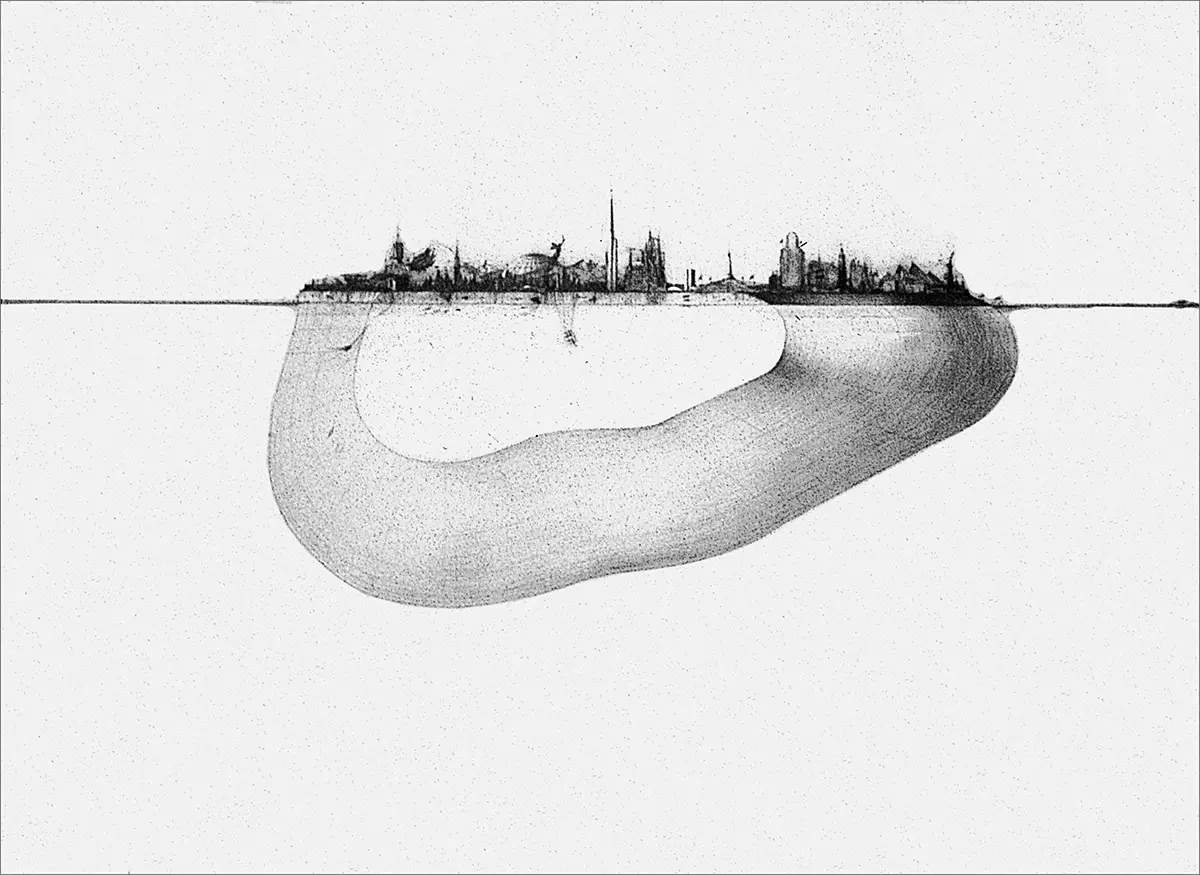
It is here that the geometric horizon appears for the first time as a formal element. The line formed by heads and instruments that hold the outlined characters of a supposedly political rally together was inspired by the famous photograph of Fidel entering Havana that the Communist Party of Cuba uses as its logo. It establishes a point of flight and balances the composition. This horizon eventually becomes a basic element in Glexis Novoa’s installations, and in more recent works even acquires a philosophical value.
For several years Glexis Novoa continued to create large-format works, massive structures with angular metallic frames inspired by the paintings of the Düsseldorf installation. As individual works and as components of monumental installations, these paintings parodied the megalomaniacal character of political set design by using curtains, flags, signs, and slogans, all predominantly in red. They also poke fun at political characters, particularly Fidel Castro, whom Novoa associated with gray-colored wooden structures with signs and slogans hanging from them.
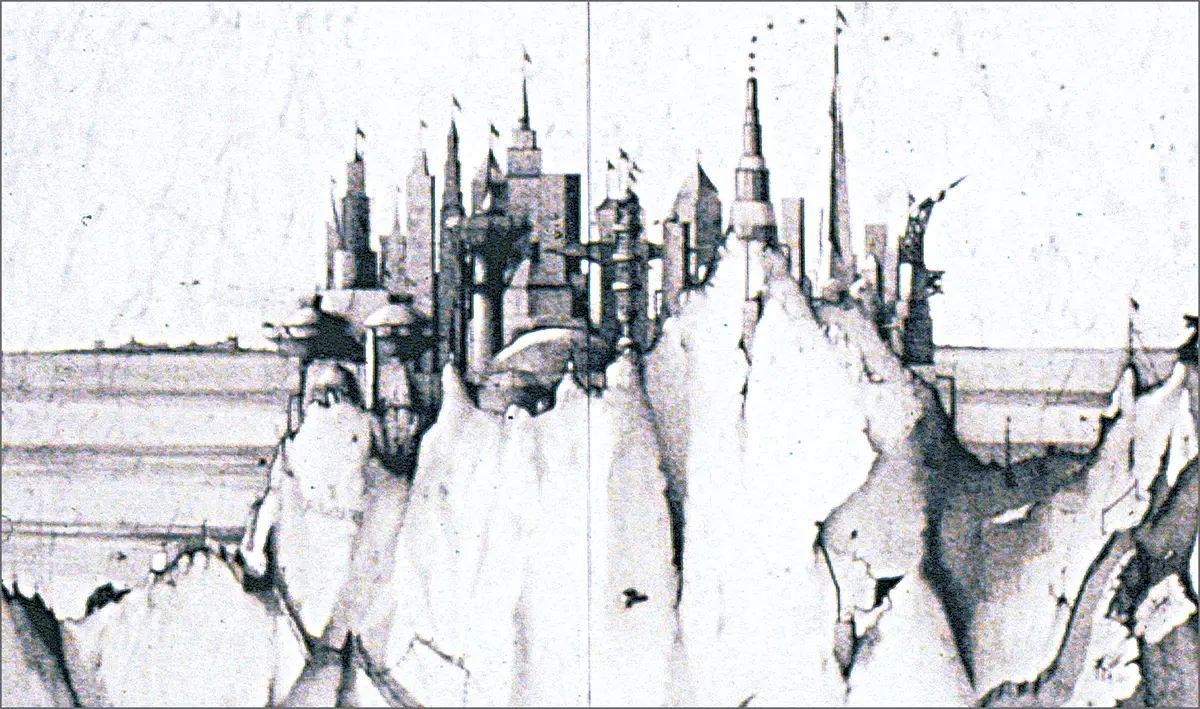
In 1992 Novoa traveled to Mexico where, in the convergence of capitalism and socialism, he developed a new style and varied his iconography. On the basis of the architectonic elements that play an important role in his current work, the artist developed an interest in the urban landscape as a symbol of totalitarian power. Buildings and monuments decorated with warlike motifs have become a kind of personal heraldry. In this context, buildings acquire a new socio-political, even religious connotation, and architecture triumphs as a symbol of power.
Following a temporary stay in Monterrey in 1994, Novoa’s work acquires a more intimate quality. Instead of posing a discourse “by others, for others,” the artist sought inspiration in his own inner world.7 During this period Novoa represents himself as an insect inhabiting a kind of capsule. These autobiographical and spiritual works are not widely known, but their importance is great —they bring the organic world into Novoa’s iconography. The great sensitivity expressed in this period comes through not only in the formal aspect but also in the media employed: a series of found objects such as bed sheets and pillowcases are used as canvases. Becoming an immigrant generates strong nostalgic feelings and deep questioning that enriches the artist’s work conceptually.
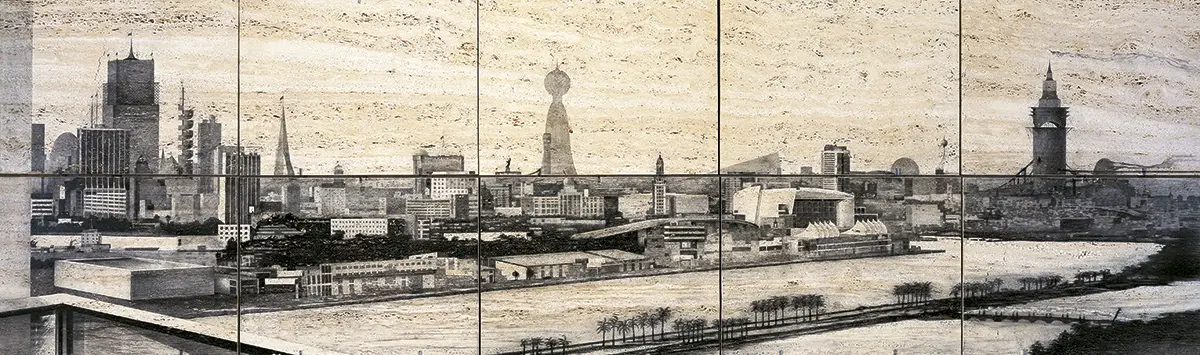
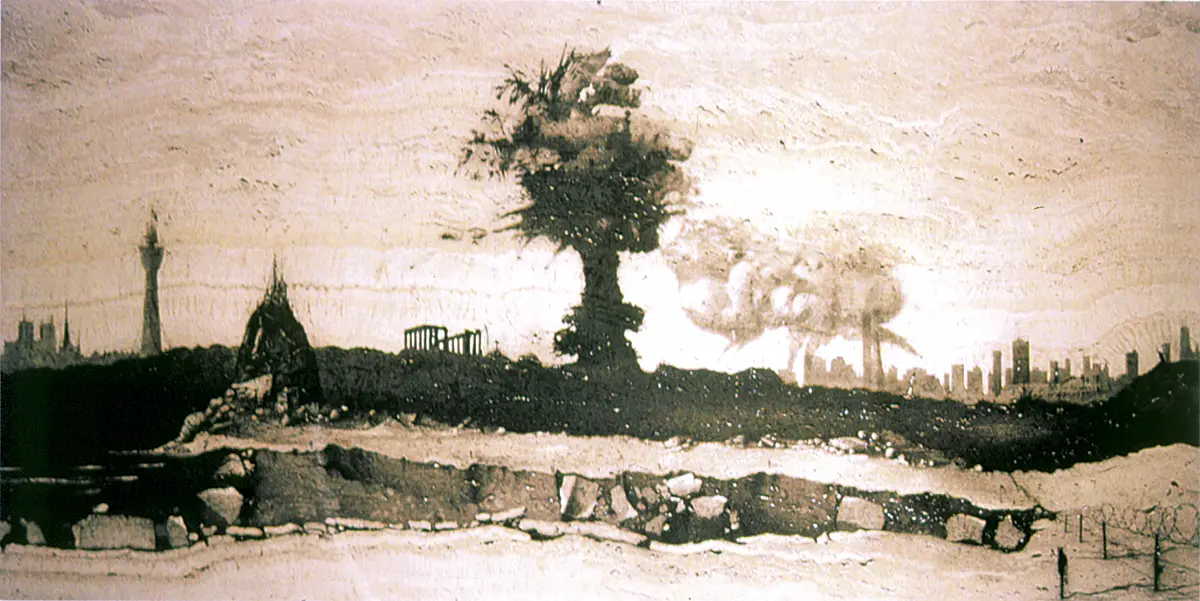
A year later, Glexis Novoa moved to Miami, where he still lives. He returned to elements of his “practical period” and, based on the premise that “people have expressed themselves by means of economic, social, political, hierarchical, and religious power,”8 developed a more philosophical line of work in which he somehow made predictions for the future of humankind. As “essence” itself gained in importance, Novoa left painting behind to focus on drawing, on a careful and detailed tracing in graphite that reminds us of ancient scrolls or Renaissance drawings.
Using elements from different periods, Glexis Novoa created a new language to illustrate futurist landscapes, premonitions in which the icons of the present are transformed through the game of memory. From that moment on, every work will be based on the linear tracing that determines the line of the true horizon. In addition to creating a balanced composition, the geometrical horizon acquires symbolic connotations by referring, for instance, to the sensible horizon perceived from aboard a ship, or to an urban skyline. These landscapes, drawn in great detail and with great skill, are reconstructions of historical and geographical truth, transformed by the artist’s reason, heart, and memory into futuristic worlds. These are primarily urban landscapes that stimulate the viewer to recognize what is, in many cases, only a mirage.
The best known among these installations (most of them are in private collections) was created for the Miami Art Museum (2001-2002).9 Created with a large number of symbols drawn with care and detail, the piece refers to well-known historical monuments, such as Gaudí’s Sagrada familia; a Frank Lloyd Wright building; the pyramids of Egypt; and the Statue of Liberty, among others. According to the artist, by documenting architecture’s political, religious, and social legacy, the piece has a historicist function; it seeks to preserve a “futuristic” view of Earth, in which buildings stand despite the context of war (there is an abundance of weapons, radar systems, rockets, and nuclear reactors in the work). The piece is accurately premonitory —it was created before the current state of war could be anticipated.
Time becomes a primordial factor in Glexis Novoa’s work. After witnessing the destruction of New York’s Twin Towers, the artist felt the need to move beyond his time in order to create a futuristic vision of the world. In an attempt to salvage those images, he creates an apocalyptic vision that is part reality, part fiction. Glexis Novoa becomes a Jules Verne for the twenty-first century, with a plastic proposal that projects Earth into a lackluster future, marked by war and environmental destruction at the hands of humanity itself.
NOTES
1. Luis Camnitzer, New Art of Cuba (Austin: University of Texas Press, 1994), p. 21.
2. Gerardo Mosquera, “14 hijos de Guillermo Tell,” Joven Arte Cubano (Helsinki, Finland: Marketta Seppälä/Pori Museum of Art, 1990), p. 35.
3. Francine Birbragher, “Performance cubano en los ochentas,” Art Nexus 37, 2000, pp. 62–66.
4. Glexis Novoa, interview by author, Miami 2002.
5. Illustrated in Luis Camnitzer, “Un laboratorio vivo,” Arte en Colombia 43, February 1990, p. 64.
6. Illustrated in Los hijos de Guillermo Tell (Caracas: Museo de Artes Visuales Alejandro Otero, 1991), p. 35.
7. Novoa, interview, 2002.
8. Ibid.
9. Francine Birbragher, “Naomi Fisher—Glexis Novoa,” ArtNexus 43, 2002, p. 115.
FRANCINE BIRBRAGHER
Ph.D. Candidate in Latin American History, University of Miami. Art historian specializing in contemporary Latin American art.