
Towards the end of the 1980s, while in search of an appropriate mode of expression for their time and their personal life experiences, a group of young Venezuelan artists developed an interest in and experimented with new and different kinds of artistic media. Reacting against the vogue for painterly, or neo-expressionist painting that, supported by a number of critics and galleries, attempted to reproduce locally the success these styles achieved in Europe and the United States, those artists chose to explore electronic media and worked on installations, thus contributing to the renewal of Venezuelan art. We are talking about, among others, José Gabriel Fernández (1957), Sammy Cucher (1958), Óscar León Jiménez (1960-1990), Alí González (1962) and José Antonio Hernández-Díez (1964).1
Perhaps due to the quality, strength, and influence achieved by modern art in Venezuela, and also because they grew up and lived their formative years in the age of global communication (TV, video, magazines, etc.) in a city where socio-cultural and technological contrasts are immediately evident,2 the work of José Antonio Hernández-Díez and the artists mentioned above is founded on the knowledge and use of a language that today is considered international. It is the reason this work presents a high degree of cosmopolitanism.
José Antonio Hernández-Díez became an artist through the use of and experimentation with those new media. He was an undoubtedly active and inquisitive child who, interested in technology, wanted to find out how all things worked; he took things apart even if putting them back together afterward was a dubious proposition.3 The body of work produced by Hernández-Díez, since he began exhibiting his art in 1988, makes evident the development of a well-guided process of exploration in search of his goals, a process that does not fall back on the complacency of its achievements and does not shy away from shifts in language when they are deemed necessary. This is why Hernández-Díez’s oeuvre has deserved praise from the moment it was first presented to the public. Hernández-Díez’s works appeared in video art exhibits and indeed, initially tended to use that medium, which later continued to be used whenever the artist’s need to express himself required it. Yet in recent times Hernández-Díez’s pieces are objects and as such, more sculptural.
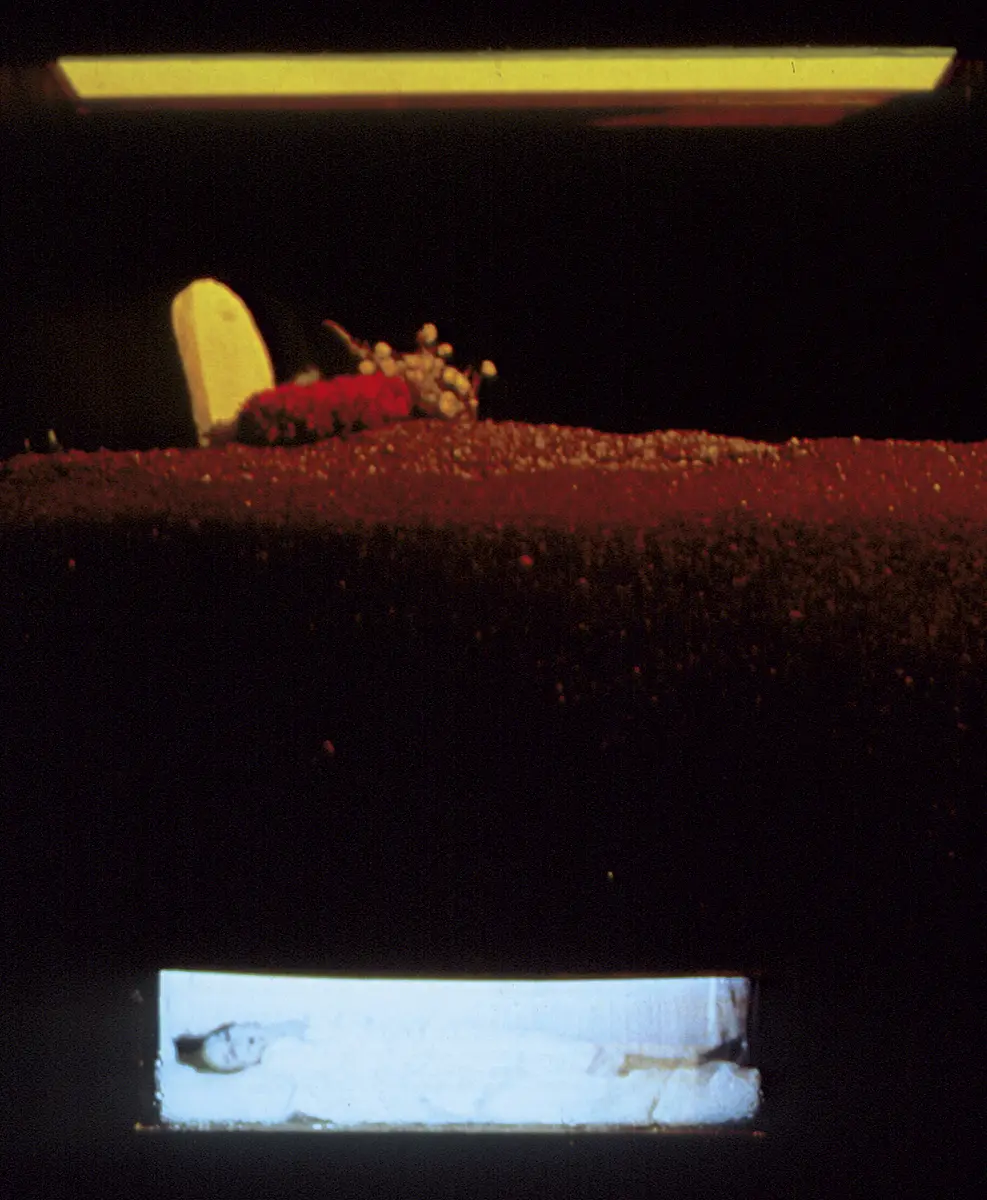
Among Hernández-Díez’s early works from the late 1980s, there were two videos that made a profound impression. Annabel Lee (1988) and Houdini (1989), both presented in a show titled The Eighties. A Panoramic View of the Visual Arts in Venezuela, at the Galería de Arte Nacional, alludes to the most inexorable form of incarceration, from which the only possible exit is death. The first piece, an electronic/visual metaphor of a poem by Poe, shows the agonizing movements of a woman (supposedly, the poet’s beloved) who has been buried alive and is visible to us through a transparent methacrylate box three-quarters filled with dirt. The video captures this woman in her death throes, while higher up (at ground level) a diorama depicts her tombstone. The second piece, in which the artist takes Houdini’s place, relates the famous magician’s last—and failed—escape attempt. These works, perfectly resolved at the technical level, bring to mind a sort of existential angst characteristic of beings who are possessed of unbridled imagination. In the first instance the artist, emulating the poet, sees and feels himself buried next to his beloved, and in the second instance, having assumed the role of Houdini for the video, he seems to suffer the fate of the escape artist when his technique fails.
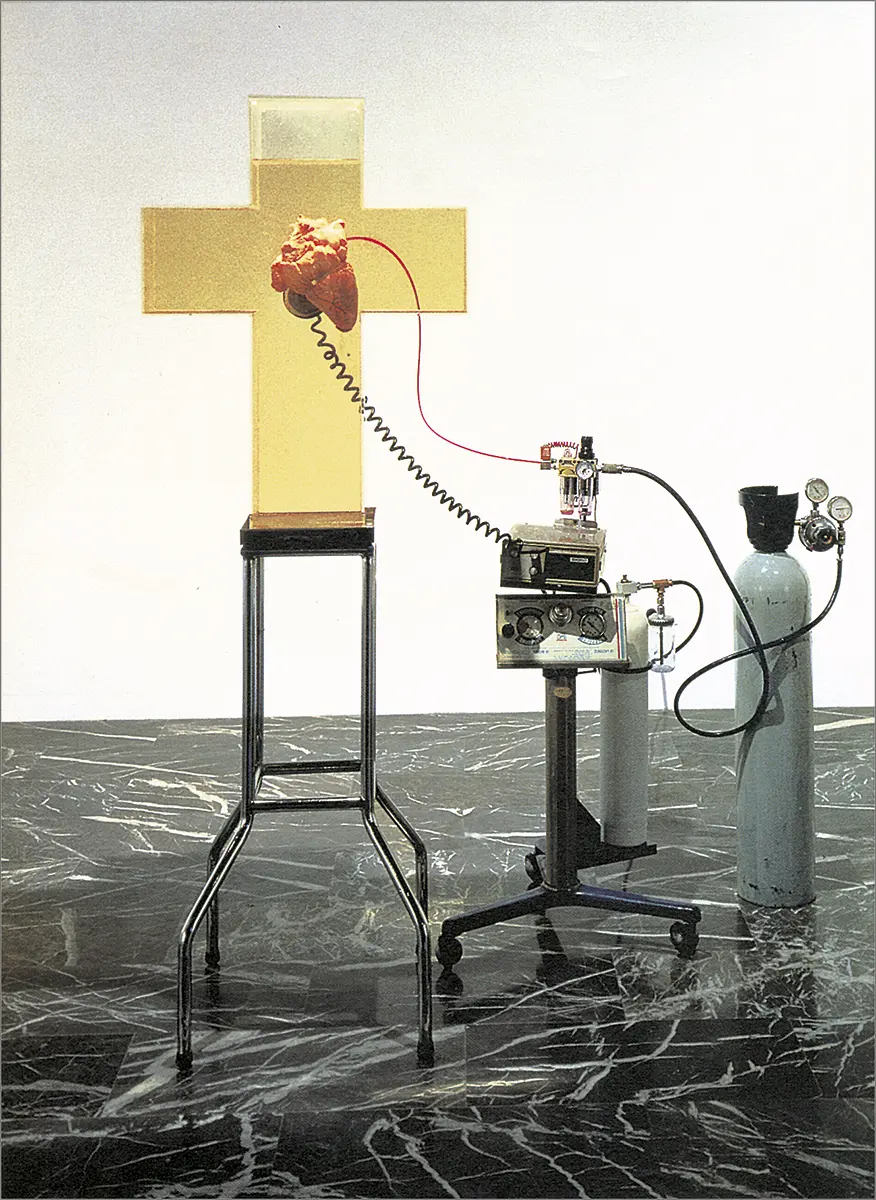
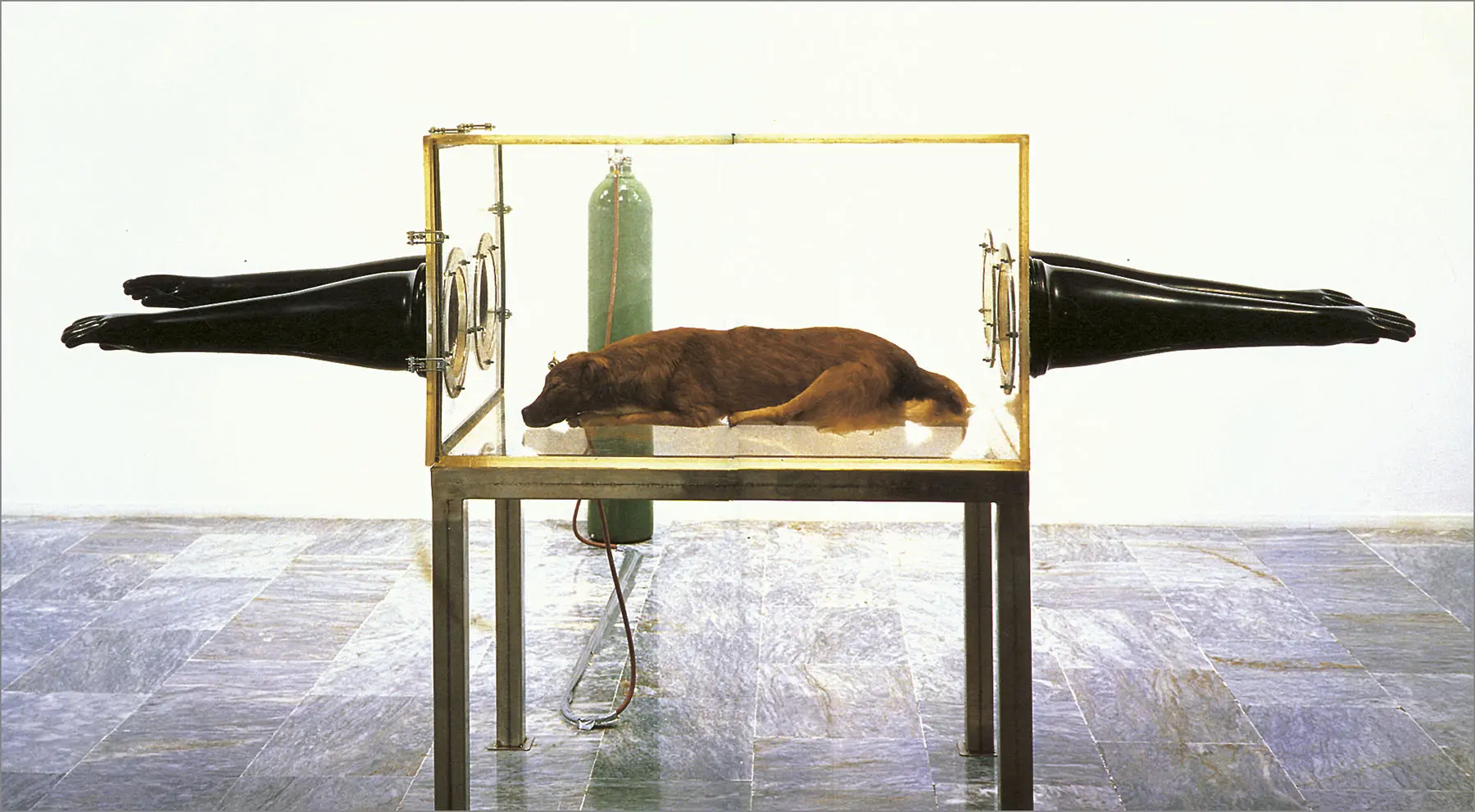
Hernández-Díez’s first individual show, San Guinefortand other devotions presented at Caracas’s Sala Romulo Gallegos in 1991, makes evident the artist’s ability to invent or appropriate the historical, aesthetic, and technological resources needed in order to articulate his ideas and put them in practice. One of these resources (perhaps the most important one) is the contrast or confrontation of opposites,4 whether in the realm of ideas, environments, materials, or textures or in all of them at once. The outlines of some of these works, such as Sagrado Corazón Video, You will wash your sins and Sacred Active Heart, all from 1991, thanks to their clean and unadorned form recall Kasimir Malevich’s suprematist icons, which follow a cold, rigorous conception of abstraction but are nonetheless impregnated with religious feelings, in contrast, for example, to images and ideas of Latin America’s everyday religious nature. In San Guinefort (1991), the piece that gives title to the show, an embalmed dog lies in a kind of incubator. This work contrasts various industrial materials (glass, metal, and others of the kind found in a scientific lab), the reversible rubber gloves used to manipulate objects inside the isolation box, and the natural element of the dog’s reddish fur. In a work included in the same series, Sacred Heart Video, Hernández-Díez revisits the video medium itself: two hours of open-heart surgery are shown on a TV monitor inside a transparent methacrylate cross. In the same show, You will wash your sins presents—also locked inside the figure of a cross—an automatic washing machine washing a purple tunic, “a sacred shawl."5 The contrast here resides not as much in form and texture (less observable, since the tunic inside the machine is in movement), but in the sacrilege of washing a sacred cloth: sacred things are not to be touched, not to be washed. Most of these works, beginning with the one dedicated to the saintly dog, a healer of sick children,6 tend at the same time to depict the contrast or confrontation between the sacred and the profane: a stray dog receives the treatment reserved for medieval religious relics, yet in this case, the corpse’s preservation is not the result of sainthood but of the proper technological resources. Perhaps the intention is to highlight the sacred in the contemporary, especially the idea that life, in the past dependent on divine power, now exclusively depends on technological elements that are as precarious and as fallible as an oxygen tank, a hose, a pair of rubber gloves, or isotonic liquids. Although shown in a previous exhibition (The Spirit of Time, at the Los Espacios Cálidos gallery in Caracas’ Ateneo), the installation Sacred Heart Activo (1991) nonetheless responds to similar ideas and, as such, belongs to this cycle that Hernández-Díez calls his “new Christian iconography,” and even seems to close it. This piece presents an organic, natural heart (possibly a cow’s), also encased in a transparent methacrylate cross and suspended in an isotonic liquid or solution. Along with the necessary medical equipment, the solution allows the heart to pulse rhythmically, fulfilling its cycle of systole and diastole.7 In this work, the point is not only that the shape and texture of a living heart contrast brutally, almost painfully, with the medical instruments, but also that the heart, dislodged from the organism it belonged to, is forced to pulsate by the technological mechanism of a life-support system, which is profoundly shocking.
Some works dated between 1991 and 1993, among them In God We Trust (1991), Minamata (1991), Perfect Vehicles (1992–93), and others, highlight, if not a political engagement, at least the artist’s interest in investigating, studying, and critiquing his country’s problems, and in creatively expanding his own themes, always seeking the necessary means to express them. Thus, the first of the works mentioned, In God We Trust, emphasizes the relationship between U.S. currency and political and social events in Latin America. As in many of Hernández-Díez’s works, the title already provides a clue to identify his referent. This is a complex work in two parts: the first part shows the famous Masonic pyramid with the eye of God at its apex that appears on U.S. dollar bills, intercepted by images of modern buildings and bank logos; at the same time, scenes of looting and rioting that took place in Caracas on 27 February 1989 are projected onto a wall with what might be narrative intent, since it ends in a second part or section where, through a small pyramid, an advertising image calling for peace is projected onto an aluminum sheet whose format reproduces the proportions of a U.S. bill.
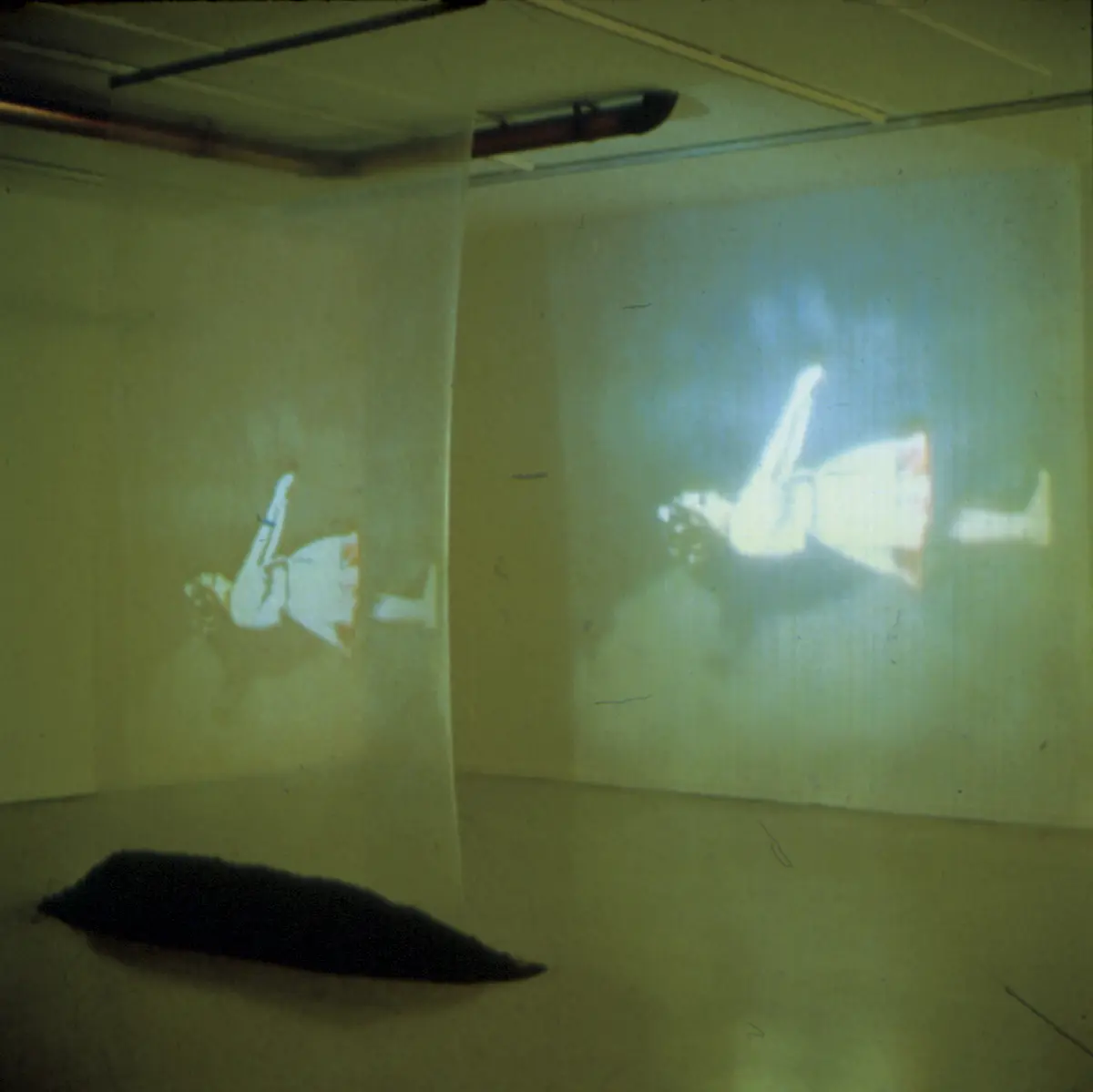
As extremely simple as the subjects they address are Hernández-Díez’s videos about dead children, such as The Box(1991), a video installation of images of street children projected onto a plastic screen that is attached to a cardboard box. Because of the way in which the artist videotaped the children, these seem to fall from the screen to the box. A similar video installation echoes popular traditions in Latin America that ascribe a highly symbolic character to the funerals of children. You are Going to heaven and You Go Crying (1992) is a metaphor for a popular saying that compels us to emphasize what is good in our lives. In this case, the literalness of the act of “going to heaven,” causes the proverb to generate a certain cruelty, as on a plastic screen we see the projected images of Andean children dressed “in their Sunday best” who, due to the inversion of the horizontal/vertical projection axis, seem to be ascending towards the sky.

Every one of these works manifests Hernández-Díez’s interest in the problems affecting children in Latin America. In large part, they relate to the degrees and kinds of violence exerted on them, not always consciously. His pieces in reference to youthful games of skill are well-known, for example, the skateboards with portraits of adolescents half-veiled by handkerchiefs. Perfect Vehicles (1992–1993) is an installation of thirty skateboards painted in the best commercial advertising style (it was created with the help of art students, using photographs of school-age children).8 Emulating the groups of college students known as los encapuchados (“the hooded ones”), these high school students often battle the police in the streets, covering their faces to avoid identification.
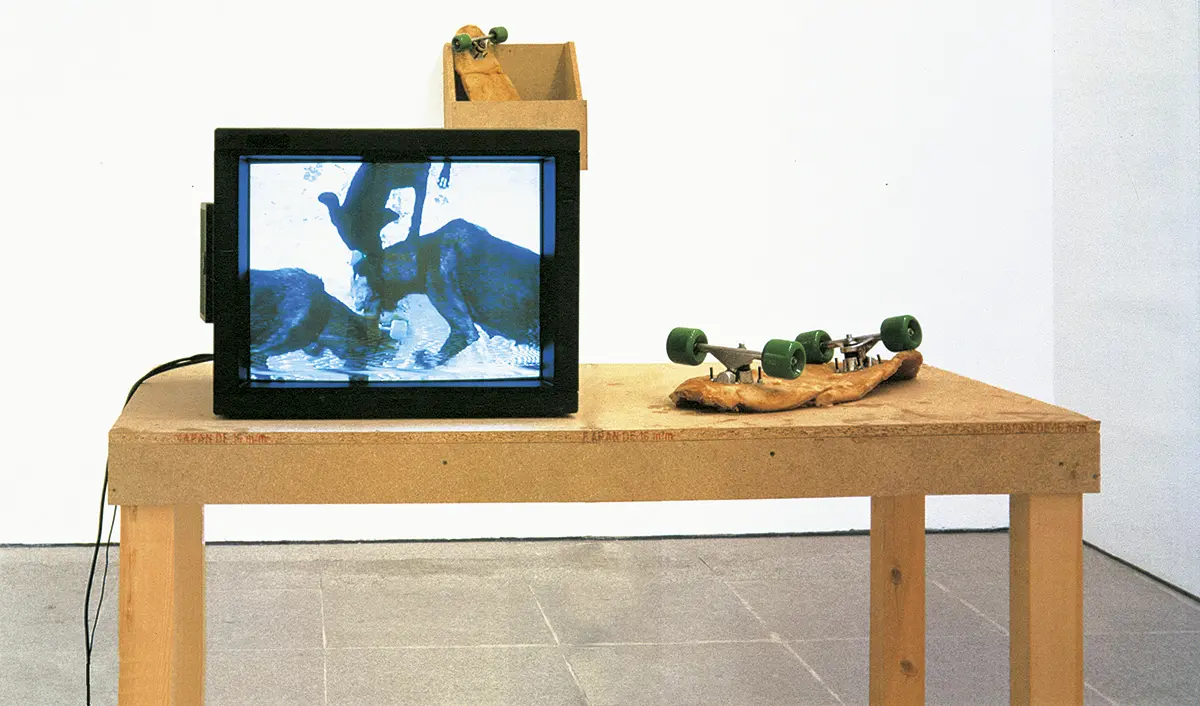
The Brotherhood (1994) is a complex video installation also on the theme of adolescence and its dangerous games. The piece comprises three videos seen on three monitors, and skateboards made out of fried pig skin, to which metal and rubber wheels are bolted. In one of the videos we see a pig-skin skateboard being fried; in the next one we see the skateboard in use in the street; the third one shows the pig skin as it is devoured by three stray dogs. These processes that should have been diachronic, developing sequentially over time, are distinct but simultaneous, synchronic. Twelve skateboards hanging from a metal bar, like pieces of meat in a meat-packing plant, complete the composition. Collector and writer Enrique Oberto make a comparison with the fate of Acteon, who is sentenced to be devoured by his own dogs supposedly for having seen Artemis bathing, and his insertion in the struggle between the Apollonian and the Dionysian forces that are continuously fighting each other in Western culture.9
In recent times, perhaps due to his prolonged absence from Venezuela and its troubles, Hernández-Díez has begun to use more distanced, more impersonal procedures to work his colored-methacrylate pieces. The procedures are derived from industrial techniques and the pieces themselves present a nondescript character that earlier ones did not have. That, plus the intense colors in some of these works, brings to mind the futuristic, industrial, impersonal, anonymous plastic furniture vogue of the 1960s, and it signals a new distance from more traditional, hand-made art. In these pieces, Hernández-Díez puts into practice techniques related to those of an art designer.10 He plans designs for others to execute, but unlike traditional art designers, he always remains close to the process, ensuring that the results are exactly as he envisions them. Also, the fact that many of the objects thus produced (teaspoons, battery caps, fake nails) are outsized indicates their non-utilitarian character, their character as sumptuary creations.
In this way the artist moves from the personal and intimate to the public, attempting to interconnect both realms, as for example in Searching for Vice, Without Money (2000), Untitled (2000), and Super Breakfast (2000)—again in the sphere of youth-related problems—as well as for older pieces like S & M (She Lost a Finger) (1998), also known as Soledad Miranda, and Margarita (1999). In large measure, the impact of Hernández-Díez’s work has to do with his ability to suggest or to invite the viewer to imagine what perhaps is not even there and was never a part of the artist’s intentions. His 1995 video assemblage X-1 comprises a TV monitor that, like a recently purchased loaf of French bread, protrudes minimally from a paper bag. By closing the frame around the central motif, the artist makes us guess the presence of something like a fruit or a penis that releases a stream of juice? urine? semen? This piece is part of a series of videos in which Hernández-Díez, through a projected loop of tape, dealt with the theme of continued streams (perhaps of soda, or of water flowing from a fountain of the kind one finds in Caracas’s schools and public places in Frescolita Syndrome, 1997).
Among Hernández-Díez’s most recent works, his giant photographs of sports shoes, placed in vertical lines so that their logos acquire a certain order and names can be spelled deserve special mention. These are at least four-letter words that can be read just as the artists intend: Jung, Kant, Marx, Kafka, and they again produce a highly suggestive contrast: the names of well-known writers and thinkers from the European tradition, representatives of the modern world’s great thought, are at the feet of young athletes, and from high culture we move to the preeminence of an artistic practice whose theme is the everyday.
One of Hernández-Díez’s most recent works relates to an artwork that was presented at and acquired by the Museo Alejandro Otero, in Caracas, years ago. Ceibó (1999) can be thought of as a self-portrait in movement. It is a video projection in a loop, showing the artist in continued movement as he organizes his possessions in a wooden armoire with glass doors.
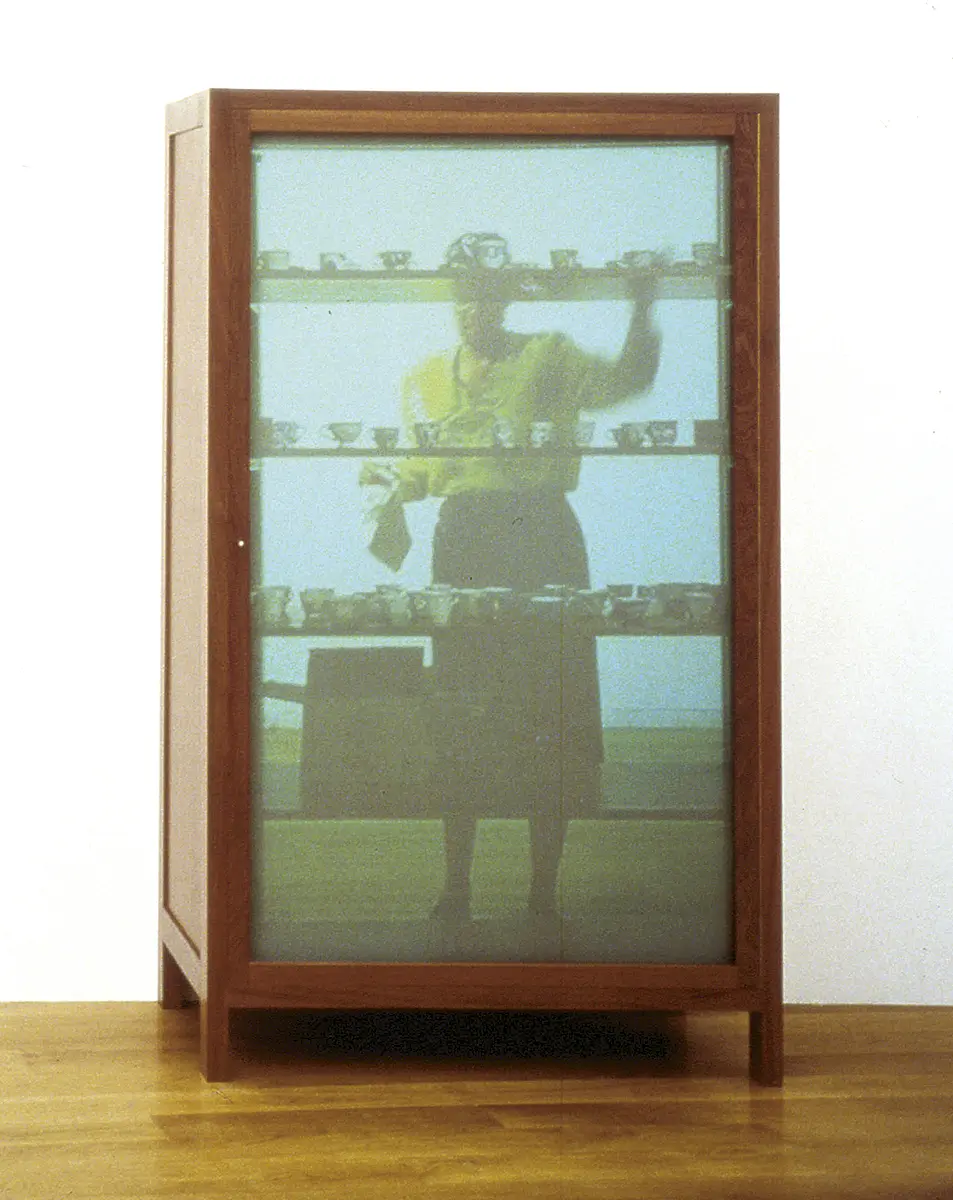
Similarly, La vitrina (2000) uses a loop projection to show a display case, supposedly in a museum, filled with small coffee cups of several kinds; we see a conservation specialist working calmly but without pause to clean and organize the items in the display case only to take them out afterward and repeat the operation. This gives us an idea not only of the routine nature of many museum jobs, but also of the many rituals we are forced to perform daily that make us feel the weight, pressure, and inconvenience of real-time —a real-time in which nothing occurs.
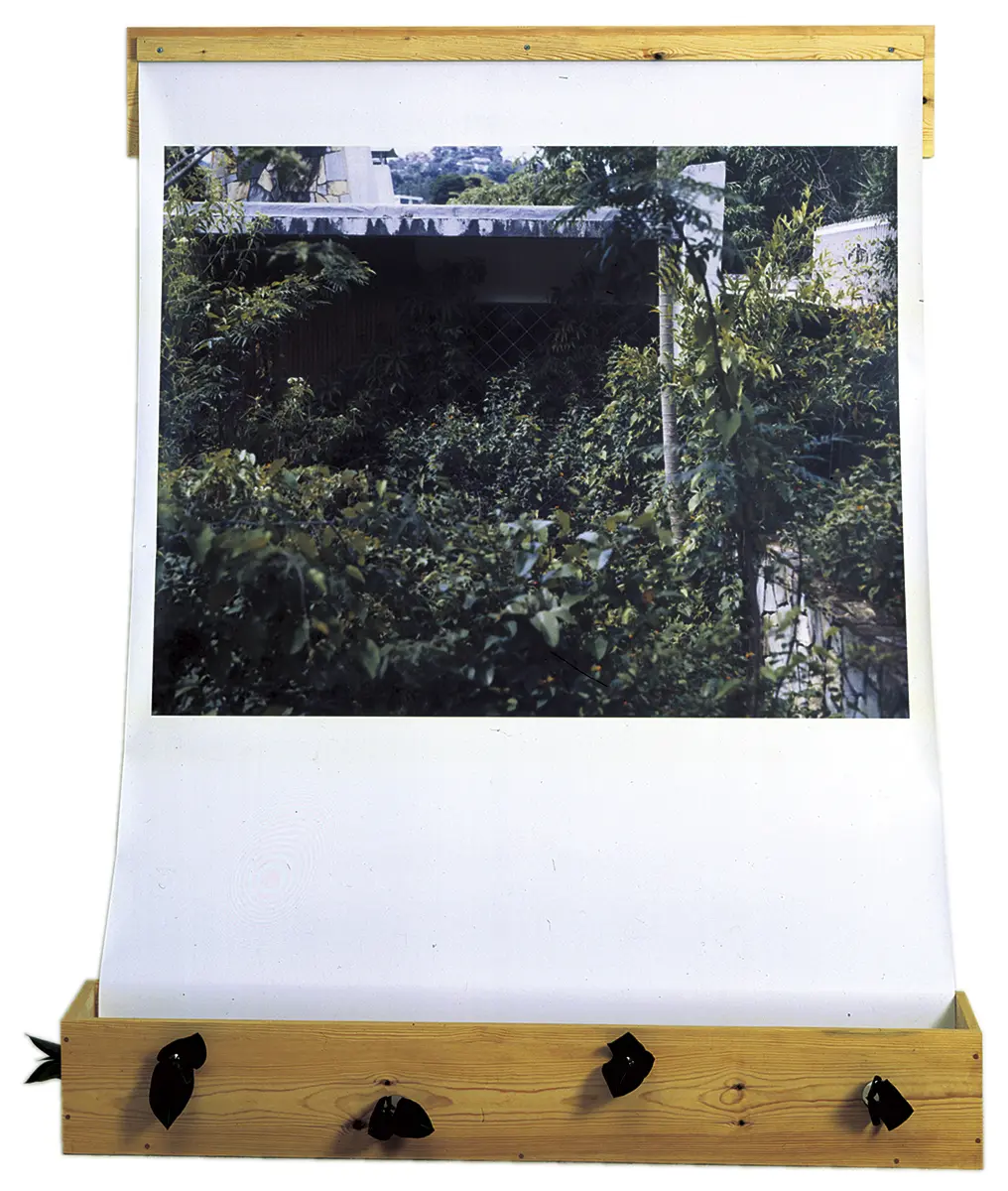
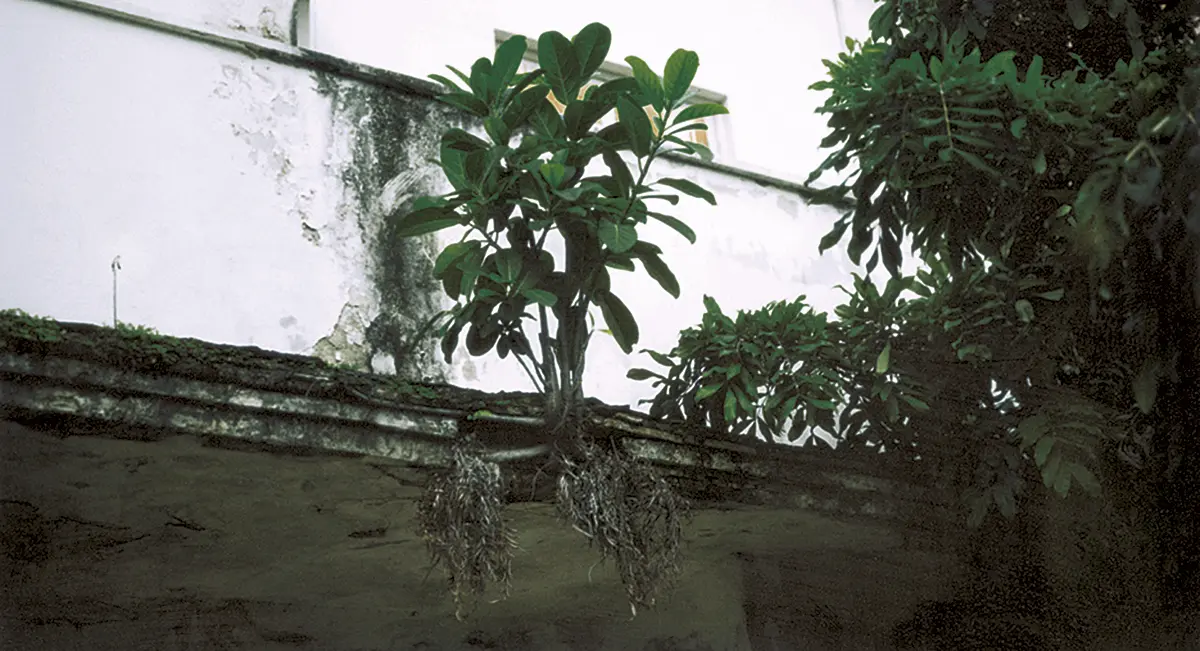
José Antonio Hernández-Díez's most recent works are photographic, which is nothing new: this is not the first time the artist has used this medium. What is unusual is the fact that these are landscape photographs; Hernández-Díez had never shown an interest in landscape. Focused on the vegetation in Caracas’s gardens, these are mostly urban landscapes and represent the exuberant vegetation of the Tropics. The intention is to show the way in which tropical plants take over space quickly, the way in which it takes command even of interstices, occasionally grabbing onto tile roofs, in order to grow chaotically as soon as people let their guard down, as soon as we board up a house and abandon it.
Against this overflowing nature, the city’s buildings, its modernist constructions, and modernity itself, with all its rationality, have no power.
Some of the photographs focus on those temporary forms of shelter known in Caracas’ as ranchos. Contrary to what happens with the gardens, here what becomes all-invasive are these constructions (fragile, flimsy), bringing down in their wake any Modernist effort. One of these photographs contemplates what seems to be the Bloques del 23 de enero, in The Silence, surrounded by the low-rise constructions we know (houses or ranchos?) But in this case, the surrounding constructions, precarious and fleeting as they are, seem to devour the blocks (the rational buildings so proudly erected by Democracy.)
On the other hand, these photographs by José Antonio Hernández-Díez are of such a large size, so decidedly monumental, that n room for doubt about their message is left.
The work of José Antonio Hernández-Díez has transported us from the existential angst of his first pieces, from the religious, political, and social critique in some of them, to the realm of the everyday—which is not devoid of a degree of violence.
NOTES
1. Luis Ángel Duque, San Guinefort y otras devociones, exhibition catalogue, (Caracas: Sala Rómulo Gallegos, 1991).
2. I am referring to the contrasts that can be appreciated in the artist’s childhood home (at least in one of them, his grandparents) which, like many homes in the Caracas valley, seems on the one hand populated with religious images and filled with mystery, and on the other hand protected against undesirable visitors with the most sophisticated resources for domestic security. See Duque, San Guinefort.
3. Ibid. Duque refers to the “closed circuit security system in his grandparent’s home” that an adolescent Hernández-Díez disassembled in order to learn how it works.
4. João Fernandes, “José Antonio Hernández-Díez: los accidentes del objeto y sus cicatrices,” José Antonio Hernández-Diez, exhibition catalogue, (Santiago de Compostela, Spain: Centro Galego de Arte Contemporánea and Xunta de Galicia, n.d.) p. 16.
5. Jesús Fuenmayor, “Crónica de una obra,” José Antonio Hernández-Díez, exhibition catalogue, (New York: New Museum of Contemporary Art, 2002).
6. Duque, San Guinefort, 1991. Duque explains the origins of the “Saintly Dog” cult, the San Guinefort, and its evolution in various European regions.
7. Ibid.
8. Jesús Fuenmayor, José Antonio Hernández-Díez, 2002.
9. Ignacio Enrique Oberto, “José Antonio Hernández-Díez: Una visión dionisíaca y crónica de su obra,” El Universal, Caracas, 21 May 1995.
10. João Fernándes, José Antonio Hernández-Diez, exhibition catalog.
IRIS PERUGA
Art critic, and researcher at the Museo de Bellas Artes in Caracas.